Why God Shielded the World's First Murderer Instead of Killing Him
God cursed Cain, then marked him for protection. Philo argues the mark was not mercy but the sharper punishment, a sentence that would never end.
Table of Contents
 Click for full size
The Murderer Who Walked Away Alive
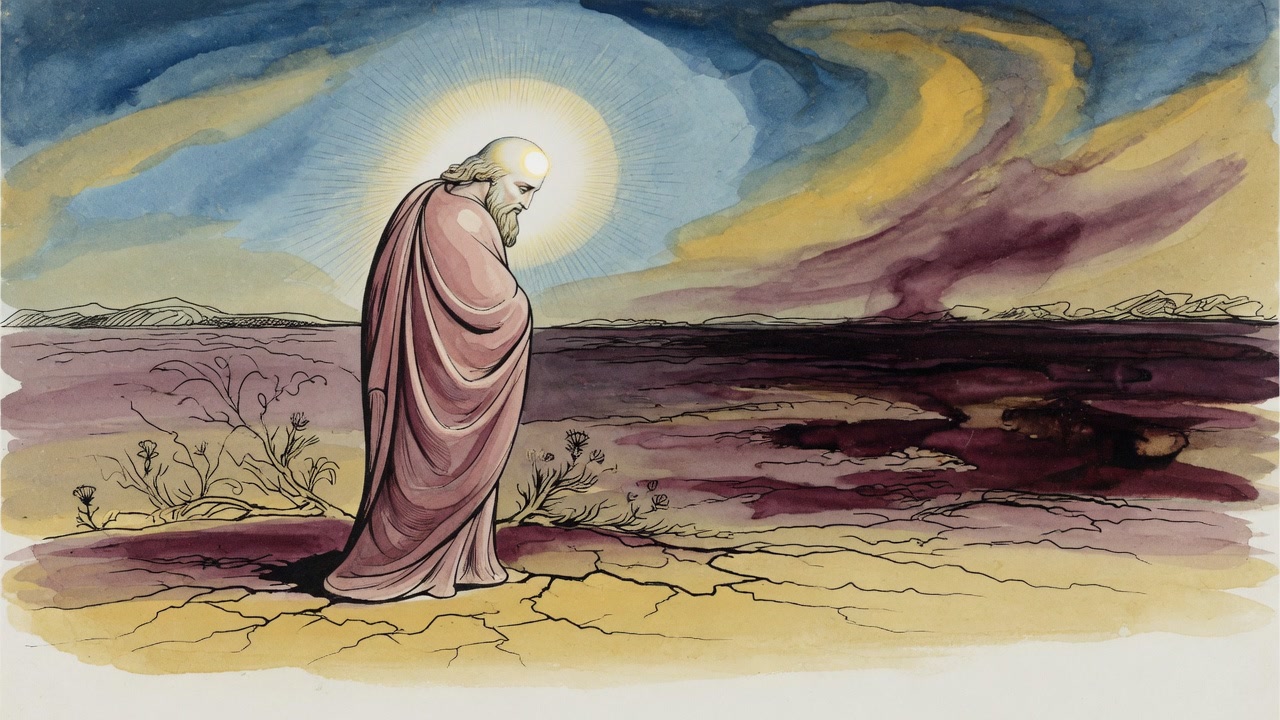
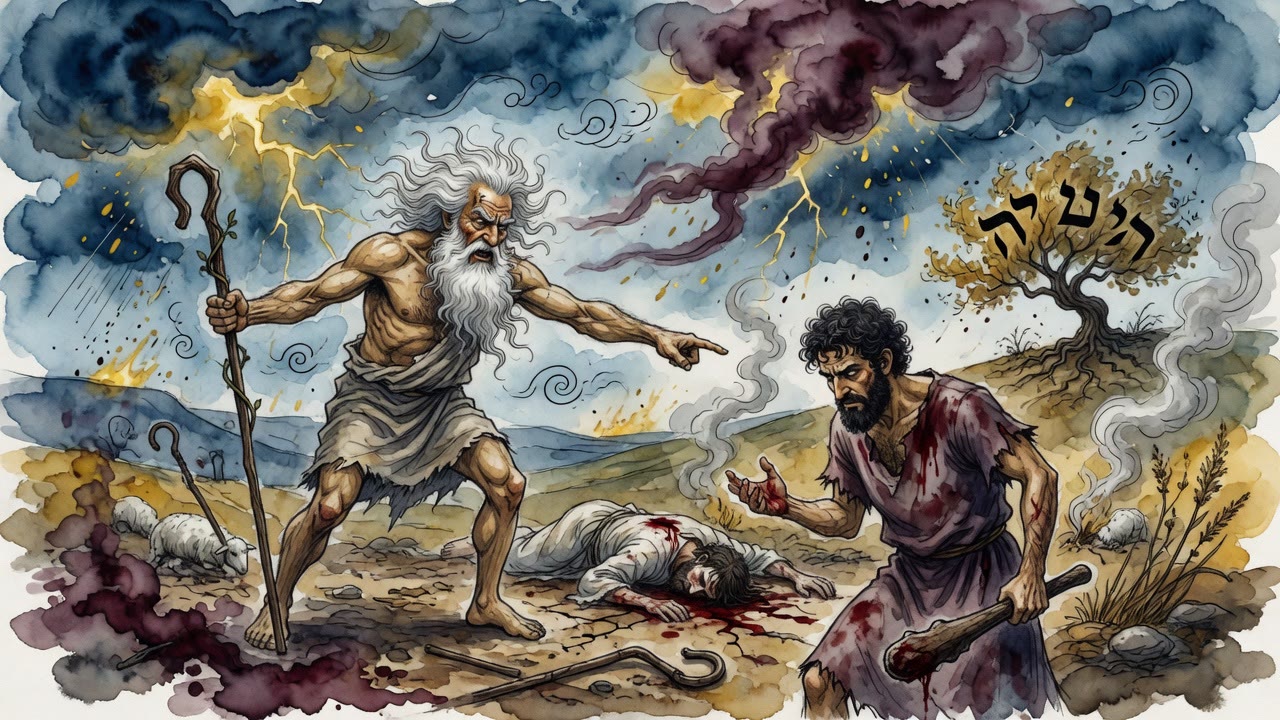
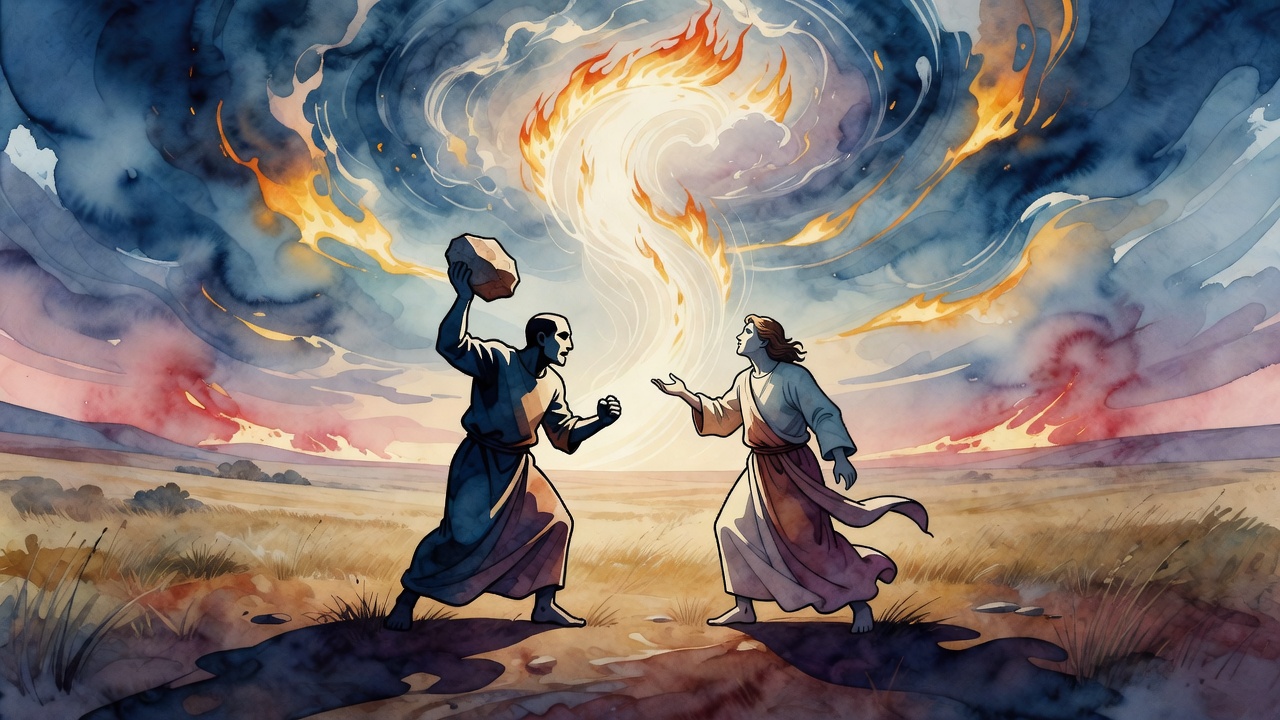
Cain killed his brother and God did not kill him. The curse came, the groaning and trembling, the exile from fertile ground, but then God placed a mark on Cain: a sign that anyone who killed him would suffer sevenfold vengeance. The world's first murderer walked away alive, marked, and protected. The first divine response to the first murder was to guarantee the killer's safety.
The protection has always seemed troubling. Why protect him? Philo of Alexandria found in it not a contradiction but a logic more severe than execution would have been.
The Mark Was a Sharper Punishment
Philo's first argument is about the varieties of death. There are deaths worse than physical death. The change of the nature of living is itself one kind of death: a life stripped of joy, rest, hope, the capacity to be still in one's own company, is a sensible death, experienced continuously and without end. Execution would have concluded Cain's suffering in one moment. The mark ensures the suffering continues for the full length of his life.
This is why the sevenfold vengeance on anyone who kills Cain is not the protection of the forgiven. It is the guarantee that the sentence will be served. It keeps the prisoner alive in the prison he carries with him. Cain cannot be freed from his inner torment by dying. He has to live inside it, groaning and trembling as the Torah's exact words require, for as long as breath remains in him.
Abel's Death as Proof the Soul Survives
Philo does not stop at punishment. He reaches for something larger. The whole structure of the Cain and Abel story, including the protection placed on the killer, implies something about the victim. If Abel's blood keeps crying from the ground, if the murder generates consequences that amplify across generations, if Cain's guilt persists and refuses to dissolve into forgetfulness, then Abel has not simply ceased. His presence remains as a moral force in the world after his body is in the ground.
For Philo, this is evidence for the soul's immortality. Not philosophical argument but narrative proof: the righteous man, killed before his time, does not vanish. Something of him persists, in a form that still makes demands on justice. The groaning of Cain and the crying of Abel's blood are the paired testimony: the torment of the guilty soul and the continuing presence of the innocent one, neither one dissipating, both permanent in their different ways.
Repentance and What Was Still Possible
There is a tradition that Cain did eventually repent. Not immediately, not when God spoke to him in the aftermath of the murder, but later, after the full weight of his sentence had settled on him. The groaning and trembling that became his constant companions eventually, in some versions of the story, worked the effect they were designed to produce: they broke through the denial and reached the recognition underneath it.
If this is true, it changes the meaning of the mark. The protection on Cain's life was not only a guarantee that his punishment would continue. It was a guarantee that repentance remained possible for as long as he lived. A man who can still turn has not yet been abandoned by the possibility of becoming someone other than who he has been. The mark held that door open, even for the person who had closed every other door on the day he went to find his brother.
The Inheritance That Passed Forward
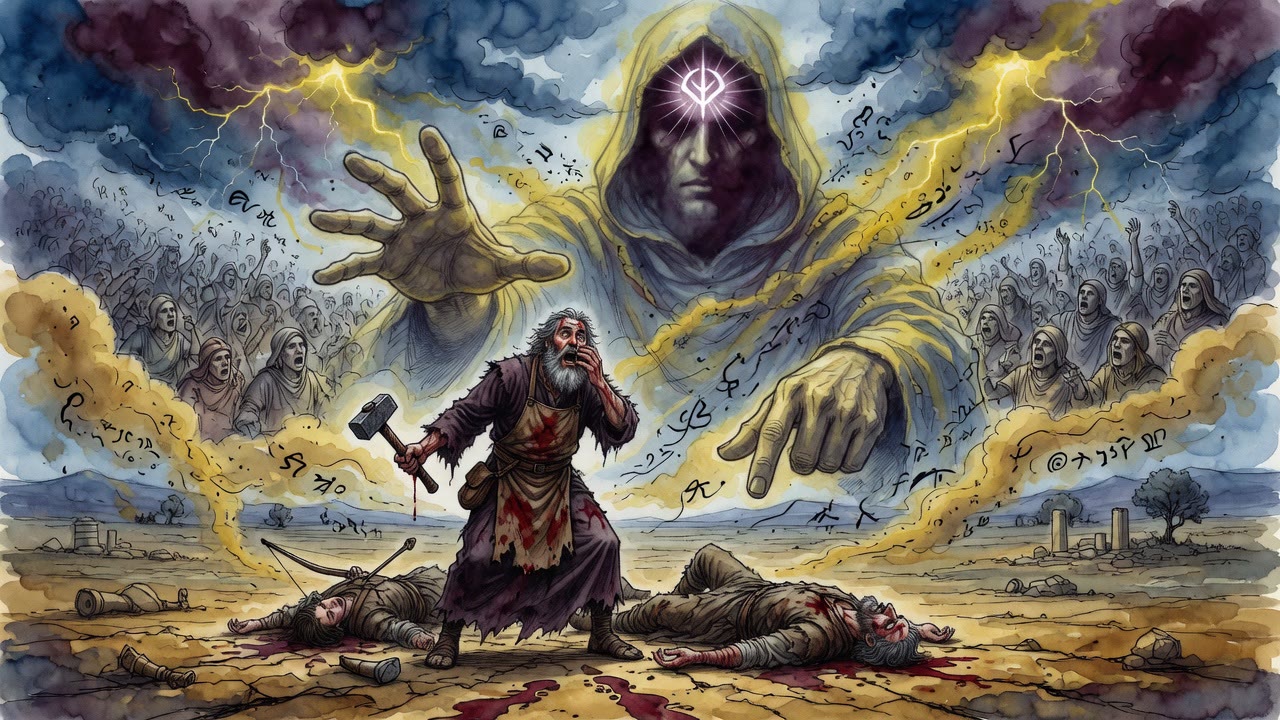
Cain built a city and named it and had descendants who filled it with music and metalwork and the arts of civilization. The line was productive by every external measure. And then Lamech stood before his two wives and confessed to murder and reached back to Cain for the same divine protection his ancestor had received, as though the sevenfold guarantee was heritable, as though the mark passed down through the bloodline along with the capacity for violence.
The tradition does not grant this. The protection God placed on Cain was specific to Cain. Lamech cannot claim it. But the fact that he tried, the fact that five generations later a man committing murder still reached instinctively toward the first murder for cover, suggests that what the mark protected was not only a life but a type, a character that runs through certain lines and expresses itself in the same way across time. Cain is not an individual who made a terrible choice. He is a condition of the human soul that recurs.
← All myths