4,108 texts · Page 12 of 86
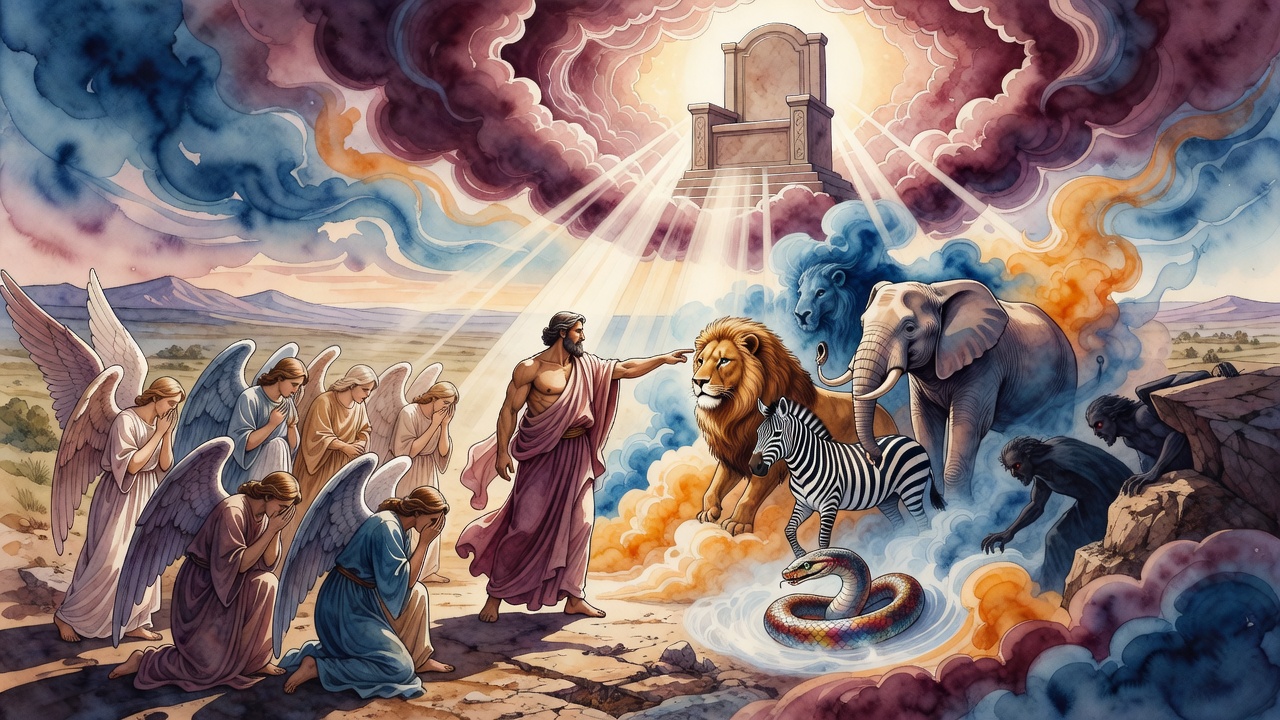
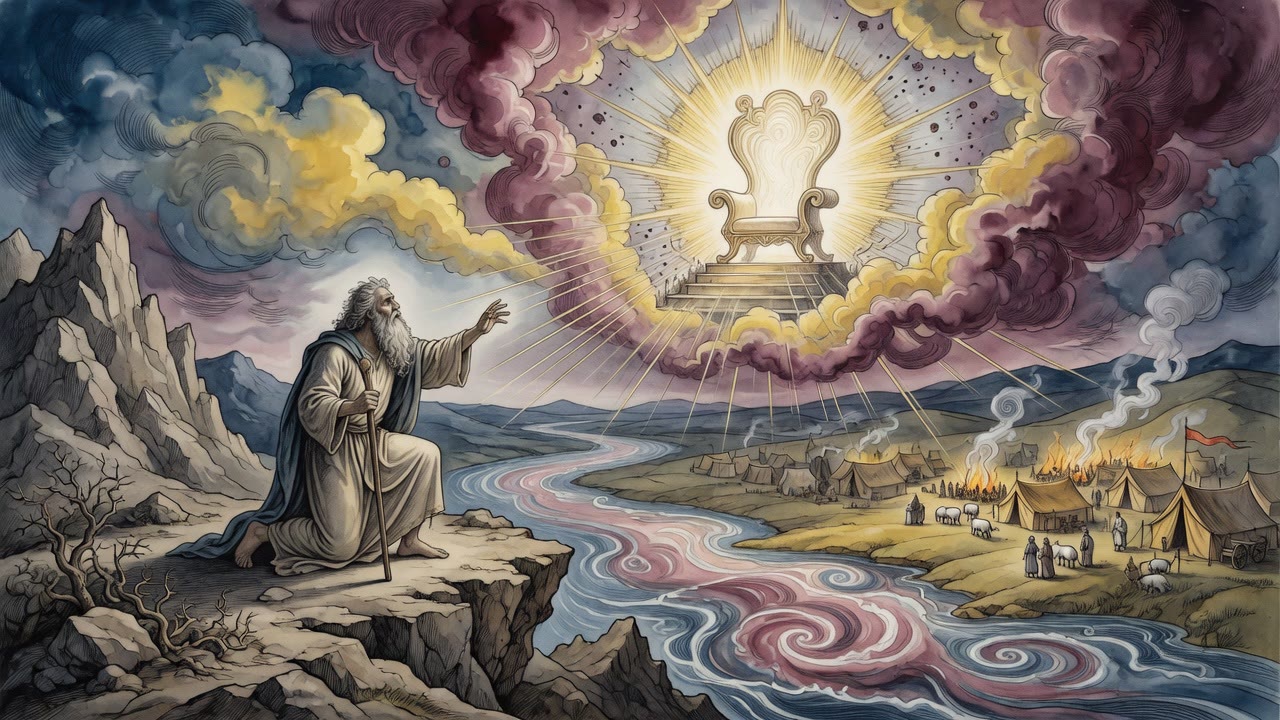
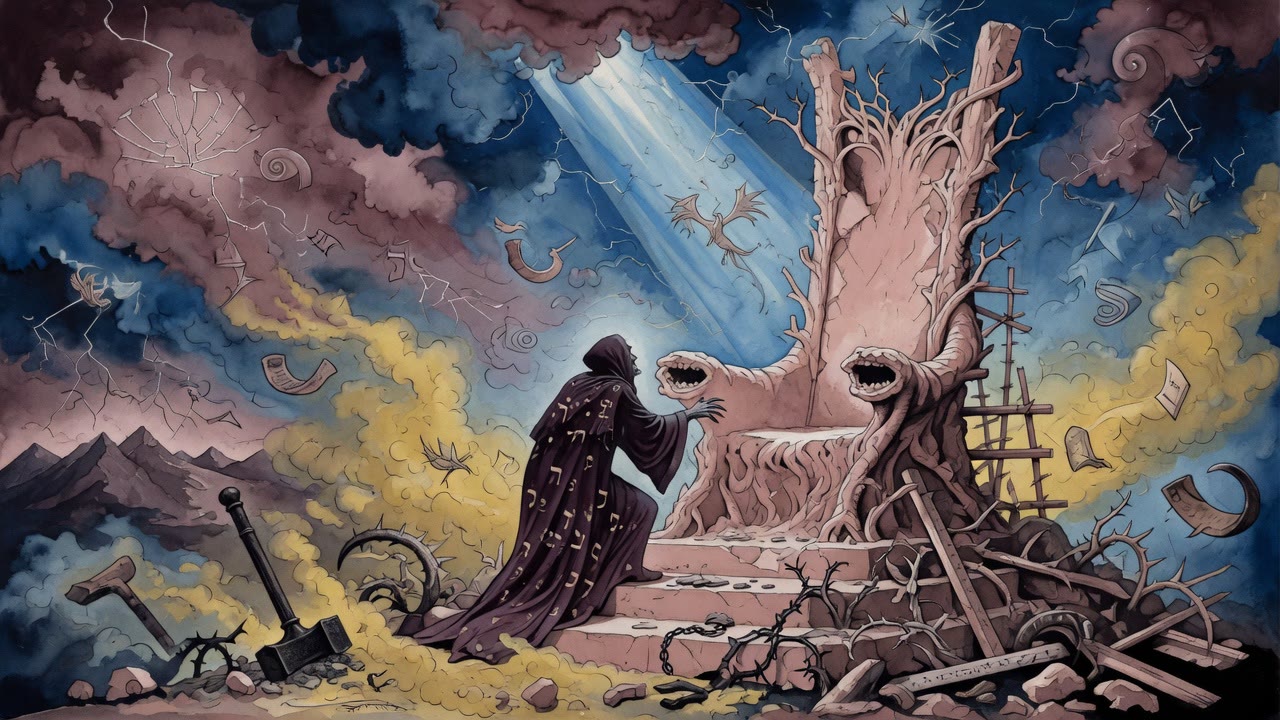
The story we're about to delve into, found in Ginzberg's Legends of the Jews, paints a vivid picture of a heavenly court in turmoil. God, seemingly distant, and the angels, filled ...
It’s a universal feeling, and it echoes through the ages, even finding its voice in the ancient stories of our people. Imagine the scene: The Jewish people are in exile, far from t...
That was the reality for the Jews being marched into exile in Babylon. Nebuchadnezzar, that infamous king, wasn’t taking any chances. He’d conquered Jerusalem, destroyed the Temple...
The book of Ezekiel gives us some potent imagery. And Jewish tradition, ever eager to fill in the gaps, expands on the story. to a fascinating, if somewhat gruesome, tale of resurr...
Sometimes, even the most extraordinary events can bring unexpected anxieties. Take the story of those brought back from the dead – a true gift. Yet, according to Legends of the Jew...
This is one of those stories. It features a king so puffed up with pride that he believes himself immortal, only to be brought crashing down to earth – quite literally! We're talki...
He wasn't born to be king of Persia. Nope. No royal blood coursing through his veins, no divine right backing him up. How did he become king then? Money. Pure, unadulterated wealth...
Take Esther, for example. It’s more than just a name; it's a clue, a whisper of her destiny. The Megillah, the Scroll of Esther, is a story of hidden identities and near-miss disas...
How would you hold onto your identity? That's the challenge Esther faced, according to Ginzberg’s retelling in Legends of the Jews. She was living in the palace, a world away from ...
Servants murmur, frustration simmering beneath the surface. They approach Mordecai, their voices laced with a mix of resentment and curiosity. "Wherein art thou better than we," th...
It wasn't just a snap decision, that's for sure. According to the Megillah, the Book of Esther, Haman was very particular in his wicked plans. He didn't just pick a date out of thi...
Sometimes, the observations are...well, let's just say they offer a unique perspective. Imagine someone, unfamiliar with Jewish practice, trying to describe what they see. It might...
We often imagine it’s a snap decision, a sudden impulse. But usually, there’s a whole lot of whispering, plotting, and persuading going on. Take Haman, for example. He didn’t just ...
We're going to look at the actual edict – or, more accurately, the alleged edict – issued by King Ahasuerus based on the advice of none other than Haman. : how would you convince a...
Jewish tradition certainly knows that feeling, and it gives us some incredible stories about how our ancestors faced it. Imagine this: the prophet Elijah, a figure practically syno...
That's the situation facing the Jews in the story of Esther. We often think of Purim as a joyous holiday, full of costumes and noisemakers. But beneath the surface lies a story of ...
We all know the happy ending, the costumes, the graggers (noisemakers), and the hamantaschen (three-cornered pastries). But let’s pull back the curtain for a moment and look at the...
Can you imagine the humiliation? The rage boiling in your gut? That's what Haman must have felt as he led Mordecai, the man he despised above all others, through the streets of Shu...
It paints a vivid picture of a king trying to undo the damage caused by his own misjudgment. The edict, as recounted, begins with Ahasuerus addressing "all the inhabitants of water...
Josephus begins by expressing his astonishment at those who insist on relying solely on Greek sources when seeking information about the most ancient events. Why, he asks, should w...
Why can't we get a straight story? Josephus, in his work Against Apion, grapples with this very issue, specifically regarding the discrepancies between Greek and Jewish accounts of...
It was a matter of utmost importance, a sacred duty meticulously observed. Josephus, in his work Against Apion, gives us a fascinating glimpse into this world. He explains that our...
Take the story of the Jewish people and their time in Egypt, for example. We all know the Exodus story from the Torah, but what did the Egyptians themselves say about it? That's wh...
Take the ancient Egyptians and the Israelites, for example. Their story is filled with power struggles, cultural clashes, and some serious finger-pointing. Josephus, in his work Ag...
Today, we're diving into one such path, guided by the words of Josephus, a first-century Romano-Jewish historian. He's responding to some pretty harsh claims made by an Egyptian pr...
Ever hear a story so outlandish, so dripping with bias, that you just have to raise an eyebrow and ask, "Really?" That's exactly the kind of tale we're diving into today, thanks to...
Our guide for this adventure is Flavius Josephus, the first-century Romano-Jewish scholar and historian, and the story comes from his work, Against Apion. This book is essentially ...
He claimed they swore "by God, the Maker of the heaven, and earth, and sea, to bear no good will to any foreigner, and particularly to none of the Greeks." Now, Josephus, the Jewis...
The historian Flavius Josephus, writing in his treatise Against Apion, thought he had the answer, at least when it came to the Jewish people. And it all came down to a specific app...
Isn't it amazing to consider the different ways people organize their societies, and how those structures reflect their deepest beliefs? : what could be a more sacred form of gover...
He argues that the strength of a community isn't found in fleeting celebrations or momentary pleasures, but in the consistent, dedicated education of its children. for a second. Jo...
The serpent could talk. That detail, buried in Josephus's retelling of creation in the Antiquities of the Jews (c. 93 CE), changes everything about how the story lands. Before the ...
Cain didn't just kill his brother. According to Josephus, he then built a city, invented weights and measures, drew the first property lines—and turned the entire human world towar...
For centuries, mystics have explored this idea, and one of the most profound expressions of it is the concept of the ten sefirot (the divine emanations). What exactly are they? Ima...
Kabbalistic tradition teaches us that the twenty-two letters of the Hebrew alphabet aren't just symbols; they are the very building blocks of existence. They are, as Rabbi Isaac Lu...
That, in essence, is the concept of Ein Sof (the Infinite, God beyond all attributes). Think of it: before anything existed, there was only the Ein Sof – the Infinite Being. This i...
In Jewish mystical tradition, the idea that humanity reflects God is a powerful and recurring theme. : (Genesis 1:27) states plainly that God created humanity in His image. But wha...
Jewish mystical tradition isn't afraid to ask big questions. And sometimes, the answers come in the form of dazzling imagery. The Zohar, that foundational text of Jewish mysticism,...
Think of it like this: the "Cause of all Causes" is above everything. I mean everything. There's no higher power, no celestial being pulling the strings of it. It's the ultimate or...
It suggests that the entire universe, everything we know, exists only because God is actively, constantly, paying attention. for a second. A sixteenth-century Kabbalistic text, Or ...
Tzimtzum, a Hebrew word that means "contraction" or "self-limitation," is a profound idea in Jewish mysticism, particularly within the Kabbalistic tradition. It suggests that, befo...
Jewish mysticism gives us a fascinating, mind-bending concept: Adam Kadmon. Adam Kadmon, literally "primordial man," isn't just some ancient dude. According to kabbalistic traditio...
Jewish tradition teaches that all of creation springs forth from the very Name of God, specifically the holiest Name: YHVH. The Zohar tells us that in the very beginning, God revea...
They were so well hidden that they couldn't be revealed to just anyone. So, what did God do? This is where it gets really interesting. God decided to bring all those treasures toge...
One powerful answer lies in the concept of the Shekhinah (שְׁכִינָה). The Shekhinah, often described as the divine feminine presence, the immanent glory of God, has a fascinating a...
It’s a question that might sound irreverent, but Jewish mystical tradition actually gives us a fascinating answer, one deeply intertwined with our own actions and the fate of the w...
What happens when even the Divine weeps? What happens when home is lost, not just for us, but for God, too? We often think of God as unchanging, eternal, beyond our human messiness...
It all starts, as many intense stories do, with a separation. Specifically, the separation of God and the Shekhinah (שכינה), God's Divine Presence, often seen as the feminine aspec...