82 texts · Page 1 of 2
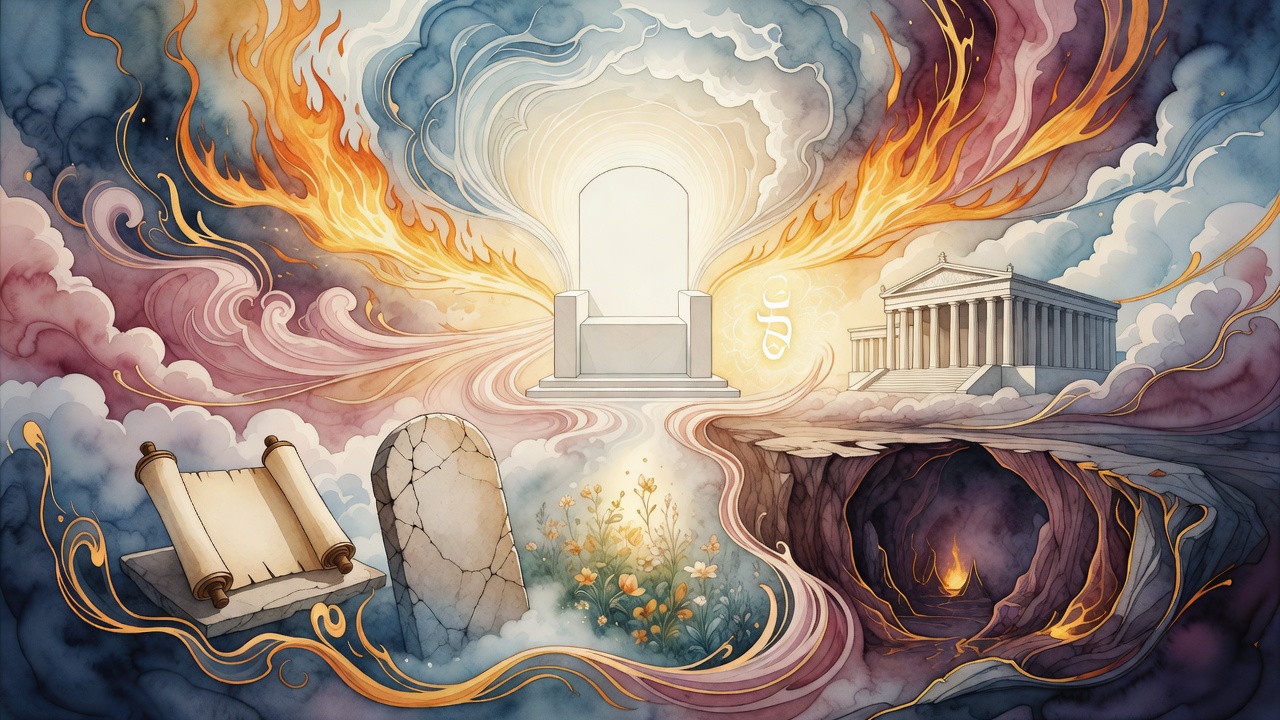
That feeling, that intuition… Kabbalah, the Jewish mystical tradition, wrestles with it directly. And one of the biggest, most mind-bending questions it tackles is this: If our sou...
The great Kabbalist, Baal HaSulam, in his introduction to the Zohar, dives deep into this very idea, giving us a glimpse into what might have been. He explains that before God even...
Specifically, he addresses how finite beings like us can emerge from an infinite source. His answer? We actually emerge from the Eternal in a way that is fitting for that eternity!...
He paints a picture of souls descending through history, each era presenting its own unique challenges and opportunities for spiritual development. Think of the six thousand years ...
According to Baal HaSulam, the great 20th-century Kabbalist and commentator on the Zohar, it's much more nuanced than that. In his "Preface to the Zohar," Baal HaSulam urges us to ...
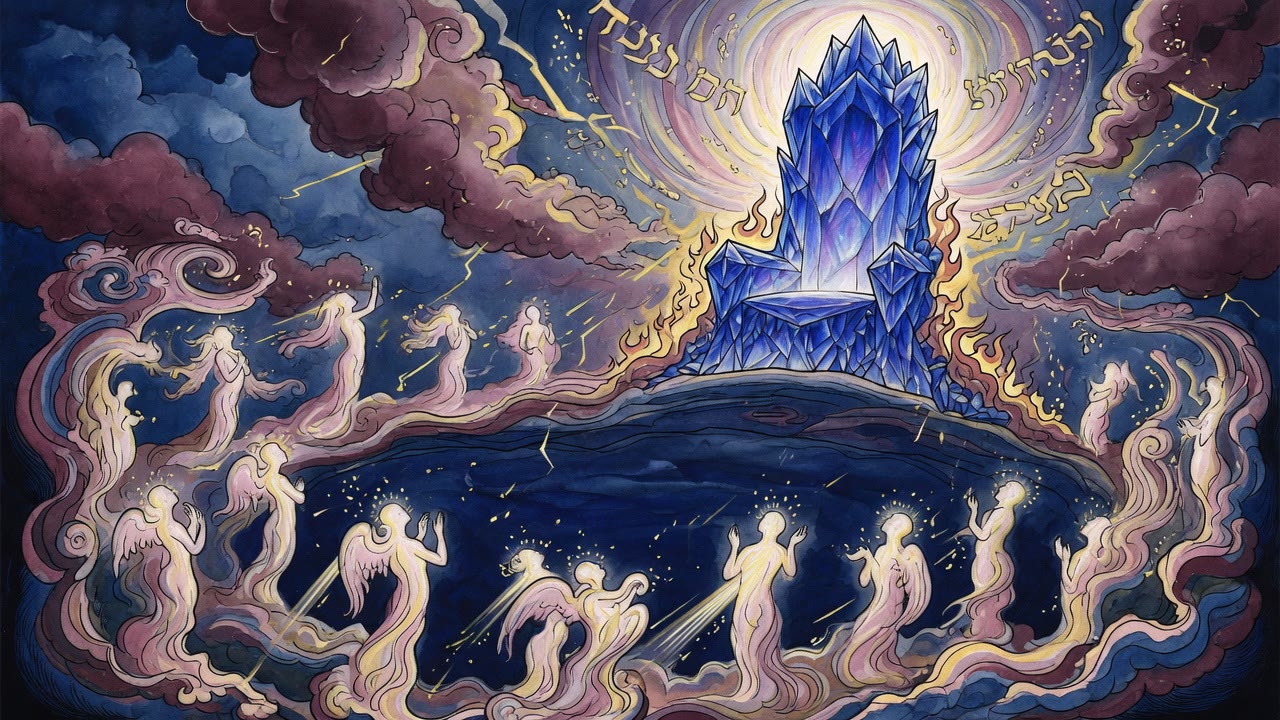
We jump into discussions about angels, souls, and the very nature of reality, but often without exploring the preparations that made it all possible. Think of it this way: before a...
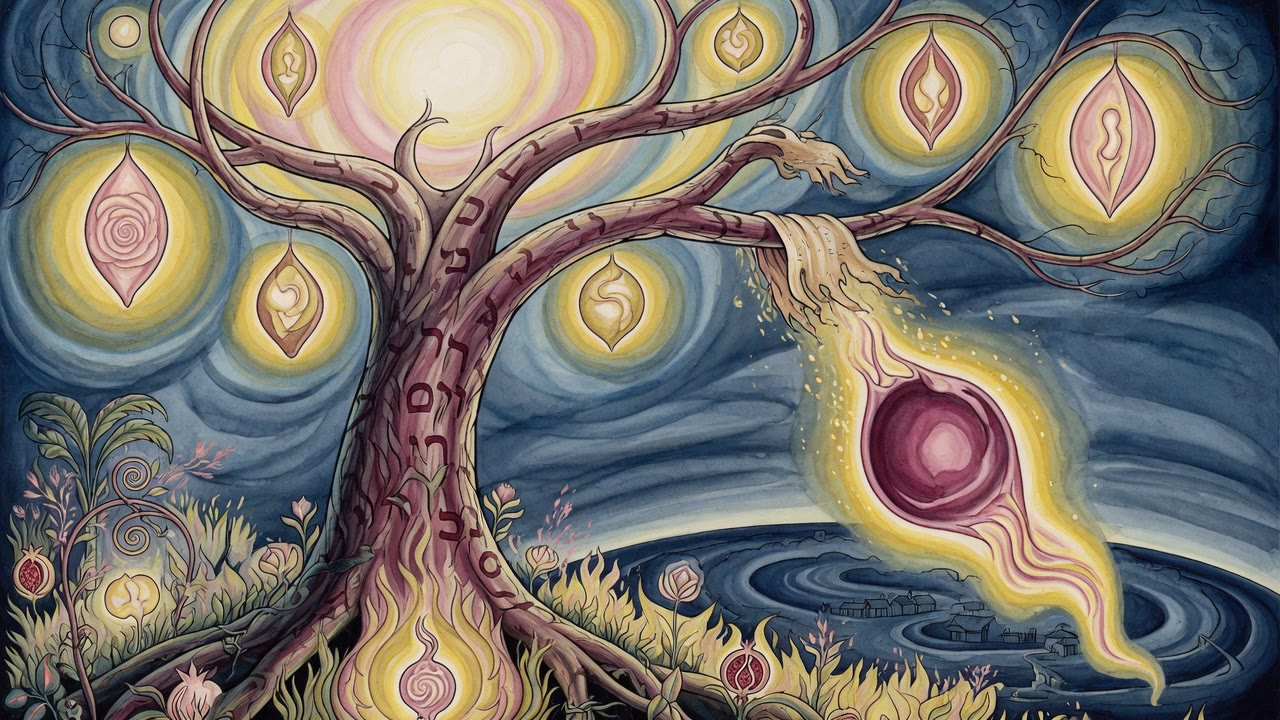
The Kalach Pitchei Chokhmah, a profound text of Kabbalah, delves into just that. It explores the idea that within each Sefirah, there exists an inner essence – the pnimiyut (פנימיו...
The ancient wisdom tradition of Kabbalah delves into these mysteries, and it uses a fascinating concept to explain it all: zivug (זיווג). Zivug. It means "coupling," but not in the...
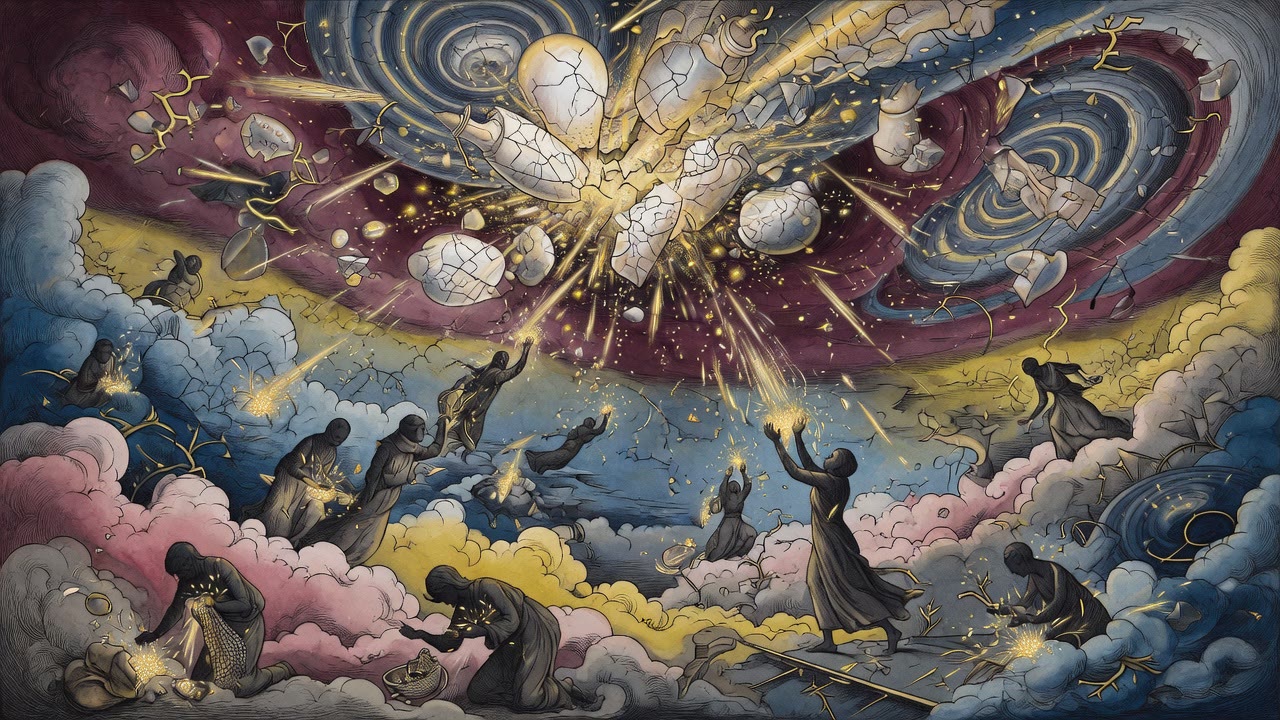
It suggests that our very souls are active participants in a cosmic repair project. The text we're diving into comes from Kalach Pitchei Chokhmah, a profound work of Kabbalah whose...
It’s a question that’s occupied mystics and scholars for centuries. And one answer, a deeply beautiful one, comes from the Kabbalah, specifically from the text Kalach Pitchei Chokh...
Today, we're going to peek into a fascinating, if somewhat cryptic, passage from Tikkun (spiritual repair)ei Zohar 46, which wrestles with the very nature of souls and the laws tha...
An emperor and a king—both childless—met by chance at an inn. Neither recognized the other at first, but each noticed royal mannerisms in his companion. They confessed their identi...
A king without children decreed that the Jews must pray for him to have an heir, or face consequences. The Jews searched until they found a hidden tzaddik (צדיק)—a righteous man so...
"I will tell you about being happy," Rabbi Nachman said. And then he told the strangest, most luminous story he ever told. A king had an only son. He decided to transfer his kingdo...
Rabbi Schneur Zalman of Liadi, the founder of Chabad Chassidism, opens his masterwork the Tanya with a contradiction. The Talmud in Tractate Niddah says that before birth, every so...
The second chapter of the Tanya makes a claim so audacious it takes your breath away: the soul of every Jew is "truly a part of God above." Rabbi Schneur Zalman does not mean this ...
The soul has ten faculties, and they mirror the structure of God. Chapter three of the Tanya lays out the architecture. Every Jewish soul—whether at the level of nefesh (נפש), ruac...
The divine soul has ten holy faculties and three garments—thought, speech, and action—through which it connects to God via the 613 commandments. But there is another soul inside yo...
The Tanya's fifth chapter makes a claim about Torah study that is unlike anything else in Jewish literature. When you study a halacha (Jewish religious law)h—a legal ruling—your mi...
"God has made one thing opposite the other" (Ecclesiastes 7:14). The Tanya's sixth chapter maps the dark side of the soul's architecture. Just as the divine soul has ten holy sefir...
Can you sanctify a steak? The Tanya's seventh chapter says yes—but only under certain conditions. Rabbi Schneur Zalman distinguishes between things that can be elevated to holiness...
Why can't forbidden pleasures be elevated to holiness? The Tanya's eighth chapter confronts this question head-on. The answer lies in the three completely impure kelipot (קליפות)—t...
The ninth chapter of the Tanya maps the battlefield inside every human being. The animal soul—the nefesh (the vital soul) habehamit (נפש הבהמית)—lives in the left ventricle of the ...
Chapter ten of the Tanya defines the difference between two kinds of righteous people, and the gap between them is enormous. The "completely righteous" person—the tzaddik (a righte...
The Tanya's eleventh chapter turns the mirror around and examines wickedness with the same precision it applied to righteousness. The "wicked person who prospers"—the rasha v'tov l...
The benoni (בינוני)—the intermediate person—is the central figure of the Tanya, and chapter twelve defines him precisely. The benoni has never sinned. Not once. Not in action, not ...
Chapter thirteen of the Tanya explains why the evil inclination feels so much more powerful than the good one—and why that feeling is actually evidence that you are winning. The Ta...
"The rank of benoni is attainable by every person," the Tanya declares in chapter fourteen, "and each person should strive after it." This is Rabbi Schneur Zalman's most democratic...
Chapter fifteen of the Tanya draws a distinction so subtle that most people miss it entirely: the difference between a person who "serves God" and a person who "does not serve Him"...
The sixteenth chapter of the Tanya reveals the benoni's secret weapon—and admits that for most people, it will be hidden. The Tanya has established that the benoni must govern the ...
"For this thing is very near to you, in your mouth and in your heart, so you can fulfill it" (Deuteronomy 30:14). The Tanya's seventeenth chapter takes this verse—which seems to pr...
Chapter eighteen of the Tanya reveals the deepest source of every Jew's connection to God: an inherited love that predates individual experience. The Tanya has just argued that eve...
"The candle of God is the soul of man" (Proverbs 20:27). Chapter nineteen of the Tanya takes this verse and builds from it one of its most luminous teachings: the soul is a flame t...
The Tanya's twentieth chapter asks a question with a startling answer: why will even the most secular, disconnected Jew choose death rather than worship an idol? This is not theore...
Chapter twenty-one of the Tanya makes a metaphysical claim about Torah study that goes beyond anything said before: when you study Torah, God wraps Himself around your mind. The lo...
Chapter twenty-two of the Tanya confronts a paradox: if God's speech never separates from God, and if that speech is what sustains all of creation, then how can evil exist at all? ...
"The Torah and the Holy One, blessed is He, are altogether one," says the Zohar. Chapter twenty-three of the Tanya explains what this means in practice—and the explanation transfor...
Chapter twenty-five of the Tanya returns to the verse that has been its guiding thread—"For this thing is very near to you, in your mouth and in your heart, so you can fulfill it" ...
The Tanya's twenty-sixth chapter opens with one of its most practical teachings: you cannot fight the evil inclination if you are depressed. Spiritual warfare requires joy. Rabbi S...
What should you do when unwanted thoughts invade your mind—not during prayer, but during ordinary life? The Tanya's twenty-seventh chapter offers counterintuitive advice: be happy ...
Intrusive thoughts during prayer are not a sign that your prayer is worthless. They are a sign that your prayer is working. Chapter twenty-eight of the Tanya addresses one of the m...
Sometimes the heart turns to stone. You try to pray and feel nothing. You try to study and the words slide off your mind like water off rock. You know intellectually that God is gr...
Chapter thirty of the Tanya instructs: "Be humble of spirit before every person" (Avot 4:10)—and it means every person, including the worst person you can imagine. How is this poss...
Chapter thirty-one of the Tanya addresses a danger built into its own system. The previous chapters instructed the reader to crush the ego, to contemplate one's spiritual wretchedn...
"You shall love your fellow as yourself" (Leviticus 19:18). Hillel the Elder called this the entire Torah, with everything else being commentary. Chapter thirty-two of the Tanya ex...
Chapter thirty-three of the Tanya prescribes an exercise for generating joy—and it is available to every person, regardless of spiritual level. Concentrate your mind and consider: ...
The Tanya's thirty-fourth chapter brings everything together with a single image: the Patriarchs were God's chariot, and you can be too. Abraham, Isaac, and Jacob never, for a sing...
Rabbi Schneur Zalman of Liadi, the founder of Chabad Chassidism, poses a devastating question in his masterwork the Tanya: if most people will never fully defeat their evil inclina...