7 min read

Abraham Was Tested Ten Times and the Shofar Remembers All of Them

The ten trials of Abraham are the most celebrated ordeal narrative in rabbinic tradition, but Sifrei Bamidbar finds Abraham in a surprising place: hidden inside the laws of trumpet blasts in the wilderness camp. The connection between the marching signals and the patriarch's trials reveals how the rabbis wove biography, law, and liturgy into a single continuous argument.

Table of Contents
  1. The Question the Text Does Not Answer
  2. What the Ten Trials Were
  3. The Shofar as Abraham's Echo
  4. Why the Number Ten Is Not Negotiable
  5. What Was Proved and Who It Was Proved To

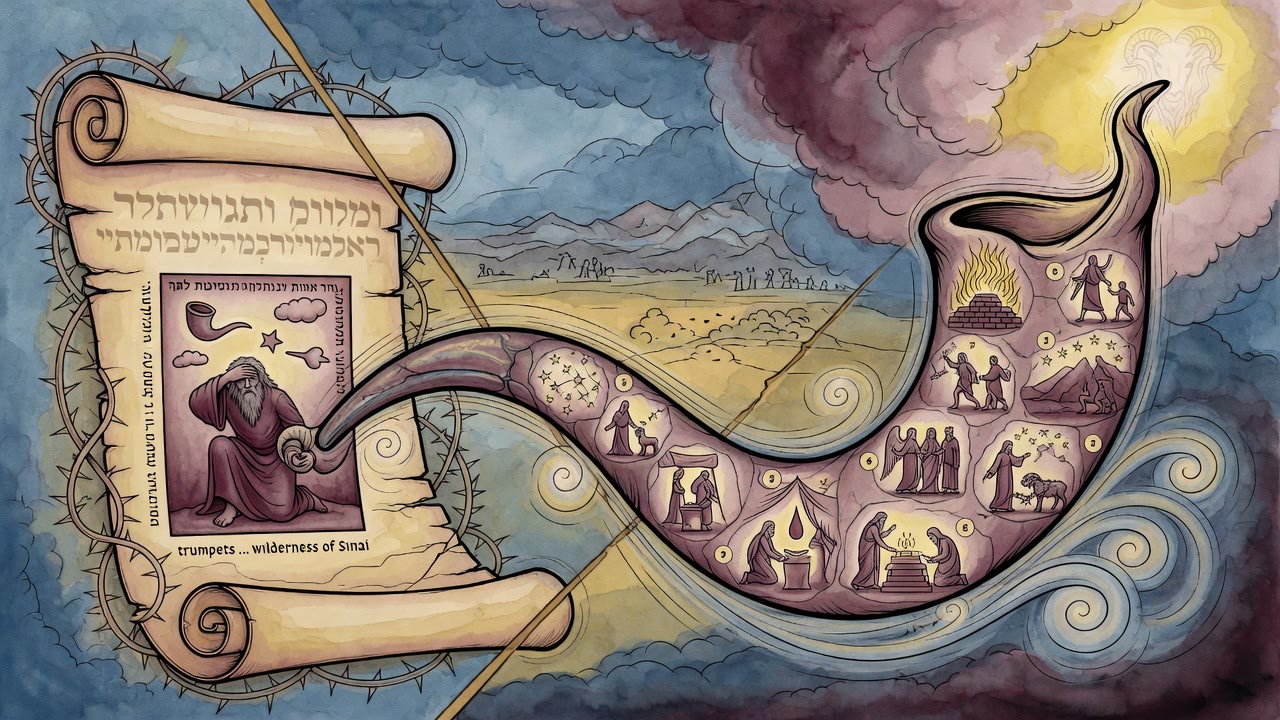
On the surface, the passage in Numbers 10 about trumpet blasts has nothing to do with Abraham. The Torah is giving the Israelites instructions for breaking camp in the wilderness: two silver trumpets are to be made, the priests are to blow them, and different sequences of blasts signal different actions. This tribe moves. That tribe moves. The whole camp moves. It is military logistics put into liturgical form.

But Sifrei Bamidbar, the tannaitic legal midrash on Numbers compiled in the land of Israel in the second and third centuries CE, found Abraham inside this passage. The connection required looking at the language carefully. The word for the blast pattern called teruah appears in Numbers 10, and it is the same word that appears in the shofar service of Rosh Hashanah, and the shofar service of Rosh Hashanah is explicitly connected in the Talmud to the ten trials of Abraham, particularly to the Akeidah, the binding of Isaac.

The Question the Text Does Not Answer

Numbers 10:5-6 explicitly mentions the eastern and southern camps receiving the signal to march, but it does not mention the northern and western camps. Sifrei Bamidbar section 73 asks the obvious question: did the other camps march? Of course they did. But why did the Torah specify only two directions?

The answer the text develops involves examining which tribes camped in each direction and what they represented in the symbolic geography of the Israelite camp. The eastern camp, led by Judah, represented royalty and the Davidic covenant. The southern camp, led by Reuben, represented birth order and its complications. The northern and western camps had their own associations. The selective mention of east and south in the text was not an oversight; it was a signal about which narrative threads the passage was primarily connected to.

And one of those narrative threads led back to Abraham, whose trials the tradition counted and commemorated in the shofar blasts of every subsequent Rosh Hashanah. The 3,205 texts of the midrash-aggadah collection are filled with elaborations of Abraham's trials and their lasting significance for every generation that came after him.

What the Ten Trials Were

The enumeration of Abraham's ten trials varies slightly across different rabbinic sources, which is itself a sign that the tradition understood the number as significant before it settled on a definitive list. Pirkei Avot, the Ethics of the Fathers, compiled in its current form in the third century CE in the land of Israel, states flatly that Abraham was tested with ten trials and passed all of them. This is the founding statement. The list comes later.

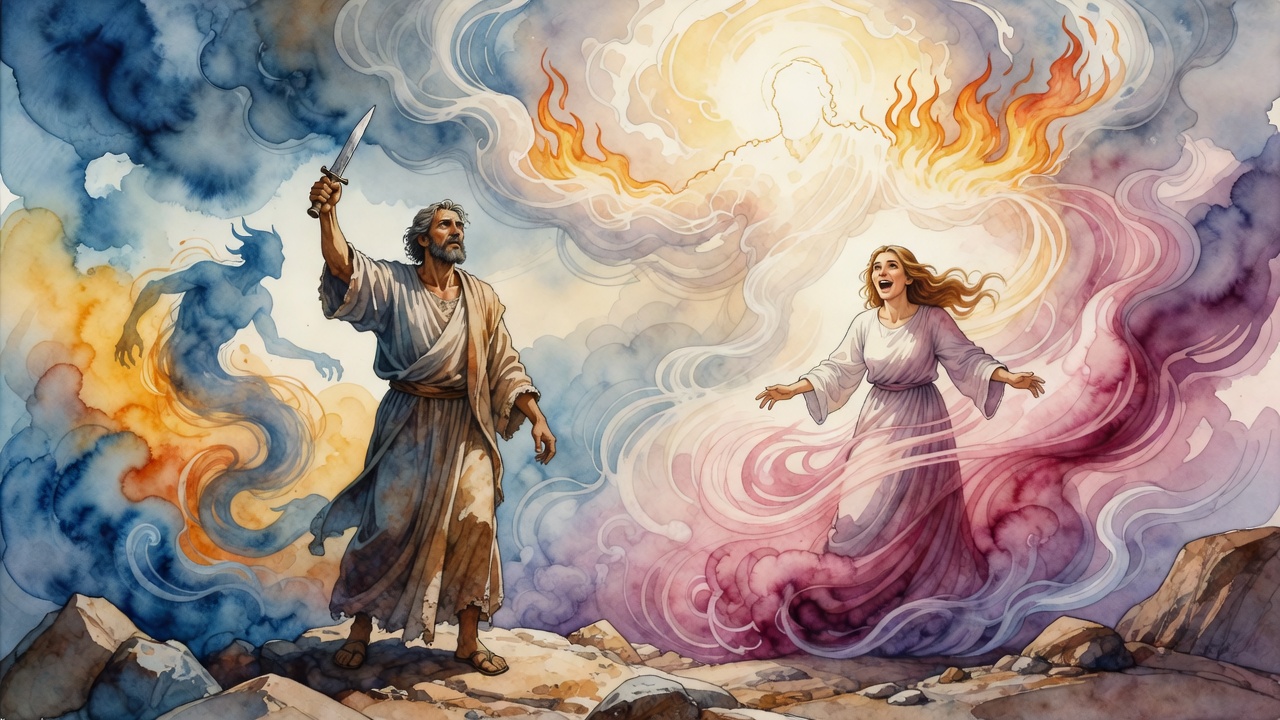
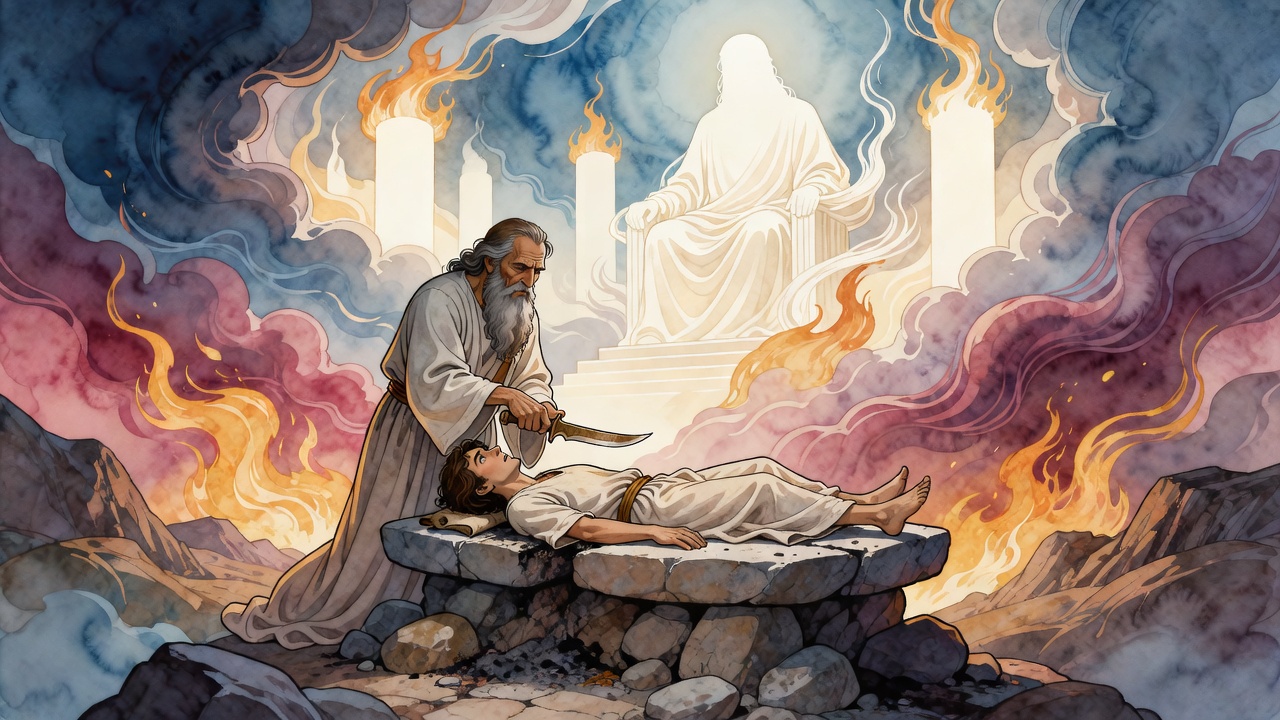
The most common enumeration runs: the command to leave Ur of the Chaldees; the famine in Canaan; the seizure of Sarah by Pharaoh; the war of the four kings against the five; the covenant between the pieces and its prophecy of slavery; the circumcision at age ninety-nine; the seizure of Sarah by Abimelech; the expulsion of Hagar and Ishmael; the binding of Isaac on the altar at Moriah.

That is nine. The tenth varies. Some sources count the purchase of the Cave of Machpelah as the final trial, because Abraham had to buy a burial place in the land God had promised him he would own. He was still a stranger in the land of his inheritance. He had to pay for a grave. That is a trial of a particular kind: the gap between what God promised and what Abraham actually possessed in his lifetime.

The Legends of the Jews, Louis Ginzberg's encyclopedic synthesis of rabbinic tradition compiled in early twentieth-century New York, presents all ten trials with the narrative elaborations that accumulated around each one over centuries of retelling, turning the bare list into a coherent portrait of a man who was tested at every stage of his life and found faithful at every stage.

The Shofar as Abraham's Echo

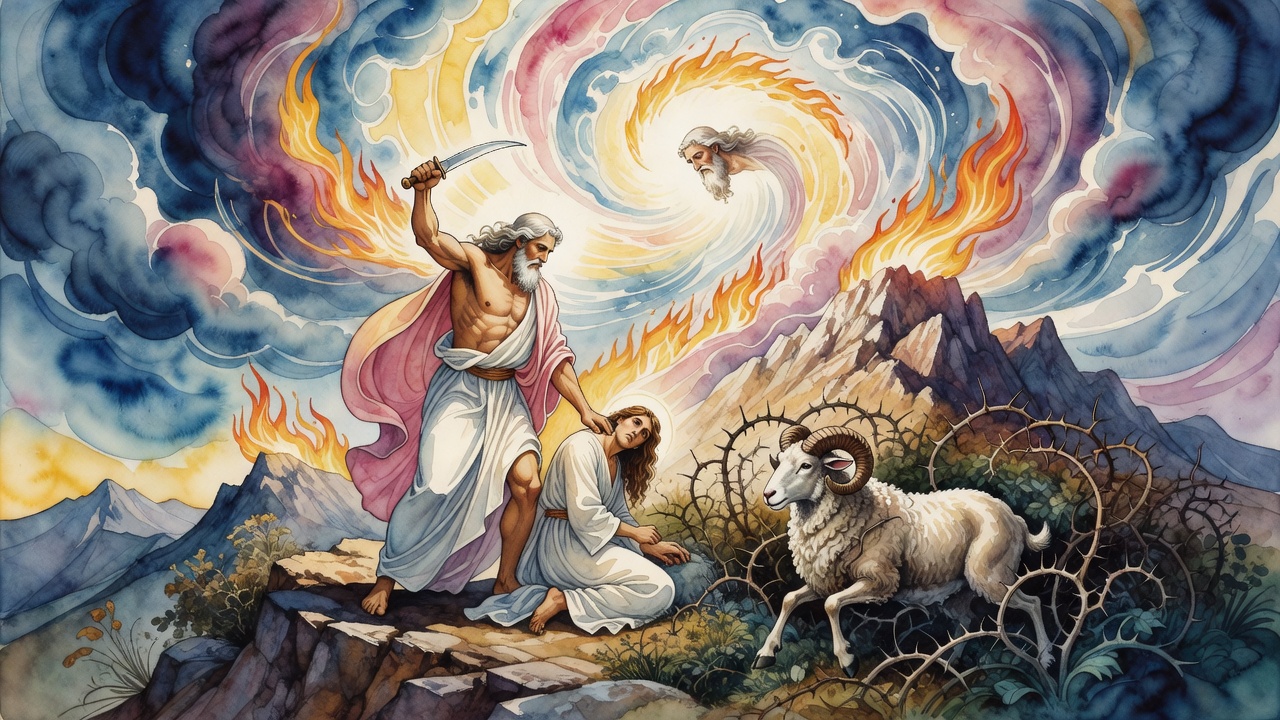
The connection between Abraham's trials and the blasts of the shofar is explicit in the Talmud tractate Rosh Hashanah. The horn used for the Rosh Hashanah service must ideally be the horn of a ram, specifically because of the ram that appeared at the Akeidah and was sacrificed in Isaac's place. When the shofar sounds on Rosh Hashanah, the tradition says, it is the ram of Moriah speaking, and through it, all ten of Abraham's trials are present, because the Akeidah was the culmination of a life of trial and the moment the tradition treats as the definitive demonstration of Abraham's faithfulness.

Sifrei Bamidbar's placement of a discussion of Abraham within the laws of wilderness trumpets accomplishes something subtle. It ties the very structure of Israelite communal life, the signals that organized the camp's movement, to the memory of the patriarch who first demonstrated what it meant to follow God's command into the unknown. Every time the trumpets sounded and a tribe rose to march, the action was resonant with Abraham's original movement, his departure from Ur, his journey toward a land he had not yet seen, his willingness to go where the voice directed without knowing where he would arrive.

Why the Number Ten Is Not Negotiable

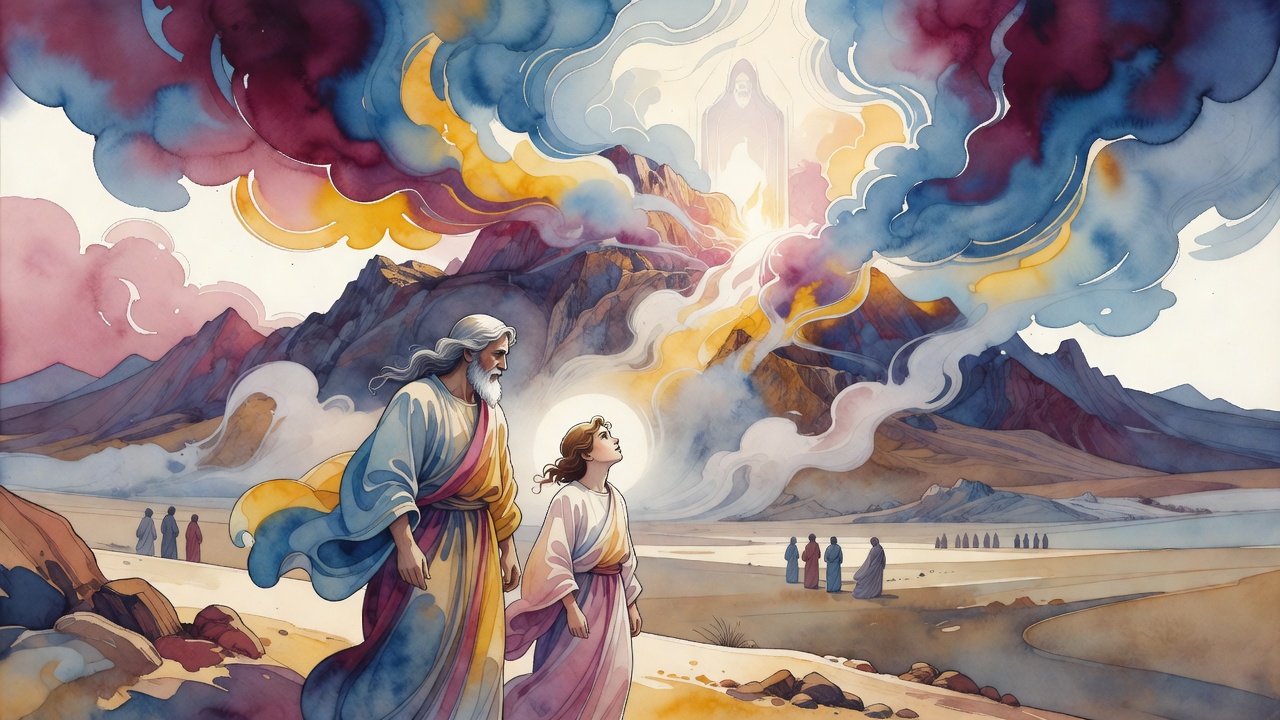
The tradition was insistent on the number ten. The trials were exactly ten, not nine, not eleven. This insistence served a theological function that Sifrei Bamidbar and later commentators made explicit: the ten trials of Abraham corresponded to the ten utterances through which God created the world, and to the ten commandments given at Sinai. The structure of reality, the structure of the covenant, and the structure of Abraham's life were aligned in the same number.

What this means is that Abraham's trials were not incidental ordeals, inconveniences that a faithful person would endure on the way to the real content of their life. They were the content. The trials were the shape of the covenant enacted in a single life, the same ten-fold structure that organized creation and law appearing now in biography. Abraham did not merely pass ten tests. He embodied the ten-structured order of the covenant in his own experience.

The kabbalistic tradition, working in thirteenth-century Castile and sixteenth-century Safed, mapped Abraham's ten trials onto the ten sefirot, the divine attributes through which God's presence flows into the world. Each trial tested a different aspect of Abraham's soul, corresponding to a different divine attribute. The Akeidah, the tenth trial, tested the attribute of hesed, loving-kindness, in its most extreme form: the willingness to give back the very gift through which God had promised to fulfill the covenant. Abraham's faithfulness at the Akeidah was the completion of a decade-long demonstration that every dimension of the divine presence he carried within him had been tested and confirmed.

What Was Proved and Who It Was Proved To

The rabbinic tradition wrestled with an uncomfortable question about the purpose of the ten trials. If God is omniscient, God already knew Abraham would pass every test before the tests were administered. Why run them? What was being proved, and for whom?

The answers vary but converge on a point. The trials were not for God's information. They were for Abraham's formation, for the formation of the covenant community that would descend from him, and for the angelic host and the watching world, which did not have access to what God knew and needed to see demonstrated what faithfulness under pressure actually looks like.

The shofar blast that resonates from the ram's horn on Rosh Hashanah is, in this reading, not just a memorial. It is a demonstration addressed to every generation: this is what the covenant looks like when a human being lives it fully. This is what happened when God tested and found faithful. The sound itself carries the content of the proof, and every year it is offered again as evidence that the covenant has been lived at its fullest, at least once, by at least one person, and that therefore it can be lived again.

← All myths