Abraham's Glowing Stone and the Daughter Named Bakol
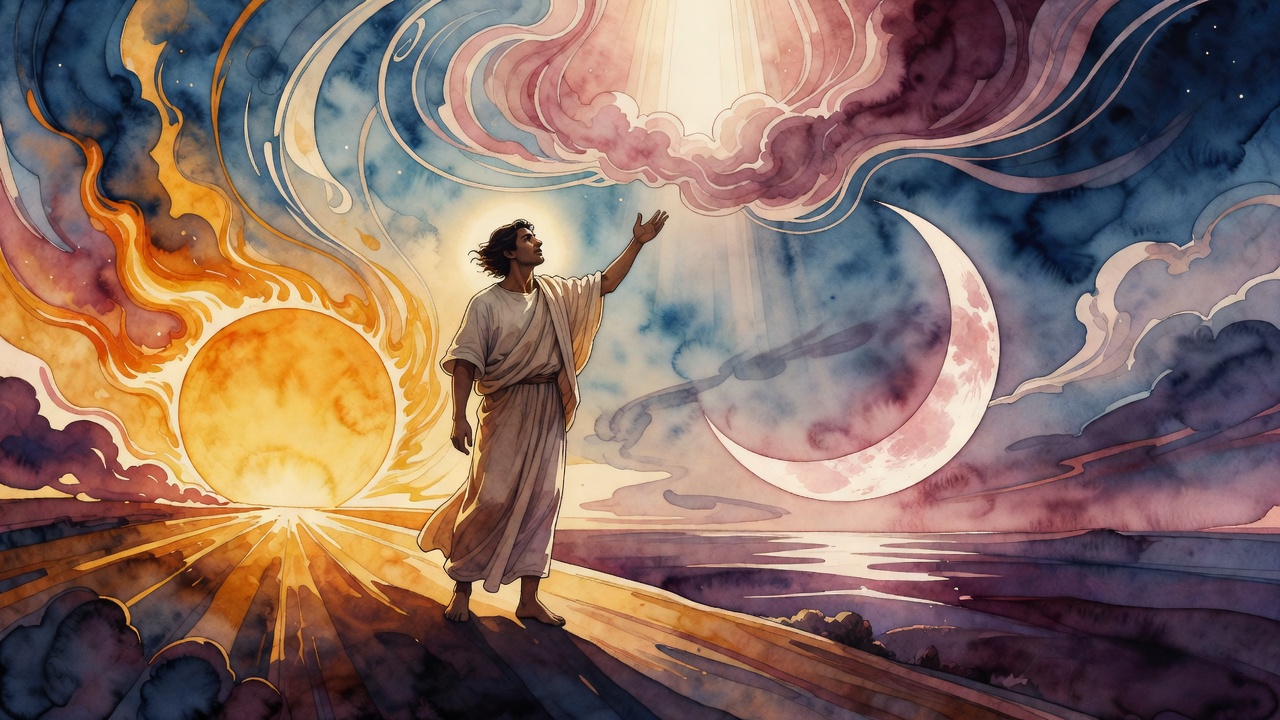
Sick men looked at the stone on his throat and stood up well. When Abraham died, God hung that stone on the wheel of the sun.
Table of Contents
Sick people came to look at his throat. They did not need a long prayer. They needed to see the stone.
 Click for full size
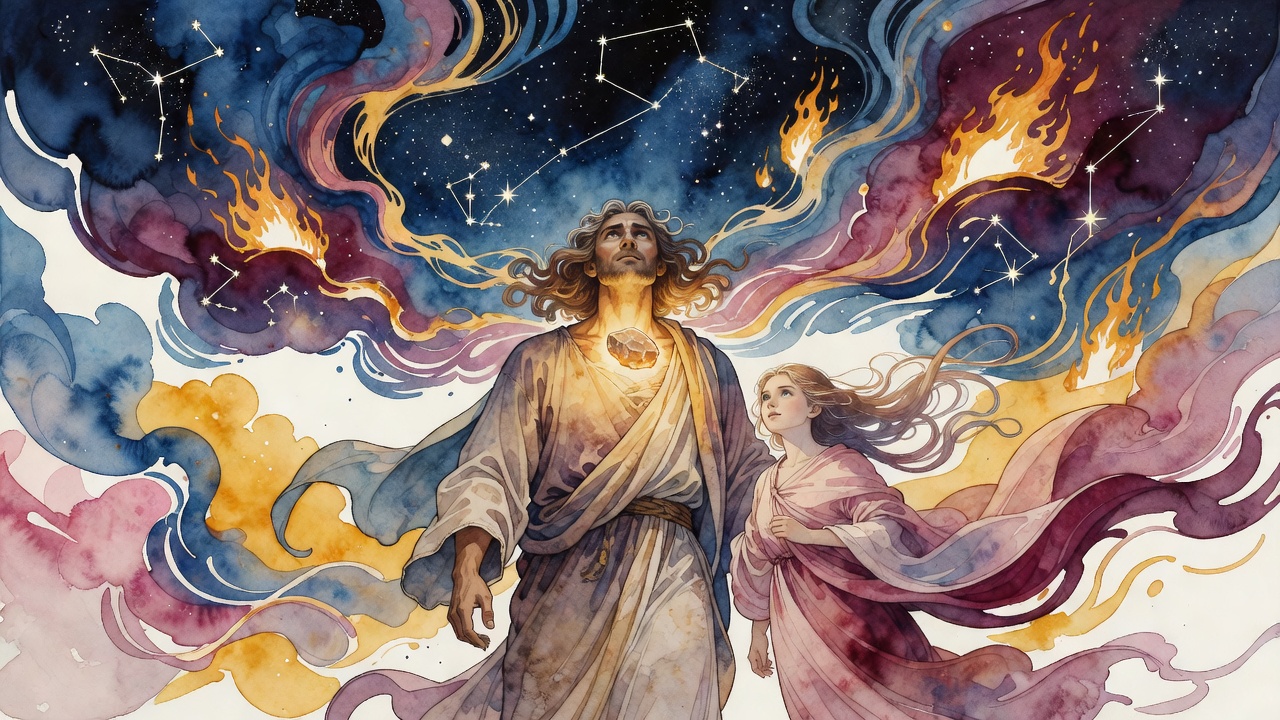
Abraham wore a glowing stone on a cord, close to the place where breath leaves the body. Whoever was ill and looked at it stood up well. Kings of the east and the west rose early to stand at his door. The blessing sat where other men wear a bead.
The Stone at His Throat
It was a precious stone. Some later called it a pearl. The sick did not argue about the name. They came, they looked, they walked away with the pain gone.
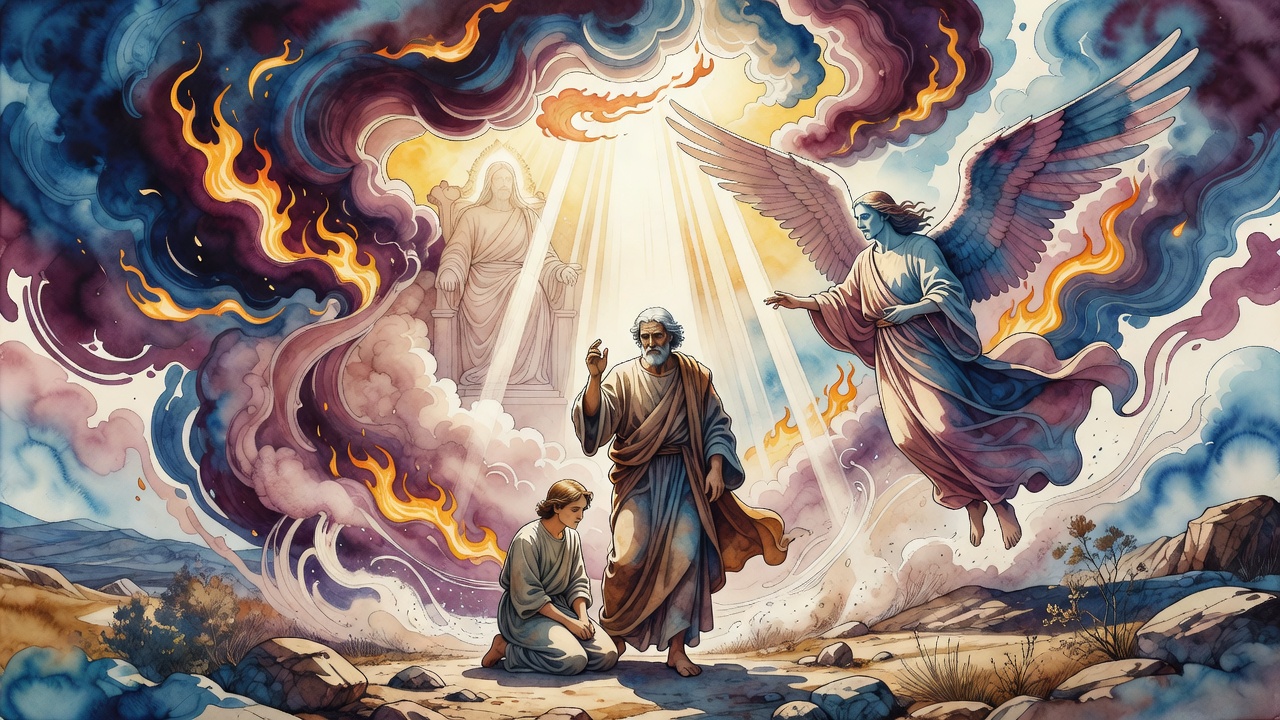
He lived that way for years, a man whose neck did work other men asked of altars. Then he died. God took the stone from the cord and hung it in the sphere of the sun. What had been a local cure became morning. People woke and looked up and did not know they were looking at the jewel that had rested on Abraham's throat.
Abaye said the folk proverb remembered it without knowing it. As the day rises, the sick improve.
Kings at the Door Before Dawn
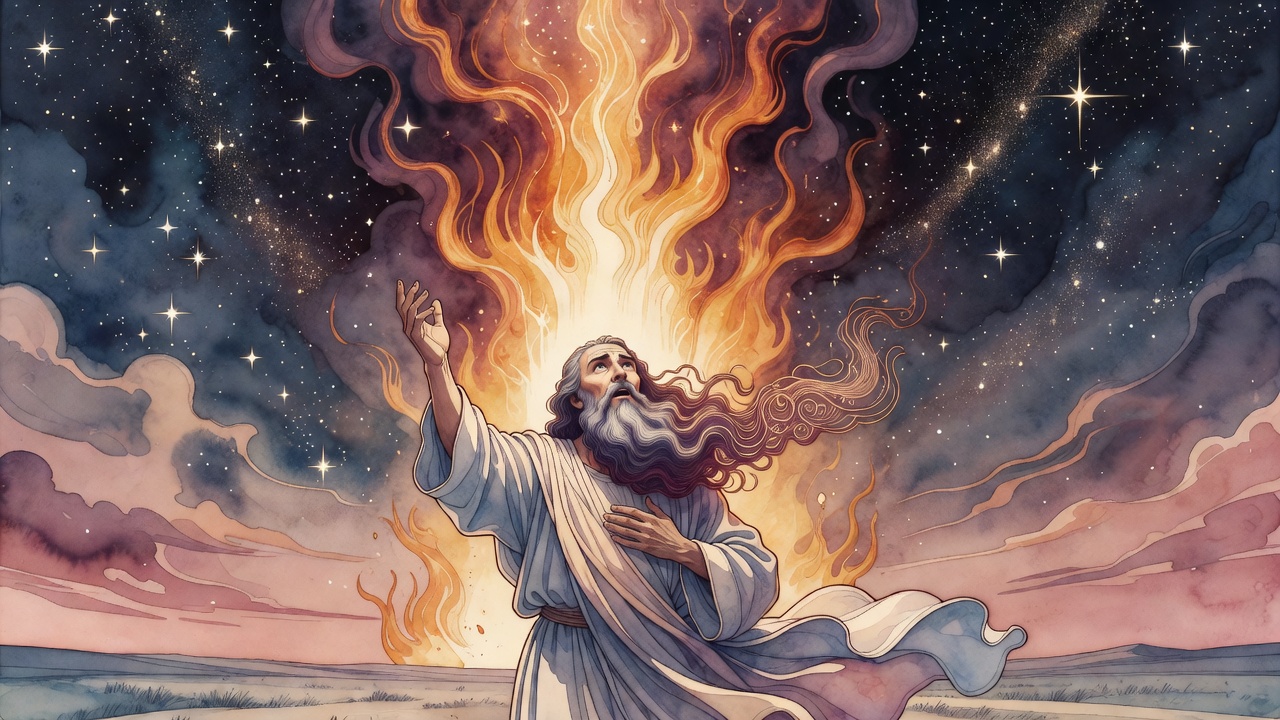
Before the stone, and with it, there was the sky. Abraham had astrology in his heart. He could read the heavens the way a scribe reads a contract. Kings came because he could tell them what the lights were doing.
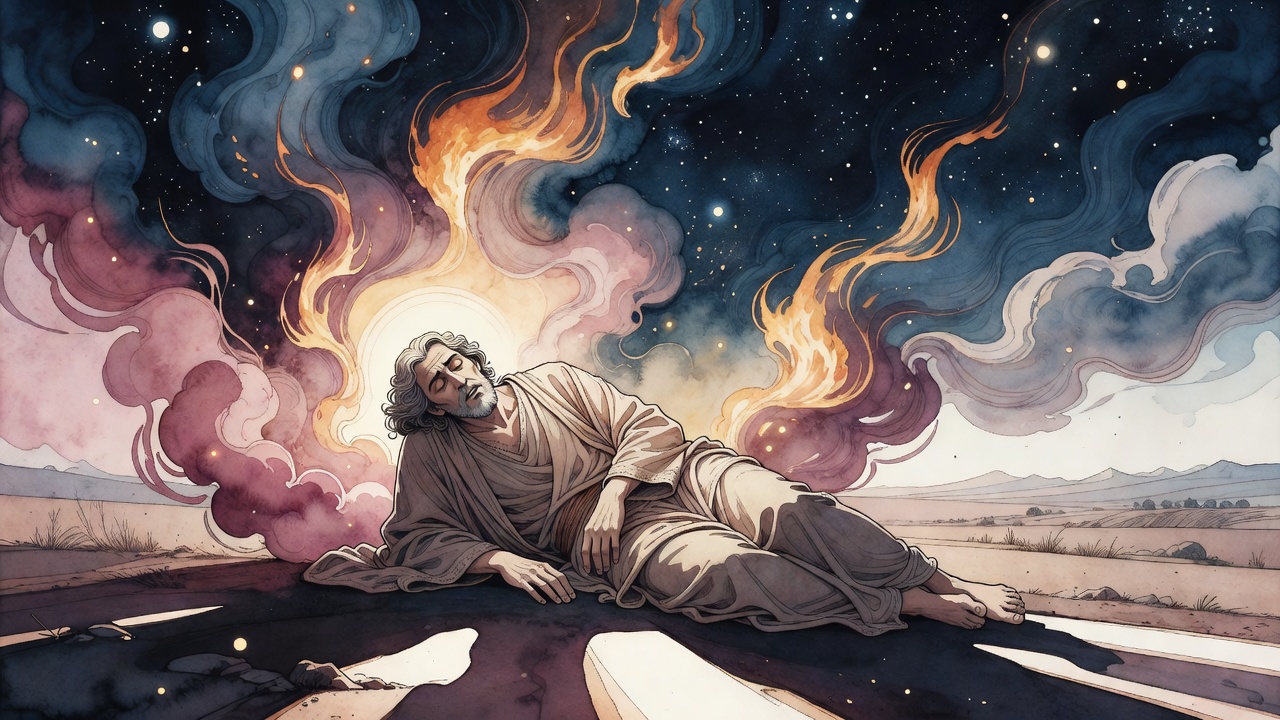
The lights told him something he did not want. Abram and Sarai would have no child. He stood under a correct sky and the sky was a locked gate. An astrologer who is good at his work can become a prisoner of his own accuracy.
He could not unknow it. He could only keep looking up, night after night, at a decree that had his old name on it.
A Name the Stars Had Not Learned
Then God changed the names. Abram became Abraham. Sarai became Sarah. A letter entered each name, the heh of God's own Name, and the file the stars had been reading no longer matched the person on the ground.
The stars had been right about Abram. They had nothing to say about Abraham. The man who had trusted the sky learned that God writes names the sky has not yet been taught to read.
The child came anyway. The charts had been drawn for a man who no longer answered to that name.
A Daughter Called In All
When Abraham was old, the verse said God had blessed him bakol (בכל), in all. Rabbi Meir heard that as a life without a daughter, a house spared a certain worry. Rabbi Judah heard the opposite. He had a daughter, and that was the all. Others went further. The daughter was herself named Bakol.
She is only a handful of words. Those words are sharp. A child called In All means the covenant had arrived in the house as a person, not only as cattle and land and a son.
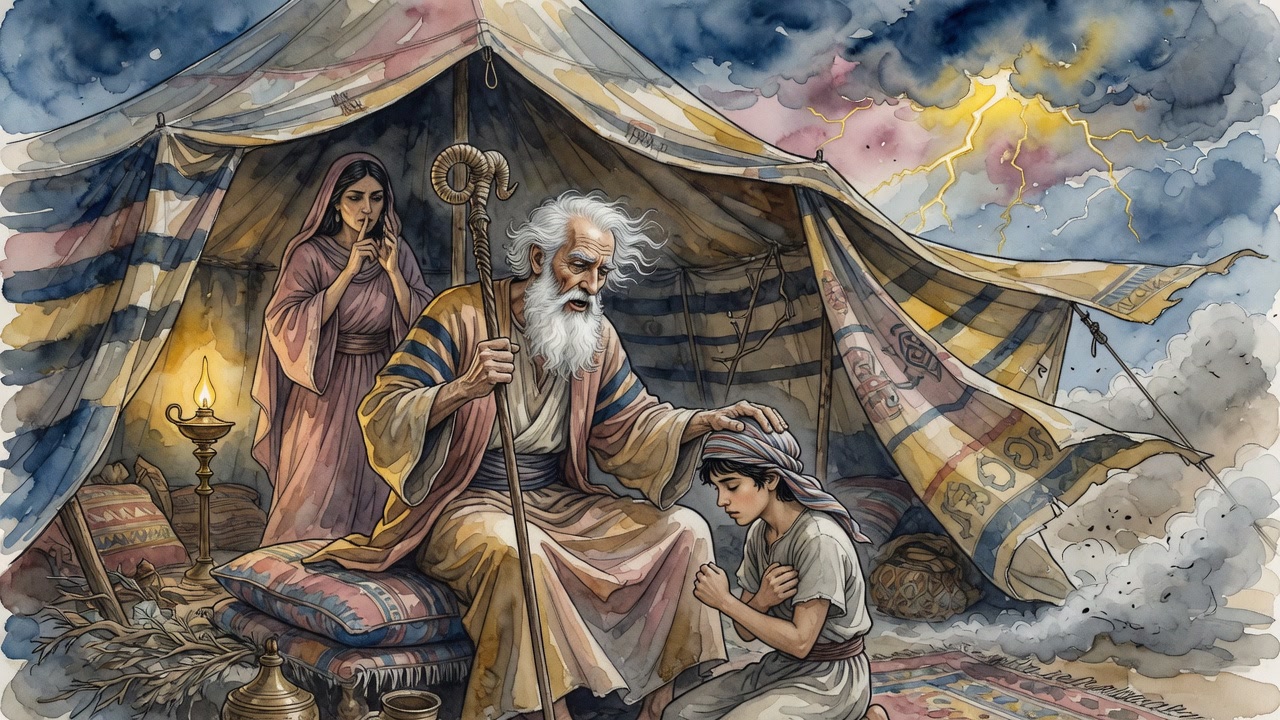
Some said she was a girl in the tent. Some said the word itself was the daughter. The house held the name either way. After the stone, after the new letters, after Isaac, there was still a name that meant nothing was missing.
The Cord and the Sun
The sick had looked at his throat. The kings had looked at his door. The stars had looked at a man who no longer existed under that name. God hung the stone on the sun's wheel and left Bakol in the story as a daughter or as a word, and did not settle the argument.
Abraham had wanted a future the sky refused. He got a child, a jewel in the morning, and a daughter whose name was the blessing itself. The cord at his neck was empty. The day kept rising.
← All myths