Absalom Weighed His Hair Every Shabbat Eve and It Killed Him
The Mekhilta records that Absalom cut and weighed his hair every Shabbat eve. That same hair caught in a tree and held him there for Joab.
Table of Contents
 Click for full size
The Most Beautiful Man in Israel
The Bible does not usually pause to describe physical beauty, but with Absalom it pauses. "From the sole of his foot to the crown of his head there was no blemish in him" (2 Samuel 14:25). He is the most beautiful man in all of Israel. The text adds, as if it cannot quite leave the subject, that his hair was his most remarkable feature: he cut it only once a year, and when it was cut it weighed two hundred shekels by the king's weight. This is a lot of hair. The tradition took note.
The Mekhilta DeRabbi Yishmael, compiled in the second century, preserves a tradition attributed to Rebbi, Rabbi Yehudah HaNasi, the compiler of the Mishnah, that adds a detail the plain text of Samuel does not contain. It is a detail that completes the arc between the beauty and the death in a way that the plain text leaves open.
The Custom of Friday Preparation
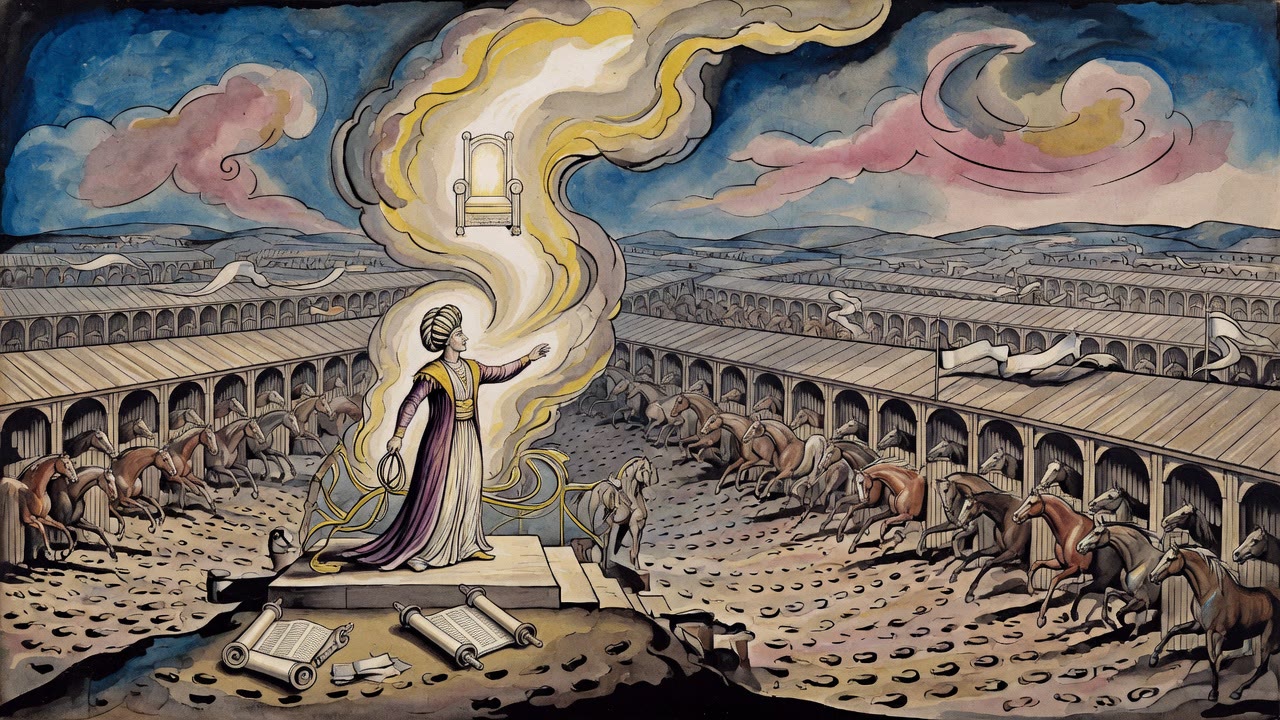
Rebbi teaches that Absalom did not cut his hair once a year. He cut it every Shabbat eve. This was the custom of princes, the proper preparation of royalty for the holiness of the Sabbath. Princes set their tables, lit their candles, and shaved before Shabbat because Shabbat deserved the best of them. Absalom, a prince, the most beautiful of David's sons and the one most certain he would eventually be king, observed this custom.
His hair grew so fast and so thick that it required weekly attention. And after each cutting, he weighed what had been removed. Every week, the same ritual: the hair falls, the scales are brought out, the weight is measured. What the Mekhilta does not say directly but implies through the act of weighing is that Absalom knew the number. He tracked it. His hair's weight was information he kept. It was among the facts about himself that he considered worth knowing.
The Tree That Received Him
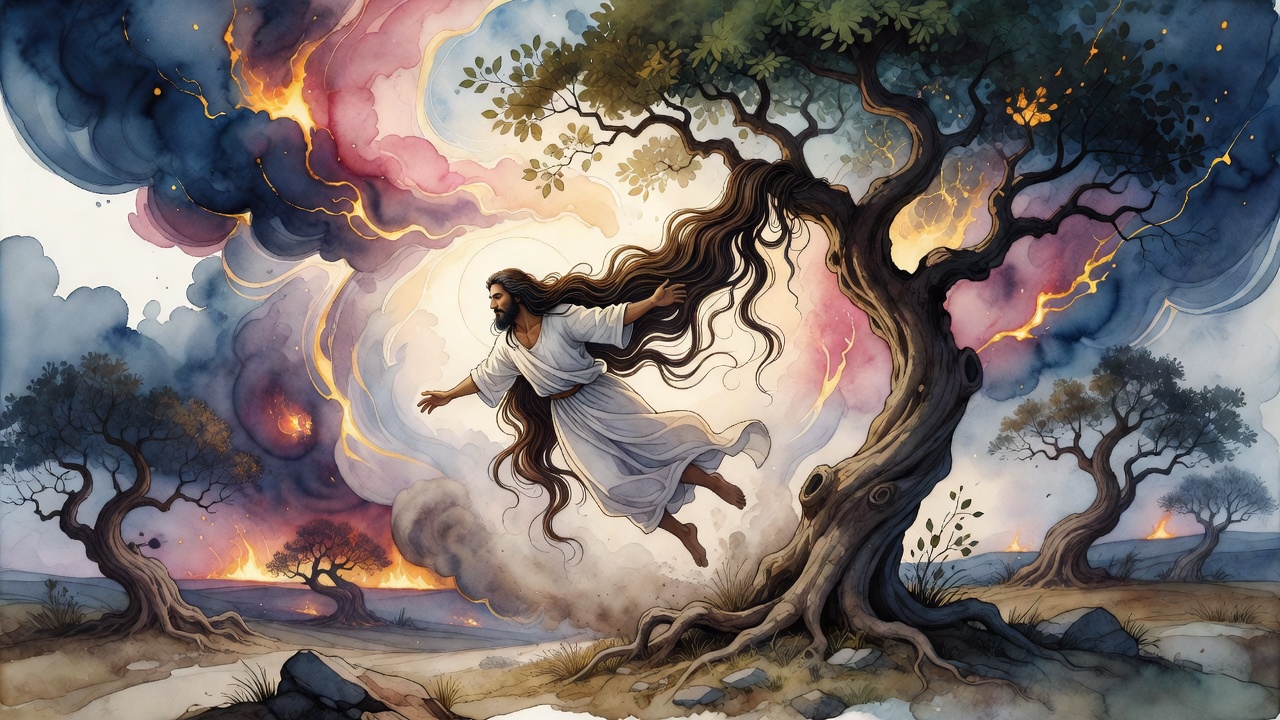
Absalom's rebellion fails at the forest of Ephraim. The battle goes against him, and he is riding his mule in flight when his head catches in the branches of a great oak. The mule keeps moving. He hangs in the tree, between heaven and earth, unable to get up or down, until Joab finds him and drives three spears through his chest. The death is not clean. The beauty that distinguished him hangs tangled in the wood until the man inside it is dead.
The Mekhilta connects what happened in the tree to what happened every Friday. Absalom's hair, which he weighed with such attention every Shabbat eve, is the instrument of his death. The same hair. The same weight he kept track of every week. The same abundance that was his signature pride. The tree did not reach up and grab him. His own hair, the thing he most tended and most measured, wrapped itself around a branch and held him for Joab to find.
What Rabbi Meir Wrote in the Margin
The Mekhilta preserves a tradition about Rabbi Meir, the great second-century sage, who wrote in his Torah scroll opposite the words "and it was very good" at the end of the sixth day of creation the words "and death is good." This tradition appears alongside the Absalom material, and the juxtaposition is not accidental.
Creation is very good. Death is part of what is very good. Absalom's death by his own hair is part of what is very good in the sense that Rabbi Meir meant it: the system works. The thing that kills you is not external bad luck. It is the internal substance of who you were and how you lived. Absalom's hair killed Absalom. The most beautiful man in Israel was killed by his most beautiful feature, weighed every Friday with careful hands, tracked and treasured and in the end inescapable.
← All myths