The Fig Tree Owner Came Looking for the Scholars Who Left
He was out picking before they arrived every single morning. The students decided he suspected them of stealing his fruit, and quietly moved to another tree.
Table of Contents
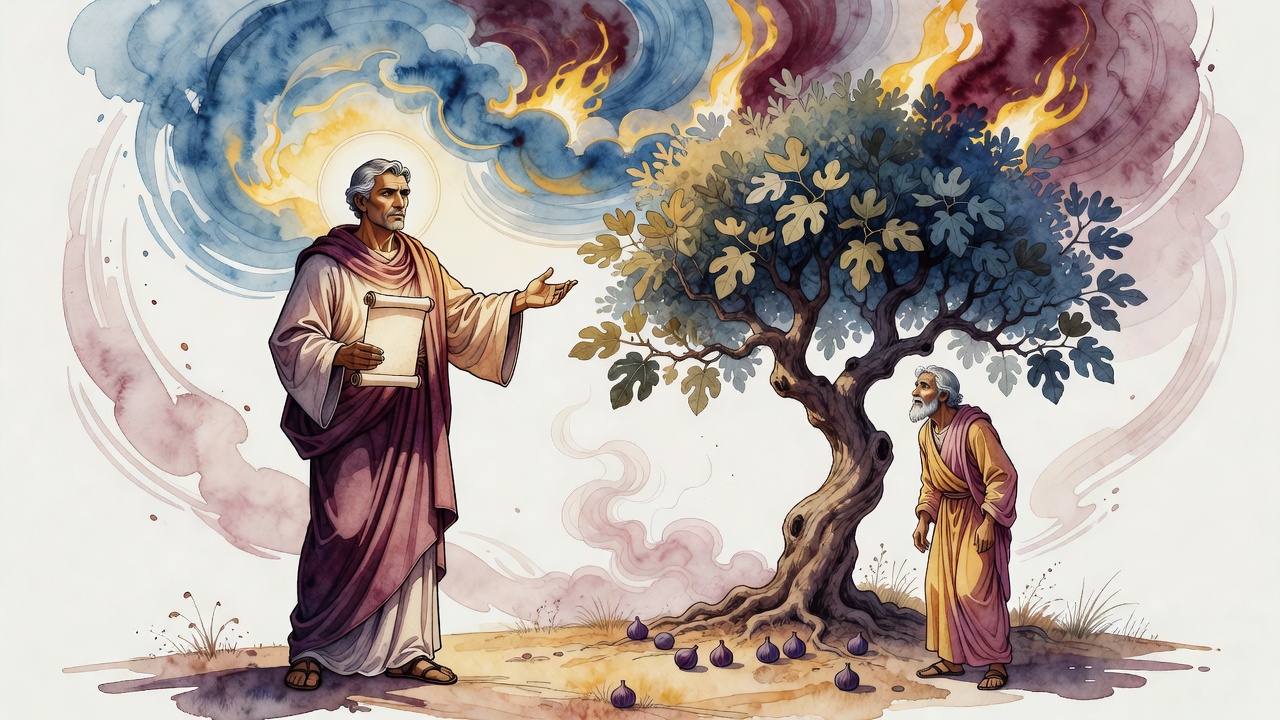 Click for full size
The Man Who Was Always There First
The low branches were already stripped when they arrived.
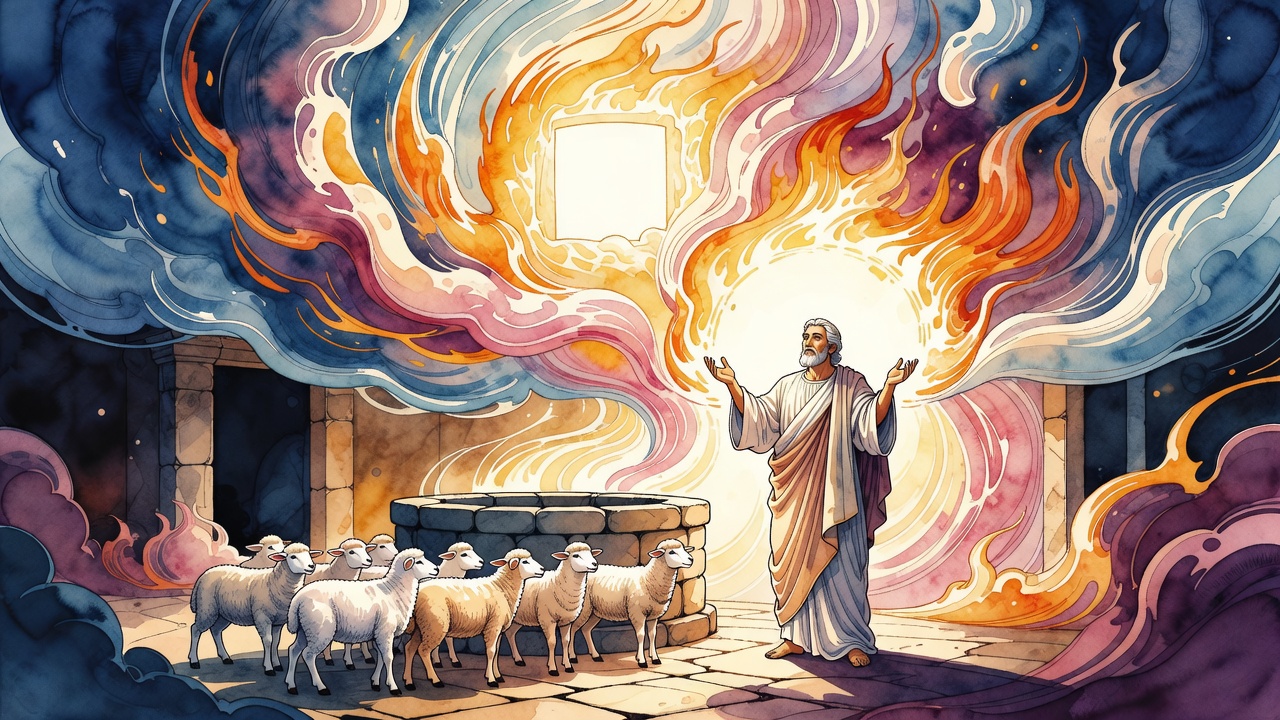
Every morning it was the same. Rabbi Akiva and his students walked out to the fig tree at their usual hour, settled in the shade, opened the day's argument, and overhead the fruit within a man's reach was gone. Somewhere out past the rows the owner was already walking home with his basket on his hip.
He never spoke to them. He did not ask them to move, did not ask what they were studying, did not sit down for a minute to listen the way people sometimes did. He came out in the grey part of the morning, picked his tree bare as high as he could reach, and went.
What the Students Decided It Meant
One of them said it out loud, and after that none of them could unhear it.
A man does not get up in the dark for no reason. He is coming out early to be at the tree before we are. He wants to see his fruit counted while there is nobody sitting under it. He thinks we help ourselves.
They turned it over the way they turned over everything. Nobody had accused them. Nobody had even looked at them sideways. But a man who suspects his neighbours and says nothing carries the suspicion around all day, and they were the ones putting it in his hands every morning by sitting where they sat. The decent thing was to take it away from him.
So they picked up and moved. They found another spot, out of sight of his rows, and told themselves they had done him a kindness.
He Went Out and Found Them
The next morning the owner came out in the dark, picked his tree, and turned around to an empty patch of ground where his scholars should have been sitting.
He did not shrug and go home. He put the basket down and went looking. He walked the fields asking after them, and he kept walking until he found them, and when he found them he was not relieved.
"My rabbis," he said. "You were performing one mitzvah (מצוה), one credit on my account, and now you want to take it away from me?"
They were appalled. "Heaven forbid."
"Then why did you leave my place and go sit somewhere else?"
And they had to say it to his face. We thought you suspected us.
"Heaven forbid," he said. "I will tell you why I go out early to pick that tree. Once the sun gets on the figs, they go wormy."
They Went Back and Split the Fruit Open
They came back with him that same hour.
The next day he left the tree alone on purpose. They stood under it in the middle of the morning with the sun full on the branches, reached up, took the figs down themselves, and pierced them.
The flesh inside was moving.
Every man there had spent the past week certain he understood what he was looking at. A watchful farmer, an unspoken accusation, a quiet act of tact. And the whole time the man had been racing a clock nobody else in the field could hear, out there before first light because he knew the exact hour after which his fruit stopped being fruit.
The Owner of the Fig Tree Spoke Well
That was the sentence they came back with. The owner of the fig tree spoke well.
He knows the season of his figs, and when the season comes he takes them. So too the Holy One knows when it is the time to take the righteous, and takes them.
They were standing in an orchard holding fruit that had been sound in the dark and was ruined by the middle of the morning, and the farmer beside them was not troubled by it in the least. A fig has an hour. The hour is not up for discussion. He had known that since he was a boy, and it had never once occurred to him that the tree was being cruel.
He picked up his basket. He had figs to get in before the sun came round.
← All myths