Cain Faked Repentance and God Offered Him a Second Chance
Cain told God that a world heavy enough to be carried could surely carry one sin. He did not mean a word of it. Half his sentence came off anyway.
Table of Contents
 Click for full size
He Did Not Know Which Blow Would Do It
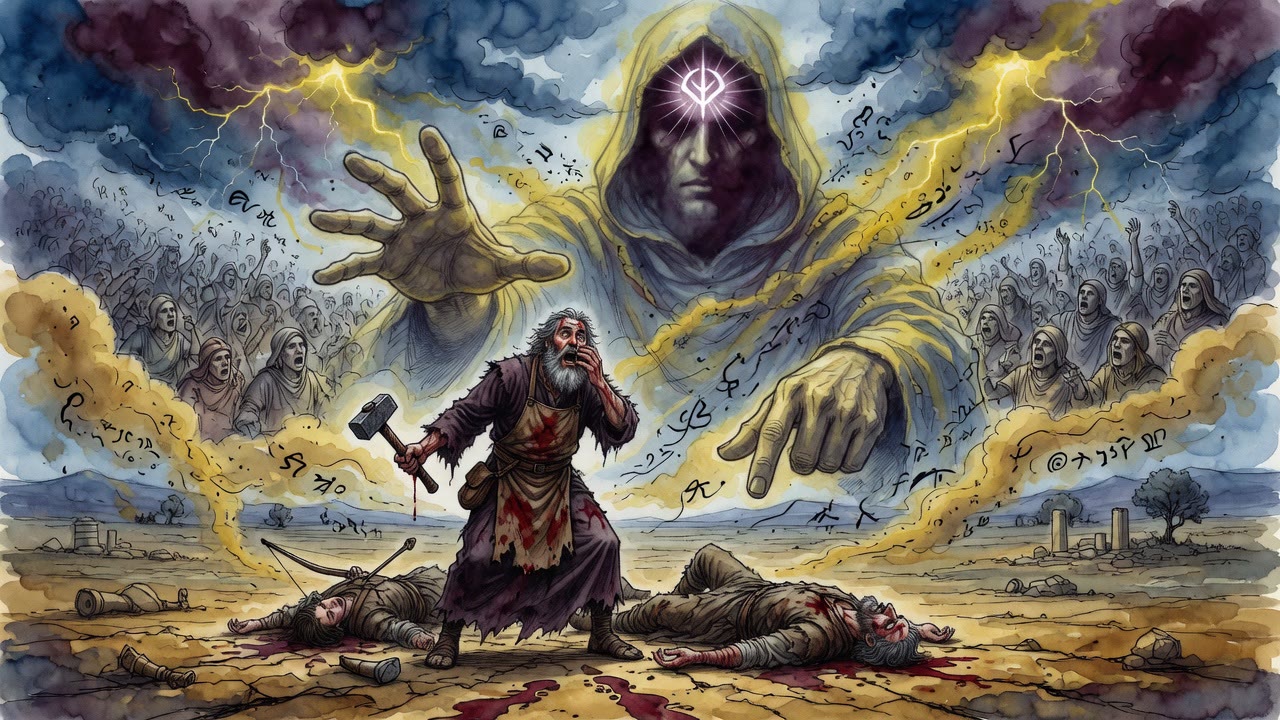
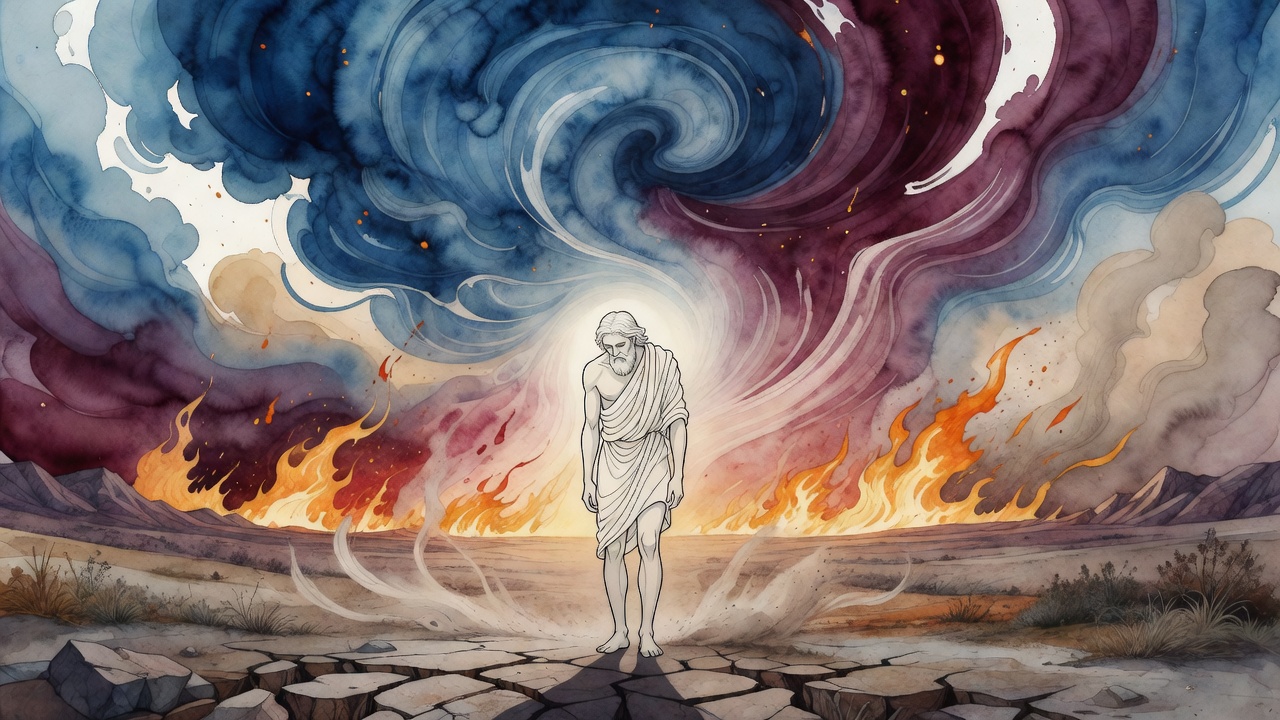
Cain had never seen anyone die, so he did not know where a man breaks. He threw stones at every part of his brother, the legs, the back, the arms, working his way over him, until one caught Abel on the neck and that was the one.
Then he stood in the field and made a plan. "My parents will demand account of me concerning Abel," he said, because there was no other human being on earth to ask. He would go where they could not find him.
The thought had barely finished when God was there.
"Before your parents you can flee. Can you go out from My presence too? Can any man hide himself in secret places that I shall not see him?"
And then something worse than an accusation. "Alas for Abel, that he showed you mercy and held back from killing you when he had you in his power. Alas that he gave you the chance to kill him."
Abel had had him down once and let him up.
The Answer He Gave as If to a Man
"Where is Abel your brother?"
"I do not know. Am I my brother's keeper?"
There were four people alive in the world. His mother, his father, himself, and the one in the dirt behind him. He answered as though he were talking to a neighbor who might not have heard, as though the eye that reaches into the bottom of the sea could be waited out with a shrug.
Philo of Alexandria could not get over the nerve of it. What a beautiful apology, he wrote, and meant nothing kind by it. Whose keeper should you have been, if not your brother's? You had energy enough for the fraud and the violence and the killing. Your brother's safety was the thing you could not find time for.
He Told God It Was God's Fault
Cain kept going, and the argument got bolder as it went.
"You are the one who keeps watch over every creature, and You are demanding an account from me? I killed him. You made the evil inclination in me. You guard all things. Why did You let me do it?" He got to the end of that and went further. "You killed him Yourself. If You had looked at my offering the way You looked at his, I would have had nothing to envy, and he would be standing here."
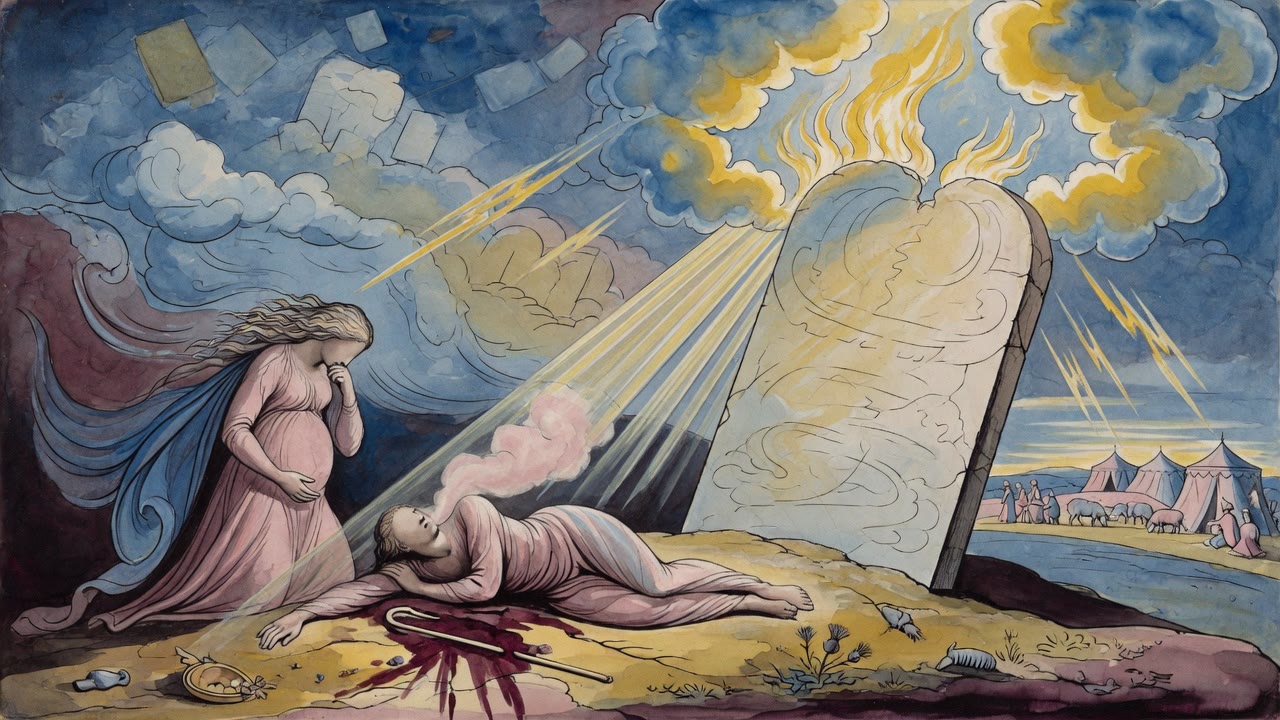
"The voice of your brother's blood is crying out against you from many wounds," God said. Not one wound. Every place a stone had landed had a voice. "And the blood of all the righteous who would have come out of Abel."
Abel's soul was crying too, and it could not find anywhere to stand while it did. It could not go up, because no human soul had ever gone up. It could not lie down in the grave with the body, because no human soul had ever done that either. It went back and forth over the field with nowhere to be.
Cain said he had never seen a man killed and could not have known that thrown stones would take a life.
The Repentance He Did Not Mean
"Are there informers who denounce men before You?" Cain said. "My parents are the only living human beings and they know nothing about it. You live in the heavens. How would You know what happens down here?"
"You fool. I carry the whole world. I made it, and I will bear it."
Cain heard the opening and took it in one step.
"You bear the whole world, and my sin You cannot bear? Then my guilt is too great to be borne. Yesterday You banished my father from Your presence. Today You banish me. People will say it is Your way, banishing."
It was a performance. He was not sorry; he had found the seam in the last sentence and put his knife in it. The sentence had been fugitive and wanderer, homeless and moving forever. God took half of it off. Cain would be homeless. He would not have to keep walking.
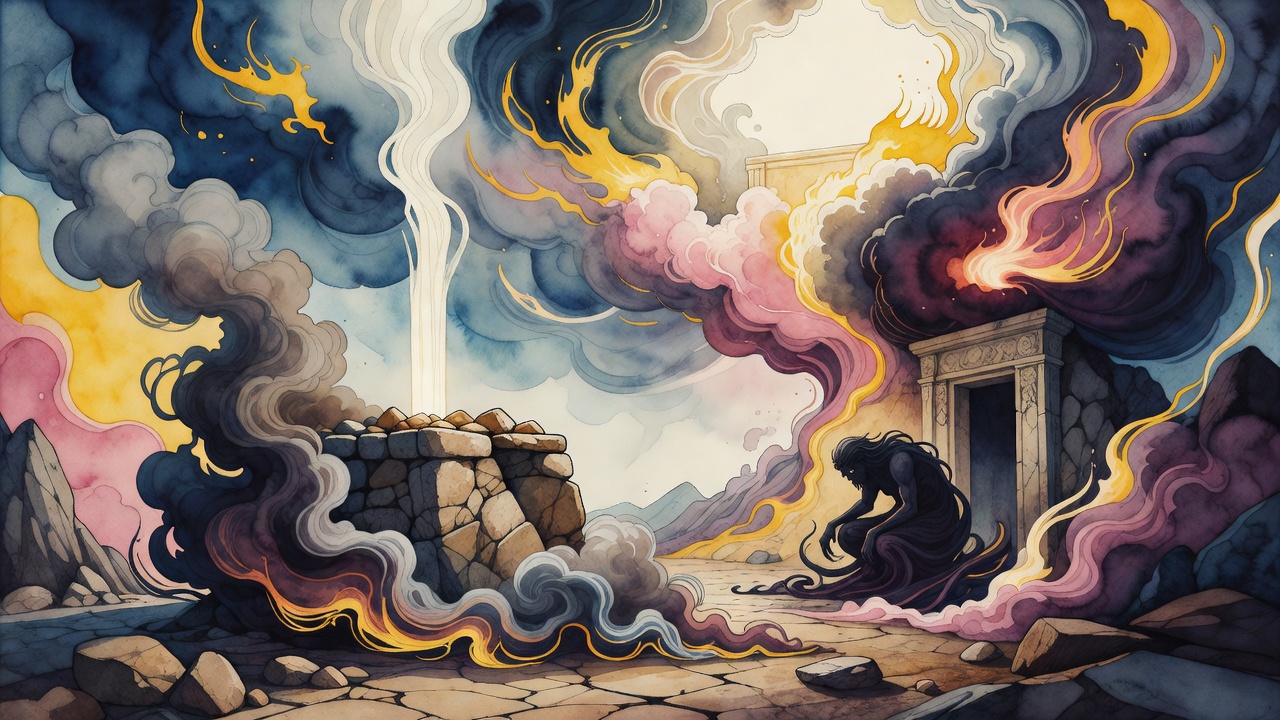
Half a sentence was still enough to be unbearable. The ground shook under his feet wherever he put them, and the animals came for him, the tame with the wild, the serpent among them, all of them meaning to open him up for Abel's sake. He broke down in the middle of it and wept. "Where shall I go from Your spirit? Where shall I flee from Your presence?"
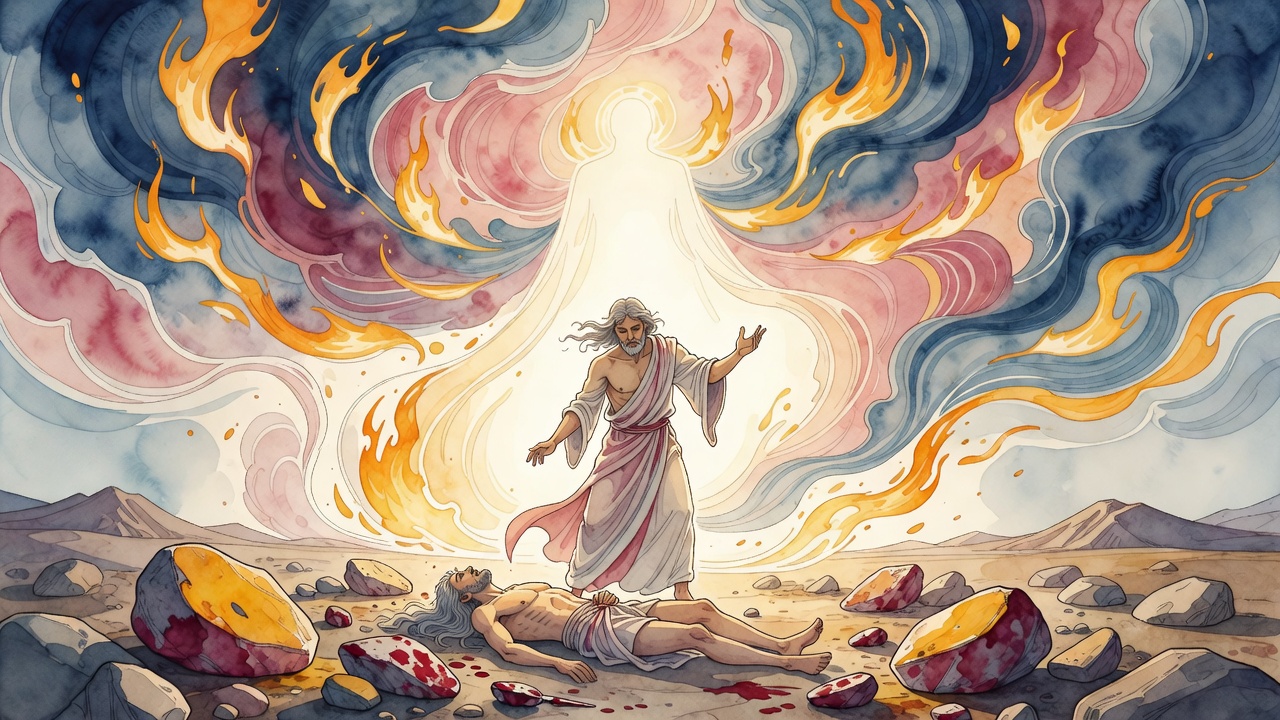
God cut one letter of the Holy Name into his forehead and the animals fell back. "His punishment will not be like the punishment of murderers after him. He shed blood, and there was nobody to teach him. From now on, whoever kills a man will himself be killed." Then God gave him a dog to walk with him against the beasts, and put leprosy on his skin so that anyone who met him would know what he was.
So Potent Is Repentance, and I Knew It Not
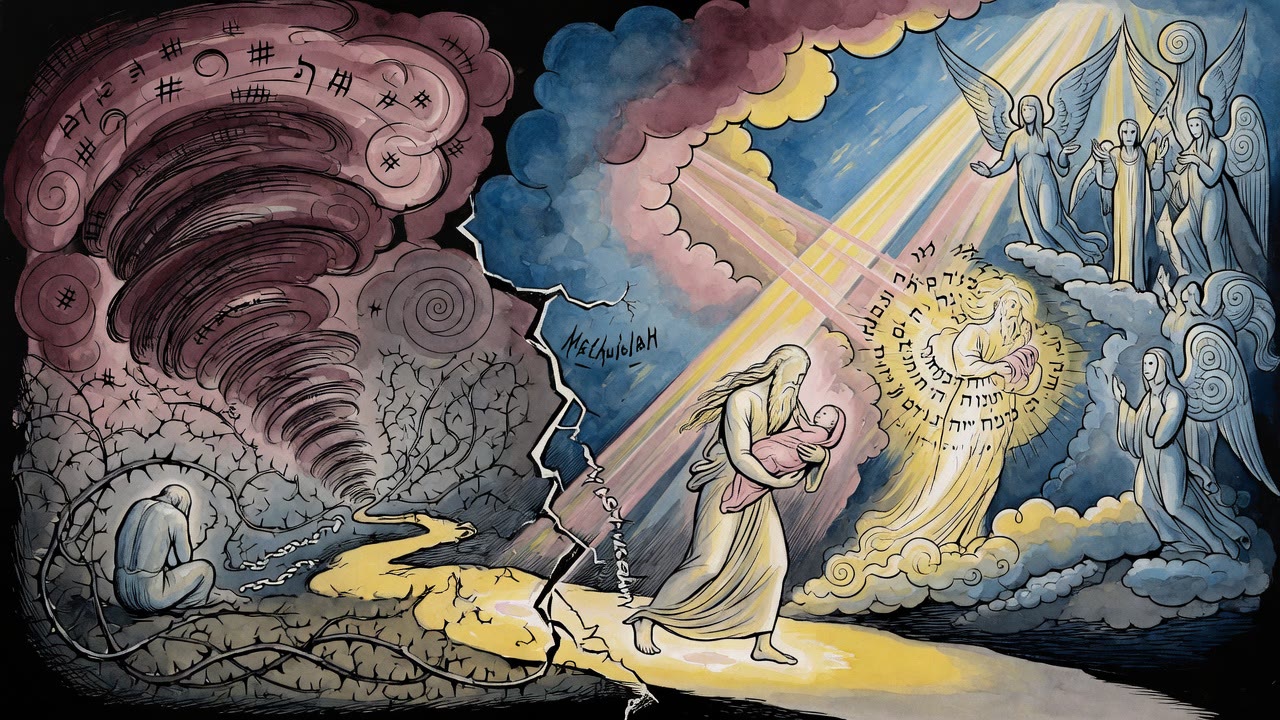
Adam met his son on the road and asked what had been decreed against him.
Cain told him the truth about the outcome and nothing about the lie: he had repented, and it had worked, and the sentence had been cut.
"So potent is repentance," Adam cried out, "and I knew it not!" He had walked out of Eden believing a thing done was a thing finished. He stood in the road and made up a hymn on the spot, and it began, it is a good thing to confess your sins to the Lord. The first song of repentance in the world was written by a man who had learned the word from his son, who did not mean it.
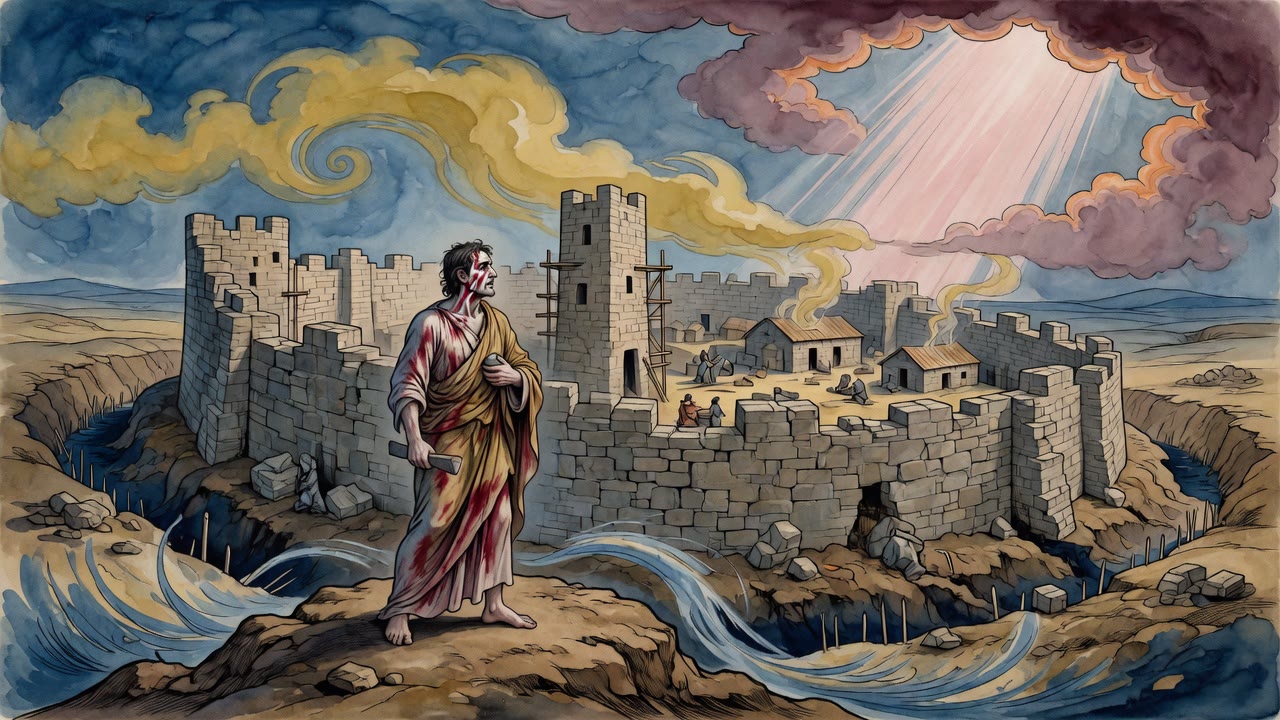
Cain went east and built a city and named it after his son Enoch, and he was the first man on earth to put a wall around a city and dig trenches outside the wall, because he was afraid of his enemies. He robbed the people who came to him. The wall stood for seven generations. In the seventh, Lemech killed him.
← All myths