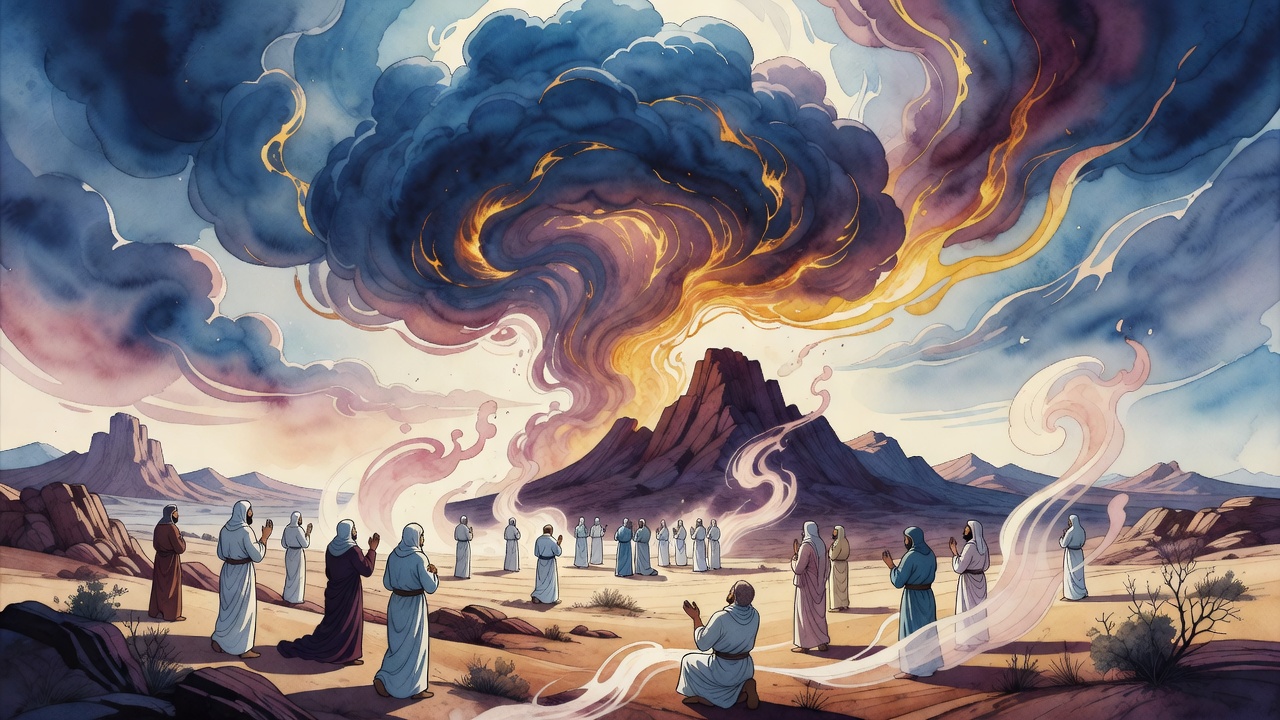
Dumah Fell to Gehinnom While Dumiel Guarded the Gate
Egypt's prince ran four hundred parasangs from the decree. God stripped him and sent him down to keep the dead. Sabbath is their only rest.
Table of Contents
 Click for full size
He Ran Four Hundred Parasangs
Dumah ran.
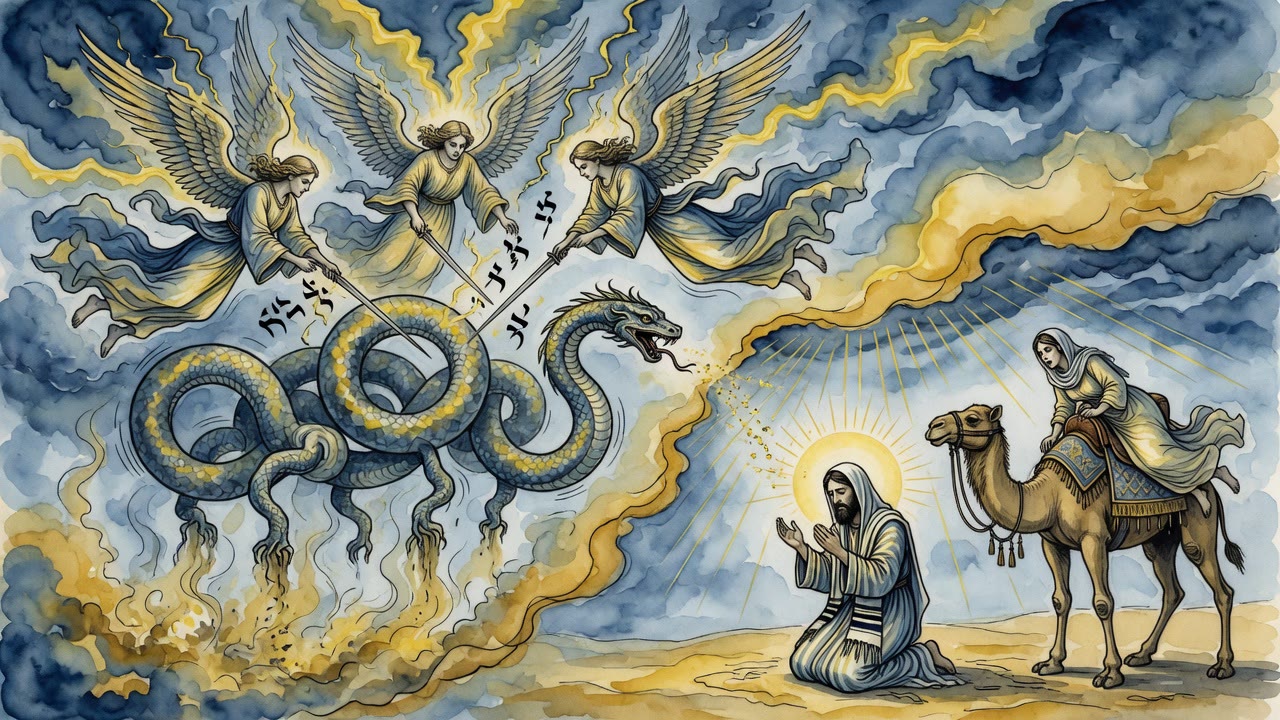
He had been the heavenly prince of Egypt. Moses had already spoken the decree in Pharaoh's court, and every word was sealed above. Dumah heard it and did the one thing a prince is not supposed to do. He fled. Four hundred parasangs, without permission, not to make war, only because he could not watch what was coming to the nation under his hand.
God caught the flight in a sentence. "It is My decree."
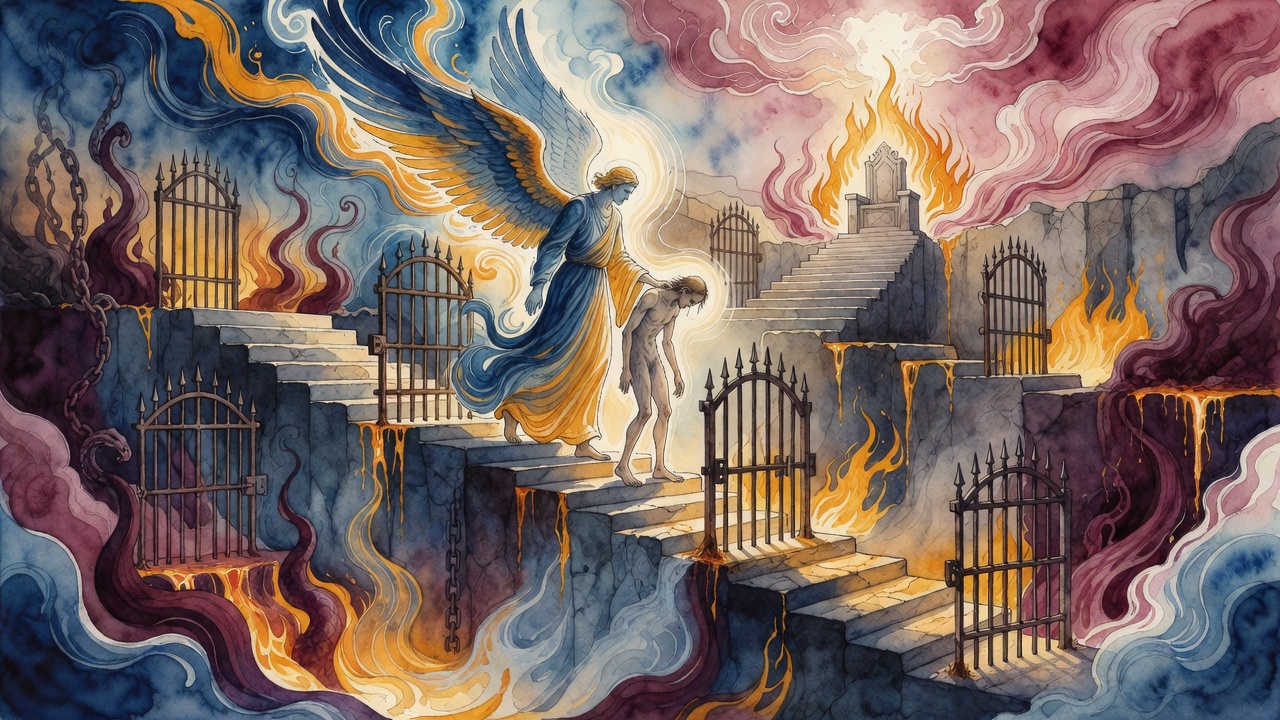
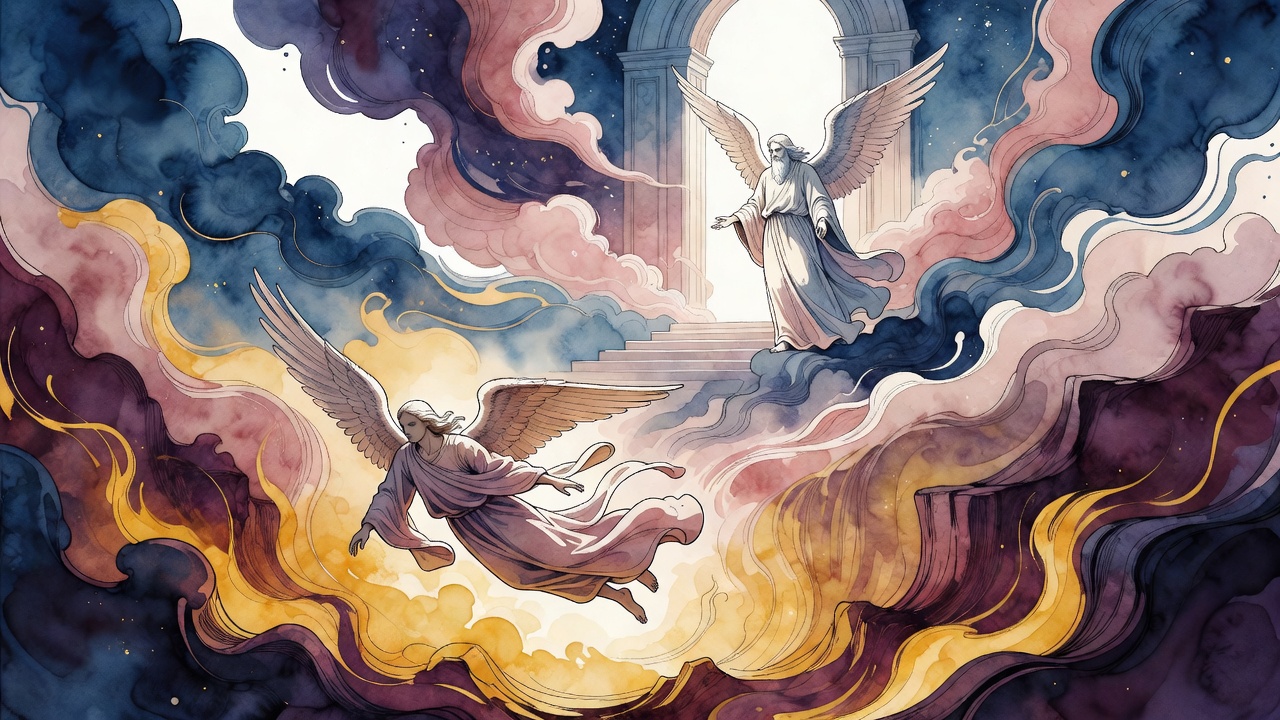
The dominion came off him. Dumah fell. The Prince of Egypt was sent down to Gehinnom (גיהנם) and given the angels of destruction to command. He took the new office below, where the suffering he had refused to watch was now his work. He does not run anymore. The pit does not allow it.
The Dead Keep the Sabbath Under Him
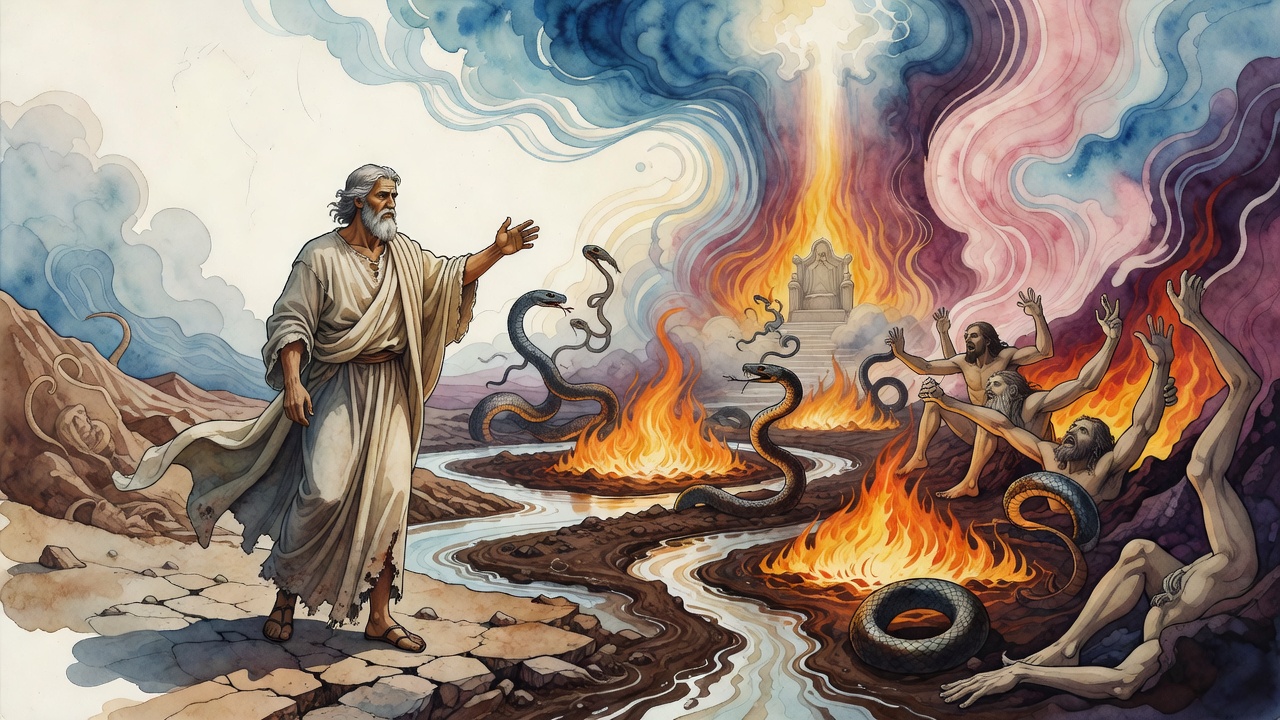
The dead arrive without speech. Dumah stands over them in a silent court. Six days he keeps them in the fire of judgment. On Shabbat he lets them rest. The moment the day ends he is there again, sending them back down. Guards of destruction wait on his word. He does not miss the hour.
He does not argue the old case. Egypt is gone. The prince who ran from a decree now keeps the place where earthly noise stops.
A Voice Named Dumiel From the Seventh Heaven
Above, another officer carries a name that sounds almost the same.
Rabbi Ishmael asked Rabbi Nehunya ben Hakkanah whether Dumiel was truly the name. Each day a voice goes out from the seventh heaven into the heavenly court and says that the Lord God of Israel called him Dumiel according to His own Name: "Just as I see and hold my peace, so does Dumiel."
His authority sits on the right lintel of the gate. Kazpiel the Prince drives him from that post, and Dumiel cherishes no enmity, no hatred, no jealousy. Each of them serves the honor of the One who posted them. Dumiel holds his peace the way God holds His.
The Seeker Reached the Sixth Palace
Rabbi Ishmael came to the entrance of the sixth palace. Five gates were already behind him. Dumiel guarded that door. He sat on a chair wrought of a pure gem, a chair that held the first light from the day the world was made. He was not furniture. He was jurisdiction. The seeker stood in the light and waited to be asked.
He did not open for everyone who arrived. He asked whether the seeker knew Torah. Not whether the mouth could recite. Whether Bible and Mishnah and midrash and law and lore were in the body, and whether the seeker had kept what was given to Moses on Sinai. A quotation would not satisfy him. A life might.
The worthy he received kindly. He seated the man on a chair of that same gem and sat beside him at his right.
Gabriel Wrote It in Red on the Chariot
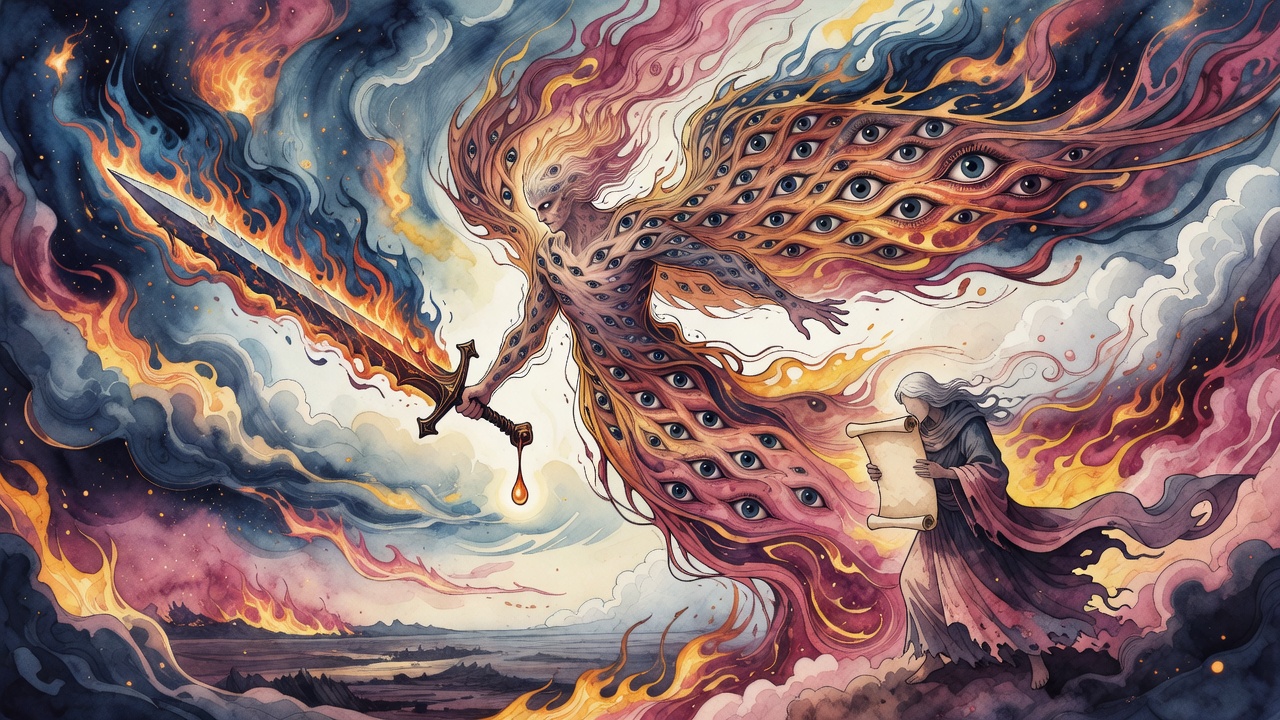
When a seeker claimed the qualifications, Dumiel did not take the word alone. He sent to Gabriel, who keeps the records. Gabriel wrote a document in red paint and hung it on the seeker's chariot: thus and so is this one's knowledge in the Torah, thus and so are his actions, and he desires to enter before the throne of Glory.
The red writing rode with him toward the next gate. Rabbi Ishmael sat on the gem chair at Dumiel's right and did not speak. Below, Dumah waited for Sabbath to end so he could send the dead back to the fire. Above, Dumiel sat at a gate and asked what a living man had actually learned. Two offices. Two silences. The traveler in either direction meets a name that begins in quiet and ends in God.
← All myths