God Divides His Day Into Four Watches of Three Hours
The verdict on the world came out as annihilation. He left the judgment seat, crossed the floor, and sat down on mercy. Every ordinary morning.
Table of Contents
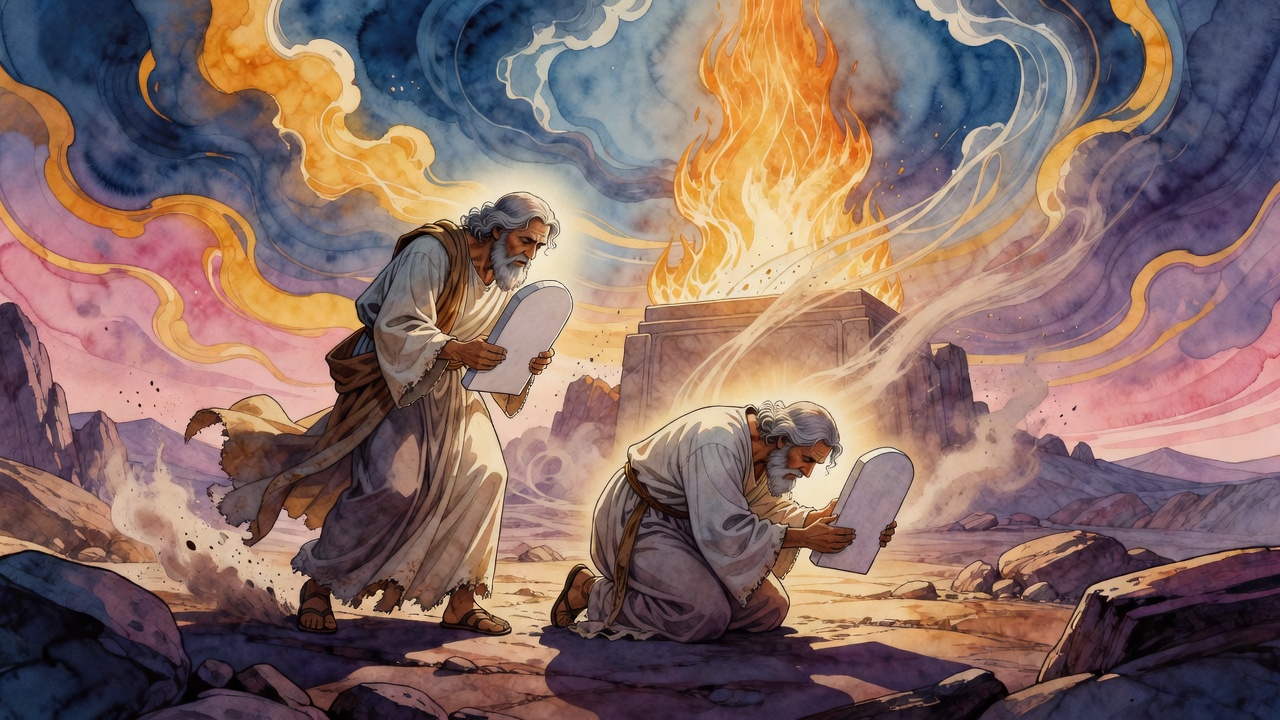
Moses knew the date he was going to die. Before he went up the last mountain he stood in front of the whole assembly to sing one last time, and he wanted witnesses who would still be standing when every man in the room was dust.
 Click for full size
He Chose Witnesses That Would Not Die
Not elders. Elders die. He called heaven and earth, because heaven and earth do not taste death in this world and are due to be made new in the next. Attend, you heavens. Hear, you earth.
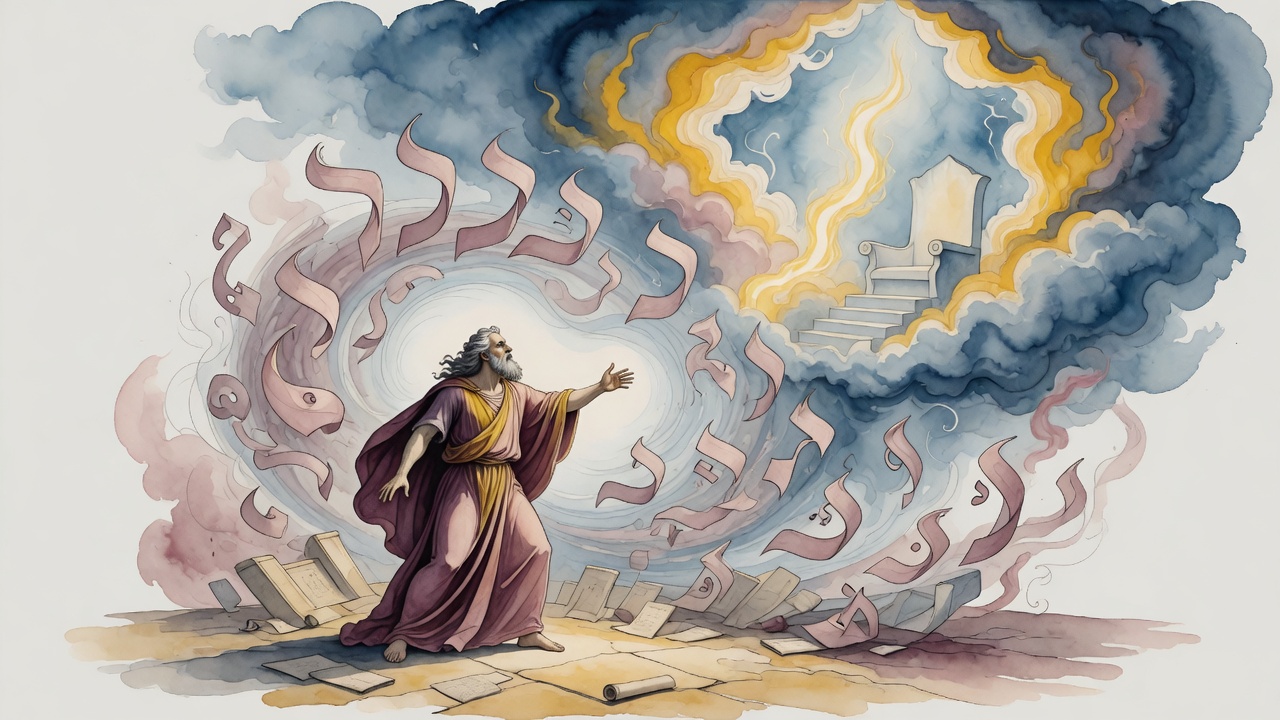
Then he would not say the Name. Not straight away. He dedicated his lips first with eighty-five letters, twenty-one words of preparation, and only then let the Name out.
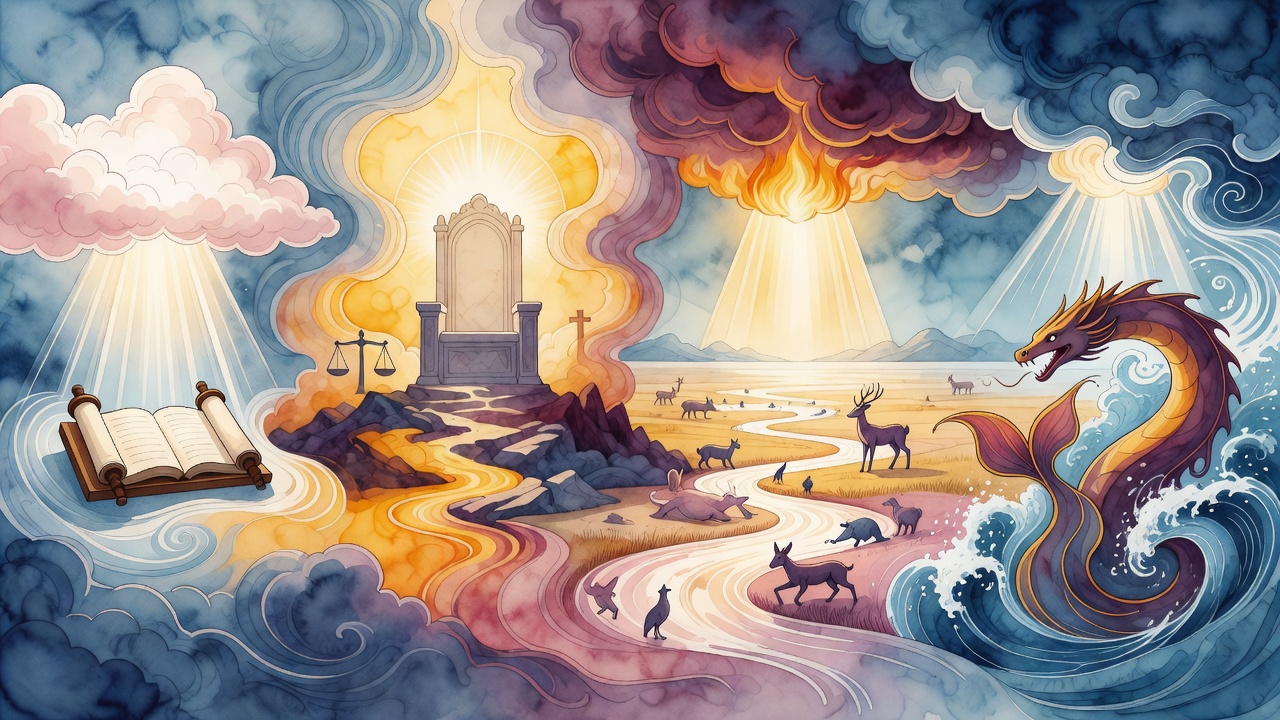
When he spoke he told them what nobody else in the camp could tell, because nobody else had been up there. "When I went up the mountain of Sinai," he said, "I saw the Lord of all the worlds. He divides the day into four shifts."
He said it as a man who had seen a working day and wanted one more morning of his own.
He Sat Over the Text First
Three hours, and He sits and studies.
Not consults it. Studies it. Before the animals have lifted their heads, before the man who will open a page by lamplight has washed his hands, the One who made the world is already at the text, sitting over it the way a student sits over it, taking His time.
Moses had watched that. The day did not begin with a sentence. It began with reading. A man about to die wanted the assembly to know that even God opens a book before He opens a court.
He Rose and Changed Chairs
Three hours more, and He sits and judges the entire world. Every creature. Every city. Nothing skipped.
Then the accounting comes out, and the total is annihilation. The world has earned it. The court has done its work correctly. The evidence is not in dispute. The finding is that there should be no more world.
He stands up.
He rises from the throne of judgment, crosses to the throne of mercy, and sits down on that one instead. Nobody argues the verdict. The verdict simply gets outlived, by a change of seat, in the middle of the second watch, on an ordinary morning, and then again the next morning, and the one after that.
Moses saw the crossing. He saw a world that should have ended before breakfast, and did not, because God left one chair and took another. That was the image he carried down the mountain, and it was the image in his mouth when he later asked for his own sentence to move.
He Fed Oxen and Lice Together
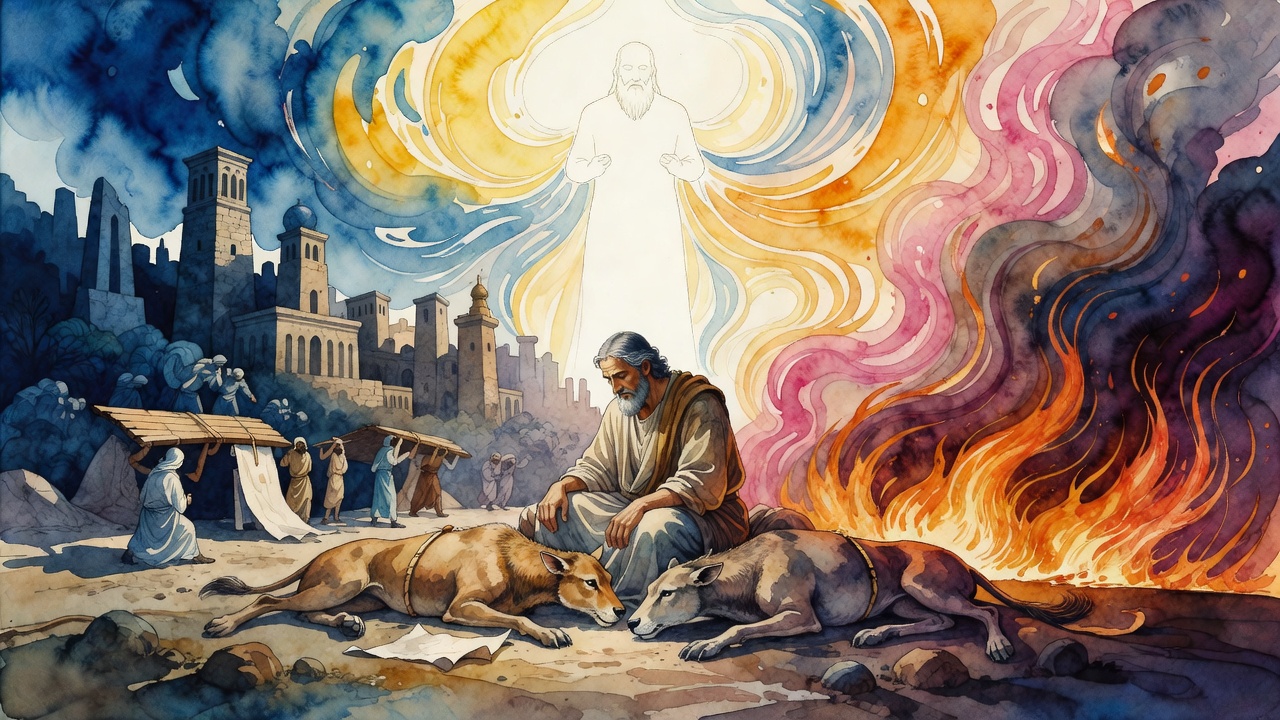
Third watch. He feeds the whole world.
From the horns of the wild ox down to the eggs of lice. The largest animal on the plain and the thing too small to see get fed inside the same three hours by the same hand, and neither of them is told which one was the afterthought.
Moses, standing in front of Israel with the mountain behind him, put a different labor in that stretch of the day. He had watched the Lord of all the worlds spend three hours making marriages, tying this man to that woman, and while He was at it lifting one person up and setting another one down. After that, three hours on the care of every created thing.
Marriages and lice. The same working day. A dying man told it as if the schedule itself were a kind of mercy: even the small lives get their three hours.
After the House Burned He Taught Children
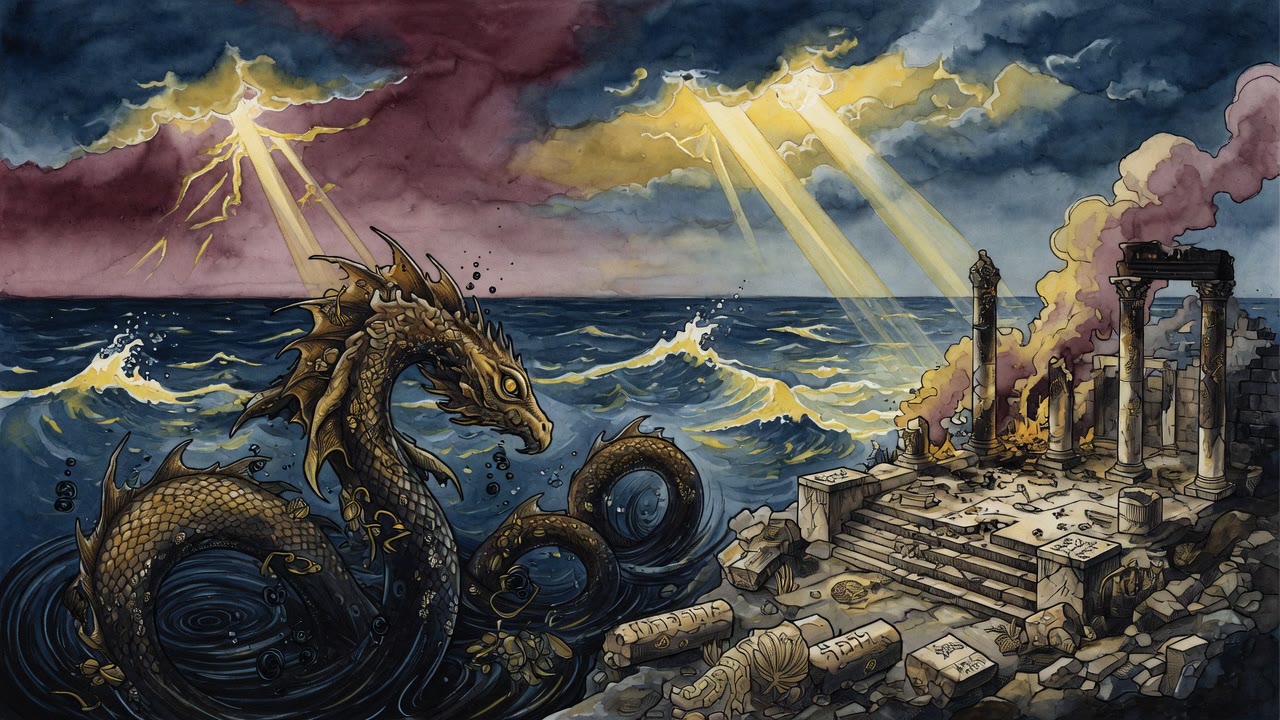
The last three hours were the strange ones. He sat and played with Leviathan.
Not fought him. Played with him. There had been two once, a male and a female, and the female was killed, because a breeding pair that size would have finished the world, and her flesh was salted and put away for the feast of the righteous. What was left was one enormous animal alone in the water, and every afternoon God came down and played with him.
He plays with His creatures. He has never once laughed at them, except on a single day that has not arrived yet.
Then the House in Jerusalem burned, and the playing stopped. There has been no laughter before Him since. The fourth watch stayed on the schedule and something had to fill it, so now, from the ninth hour to the twelfth, God sits and teaches Torah to schoolchildren.
Moses never saw that change. He finished the song, and then he asked. He said he was like a man who had redeemed his only son out of captivity, taught him a trade, found him a wife, built the wedding house, baked the bread, slaughtered the meat, mixed the wine, and was then summoned to court and sentenced to die before the guests sat down. Let me cross the Jordan, he said. Let me see the good of Israel first.
He was told to go up the mountain and look at the land from there.
← All myths