How Noah Divided the Earth and Joseph Found the Line
Noah bound his sons by an oath over lots from his chest. Cross a brother's line, he said, and the curse would last forever.
Table of Contents
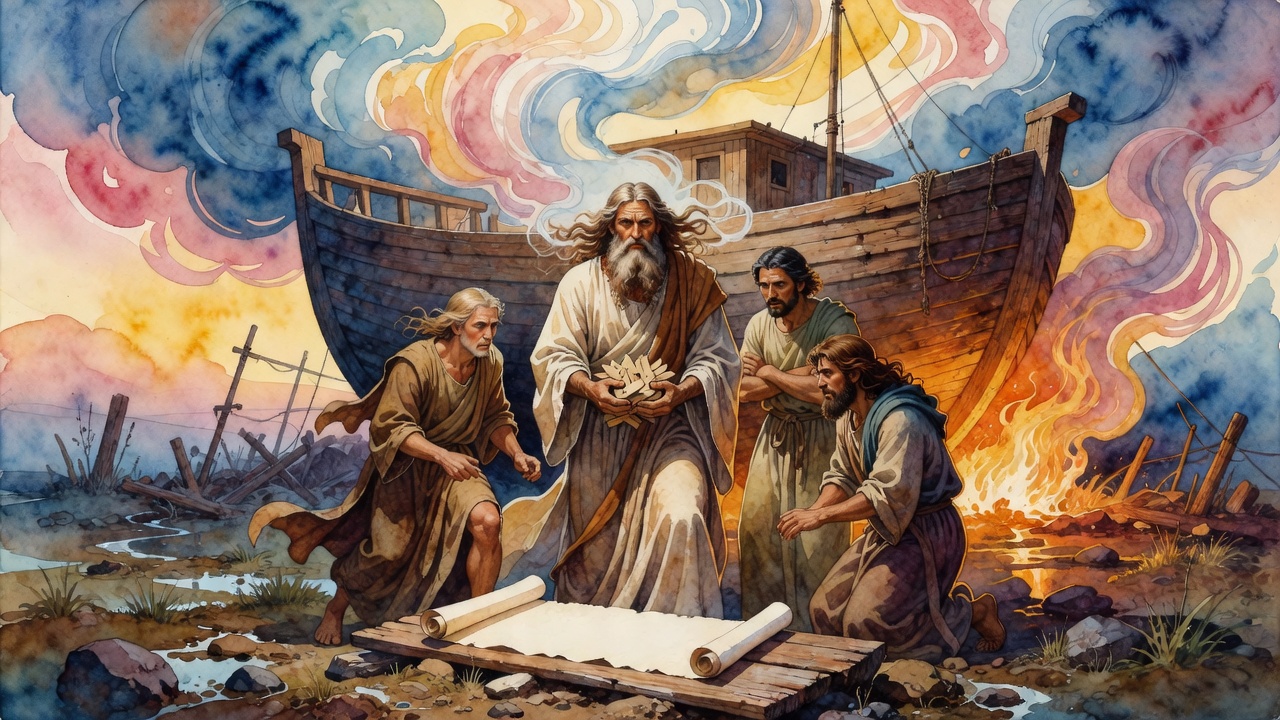
Noah's sons reached into their father's chest and took out a document. The world after the flood was still wet at the edges, and they were already drawing lines on it.
 Click for full size
They divided the earth secretly first, then told him. They wanted his blessing on what they had arranged before it hardened. Noah gave the blessing. He also added a clause that would outlive them.
The Sons Drew Lots in Secret
In the first year of the first week of the thirty-third jubilee they did it in the open. Noah called his sons and their children. Lots, goralot (גורלות), came out of the document. One who had been sent stood with them. They were not alone when the shares fell.
Shem's lot was the middle of the earth, from the mountain range of Rafa to the mouth of the river Tina, an inheritance for generations of eternity. Ham took the south. Japheth took the north and the islands. Noah blessed the God who had put the word in his mouth, and he knew a blessed portion had come to Shem. Eden. The Red Sea. The east. India. Bashan. Lebanon. Asshur. Elam. Babel. The mountains of Ararat.
Shem held the middle of the map as if it might slide. Ham and Japheth watched the lots settle and did not yet speak the oath.
Seventy-Two Families on Marked Ground
The world broke into seventy-two families, seventy-two languages, three portions. Shem received Asia, from Bactria to India, twenty-seven languages and four hundred and six peoples. Ham received Africa, from Aram and Lebanon to the Red Sea, twenty-two languages and three hundred and ninety-four peoples. Japheth received Europe, from Media to the river Tanais, twenty-three languages and three hundred peoples.
Hebrew stayed with Eber. Egyptian with Egypt. Each river marked a line. The Euphrates for Shem. The Nile for Ham. The Tigris for Japheth. The nations were not accidents scattered over blank space. They inherited marked ground. Every people would stand somewhere because a father, a lot, and a boundary put them there.
Canaan was listed under Ham, though the land later called Israel sat in the ledger like a fuse waiting for a hand.
Noah Bound Them With a Curse
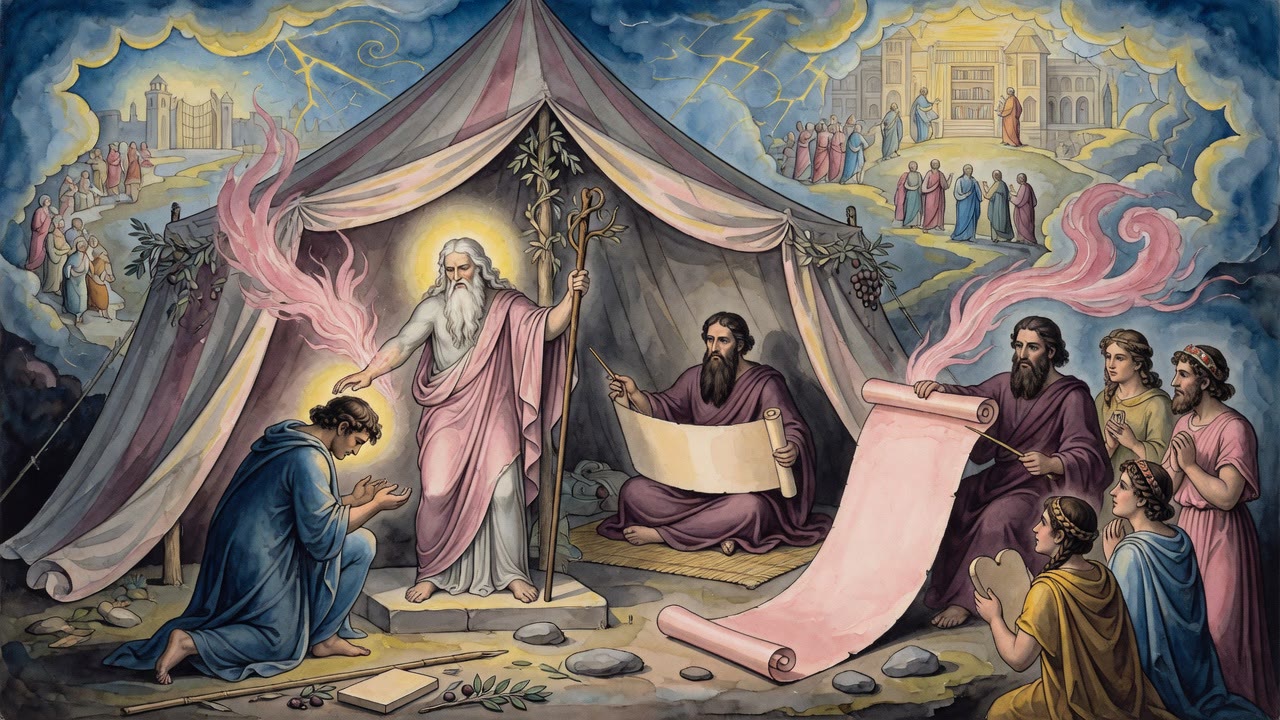
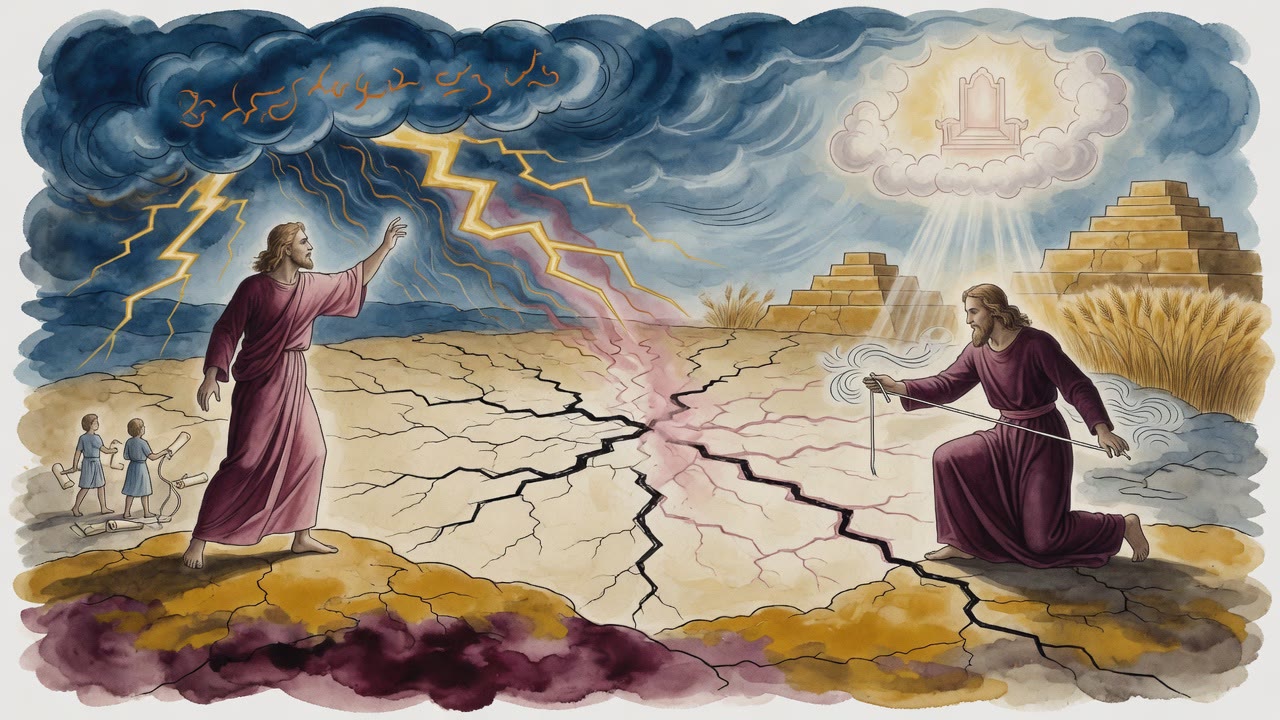
Noah did not treat the map as a suggestion. He bound them by an oath. A curse on anyone who seized a portion that had not fallen to him by lot. The stolen ground would be taken back. The violator's line would suffer for the theft. He made them swear.
They swore. "So be it. So be it," they said, for themselves and their sons forever throughout their generations.
The words hung in the air after the lots were put away. The chest closed. The document went back into the dark. The curse stayed out in the open. Noah looked at each son until the "so be it" had left the mouth twice. Then he let them go to the portions they had drawn.
Joseph Fed Ham's Portion Through Famine
Centuries later Joseph sat in Egypt administering bread. Egypt was Ham's inheritance. Joseph had not crossed the line as a thief. He had been sold into it. From that position he nourished his father and his brothers and all their possessions through seven years of famine, bread as much as sufficed them.
The land of Egypt suffered. People came with empty sacks and left with grain and less land. Joseph acquired all the land of Egypt for Pharaoh in return for food. Then the river overflowed in the eighth year, and he gave the people seed and food that they might sow again. He was managing Ham's ground so it would live, not so he could annex Shem's.
The lines Noah had drawn were still there. What happened inside them was now a matter of a man who remembered hunger. Joseph opened storehouses. He did not open his great-grandfather's chest.
The Curse Waited on the Boundary
Noah had said the thief's line would pay. Joseph's household lived as guests on Ham's portion and sent grain out instead of taking a brother's map. When the famine years were accomplished, the people went back to their fields with seed in their hands. The Nile still marked Ham. The Euphrates still marked Shem.
Somewhere the old document still named Rafa and Tina, Bactria and the Tanais. Somewhere the oath still said, so be it. Joseph found the line by feeding across it without stealing it. He had crossed into Egypt to survive. He administered the most productive ground in the region, and he kept the curse off his own house by refusing to treat Ham's inheritance as a prize.
The chest stayed closed. The storehouses emptied and filled. The boundary held.
← All myths