Potiphar's Baby Son Spoke Up While the Guards Beat Joseph
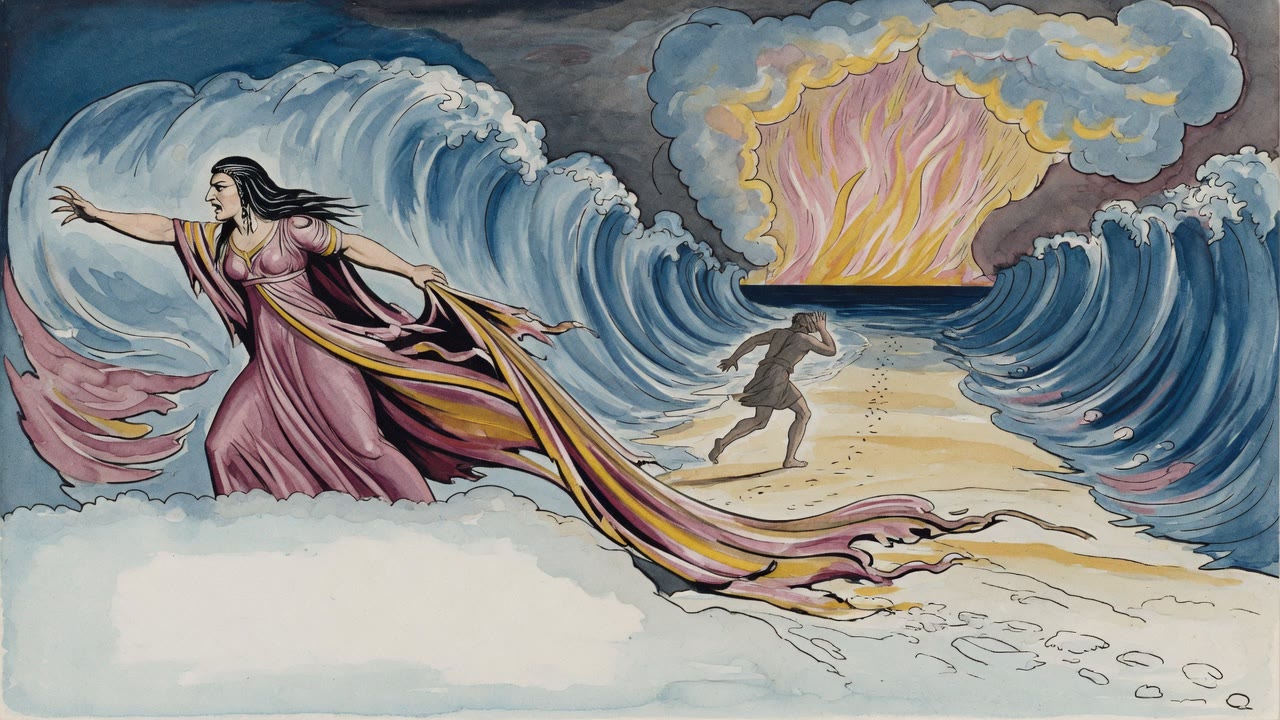
She changed out of her state robes, got back into the bed she had left that morning, and laid the torn coat down beside her. Then she called the house in.
Table of Contents
 Click for full size
The Bed She Climbed Back Into
Zuleika had friends working on her husband already, but she was not going to leave it to them.
She took off the rich robes she wore for company. She put on the plain clothes she had been wearing that morning, when the household went out to the festival and left her behind claiming she was too ill to walk. Then she got back into the sick-bed exactly as she had lain in it at dawn, arranged herself, and laid Joseph's torn garment on the covers beside her where it would be the first thing anyone saw.
Then she sent a small boy running to fetch the men of the house.
The Story She Told Them Standing Around Her
They came in and found their mistress flat on her back, pale, in her ordinary clothes, with a slave's ripped mantle lying on the bed.
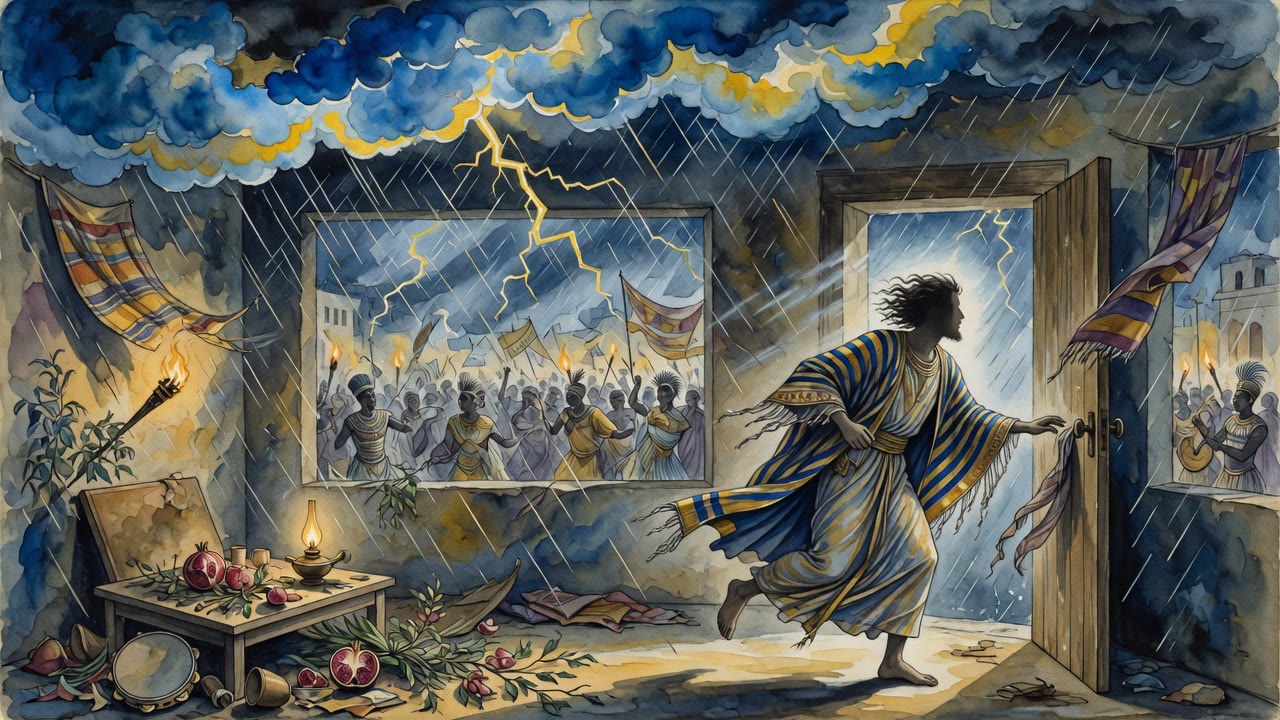
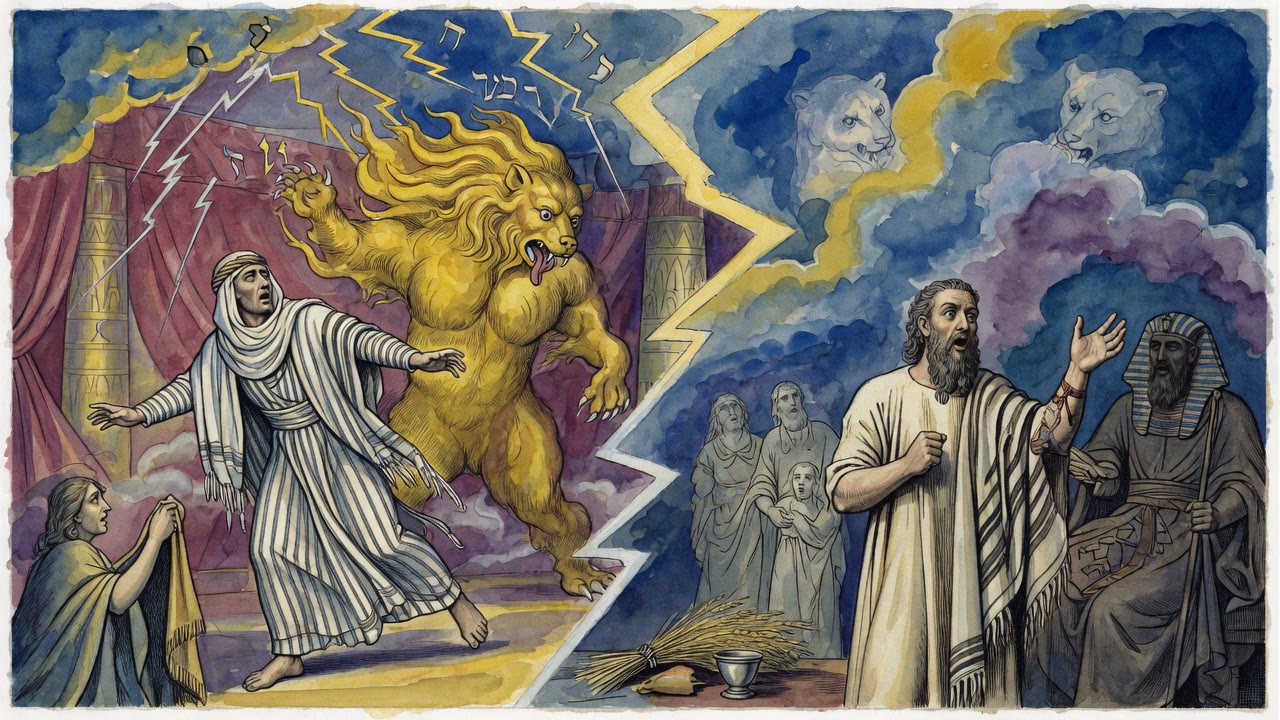
"See the Hebrew slave your master brought into my house. He tried to do violence to me today. You had barely gone out to the festival when he came in here, made certain nobody else was in the house, and tried to force me. I got hold of his clothes and tore them and cried out with a loud voice. When he heard me screaming he took fright and ran, and he got himself out, and he left that garment lying by me."
Not one of them said a word to her. They turned and went straight to their master in a rage.
The Other Complaints That Arrived the Same Day
Potiphar was hearing it from more than one direction. The women Zuleika had been talking to had gone home and worked on their own husbands, and those men came to Potiphar too, to lodge their own grievance about his Hebrew: the slave had been bothering their wives.
By evening Potiphar had a wife on a sickbed, a torn mantle, his own household men swearing to the story, and a line of respectable Egyptians at his door saying the same thing in different words. He gave the order.
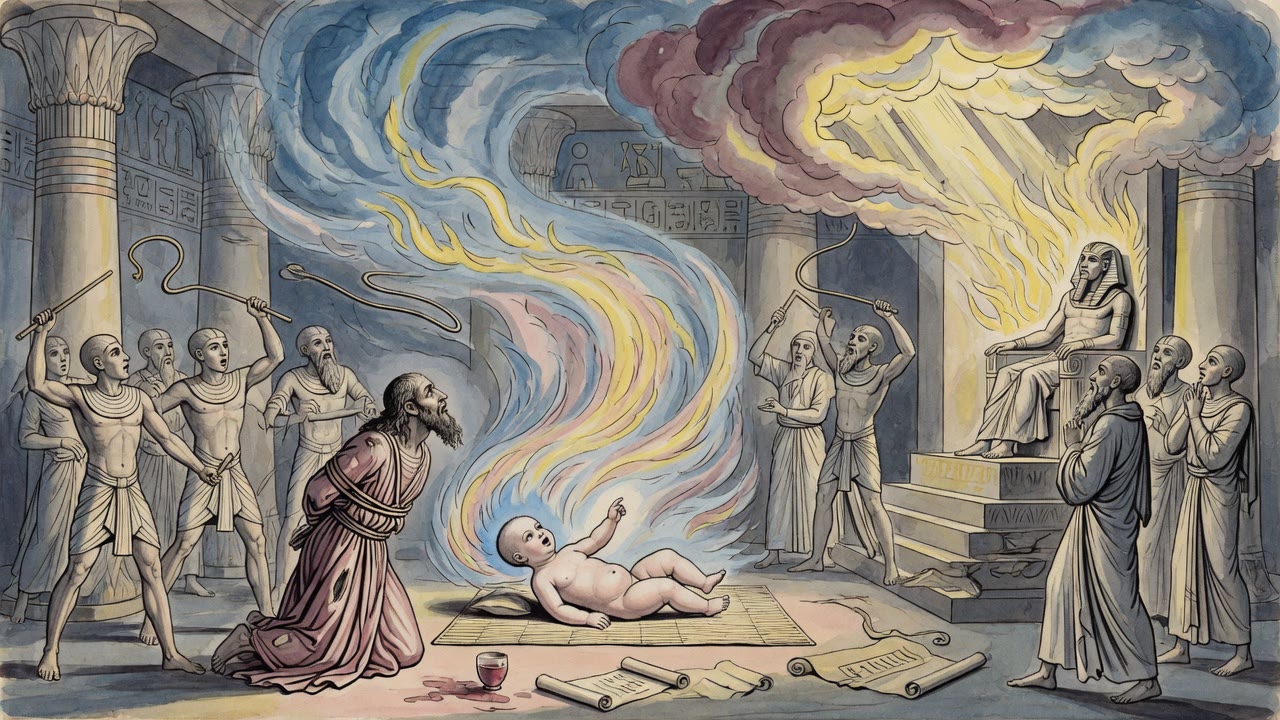
The bailiffs took Joseph out and began to beat a confession out of him. That was the procedure. The beating came before the hearing, and a slave who had assaulted his master's wife was not expected to survive the sequence.
The Voice From the Cradle
Potiphar's infant son was in the house while it happened.
He was too young to be asked anything. Nobody had counted him among the people who might have been present, because a child that age is furniture in a room full of shouting adults. Then, in the middle of it, the baby opened his mouth and spoke.
What he said shamed his father in front of the whole household. Potiphar stopped the beating. He called the bailiffs off, and the men who had been swinging stood there with their arms down while a room full of grown Egyptians looked at a child who had just made all of them wrong.
It did not end the case. It moved it. From the courtyard, where the answer had already been decided, to a court, where priests sat as judges and evidence had to be produced.
What the Judges Found in the Cloth
Joseph stood in front of them and told it straight through, every part of it, exactly as it had happened. Potiphar stood up after him and repeated his wife's version word for word.
Then the judges asked for the garment.
Zuleika still had it. It was carried in and laid out and the priests bent over it and looked for the tear. Where the cloth had given way would settle everything, because a man dragged backward tears one way and a man breaking forward out of a grip tears another, and cloth does not adjust its story to suit the household that owns it.
The tear was on the front of the mantle.
She had held him by the front and he had pulled away from her, and the rip ran where his weight had gone, away from her hands and not toward them. The judges said what the cloth said: the woman had tried to keep hold of him, she had failed, and the charge she brought afterward was invented.
Then they sentenced him.
Not to death. They were explicit that he had done nothing to deserve death. They sent Joseph to prison because a stain had been left on Zuleika's good name, and somebody had to carry it, and the person carrying it was not going to be the captain of the guard's wife. Joseph walked out of that court cleared of the crime and convicted of being the reason people were talking about her.
← All myths