Issachar the Strong-Boned Donkey Who Kept Israel's Calendar
Reuben claimed the second day's offering by birth. Moses held the order, and Netanel of Issachar still brought the dish close.
Table of Contents
Jacob was dying, and he still had names to give. When he reached Issachar, the ninth son, he did not promise armies. He did not promise a throne.
 Click for full size
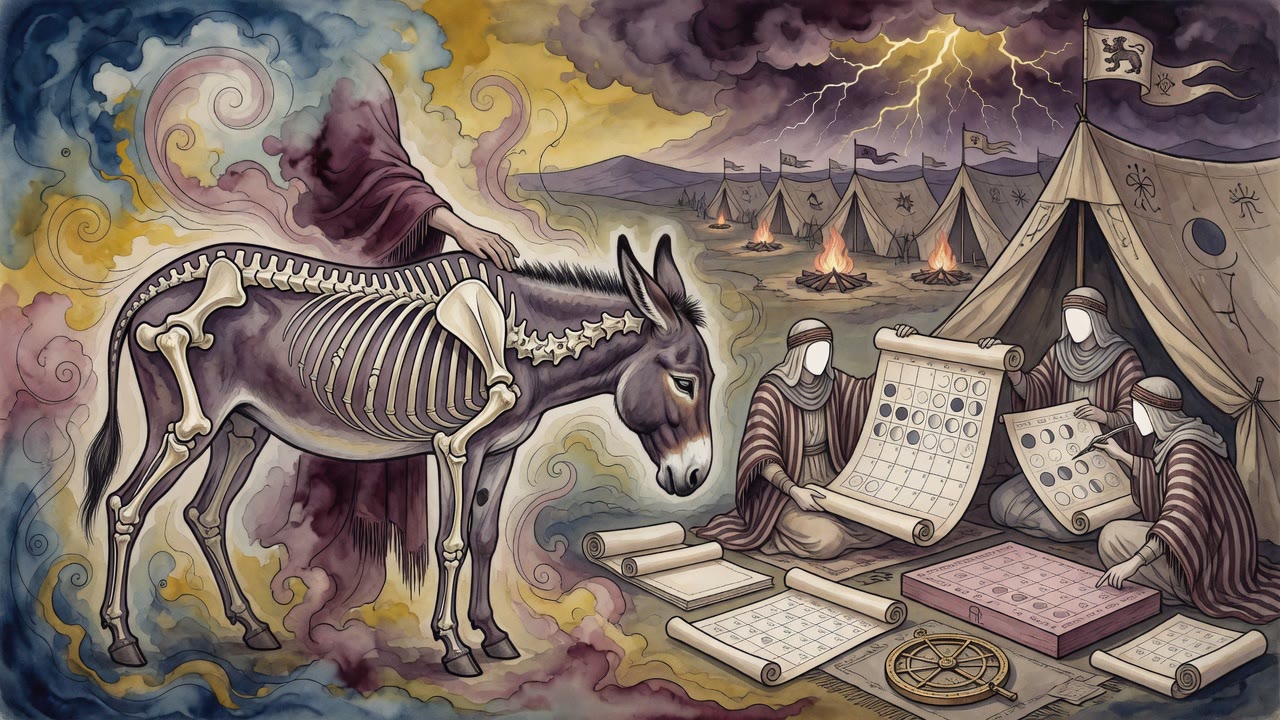
"Issachar is a strong-boned donkey, lying between the sheepfolds" (Genesis 49:14-15).
Jacob had worked fourteen years for his wives and six more for his flocks. He knew a load when he saw one. A donkey is lean. The bones show. Anyone looking knows what the animal is for: the long road, the weight no one else wants, the work that does not glitter.
Reuben Wanted the Second Day
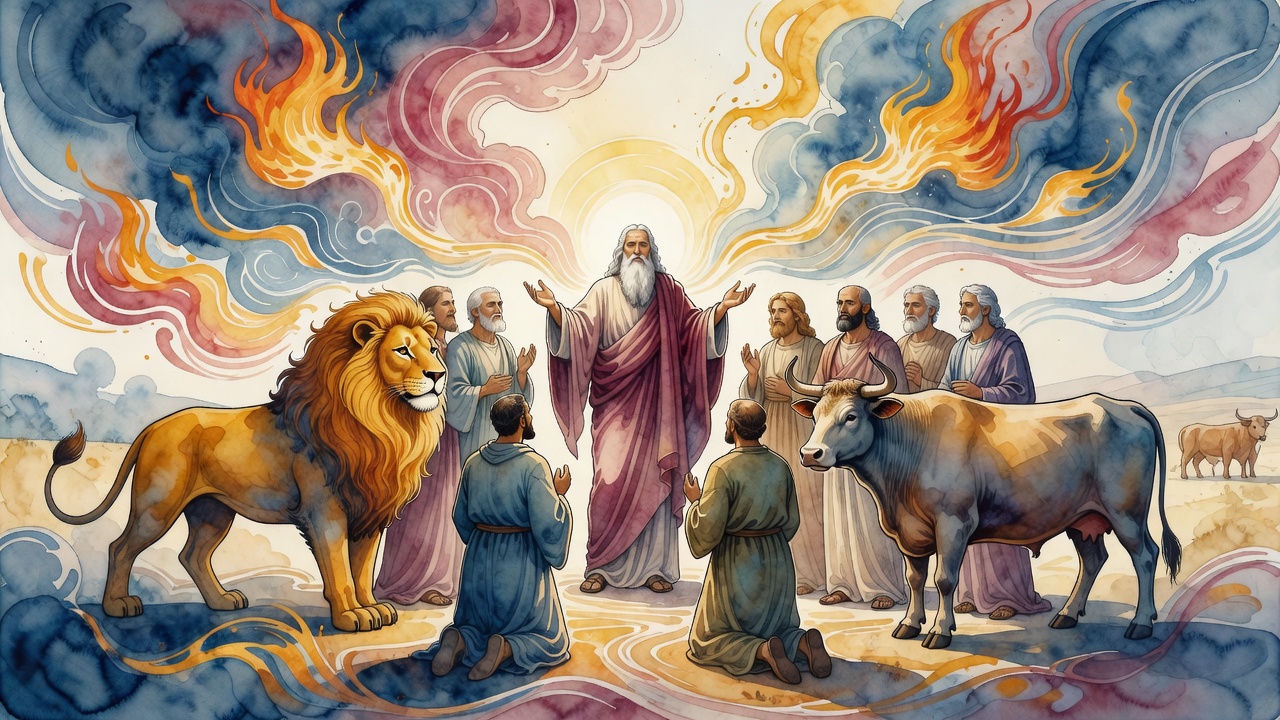
Generations later, at the dedication of the Mishkan, the Tabernacle, the tribal princes came forward with the same gift, one day each (Numbers 7:18-19). Judah went first. On the second day Netanel son of Tzuar, prince of Issachar, stepped toward the altar with a silver dish in his hands.
Reuben was already talking. Judah had led in the wilderness. Judah had gone first in the offerings. If not first place, Reuben said, then second should follow birth. The eldest had a claim.
Moses heard him and did not move the sequence. The order had been set by God, according to the journeys, not according to seniority.
Netanel still came. While Reuben argued, the dish kept moving. The verse that recorded that day used a word it did not spend on the others. Hikriv (הקריב). He brought it close. He pressed the offering forward instead of setting it down and stepping back. Issachar, second in line and never first in anyone's reckoning, left a mark in the language by refusing to wait for a better hour.
The Rows Between the Folds
"Lying between the sheepfolds," Jacob had said. Between two folds. Not fully inside one world or the other.
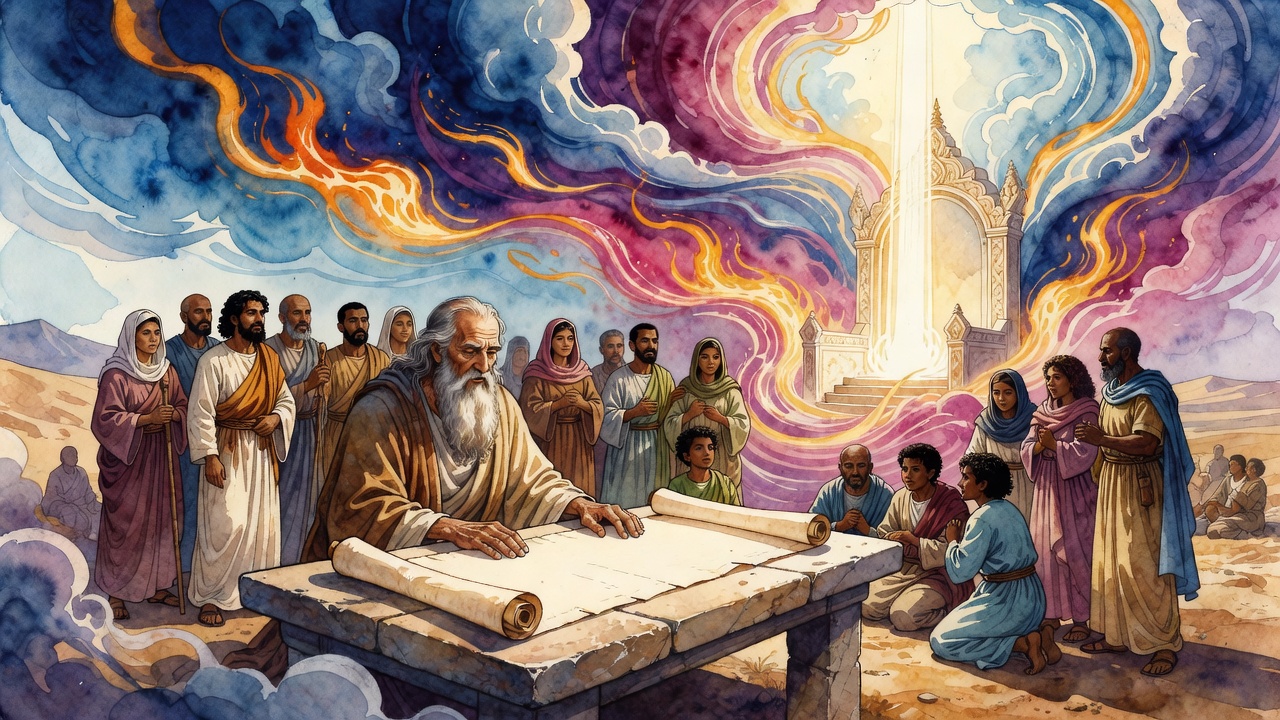
Issachar's scholars sat in the three rows before the Sanhedrin, the court that ruled on law. Faces toward the arguments. Places assigned. The space between knowing and ruling was a load, and they took it.
They kept the calendar. New moon. Festivals. The Sabbatical year. The Jubilee. If the count slipped, Passover fell on the wrong night. The Day of Atonement could be kept a day early or a day late. The nation's holy time turned on men whose learning showed the way a donkey's bones show, without ornament, from across a room.
He saw rest, that it was good. They read that rest as Torah, and they bent their shoulders to it. Other tribes would later come bearing presents, not as subjects to a king, but as people who needed the count to be right.
Rabbi Meir Named Issachar
Rabbi Meir was traveling through Samaria when a man stopped him and claimed descent from Joseph. Viceroy. Dreamer. The glamorous brother. Meir shook his head.
"From whom, then?" the man asked.
"From Issachar."
The man did not want that answer. Meir pointed at the list of Jacob's sons who went down to Egypt (Genesis 46:13). Among Issachar's sons was a name: Yov. A short syllable, like affliction. Issachar's line carried a name that means suffering and did not ask to be renamed.
The chief magistrate of the Samaritans heard what Meir had done and cut his own man with a rebuke. This rabbi removed you from Joseph, he said, and did not even manage to land you on Issachar. The glamour was gone. The load had not yet been accepted. That was the insult, and also the truth of the tribe. Joseph dazzled Egypt. Issachar calculated months.
The Shoulder Stayed Bent
Jacob had not been reaching for an insult. He had been recognizing a back that would not straighten for comfort.
Judah would produce kings. Joseph would run a famine. The soldier-tribes would be sung in battle. Issachar would sit between the folds, between labor and holiness, and keep the days from slipping. Month after month, in rooms where the calendar was kept, men with visible bones of learning bent over their work and said when Israel's sacred time began and ended.
Netanel had already shown the posture. He brought the dish close while a firstborn argued for rank. Rabbi Meir had already named the alternative to glamour. A donkey crouched between two folds, still carrying what it was given.
Strong-boned. Bent. Moving forward. Jacob had named them exactly.
← All myths