Jeremiah Hides the Ark Before Babylon Arrives
His men tried to scratch the rock so they could find the cave later. Jeremiah turned on them. God would show the Ark when God chose.
Table of Contents
 Click for full size
An Angel Lifted What Babylon Must Not Touch
The Babylonian camps were already in the hills when God sent Jeremiah a task that had nothing to do with speaking.
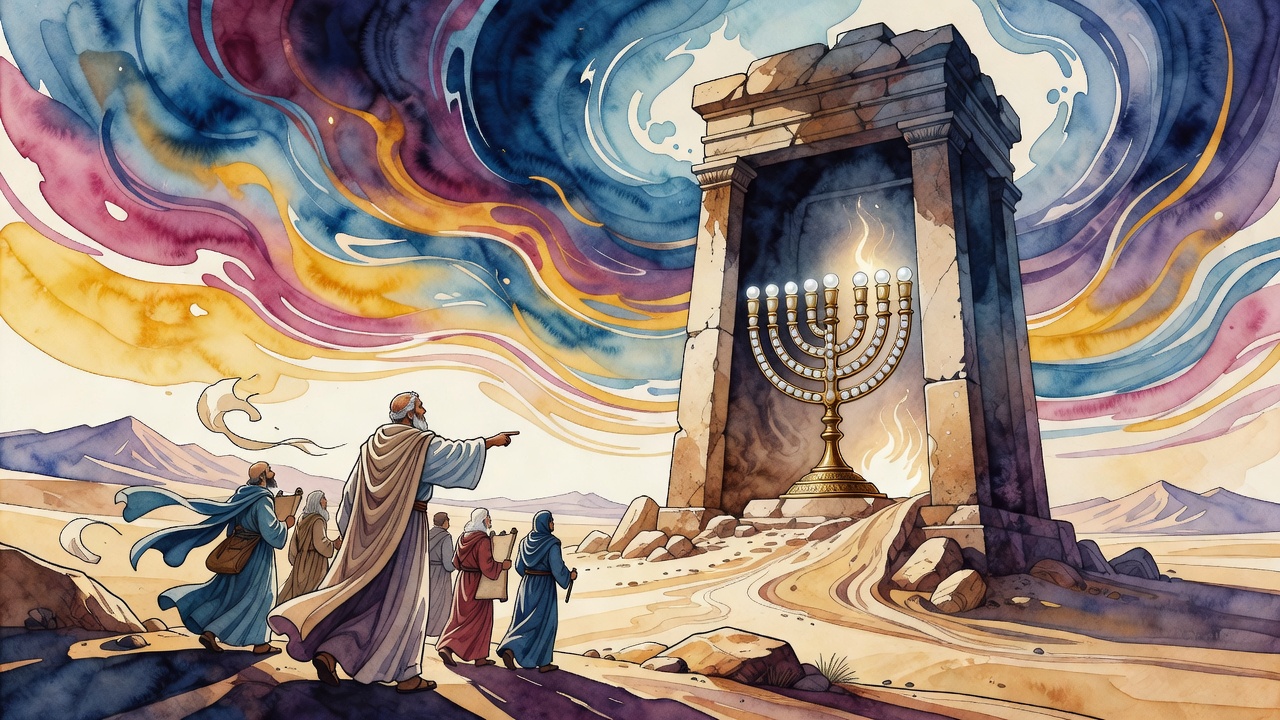
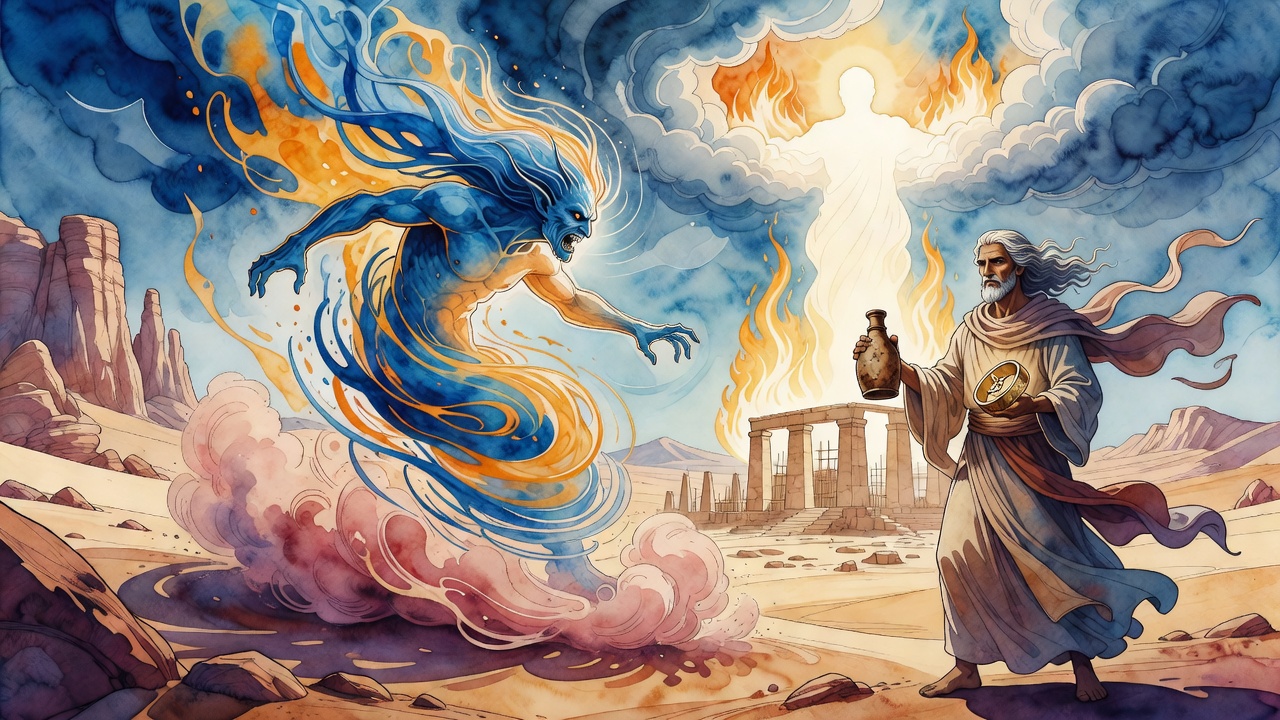
He was not told to preach. He was told to hide things, and he hides them in order. The Aron HaKodesh (ארון הקודש), the Holy Ark, first. Then the altar of incense. Then the sacred tent. These were not to be listed by generals, not hauled into Nebuchadnezzar's house as proof, not found by anyone who came after.
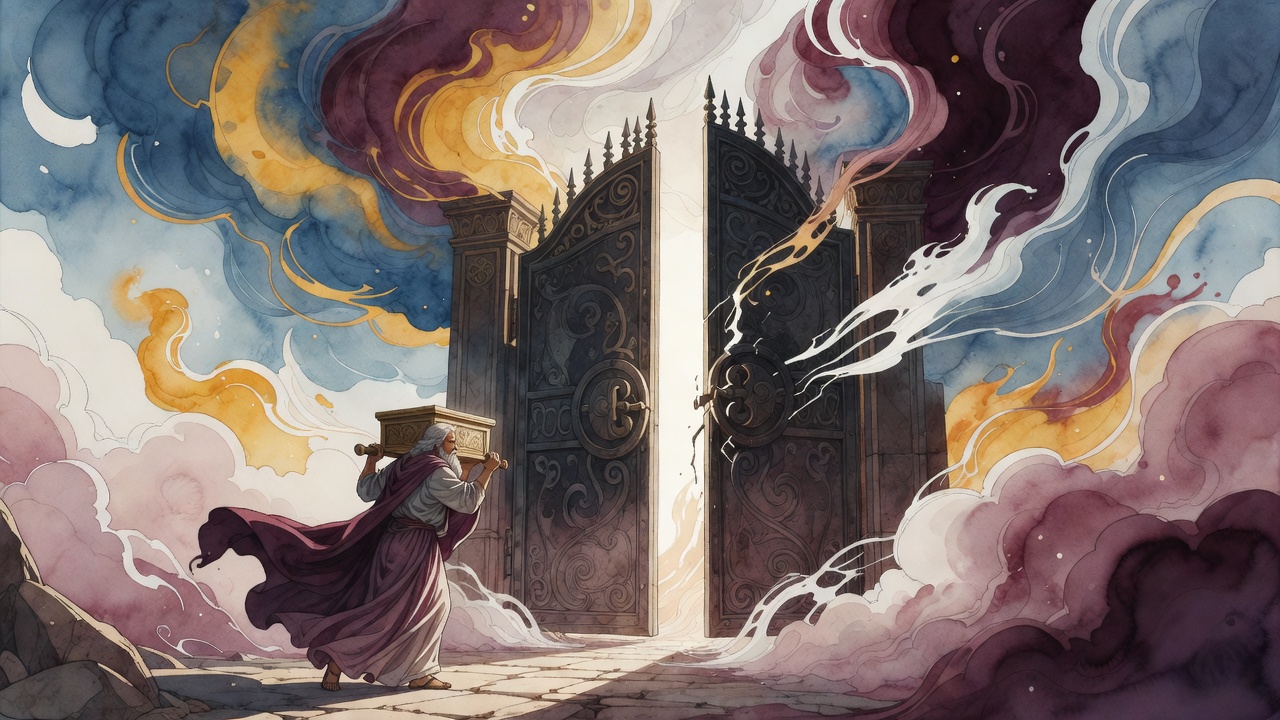
He walked the courts while they still had priests in them. He put his hand on the Ark's poles. He did not wait for the battering ram. An angel took the vessels up off the floor of the Temple while the city still stood, and Jeremiah followed on foot, out through a gate that had not yet been broken.
The Cave on the Mountain Moses Never Crossed
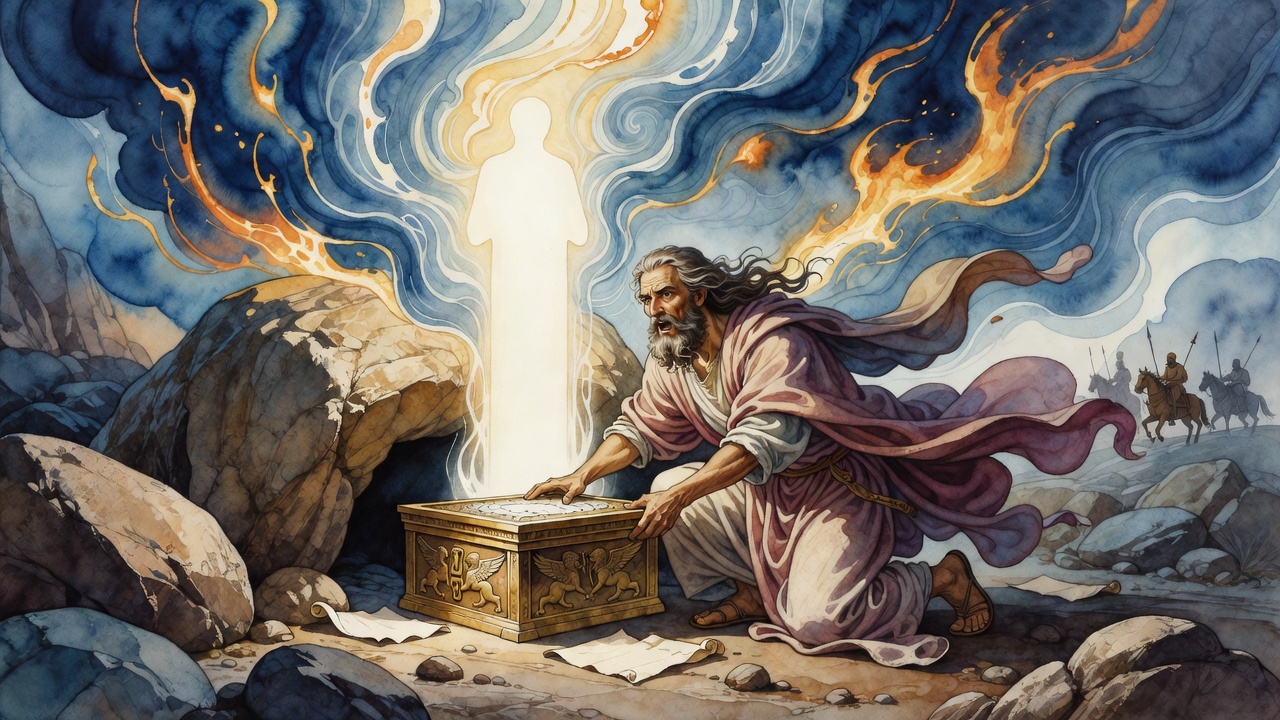
The angel set them down on the mountain where Moses had stood before he died, looking across the Jordan at a land he would not enter. Jeremiah climbed after, catching at scrub, cutting his palms on the rock. He found a cave in the face of the hill. He went in on his knees. He put the Ark inside, then the altar, then the tent. He backed out and sealed the mouth with his own hands, shoving stone until the gap was gone.
Dust rose and settled. The stone took the seal and kept it. Moses had stood on this same height and been refused the crossing. Now the Ark sat in that stone, waiting for a day Jeremiah would not live to see. He stood outside the closed mouth and did not look for a landmark. He turned downhill without marking a tree.
His Companions Tried to Mark the Way
Some of the men who followed him wanted a trail. A cairn. A scratch on the face of the rock. Something a later generation could read, so that when the exile ended someone could walk back up and bring the Ark home.
They went after him. They lost the entrance. The slope looked like any other slope. The rock looked like rock. One of them knelt and dug with a knife anyway, cutting a shallow line that the next rain would erase. Another piled three stones and kicked them down when he could not tell which cleft they had come from. They called Jeremiah's name into the mountain and got no answer back.
When Jeremiah learned what they had tried, he turned on them.
"The place is unknown," he said, "and it shall remain unknown. These things will not be found by searching. They will not be recovered by explorers or by scholars with maps. The Ark will return when God decides it is time, and at that moment it will become visible, and not before."
He would not allow a mark.
The Temple Doors Had Already Refused a King
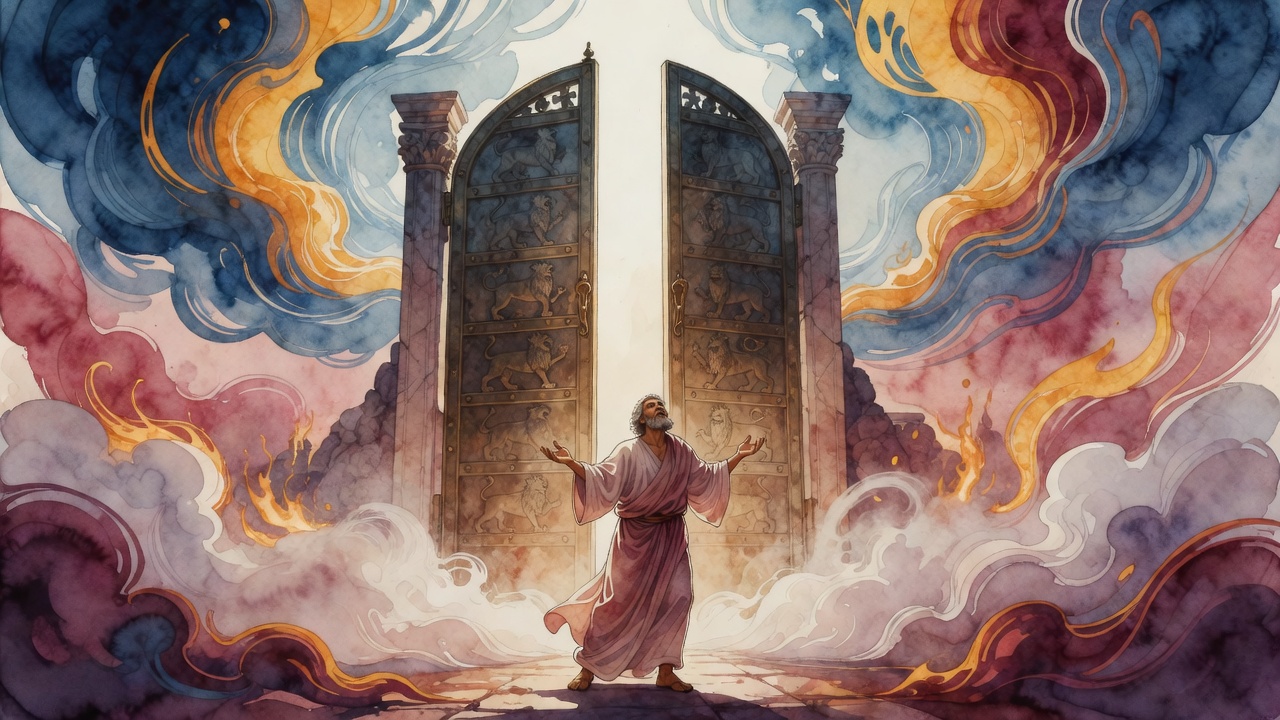
Long before Babylon, Solomon finished the House and tried to bring the Ark in. The doors would not open. He offered twenty-four prayers. He cried, "Lift up your heads, O you gates" (Psalms 24:7). The gates stayed shut. He had said, "I have built You an exalted house," taking the work as his own.
Only when he asked for the sake of David did the doors move, and the Ark went in.
The Ark had refused a king at the height of his glory. It would not now take a scratch from Jeremiah's friends. He left the mountain unmarked. Babylon arrives at the walls, and the army enters the city. The Temple burns. The cave stays shut, and no one living can point to the door.
← All myths