Joshua Crossed the River and an Altar Nearly Split the Country
Fifty thousand men crossed the Jordan to fight for land they would never live on. When they went home and built an altar, Israel armed against them.
Table of Contents
 Click for full size
The Priests Stood in the Riverbed
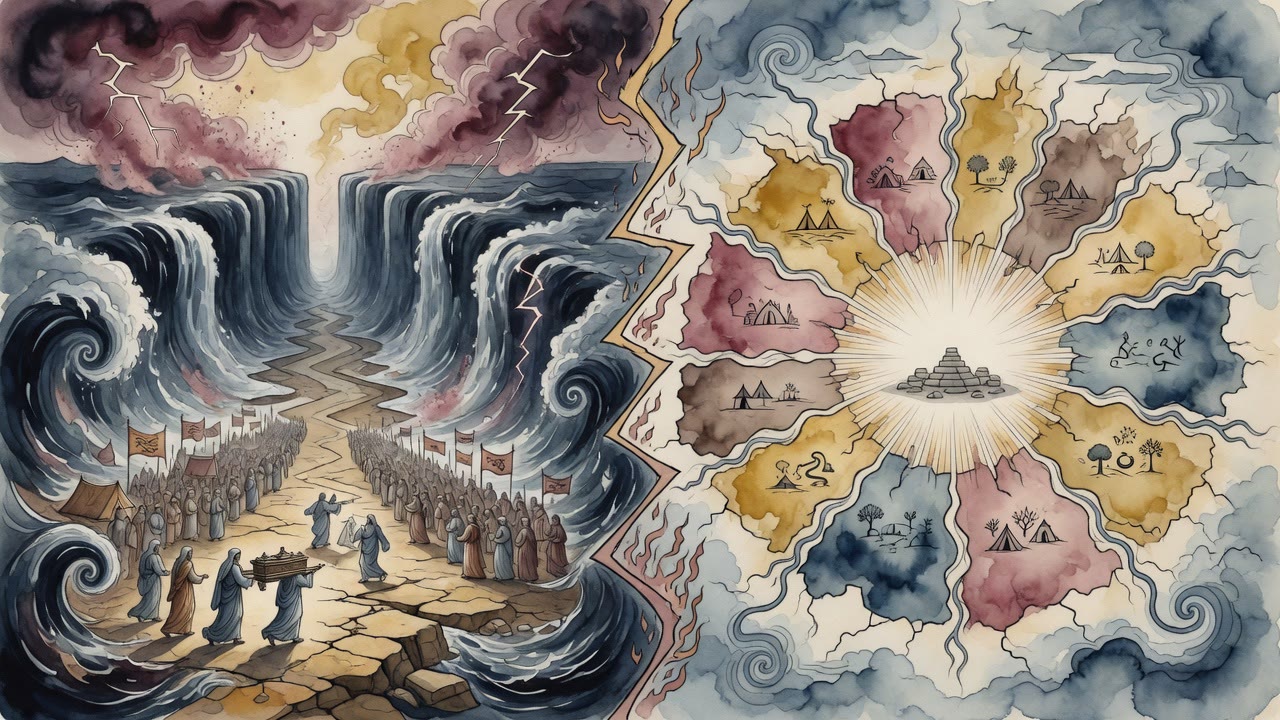
The priests went in first with the ark, and the water thinned around their ankles until the sand of the riverbed showed through. Behind them came the Levites carrying the tent and the vessels. Behind them came everyone else, tribe by tribe, the children and the wives walking in the middle of each column because the parents were afraid the current would take them.
The priests did not move. They stood in the middle of the channel holding the ark while the whole nation walked past them and up the western bank. Only when the last of them was on dry ground did the priests come out, and the Jordan closed behind them and rose back to its ordinary size.
Fifty thousand of the men who crossed that day owned nothing on that side of the river. Reuben, Gad and half of Manasseh had already been given the Amorite country east of the water. Joshua had called their chiefs together before the crossing and reminded them what they had sworn to Moses, who had worn himself out for them and had not stopped even while he was dying. They armed and came over anyway.
Land Measured by Its Goodness
Years later Joshua was old and the war was not finished. Thirty-one kings had gone down, but the strongest walled towns were still standing, because the Canaanites had spent the whole forty years of the wilderness making their cities harder to take.
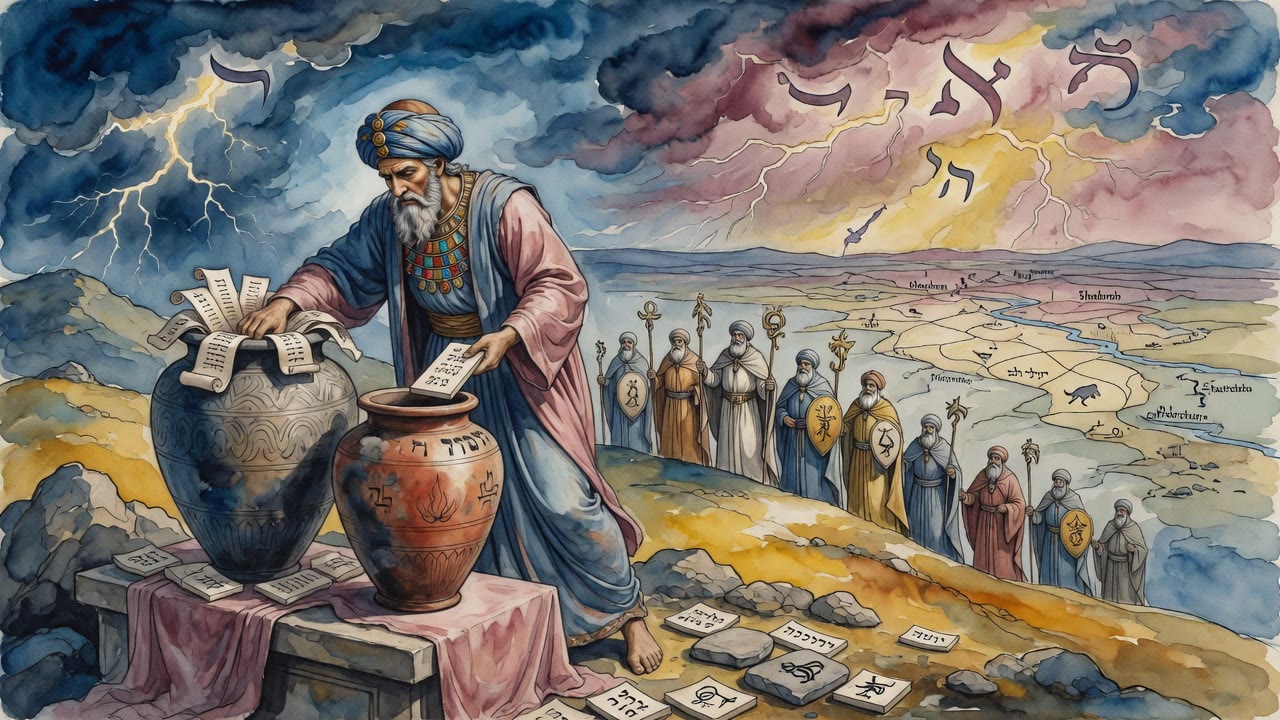
He gathered everyone at Shiloh and sent out ten men, one from each tribe and each with a reputation for honesty, and he sent surveyors with them who knew the craft of measuring. His instruction was odd for a general. Do not bring me back the size of it. Bring me back what it is worth. One field near Jericho was worth a thousand acres somewhere in the hills, and he would not hand a tribe a large portion of stone and call it a share.
The ten came back in the seventh month, and Joshua divided the land by lot. Judah took the high country as far as Jerusalem. Benjamin got the narrowest strip of all of them, and got it because the ground was so good, and because Jericho and Jerusalem sat inside it. The Levites were given no country at all, only thirty-eight towns scattered through everyone else's land, and three of those were set aside for anyone who killed a man without meaning to and had to run somewhere.
The River Is Not a Border
Then Joshua dismissed the eastern tribes. He stood in front of fifty thousand men who had fought a war for land they would not live on and told them they could go home.
"Do not imagine, because this river is between us, that you are of a different race and not Hebrews," he said. "We are all the posterity of Abraham, we who live here and you who live there."
He saluted the officers one by one and then the crowd together, and stayed where he was. The rest of the nation walked the eastern tribes to the ford, and they were crying, and nobody seemed to know how to say goodbye.
The Altar on the Far Bank
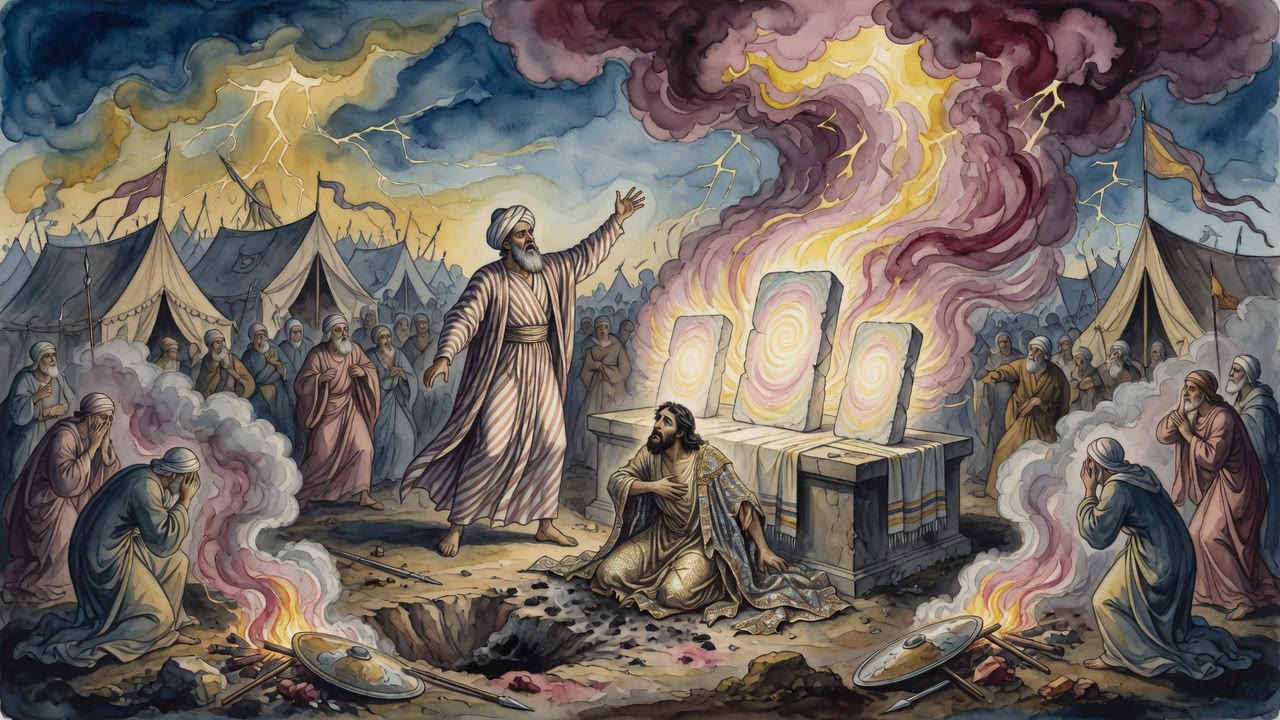
On the other side, the men of Reuben and Gad and Manasseh built an altar on the bank of the Jordan where anyone crossing would see it.
The report that reached the west was that an altar had gone up. Nothing about why. What the western tribes heard was that the men they had just wept over had crossed the water and immediately started sacrificing to strange gods, and they believed it, and they took up their weapons. They did not care that these were their brothers or that their commanders were men of standing. They cared how God had said He wanted to be worshipped. They formed up along the water to cross and punish them, and the country very nearly split along the line of the river.
Joshua stopped them. Eleazar the high priest and the elders stopped them. Their argument was small and slow: try words first, and if the words prove the worst of it, then go. So they sent Phineas, Eleazar's son, and ten men with him, across the river to ask.
Phineas Asked and Waited for the Answer
An assembly was called on the eastern bank, and Phineas stood up in the middle of it. He did not soften the accusation. The offense was too heavy to be fixed with talk, he said, and the only reason there was talk at all was kinship and the chance that they might still be brought back.
"Do not imagine that because you have got over the river you have got out of the reach of God's power," he told them. "You are everywhere in places that belong to Him." If they wanted to be free of it, he said, the land could be divided all over again and this eastern country left empty for sheep. Then he stopped arguing and begged. By your children. By your wives. Do not make us punish you.
The governors answered that they had never left them and had never built anything new. They worshipped the same God. Their sacrifices went on the bronze altar in front of the tent, the way everyone's did. The thing on the riverbank was not for burning anything. It was a marker, so that a hundred years from now no child born on this side could be told he was not one of them.
Phineas approved of the answer and carried it back across. Joshua heard it and offered a thanksgiving sacrifice, glad he would not have to draw up his own people against his own people, and sent the assembly home. He lived at Shechem after that. Twenty years later he called them in once more, an old man reminding them how low they had started, and then he died at a hundred and ten, and they buried him at Timnah in the hills of Ephraim.
← All myths