Judah Kept Failing, Then Stood in Benjamin's Place
The Egyptian lord held Benjamin. Judah stepped forward and offered his own neck. Years earlier he had sold a brother for silver.
Table of Contents
The pit was Judah's idea.
 Click for full size
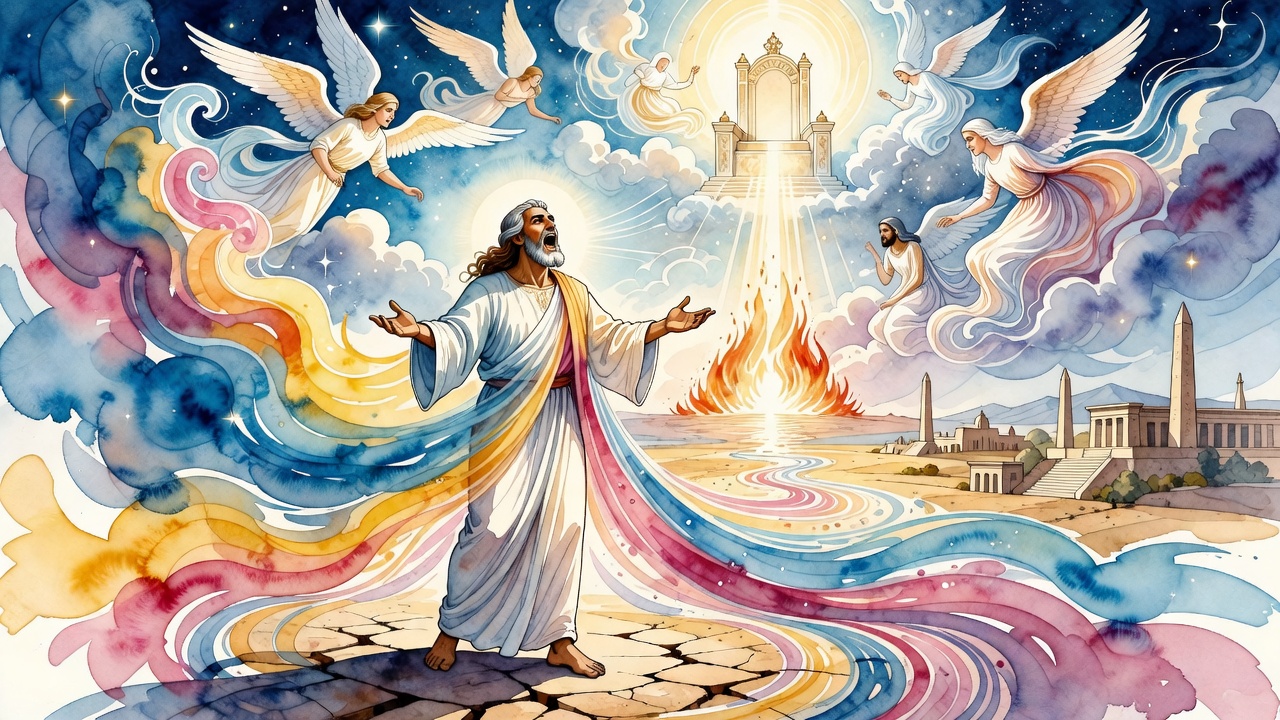
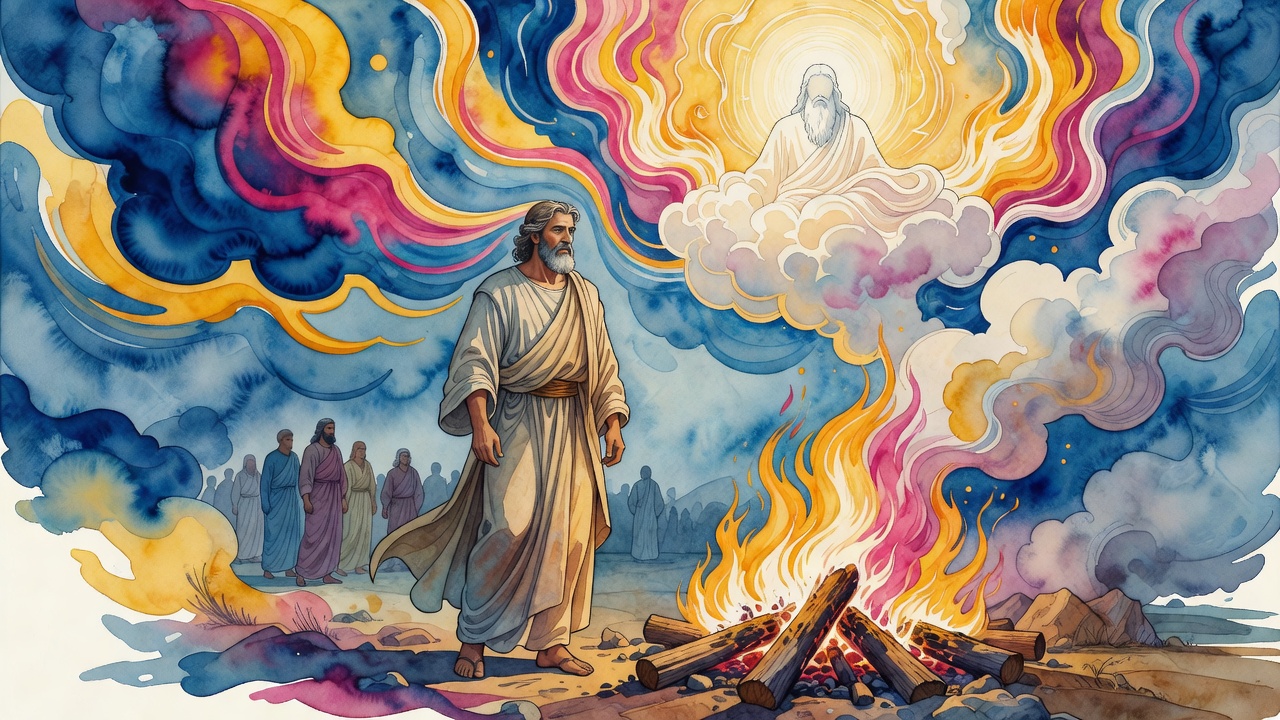
He stood at the rim while Joseph's voice came up from the dark, thin and furious. The brothers sat down and ate bread as if a meal could cover the sound. Judah had already talked them out of killing the boy. Blood on the ground would stay. Silver in the hand would travel. When the Ishmaelite traders came down the road, he named that as mercy. He named the price too. They pulled Joseph up, put a chain on him, and sold him (Genesis 37:28). The caravan shrank south. Judah walked away with his hands empty of blood and full of the sum that had gotten him there.
He Left the Brothers and Buried Two Sons
He did not stay. He went down from them, married a Canaanite woman, and built a house that had nothing to do with the hole in Canaan. Two sons died. He sent his daughter-in-law Tamar back to her father's house with a promise he did not mean to keep. When the third boy was old enough, Judah never sent for her (Genesis 38:14). She waited in widow's clothes. He sheared sheep and did not think about the pit.
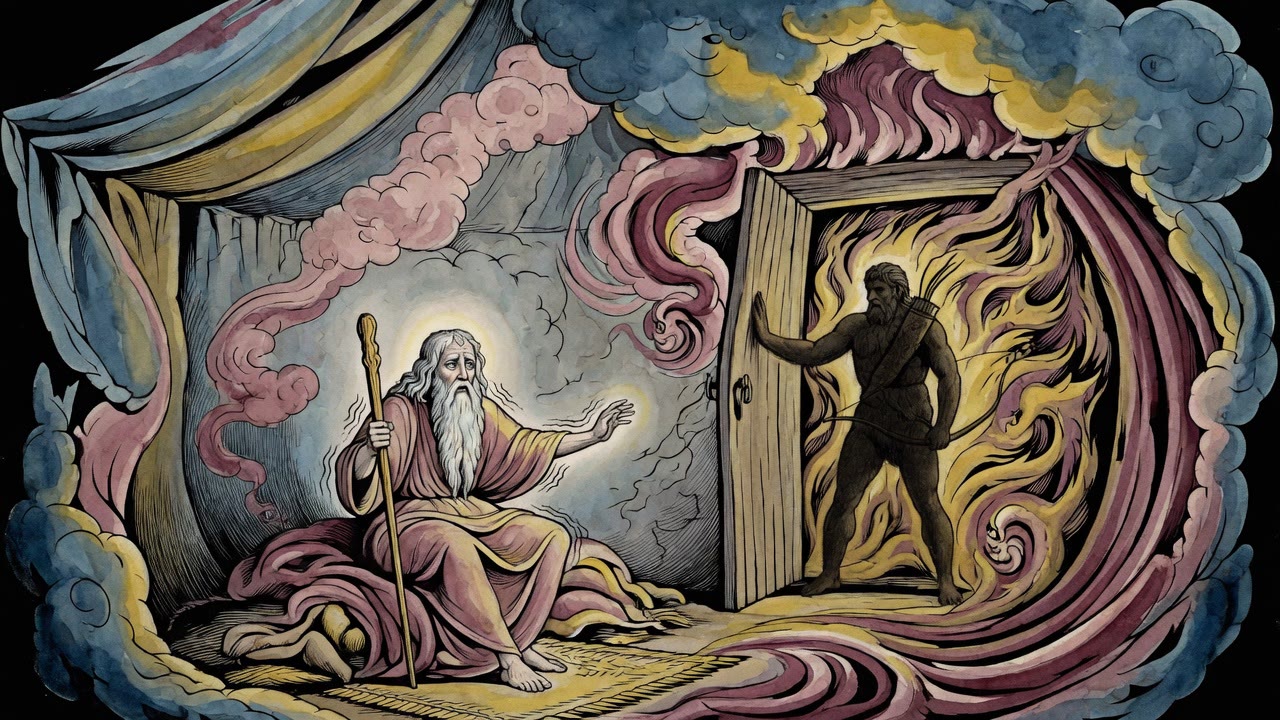
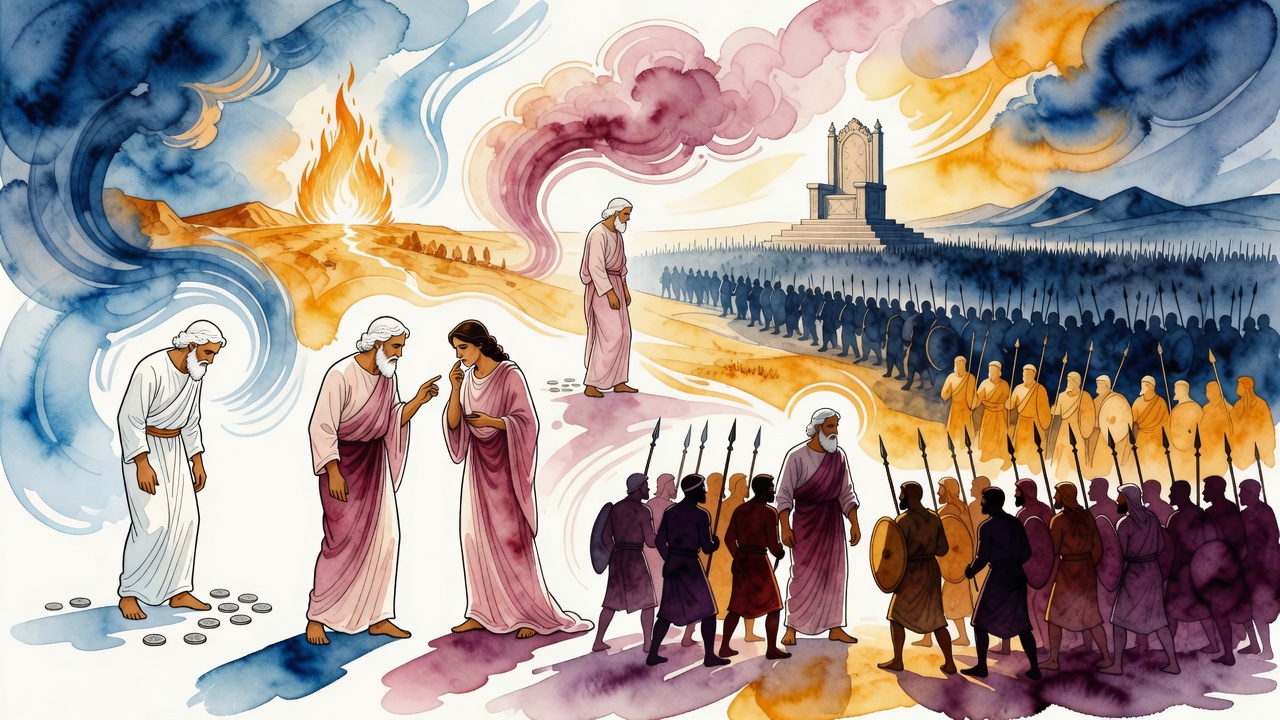
Tamar heard he was going up to Timnah for the shearing. She took off the widow's clothes, wrapped a veil over her face, and sat at the crossroads near Enaim. Judah saw a woman on the road and took her for a harlot. In his own house she had always covered her face. He had never learned the look of her. He went to her. He had no payment on him. He left three things as a pledge: his seal, his cord, and his staff.
She Sent Him His Own Staff
Three months later a man came running. Your daughter-in-law has played the harlot, he said. She is pregnant by it. Judah did not ask a question. "Bring her out and burn her" (Genesis 38:24).
Tamar sent the three objects ahead of her. She did not shout his name in the street. She put the evidence in his hands and waited.
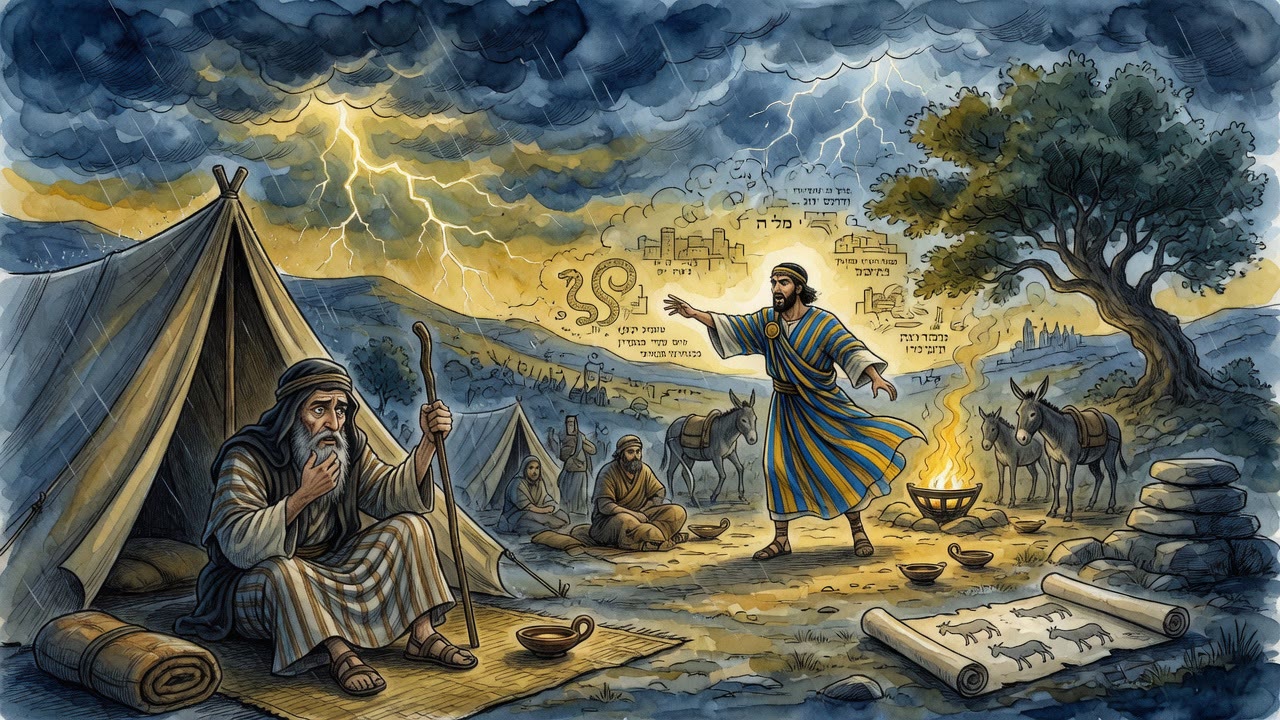
Judah held his own seal. He turned it in his palm until the cut of it was familiar, the same cut he had pressed into clay a hundred times. He held his own cord. He held his own staff. The town was watching. He could have said he had been tricked. He could have said he had not known. The words that came out were the expensive ones. Tzadkah mimeni (צָדְקָה מִמֶּנִּי), she is more righteous than I. He said it in front of everyone. Honor was the only coin that counted in that country, and he spent it in one sentence.
He Put His Own Neck Out
He said it once. After that he could not walk away from a brother the way he had walked away from the pit.
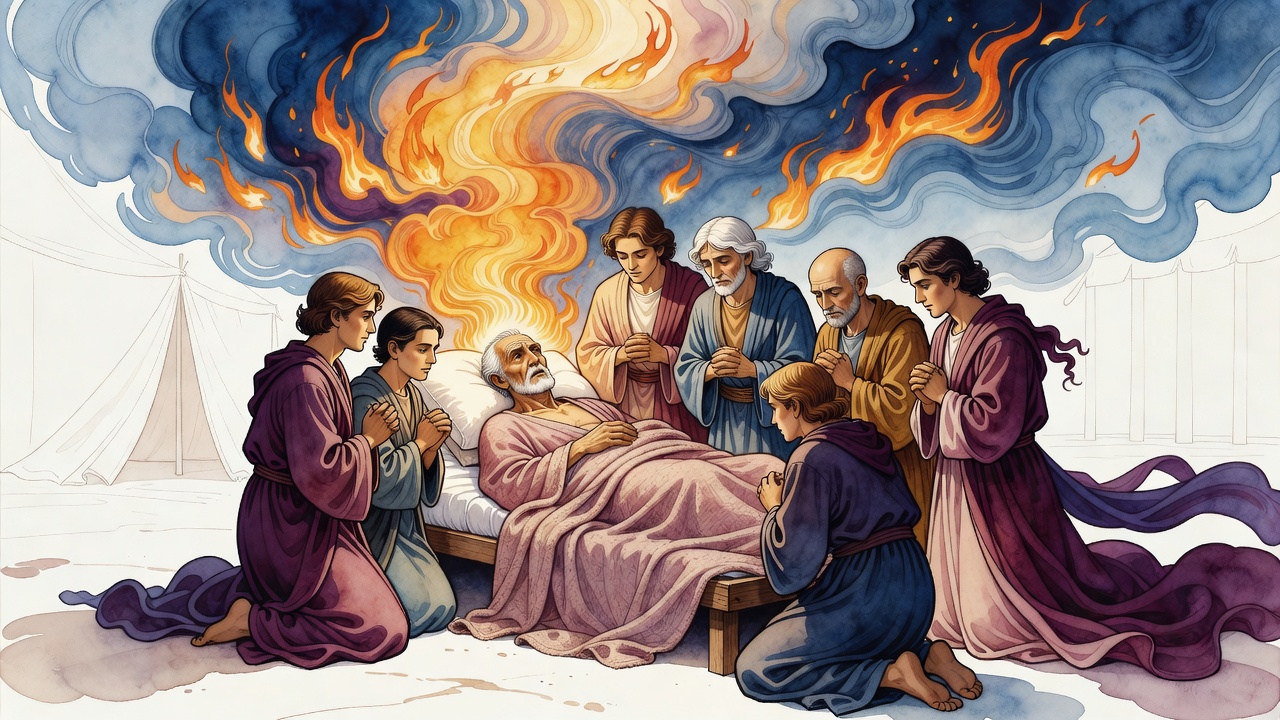
Years later the same brothers stood in Egypt before a lord who accused Benjamin of theft. The lord was Joseph. Judah did not know that. Benjamin was being held. Jacob was in Canaan, an old man who had already buried one son in his heart and would not live through burying another. Judah had pledged himself as surety for the boy before they left home (Genesis 43:9). He had made that kind of pledge before, to Tamar, and broken it. He was not going to break this one.
He stepped forward and demanded to speak. He told the Egyptian everything. The father's grief. The son who was gone. The son who was left. The old man who would go down to the grave if the boy did not come home. Then he offered his own body. Take me. Leave the boy. I will be the slave.
He had once priced a brother in silver beside a hole in Canaan. He was pricing himself now.
Joseph could not hold the wall of his rank. He cleared the room. He said his own name to them in Hebrew, and the weeping came out of him like water through a broken gate.
The Cry at Isaac's Grave
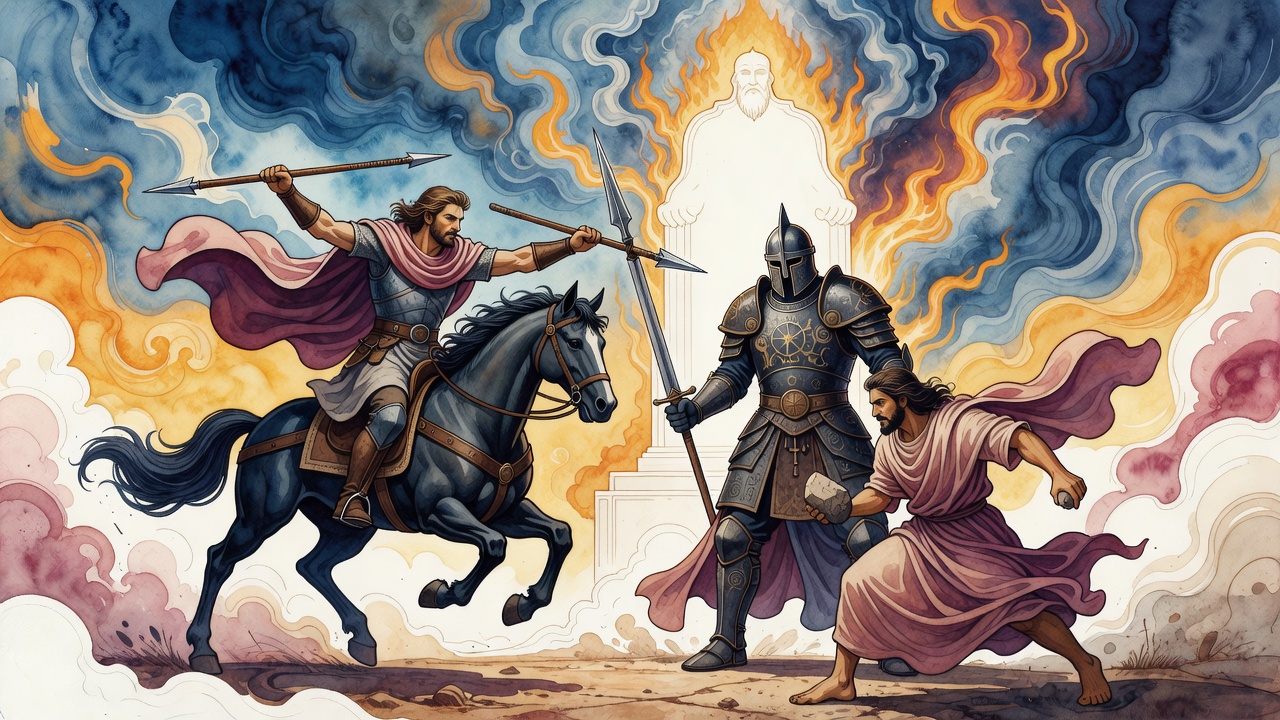
At Isaac's burial the sons gathered to carry the old man into the cave at Machpelah (Genesis 35:29). Esau waited near the mouth of the cave. He had not come only to mourn. The brothers stepped back to honor their father. Esau did not step back. Judah watched him across the courtyard and understood the angle of the body before anyone else did.
He had used his voice once to spend his honor in public. He used it now as a weapon. The war cry from the front of the line turned the burial into a fight. Judah killed Esau at their father's funeral and left the old hatred in the ground beside the patriarch.
Eight Hundred Against Thirty Thousand
The name did not stay in Canaan. Centuries later a man called Judah Maccabee carried it into another war. The general Baqidos came down on him at Laish with thirty thousand soldiers. Judah had three thousand. The three thousand looked at the lines and fled. Only his brothers and eight hundred veterans held. Men who had already gone in with him and did not know another habit.
Baqidos split the army. Fifteen thousand on the right. Fifteen thousand on the left. The shouting from both sides filled the field. Judah saw that Baqidos himself commanded the right wing. He did what the name had always done. He charged the strongest point.
They tore through the line until the dead lay so thick that Judah had to walk on them to keep moving. He reached Baqidos. He shattered the right wing and drove what was left toward the sea. Then he turned. The left wing had come around behind the eight hundred and closed the ring. There was no road out. Judah fought until there was nothing left to fight with. He died in the field.
The man kept failing. He kept going in. No surprise. No plan for the door behind him. The right point of entry, and then through.
← All myths