King Hiram Built a Throne and Claimed Immortality
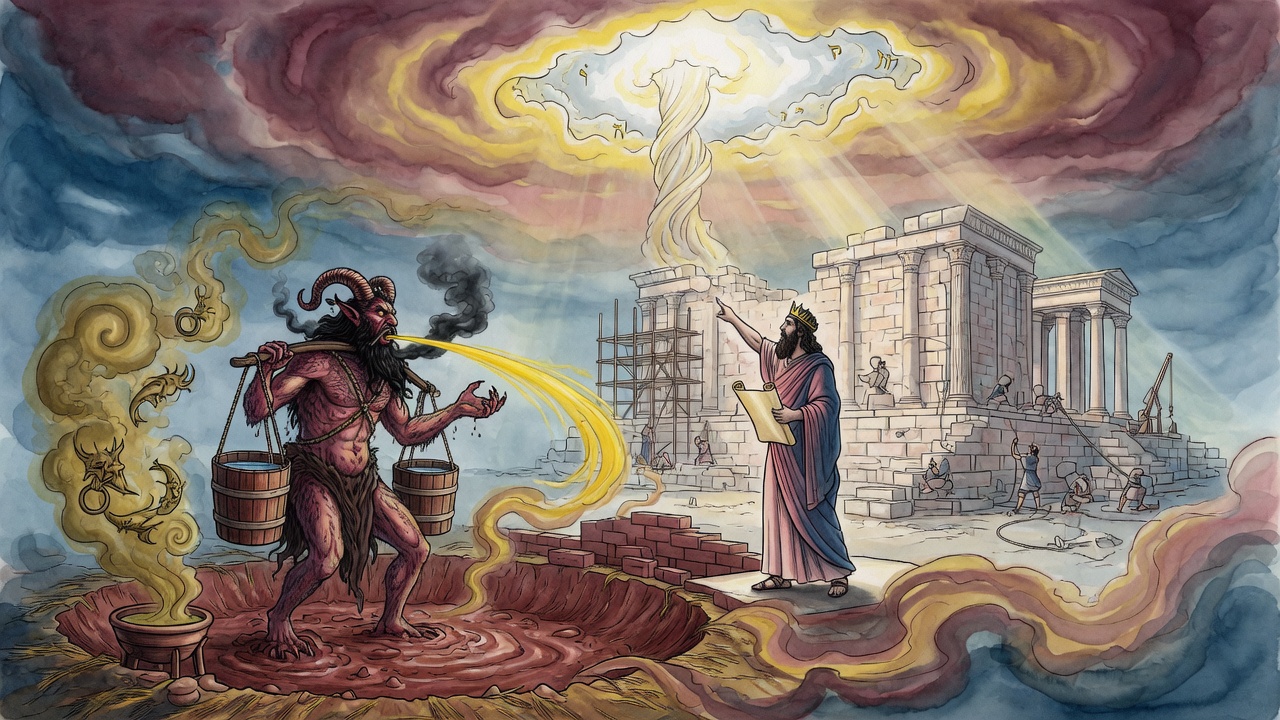
Hiram sat on a gold couch above six false skies. Ezekiel rode a wind up there and asked why a man born of a woman called himself God.
Table of Contents
Hiram of Tyre had already outlived David. He had outlived Solomon. He had sent cedar from Lebanon for the Temple and craftsmen Israel did not have, and the house of God stood because his wood stood in it. He began to tell himself that men die and he did not, so he must not be a man.
 Click for full size
He whispered it to his chief counselor and told him to tell one person a day, and to order each hearer to do the same. The news ran through Tyre like a doubled number. Nothing fell on him. That, to Hiram, was further proof.
Seven Skies on Iron Pillars
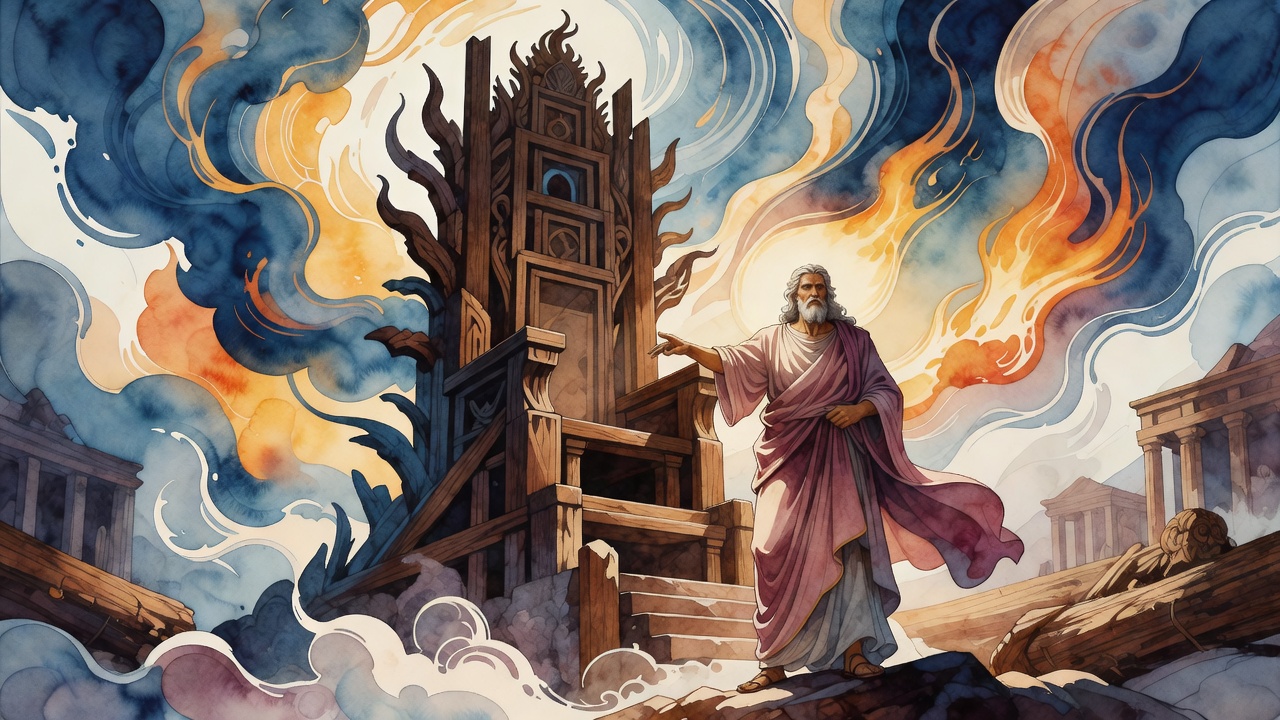
He built what he thought heaven looked like. Seven artificial skies, stacked, on pillars of iron.
The first was glass, fitted with a fake sun and moon and stars. The second was iron, with a lake of water hung inside it. The third was tin, with precious stones rolling across it for thunder. Lead, then copper, then silver, then gold. On the seventh he set a couch of gold and pearls. When he moved it, the structure threw off flashes he called lightning.
He sat on that couch and said he was God. He had copied every visible piece of the sky. He had not made light. He had hung lamps. The water hung by engineering, not by the word that set a firmament over the deep. The stones rolled because he had built a track. He decided that looking like heaven was the same as being its king.
A Wind and a Question
Ezekiel arrived at the top on a wind, because God had lifted him there and told him to ask a question. Hiram, floating above his own machinery, was frightened and then angry.
"How did you rise to my heights?"
"God brought me here, and He bade me ask thee why thou art so proud, thou born of woman."
Hiram pointed at the seven skies under him. "I am not one born of woman. I live forever. As God resides on the sea, so my abode is on the sea, and as He inhabits seven heavens, so do I. See how many kings I have survived. Twenty-one of the House of David, and as many of the Kingdom of the Ten Tribes, and no less than fifty prophets and ten high priests have I buried."
He counted graves as if a pile of funerals were a throne.
The House Taken Down
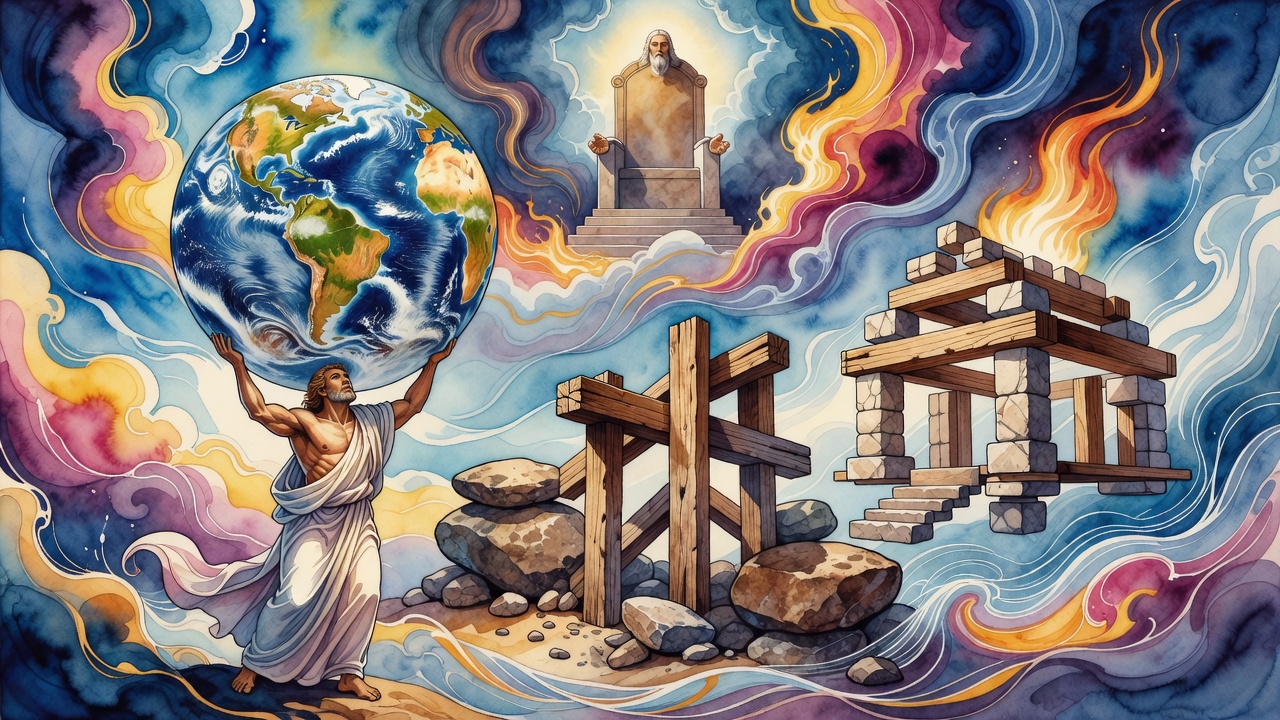
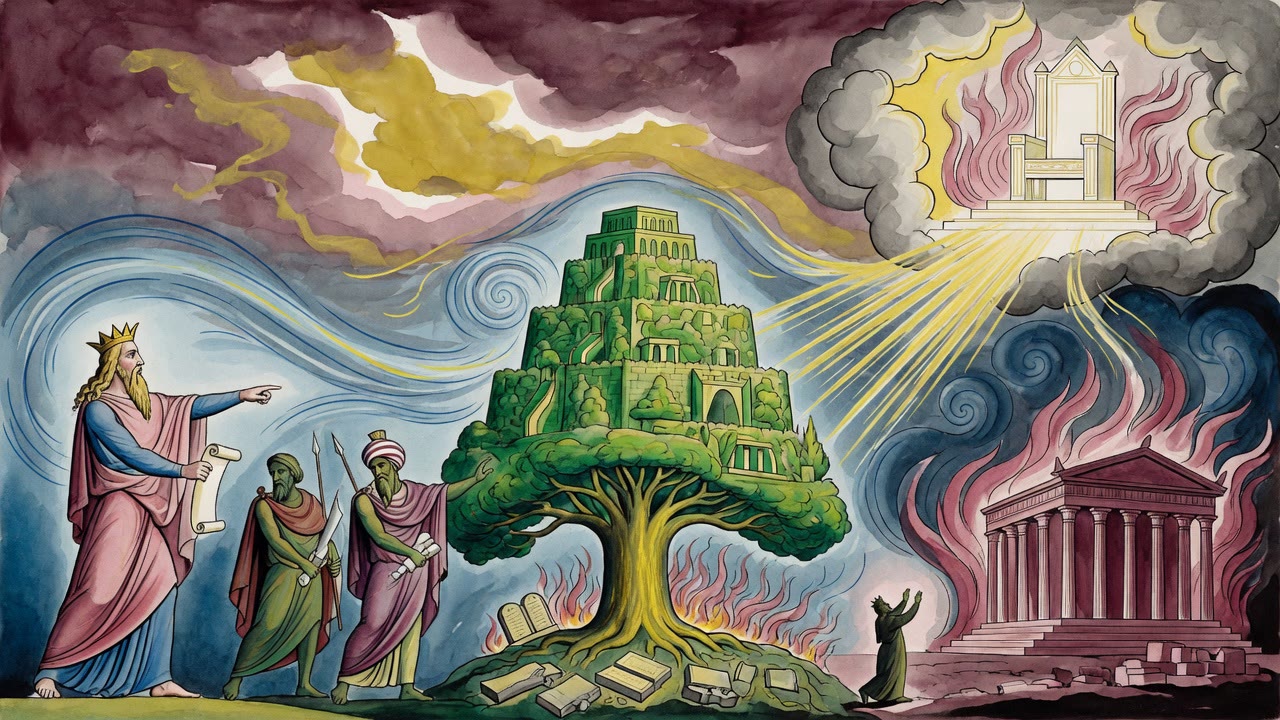
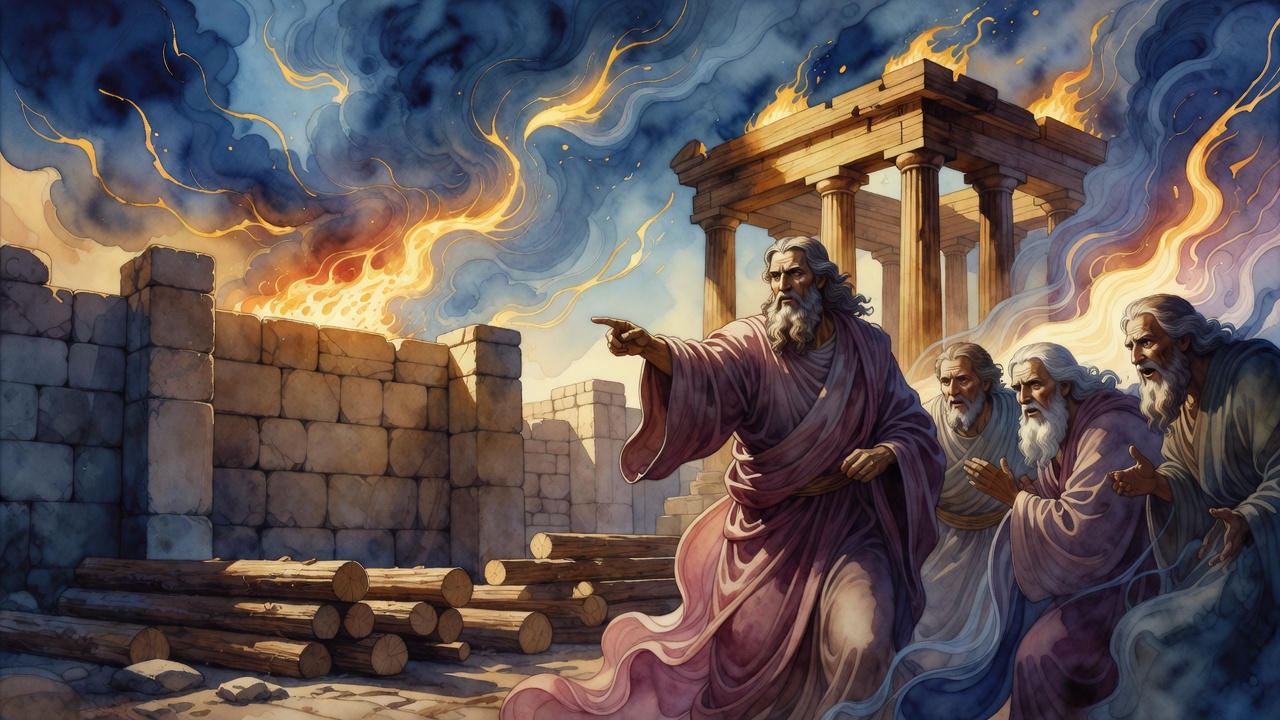
God said, "I will destroy My house, that henceforth Hiram may have no reason for self-glorification, because all his pride comes only from the circumstance that he furnished the cedar-trees for the building of the Temple."
The cedar had been the wound. Access to holiness had been mistaken for ownership of it. The Temple would come down so a Tyrian king would stop using its beams as proof that he could not die.
Hiram had also spent years sending riddles to Solomon, and paying a fine whenever he failed to solve Solomon's in return. Solomon's wisdom came from God. Hiram's cleverness came from Hiram. The difference did not show in the quality of the puzzles. It showed in who each man thought had made his mind.
The Flesh Cut Daily
Nebuchadnezzar took him. In this telling the Babylonian king was Hiram's own stepson, and that did not help. Daily he cut a bit of flesh from Hiram's body and forced the old king to eat it, until there was nothing left to sit on a gold couch and call itself God.
Hiram's palace was swallowed by the earth. It will remain there until it rises in the world to come as a dwelling for the pious. The man who built seven fake heavens still died chewing his own flesh.
Ezekiel had asked the only question that mattered. Born of woman. The seven skies did not change the answer.
← All myths