The King Who Ate Grass and the Son Who Fed Him to Vultures
Crowds walked out past the walls to watch Nebuchadnezzar crop grass in the field. Daniel was the one man in Babylon who would not go and look.
Table of Contents
 Click for full size
The Dream Nobody Wanted to Read
Nebuchadnezzar had already tried to kill every wise man in Babylon once. He had woken from a dream he could not remember, called in the Chaldeans and the magicians and the interpreters, and ordered them to tell him both the dream and its meaning. They said no man alive could do that. He gave the order to have all of them executed, and it was only called off because a Judean captive asked for one night and got the dream out of God before morning.
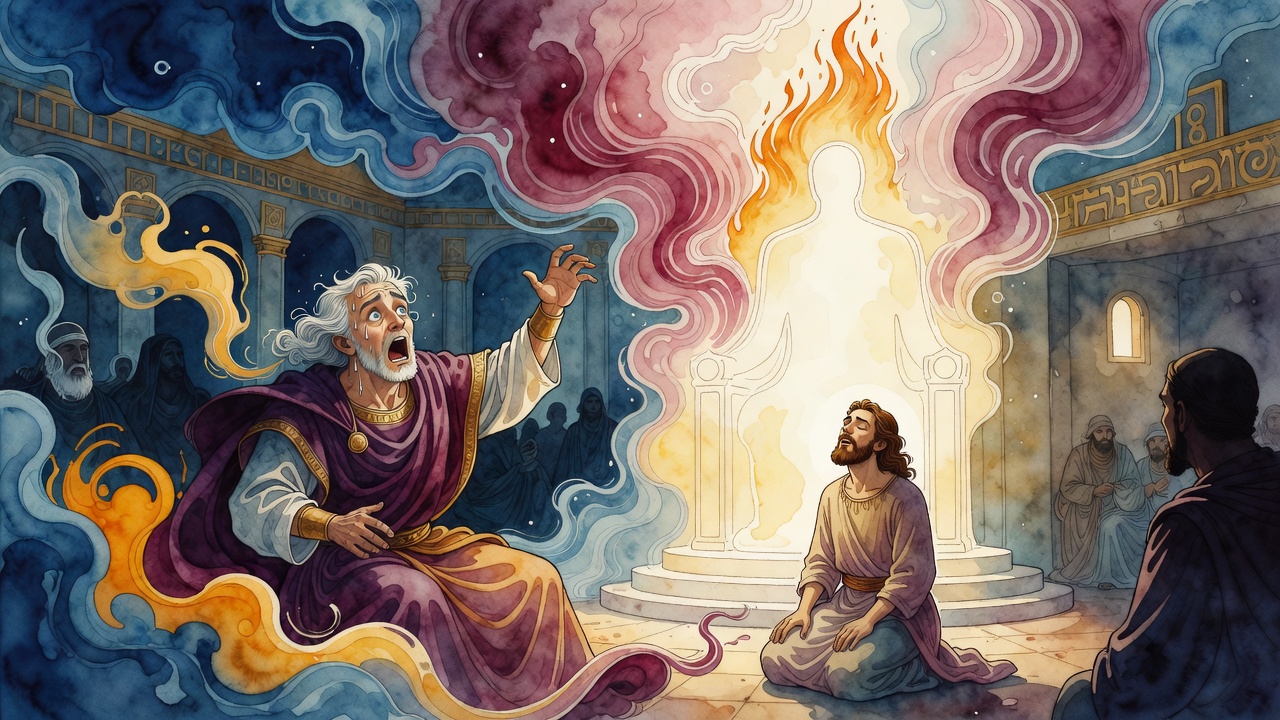
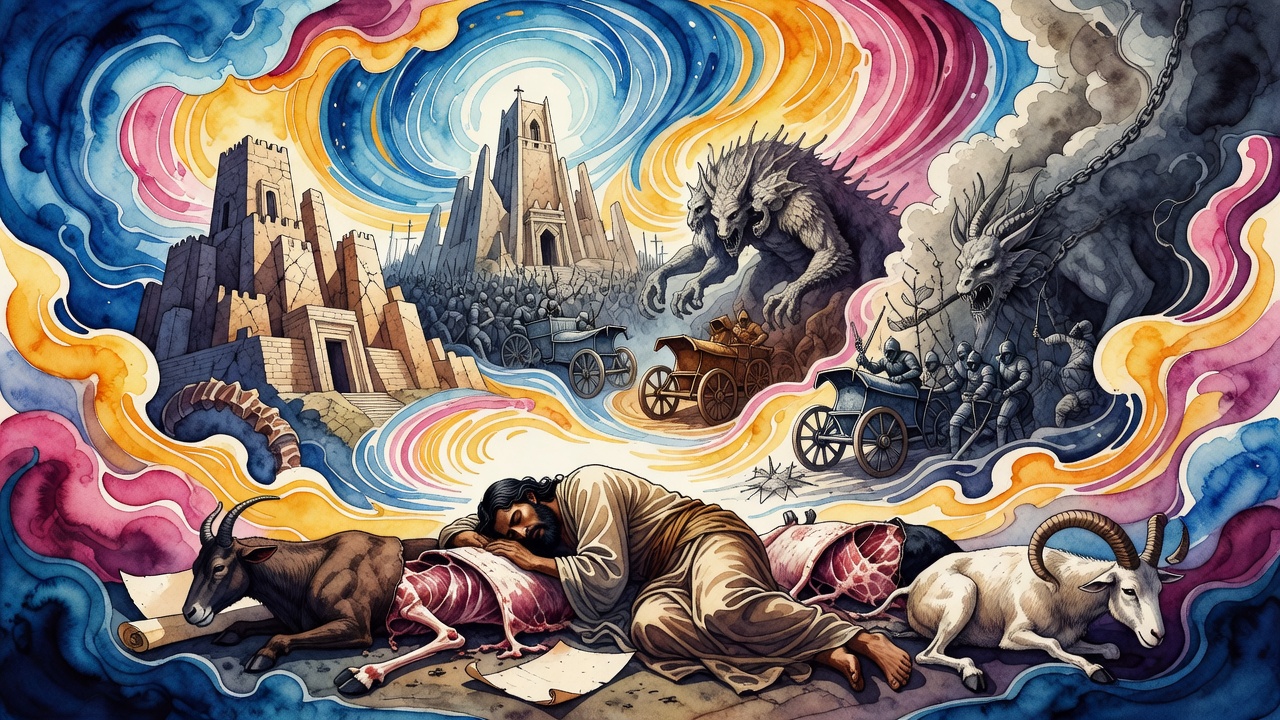
Years later the king dreamed again, and this time he remembered every part of it. He was going to lose his kingdom. He was going to feed among wild animals in open country. After seven years he would get his throne back.
He called the magicians in again. Not one of them would put a word to it.
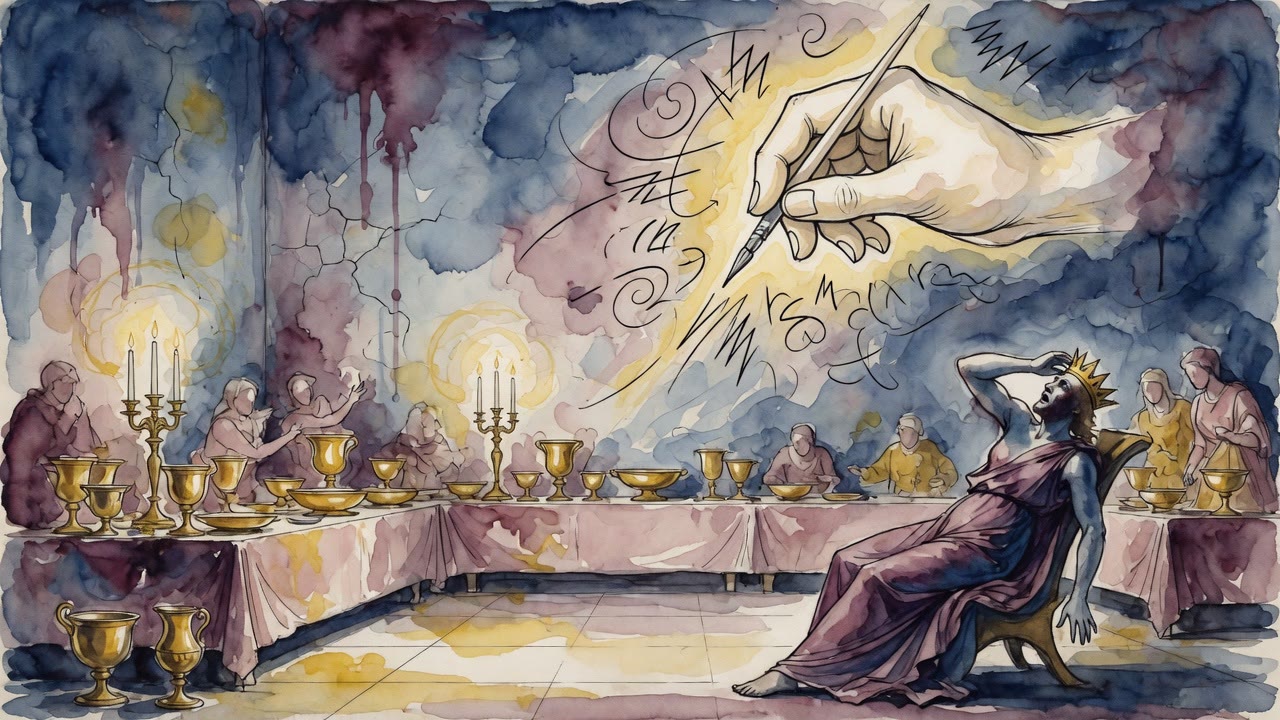
Daniel stood in front of him and told him what it meant, in a room where telling the truth had a documented cost, and the thing came out exactly as he said.
Ox to the Navel, Lion Below
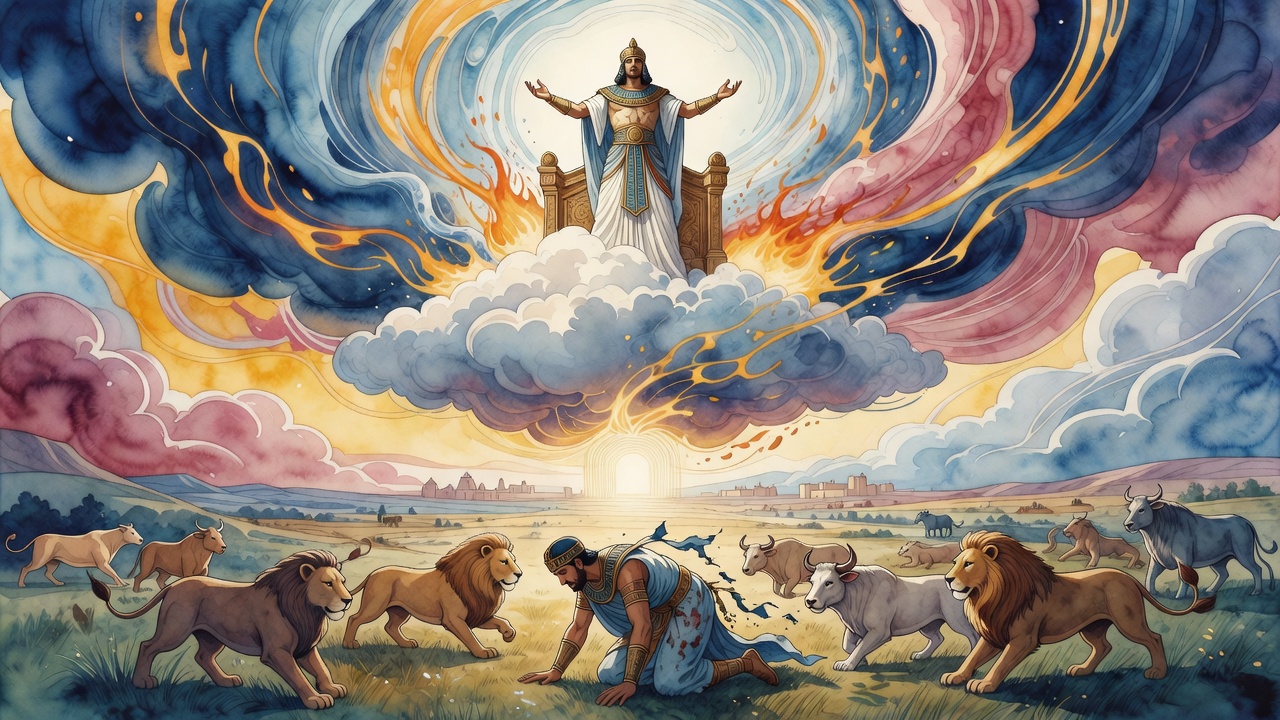
He was not turned into an animal, quite. He was changed in three places only: in how he looked, in his mind, and in his speech.
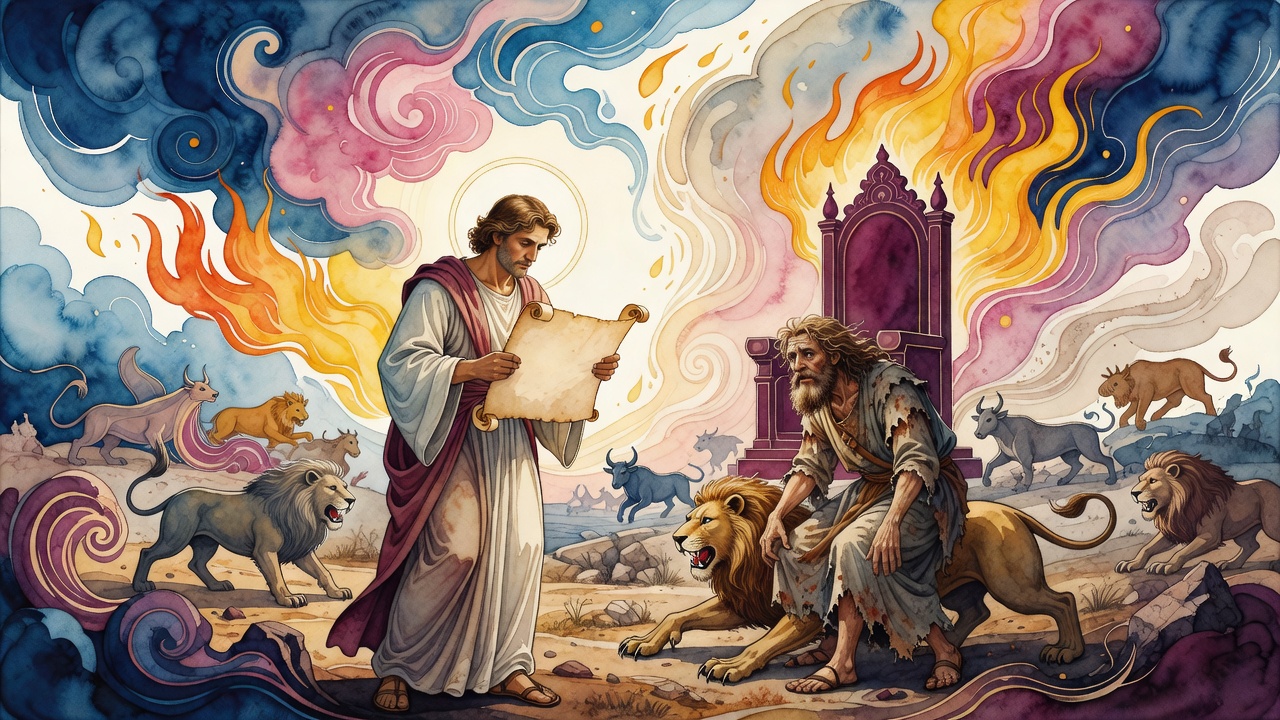
From the head down to the navel he had the look of an ox. From the navel to his feet he had the look of a lion. At the start he ate the same field herbs any man might eat, chewing them the way an ox chews, and by the end he was killing, the way a lion does, and what he killed were the wicked.
People came out from the city to look at him. It was the one show in Babylon. They walked out past the walls in groups to stand at a safe distance and watch the king of the world crop grass with his mouth.
The One Man Who Did Not Go Out to Look
Daniel never went.
He spent the whole period praying for him, the man who had burned the sanctuary and marched his people out in chains, and because of those prayers the seven years came down to seven months.
The months went in blocks of forty days. Forty days he roamed with the wild animals. Forty days his mind came back to him and he was a man again, and he spent all of it weeping over what he had done. Forty days he hid in caves. Forty days he went back out among the animals until the seven months were finished.
The stretches when he knew himself were worse than the stretches when he did not.
Seven Judges and an Inheritance Refused
When God put him back on his feet he did not go back to ruling the way he had. He appointed seven judges, one for each of the seven years the dream had named, and he would not sit alone over the kingdom again. He kept off meat and bread and wine and lived on herbs and seed, on Daniel's advice, the whole time he was repenting.
His son Evil-merodach had been on the throne for those seven years. When his father walked back into Babylon, the son went to prison for the rest of his life.
Then Nebuchadnezzar offered Daniel a place among his own sons, an heir with a share of Babylon.
Daniel said, "Far be it from me to trade the inheritance of my fathers for the inheritance of the uncircumcised."
Three Hundred Vultures
He reigned forty years in all, the same span David reigned. In all that time nobody in his kingdom dared laugh out loud. When he finally died and went down, the residents of Sheol (the underworld of the dead) felt him coming and shook, because they thought he had come to rule them too, and a voice went out over him: go down, and be laid with the uncircumcised.
His son was let out of prison and the nobles came to him with the crown, and he would not take it.
He had watched this man go out into the fields on all fours and come back and put him in a cell. "I am afraid of my father," he said. "He changed from an animal into a man once. He can change from a dead man into a living one."
Jehoiachin, the exiled king of Judah who had shared that cell with him, told him what to do about it. Take the body out of the grave. Cut it into three hundred pieces. Give the pieces to three hundred vultures. Your father will not get up until every one of those birds brings back the meat it swallowed.
They dug him up. What was left of Nebuchadnezzar was dragged through the streets of his own city, and his son took the crown.
← All myths