Nimrod Built a Copy of God's Throne and Sat on It
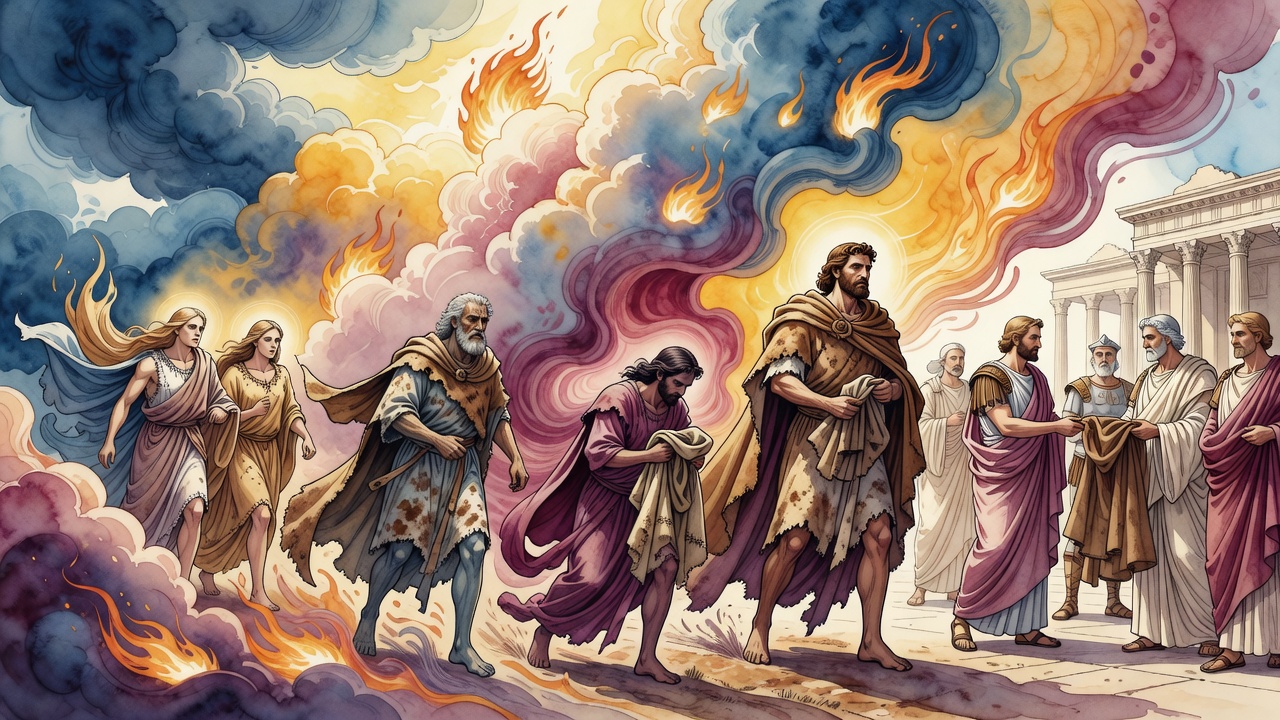
Before he built anything, Nimrod rode out to a son of Noah to ask how a man takes the whole earth. He was told four kingdoms were coming, none of them his.
Table of Contents
Before he built anything, Nimrod went looking for a man who could tell him how to take the whole earth.
 Click for full size
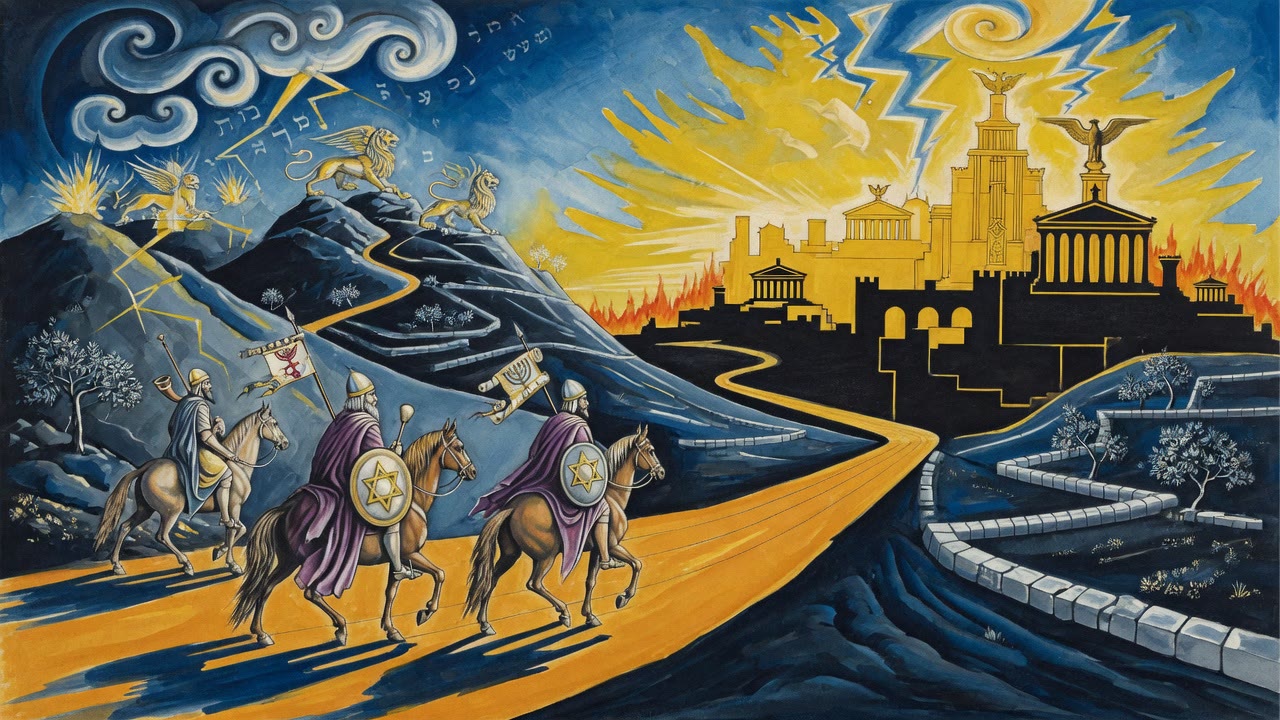
He rode east, to the land beyond the sea where Jonithes lived, a son of Noah born after the flood, born in his father's likeness, with the spirit of the Lord on him. Noah had given that son gifts and sent him out to a country of his own. Nimrod arrived at his door as a petitioner.
The Astrologer Was Already Waiting
Jonithes had read the sky and knew what was coming up the road and what it wanted. He did not send Nimrod away and he did not flatter him. He laid out the future.
Four kingdoms, he said. They come one after another, and the same vision would be shown again generations later to a man in Babylon named Daniel. The first of them belongs to the sons of Ashur, which is to say the line of Shem.
Nimrod had come to hear that the world was available. He was told instead that the world was already on a schedule, that the schedule had four names on it, and that the first name was somebody else's.
He thanked the astrologer and went home to Babylon, where he began to reign, and where he decided that if he could not be first in the schedule he would be first in the sky.
What He Built
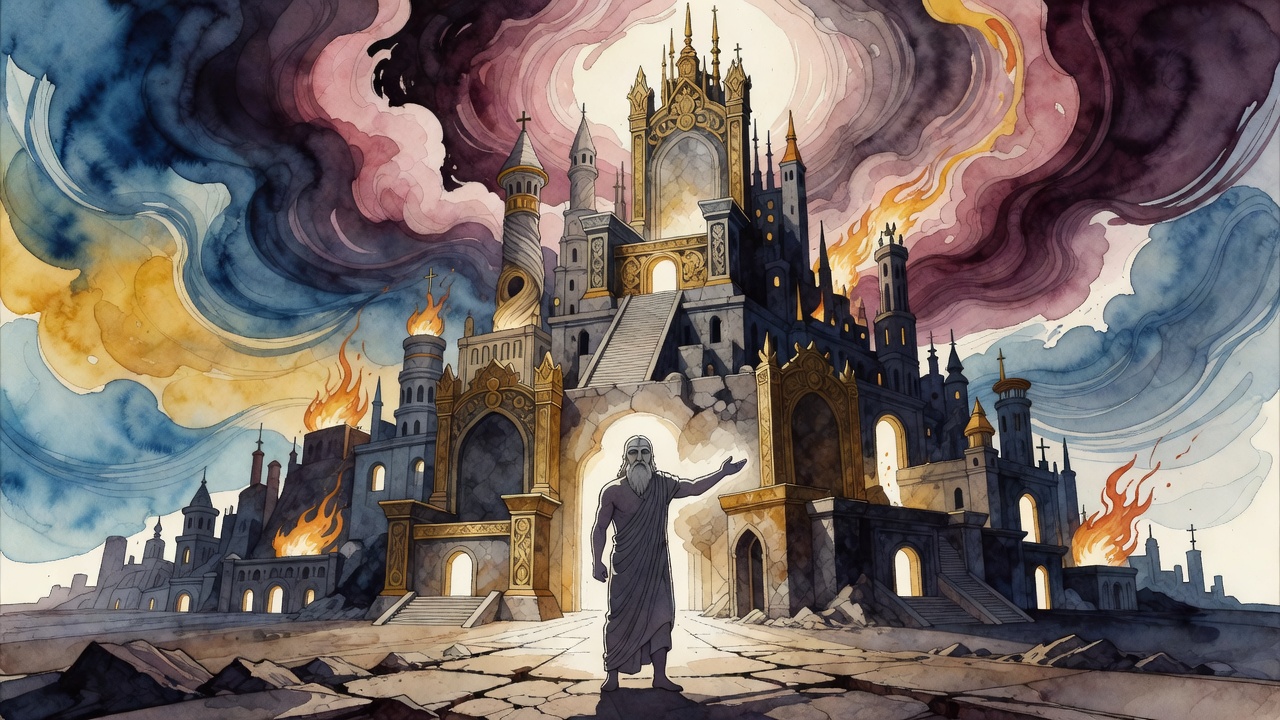
He started with a round rock and built a tower on top of it.
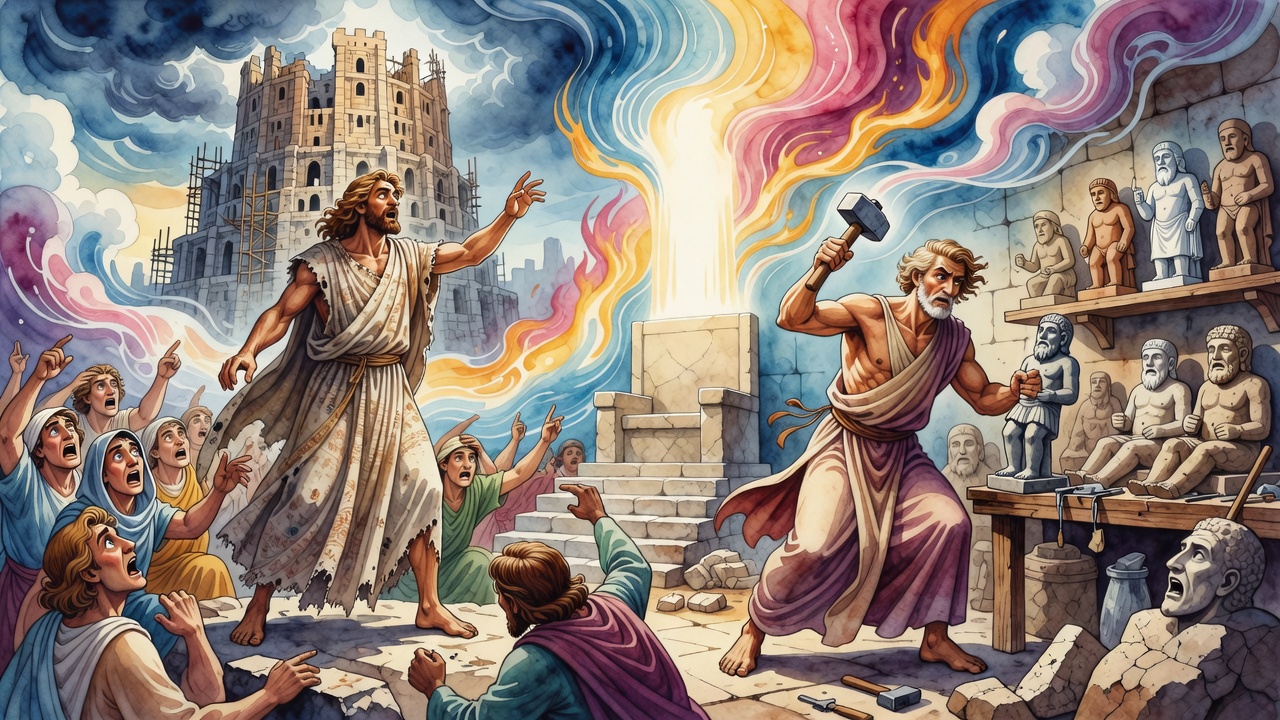
On the rock he set a throne of cedar. On the cedar throne he set a throne of iron. On the iron, copper. On the copper, silver. On the silver, gold. Five seats stacked one above the other, each one a full throne, each one empty, so that everything below him was a chair nobody was permitted to sit in.
On the golden throne at the top he laid a single precious stone, round, and so large that it took the place of a cushion. That was his seat. He climbed his own furniture to reach it.
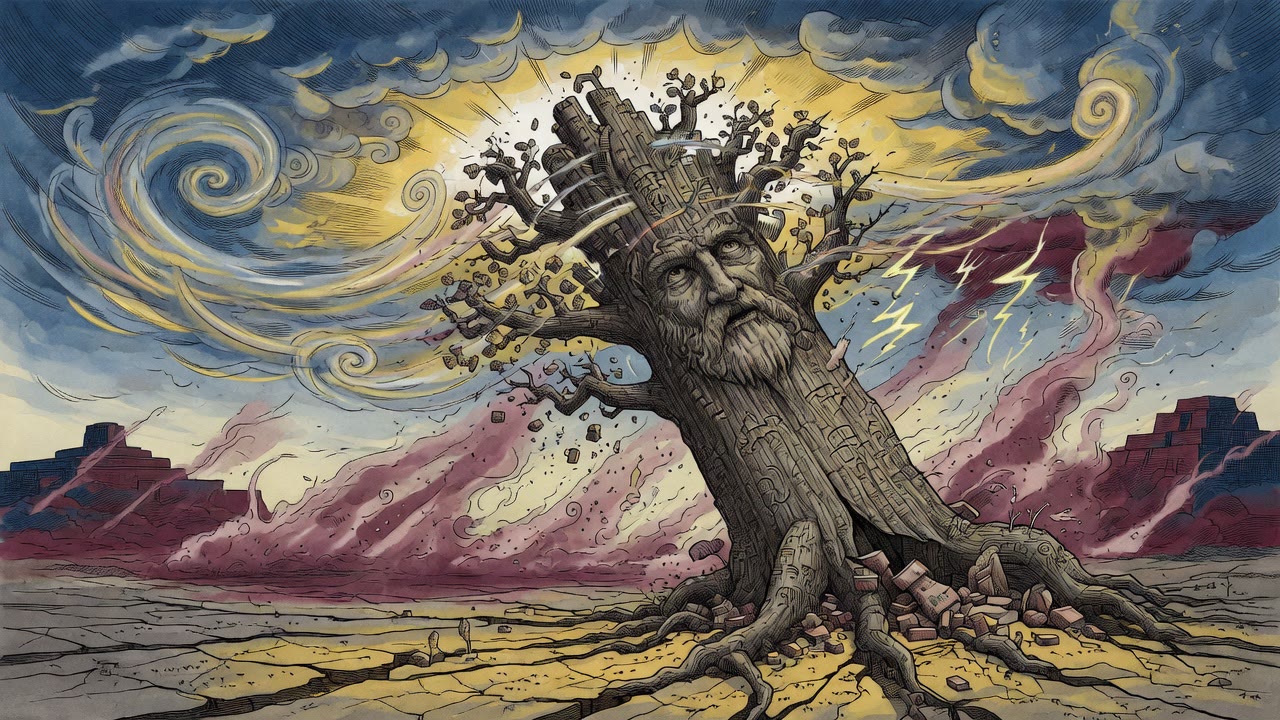
Nobody had built anything like it, because nobody had needed to. A king sits on one throne. The tiers were the argument. Metal by metal, the structure said that whatever is above the world had a shape, and that a man had worked out the shape and moved into it.
The Nations Came and Went Down on Their Faces
Then the visits began.
They came from every country, and when they reached the foot of the rock they did not bow the way a man bows to a king. They gave him the homage owed to God, and he took it sitting down, at the height of five thrones, in the light coming off the stone.
He did not stop at the seat. He carved idols out of wood and stone and knelt to them himself, and then he worked on his subjects until they knelt too, and his son Mardon went further than his father did, which is how the saying started that out of the wicked comes wickedness.
Everything he touched worked. That was the poison in it. Men watched him and stopped trusting God, and started trusting muscle and cunning and luck, because muscle and cunning and luck were visibly getting results, and the results were sitting on a gold chair with the world's foreheads in the dust in front of them.
A Hunter of Men
They said of him that since the creation of the world there had been no one like Nimrod, a mighty hunter of beasts and of men, and a sinner before God.
The hunting of beasts is in the plain verse. The hunting of men is what the tellers add, and they do not mean he chased them through fields. He hunted what people trusted. He took a man's faith the way a hunter takes an animal, quietly, from a distance, with the animal not knowing until the end that it had been walking through a snare all afternoon.
The Schedule Kept Its Appointment
He sat there for as long as he had, and it was not a short time, and the whole earth learned the position: face down, in front of a chair.
The four kingdoms Jonithes had counted out for him came anyway, in their order, none of them his. In the years after he died, the men who followed him kept the habit going and gave it a statue to aim at, until every country in the world had a name it knelt to.
And somewhere in the middle of all that kneeling, in a house nobody was watching, a boy was born who would look at a stone image and ask the one question the whole structure had been built to prevent.
← All myths