Nimrod Was the First Person to Rebel Against God
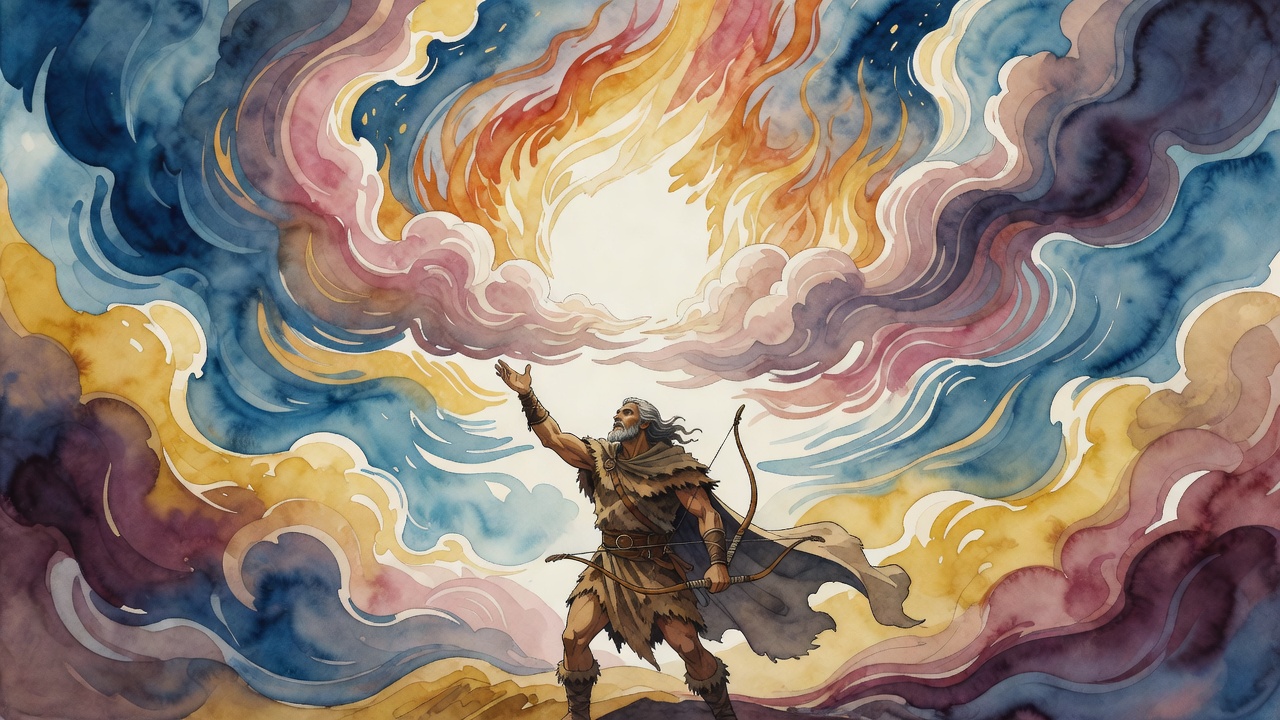
Genesis calls Nimrod a mighty hunter. The ancient Aramaic translators called him the first rebel in history, and Adam's garments made him powerful.
Table of Contents
 Click for full size
The Garments That Came Down From Eden
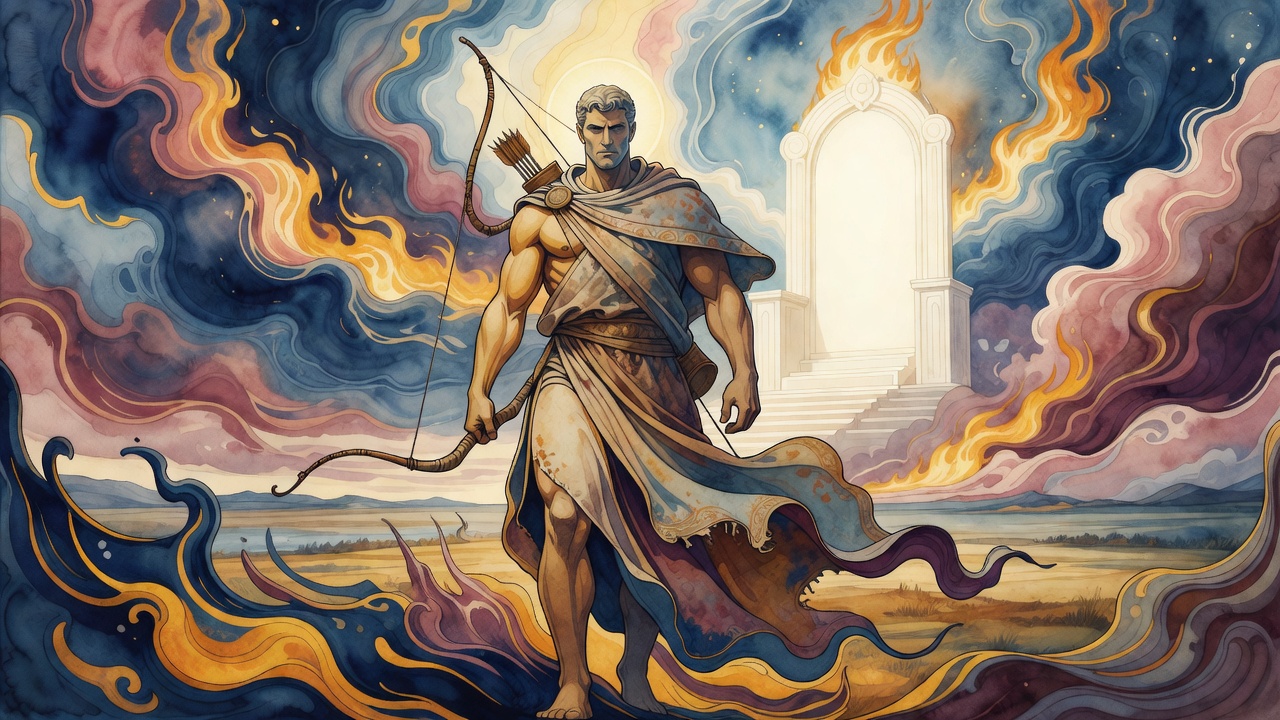
When God clothed Adam and Eve after the fall, the Torah says God made them "coats of skin" (Genesis 3:21). The tradition that developed around that single phrase held that these were not ordinary animal hides. They were garments of supernatural authority, the original divine clothing, woven before the world knew what sewing was. And when Adam died, they did not disappear. They passed from hand to hand down through the generations until they landed on someone who would use them to declare himself a god.
From Adam to Enoch. From Enoch to Noah. From Noah they were stolen by his son Ham and hidden. Ham passed them to his son Cush, and Cush gave them to his son Nimrod. When Nimrod put on the garments, every animal on earth fell before him in submission. This is the real explanation for Genesis 10:9, the verse that calls Nimrod a mighty hunter before God. The animals did not flee from him. They prostrated. He hunted them because they came to him already defeated by the power he was wearing.
And having learned what the garments could do, Nimrod did not stop at hunting animals.
The First Declaration of Rebellion
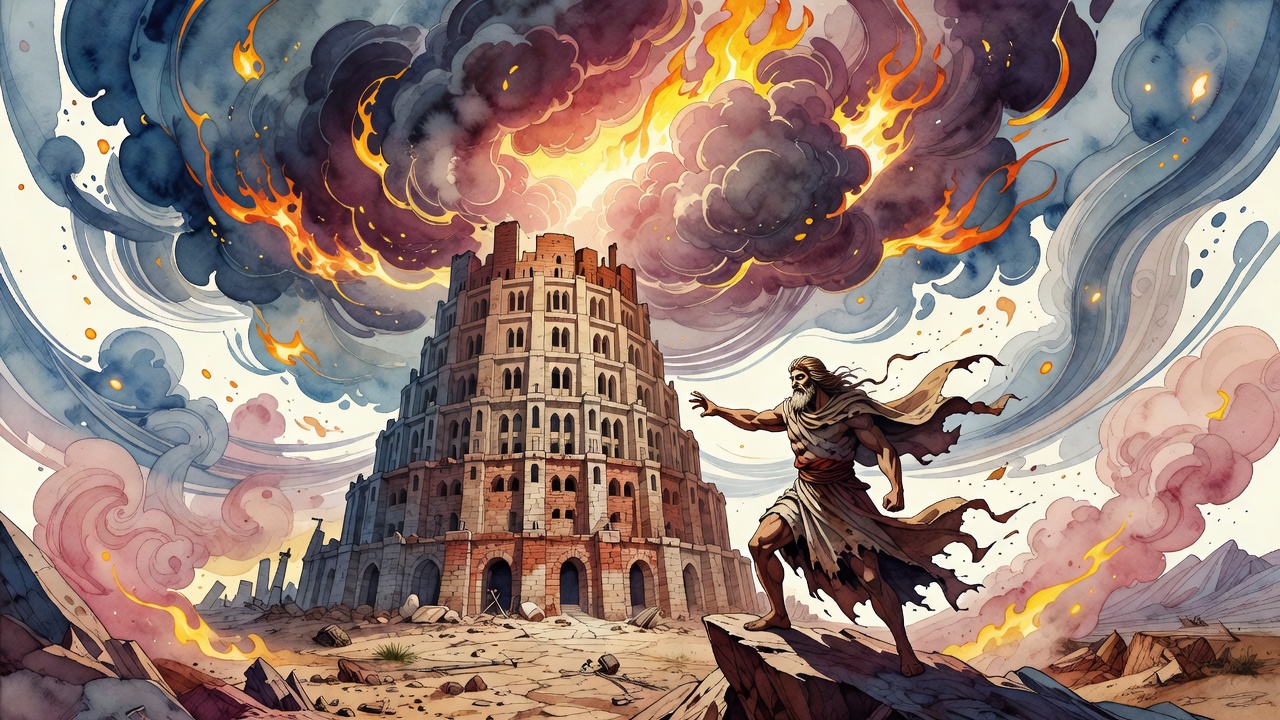
The Hebrew text of Genesis 10:8 says Nimrod "began to be a mighty one on the earth." Targum Jonathan on Genesis 10, the ancient Aramaic translation composed in the land of Israel between the 4th and 7th centuries CE, rewrites this completely: Nimrod "began to be mighty in sin, and to rebel before the Lord in the earth." The word "mighty" remains. Everything else is transformed. The Targum turns a genealogical note into a political declaration. Nimrod is not a strong man in a neutral sense. He is the first strong man to orient his strength against heaven.
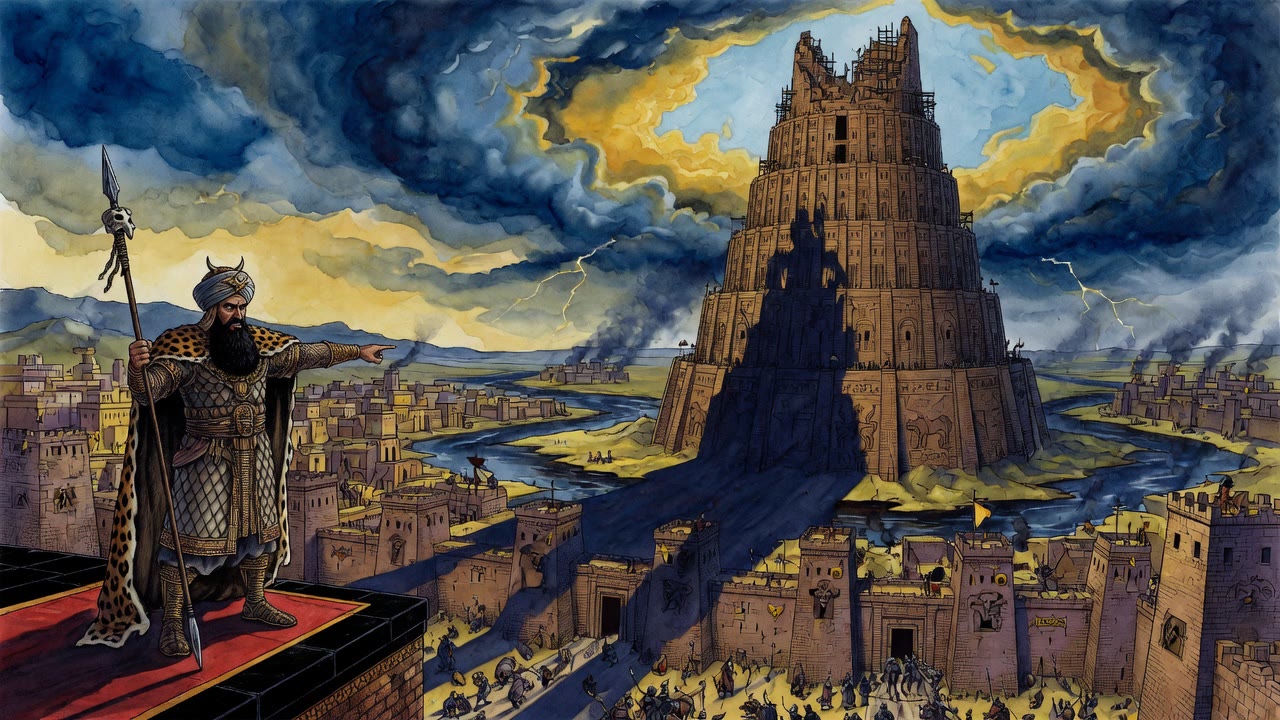
The Chronicles of Jerahmeel, a 12th-century Hebrew chronicle that preserves older legendary material, describes what Nimrod's rebellion looked like institutionally. He built a round tower of stone in the center of the earth, placed a throne of cedar on the stone, above it a throne of iron, then copper, then silver, then gold, and at the top a throne of pearl and precious stones. He seated himself at the peak of this structure and demanded that the people worship him. He was not simply powerful. He had built a religion around his own power.
The Tower That Turned People Into Animals
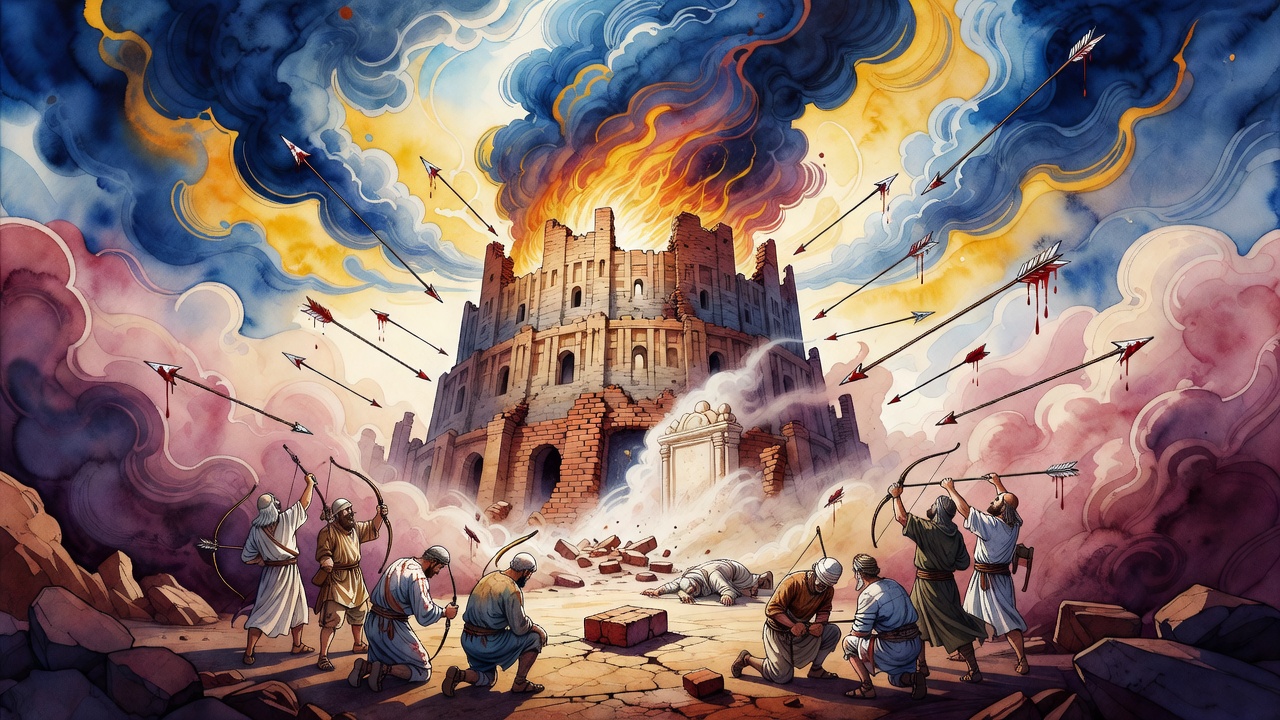
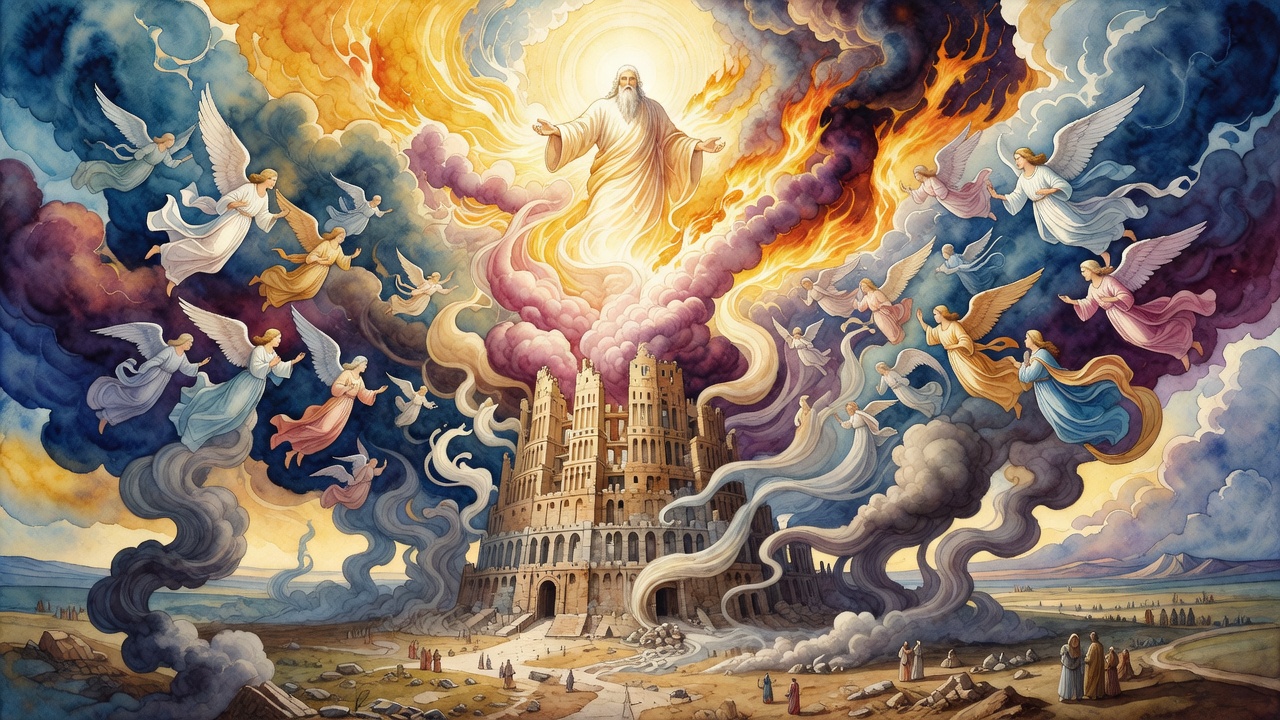
Nimrod's most famous project was the Tower of Babel, and the tradition surrounding its collapse is not simply that the builders' languages were confused. The Chronicles of Jerahmeel, drawing on older midrashic material, says that God's punishment went further than speech. The builders were transformed. Some became apes. Brothers could not recognize each other. When a builder asked for a stone, a worker brought water. When they asked for water, they received stubble. The project did not merely halt. It dissolved into chaos because the people who had been building it were no longer quite human in the same way they had been before they started.
The tower itself had been a seventy-step structure with the ascent on the east side and the descent on the west. The builders' own priorities revealed what they were actually building it for: if a man fell from the tower and died, they barely paused. If a brick fell and broke, they sat down and wept, because bricks took a year to produce and a man could be replaced in a day. The project was not for human benefit. It was for the monument's glory and, behind the monument, for the man who had declared himself the monument's god.
Abraham in Nimrod's Shadow
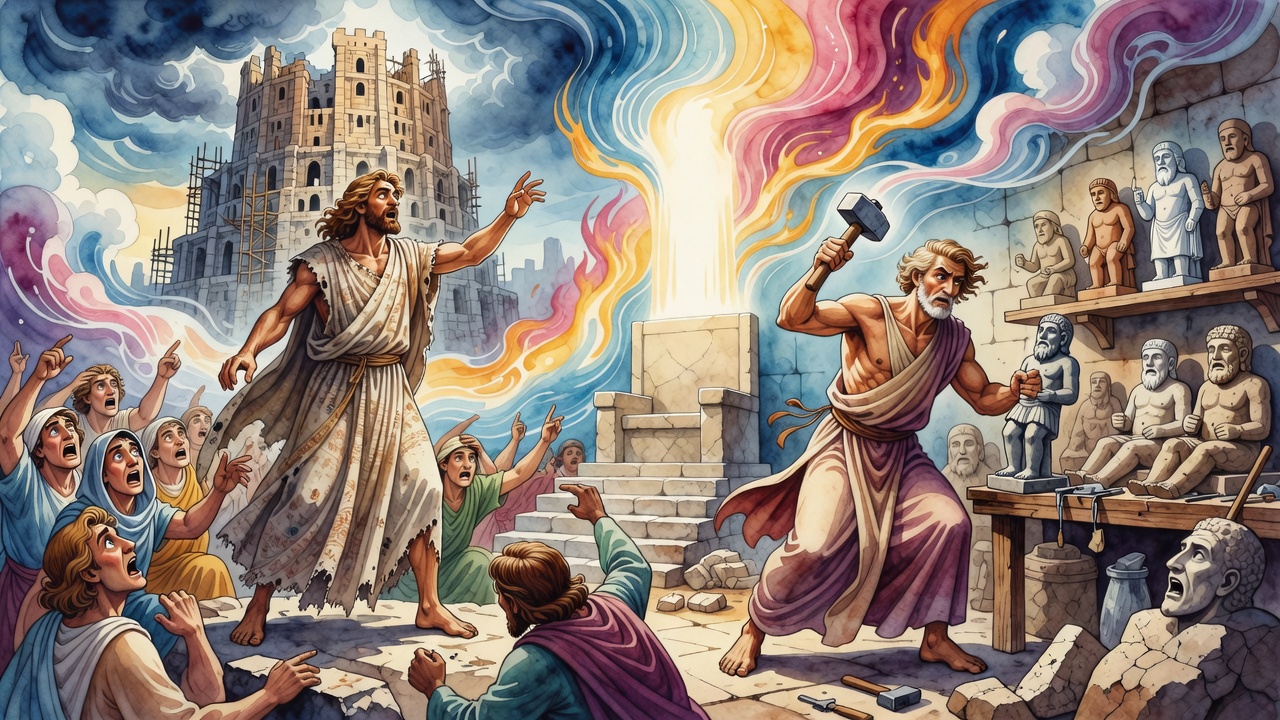
The tradition connects Nimrod's story directly to Abraham's birth. When Abraham was born, Nimrod's magicians told him that a child had arrived whose influence would end his kingdom. Nimrod went to Abraham's father Terah and tried to purchase the infant. Terah refused and hid the child in a cave. Abraham grew up in hiding, emerged, and returned to his father's house to find Terah selling idols. Abraham began persuading people not to buy them and then, in the version preserved in the Chronicles of Jerahmeel, began destroying them.
The confrontation between Abraham and Nimrod is therefore the confrontation between the world's first rebel and the man who would become the source of all monotheism. Nimrod had the garments of Adam. Abraham had nothing except his conviction that the garments were stolen and the throne of precious stones was built on a lie. The midrashic tradition does not resolve this tension quickly or easily. It takes generations. But the conflict was set in motion when Nimrod put on Adam's clothes and decided they made him divine.
← All myths