Nimrod Was the Second King of the World and God Was the First
Ham stole the clothes God had sewn for Adam and hid them on the ark. Two generations later a twenty-year-old boy put them on and went out hunting.
Table of Contents
 Click for full size
The Clothes Ham Stole Off the Ark
When Adam and Eve walked out of the garden, God made them clothes out of skins so they would not go into the world naked. Those clothes never wore out.
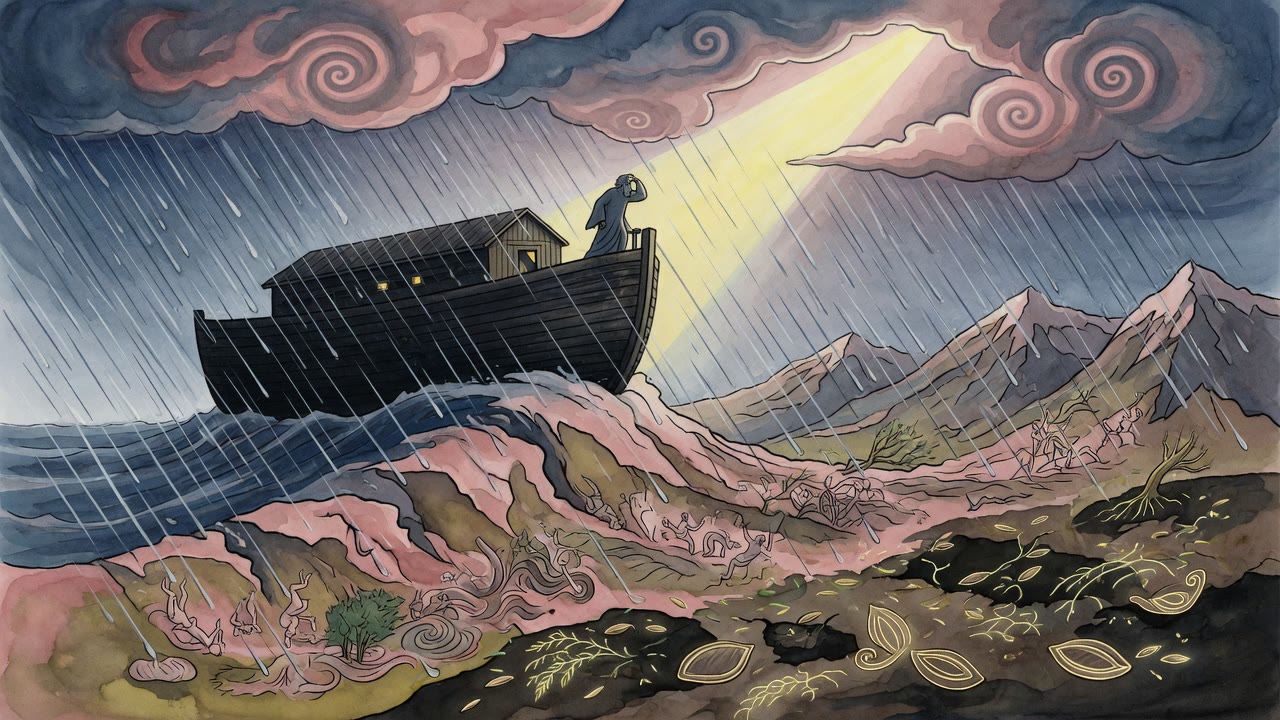
They went to Enoch. Enoch left them to Methuselah, Methuselah to Noah, and Noah carried them onto the ark along with the animals. On the day the ark opened and everyone stepped down onto a washed and empty earth, Ham took the clothes, hid them among his own things, and told nobody. Years later he handed them to his firstborn son Cush.
Cush kept them out of sight for a long time. He had married late and fathered a son late, and he loved that boy the way men love a child who arrives after they have stopped expecting one. On the boy's twentieth birthday he brought out the bundle and gave it away. The boy's name was Nimrod.
Every Animal in the Forest Went Down on Its Face
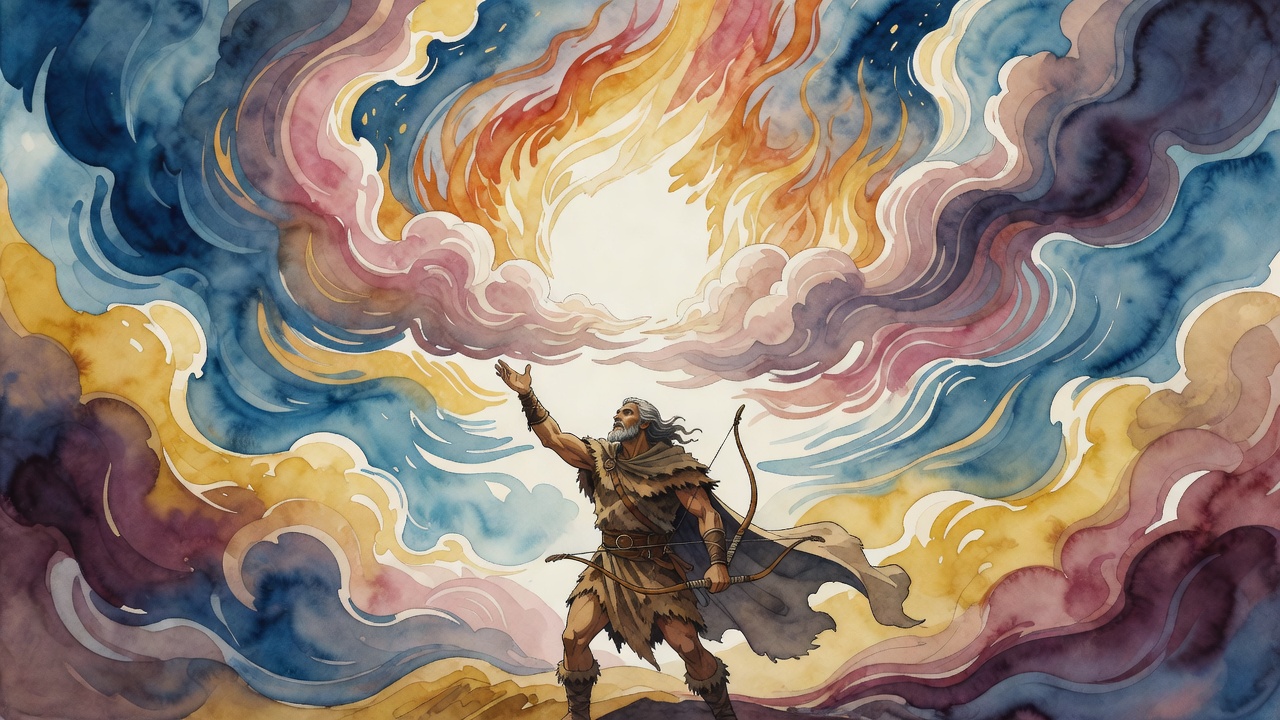
He put them on and went out to hunt, and his hunting was not like other men's hunting. Birds came down out of the air in front of him. Beasts that should have run lay flat in the grass with their heads on the ground. Nothing that saw him in those skins could stay standing.
Men went the same way. When the sons of Cush fought the sons of Japheth, Nimrod went in with a handful of warriors and came out holding the field, and nobody who watched it could explain it. They decided it was courage. They decided it was the man. They made him king.
The world was still young out of the water. Everyone lived crowded into one place, afraid the flood was coming back, and they wanted somebody standing over them. He took Babel first, then Shinar for his capital, then more, by cunning where cunning worked and by force where it did not, until he ruled from one end of the earth to the other.
He was the second king ever to hold it all. The first had been God.
The Throne on the Round Rock
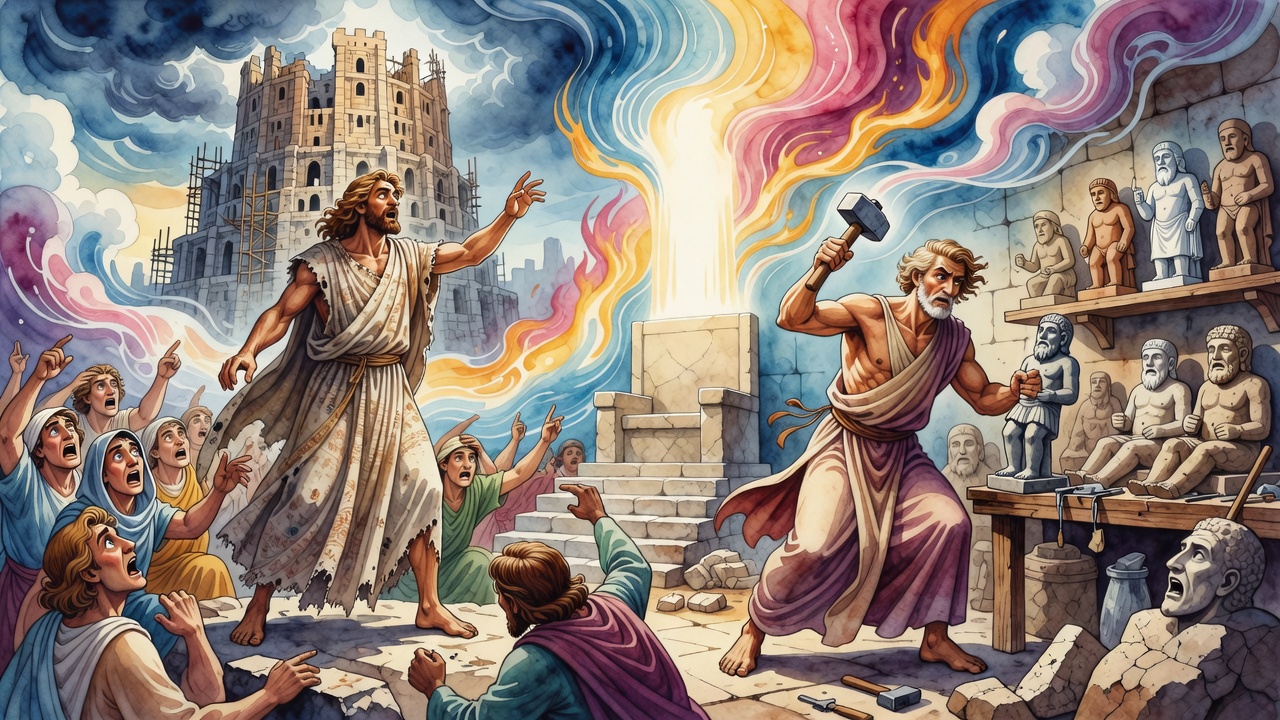
The success went into him like drink. He cut gods out of wood and stone and bowed to them, and going bad alone did not satisfy him, so he worked on his subjects. His son Mardon outdid him at it. People took to saying that out of the wicked comes wickedness, and everyone knew which house they meant.
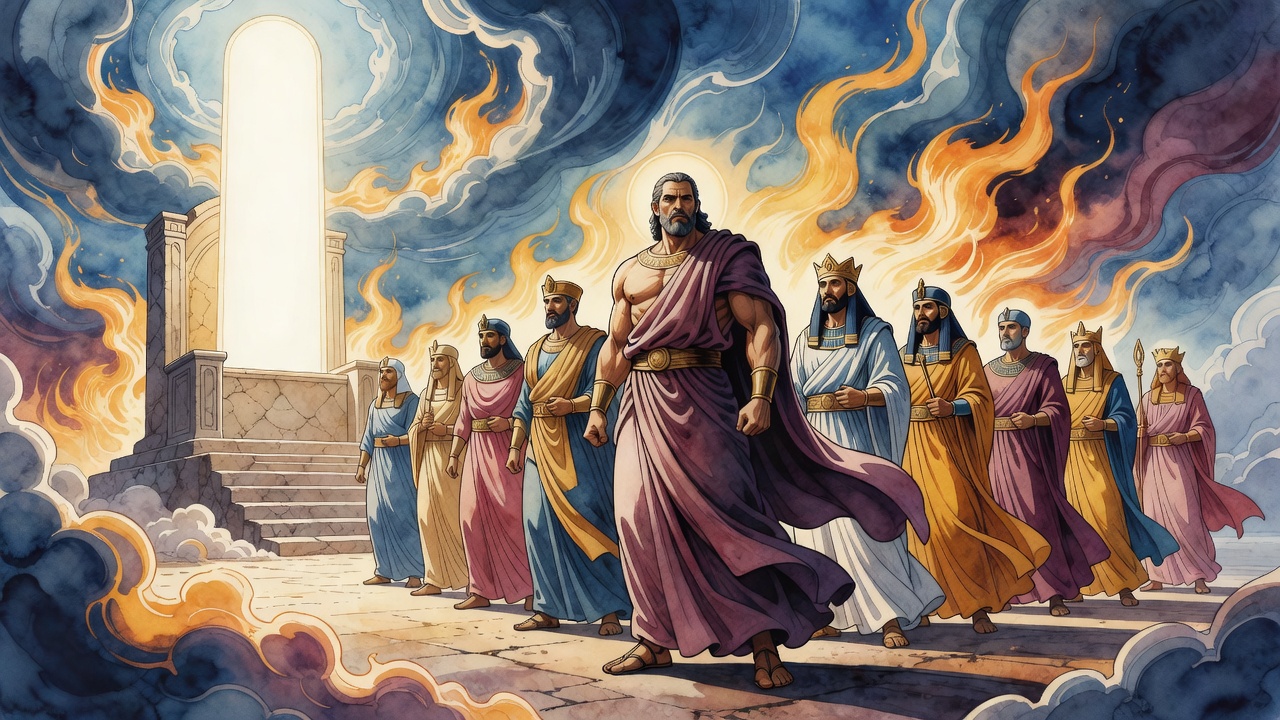
Men stopped trusting anything except their own arms, which was what Nimrod had been selling from the start. Then he wanted the rest of it. He had a tower built out of one round rock and set a throne of cedar on top, and on the cedar a throne of iron, and on the iron copper, and on the copper silver, and on the silver gold. On the gold throne he laid one round stone, enormous. He sat on the stone, and the nations came and worshipped him there.
A Brick Was Worth More Than a Man
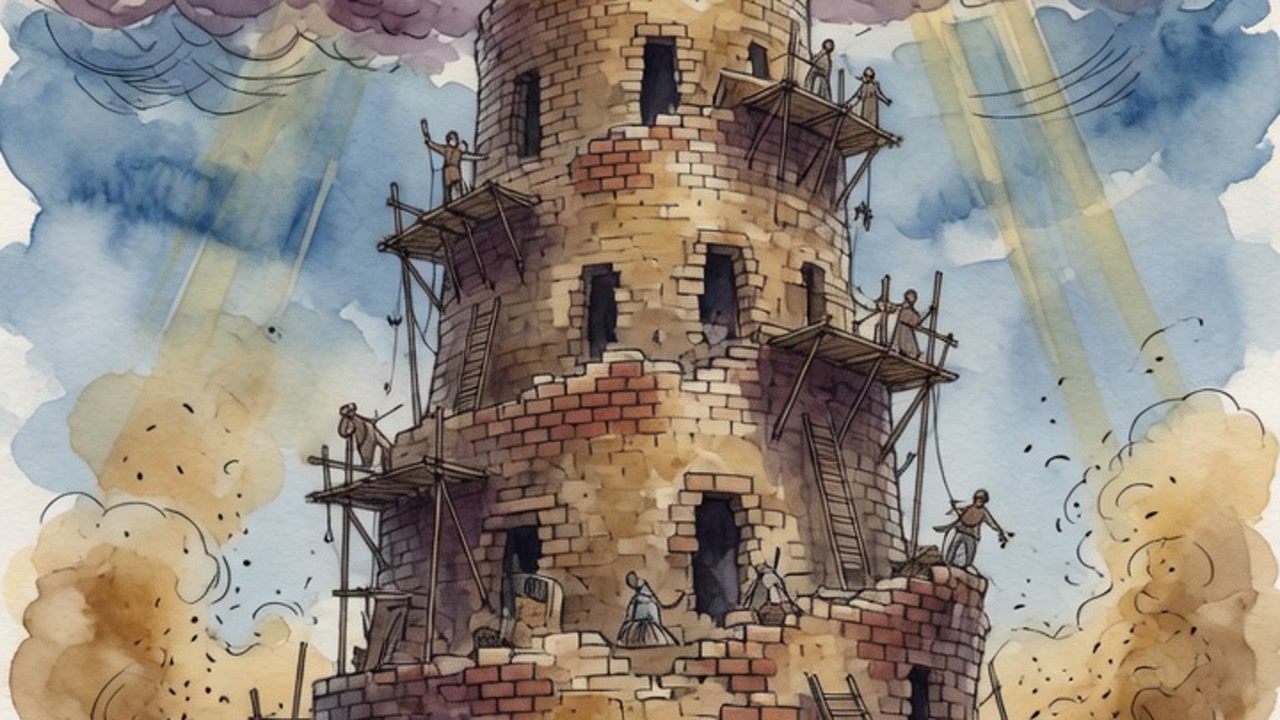
His counsellors brought him the plan for the tower and he approved it, and six hundred thousand men went to work in Shinar.
They did not all want the same thing. One group meant to climb up and make war on heaven. One meant to climb up, set their idols in the sky, and worship them there. The third only wanted to get high enough to wreck the place with arrows and spears.
The work ran for years. The tower rose until it took a full year to climb to the top, and by then a brick was worth more than a person. A man could fall off the scaffold and nobody put down his trowel. A brick could fall and grown men wept, because replacing it cost a year. When a woman went into labor at the moulds they would not let her stop. She gave birth there, tied the baby against her body in a sheet, and went on shaping bricks.
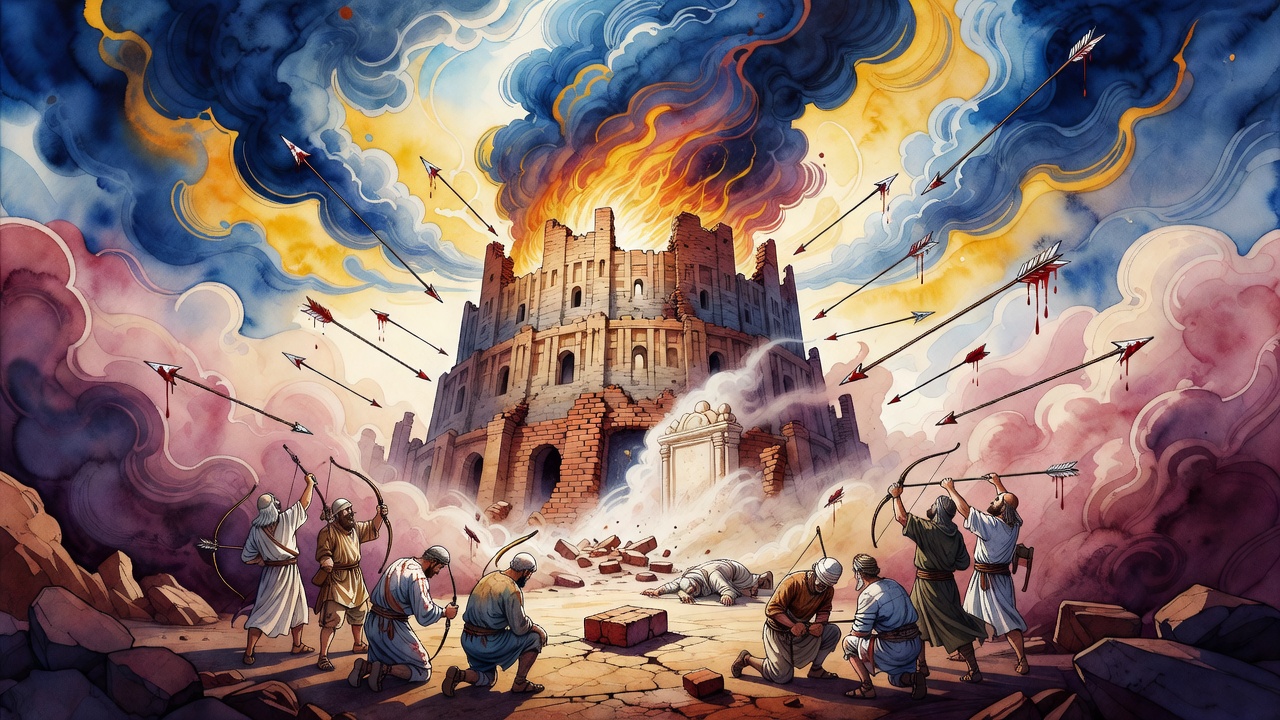
From the top they shot arrows straight up into the sky, and the arrows came back down wet with blood. They held them up and shouted that they had killed everyone in heaven.
Go Down and Confuse Them
God turned to the seventy angels standing around the throne. "Go to," he said. "Let us go down and confuse their speech, so that they cannot understand one another."
It happened while their hands were still moving. A man called down for mortar and the man below passed up a brick. He threw the brick at his partner's head and killed him. That went on all over the tower.
The rest were sentenced by what each of them had wanted. The ones who had tried to set idols in the sky were turned into apes and phantoms. The ones who had meant to fight with weapons were set against each other until they fell. The ones who had meant to make war on God were lifted and scattered across the face of the whole earth, and that was all. They kept their lives, which the generation of the flood had not.
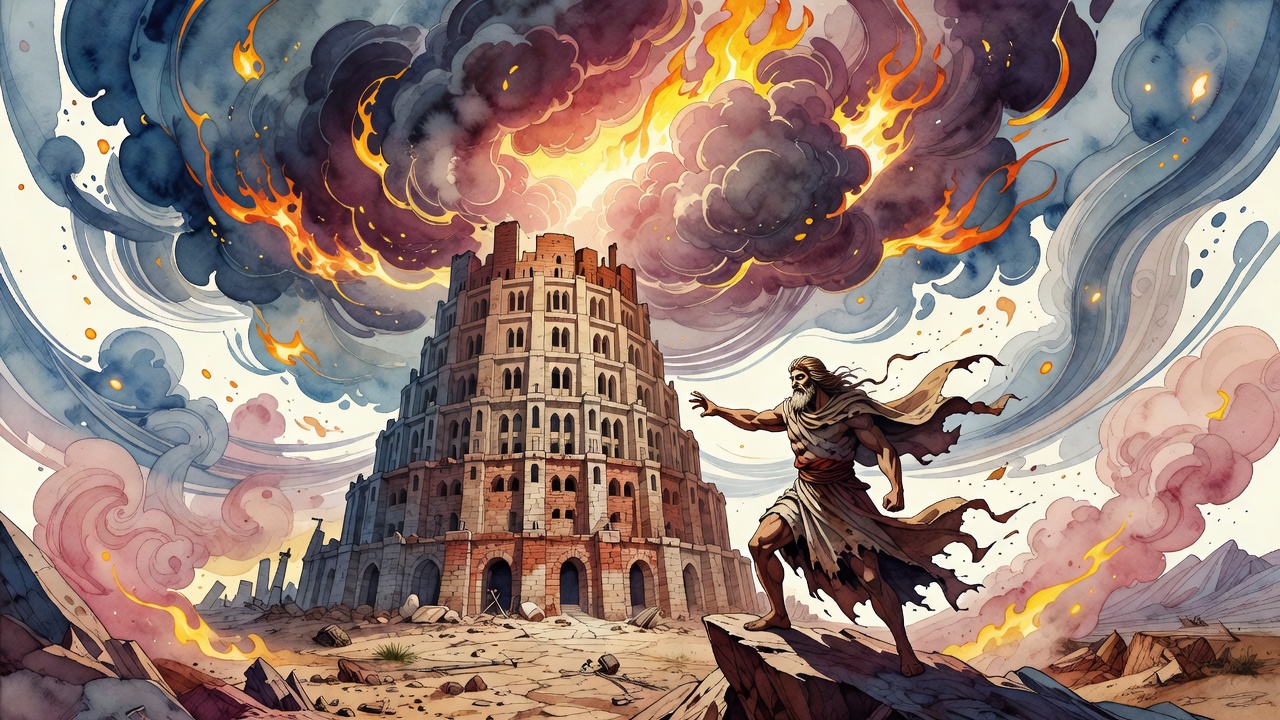
Part of the tower sank into the ground. Part of it burned. A third of it is still standing, and the ground under it never lost what it took from that year. Anyone who walks past that place forgets everything he knows.
← All myths