Noah Stepped Off the Ark and Built the Altar Before He Built a House
After a year on the water, Noah's first act on dry ground was to build an altar. Before shelter, before planting, before anything else, he made atonement.
Table of Contents
 Click for full size
The First Thing He Did on Dry Ground
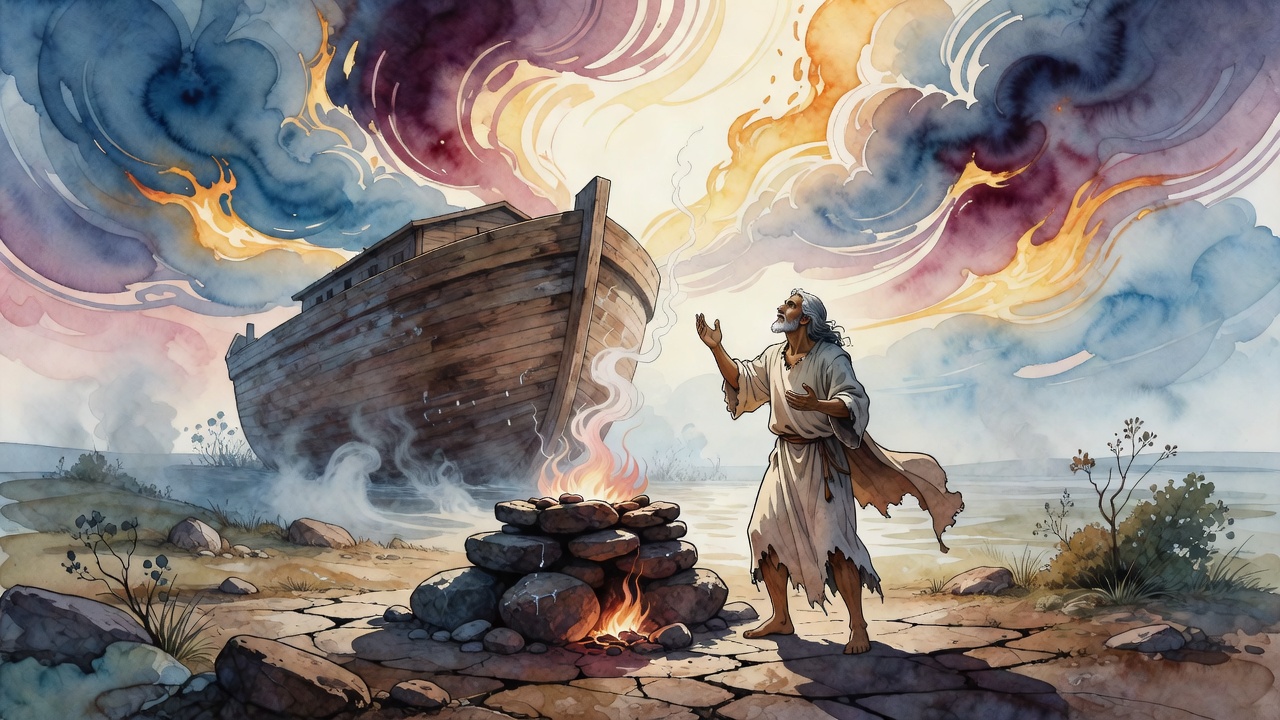
After a year on the water, after the rain, after the silence, after the long waiting while the world drained, Noah stepped out of the ark onto Mount Lubar. He did not look for shelter. He did not count his family to make sure everyone had survived. He did not walk the perimeter of the ship to assess the damage. The first thing Noah did on dry ground was build an altar.
The Book of Jubilees, tracking the flood with a precision Genesis does not attempt, gives the exact dates. The new moon of the tenth month: the tops of the mountains appeared. The new moon of the first month: the earth became dry. The seventeenth day of the second month: the earth was ready. The twenty-seventh day: Noah opened the ark and sent forth the animals. The new moon of the third month: he went forth from the ark and built an altar on that mountain.
Why the Mountain Mattered
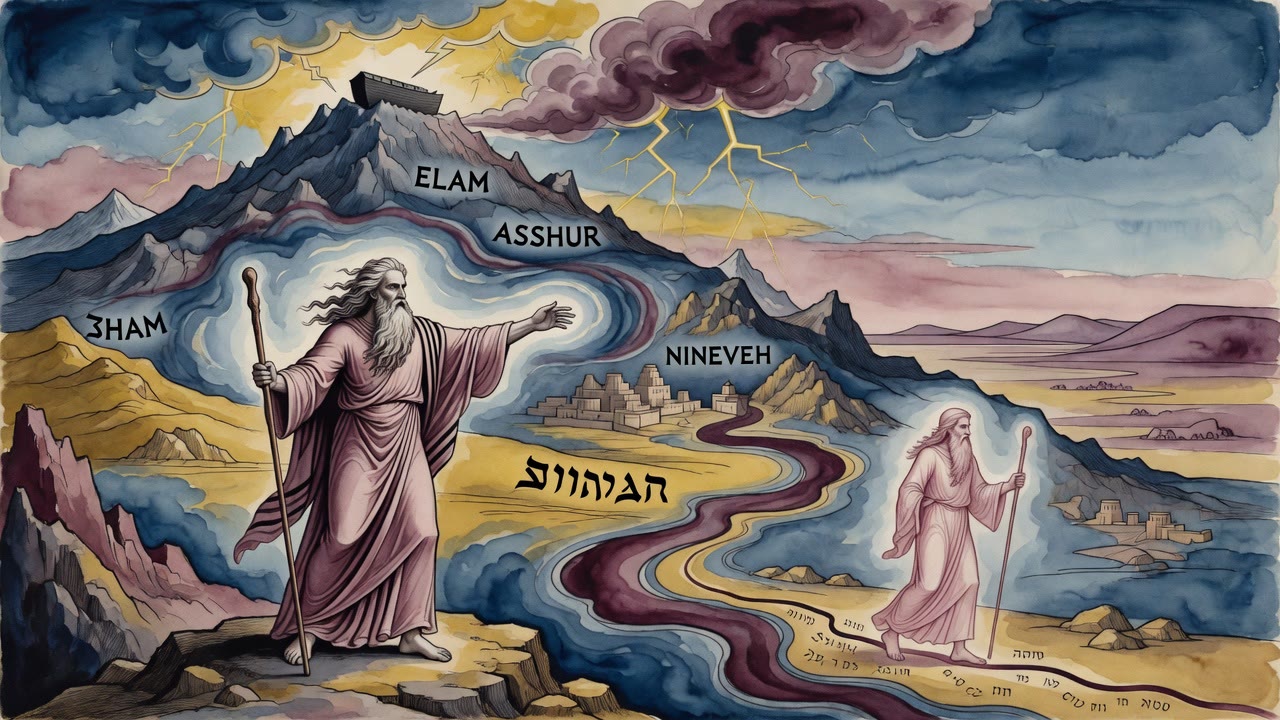
On that mountain. The text is careful with this detail because the location was not incidental. Mount Lubar, where the ark rested, was the same mountain range where the altar would be built. This was not a convenience of geography. It was a statement about what the first act on renewed earth needed to be: worship, not survival. The world had been destroyed because of what humanity had done on it. The first act on the new version of that world was not to claim it for human use but to consecrate it.
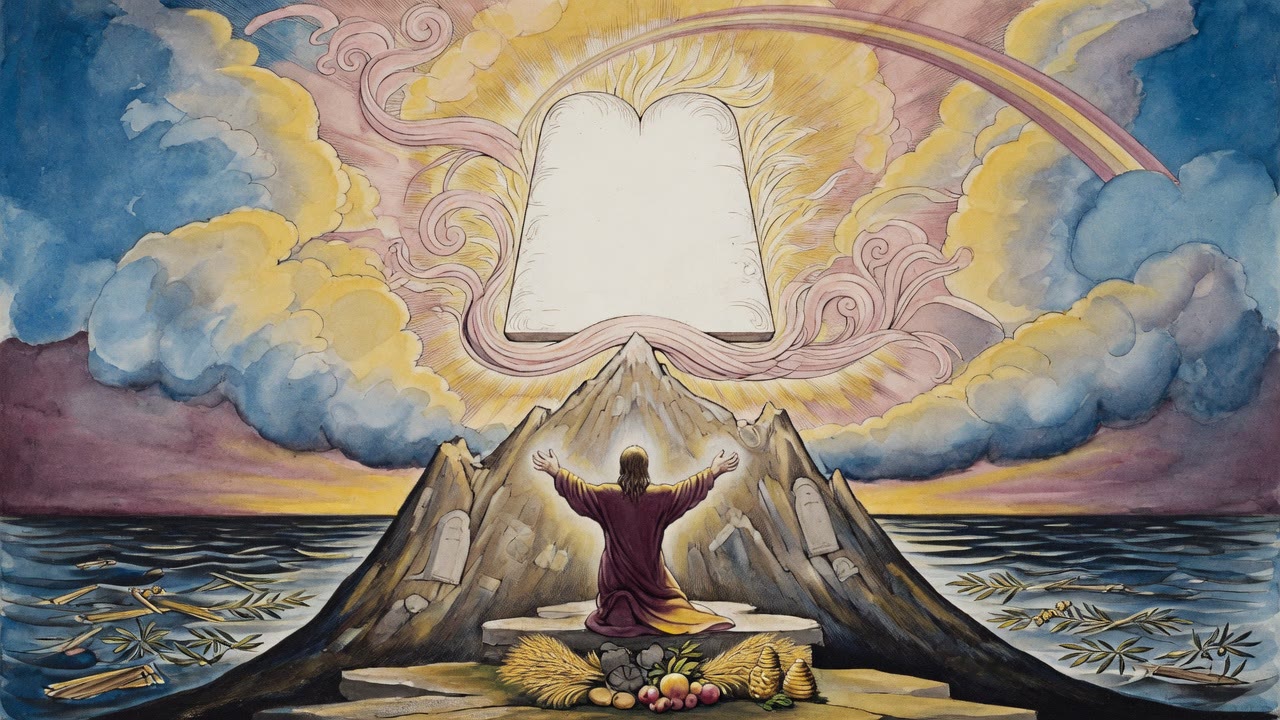
Noah's first sacrifice was not modest. He took a kid and made atonement with its blood for all the guilt of the earth, for everything the earth had absorbed in the long centuries before the flood. He brought seven clean animals and seven clean birds and offered them on the altar, one by one, until the smoke rose from Mount Lubar and God smelled the pleasing aroma and made the promise: never again. The covenant of the rainbow was not an arbitrary gift. It was the divine response to Noah's act of returning the earth to God before doing anything else with it.
What Noah Covered
The atonement was specific. Blood atonement for all the guilt of the earth. The tradition understood this to mean that the flood had not simply washed the earth clean. The earth itself had been implicated in what the generation of the flood had done. The ground that had been soaked in Abel's blood, the land that had heard the cry the text of Genesis describes as heard by God, had accumulated a debt that Noah's sacrifice was paying. He was the first priest of the renewed world, and his first act of priesthood was atonement for a generation he had survived.
Jubilees describes the specific offerings in detail. The fat of the burnt offerings he laid on the altar. He offered every kind of fruit tree, cedar and palm and pomegranate, fig and olive, myrrh and frankincense, a pile of sweet-smelling wood. He covered the altar with everything that was available on the renewed earth and offered all of it back to the one who had made it. The smoke was the totality of what had survived.
The Inheritance That Followed
Noah gave the altar to his son Shem. This detail is not in Genesis but is preserved in the tradition that tracks the priestly line. Shem received from his father the right to serve at the altar on Mount Lubar. And Shem's inheritance went further: Jubilees says that to Shem went the Garden of Eden, the holy land, the land of promise, the inheritance that connected the first garden where Adam had walked with God to the mountain where Noah had first built an altar and made the world usable again.
The line from Adam to Shem to Abraham to the priesthood at Sinai is the line of the altar. Every sacrifice afterward was a repetition of what Noah had done: returning the earth to God before claiming it for human purposes, making atonement before making a life.
← All myths