Noah Tied the Giant Reem Outside the Ark
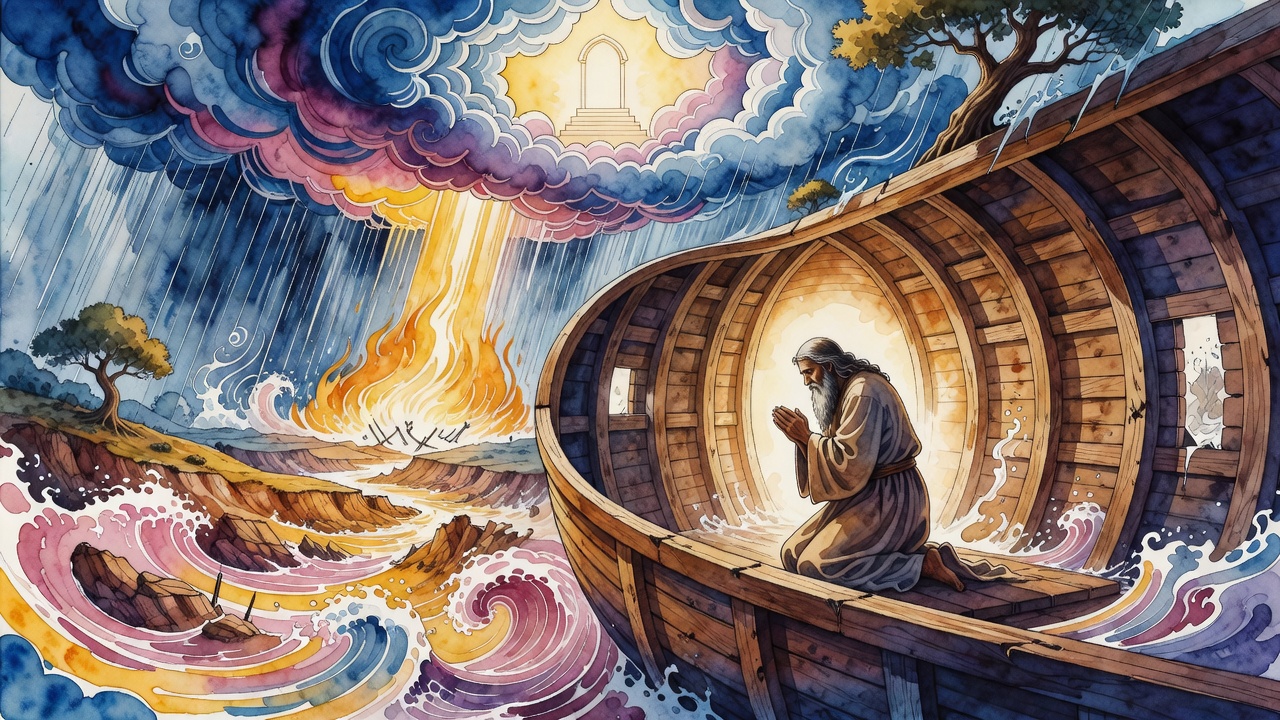
Noah saved spirits without bodies, lashed a reem the size of a mountain to the ark's side, and refused to leave until God swore the world would not flood again.
Table of Contents
 Click for full size
The Reem Was Too Vast to Enter the Ark
The reem would not fit through the door.
Rabbi Judah said only the young came aboard. Rabbi Nehemiah went further: not even the calves boarded. Noah tied the great beast outside by a rope, and as the ark moved through the floodwaters it dragged the reem alongside, plowing furrows in the earth long enough to measure the road from Tiberias to Susita. One witness to the reem's scale claimed he had once seen a day-old calf as big as Mount Tabor, with a neck stretching three parasangs and dung so plentiful it dammed the Jordan. No stall in the ark could hold such a creature. No ramp could receive it. So it traveled beside, tethered to the vessel's hull, the largest beast in the world hitched to salvation like cargo too big to stow.
The Ark Saved Things With No Bodies
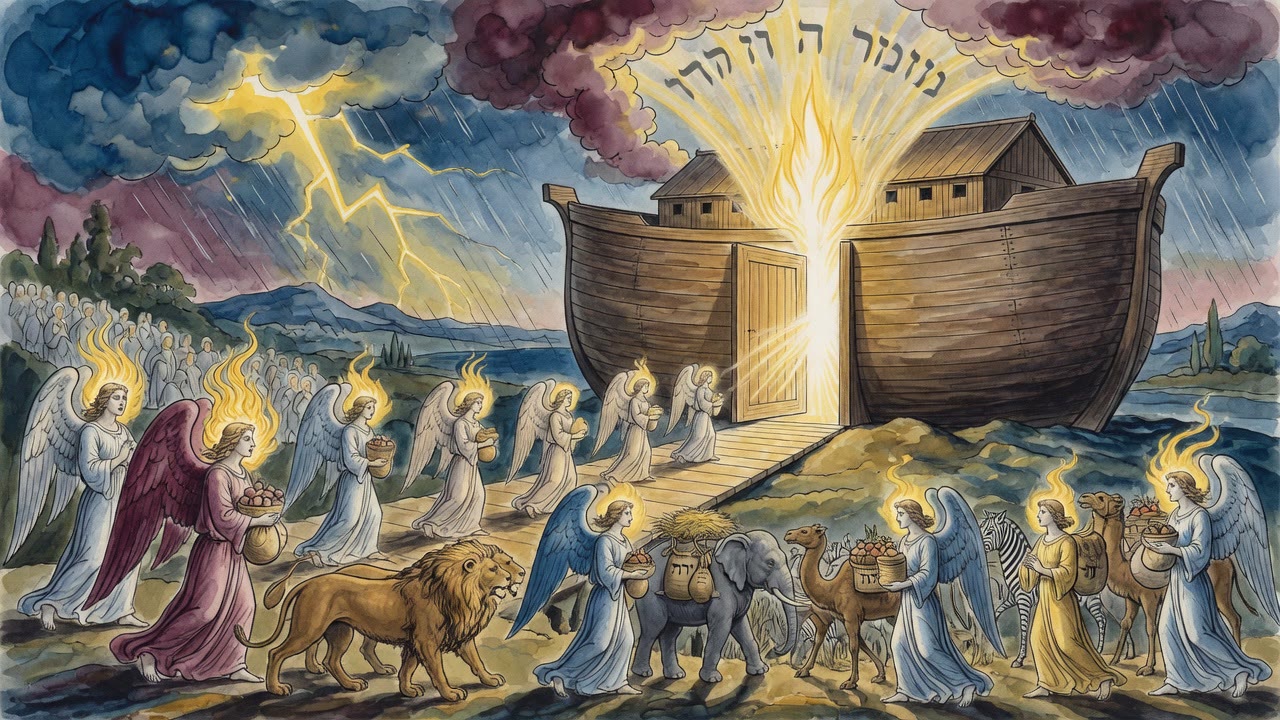
Before the reem puzzle, the command created another. Every living thing, the Torah says. The sages pressed on that word living. It was too large to mean only flesh and blood. It included spirits, beings created with souls but never given bodies, who slipped into the ark alongside the breathing creatures. They entered not through stalls or cages but through the reach of the command itself. The ark was large enough, by divine instruction, for things that had no size.
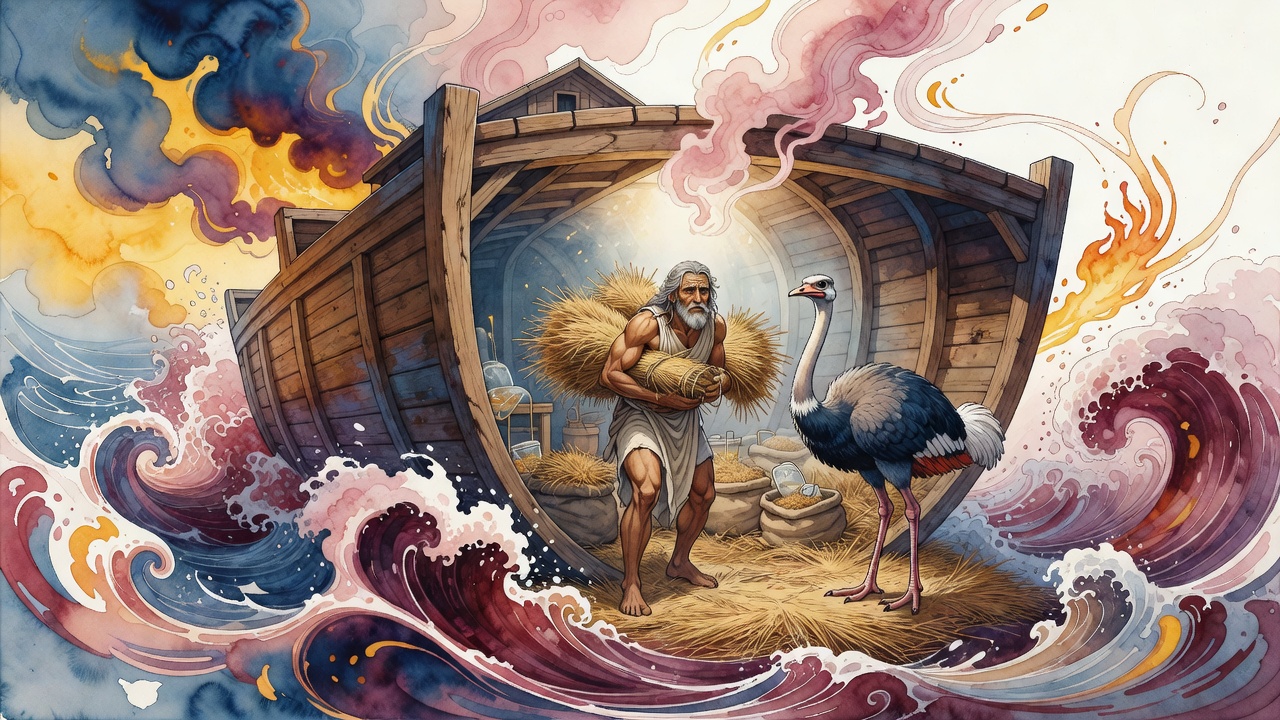
The phoenix also boarded. When Noah went through the ark during the year of the flood, providing food for every creature at the appropriate hour, he found the phoenix lying quietly in its compartment, not asking for anything. He asked it: "do you not need to eat?" The bird answered: "I saw you were busy and I did not want to trouble you." Noah blessed it: "may you live forever." And the tradition says it does, dying in fire at the end of each age and rising again from whatever remains.
The Pairs Who Were Accepted and Those Who Were Turned Away
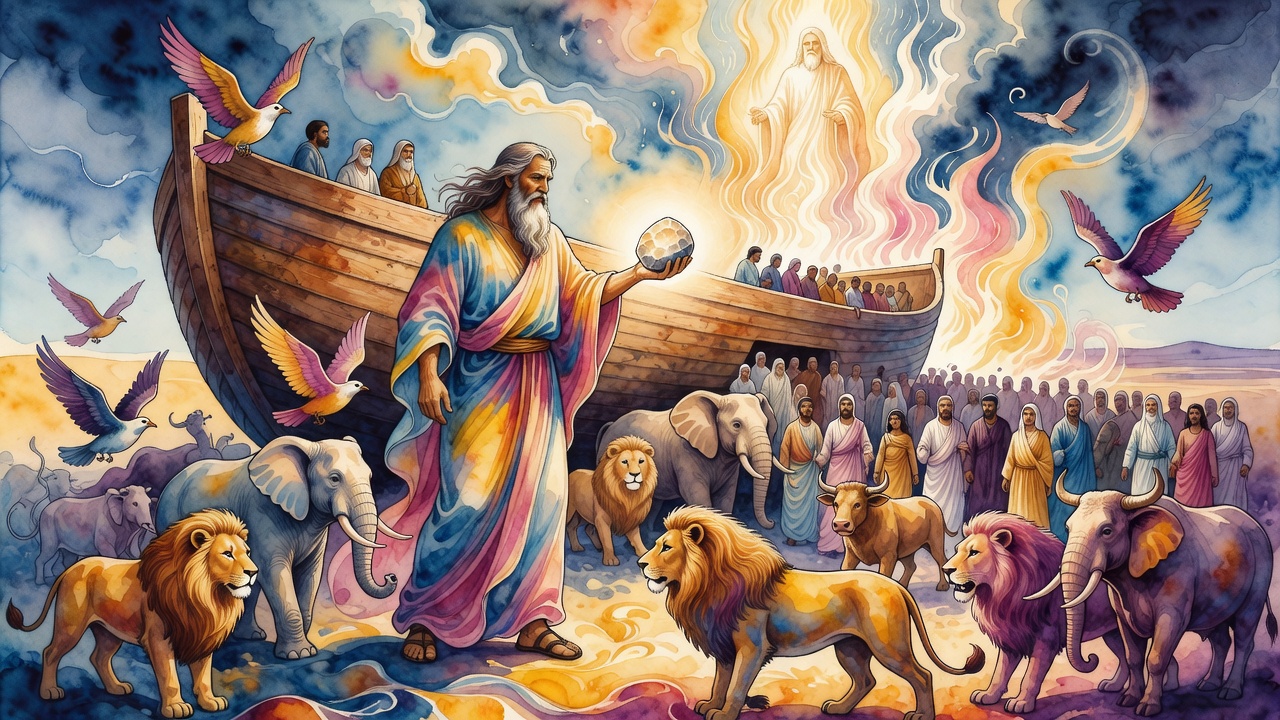
When the animals came aboard two by two, the ark accepted only certain pairs. The rule the sages drew from the verse was behavioral: if a male pursued a female, accept the pair. If a female chased the male, the natural order showed the coupling was not fit, and Noah turned them away.
Then Falsehood tried to enter. It arrived alone, without a pair, and Noah turned it away, because the command was clear: two by two. Falsehood walked out and found Corruption and proposed a partnership. "We travel together, and whatever you gain belongs to me." Corruption agreed. They entered together. That is why, the sages said, Falsehood and Corruption have traveled together since before the flood: they made their arrangement at the door of the ark when there was no other way in.
Noah Refused to Leave Without an Oath
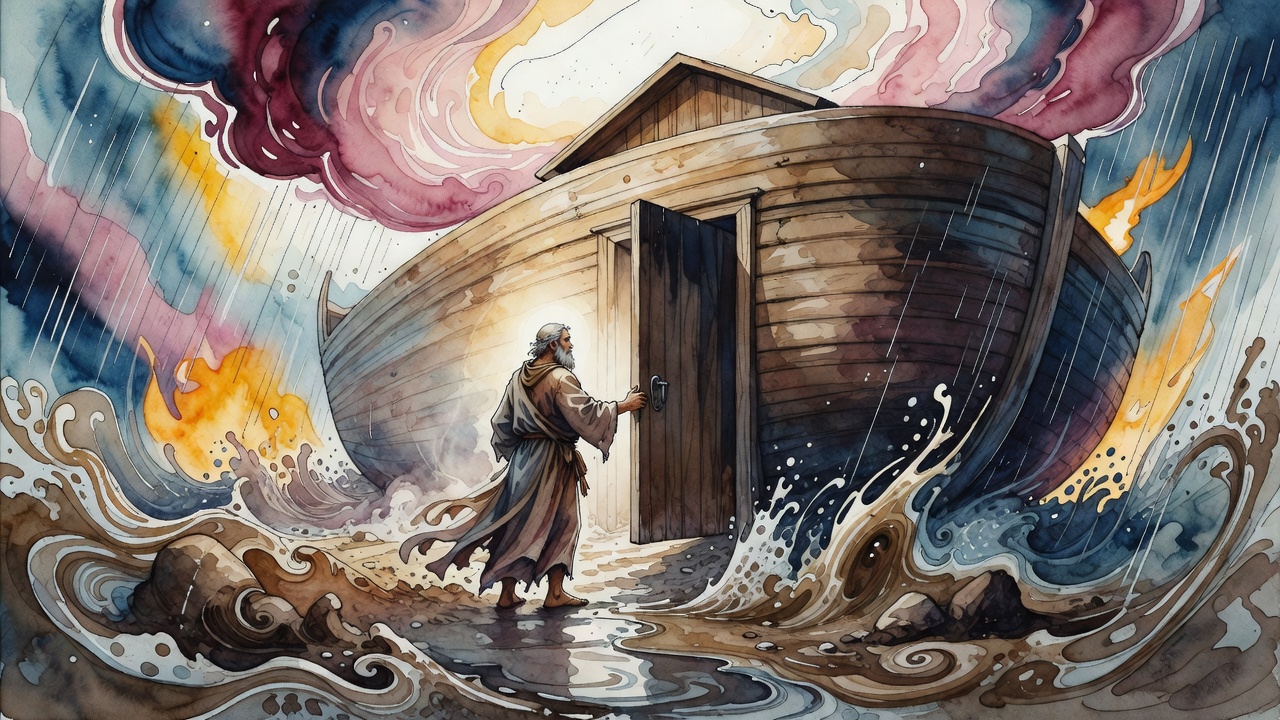
After a year inside the ark, the door could have been forced. Rabbi Yudan admitted he would have broken it open and walked out. But Noah refused to move. "Just as I came in only by permission," he reasoned, "I will leave only by permission." He sat in the ark like a steward minding another man's post, waiting for the owner to return and release him.
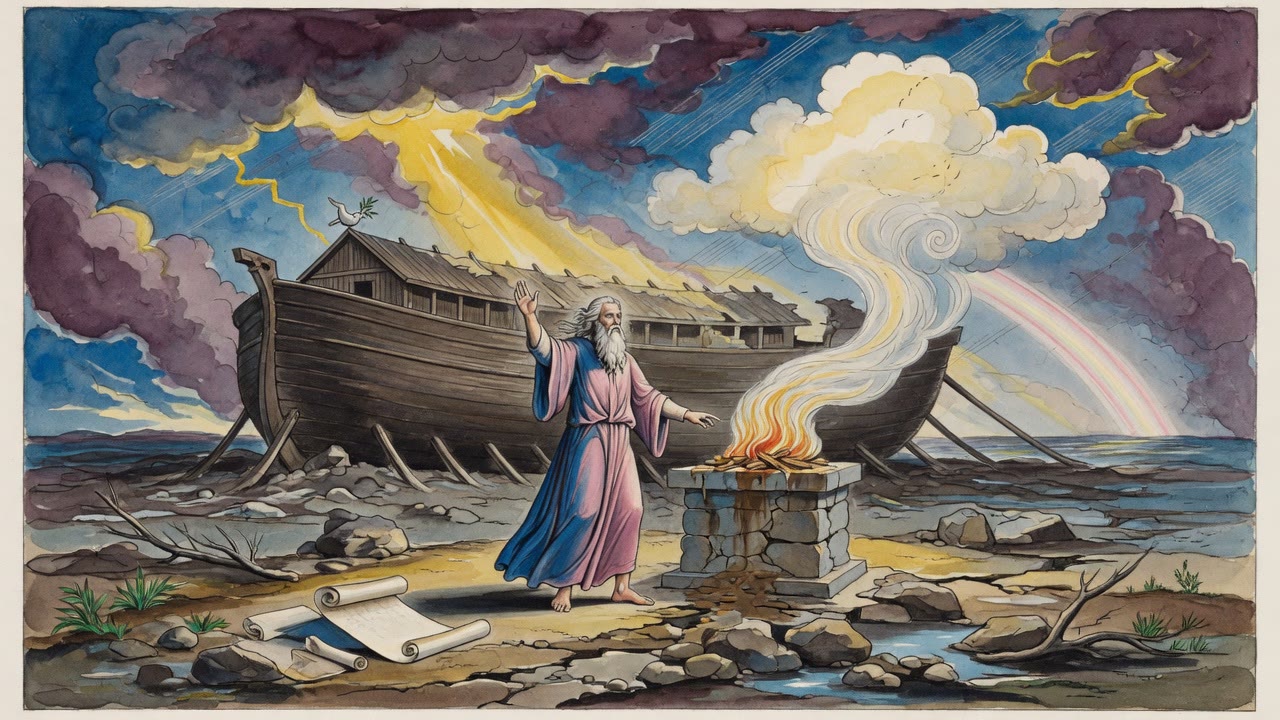
Even when the command came to leave, he hesitated. "Why bring children into a world that might be flooded again?" He would not step out until the Holy One swore an oath never to flood the earth a second time. Only a sworn promise could draw him through the door. The man whose righteousness had saved humanity demanded a guarantee for the world he was re-entering before he would agree to re-enter it.
The animals were sent out to multiply on the open earth, not inside the ark. The sages read the spelling of the verses closely to establish that mongrel creatures and those unable to reproduce had no future in the repopulation, and that only the natural pairs, the ones whose fitness had already been demonstrated at the door, went out to fill the emptied world.
← All myths