Pharaoh Stood at Gehenna Until the Kings Arrived
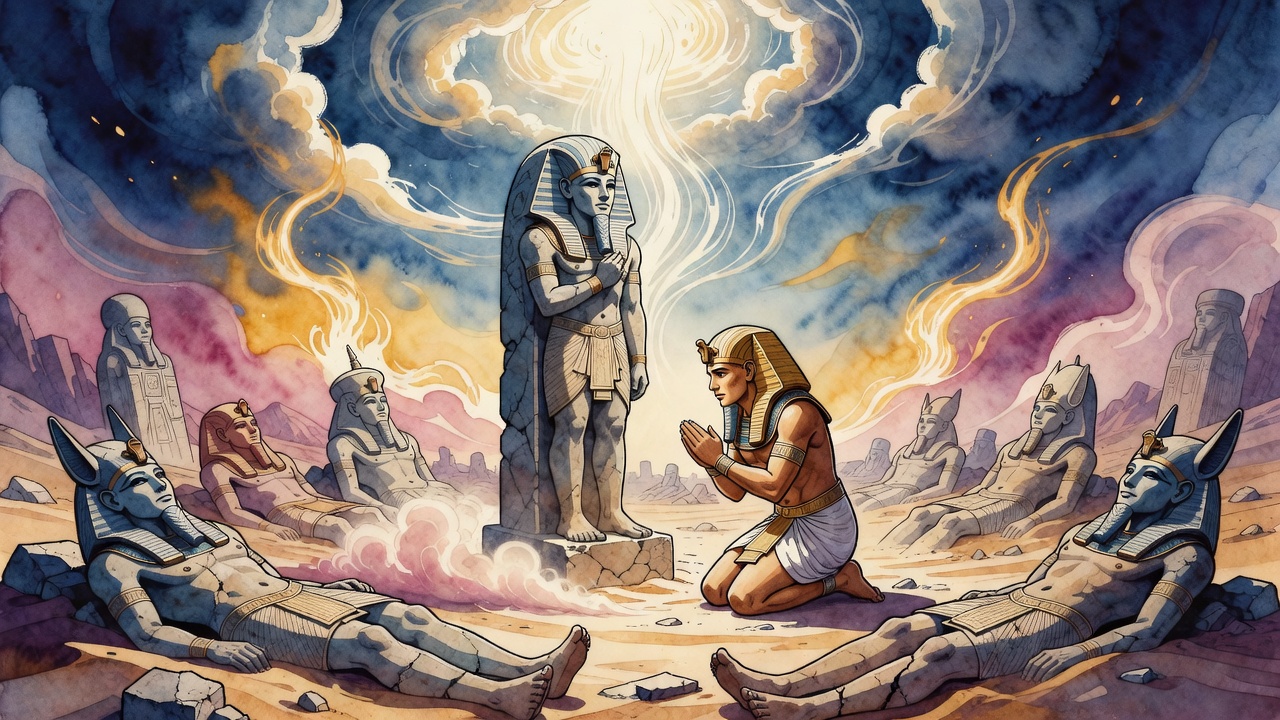
A king arrived at Gehenna expecting fire. Pharaoh stood in the doorway with fifty days of sea-floor dark still in his mouth.
Table of Contents
The king who arrived at Gehenna expected fire. He found Pharaoh standing in the doorway, already talking.
 Click for full size
"O ye fools," Pharaoh said. "Why have ye not learnt knowledge from me?"
The new arrival had been a god in his own country. He had statues. He had priests. He had a mouth that used to finish sentences for heaven. Now he had to listen to a drowned man.
Three Mouths in the Court
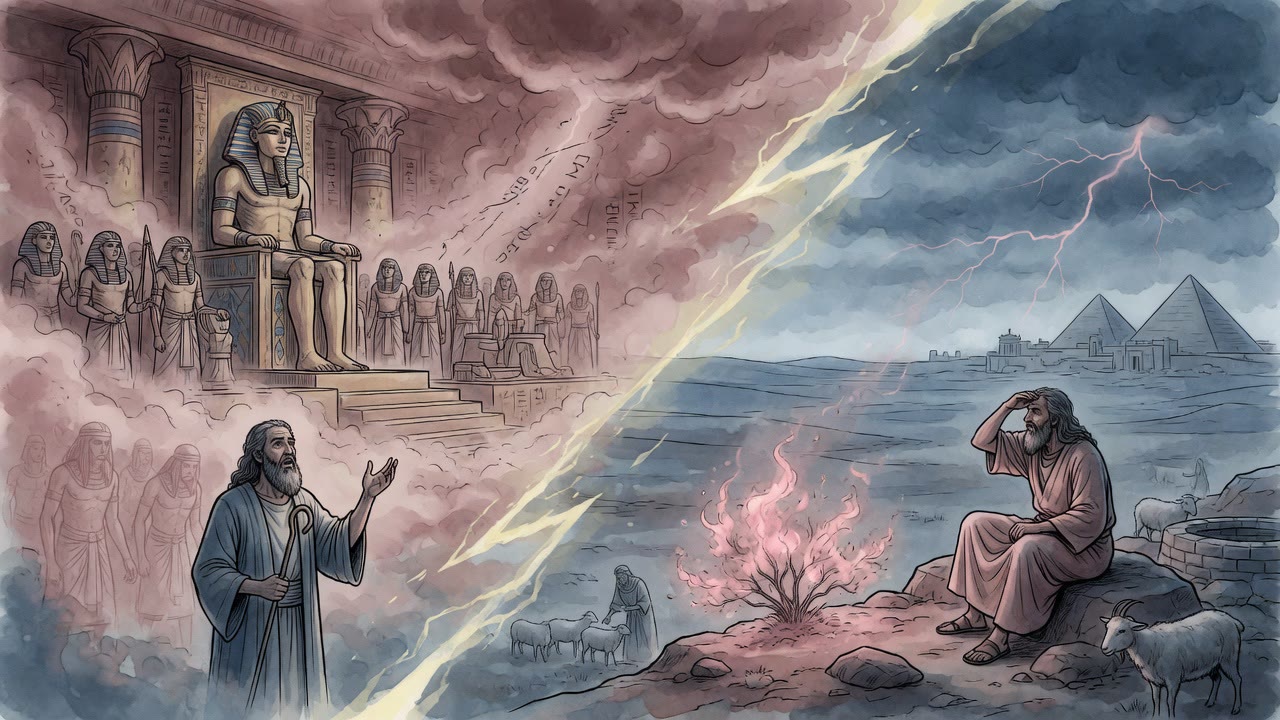
Years earlier, three men sat in front of Pharaoh while the Hebrews were still a problem he thought he could solve with a decree.
Jethro spoke first. Do not destroy them, he said. Pharaoh's face went hard. Jethro was dismissed that same hour, driven out in disgrace, and sent toward Midian, where he would later sit at a well and meet the man who freed them.
Balaam urged the killing of the Hebrew males. He would be killed for his own counsel in the end.
Job folded his hands. "Behold, all the inhabitants of the land are in thy power. Let the king do as seemeth good in his eyes." He said nothing that would cost him the room. He would spend the rest of his life paying for that quiet.
Pharaoh, left with no one willing to refuse him, proceeded.
The Idol That Survived
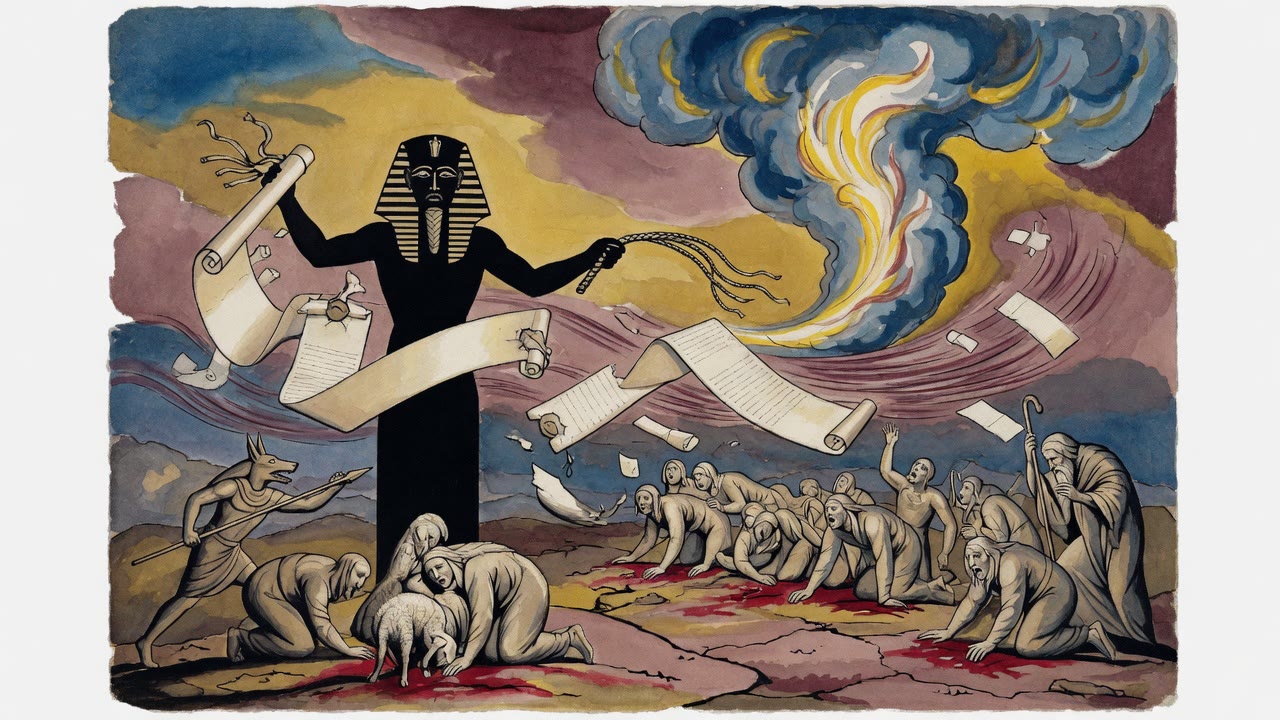
The plagues came in sequence. Blood. Frogs. Lice. Beasts in the palace while Goshen stayed quiet. The line between Egypt and Israel was drawn on the ground, so no one could later call it chance.
Ten times the king was shown something that should have ended the argument. Ten times he stood firm. Sometimes he hardened himself. Sometimes God kept him stiff, because this man was going to go all the way to the water.
After the firstborn died, after the wailing rose from every house in Egypt, Pharaoh let Israel go. Then he changed his mind. He took his six hundred best chariots and drove hard toward the sea.
At the coast, at the sanctuary of Baal-zephon, he stopped. Every other idol in Egypt had been smashed or defiled. This one still stood. He took that as a sign. The god had survived. The god approved. He offered sacrifices at the altar, found his courage again, and pointed the chariots at the water.
The idol had been left standing for exactly this. One last reason to charge.
Fifty Days Under the Water
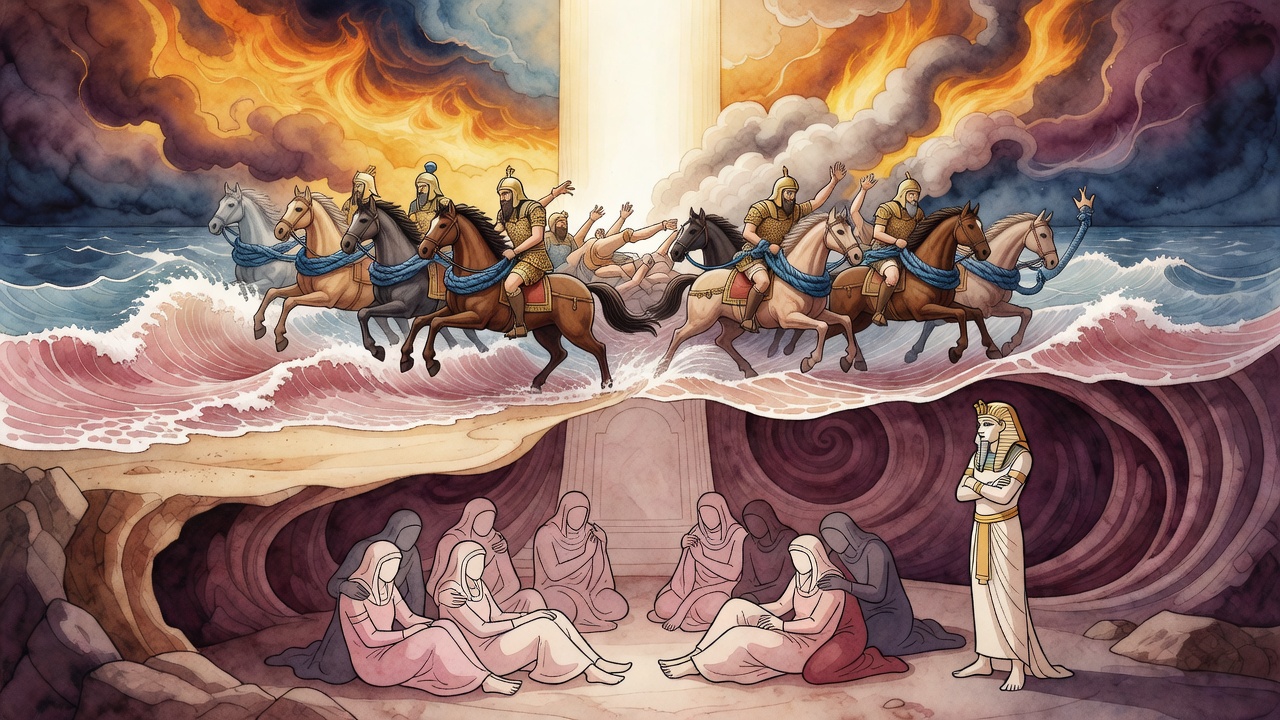
The sea opened. Israel crossed. The sea closed.
Egyptian bodies washed onto the shore so Israel could see them. No army had swum out the other side. No Egyptian had crossed alongside them. The drowned men also carried Egypt's gold and silver on their bodies, wages that returned, after generations, to the people who had earned them (Exodus 14:30).
Pharaoh himself did not wash ashore. He sank. He was held at the bottom of the sea for fifty days. Dark. Pressure. No throne. Sand in his mouth. The current turning him like a piece of wreckage that used to give orders.
Then he was brought up. Not to Memphis. Not to any palace. To a gate.
The Sentence Was His Mouth
Gehenna (גֵּיְהִנֹם), the place of divine judgment, has a doorway. Pharaoh was posted there to wait for kings.
Every ruler who had made himself a god walked through eventually. Every man who had looked at a suffering people and doubled their labor. Every heart that had gone stiff ten times against what was in front of it. Pharaoh opened his mouth each time.
"I denied the Lord God, and He brought ten plagues upon me, sent me to the bottom of the sea, kept me there for fifty days, released me, and brought me up. Thus I could not but believe in Him."
The man who had refused for decades to say those words now said them without end. Not darkness. Not fire. Not the forgetting of his name. Testimony.
Jethro had been banished for objecting. Balaam had died for encouraging the killing. Job had suffered for staying silent. Pharaoh had done all three, at different hours of his life, and then, too late for a throne, he believed.
A new king arrived. Pharaoh was still talking.
← All myths