5 min read

Rabbi Ishmael and the Chariot That Shortens Years

An angel carried an emperor into a pigsty and set a condemned sage in his bed, while Rabbi Ishmael learned how dangerous heavenly honor could be.

Curated by Arthur · Told by Maggid ·
Table of Contents
  1. The Sentence Entered the Schoolhouse
  2. The Angel Entered the Night
  3. The Decree Devoured Its Maker
  4. The Chariot Changed the Rules of Honor
  5. Rabbi Ishmael Kept the Boundary

The decree went out quietly, the way cruel decrees often do. A sage sat in a schoolhouse and taught Torah while the empire counted that act as rebellion. The order did not ask whether he was old, beloved, learned, or poor. It asked where he sat. It asked for his head.

The Sentence Entered the Schoolhouse

Rabbi Hananya ben Teradyon had made his danger public. He did not hide Torah in whispers or fold it into polite silence. He opened it before the great ones of Israel, with students close enough to hear each word and enemies close enough to report him. Rome did not need to invent a charge. The scroll itself lay against him like evidence.

His house already stood under judgment. His wife had been pulled into the decree because she had not stopped him. His daughter had been marked for humiliation because even a small vanity, once noticed by powerful men, could become a hook in their hands. Each sentence fell on the family separately, and each sentence carried the same imperial confidence. Bodies could be arranged. Voices could be extinguished. The schoolhouse could be made quiet.

The Angel Entered the Night

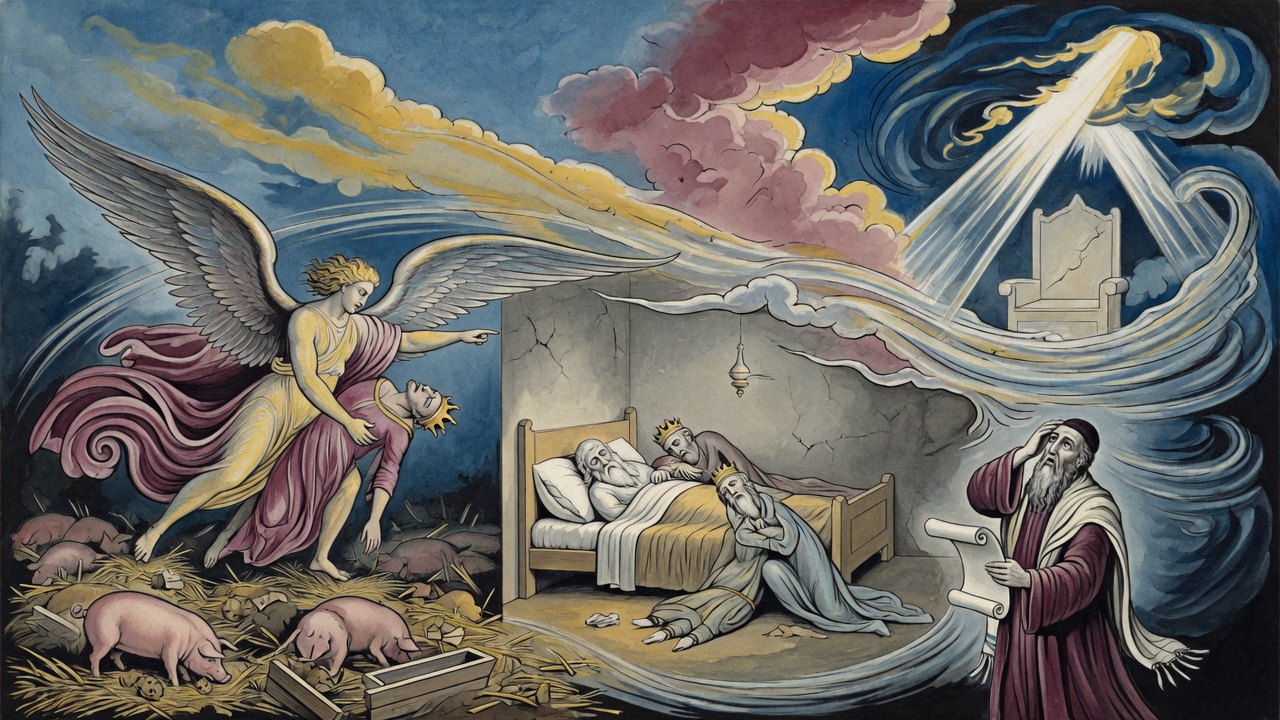
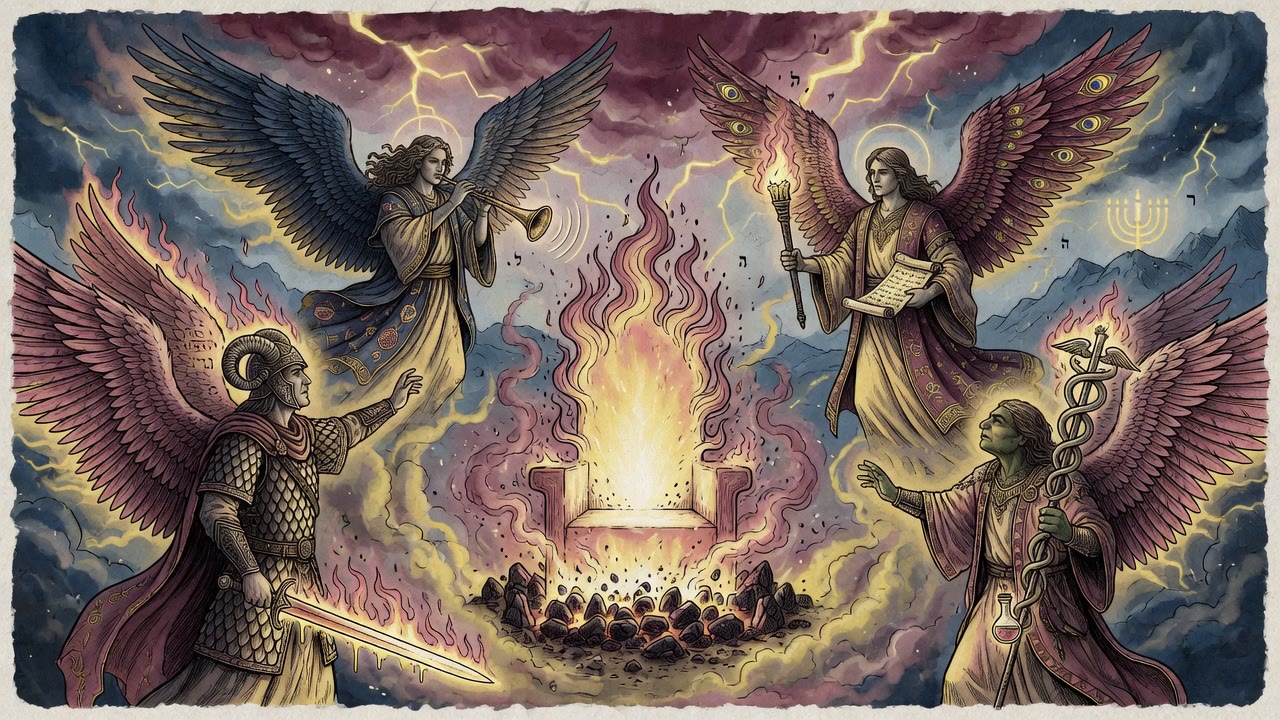
But the night still belonged to heaven. Surya, prince of the Presence, descended while the palace slept. No trumpet announced him. No sword flashed in the street. The angel found Lupinus Caesar in the sealed comfort of his bed and lifted him out of it as easily as a man lifts a cloak from a peg.

The emperor woke nowhere. He was carried into filth, set down among the beasts of his own contempt, and left there breathing under the smell of the sty. Then the angel went to the condemned sage and moved him in the other direction. Rabbi Hananya slept through the transfer. One body was taken from power into disgrace. One body was taken from danger into the center of power. By dawn, the world had been rearranged without a soldier moving.

The Decree Devoured Its Maker

Morning obeyed yesterday's order. The executioners came looking for the man in the place named by the decree. They did not ask why the face was wrong. Power had trained them to see location before person, command before truth. They found a body where the emperor's body should have been and cut off the head that lay before them.

The order returned to the mouth that issued it. Lupinus Caesar died inside his own machinery, killed by servants who thought they were being faithful. Rabbi Hananya walked out alive. The rescue had no public banner, only the terrible neatness of measure for measure. A throne had mistaken itself for heaven, and heaven answered by changing the beds.

The Chariot Changed the Rules of Honor

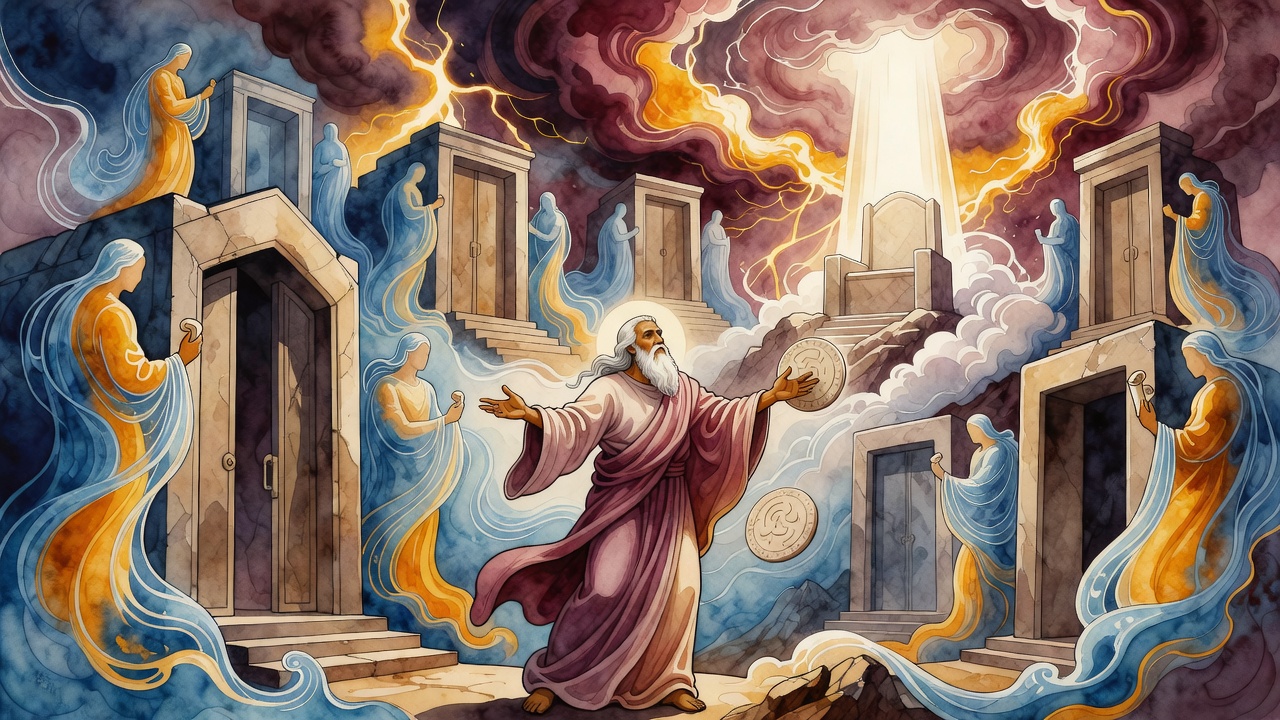
Rabbi Ishmael received the account as a man who already knew how dangerous nearness could be. The upper world was not a decoration above the lower one. It pressed on the lower one. It corrected, burned, shifted, shortened, and saved. A man who had watched the borders tremble did not treat honor as a social courtesy anymore.

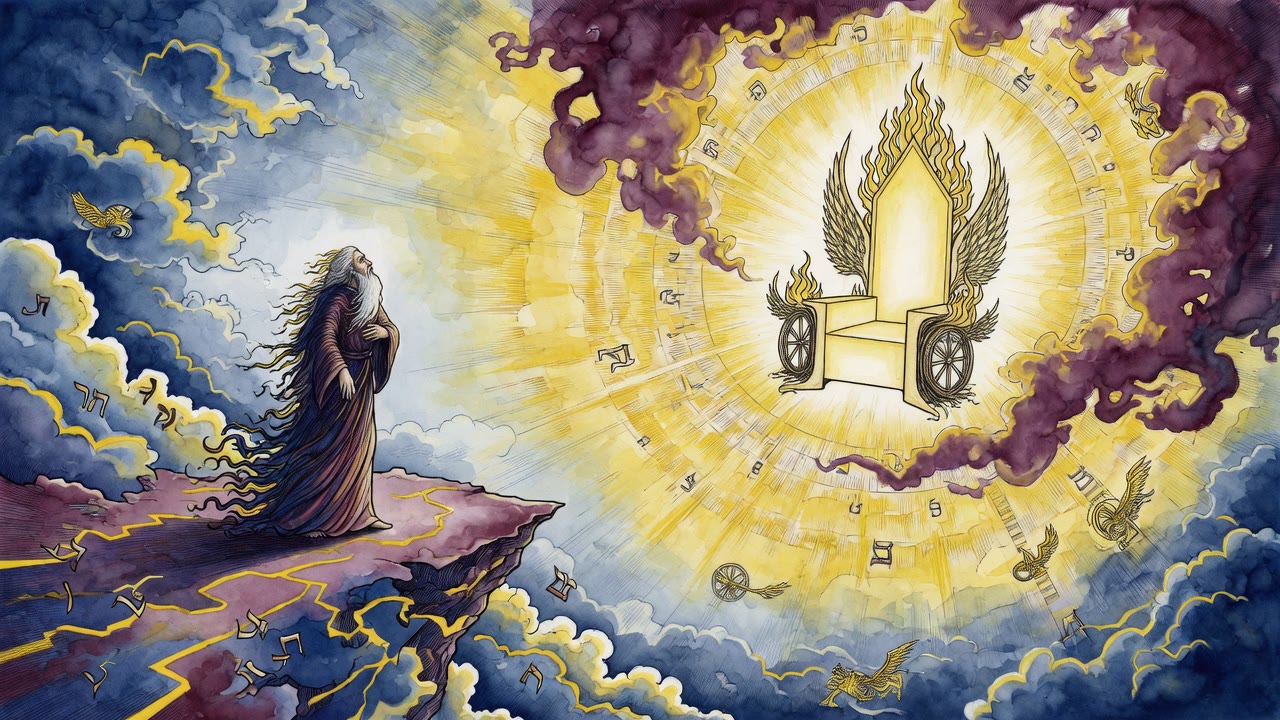
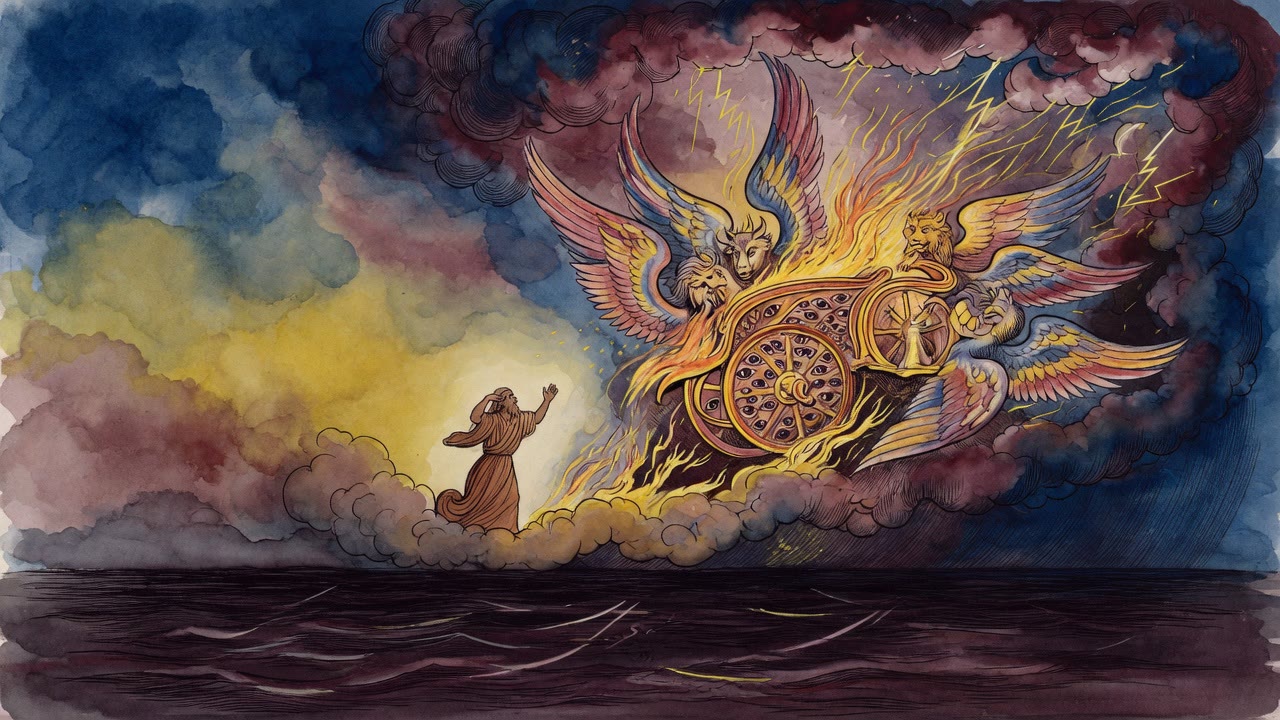
The vision of the Chariot made ordinary gestures heavy. Standing could no longer be only standing. A body that rose in the wrong moment could make a false comparison between earthly rank and the burning order above. Honor offered twice, without care, became a kind of theft. The years of a life could be cut by the movement of knees and spine.

Rabbi Ishmael Kept the Boundary

So Rabbi Ishmael spoke with the severity of someone warning men away from fire. Before royalty, before the High Priest, before the court of Israel, a person might rise. Before the Chariot, everything else had to shrink. The body had to remember where it had been. The mouth had to know when silence was safer than praise.

Heaven had saved Rabbi Hananya by moving bodies in sleep. Heaven could also demand that bodies remain still in awe. The same court that slipped a sage out of death could shorten the days of a careless mystic. Mercy and danger did not cancel each other. They stood together, two flames fed from one altar.


← All myths

From the tradition

Sources

2 sources

The texts this telling draws on, in full. Open a card to read inline, or expand it for a wider, quieter read.

Gaster, Exempla of the Rabbis No. 67; Avodah Zarah 17b-18aThe Exempla of the Rabbis (1924)

This is one of the cruelest and most luminous stories in the Talmud, preserved both in tractate Avodah Zarah and in Moses Gaster's 1924 collection as exemplum No. 67.

Rabbi Chanina ben Teradyon, one of the Ten Martyrs of the Hadrianic persecutions in the second century, was arrested for the crime of teaching Torah in public. When he received the sentence of death by fire, he did not curse; he quoted. "The Rock, His work is perfect; all His ways are justice" (Deuteronomy 32:4).

His wife was condemned to death by the sword, for failing to prevent him. "A God of faithfulness and without iniquity, just and right is He" (continuing the same verse). She accepted her sentence.

His daughter was sent into a Roman brothel, punished for a moment of vanity she had once indulged before senators. She too found a verse to acknowledge the decree. Each of the three, the tradition says, sanctified the judgment against them with a word of Torah.

On the day of his burning the Romans wrapped Rabbi Chanina in a Torah scroll, soaked wet wool against his heart to prolong the agony, and set the parchment alight. His daughter wept. "Father, that you should be burned like this."

He answered her gently. "Is it not better that I should be burned in a fire that can be extinguished, than in the Eternal Fire?"

She wept again. "And I cry for the Torah that is burning with you."

He replied with the line that has comforted Jews at every burning since. "The Torah is itself fire, and fire cannot consume fire. The parchment burns, but the letters, the letters fly upward and are free."

Then he said, "The One who arises in the days to come will require my blood from these men, and punish them for their persecution of the Torah."

Full source
Heikhalot Rabbati 2:5Heikhalot Rabbati

It's a wild ride, full of visions and intense spiritual experiences. And it raises a fascinating question: what happens when you encounter something so much greater than yourself?

Rabbi Ishmael, a central figure in these mystical traditions, lays down some pretty strict rules. He says that if you're lucky enough – or perhaps brave enough – to behold the Merkavah, the rules of earthly decorum go out the window. Normally, you’d stand up as a sign of respect before someone of high standing. But not here. Rabbi Ishmael states that someone beholding the Merkavah has no right to stand, except before royalty, the High Priest, or the Sanhedrin (the supreme rabbinic court). Why? Because standing before the Merkavah, and then ALSO standing before someone else, would be punishable by death. It would lessen your days and cut short your years. Think about the implications. What could this possibly mean?

It suggests the Merkavah experience is so overwhelming, so transformative, that it transcends all earthly hierarchies. To stand up would be to diminish the experience, to somehow suggest that something else could possibly command greater respect. It's a radical idea, isn't it?

What do you even say when you’re in the presence of such overwhelming divinity? Again, Rabbi Ishmael offers guidance. He tells us what songs to recite as we “descend to the Merkavah.” Yes, descend. While readers often think of ascending to heaven, here, the language suggests something different. Perhaps it's a descent into the depths of one's own soul, where the Divine Presence resides.

He says to begin with the principal songs, "The beginning of praise and the commencement of song, The beginning of jubilation and the commencement of exultation." It's about setting the tone, preparing the heart and mind for what's to come. And then, the song shifts, becoming a dialogue between the mystic and the Divine. "Do the princes sing who serve each day The Lord God of Israel and the throne of His glory; They bear up the wheel of the throne of His glory."

And what do they sing? "Sing, sing for joy, supernal dwelling! Shout, shout for joy, precious vessel! Made marvelously and a marvel. Surely thou shalt gladden the King who sitteth upon thee, as the joy of the bridegroom in his bridechamber." It’s a song of pure, unadulterated joy and awe. A celebration of the Divine Presence and the intimate connection between the King and His creation.

The passage culminates in a personal declaration: "When I came to take refuge under the shadow of Thy wings In the joy of my heart which rejoiced in thee." It's a moment of complete surrender, of finding solace and joy in the embrace of the Divine.

What does this all mean for us today? Perhaps it's a reminder that even in our ordinary lives, we can encounter moments of profound awe and wonder. Moments that demand our full attention and respect. Moments when all we can do is sing for joy and take refuge in the shadow of something greater than ourselves. It is a reminder that humility and awe can reorient us in the face of greatness, whether external or internal. And perhaps, in those moments, we too can glimpse the Merkavah, the Divine Chariot, and experience a taste of the infinite.

Full source