Rachel's Grave Spoke When Joseph Was Sold
Sold toward Egypt at seventeen, Joseph collapsed at Rachel's grave and heard his dead mother answer from the earth with courage for exile.
Table of Contents
The rope cut Joseph's wrists before the caravan reached his mother's grave.
 Click for full size
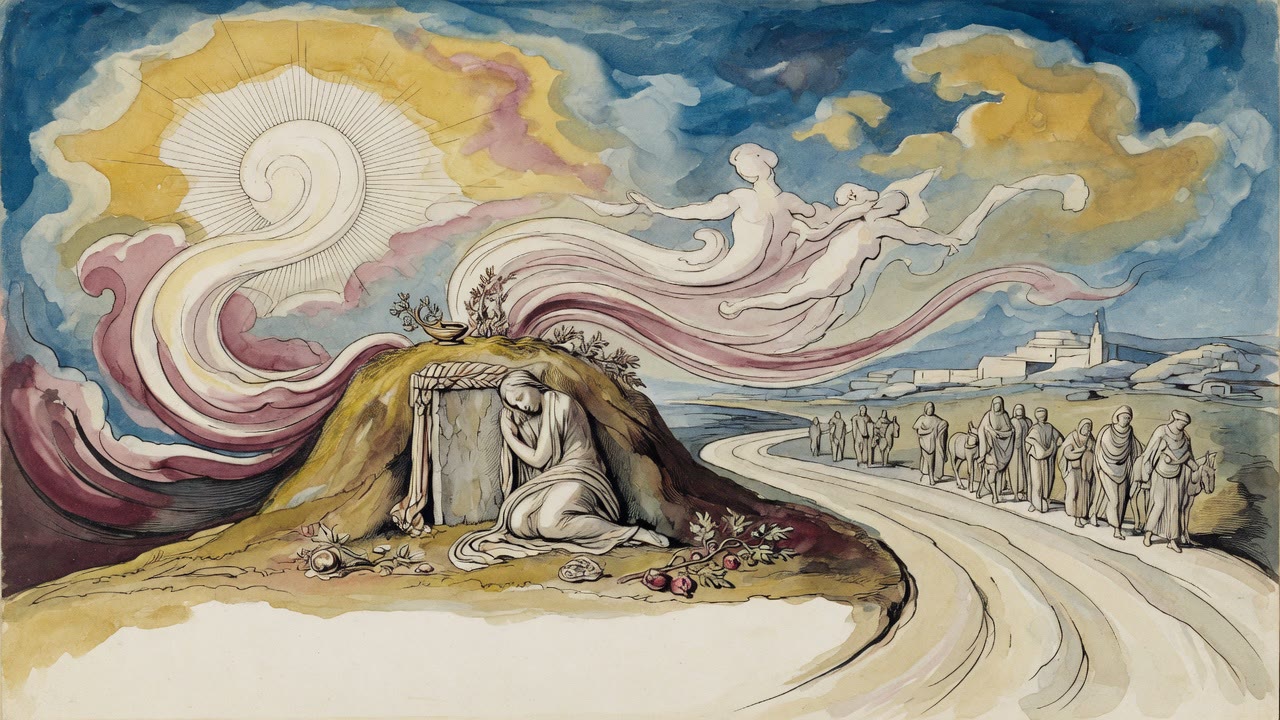
He was seventeen. His brothers were behind him with the pit, the torn coat, and the silver. Egypt lay ahead with masters whose language he did not yet know. The road bent near Bethlehem, and beside it waited the mound where Rachel had been buried after giving birth to Benjamin.
She had been dead thirteen years.
The Road Stopped Beside Rachel
The traders wanted motion. A caravan survives by walking. Camels groan, men count skins of water, and no one wastes daylight because a slave has begun to cry.
Joseph broke anyway.
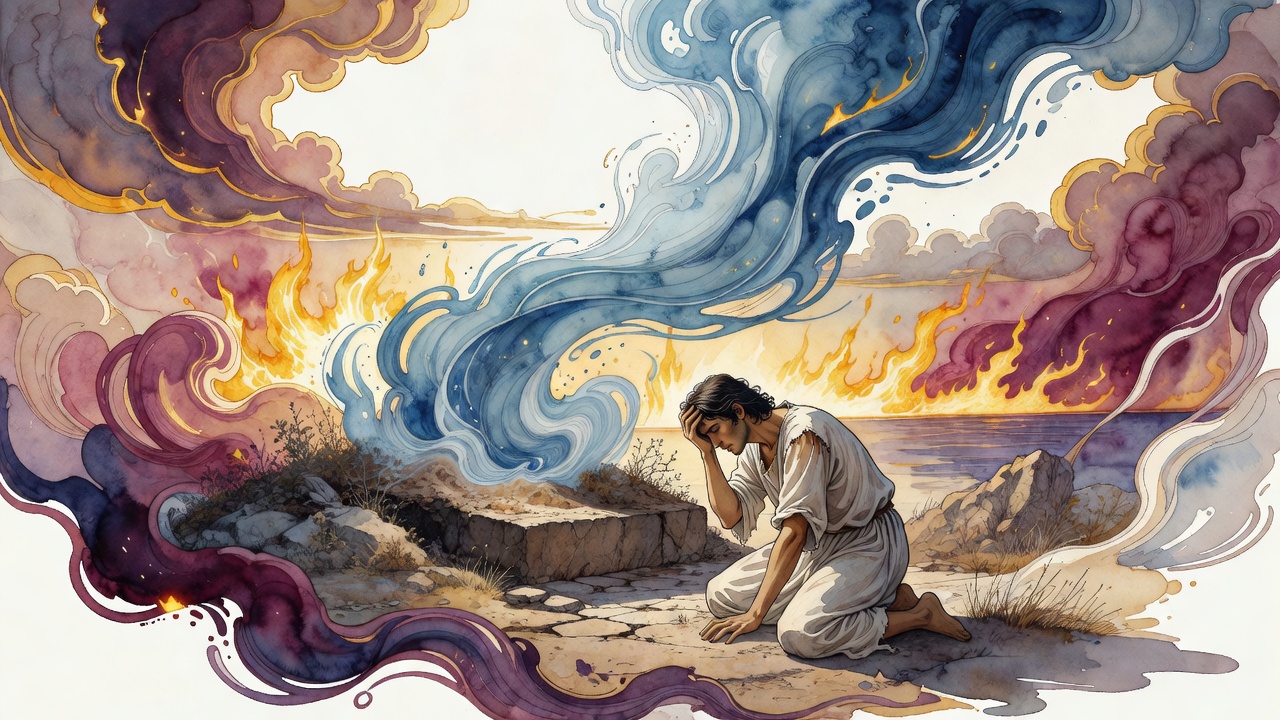
He threw himself on the grave and clung to the earth as if dirt could become arms. The boy who had carried dreams into his father's tent had been stripped of his coat, his brothers, and every witness friendly enough to speak his name. He cried until his body emptied itself of strength. At last he lay there, heavy and still, immovable as stone.
The men tugged at him. He did not rise. Grief had made him heavier than their hands.
The Voice Came From Below
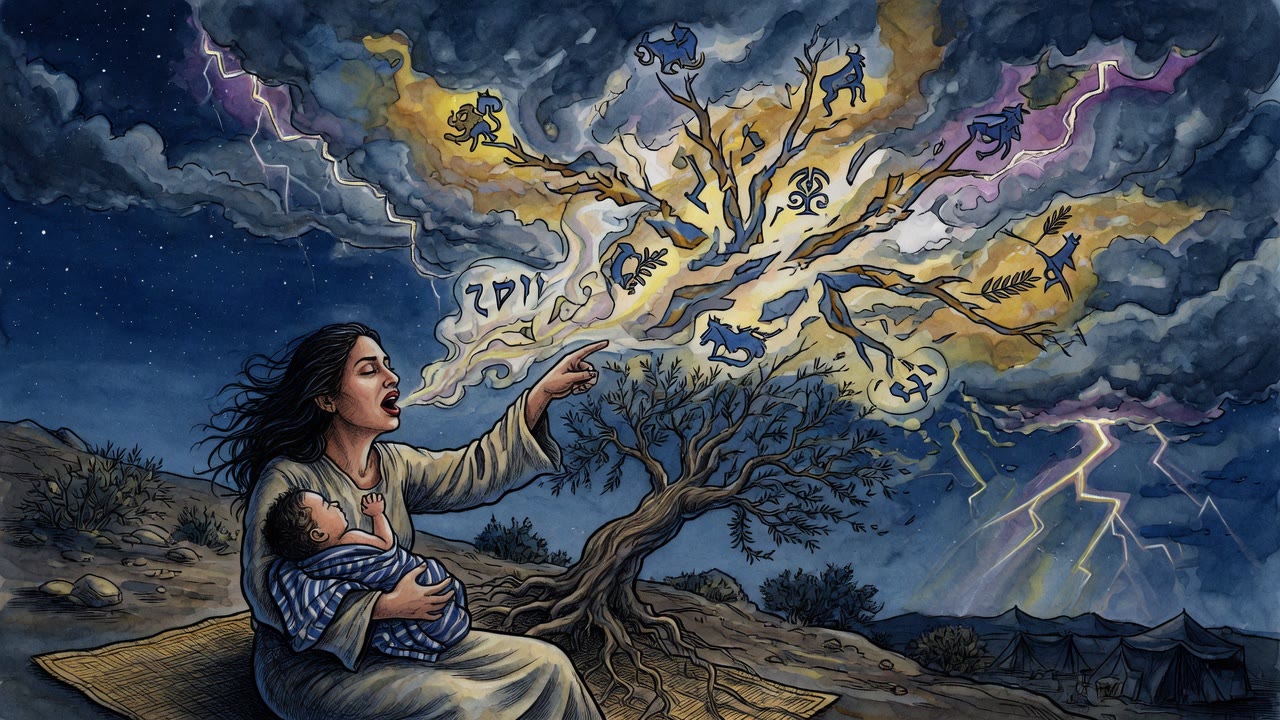
From under the mound, a voice rose with tears inside it.
"My son Joseph, my son."
The earth itself seemed to remember how to be a mother. Rachel's voice knew his complaints, his groans, his tears. She knew his misery because his pain had been added to her own. Death had not made her distant. It had only buried her where she could wait by the road.
She did not promise that the traders would turn back. She did not say his brothers would run after him ashamed. She told him to trust God and go down into Egypt with his masters. Fear nothing, she said, because the Lord was with him. Deliverance would come from the same place that looked like exile.
Joseph listened in astonishment. Then the tears came again, sharper than before, because comfort can reopen a wound by proving love is still alive.
The Traders Kicked Him Away
One of the Ishmaelites lost patience. He drove Joseph from the grave with kicks and curses.
Joseph begged. "Take me back to my father. He will give you riches. He will fill your hands if you return his son."
The men laughed at the slave who spoke like a prince. A free man's son would not be sold twice for a petty sum, they said. If he had a powerful father, where was he? Where were the servants, the horses, the armed household?
Their fury rose because his grief accused them. They beat him and maltreated him, and the road pulled him away from Rachel's grave. Behind him, the mound went silent. Before him, Egypt kept growing larger.
The Name Carried Exile
Rachel had named him Joseph because she asked God to add another son. The name began as a mother's plea over a newborn. It did not stay small.
Another son. Another exile. Another division.
Far ahead in the life of Israel, tribes would tear apart from tribes. Ten would be driven beyond the Sambatyon River, cut off behind waters that no ordinary crossing could solve. Judah and Benjamin would scatter through known lands instead. Benjamin, Rachel's last child, would remain with Judah when the kingdom split. Even the dangerous word another would bend toward other deeds, toward Jeroboam and the altars that broke loyalty in the north.
All of that pressure lay hidden inside a name first spoken by a woman who wanted one more child.
Rachel Stayed by the Road
Jacob had not buried Rachel in Machpelah. He laid her on the road, exposed to travelers, weather, and the dust of departures. A family tomb would have hidden her among the honored dead. The roadside made her available to the broken ones who would pass.
Joseph was the first to need her there. He came not as a prince but as merchandise, not with sons and banners but with bruises. Rachel answered before Egypt could swallow him. She gave him no map, no weapon, no rescue. She gave him a sentence strong enough to carry in chains.
"Go down. God is with you."
The caravan moved. Joseph walked. Behind him, his mother's grave kept its place beside the road, holding its silence until the next exile came near enough to hear it.
← All myths