The River Sambatyon Kept Shabbat and Trapped the Lost Tribes
Babylon told the Levites to play the Temple songs for its idols. They cut off their own fingers instead, and that night a cloud came for them.
Table of Contents
 Click for full size
The Harps at the Euphrates
The captives had been marched as far as the Euphrates when the order came down. Sit. Rest. Take out the harps.
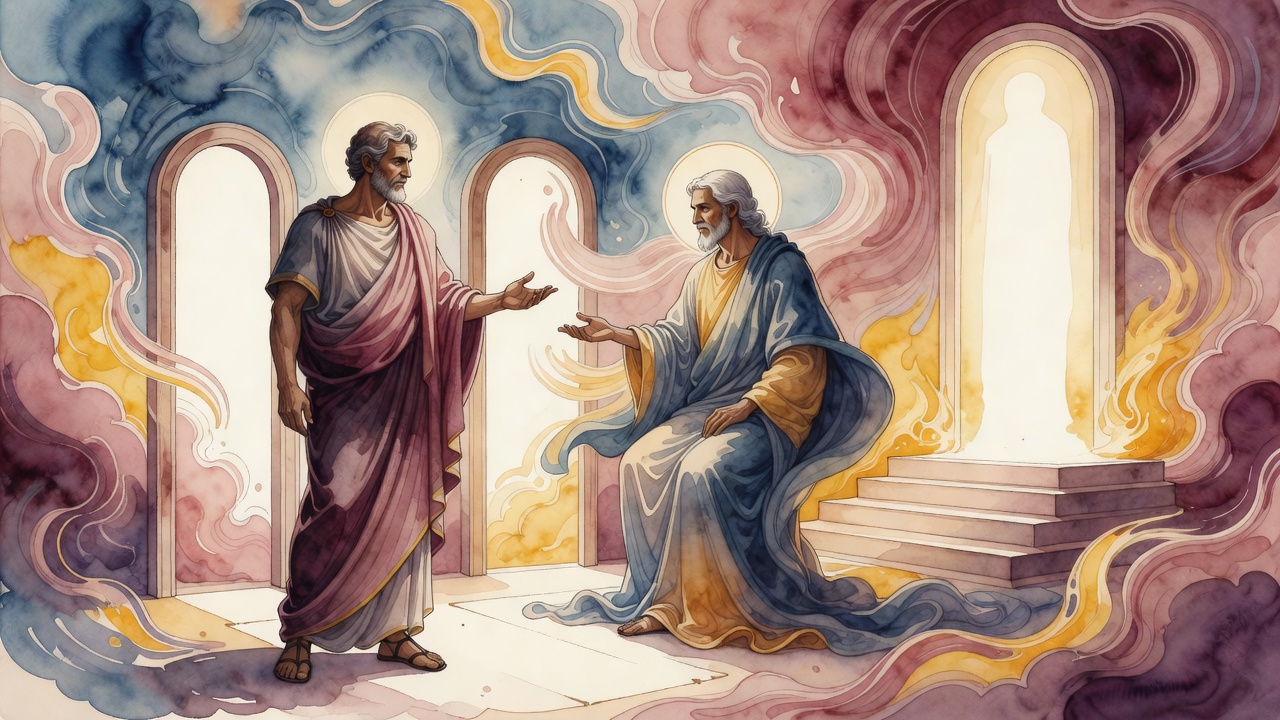
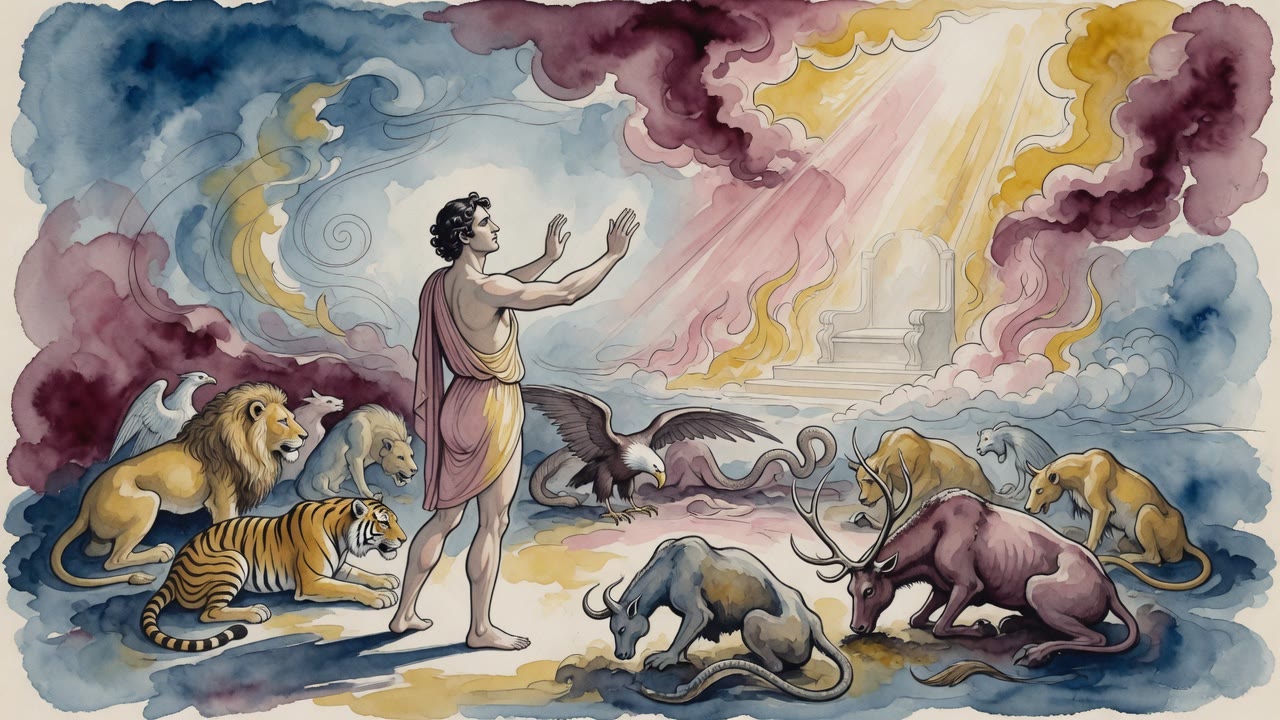
The men who were told to play were Levites, and everyone in that column knew what they were being asked for. Not music. The Temple music, the songs sung over the altar in Jerusalem, performed now in front of Babylonian gods by the men who had sung them in the sanctuary.
"You fools," the Levites said. "If we had sung a song of thanks for every miracle God did for us, we would never have been driven out of our land at all. We would have gone from honor to honor. And now you want a song for your idols?"
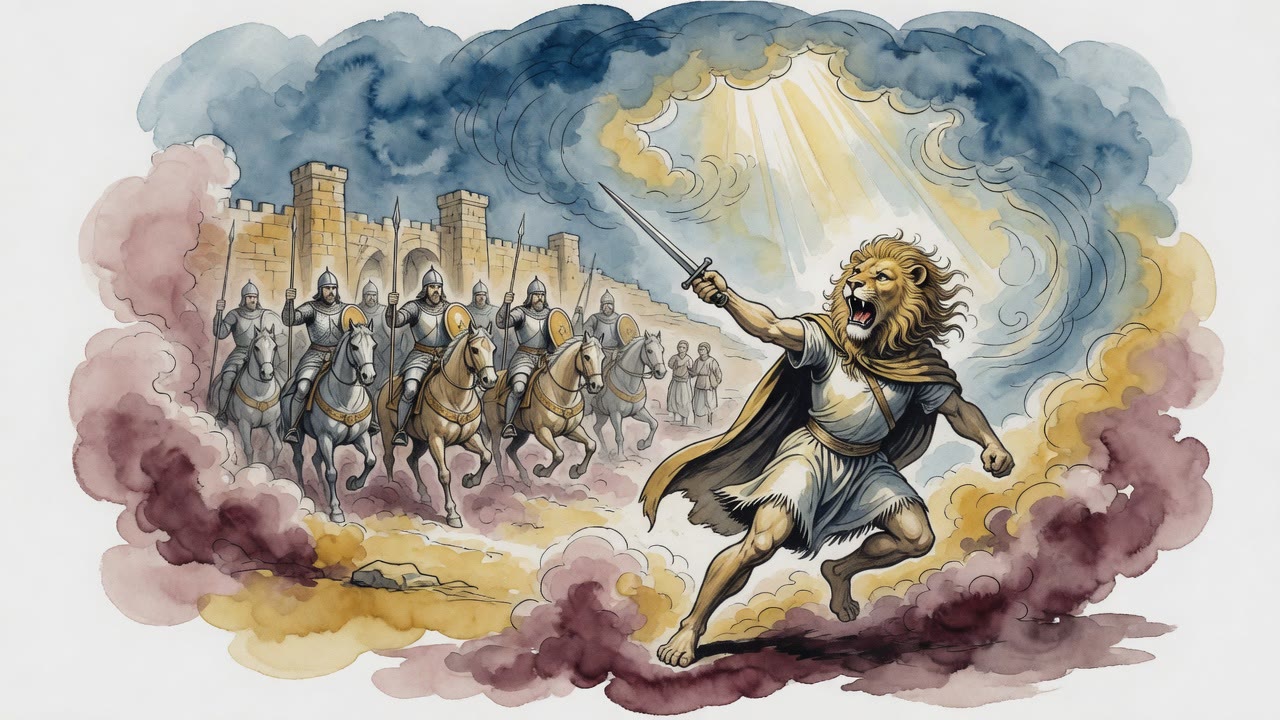
The guards rose and killed them where they stood, and went on killing until the Jews lay in heaps. It ruined the evening. They had wanted singers and they had gotten corpses, and not one of the dead had bowed to anything.
The Levites who were left did the arithmetic that night. They were still alive, and the demand would come again in the next city, and a man who can play will eventually be made to play. So they laid their hands down and cut off their own fingers. When the order came a second time, they held up what was left of their hands and said nothing.
The Cloud That Came Down for Them
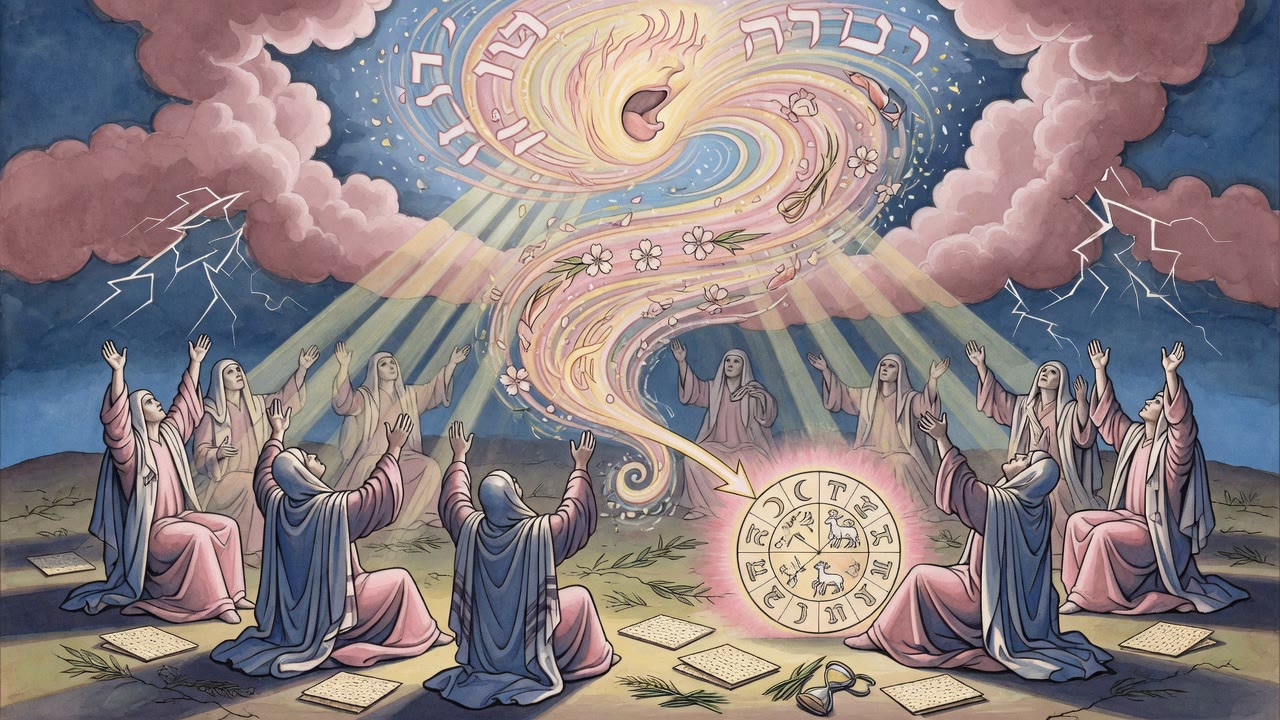
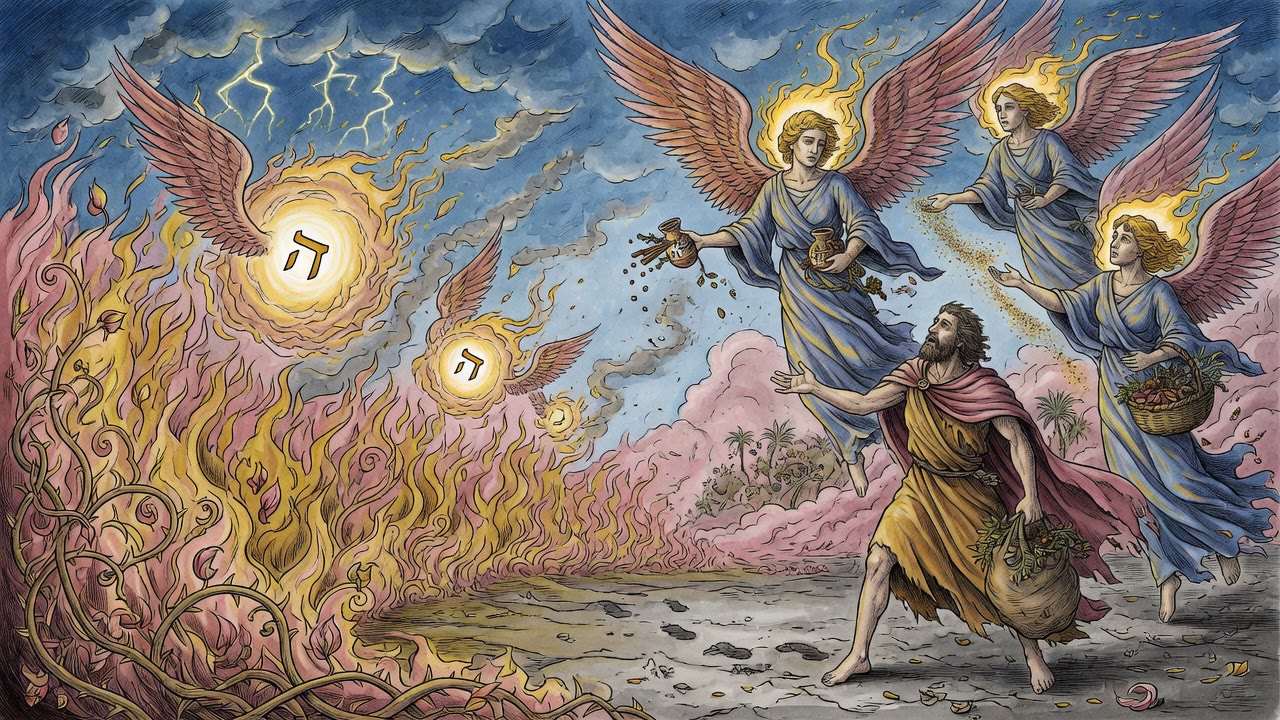
A cloud came over them after dark. It covered the maimed men and their wives and their sons and their daughters, and a pillar of fire went in front of the cloud and lit the road all night, and they walked. When the sun came up they were standing at the edge of the sea, and the cloud lifted off them, and the fire went out.
Behind them, on the far side of a country they would never see again, was the road back.
The River God Stretched Around Them
Then the river came for them, and it did not come as water.
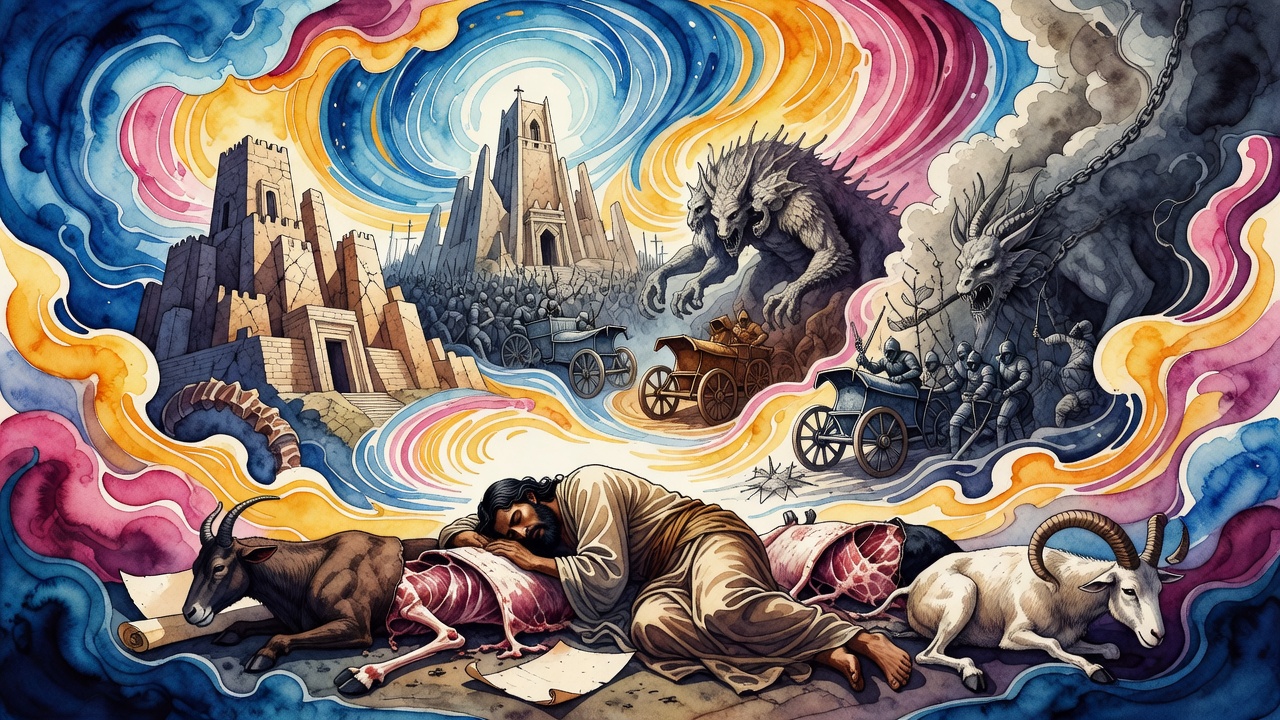
The Sambatyon runs with sand and stone. It rolls boulders down its bed with a noise like an earthquake that carries half a day's walk in every direction, and it is two hundred cubits deep, and nothing that goes into it comes out. God took the length of that river and drew it around the sons of Moses like a cord around a bundle, three sides of them river and the fourth side sea, and the loop he drew ran nine months' journey from end to end.
They had come out of Babylon in one night. They were never going to leave again.
What Grows on the Inside
Nothing unclean walks in there. No unclean animal, no unclean bird, nothing that creeps, only their own flocks and herds. Six springs run together into one pool and the pool waters the fields. They put one seed in the ground and take a hundred out. They keep the Torah and the Mishnah and the Aggadah, and none of them has ever sworn a false oath, and they own no slaves, so they plough their own furrows and build their own houses.
They live to a hundred and twenty. No son and no daughter dies while the father is alive, so every man there sees his children's children's children. They do not lock their doors at night. A young child can walk out with the cattle and stay out for days, and nothing happens to him, because nothing is coming.
They see no living person from outside, and no living person from outside sees them. Only four tribes know they are there. Dan, Naphtali, Gad and Asher live on the other side of the rivers of Kush, with the Sambatyon lying between, and they will stay where they are until the world ends.
The Fire That Stands Where the Stones Rest
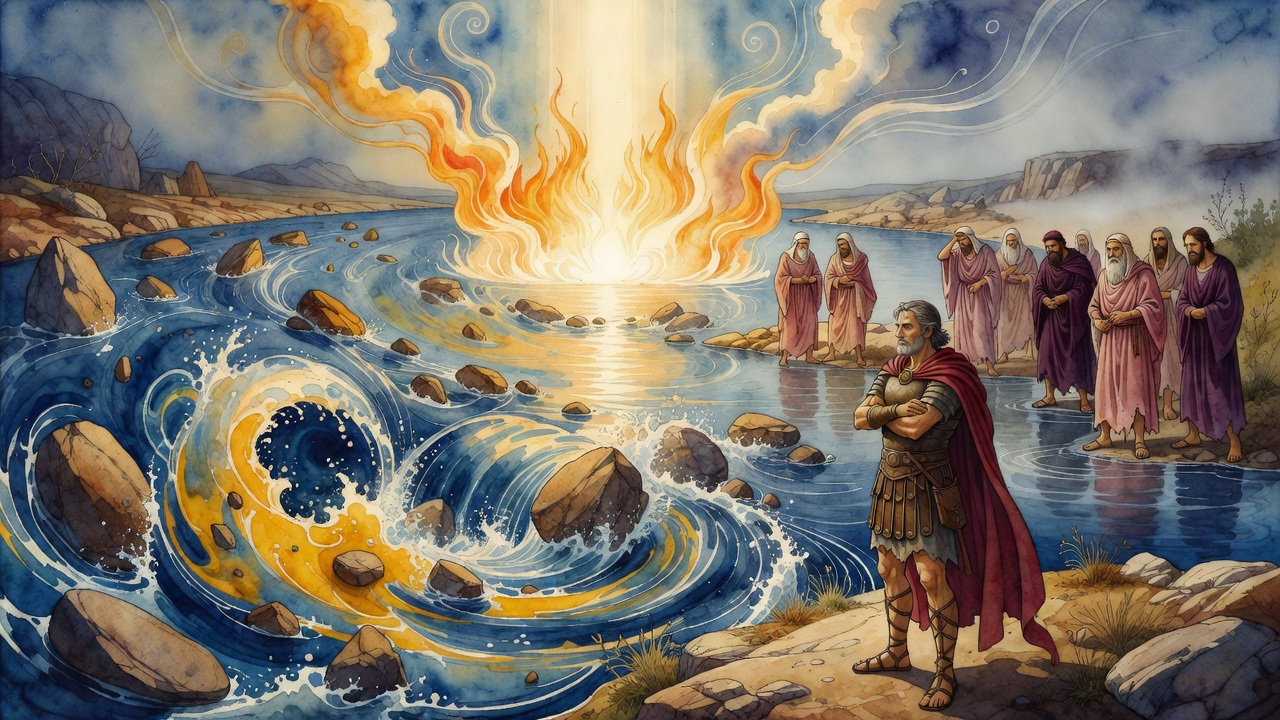
Six days the stones roll. On the seventh the river keeps Shabbat.
The stones settle where they fall, the roar goes out of the air, and for one day the water lies down flat enough to walk across. That is the day fire comes out of the western bank. It burns from the eve of Shabbat to the end of Shabbat, throwing flame in every direction, and nothing living can come within thirty-four miles of the bank while it burns.
Far to the west, in Judea, a Roman governor once demanded to be shown proof that one day of the week was different from the others, and Rabbi Akiva named this river as his first witness: six days it throws stones, on the seventh it rests. "Are you dragging me to a river?" the governor said. He was. Nobody has ever crossed it to check.
The exiles behind it keep the same day. They cannot travel on it. So the one morning in seven when the stones lie quiet and the crossing is open is the morning they are forbidden to cross, and by nightfall the noise starts again, and the lost tribes are still trapped on the wrong side of the water by the river that keeps their own day with them.
← All myths