Moses Carried Heaven's Sapphire Into Pharaoh's Court
The rod Moses carried was carved from the sapphire Throne of Glory, engraved with the Name, and became a basilisk before the king of Egypt.
Table of Contents
 Click for full size
The Weight in His Hand
The rod weighed forty seah. No shepherd walked with such a thing. Whatever tree it had been cut from before the world was made had left behind a weight that pressed into human arms as a reminder that the man carrying it was not the origin of its power.
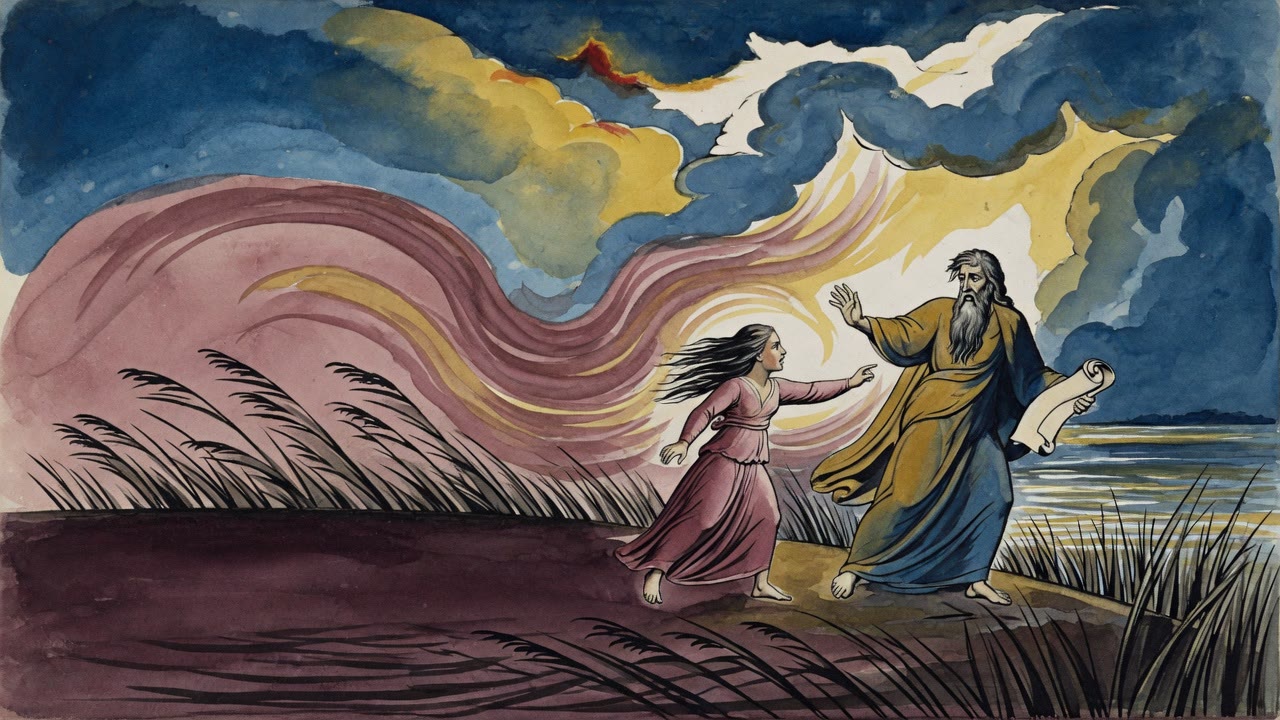
It had been fashioned from the sapphire of the Throne of Glory. The same blue stone that the elders of Israel saw beneath God's feet on Sinai, the pavement that looked like the very heaven for clearness, that stone had been shaped into a staff. Engraved on its surface in the letters of the Great and Glorious Name were the signs by which miracles would be performed. Moses took it from his father-in-law's chamber and went down to Egypt holding heaven's furniture in his right hand.
From Adam to the Shepherd
The staff did not begin with Moses. Tradition traces it backward through time the way one follows a river to its source. It was made at twilight on the sixth day of creation, at the last possible moment before Shabbat closed, when God prepared the unusual things that would later enter history sideways. It passed to Adam. From Adam to Noah, from Noah to Abraham, from Abraham to Isaac, from Isaac to Jacob. Jacob brought it down to Egypt. Joseph carried it in Pharaoh's court. After Joseph died, the rod ended up in Jethro's garden in Midian, planted in the ground, where it stood until Moses reached for it and no other man could pull it free.
Every generation that held the staff was a generation in which God intended to move. The staff did not travel by accident. It arrived in Moses' hand because the line of custody had been pointing toward this moment since the first Shabbat eve.
Pharaoh's Throne Room
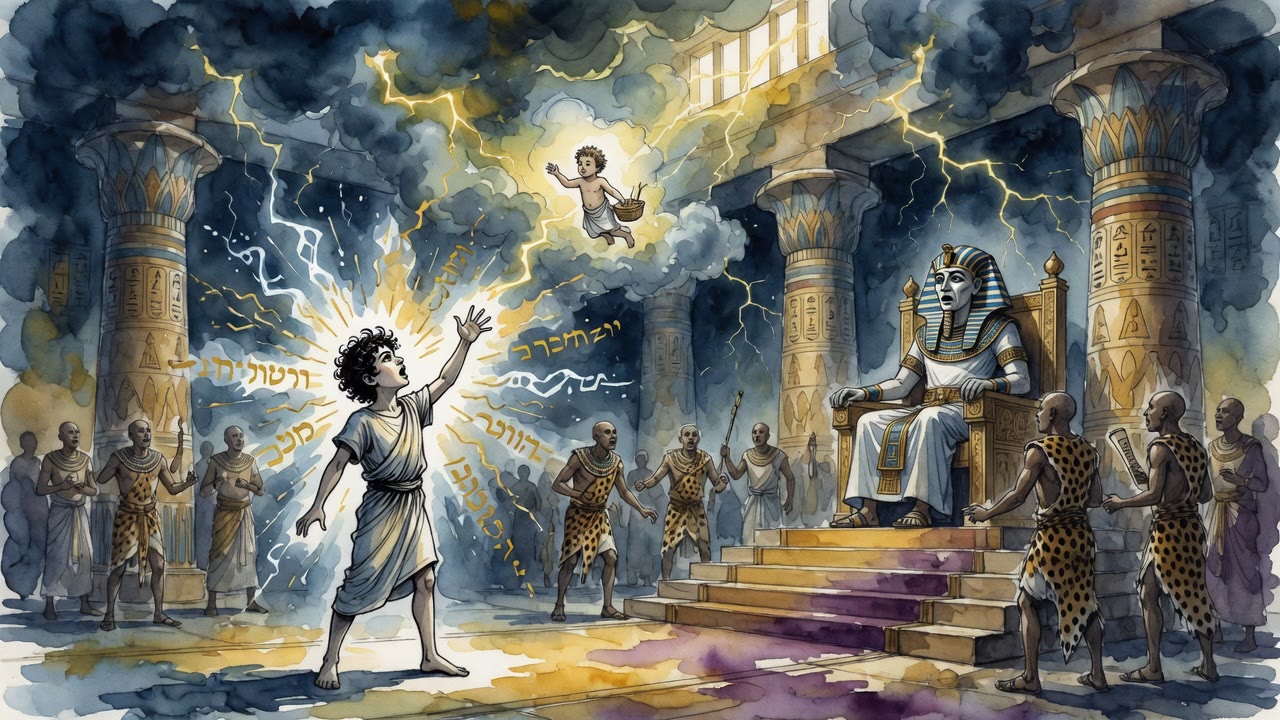
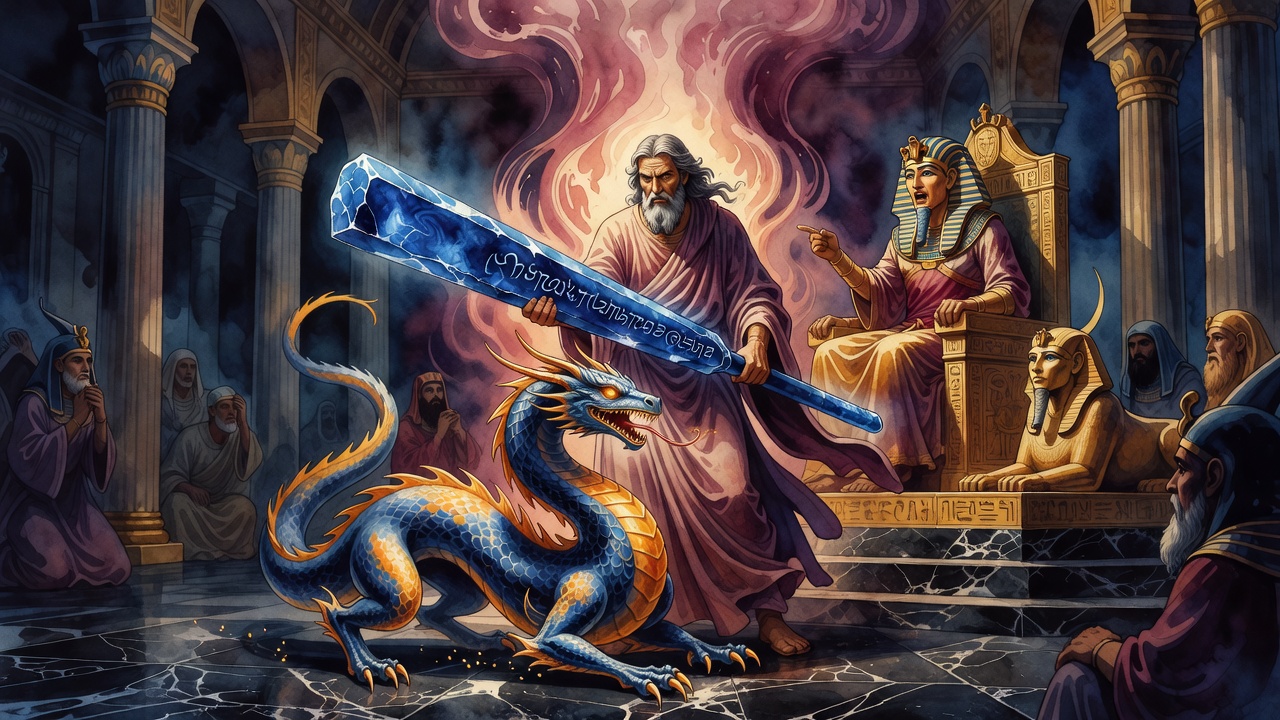
Moses and Aaron walked into the court of the most powerful king in the world. The audience was not requested. It was announced. Aaron threw the staff to the floor of Pharaoh's throne room in front of the king and all his ministers.
The rod became a basilisk.
Not a common serpent. Not the ordinary snake of desert roads. The basilisk was the king of serpents, the creature whose gaze could kill, whose shriek made men fall. Pharaoh's cobra crown, the uraeus he wore on his forehead as the emblem of his own royal power, was now looking at the floor of his own court where the basilisk from the God of Israel moved freely. Egypt's symbol of divine kingship was in the room, but the symbol had been swallowed.
Pharaoh's magicians threw down their staffs. Serpents multiplied on the floor. For a moment the court might have looked like an even contest. Then Aaron's staff-turned-basilisk ate the magicians' serpents. The floor was cleared. Only one rod remained.
The Name on the Staff
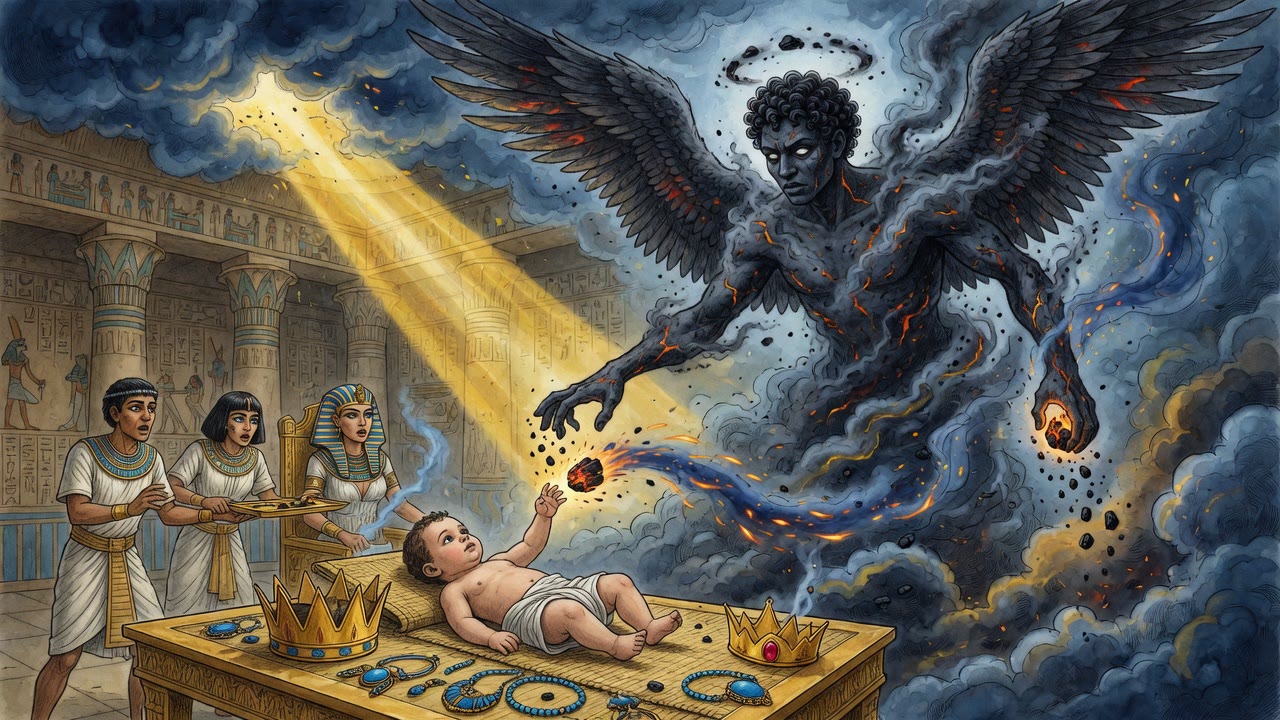
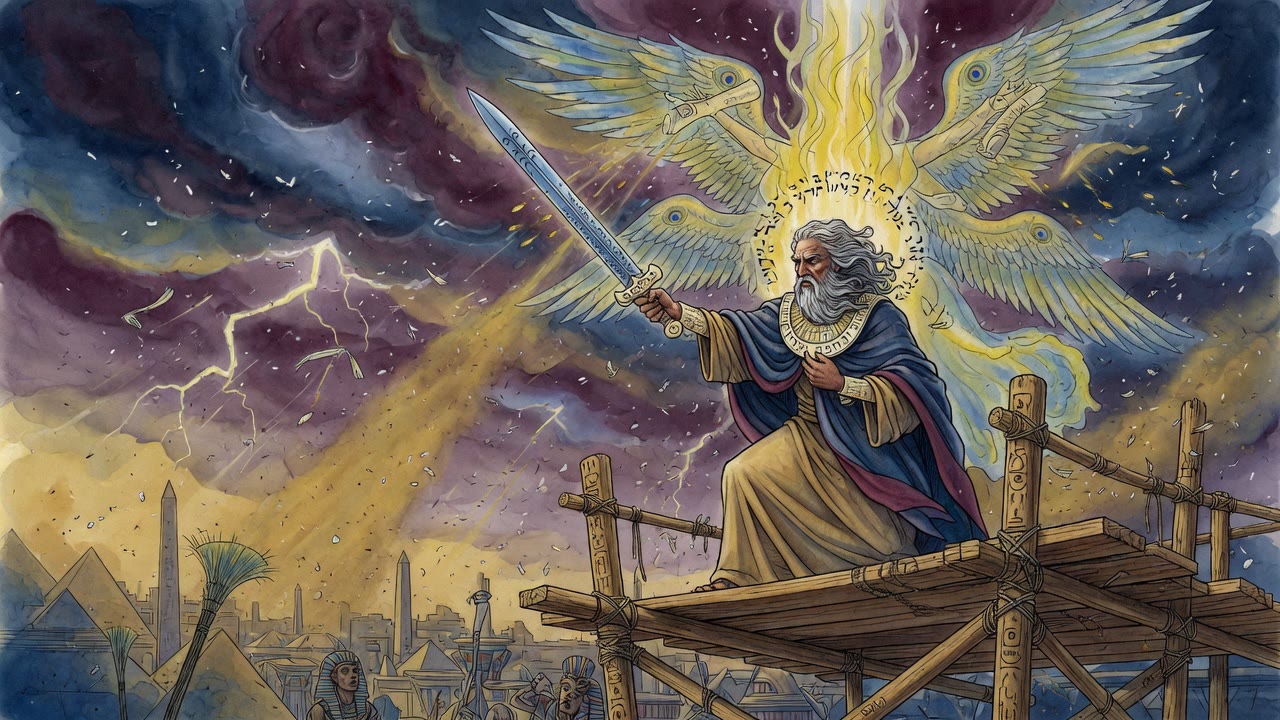
Later in the Exodus story, when the plague of the firstborn shook Egypt in a single night, something struck Pharaoh at his throne. Tradition remembers the same basilisk's shriek echoing through the palace, a sound linked all the way back to the serpent's curse in Eden, the moment the first creature lost its glory and the world learned what punishment sounded like. Egypt's breaking was connected to the beginning of the world.
The staff that had passed through Adam's hands and Noah's hands and the patriarchs' hands was now completing a circuit. The Exodus was not improvised. It had been prepared since the sixth day, when God set the rod aside among the things that would one day be needed, and waited for the shepherd who could carry forty seah of heaven into a king's court and leave it standing.
← All myths