The Tachash Hide That Kept the Ark Out of Sight
Three hundred priests washed the curtain. Two of them lowered it by inches onto the Ark so that no part of it would be in sight of the camp.
Table of Contents
 Click for full size
A Shoelace Abraham Would Not Take
The king of Sodom came to Abraham after the battle with an offer. Keep the property. Just give back the people.
Abraham raised his hand toward heaven before he answered.
"Not a thread. Not a shoelace. I will not take anything that is yours, so you can never say, I am the one who made Abram rich."
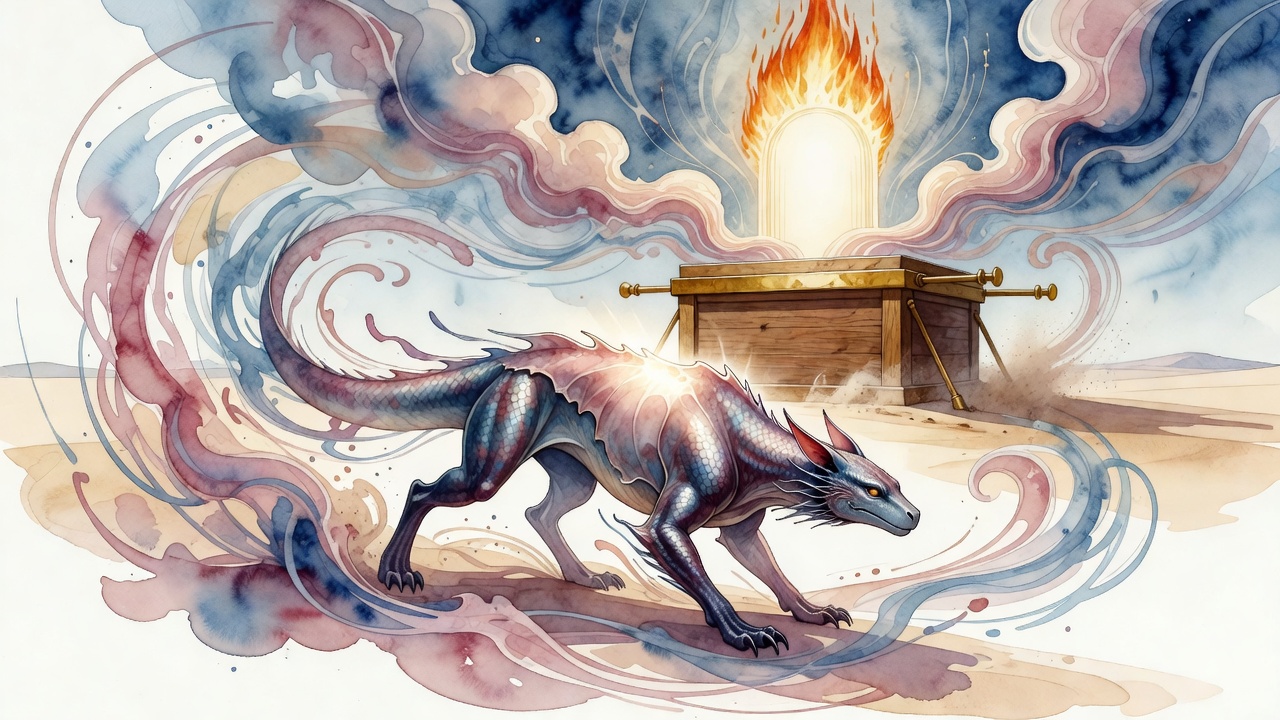
God paid both items back. For the thread there were two answers: the blue thread his children would tie to the corner of every garment, and the blue and purple threads that would go into the walls of God's tent. For the shoelace there was one. The hides of the tachash, which would roof that tent, and which would go over the Ark every time it traveled.
The Curtain Comes Down by Inches
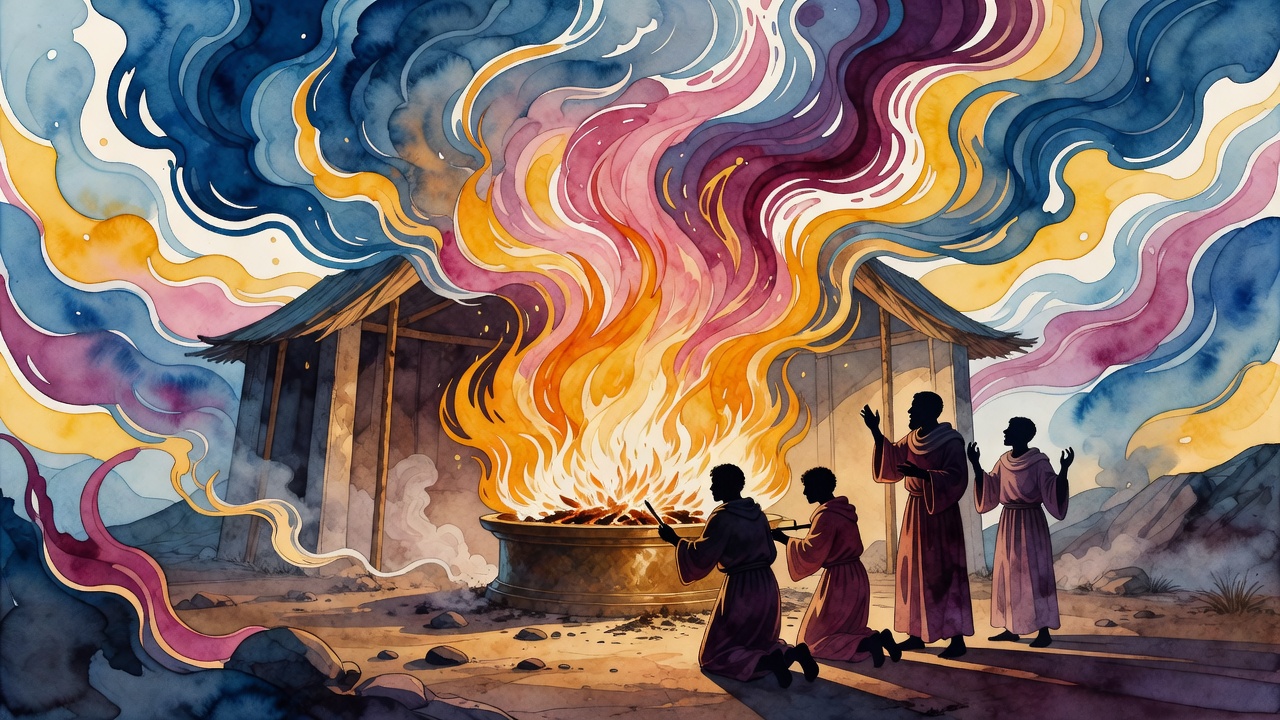
Generations later, out in the wilderness, the hardest job in a moving camp belonged to a few men who were not permitted to look at what they were handling.
The sons of Kehat carried the holy things, but the curtain was not theirs to touch. That work was for priests. Aaron's sons came in with long wooden poles tipped with gold, or with iron, and lifted the curtain off its hooks.
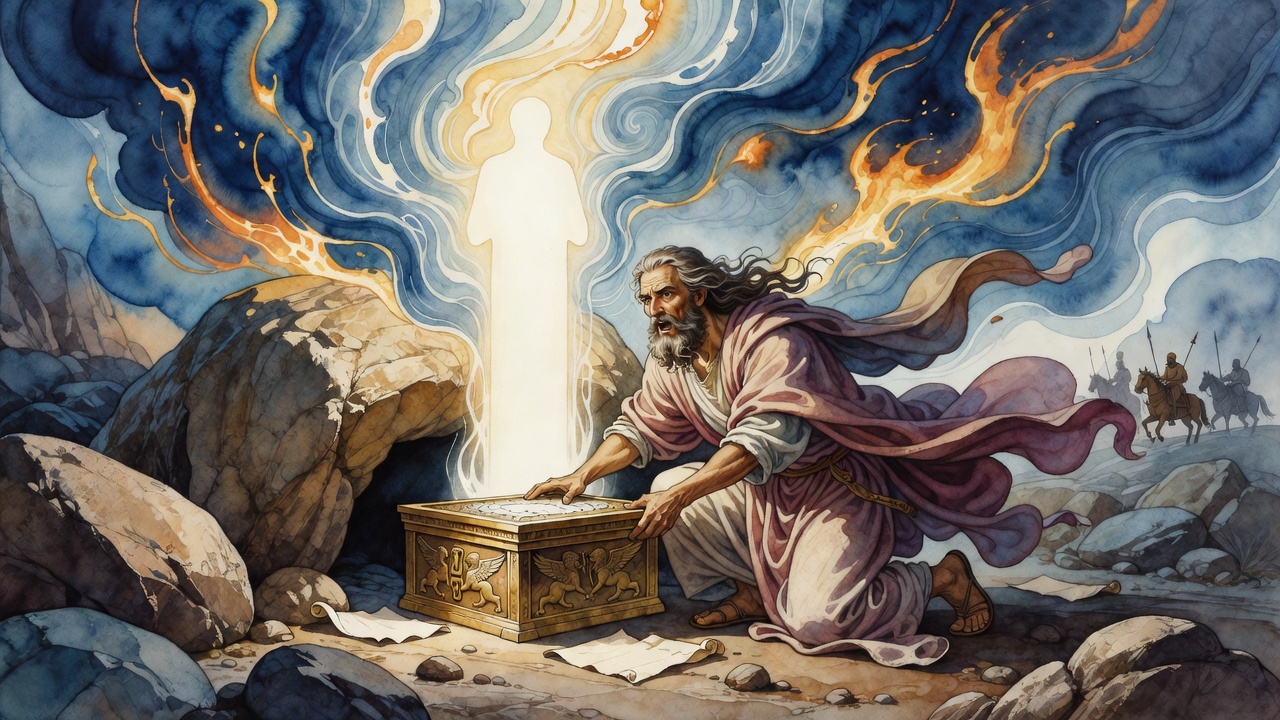
They did not let it fall. If it came down all at once they would see the Ark.
So they brought it down a little at a time, eyes on the top edge and nothing else, until the whole weight came free and settled over the Ark with no gap anywhere. The curtain was a handbreadth thick. Seventy-two strands went into it, and every strand was twenty-four threads. Three hundred priests were needed to carry it down into the water and wash it. Elazar and Itamar took the poles, one man at each end.
Over the curtain went the tachash hide, which kept every part of the Ark out of sight. Then over the hide a cloth of blue, all blue, with nothing else worked into it.
Every other vessel in the tent traveled the other way around, blue underneath and tachash on the outside. The Ark alone went out through the camp wearing blue where people could see it, because blue is the color of the sea, and the sea is the color of the sky, and the sky is the color of the Throne.
The Bread That Traveled Standing Up
Behind the Ark came the table, and the table did not travel empty.
The loaves were shaped like ships, narrow along the bottom and widening as they rose, so they would not sit flat and would not stand on their own. Four gold pillars held the bottom loaves clear of the wood. Twenty-eight rods, hollowed out lengthwise so they weighed almost nothing, slid in between so air could move through the stack and the bread would not rot. Each loaf roofed the loaf beneath it the way branches roof a booth.
Blue went over the table, for David, because God cut a covenant of kingship with him and his sons. Scarlet went over the vessels, separately, because the sin of his descendants would tear the kingdom in half. But one tachash hide went over table and vessels together, a single covering for both, because in the end the kingdom comes back whole.
Then the staves went in, and the bread went out into the desert on the table, still standing in its rows.
The Gates That Clung Together
Centuries of that. Then a building.
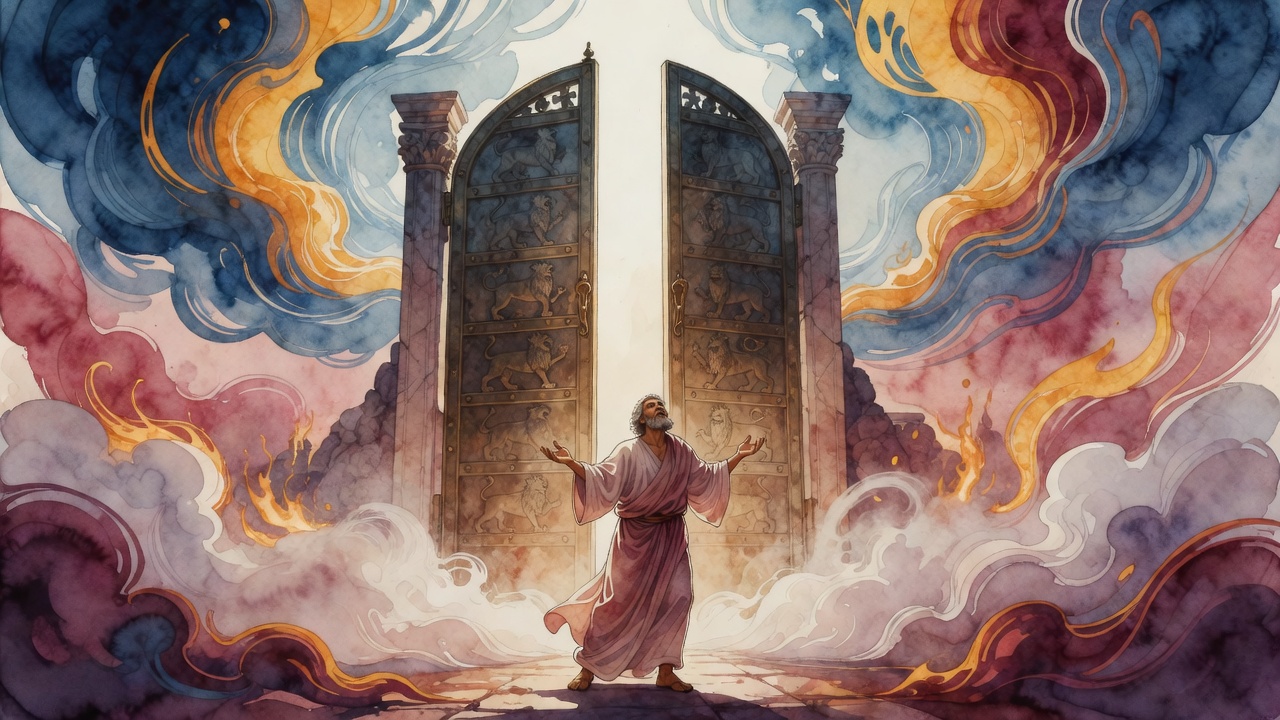
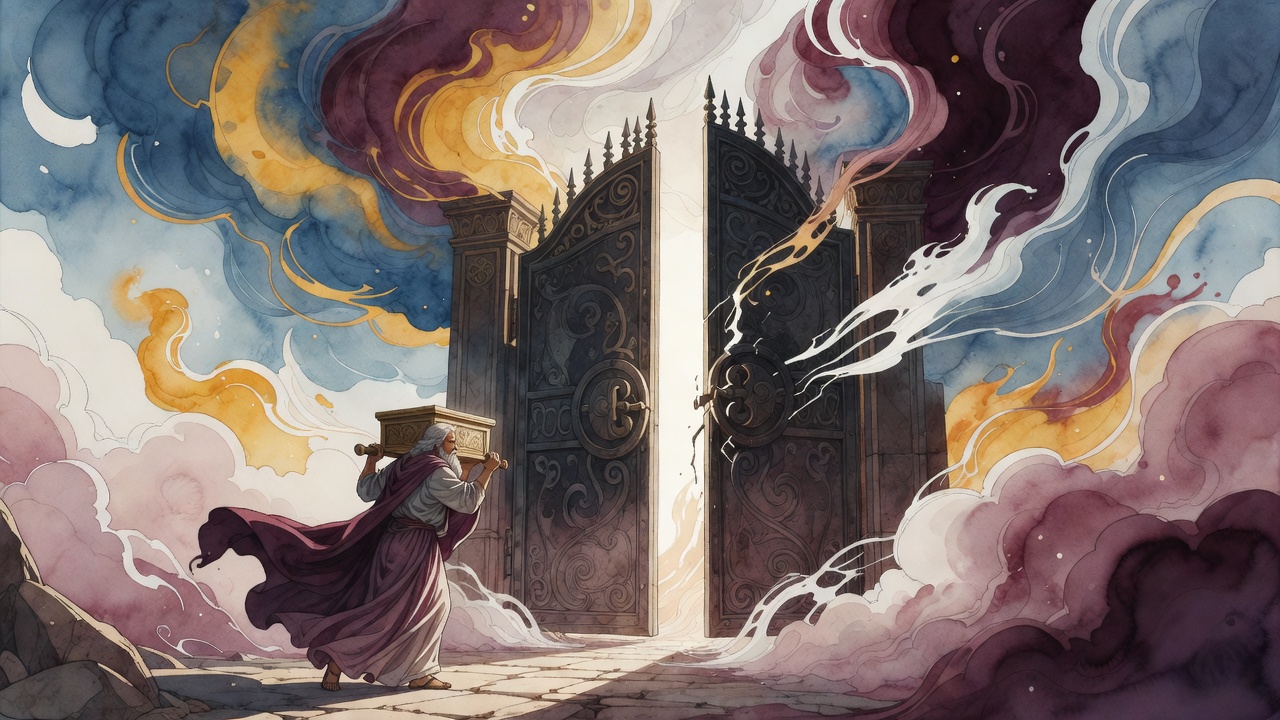
When Solomon finished the Temple he came to bring the Ark into the innermost room, and the gates shut against him. Not locked. Clinging, the two leaves holding each other like hands.
He prayed. Twenty-four times he prayed, working all the way through the long petition he had prepared, and nothing in the doorway moved.
So he sang at them. "Lift up your heads, gates. Rise, you everlasting doors, and let the King of glory come in."
The gates did not lift their heads. He said it again with the words changed. Nothing.
The trouble was one sentence he had spoken earlier, in front of the whole assembly. I have built You a house. Built, as though the stones had been waiting on him. They had not. The stones had come up out of the ground on their own and laid themselves onto the course, the way a stone once travelled from the Land of Israel to Babylon and settled over the mouth of a pit to keep a man alive among lions until morning.
Solomon Says His Father's Name
He stopped defending the building.
"Lord God, do not turn away the face of Your anointed. Remember the acts of kindness of David Your servant."
The gates lifted their heads immediately.
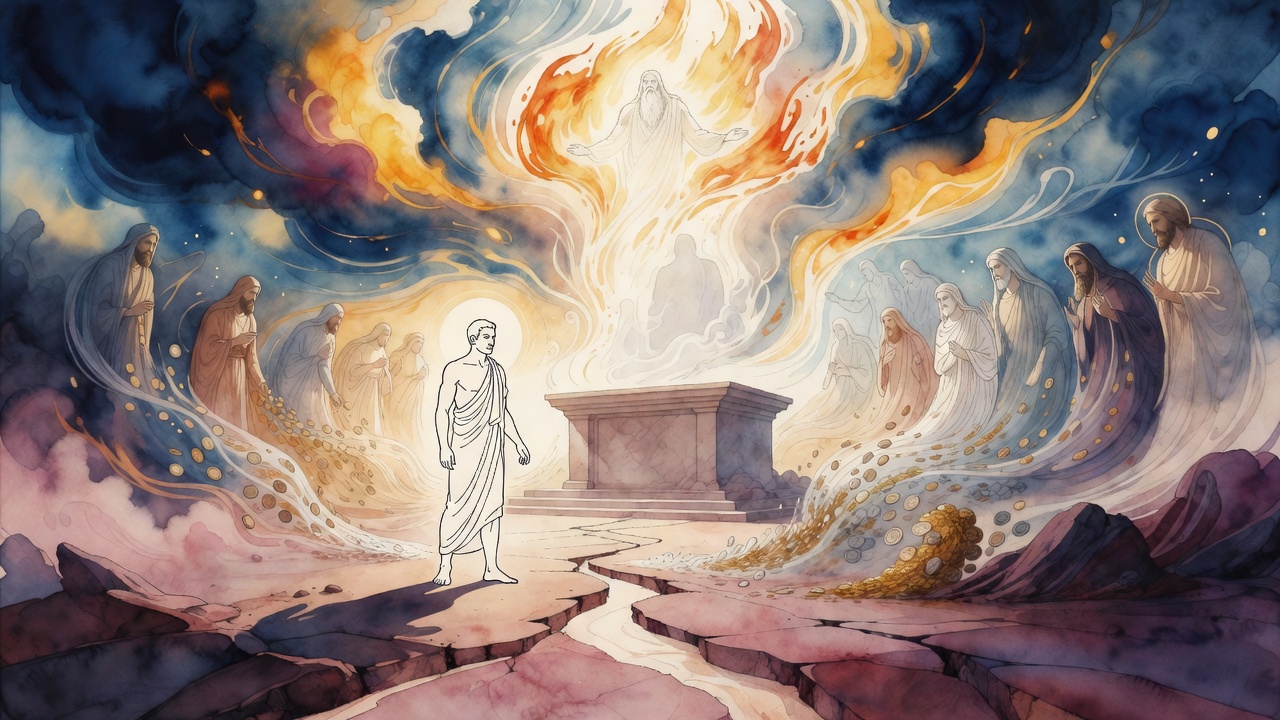
The Ark went through under its coverings. The Divine Presence came down into the house. Fire fell out of the sky onto the altar and took the burnt offering and the peace offerings off it, and the glory of the Lord filled the place until the priests could not go in.
Then the gates settled shut behind it, and the Ark stood in the dark of a room built to hold it, still wrapped in the skin of an animal that had been paid out, long before, for a shoelace.
← All myths