Terah Married Twice and the Famine Swallowed Both Marriages
Terah married twice in the years Mastema's ravens stripped the fields bare. The hungry world he survived was the one he passed on to Abraham.
Table of Contents
 Click for full size
A Marriage Inside the Barren Years
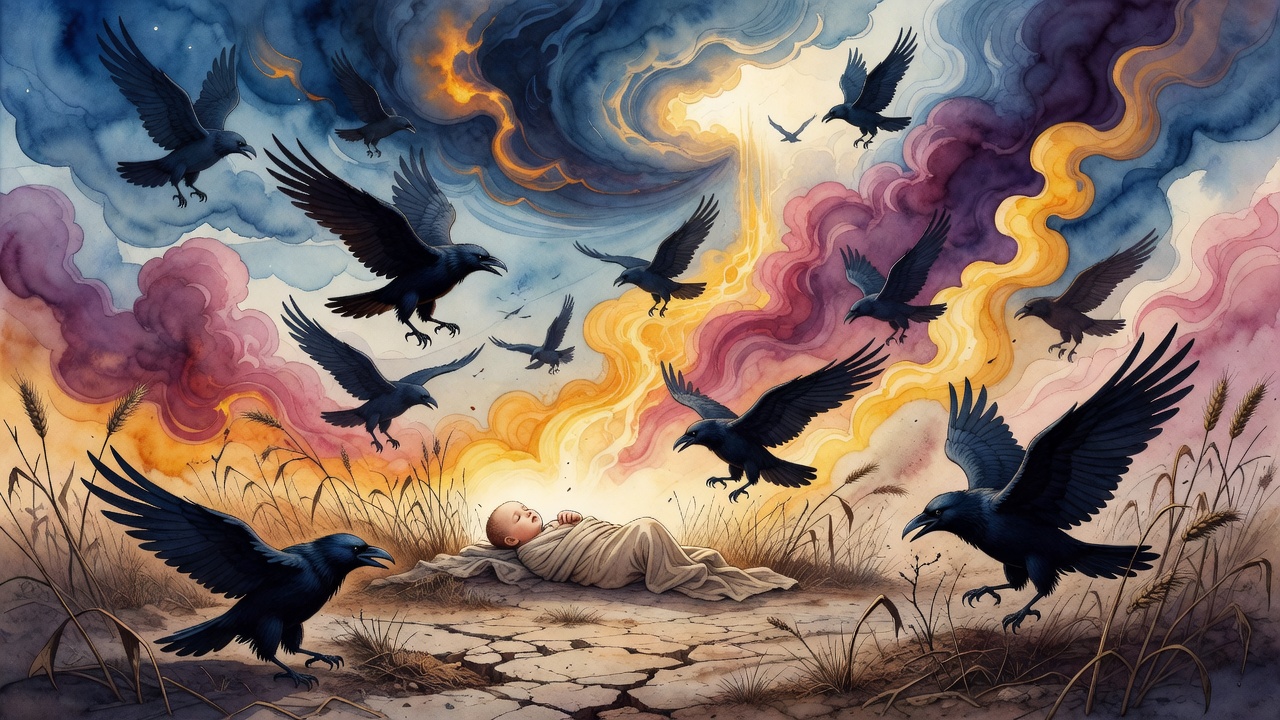
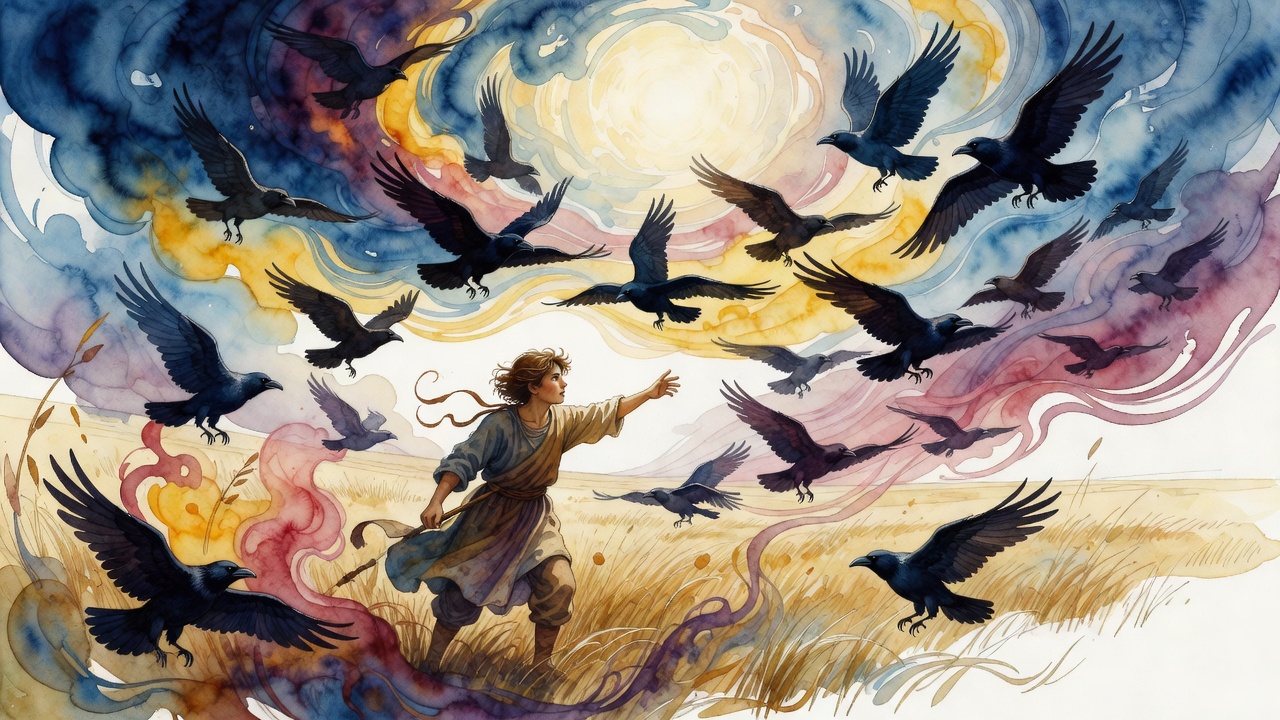
Terah married in the thirty-ninth jubilee, in the second week, in the first year. His wife was Edna, the daughter of Aram, the daughter of his father's sister. A marriage inside the extended family, the kind that pulled kinship networks tighter when the harvest had been failing for years and kinship networks were the only reliable insurance against starvation. The birds had stripped the fields bare. The fruit trees had been picked before ripening. Terah married Edna inside that siege.
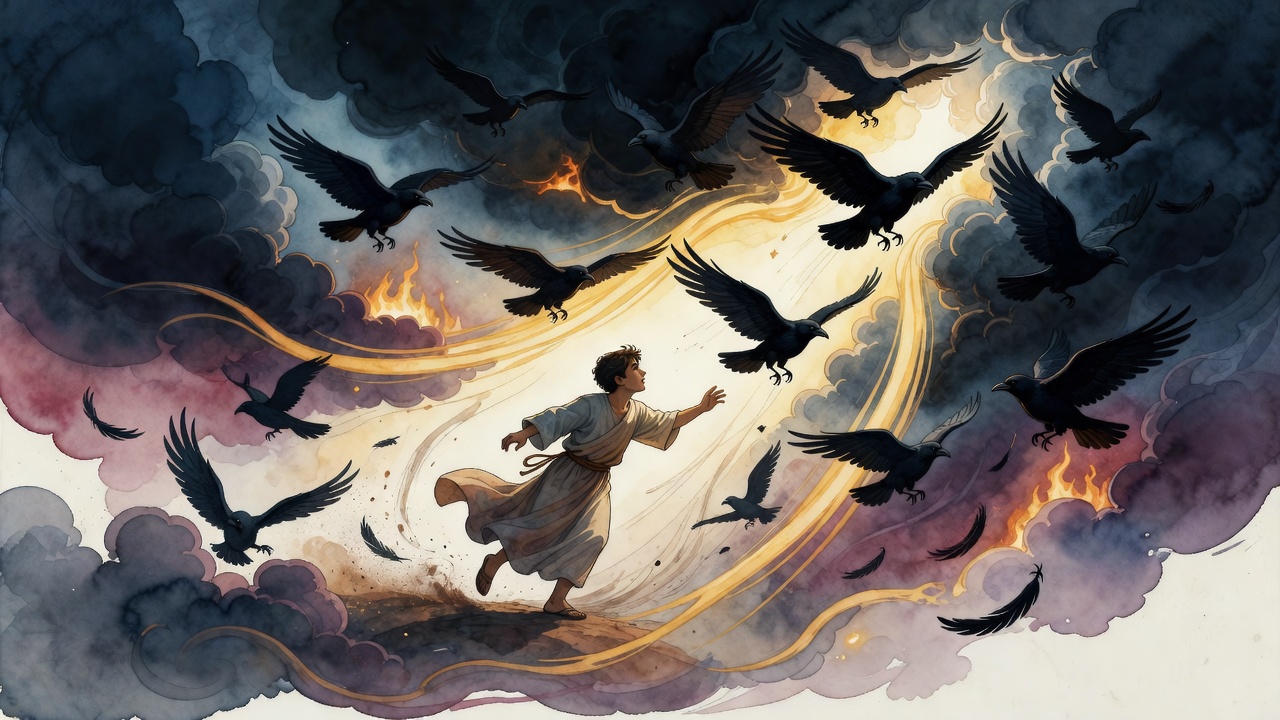
The years continued barren. Not a single bad harvest but a sustained failure that ran through the decades of Terah's young adulthood. The ravens came before the seed could take root. What little the earth produced required enormous labor to protect. A generation grew up learning to guard the fields against birds and to plant seed that might or might not survive until planting time. Terah and Edna built their household in that world.
Abram and the Brothers
Edna bore Abram in the fortieth jubilee, in the second week, in the seventh year. The date is precise in the Book of Jubilees, which tracks the family through the jubilee calendar the way a ledger tracks accounts. Abram arrived into the famine years, into the household of a man who carved idols for a living, into a world that Mastema's birds were systematically destroying one field at a time.
Nahor came next. Then Haran, though his birth came from a different household. The three brothers who appear in Genesis as bare names in a genealogy were children born inside the particular pressure of those famine years, shaped by scarcity in the way that children are always shaped by the world that meets them before they can understand it.
The Second Marriage
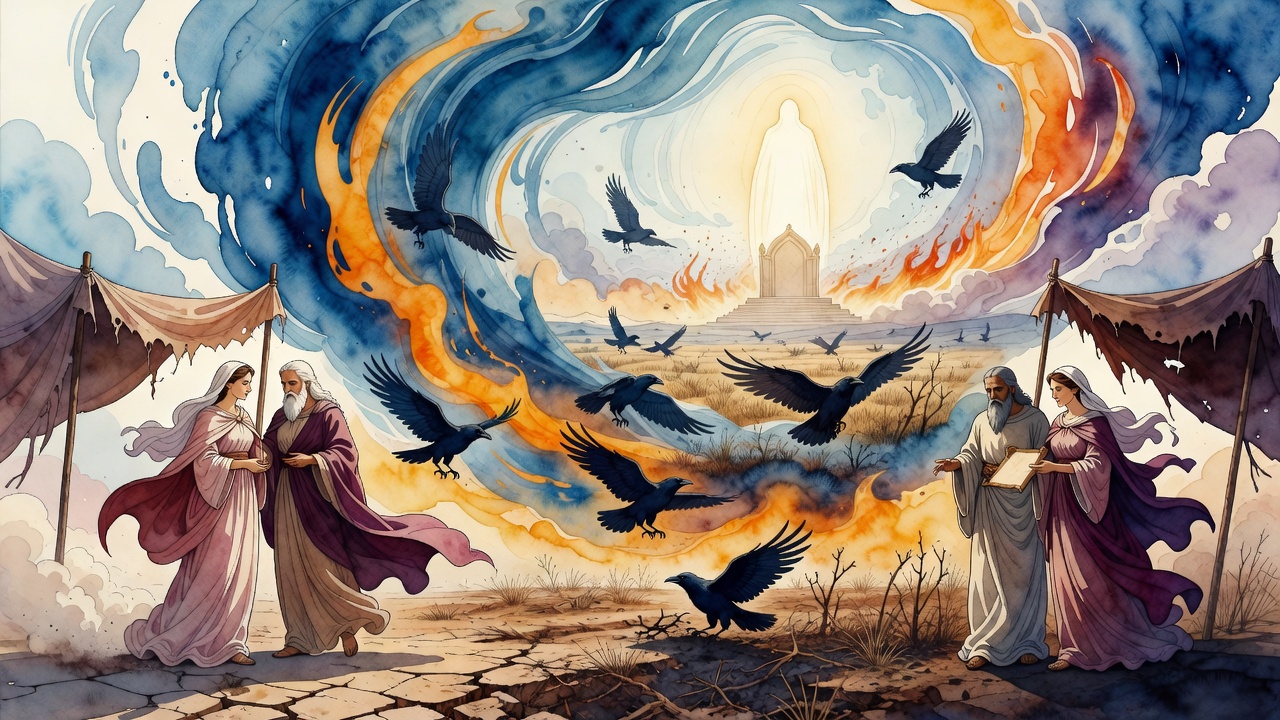
Edna died. The text does not linger on it. Terah took a second wife: Pelilah, the daughter of Mkury. She bore him a son named Zuo. A second family built inside the same conditions, the same barren years, the same ravens arriving before the planting could take hold.
This is the domestic texture that the Torah strips away. Genesis gives Terah a genealogy, the father of Abram, Nahor, and Haran, and then fast-forwards to the departure from Ur. The Book of Jubilees gives him marriages and losses, a first wife and a second wife, a household built over decades in a world being eaten by birds. He was not simply the father of a patriarch. He was a man who buried a wife and remarried and kept his household alive in years when keeping a household alive required daily struggle against forces he could not see or name.
What Abraham Inherited
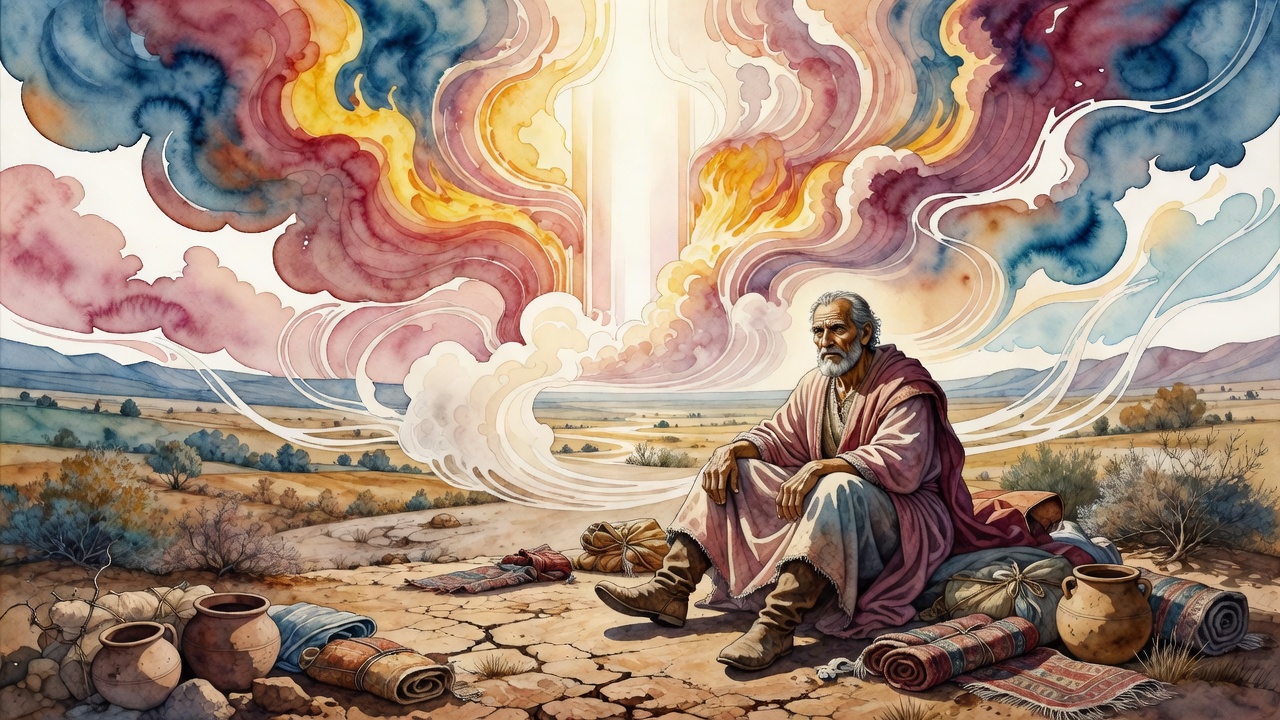
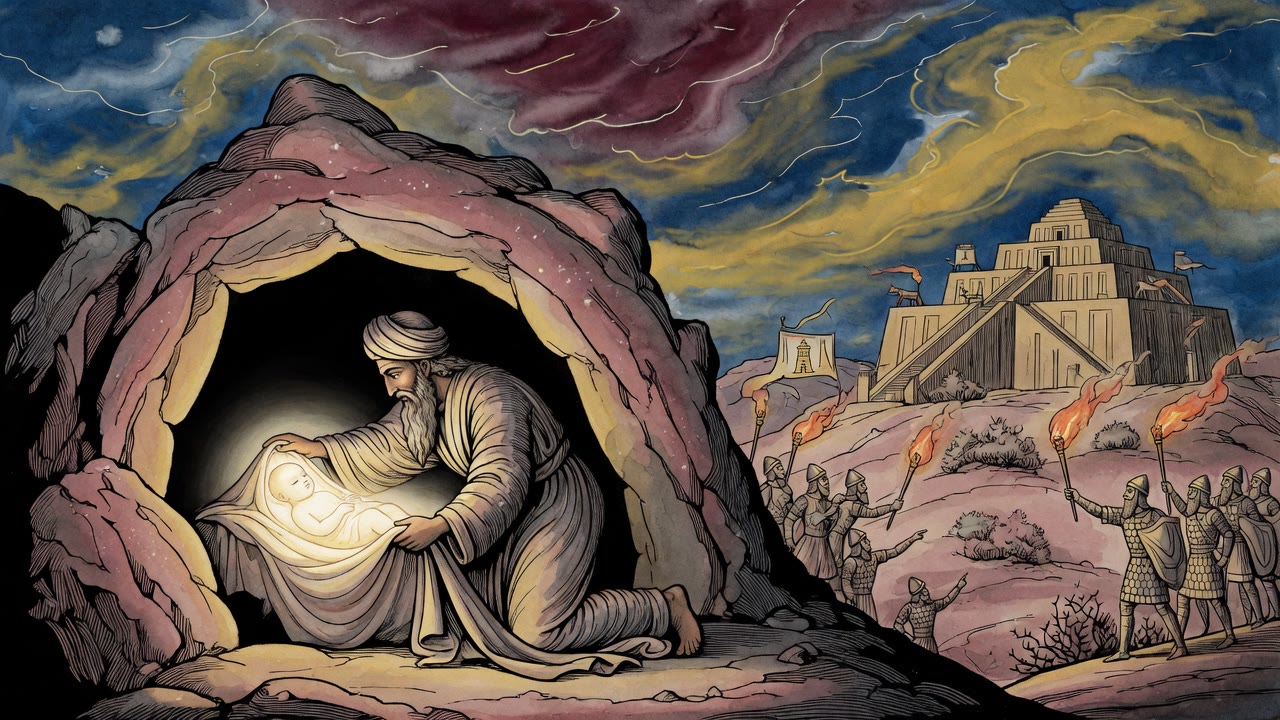
The world Terah passed on to Abram was the world the famine had shaped. A household that made its living from idols because the land had not provided enough to live on honestly. A father who had learned to be practical about gods, who understood that a carved figure was a product and that people in desperate circumstances would pay for the hope a product represented. A tradition of idol-making that was, at its root, an economic response to famine.
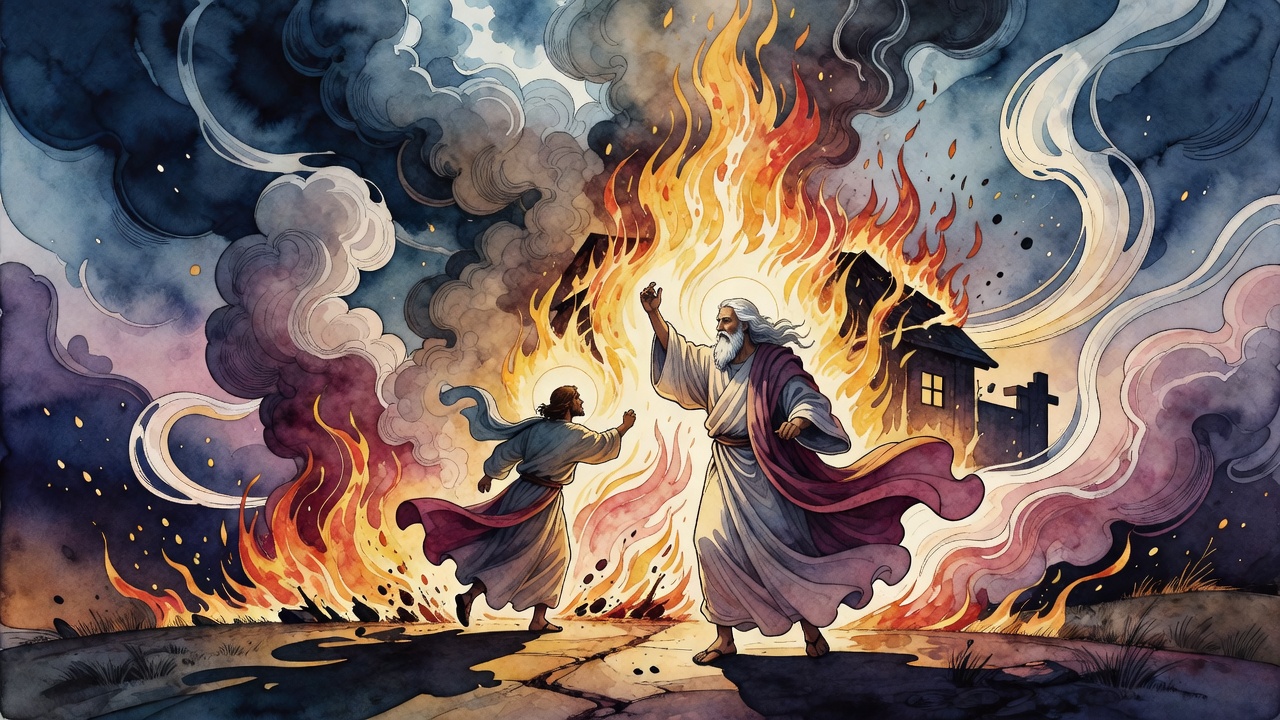
Abram grew up inside this. He was literate, Terah taught him, and he paid attention to what he read and what he saw. And what he saw was a world organized around objects that could not help, sold by a father who had spent his life surviving a catastrophe that the objects had done nothing to prevent. The critique of idolatry that would eventually lead Abram to burn the house down was not an abstract theological position. It was the conclusion of a boy watching his father's livelihood operate in the ruins of a world that Mastema's birds had stripped bare before he was old enough to stand in the fields himself.
← All myths