The Ark Moved on Its Own Across the Jordan
The priests' feet hit floodwater. The river climbed three hundred miles. Joshua walked the nation down onto dry stones and read the terms there.
Table of Contents
 Click for full size
The Priests Stepped Into Flood
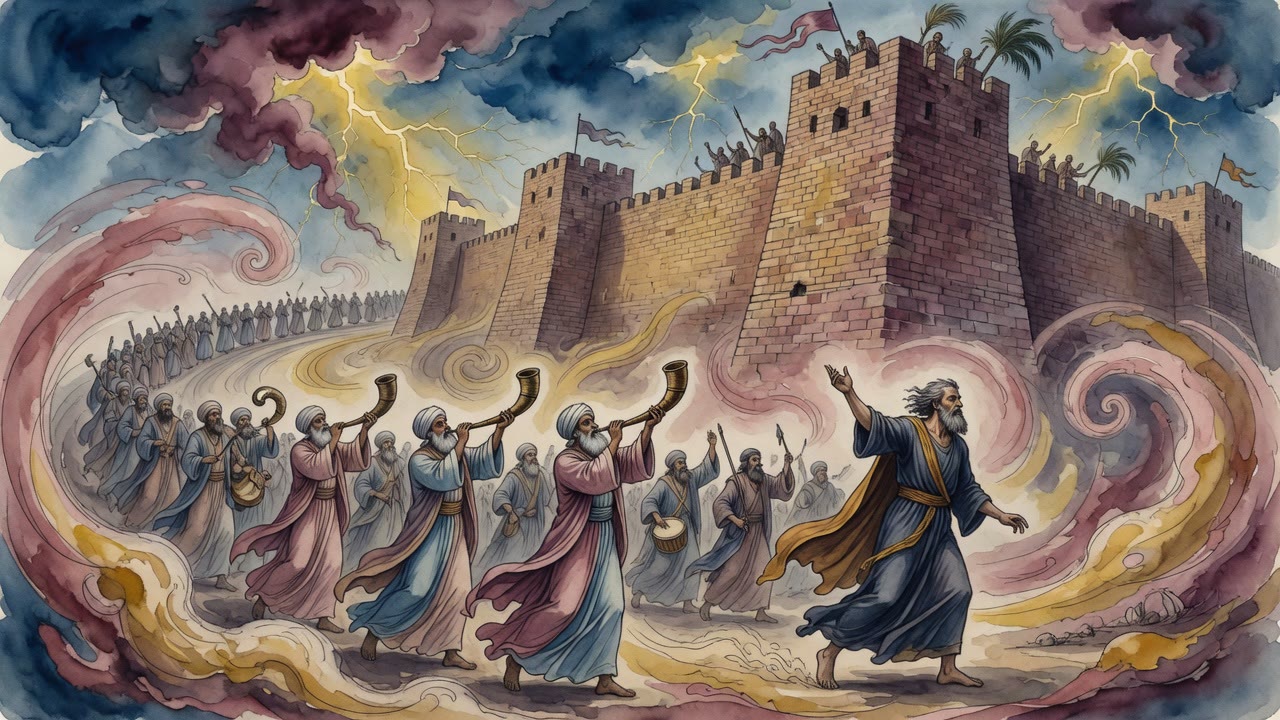
The priests came down the eastern bank with the Ark on their shoulders. It was harvest. The Jordan had climbed its banks and was running hard enough to take a grown man off his feet and roll him south. Behind them the whole nation stood packed along the shore, watching the poles and the gold chest sway.
The first priest put his foot in the water.
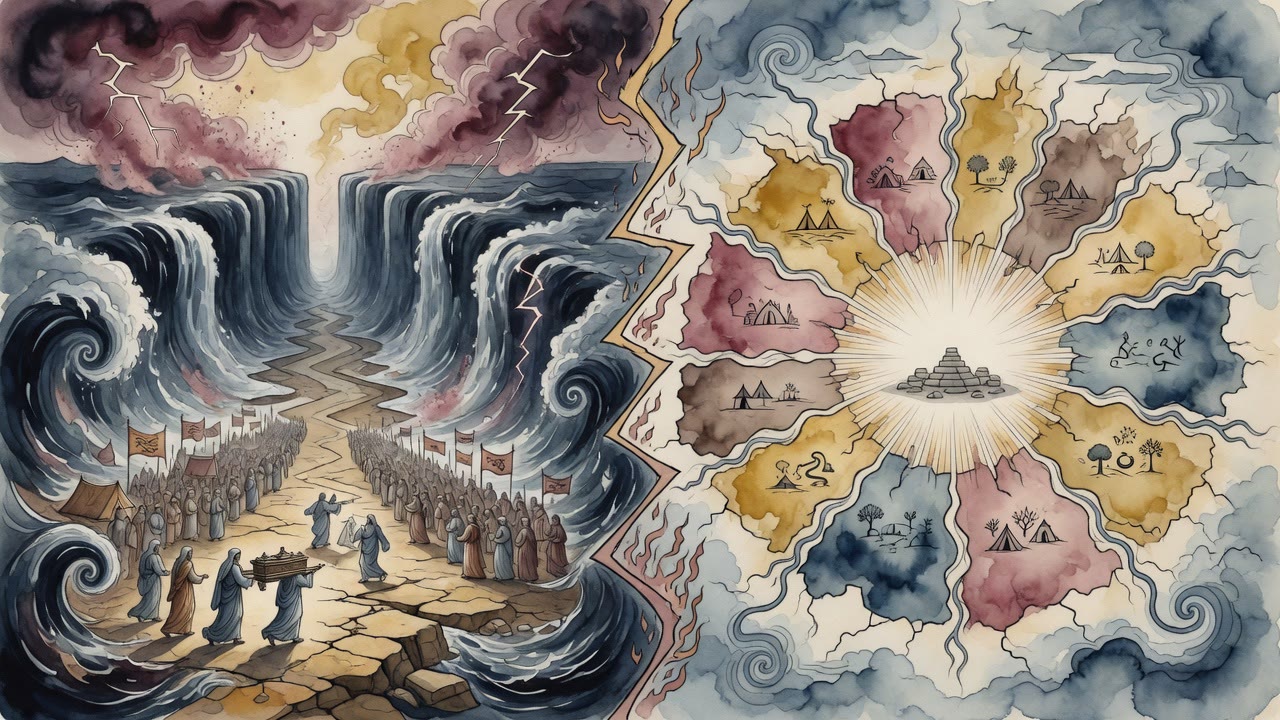
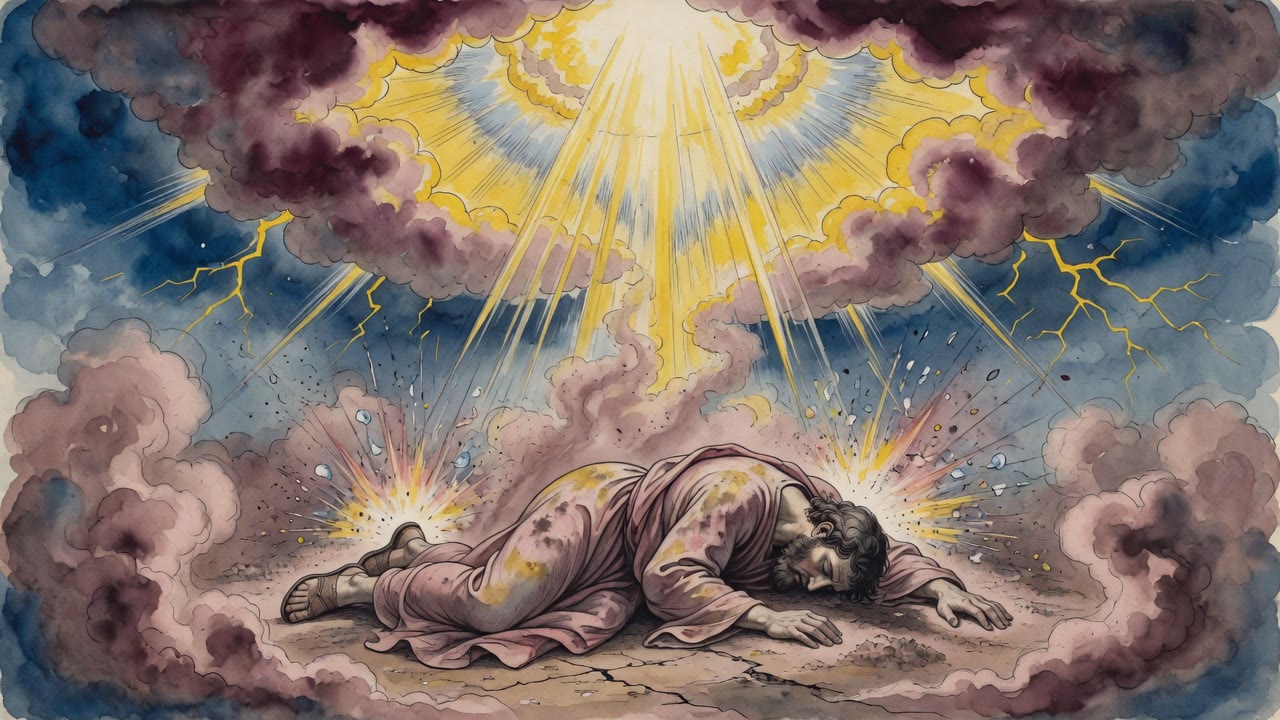
The river stopped. Then it climbed. The current folded back on itself and rose and kept rising, three hundred miles into the sky, until the water stood over the valley like a cliff nobody had built. South of the priests the channel drained. Mud, then stones, then dry ground running off toward the Dead Sea. By evening every road in that country had a witness on it. The news of the wall reached the kings of the west before the last Israelite crossed.
Moses had taken them out through a sea. A shallow ford here would have said nothing about the man who came after him. Joshua needed the river to stand up where the whole camp could see it.
A Nation Fit Between Two Poles
Joshua did not wave them across from the bank. He brought them down.
All Israel came off the shore and onto the floor of the Jordan. He gathered them in around the Ark. The chest is two and a half cubits long. The gap between its two carrying staves is narrow enough that the men bearing it walk shoulder to shoulder. Every one of them fit inside that gap. The crowd did not spread out along the channel. The ground under them did not stretch. The space between the poles held a nation, and no one standing in it could say how.
A child on a father's shoulder looked up. The wall of water hung on both sides and did not fall. Light came through it the way light comes through thick glass. The priests' knuckles were white on the staves. Nobody spoke. The only sound was feet on wet stone.
Joshua Read the Terms Under the Wall
Then Joshua told them what God required in the country they were about to enter. He set the conditions out one at a time while the wall stood above them. Blessing if they kept the terms. Ruin if they did not. When he had finished, he told them what would happen if they refused that afternoon. The water would come down. Not in a later generation. Not at some judgment after their deaths. There, on that floor, on all of them, before sunset.
Nobody argued. There was nowhere to stand and argue from.
They took the terms, and they marched.
Reuben Crossed First Into a Cut Blessing
The armed men of Reuben went over first, ahead of the tribes who still had no land at all. Their portion was already behind them on the eastern side, already fenced and grazed. Their grandfather had told them it would be.
On his deathbed in Egypt, Jacob had gone down the line of his sons and stopped at his eldest. He took away the birthright, the priesthood, and the crown. Then he gave Reuben one thing back. Your tribe will be first to take hold of its portion in the land. First in. First to have a city of refuge standing on its ground. First, also, to be stripped by an enemy and carried off into exile.
Reuben's men walked across the dry Jordan into a promise that had already been cut in half. They kept their weapons up. The wall still stood. The priests still had not moved.
The Ark Walked Them Out
The priests stayed where they were. They had been standing in the middle of the channel since the first step. They went on standing there while hundreds of thousands of people walked past them, and while twelve men bent at their feet and pulled twelve stones out of the riverbed to carry up to Gilgal.
When the last of Israel reached the western shore, the weight went off the priests' shoulders.
The poles lifted. The chest they had carried through forty years of wilderness started forward up the dry channel. They had set it down and raised it at every camp. They had draped it and guarded it. It had never once moved on its own. Now it did. Their hands were still on the staves. Their feet came off the stones. It pulled them out of the riverbed and up the bank and past the whole nation standing there, and set them down at the head of the line, in front, where it had always gone.
Behind them the wall let go. The Jordan came down into its bed at flood, exactly as it had been. The twelve stones sat on the western side. The priests stood in front of the people, breathing hard, still holding wood that had just walked them out.
← All myths