Philo Blamed the Serpent for Inventing the Idea of Many Gods
The serpent spoke a word no creature had ever said before. Philo of Alexandria argues that word, not the lie, was the real crime.
Table of Contents
 Click for full size
A Word That Had Never Been Said Before
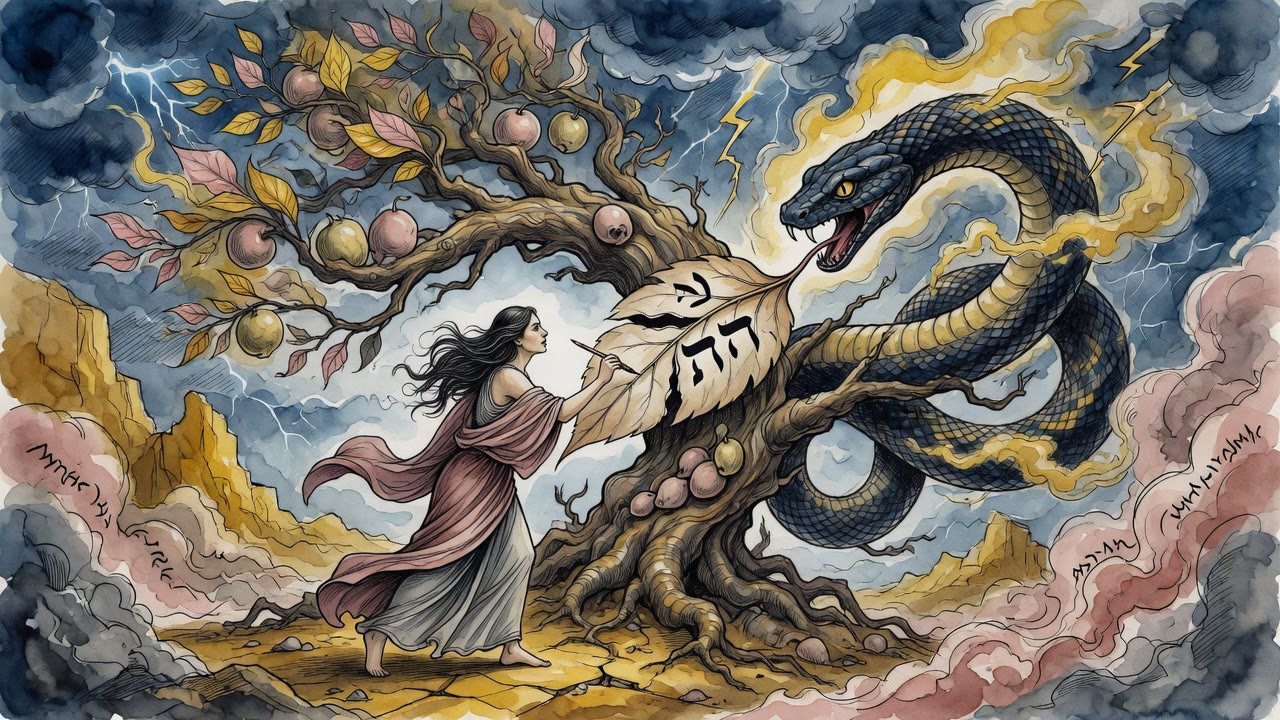
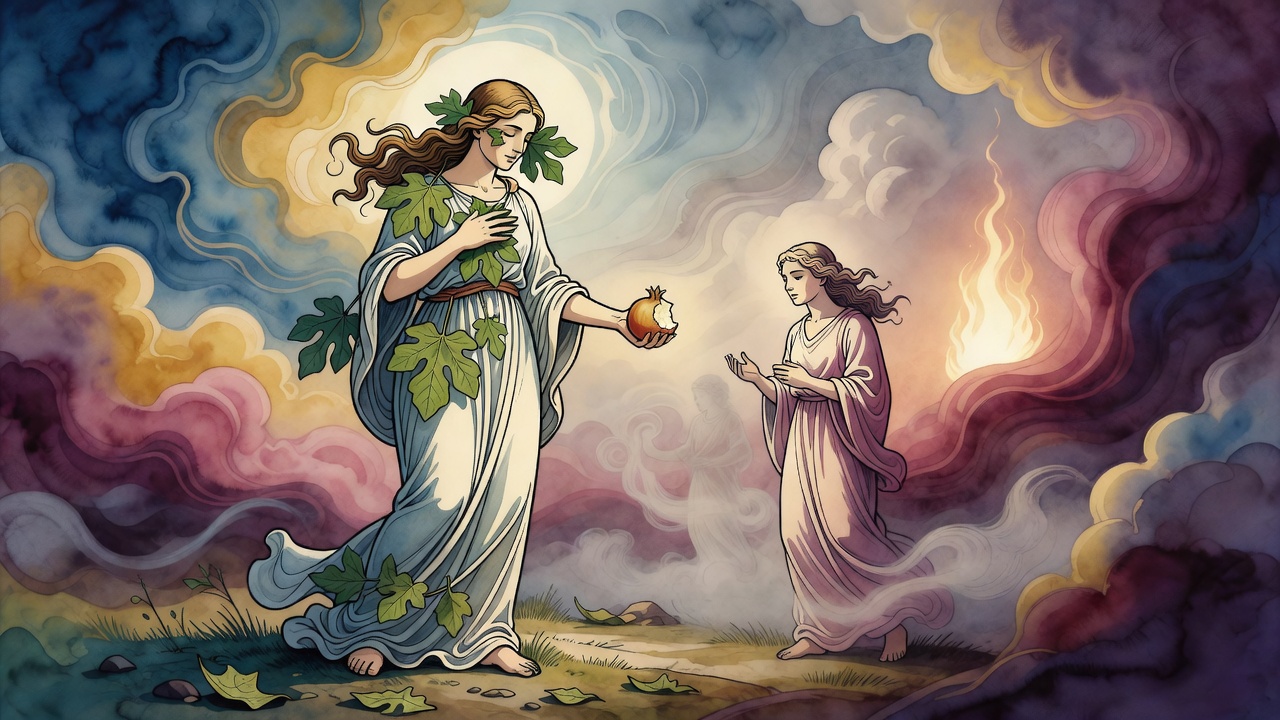
The serpent approached Eve with a question designed to destabilize: did God really say you would die if you ate from any tree? Eve corrected it. The serpent pressed. And then, offering the counterargument, it said something no creature had yet said in the Torah's account of creation: you will be like gods.
Not God. Gods. Plural.
The lie about death has always gotten the most attention. The serpent told Eve she would not die, contradicting God directly, and Eve believed it. That brazen denial seems like the heart of the serpent's crime. But Philo of Alexandria, reading this scene in the first century CE, noticed something stranger and more consequential sitting one sentence earlier.
The Plural That Invented a New Universe
The word elohim in Hebrew is grammatically plural and is used throughout the Torah as a name for God, but the serpent uses it here in a context that implies separate, competing divine powers. In Philo's reading, this was not a grammatical accident or a loose translation. The serpent spoke the word deliberately, and in doing so committed an act without precedent: it introduced the concept of multiple deities into a world that had known only one.
No creature had said this before. Not Adam in the garden, not Eve walking among the trees, not any of the animals given their names and natures. The entire account of creation up to that point had maintained a single sovereign intelligence ordering everything it made. One voice. One source. One cause. Then the serpent opened its mouth and populated the cosmos with competing divinities.
Philo's argument is cold and precise. The error of polytheism is not primarily theological. It is rational. The universe has one origin or it does not. If it has one origin, then the idea of multiple gods is a category mistake, a failure of logic dressed up as religion. The person who believes in many gods has not made an alternate religious choice. They have made an intellectual error about causation. And the first entity to make that error in the Torah's telling was a serpent.
Desire as the Engine of Idolatry
Philo does not stop at the grammar. He also reads the serpent itself as an allegory. The serpent represents pleasure, and specifically the kind of pleasure that destabilizes the rational mind. This is not a metaphor he invented. Snakes move in curves, low to the ground, and for Philo the curving, earthbound motion carries meaning: pleasure does not travel in straight lines toward truth. It winds around obstacles. It insinuates. It does not say directly what it wants.
The serpent's desire is for the woman rather than the man, in Philo's reading, because the allegorical structure of his Adam and Eve places sensation and emotion on Eve's side and reason on Adam's side. Pleasure targets sensation first. It knows that if it can move the part of the person that feels before engaging the part that thinks, it has already won half the argument. By the time reason checks the contract, the commitment has already been made.
And so the path to polytheism runs through desire. The serpent does not argue theology. It offers advantage: you will be like gods, knowing good and evil. The appeal is to appetite, the appetite to be more, to know more, to hold more power. Monotheism requires the discipline of recognizing that all power flows from one source and that the human position in creation is not at the center but in right relation to the center. The serpent offers a shortcut around that discipline. Call the powers many, and you can position yourself among them. Call the source one, and you must stand beneath it.
What the Serpent's Motive Actually Was
The deeper question Philo asks is why. Why does the serpent do this? It was not commanded to tempt. It was not assigned the role of adversary in any text Philo works from. It acted on its own, which means it acted from its own nature.
The answer he finds is envy. Pleasure, operating as the serpent, envied the rational life. Adam and Eve had been placed in a garden designed for contemplation, surrounded by visible evidence of divine order, given the leisure to walk and name and learn. The serpent watched a creature capable of ascending toward wisdom and chose to pull it toward appetite instead. Not because it was commanded to destroy but because the spectacle of rational life aimed at God was intolerable to something that moved on its belly and fed on dust.
In this reading, the serpent's invention of polytheism is not a sophisticated theological argument. It is resentment expressing itself through grammar.
← All myths