Vashti Threw a Women's Banquet and the Rabbis Argued About Why
Ahasuerus feasted for six months, then seven days, then sent for Vashti. She was hosting her own banquet. Esther Rabbah found a world of danger in both rooms.
Table of Contents
Ahasuerus had been at it for a hundred and eighty days.
 Click for full size
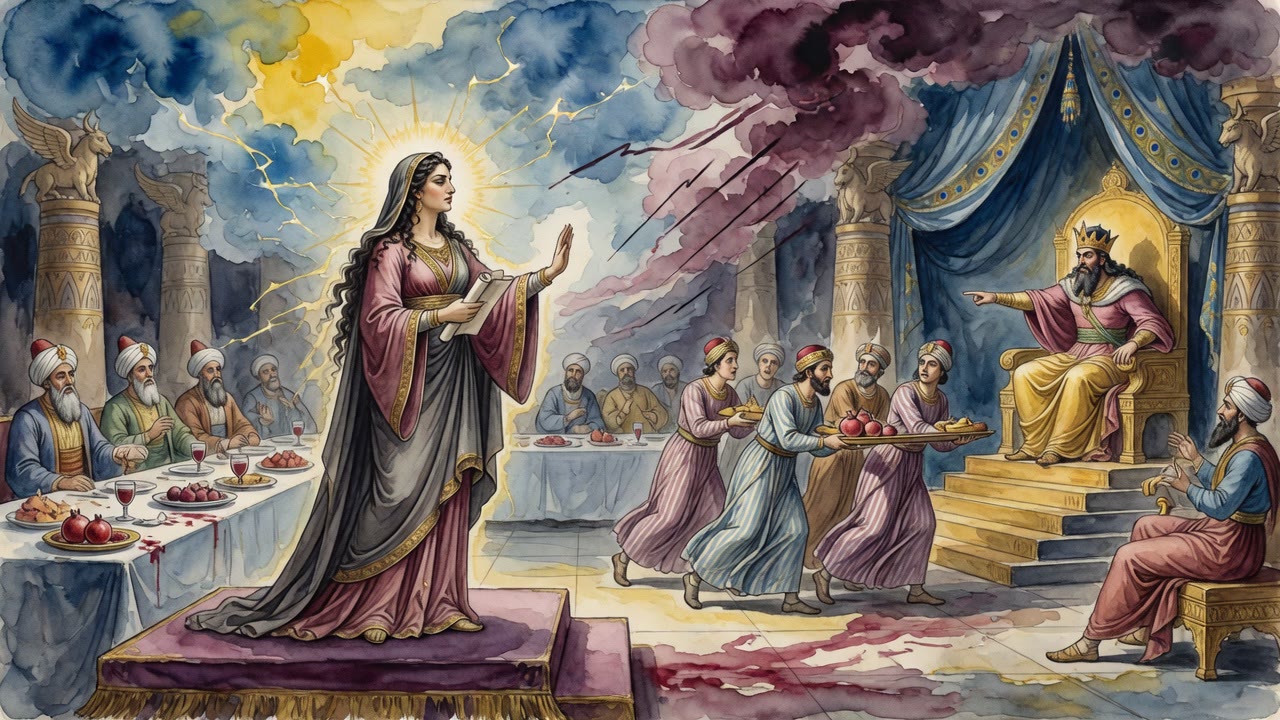
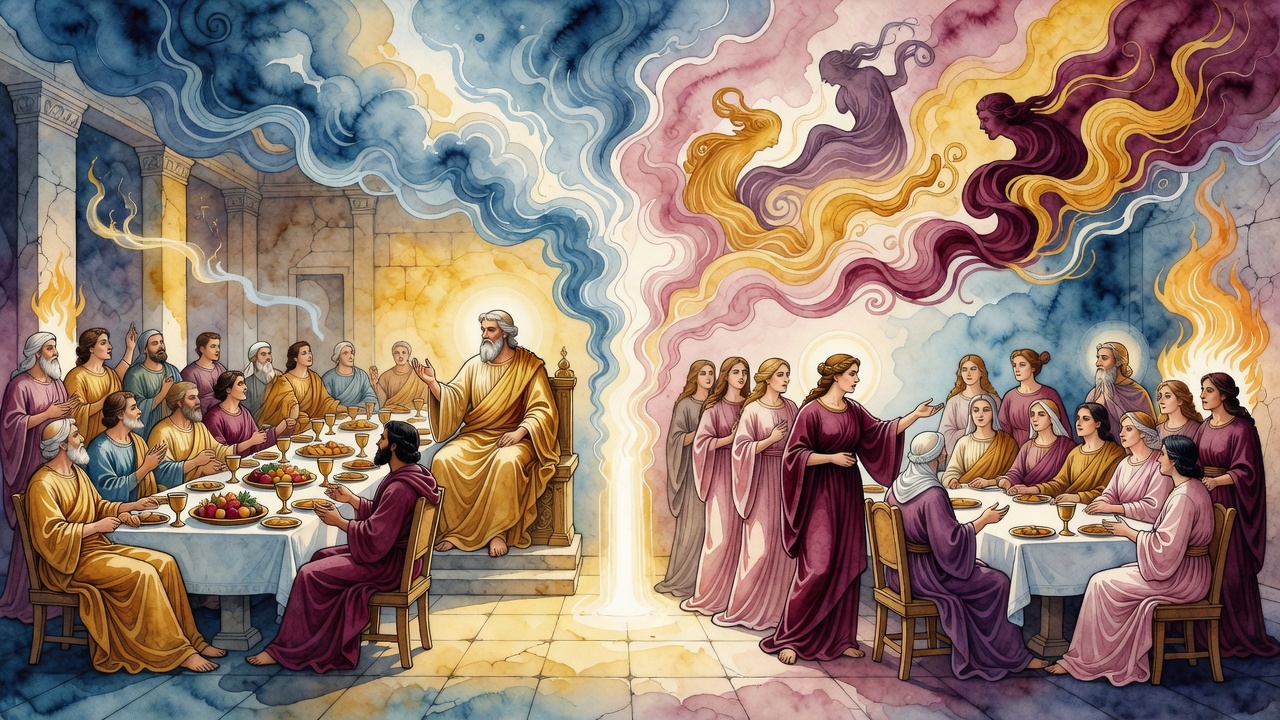
The entire Persian and Median nobility, the provincial governors, the army officers, the princes of his kingdom, all of them had cycled through his banquet hall in Shushan, watching the king turn his treasury into spectacle. Gold and silver couches. Marble columns. Violet and white hangings fastened with cords of fine linen and purple to silver rings. Wine without measure, poured to every man according to his own preference, no guest required to exceed what he wished (Esther 1:7-8). Six months of this, and then seven more days at the end for the people of Shushan specifically, and across the palace, Vashti held a banquet for the women. Esther 1:9 gives her one sentence. The rabbis refused to let that sentence stay quiet.
The Queen Built Her Own Feast
Esther Rabbah 3:9, a medieval work in the larger Midrash Rabbah corpus dated from approximately the ninth century CE through the twelfth, heard the word gam in "Also Vashti the queen made a banquet" like a door opening. Gam means also. It is an amplifying particle, and when the rabbis of Esther Rabbah heard it they read it as a signal: the also is doing more work than it appears to.
Rabbi Yehoshua ben Korha took one path. Vashti's luxury was placed in scripture to set up the splendor Esther would later enter. The more extraordinary what Vashti possessed, the more extraordinary what a young woman from the Jewish community would inherit when Vashti was gone. Rabbi Meir pressed it into an argument: if those who anger God can sit amid such abundance, what awaits those who do His will? The feast became a stolen preview of reward, a palace glittering with wealth that did not belong to it but would belong, eventually, to someone who did.
Six Treasures, Sacred Garments, Dangerous Rooms
The gam passage in Esther Rabbah 3:9 also runs a comparison between the two banquets, detail for detail. Just as Ahasuerus's banquet had six treasures, Vashti's had six treasures. Just as his feast was lavish in expenditures, hers was equally lavish. Just as his feast used objects from the Land of Israel, hers did too. The midrash pauses on this last point: the treasures displayed in the feasts of a Persian king and queen included the garments of the High Priest, removed from Jerusalem along with the Temple vessels and now decorating the dining arrangements of an empire that had no right to them. The vestments that had once stood before the altar in Jerusalem were laid out among the couches and the wine, ornaments for a foreign table, the priestly cloth turned into decoration for people who could not read what it had been.
The second Esther Rabbah passage, reading "Also Vashti the queen made a women's banquet," notices the word for the food she served. Rabbi Yitzhak says she fed her guests kinds of sweets. Another interpretation: she situated them in spacious rooms because a woman's way is to cause damage. The text is careful to note that the precise nature of this alleged damage is disputed among interpreters, some reading it as a reference to possible licentiousness when women have private space, others reading it as a practical observation about how crowded conditions harm clothing, the press of bodies and the snag of fabric in a room too full. The rabbis do not agree. But the room itself is dangerous in their reading, a place behind closed doors, away from the lamps of the great hall, where something could go wrong that would not go wrong in public view.
What Vashti Sent Back
When Ahasuerus sent his chamberlains to bring Vashti before the assembled guests wearing her royal crown, she refused. Esther Rabbah preserves what she said in her reply, and what she said was not simply no. She sent back a series of pointed observations. If they consider me beautiful, she told them, the men will want me for themselves and kill you. If they consider me ugly, I will demean you in their eyes. Either way the king loses, and the messengers had to carry that calculation back across the palace to a hall already loud with seven days of wine. She was protecting both of them, threading a danger he had not seen. He did not grasp it.
The Stable Boy on the Throne
Then she sent a second message, and this one did not protect him. Was he not the stable boy of her father's house? Had he not been accustomed to bringing naked women before himself in those days, the groom who handled animals and did as he was told? Now that he had ascended to the throne he had not abandoned his old habits. She was reminding him of where he came from, of what distinguished his present rank from his origins, the smell of the stable still on the man who now sat in violet and gold. He did not grasp that either. She provoked him repeatedly, message after message returning across the courts, and he was not provoked in the way she intended. And then the advisors were called in, and the question of what to do about a queen who refused a summons became a question about what empire does when dignity is challenged inside its own household.
← All myths