Zipporah Kept Moses Alive in a Pit for Ten Years
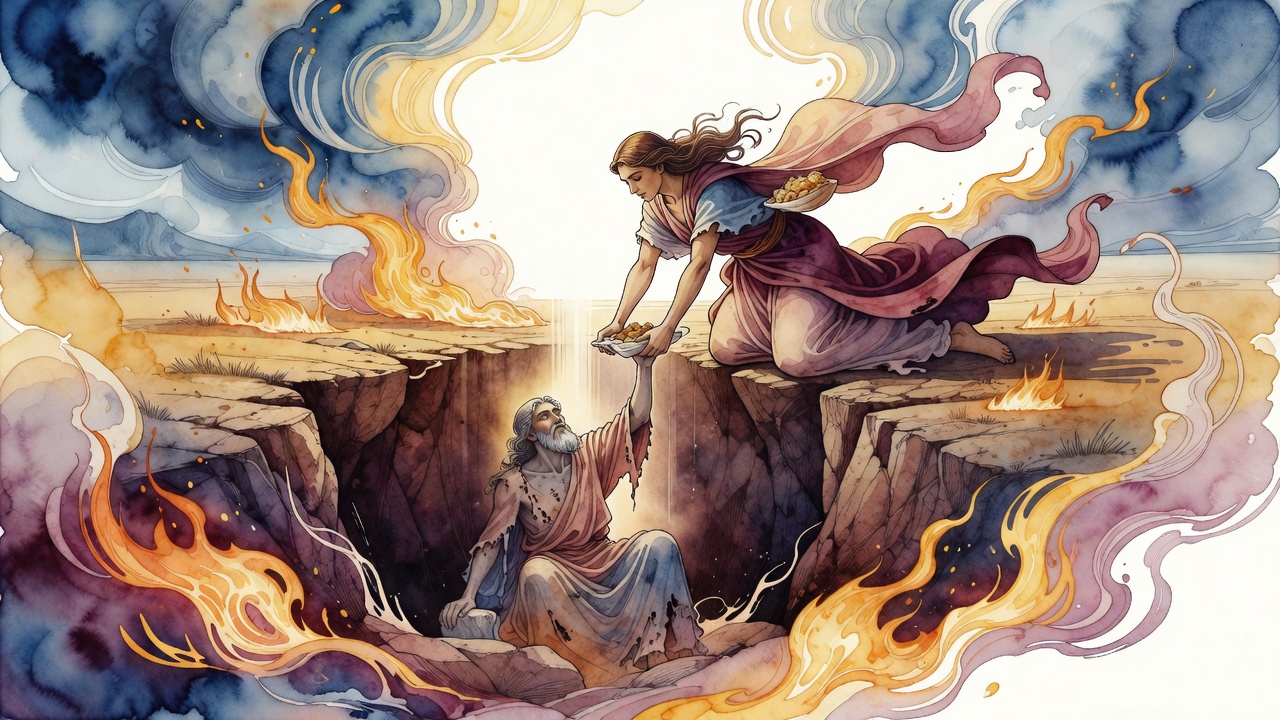
While Reuel kept Moses imprisoned in a pit, Zipporah secretly brought him food for ten years before pulling him out into his destiny.
Table of Contents
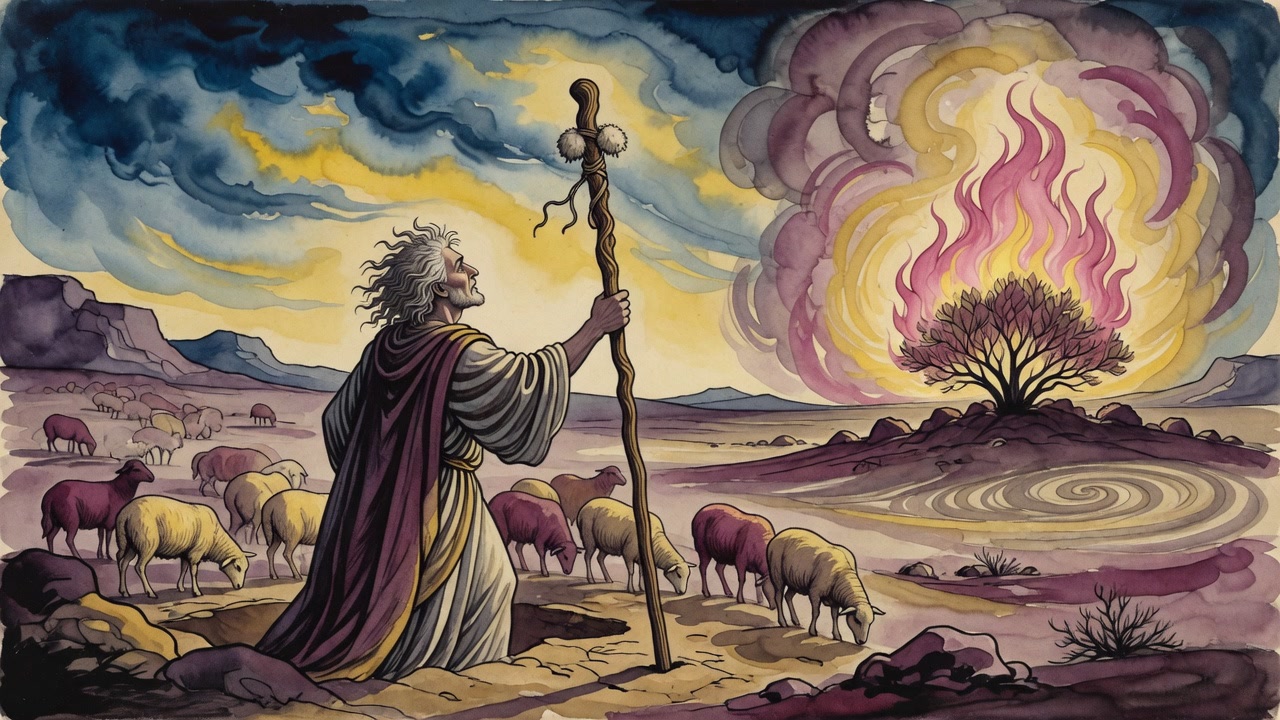
Moses survived before the burning bush because Zipporah kept bringing food to a pit.
 Click for full size
Before plagues, before the sea, before Sinai or tablets or law, Jewish legend places the future redeemer underground: hidden, helpless, and alive because one woman refused to let him disappear.
The Torah's Sentence Became Ten Years
The Torah says Moses agreed to dwell with the man and married his daughter Zipporah. It says this in a single verse, (Exodus 2:21), and moves on. The Targum Pseudo-Jonathan, an expansive Aramaic translation of the Torah composed in its current form sometime after the seventh century CE, cannot leave that sentence alone.
Reuel knew Moses had fled from Pharaoh. A fugitive from the most powerful king in the world was sitting in his house, and the reward for such a person was real. Reuel threw Moses into a pit.
Then comes the number. Ten years.
Moses remained below ground, and Zipporah secretly sustained him with food. For a decade. The man who would become the redeemer of Israel spent ten years in a hole in Midian, alive because the woman he would marry was carrying food down to him in secret, hiding what she was doing from her own father.
This is Moses before command. He cannot liberate anyone. He cannot even liberate himself.
Zipporah's Hidden Loyalty
Legends of the Jews, compiled by Louis Ginzberg between 1909 and 1938 from older Jewish traditions, preserves the same core. In Ginzberg's version the imprisonment lasted seven years rather than ten, suggesting different strands of the same tradition preserved slightly different numbers, but the shape is identical: Zipporah feeds Moses in secret while her father keeps him imprisoned.
Her loyalty is quiet, repeated, and dangerous. She is not performing a single heroic act. She is performing the same act over and over, every day, for years, carrying food down to a man who cannot reciprocate, who cannot even explain to her why his life deserves the risk she is taking. She does it because she has decided his life is worth something, and that decision does not expire.
The tradition does not give her a speech. It gives her a decade of small acts. That is where the miracle is: not in a single moment of courage but in the refusal to stop.
When Reuel Realized He Had Forgotten
In Ginzberg's account, the ending of the pit story turns on embarrassment. Reuel had imprisoned Moses and then, in the way of busy men with other concerns, had gradually stopped thinking about him. Years passed. Zipporah continued her secret feeding. When she finally told her father that Moses was still alive in the pit, Reuel was struck with something that looked like revelation.
He saw Moses emerge from the pit thin, standing, alive. Reuel interpreted the survival as a sign: this was no ordinary fugitive. A man God kept alive through a decade of imprisonment was a man God had plans for. He gave Zipporah to Moses in marriage and stopped treating him as a political liability.
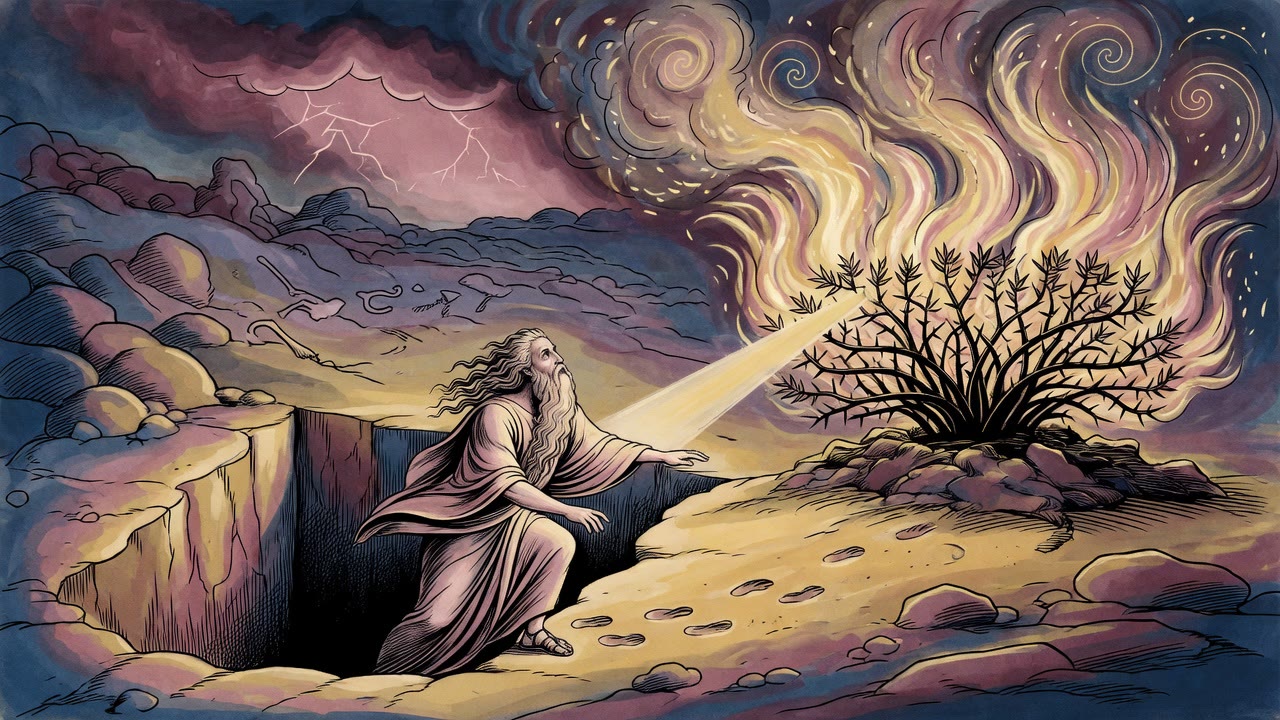
Moses came up from the pit and into the house of the family he would marry into, the family whose priest he would work for, the family whose land he would leave when the burning bush finally appeared on the mountain and called him back to Egypt.
The Rod That Had Been Waiting
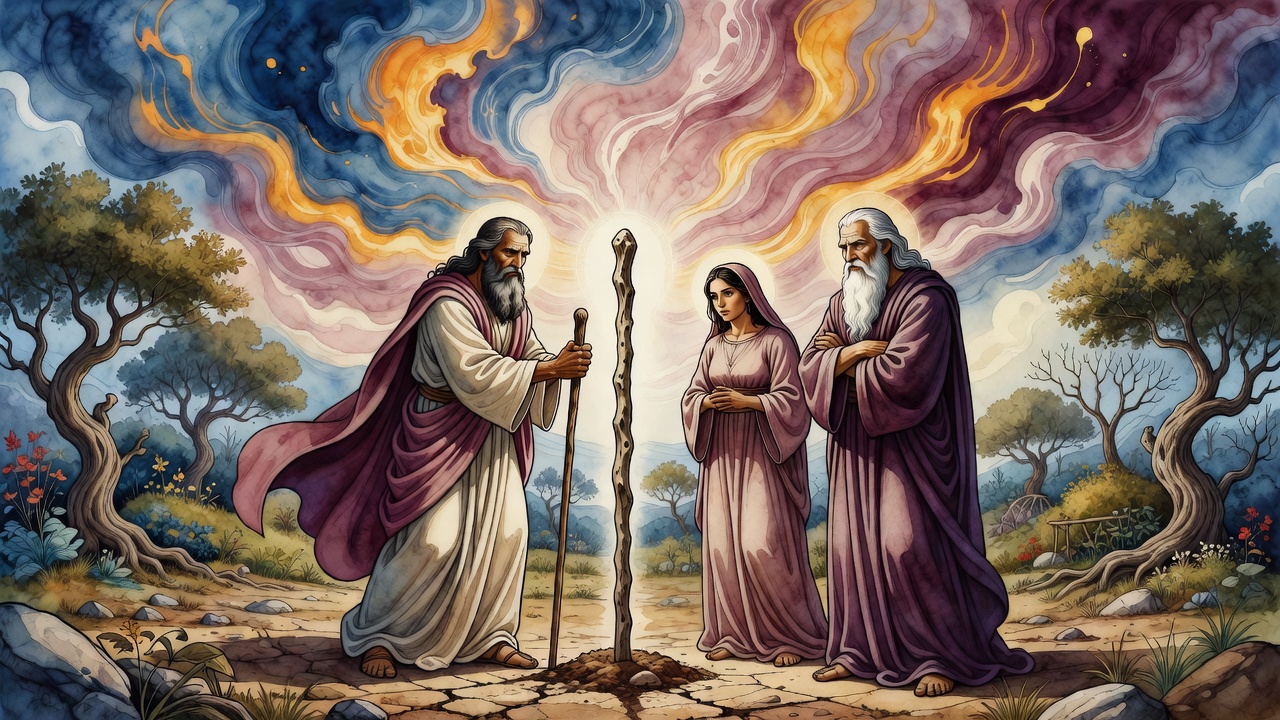
Legends of the Jews adds one more detail to the Midian episode. The rod Moses carried to Egypt, the rod he raised over the sea and struck against the rock and stretched over the plagues, had been waiting for him in Jethro's garden. It was the rod created on the eve of the first Shabbat, passed from Adam to Noah to the patriarchs, ending in Pharaoh's palace and then in Jethro's garden.
Moses came to Jethro's house and went into the garden. He reached out and took the rod from the ground where it had been planted. No other man had been able to pull it free. Moses lifted it without effort.
Everything in the legend is aligned toward the same point: Moses is not a self-made leader. He is a person preserved by a series of choices that were not his own. A mother placed him in a basket. Pharaoh's daughter pulled him from the water. Zipporah fed him through ten years of darkness. A rod waited for his hand and no other hand. The redeemer arrives at Sinai not because he was powerful but because he was kept.
← All myths