1,676 related texts · 3 related myths · Page 1 of 35
A person trapped on a low spiritual level might assume that deep Torah understanding is beyond their reach. Rabbi Nachman of Breslov says the opposite is true: the pathway from the...
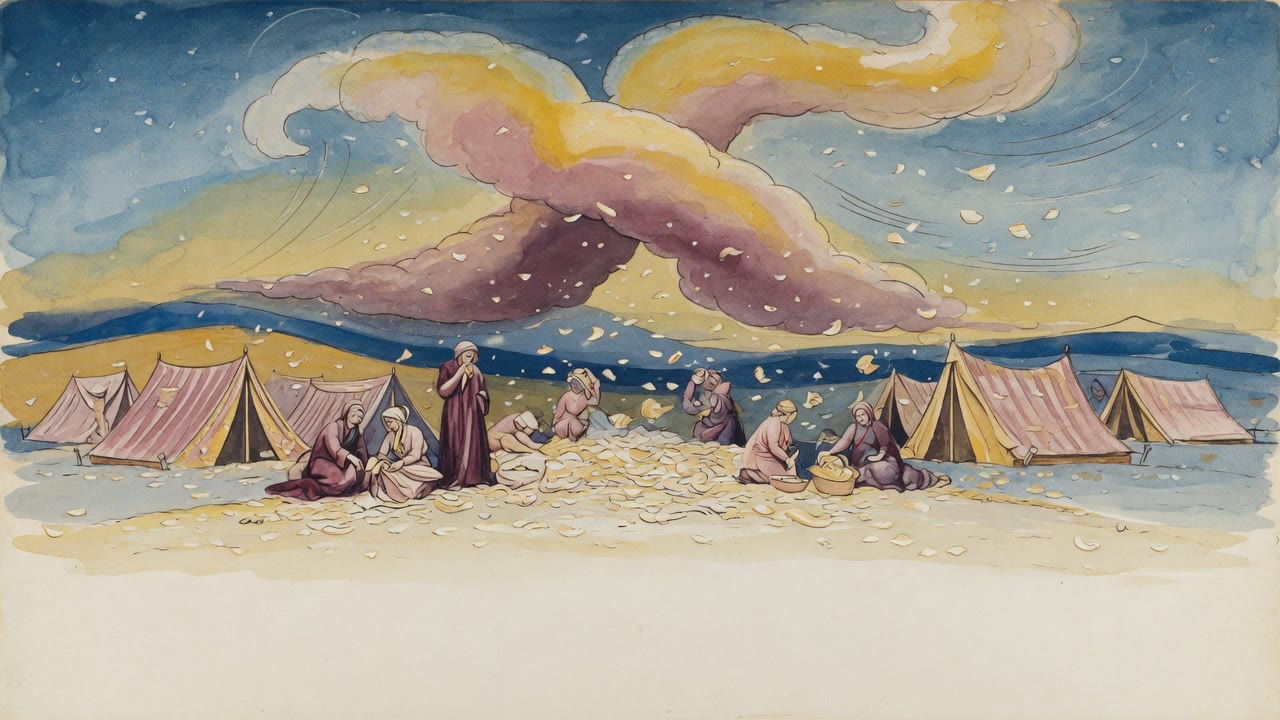
Shemot Rabbah turns to God Rains Down Bread From Heaven for Israel. Think about the manna, that miraculous bread that sustained the Israelites in the desert. In (Exodus 16:4), God ...
Israel in Egypt, fruitful and multiplying, a thousand thousand and myriad myriads. And still, in God's eyes, like a single beloved child. That's the paradox this section of Aggadat...
Midrash (rabbinic interpretive commentary) Sheni Ketuvim In the beginning God created etc. - To declare the might of the acts of creation to creatures, and to make it known to them...
Hell has seven names. This is what Aggadat Bereshit says when Malachi promises "the day is coming, burning like an oven" (Malachi 3:19). The rabbis did not flinch from the geograph...
Shemot Rabbah turns to Manna as Bread from Heaven Earned Through Torah. Here's a question: Why did the Israelites sing praises over the well but not over the manna? Seems a bit unf...
How long will the Messianic era last? The Talmud in Sanhedrin 99a records a staggering range of opinions, from forty years to eternity. Rabbi Eliezer said forty years, based on (Ps...
A small city, few people, a great king who comes and builds fortifications, (Ecclesiastes 9:14) describes something small being threatened by something enormous. The rabbis identif...
When Boaz sent Ruth home in the early morning, he poured into her shawl "six measures of barley" (Ruth 3:15). The sages, reading closely, asked: can this really mean six grains, so...
The Torah's "a mist went up from the earth" becomes, in Targum Pseudo-Jonathan on (Genesis 2:6), something far grander. "A cloud of glory descended from the throne of glory, and wa...
Targum Pseudo-Jonathan on Exodus (Exodus 23:16) names two festivals without naming them by their later names: the feast of the harvest first-fruits of the work thou didst sow in th...
Rabbi Akiva, a towering figure of Jewish law and thought, brings up a really interesting point about how we determine the order of tithing. He uses the example of the threshing flo...
In Tikkunei (spiritual repair) Zohar, it holds secrets reaching back to the very beginning of time, to Adam himself. So, what exactly is ḥallah, in this mystical sense? The Tikkune...
The story of Jethro, Moses' father-in-law, offers a fascinating glimpse. Jethro, who according to the tradition, excelled all other converts in his love for the Torah, wasn’t just ...
Not just any dinner party, but a celestial banquet in Paradise, a feast for all the righteous souls who've ever lived. And King David? He's about to play a very special role. In Le...
The manna story in (Exodus 16) raises an obvious question: where did this miracle food come from? The Hebrew Bible says God "rained bread from heaven." The Targum Jonathan gives a ...
Jewish tradition says a resounding "YES!" And one of the most beautiful examples of this is found in the stories surrounding the manna, that miraculous bread from heaven that susta...
This one, from Sifrei Devarim, a collection of legal interpretations and homilies related to the Book of Deuteronomy, really got to me. The story goes that Rabbi Yochanan ben Zakka...
The Jewish year moves with the grain. Targum Pseudo-Jonathan on (Exodus 34:22) marks two hinges of that turning wheel: the feast of weeks at the first of the wheat harvest, and the...
Our jumping-off point is Bamidbar Rabbah 12, a fascinating exploration of the verse "On the day that [Moses] concluded." Now, it first appears this is just a throwaway line, but th...
Bamidbar Rabbah turns to Moses and the Ark of Land. Our source for this journey is Bamidbar Rabbah, a collection of Midrashic (rabbinic interpretive commentary) teachings on the Bo...
It might be more surprising – and down-to-earth – than you think. Our text from Bereshit Rabbah, a classic collection of rabbinic interpretations of the Book of Genesis, dives into...
The verse that kicks things off is from (Exodus 27:20): “And you shall command the children of Israel, and they shall bring you pure olive oil, pressed for illumination, to kindle ...
Like, you look around and wonder, "How did we get here?" Well, ancient Jewish wisdom has some thoughts on that – and a surprising solution involving a rose. to Shir HaShirim Rabbah...
They used stories – beautiful, powerful stories – to make sense of it all. One of my favorites comes from Vayikra Rabbah, a collection of rabbinic teachings on the Book of Leviticu...
They're complaining, as people do when they’re hungry and thirsty and unsure of what tomorrow holds. They should have been praying! But instead of getting angry, God, in a moment o...
The story goes that God, wanting to leave a lasting reminder of His power for generations to come, instructed Moses to place a jar of manna, that miraculous food that sustained the...
The Israelites, fresh from their miraculous escape from Egypt, certainly had. They were wandering in the desert, sustained by manna, that miraculous bread from heaven. It was nouri...
Where does the obligation to say grace after meals. Birkat HaMazon, come from? The Mekhilta traces it to a single verse: (Deuteronomy 8:10), "And you shall eat and you shall be sat...
Rabbi Eliezer described one of the most vivid and beautiful scenes in all of rabbinic literature: the step-by-step process by which the manna descended from heaven each morning. Be...
Midrash Tehillim, a collection of rabbinic teachings on the Book of Psalms, explores that very feeling in Psalm 103. It speaks of remembering God's commandments, and what that real...
The verse states, "All the days of his Naziritism, of all that is made from the grape-vine, from the kernels to the husk, he shall not eat." Okay, No grapes, no wine, no grape juic...
The Israelites, fresh out of Egypt, certainly did. And their story, as told in the book of Bamidbar (Numbers), offers a pretty stark warning about unchecked desire. The familiar st...
In the book of Bamidbar, also known as Numbers, we find a fascinating discussion about vows, and particularly, the power a father and husband have to either uphold them or, to use ...
The Targum Jonathan on (Deuteronomy 11) turns the promise of rain into a precisely timed agricultural calendar. The Hebrew says God will give "the early rain and the late rain." Th...
Rabbi Pinhas ben Yair was a sage so scrupulous in his observance that the tradition says even his animals followed the law. Thieves once stole his donkey from his stable, thinking ...
When the grumbling began in the wilderness of Sin, the Holy One responded not with rebuke but with a test. Targum Pseudo-Jonathan on (Exodus 16:4) renders it: Behold, I will cause ...
A man met the teacher on the road and tried to split Sinai in half. Written Torah, yes. Mishnah, no. Scripture came from God, he said, but the oral teaching did not. Tanna DeBei El...
It's astonishing, really. The laws of the nazir, the one who takes a vow of separation, a path of heightened holiness. The Book of Numbers lays out some very specific restrictions ...
Like everyone's shouting, "Me! Me! It's all about me!" Well, the ancient rabbis felt that too, and they captured this human tendency in a beautiful, earthy parable found in Bereshi...
The book of Kohelet, or Ecclesiastes, really digs into that feeling. And the rabbis of Kohelet Rabbah, a collection of rabbinic interpretations of Kohelet, pick up on that theme in...
Take the story of the war against Amalek in (Exodus 17:9). Moses tells Joshua, "Choose men for us and go out and wage war with Amalek; tomorrow I will be standing on top of the hil...
I know, it sounds random. But stick with me. In Shir HaShirim Rabbah, a collection of rabbinic interpretations of the Song of Songs, that very grain becomes a powerful symbol for t...
Then the Lord said unto Moses: “Behold, I will cause to rain bread from heaven for you; and the people shall go out and gather a day’s portion every day, that I may prove them whet...
The stakes might be higher than we imagine. You’re wandering in the desert, sustained only by miraculous bread falling from the sky – manna. God gives very specific instructions ab...
The story of the second set of tablets, the Luchot, is a powerful reminder of divine patience and the enduring bond between God and the Jewish people. It all starts with the afterm...
He's responding to the claims of a writer named Apion, who seems to have a real bone to pick with the Jews of Alexandria. Apion, you see, is going after the Alexandrian Jews, criti...
Maybe that’s because the rainbow we see today isn’t the rainbow of the Messiah. Not yet, anyway. the rainbow we know is a promise, a beautiful one, certainly. It's a reminder of Go...