When Torah Became God's Seal on a Breakable World
After the Golden Calf, Moses holds stone carved by human hands. Devarim Rabbah says God signed it with the word that begins and ends all creation.
Table of Contents
 Click for full size
Stone Cut by Human Hands
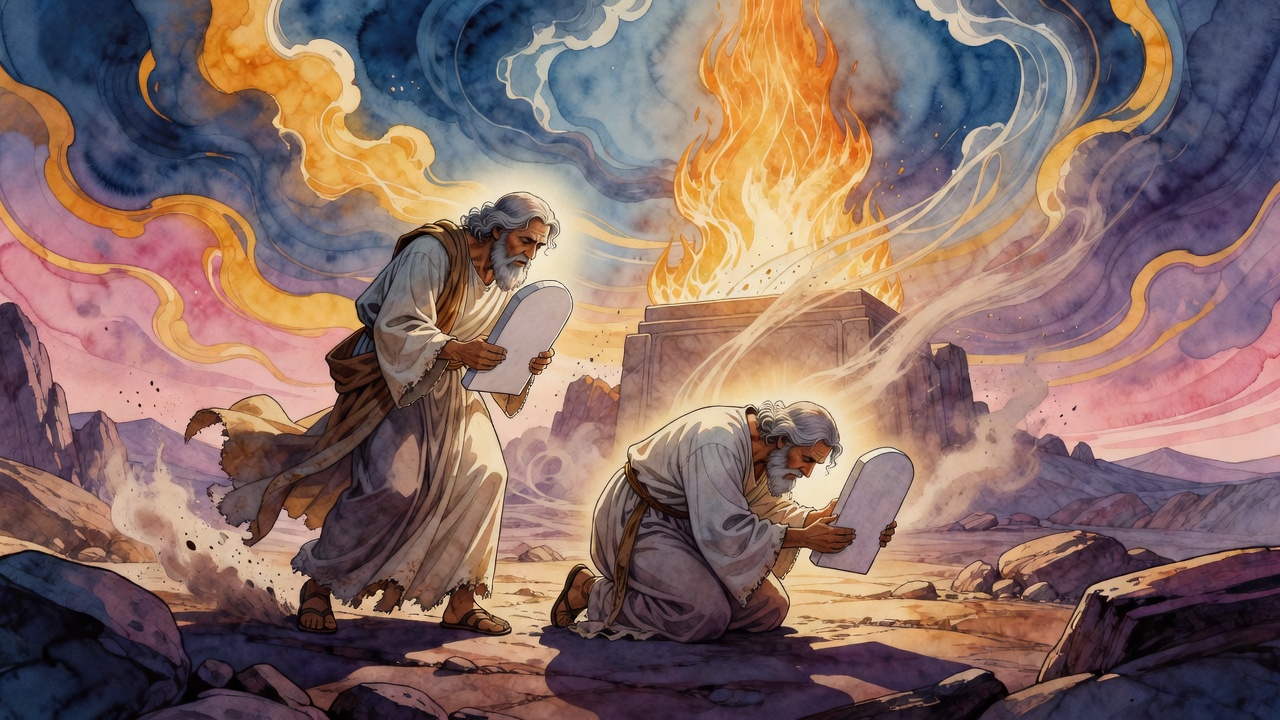
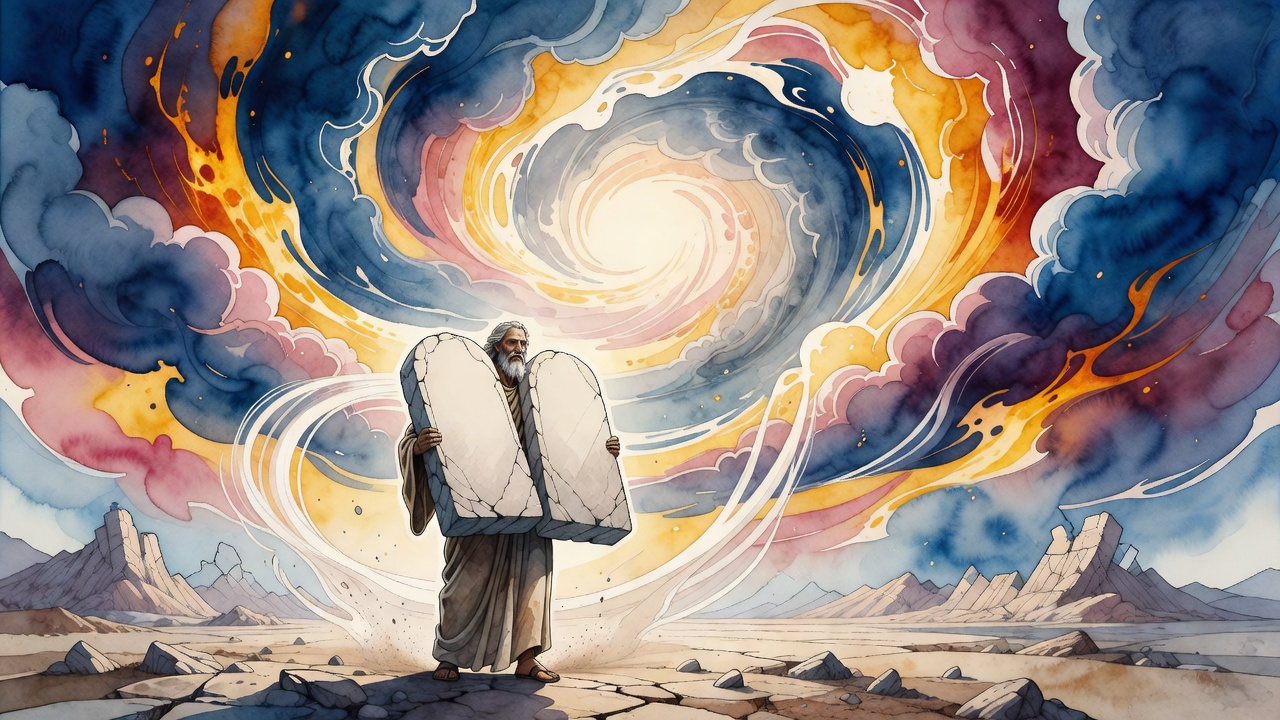
Moses stood with chisel marks on the tablets and a broken people behind him. The first set had come down from heaven whole, written by the finger of God, and he had smashed them at the foot of the mountain when he saw the calf. The second set he cut himself from stone he found on the mountain. His own hands shaped them. His own arms carried them up.
Israel was afraid of the difference.
If God's finger had written the first tablets, the writing itself was divine. But the second tablets had human marks on them first, the marks of a man's chisel before any divine inscription. How would Israel know these were accepted? How would they know that the covenant was still in effect and not simply a human attempt to reconstruct what had been destroyed?
Devarim Rabbah gave one answer: God signed them.
What the Signature Was
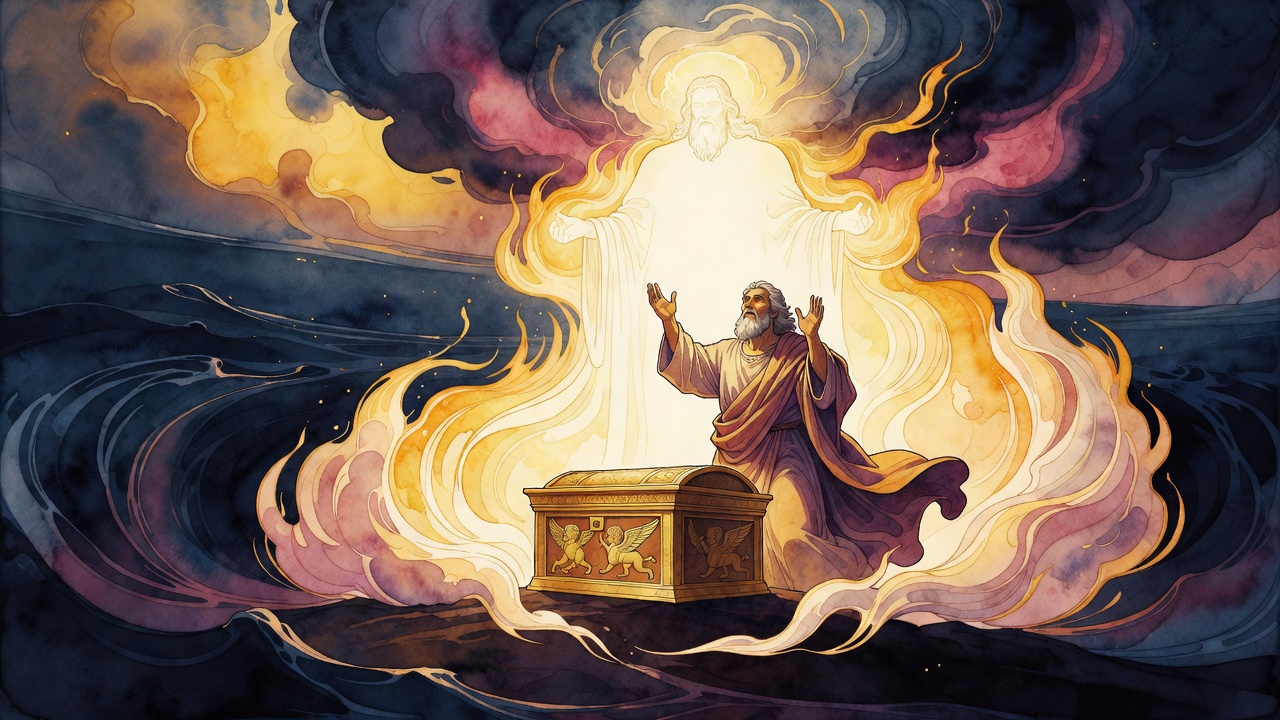
The question of God's signature had a fixed answer in the tradition. Psalm 119 said the beginning of God's word is truth. The Babylonian Talmud, in tractate Shabbat, preserved the teaching directly: emet, truth, is the seal of the Holy One. The word was God's mark on anything that bore divine authorization.
Rabbi Yosef Hayim of Baghdad, the Ben Ish Hai who lived from 1834 to 1909, traced where the seal appeared in creation itself. The last letters of the first three words of Torah: Bereshit, bara, Elohim. Take the final letter of each: tav, alef, mem. Reversed, they spelled emet. Truth was embedded in the end-letters of the opening of creation, as if God had countersigned the world before the world had been finished.
The sign was not easy to see. It required knowing which letters to take and in what order to read them. But it was there from the first moment of the first day, waiting to be found by anyone who knew to look for a signature at the margins of creation.
The World That Needed Torah to Stay Whole
Devarim Rabbah did not leave the covenant as merely a matter between God and Israel after the Golden Calf. It went further. The midrash described a king who entrusted a precious gem to a friend, a gem so rare that it could not be replaced and whose loss would harm them both. "Guard this," the king said. "Not for my sake only. For the sake of what we share."
The gem was Torah. The friend was Israel. But the loss would cost God too, because without Torah the world reverted to emptiness and disorder. The creation God had signed with emet required the ongoing practice of what emet pointed to in order to remain what it was. A world without Torah was tohu va-vohu again, formless and void, the state before the first word was spoken.
Water, Wine, Honey, Milk
Devarim Rabbah offered five comparisons for what Torah tasted like to those who received it. Water, because Isaiah wrote of going to the water for those who thirst. Wine, because Proverbs invited the drinking of what wisdom had mixed. Honey and milk, together, carried under the tongue like something that nourishes without effort. Oil, because it lights and softens and heals simultaneously.
Each substance did something the others did not. Water cleansed and quenched. Wine altered the mind toward joy. Honey sweetened what was bitter. Milk sustained without requiring digestion. Oil entered the skin and the lamp both.
The list was not saying Torah was merely pleasant. It was saying Torah addressed every kind of need a body had: thirst, delight, sweetness, nourishment, illumination. A person who needed any of those things had a route to Torah. And Torah, having been signed with emet at the beginning and carried through every exile in the hands of Israel, was still available to offer all five.
← All myths