639 related texts · Page 1 of 14
There were twenty-four dream interpreters in Jerusalem, and if you brought the same dream to all of them, you would get twenty-four different answers. According to Berakhot 56a, ev...
Can you feel their anticipation, their weariness, their unwavering faith? They arrive at Mount Gerizim and Mount Ebal, twin peaks that would become the stage for a powerful ritual....
God told Israel three separate times: do not go back to Egypt. According to Esther Rabbah, they violated every single warning and paid for every single one. Rabbi Shimon ben Yohai ...
The Talmud claims you are never alone. According to Berakhot 6a, the sage Abba Binyamin taught that if the human eye were granted permission to see demons, no living creature could...
There was an incident involving Miriam daughter of the baker, who was taken captive with her seven sons. The emperor took them and placed them behind seven partitions. He brought t...
Rabbi Nachman of Breslov taught that anyone who wants to taste the Or HaGanuz (אור הגנוז), the Hidden Light that God stored away from the first day of creation, must elevate the qu...
The Talmud in Chagigah 12b asks a foundational question: what holds up the world? The answer, according to Rabbi Yosei, is a chain of impossible supports—each one resting on someth...
It is written (Jeremiah 50:33) "Thus said the LORD of Hosts: The people of Israel are oppressed, And so too the people of Judah etc." and it is written (ibid 34) "Their Redeemer is...
Twenty generations passed between Adam and Abraham without old age being mentioned once. Not because people didn't age — but because no one had earned the particular beauty of visi...
He had so much wisdom to impart, so many blessings yet to bestow upon each tribe of Israel. But time, as it always does, was running short. So, he gathers all those individual bles...
In chapter 9, we find a surprisingly vivid image comparing rivers to the people of Israel. : rivers, in their natural course, are a blessing. As the text says, "All rivers flowing ...
These are the kinds of questions that ripple through the ancient text of Sifrei Devarim, a portion of Jewish legal and ethical thought that delves into the book of Deuteronomy. Let...
The Torah is full of promises, both of blessings and of curses. And sometimes, it seems like things don't quite line up. In Bamidbar Rabbah, a collection of rabbinic teachings on t...
Our ancestors felt that way about the land itself. But how did they express that gratitude, and what were the specific rules around it? Today, we're diving into the ancient mitzvah...
The Torah says write the law on plastered stones after crossing the Jordan. Targum Jonathan says write it "with writing deeply engraven and distinct, which shall be read in one lan...
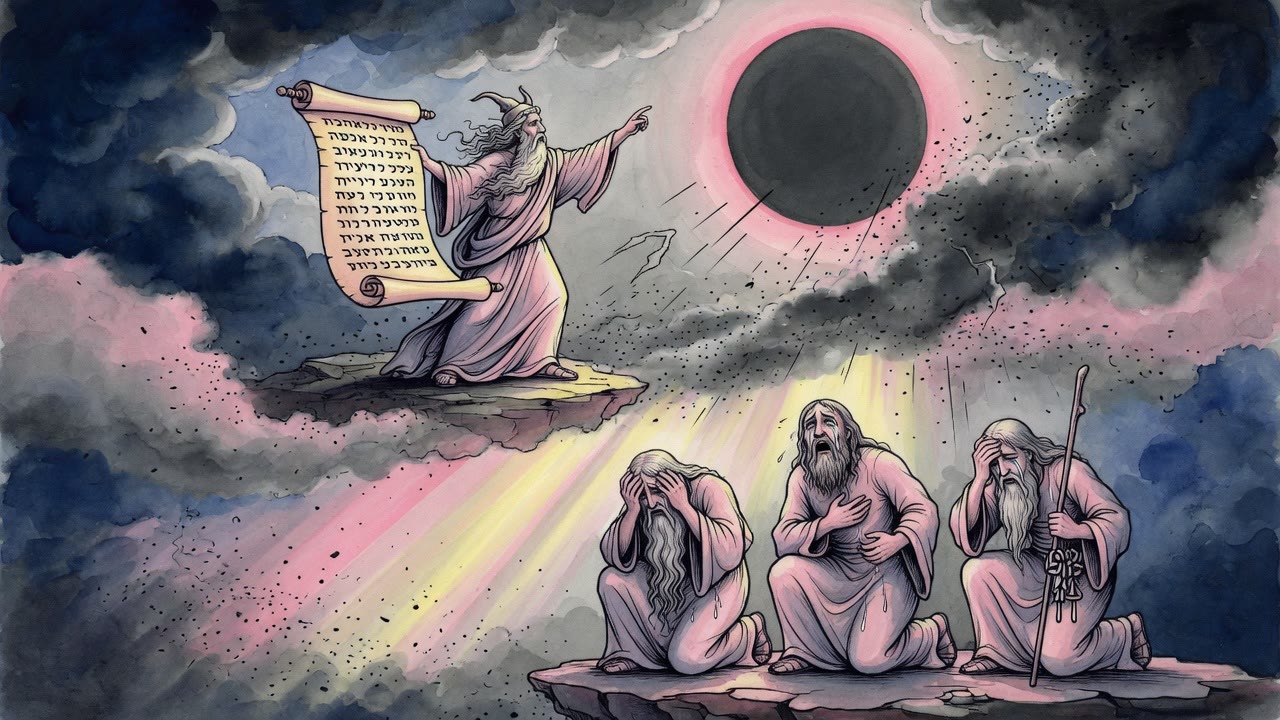
With his departure drawing near, Enoch delivered a series of blessings and curses — a final reckoning, sharp as a blade, that laid bare the difference between the righteous and the...
The Sifrei Devarim, a collection of early rabbinic legal commentaries on the Book of Deuteronomy, certainly seems to think so. It explores this very idea through the seemingly simp...
There's a verse in Devarim – Deuteronomy – that always stops me in my tracks. It's in chapter 11, verse 29, and it seems simple on the surface, but it's packed with meaning. "And i...
Let’s talk about baskets. Yes, baskets. Specifically, the basket mentioned in Devarim (Deuteronomy) 26:2, as it says: "And you shall put (them) in a basket." What’s the big deal, y...
Targum Jonathan transforms the assembly laws of (Deuteronomy 23) with details that reshape who belongs to Israel and why. A man "born of fornication" cannot enter the congregation—...
The ancient text of Sifrei Devarim wrestles with this very question, and its answer is surprisingly nuanced. We find ourselves in the book of Deuteronomy, or Devarim in Hebrew, spe...
The first-fruits ceremony in (Deuteronomy 26) is beautiful in the Torah. Targum Jonathan makes it lavish. Where the Hebrew says simply to bring produce in a basket, the Targum adds...
When Rabbi Yosei of Milḥaya died, Rabbi Yoḥanan and Reish Lakish went up to perform an act of kindness136They went to participate in the funeral. and Rabbi Yitzḥak Pesaka went up w...
The Book of Esther opens with a single verse that the rabbis of Esther Rabbah read as a cry of anguish: "It was during the days of Ahasuerus" (Esther 1:1). But to understand why th...
What happens when even the Divine weeps? What happens when home is lost, not just for us, but for God, too? We often think of God as unchanging, eternal, beyond our human messiness...
“Our inheritance has been turned over to strangers, our houses to foreigners” (Lamentations 5:2).“Our inheritance has been turned over to strangers.” What type of turning? It is “l...
The exile of the Jewish people under Ahasuerus was not an accident. According to Esther Rabbah, it was prophesied in detail centuries before it happened, embedded in verses from Is...
So, Balaam, the non-Jewish prophet hired by Balak, king of Moab, to curse the Israelites, is ready to get down to business. Balak and his princes are all waiting, anticipation thic...
The Torah is full of blessings, but it's not always straightforward. Some blessings are more potent than others, some are given grudgingly, and some come with unexpected consequenc...
And it all revolves around a seemingly simple question: how do we read the really tough parts of the Torah? Specifically, we're talking about the "rebukes," those stern warnings an...
We're talking about tzedakah, often translated as charity, but really meaning righteousness and justice. It’s more than just giving; it's about correcting imbalances in the world. ...
The story of Moses' birth is a powerful testament to that kind of bravery, laced with faith and a touch of the miraculous. It all begins with a decree from Pharaoh, ordering the de...
" This verse, seemingly simple, becomes a springboard for a deep dive into themes of good and evil, destiny, and the very nature of creation. The Midrash (rabbinic interpretive com...
Our tradition grapples with this very question, especially when considering the immense gifts God has bestowed upon us. Midrash Tehillim, specifically in its exploration of Psalm 1...
The Sifrei Devarim, a collection of early rabbinic legal interpretations on the Book of Deuteronomy, points out this fascinating characteristic of the prophets. "And this is the bl...
This week, we're diving into a powerful message about gratitude, using the ancient text of Bamidbar Rabbah, specifically Bamidbar Rabbah 1. It all starts with a verse: “The Lord sp...
He says, "Woe unto us from the Day of Judgment; woe unto us from the day of rebuke!" It's a powerful statement, isn't it? He uses Joseph as an example. : Joseph, a man of flesh and...
(Psalm 100:3) declares, "Know that the Lord is God." But it's the next part that really sparked their interest: "He made us, and we are His" (Psalm 100:3). Or is it? See, the Hebre...
It’s not just about pointing out flaws. According to Jewish tradition, it’s a profound act, potentially more valuable than empty praise. Let’s delve into a fascinating interpretati...
In Vayikra Rabbah, a collection of rabbinic homilies on the Book of Leviticus, we find a powerful exploration of peace. Rabbi Shimon ben Yoḥai declares that "Great is peace, as all...
According to Ginzberg's retelling in Legends of the Jews, all sorts of momentous events piled up on a single day. This was the very day the Israelites crossed the Jordan River. Can...
Everything has a purpose. And that purpose has a purpose of its own, each one higher than the last. Rabbi Nachman of Breslov uses this insight to explain why you must judge every p...
(Exodus 23:19) prohibits: "You shall not cook a kid in its mother's milk." Rabbi Shimon asked why this prohibition is stated three times in the Torah — here, in (Exodus 34:26), and...
The Talmud in Berakhot 57a catalogues an entire symbolic vocabulary of dreams—a dictionary of the unconscious, organized by category, where every image carries a fixed meaning. Ani...
Rabbi Simlai made one of the most ambitious claims in the entire Talmud. He said: 613 commandments were given to Moses at Sinai—365 prohibitions corresponding to the days of the so...
“And great enslavement,” Rabbi Aḥa said: Because they would keep the Hebrew slave in servitude, just as it says: “At the end of seven years [each of] you shall free [his Hebrew bro...
“For these I weep, my eye, my eye sheds water; for a comforter, restorer of my soul, has grown distant from me; my children have become desolate, because the enemy has prevailed” (...
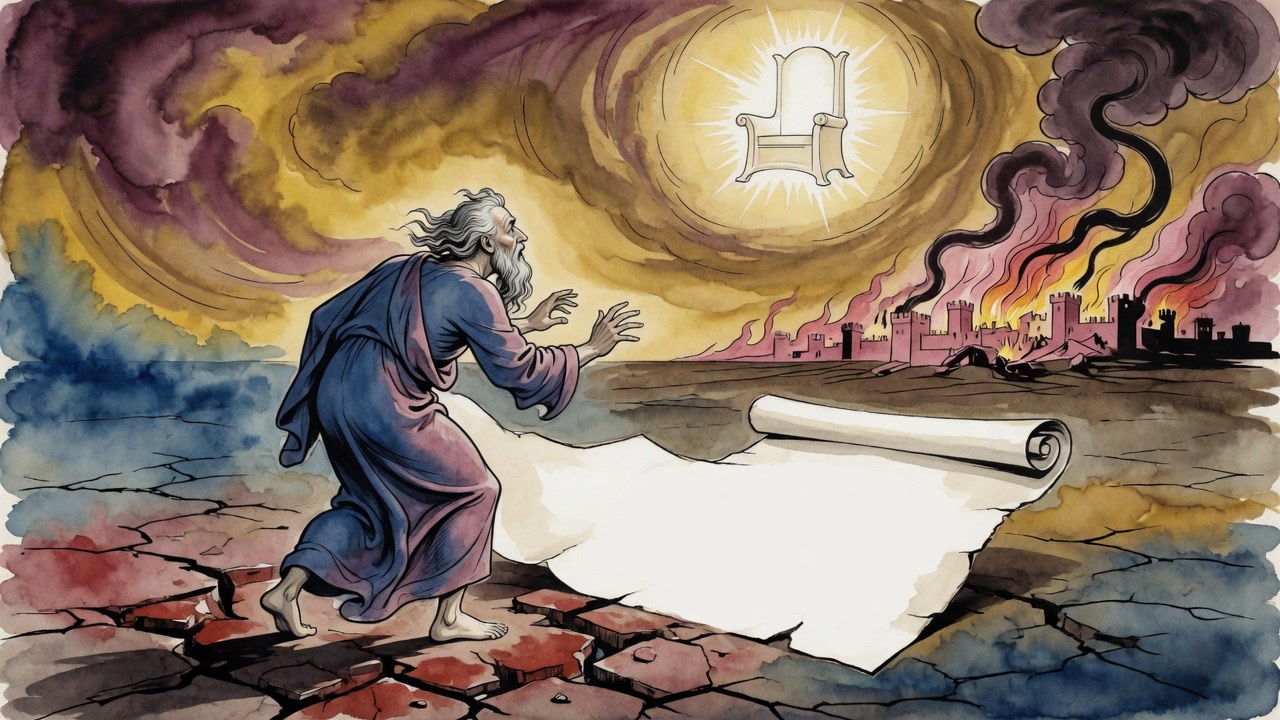
“I am the man who has seen affliction by the rod of His fury” (Lamentations 3:1).“I am the man” – Rabbi Ḥama bar Ḥanina began: “Jeremiah took another scroll and gave it to Barukh s...