4,543 related texts · 51 related myths · Page 2 of 95
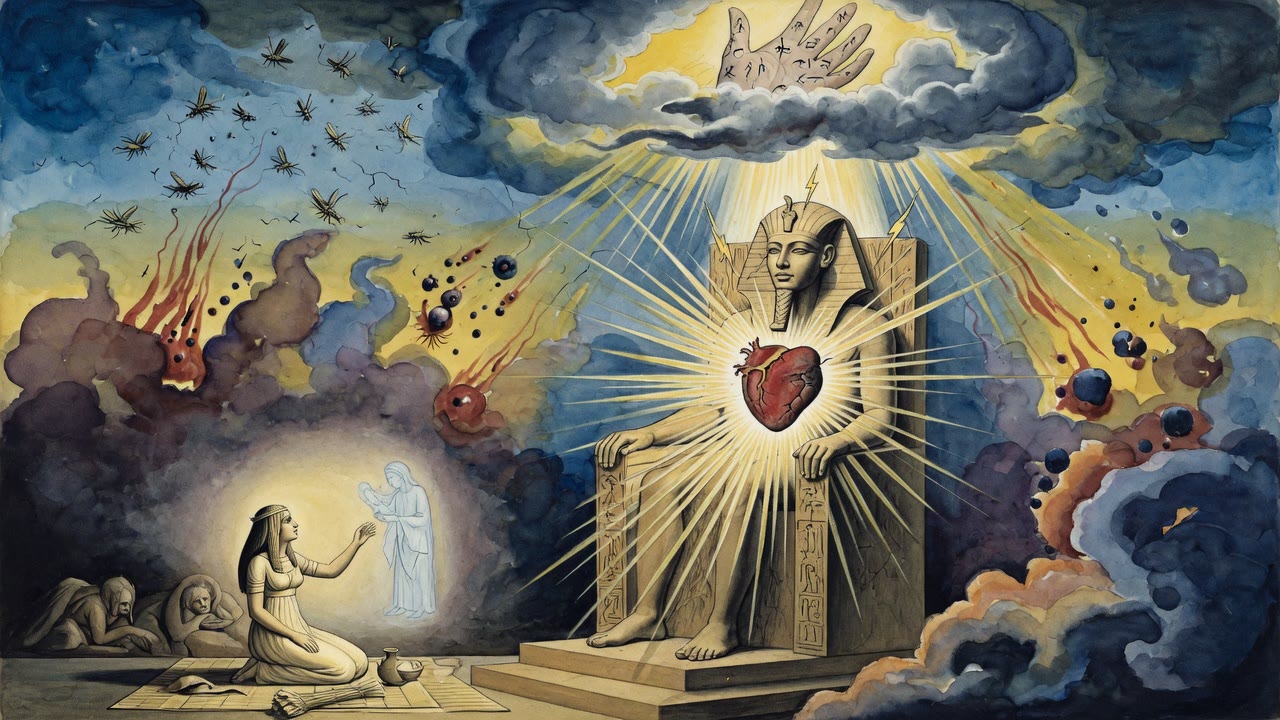
(Exodus 14:4) "And I shall strengthen Pharaoh's heart": for it was divided, whether to pursue or not to pursue. "and I will be honored through (the downfall of) Pharaoh and all of ...
Before Moses can begin the Exodus, he has to say goodbye to the family that took him in. Targum Pseudo-Jonathan preserves the scene's restraint. Moses does not march out. He return...
Whence do we find that he gave his life for Torah? In (Exodus 34:28) "And he was there with the L–rd (to receive the Torah) … Bread he did not eat, etc." And it is written (Devarim...
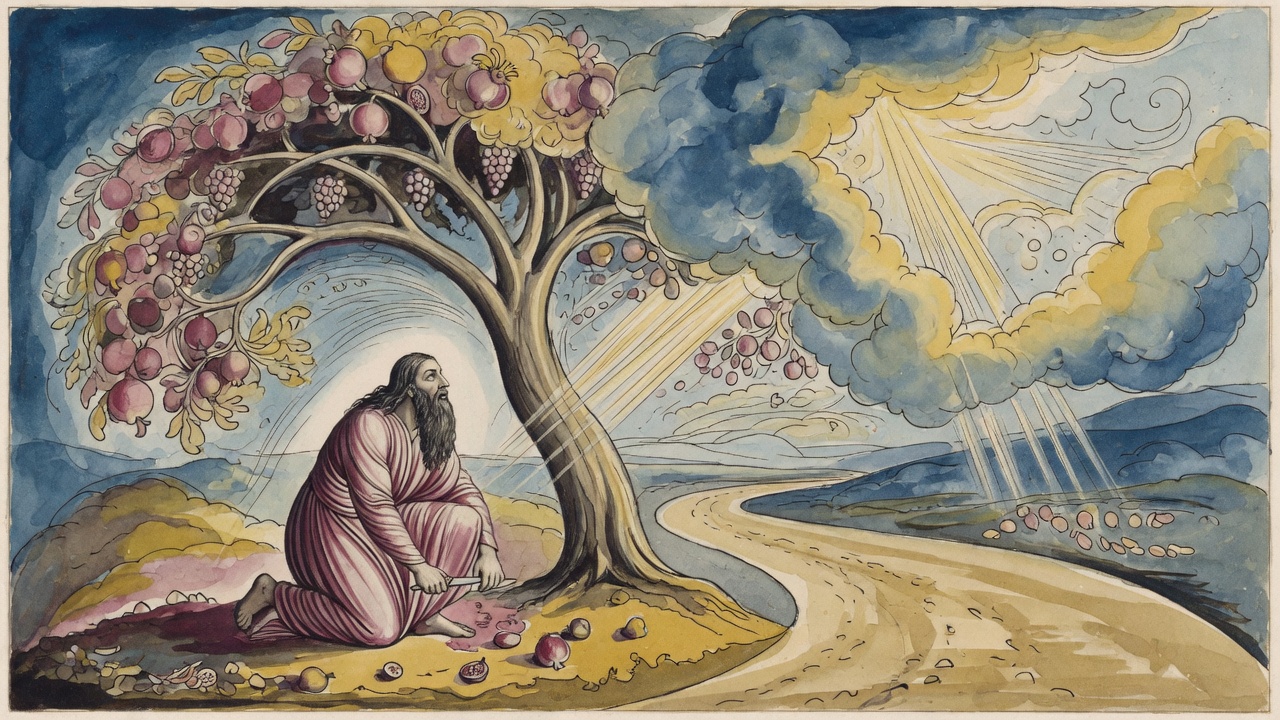
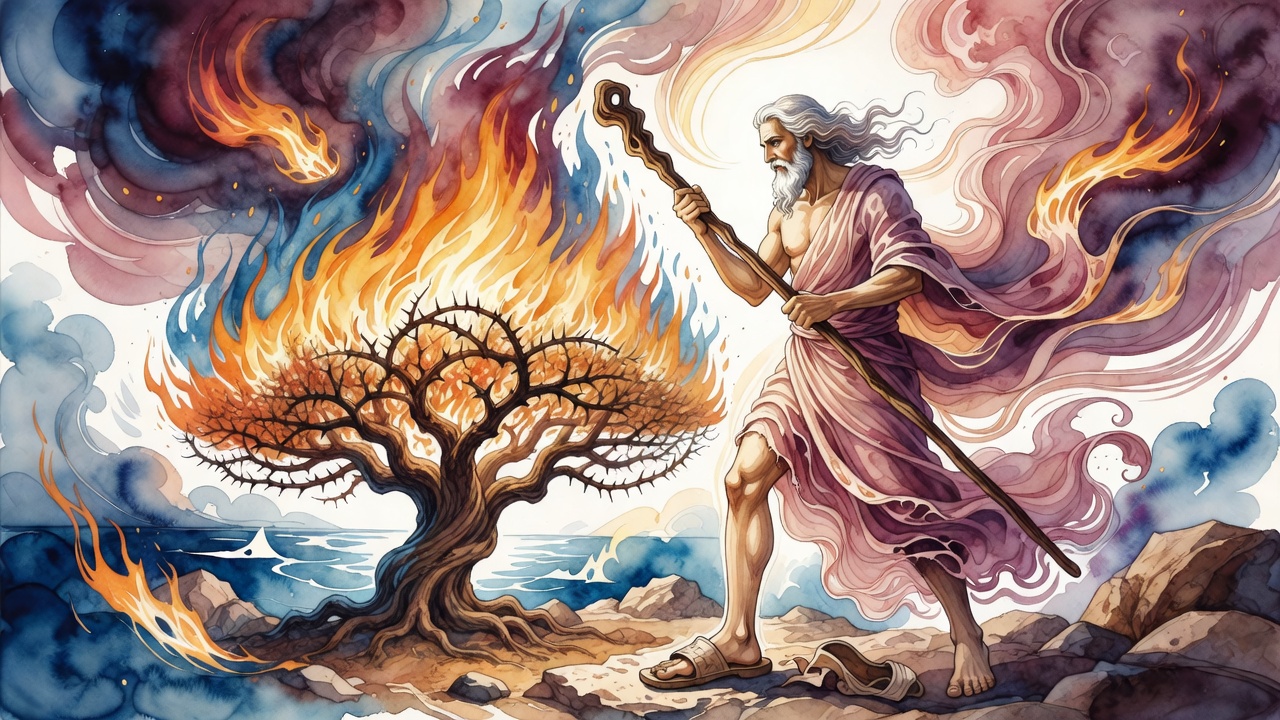
Take the story of Moses and the staff. It all starts with a garden, a simple rod, and a curious shepherd-to-be. In Pirkei DeRabbi Eliezer, a fascinating early medieval text filled ...
Joseph was brought down to Egypt (Genesis 39:1). Lamentations gives the frame: "Good is the man who sits alone and is silent, for he will bear the yoke upon himself. He will put hi...
The Mekhilta, the tannaitic midrash on Exodus, examines a verse that seems to state the obvious: "And the children of Israel did as Moses had bid them" (Exodus 12:35). The rabbis a...
(Exodus 17:14) "And the L–rd said to Moses: Write this as a remembrance in the book and place it in the ears of Joshua": The early elders said: So is it with all the generations. T...
The great Moses himself had such an experience. As we read in (Exodus 4:24), on the road one night, Adonai, God, encountered Moses and sought to kill him. Why would God, who had ju...
Here is a difficult teaching: the Holy One tells Moses the outcome before the negotiation begins. Targum Pseudo-Jonathan puts it with unsettling clarity: it is manifest before Me t...
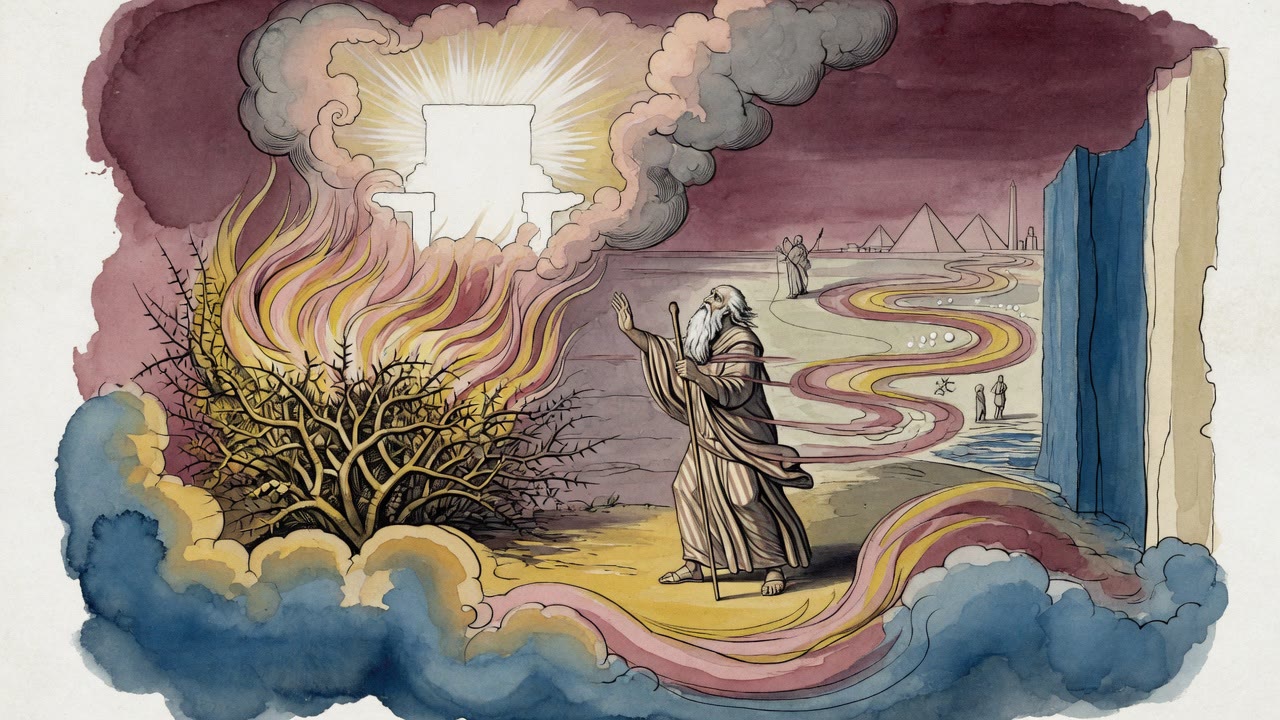
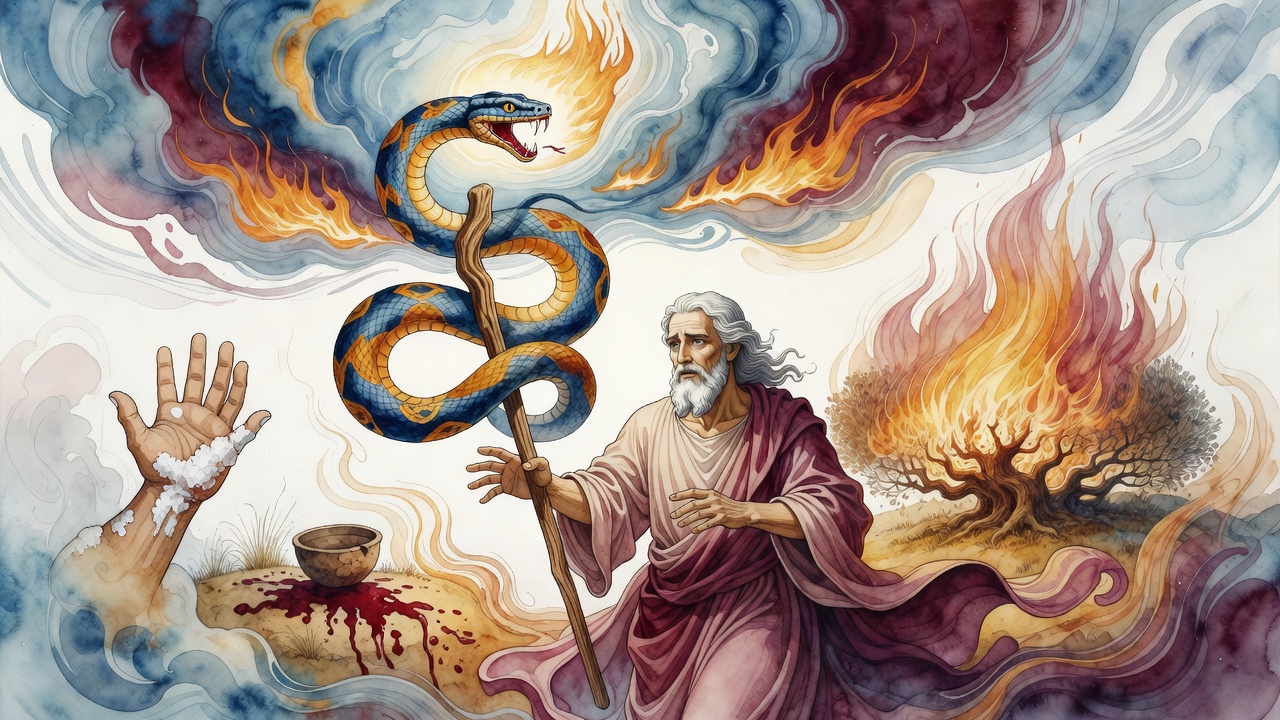
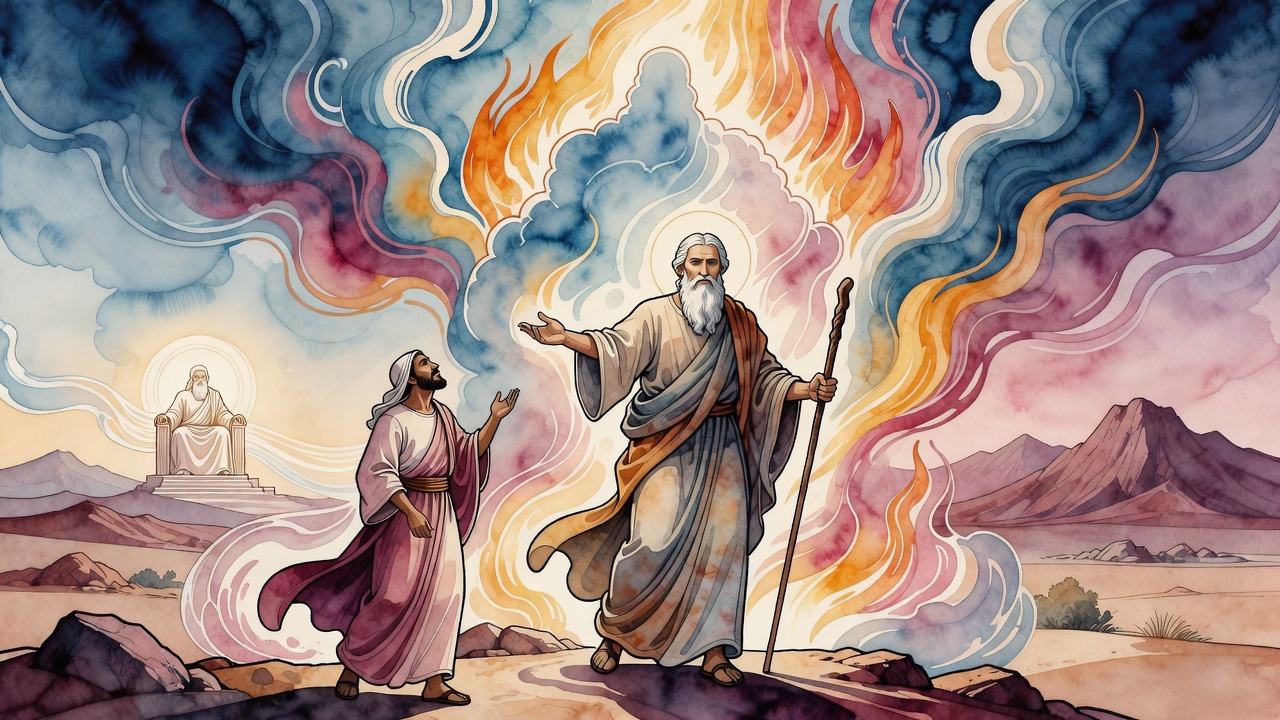
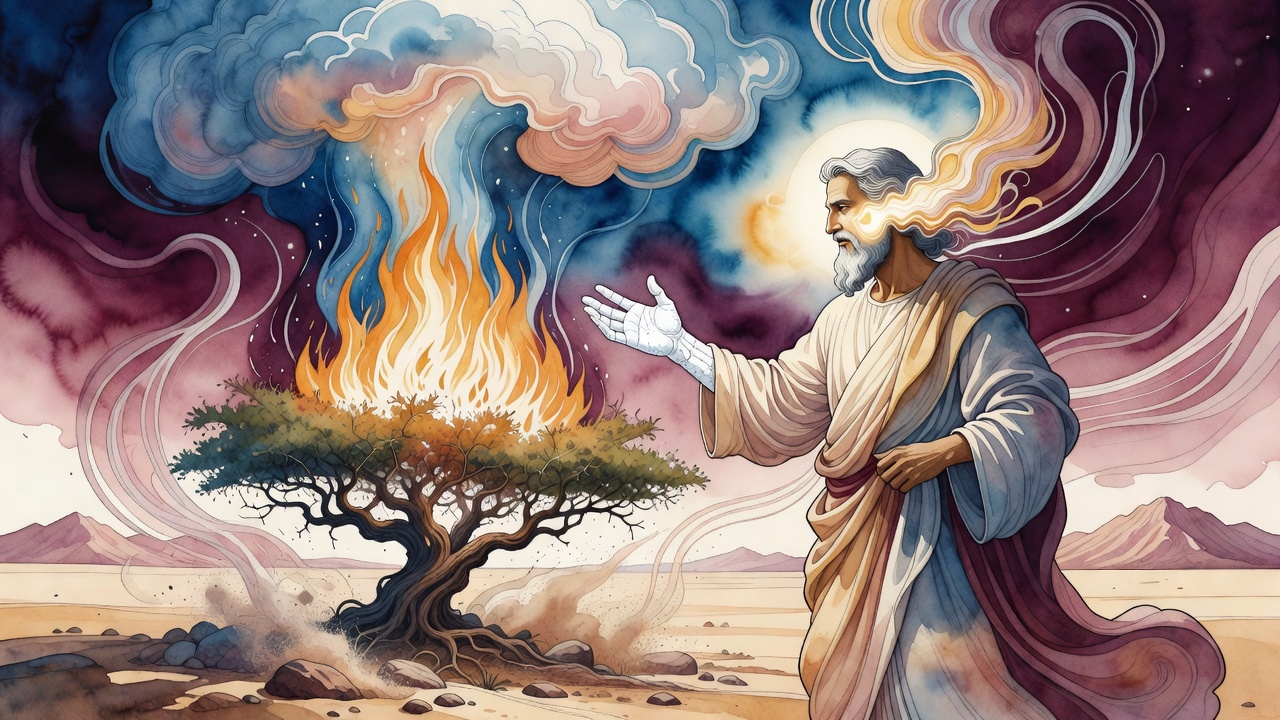
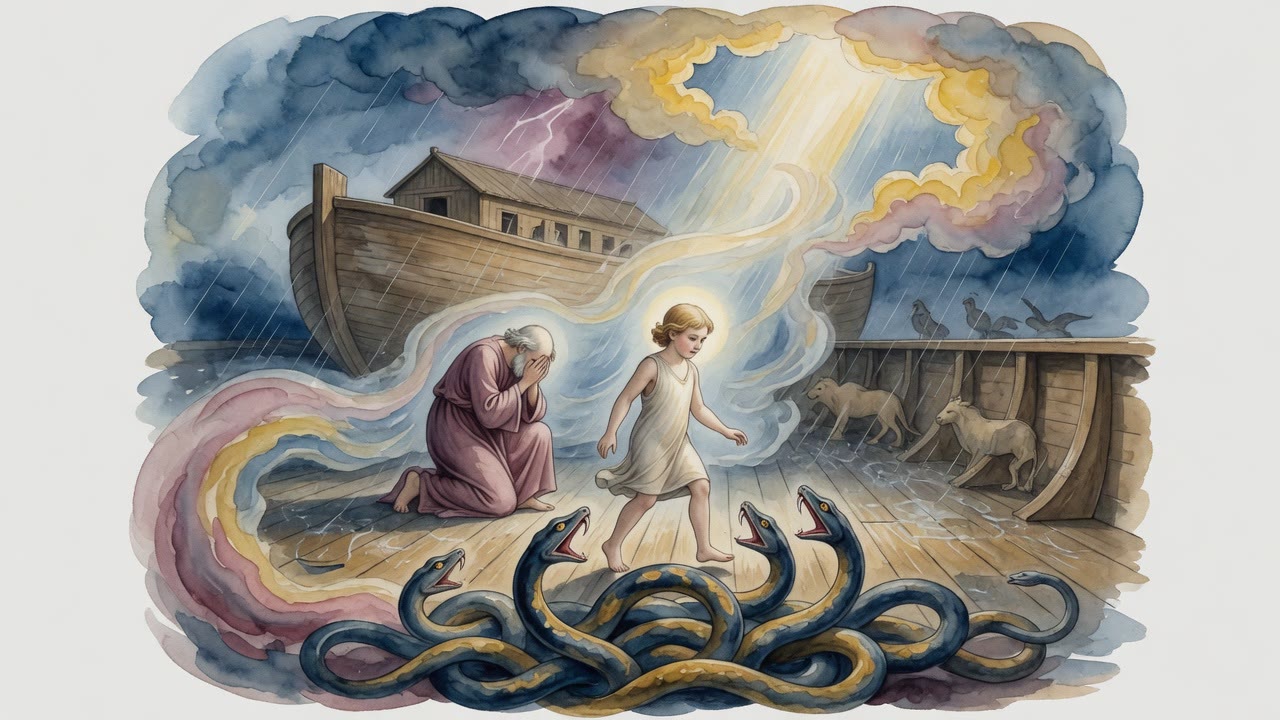
At the burning bush, the Holy One asks Moses to do something that violates every shepherd's instinct. The staff he has carried through decades in Midian has just become a serpent. ...
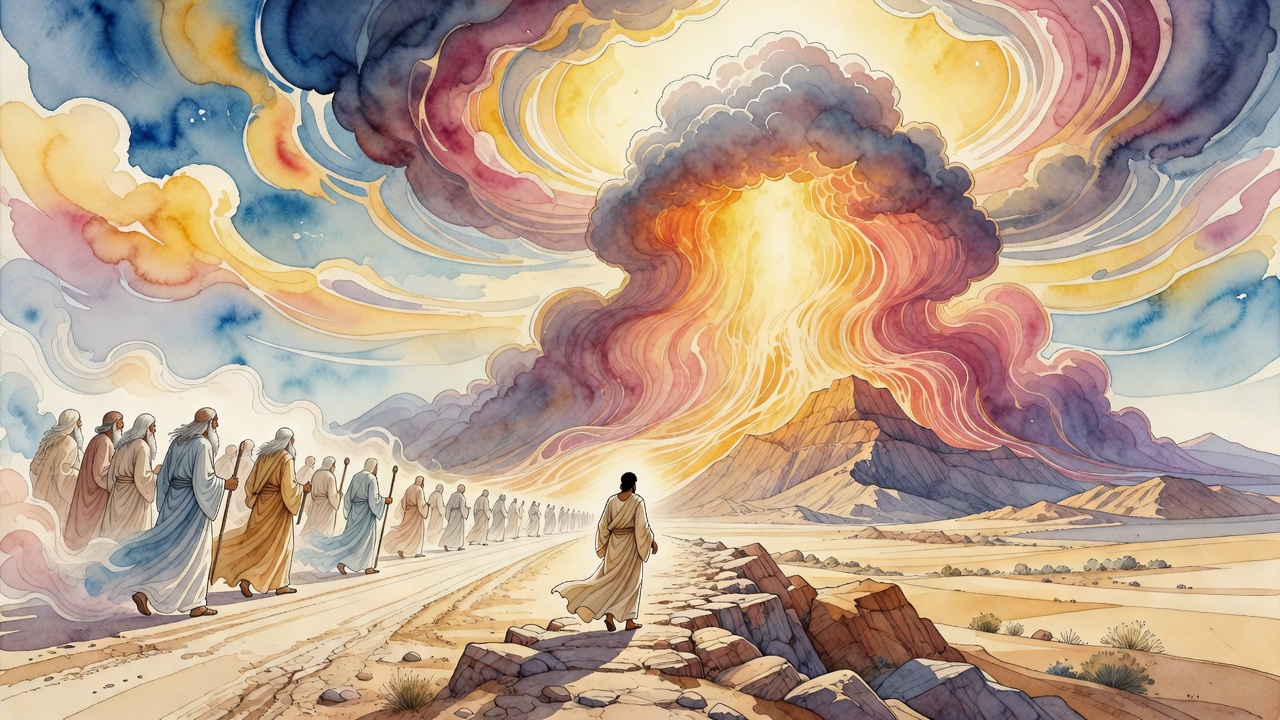
After the terror at the inn, the reunion at Sinai feels like exhale. Targum Pseudo-Jonathan preserves the geography with reverent precision: Aaron came and met him at the mountain ...
The confrontation finally arrives. Targum Pseudo-Jonathan preserves the opening line with ceremonial weight: Thus saith the Lord, the God of Israel: Release My people, that they ma...
It begins with Moses and Aaron, standing before Pharaoh, delivering a message that must have sounded utterly insane: "Thus saith the Lord, the God of Israel, Let my people go" (Exo...
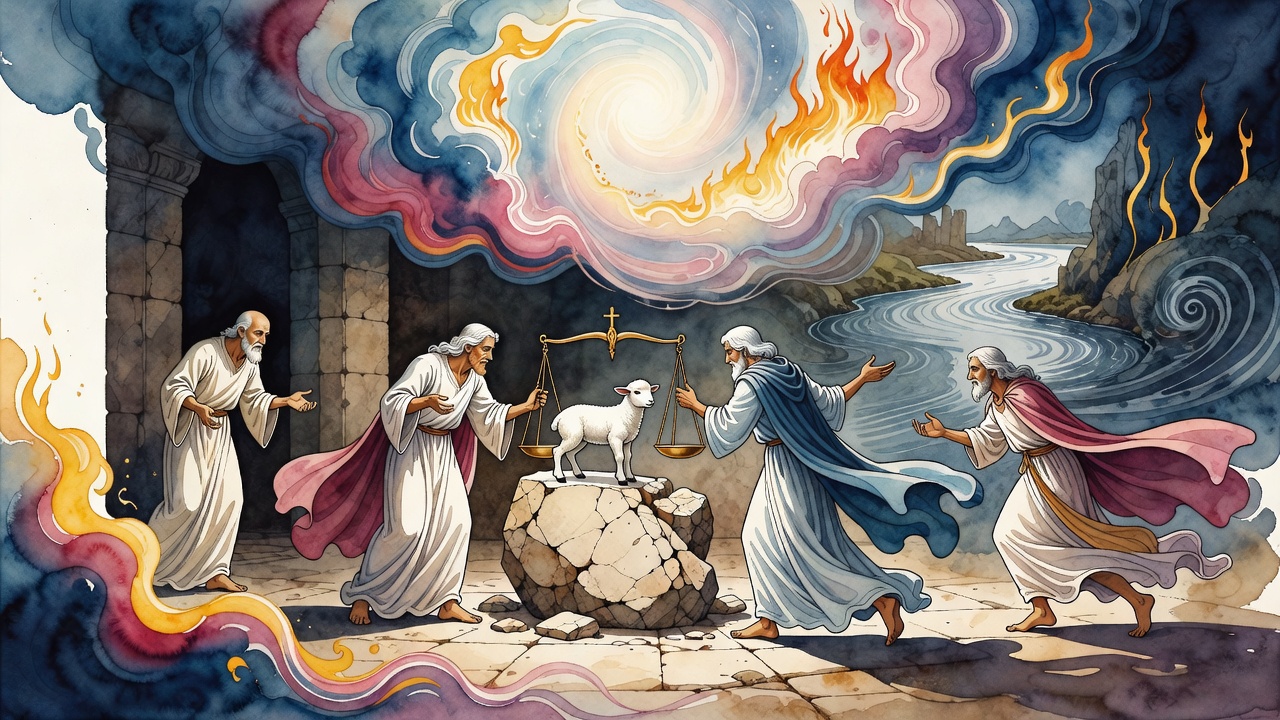
When God gave the Torah at Sinai, the Israelites did not simply accept it freely. According to Shabbat 88a, Rabbi Avdimi bar Hama bar Hasa taught that God uprooted Mount Sinai and ...
"Many peoples have afflicted me from my youth" (Psalm 129:1). The Assembly of Israel, the collective voice of the nation, says this as a Song of Ascents, sung while ascending to th...
"And it came to pass at that time that Judah went down" (Genesis 38:1). The rabbis heard in "went down" more than geography. Judah left his brothers, married a Canaanite woman, and...
R. Yehudah b. Betheira says: It is written (Exodus 6:9) "And they would not hearken to Moses (as to G–d's delivering them), for shortness of spirit, etc." Now is there anyone who i...
"And you, raise your staff": Ten miracles were performed for Israel at the sea: The waters were split and became like a dome, viz. (Habakkuk 3:14) "You split (the sea) for his trib...
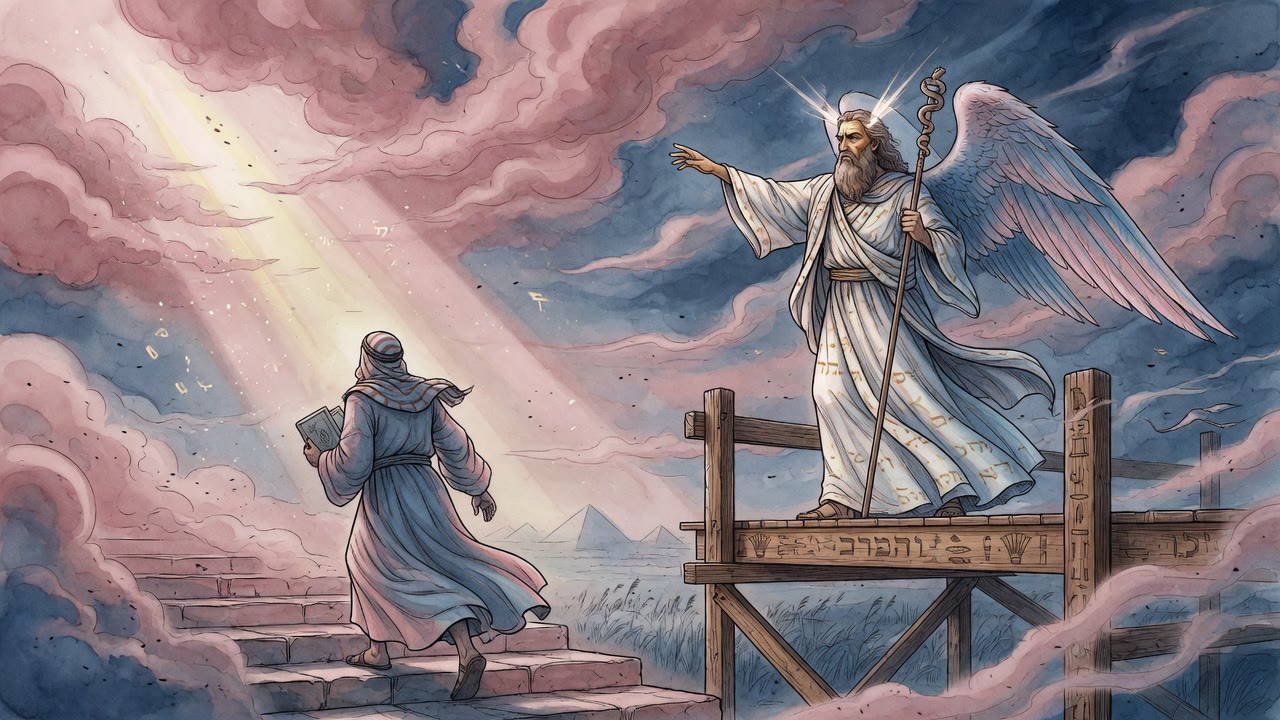
When Moses ascended to heaven to receive the Torah, the angels were furious. According to Shabbat 88b, they confronted God directly: "What is a human being doing among us?" God tol...
"Have we not all one Father? Did not one God create us?" (Malachi 2:10). Judah approaches Joseph, who is not yet revealed as his brother. And identifies his family: "We, your twelv...
After forty days on Sinai, Moses came down with the two tablets of testimony in his hand, and something had happened to his face. The Torah's Hebrew says karan, literally, his face...
It is a small verse, easy to read past, but Targum Pseudo-Jonathan on (Exodus 35:1) marks a turning point. Moses gathers all the congregation of the sons of Israel, and says to the...
The Torah speaks "to Moses and to Aaron", in that order. Moses first, Aaron second. A natural reading would assume this reflects a hierarchy: Moses is the greater, Aaron the lesser...
The princess opens the basket. She does not find a quiet, sleeping infant. She finds a crying baby. "And she opened, and saw the child, and, behold, the babe wept; and she had comp...
Here is one of the most extraordinary expansions in all of Targum Pseudo-Jonathan. The biblical Hebrew says only that Moses took the rod of God in his hand. The Aramaic adds a cosm...
After the slaves refuse to hear him, Moses turns to God with a new version of his old protest. Targum Pseudo-Jonathan preserves the logic: Behold, the sons of Israel do not hearken...
Here is one of the most tender footnotes in all of Targum Pseudo-Jonathan. Aharon lifts his hand, the frogs swarm up. And the meturgeman pauses to explain why it is Aharon, not Mos...
Moses's reply to Pharaoh's death-threat is magnificently calm. And the Targum reveals why. "Thou hast spoken fairly. While I was dwelling in Midian, it was told me in a word from b...
Moses almost never loses his temper in the written text, but on this night he does. Targum Pseudo-Jonathan on (Exodus 11:8) describes him warning Pharaoh that the day is coming whe...
The familiar picture has Moses and Aaron striding confidently into Pharaoh's court, ready to unleash divine power. But according to tradition, there was a crucial pep talk from God...
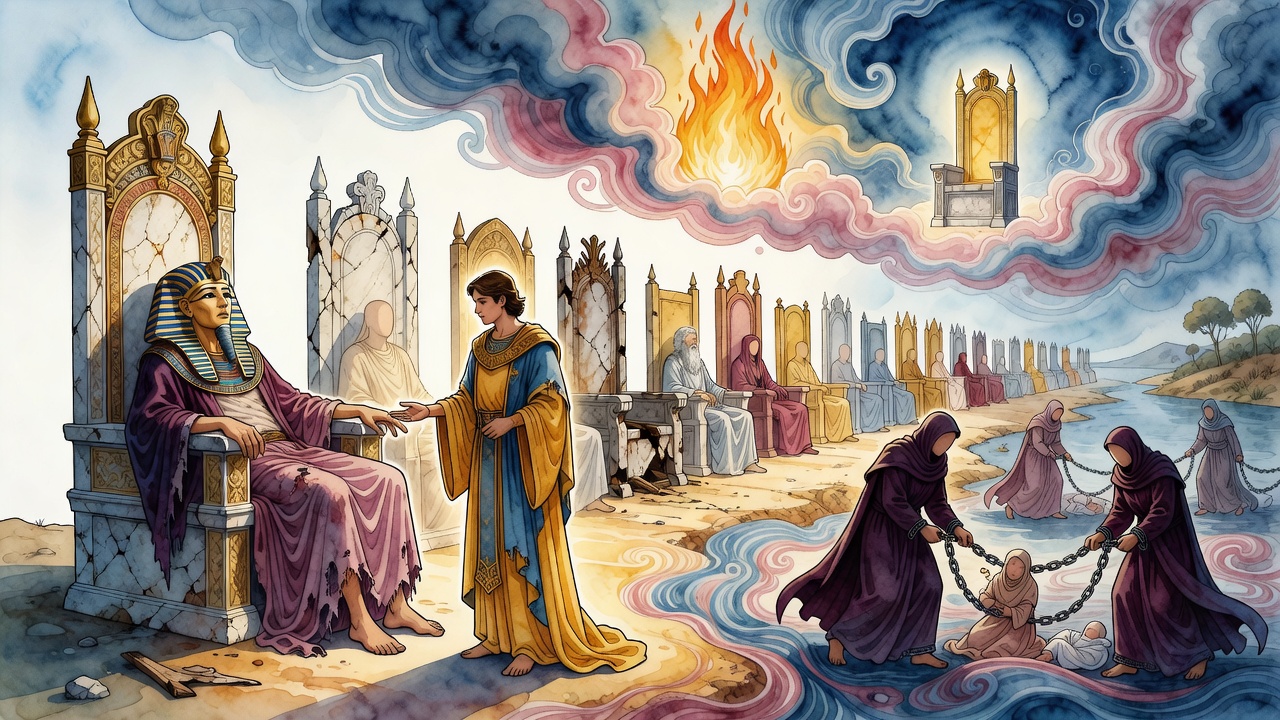
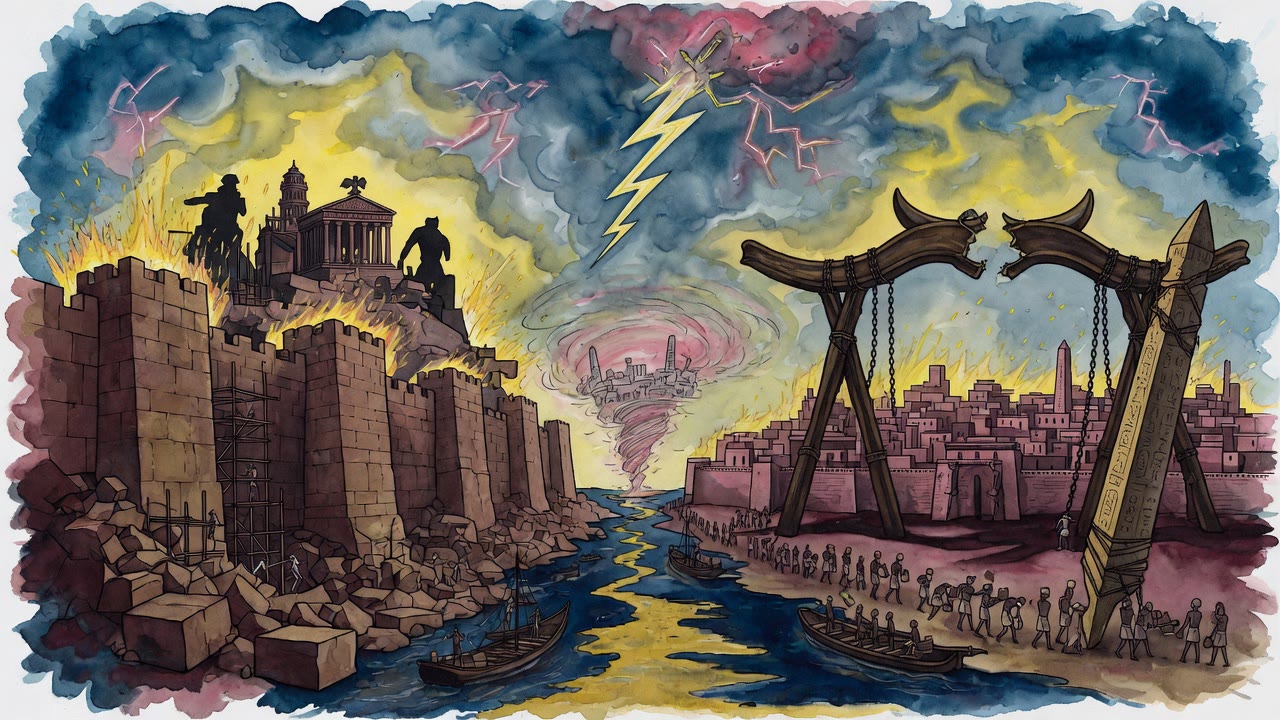
The familiar story centers on the Exodus, the parting of the Red Sea, the dramatic escape from slavery. But what about the Egyptians left behind? It wasn't just a simple case of "p...
Rabbi Nachman of Breslov taught that the root cause of exile is a lack of faith. And the cure for exile is the Land of Israel. The connection is not sentimental. It is structural. ...
R. Elazar says: after she parted from him with a ma'amar (i.e., by word of mouth). For when the L–rd said to Moses: Go and take My people, the children of Israel, out of Egypt, viz...
The timeline is what makes the sin unbearable. Targum Pseudo-Jonathan preserves God's charge with its full sting: "Quickly have they declined from the way which I taught them in Si...
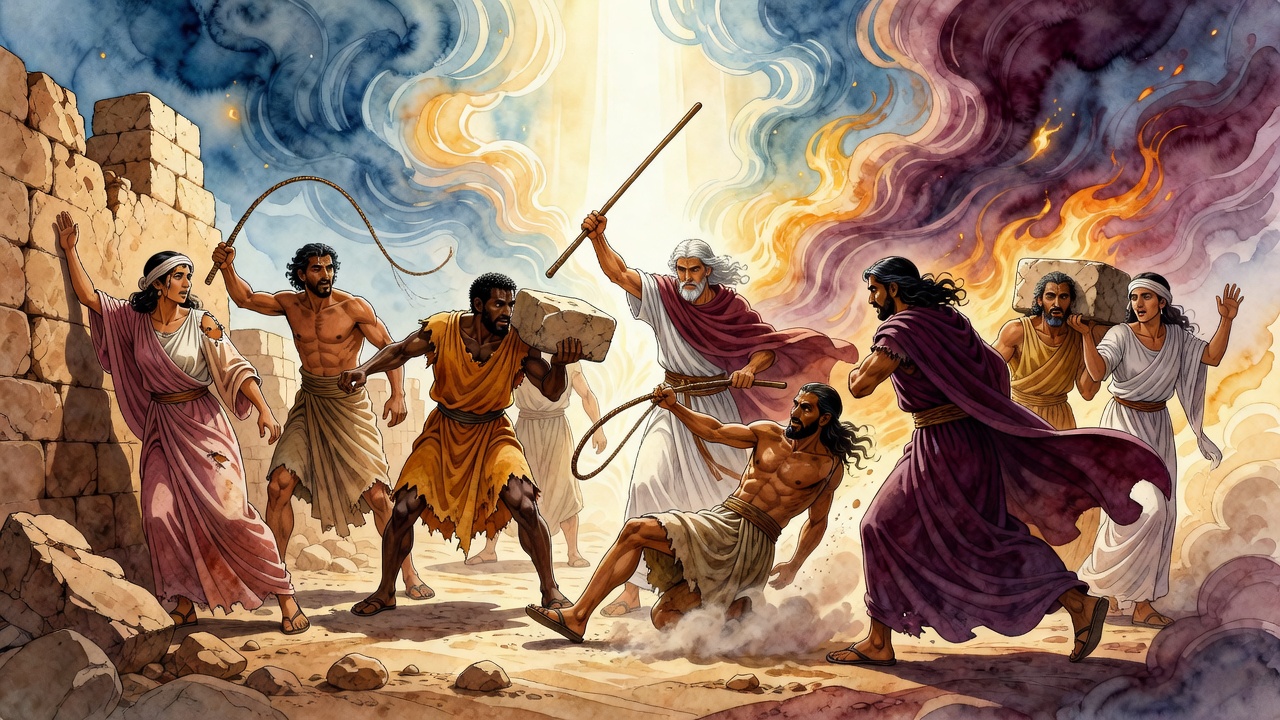
Our story begins in ancient Egypt, where the Israelites are flourishing, a little too flourishing for the liking of the Pharaoh. He sees their growing numbers as a threat, and so, ...
It's all there in the book of Exodus, chapter 7, verse 9: "When Pharaoh will speak to you, saying: Provide a wonder for you; then you shall say to Aaron: Take your staff, and cast ...
The Torah tells us about such a person: Moses. When he descended from Mount Sinai after those momentous forty days and nights, he was… different. The text says his body was bathed ...
The Targum Pseudo-Jonathan captures Jethro's theological breakthrough in one line: "Now have I known that the Lord is stronger than all powers; for by the very thing by which the M...
Moses wore a veil over his face after Sinai, because the shining of his skin frightened the people (Exodus 34:30). But there was one moment he always took it off. Targum Pseudo-Jon...
Three months. That is how long a mother can pretend her baby does not cry. "But she could conceal him no longer, for the Mizraee had become aware of him. And she took an ark of pap...
The Targum Pseudo-Jonathan on (Exodus 13:19) tells a story the Hebrew only hints at. Moses, on the night Israel leaves Egypt, is not packing or leading. He is recovering a body. Jo...
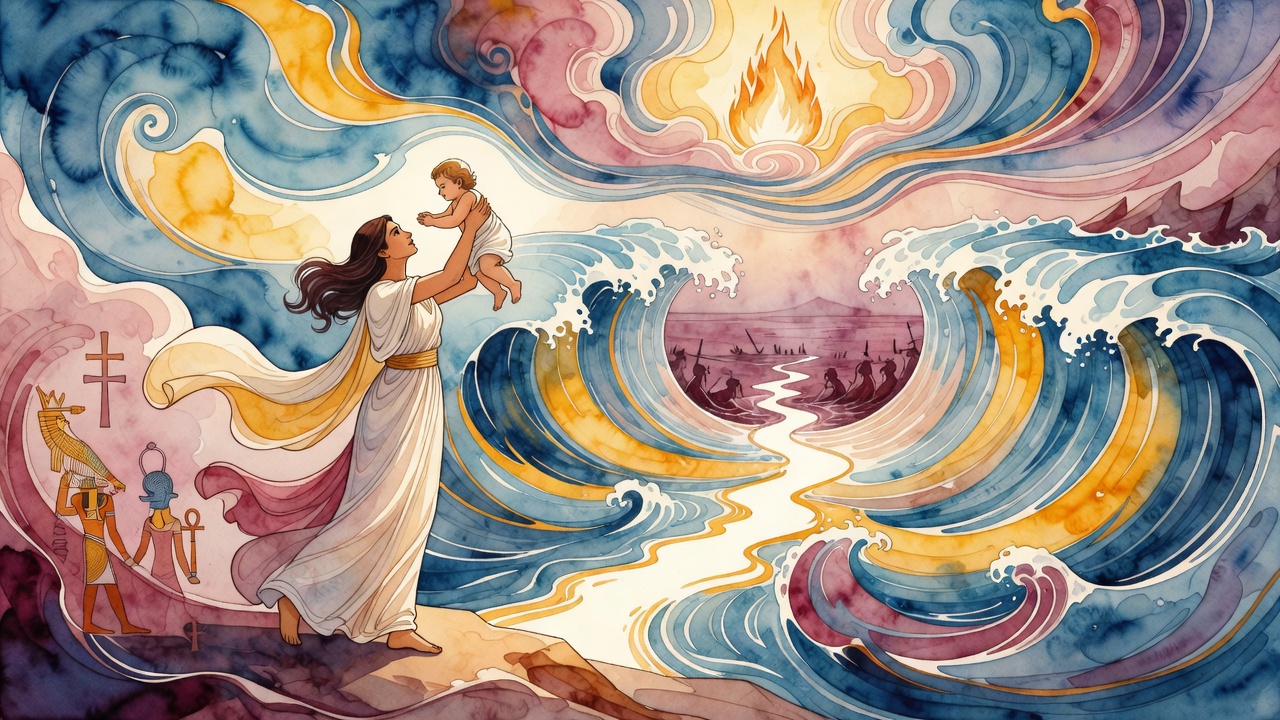
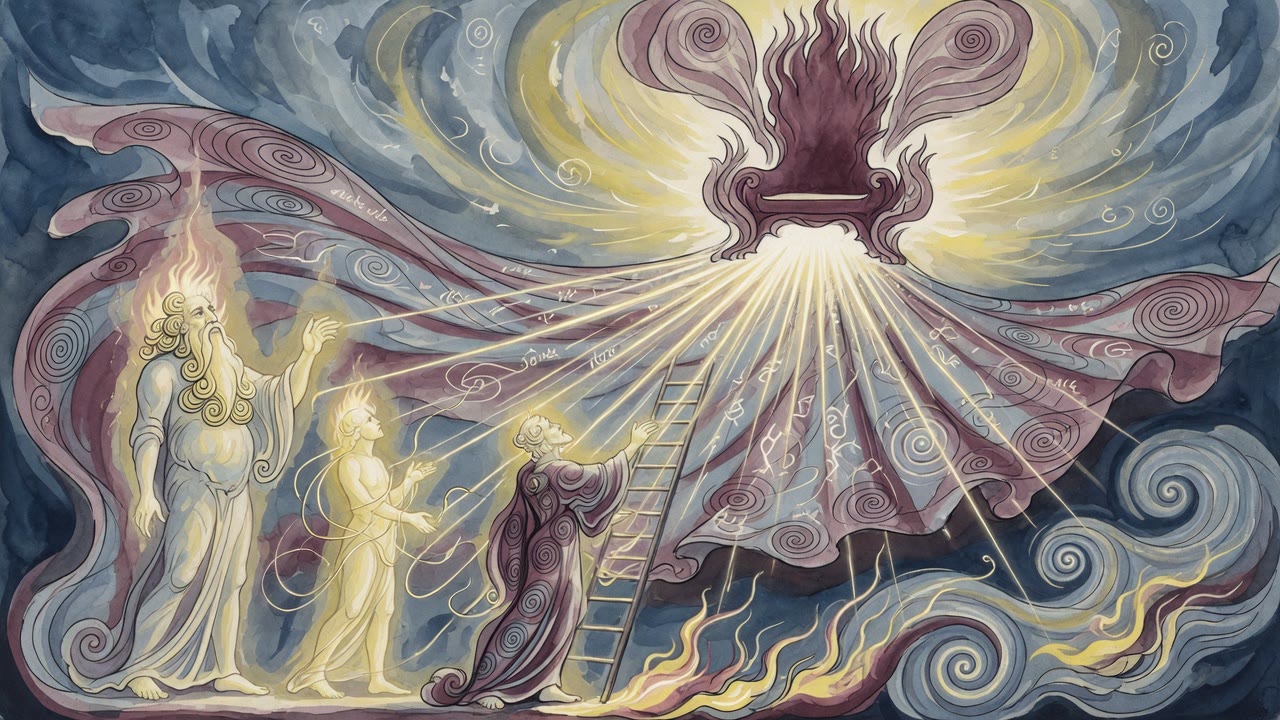
The Targum Pseudo-Jonathan on (Exodus 14:21) loads Moses's staff with cosmic freight. This is not a shepherd's walking stick. It is the great and glorious rod which was created at ...
The Targum Pseudo-Jonathan sharpens Jethro's warning with a realism the plain text softens: "Thou wilt verily wear thyself away. Aaron also, and his sons, and the elders of thy peo...
“It was during the days of Aḥashverosh; that [hu] Aḥashverosh who reigned from India to Kush, one hundred and twenty-seven provinces” (Esther 1:1). Hu [appears] five [times] for ev...
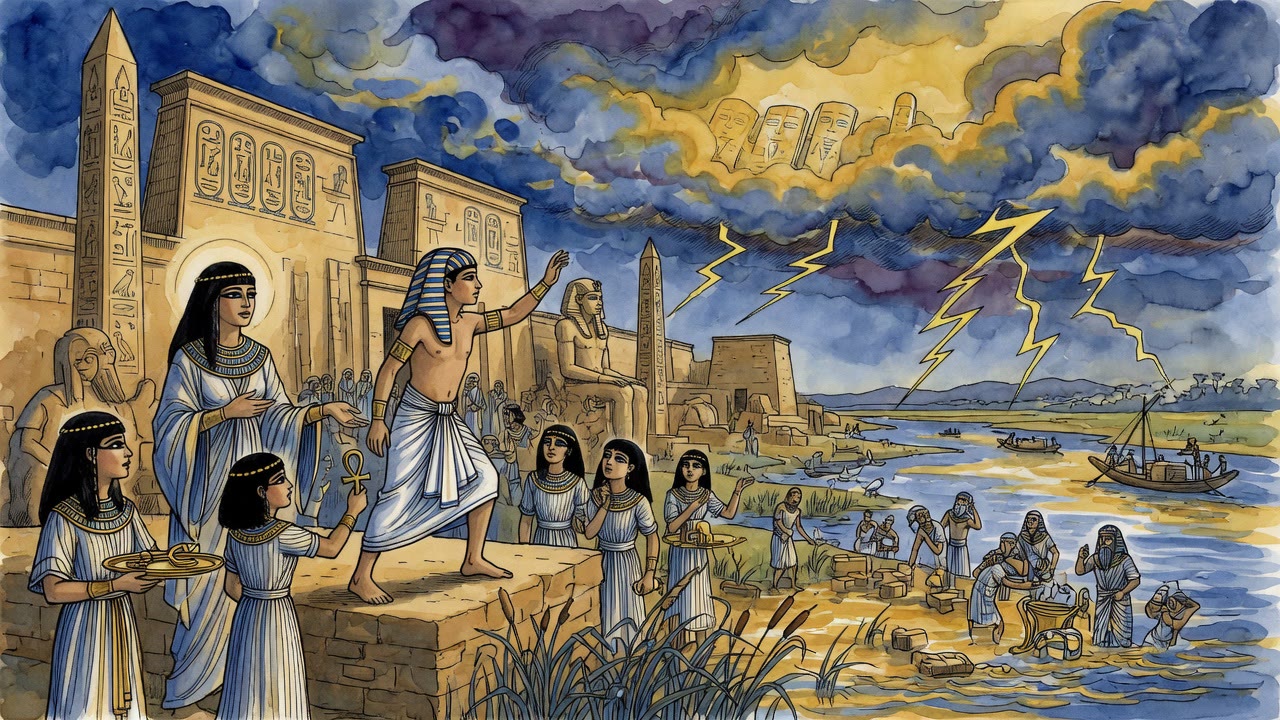
The scene: Pharaoh's birthday. A huge deal. He's not just any king, remember – according to Legends of the Jews, he fancied himself ruler of the entire world. The book, compiled by...
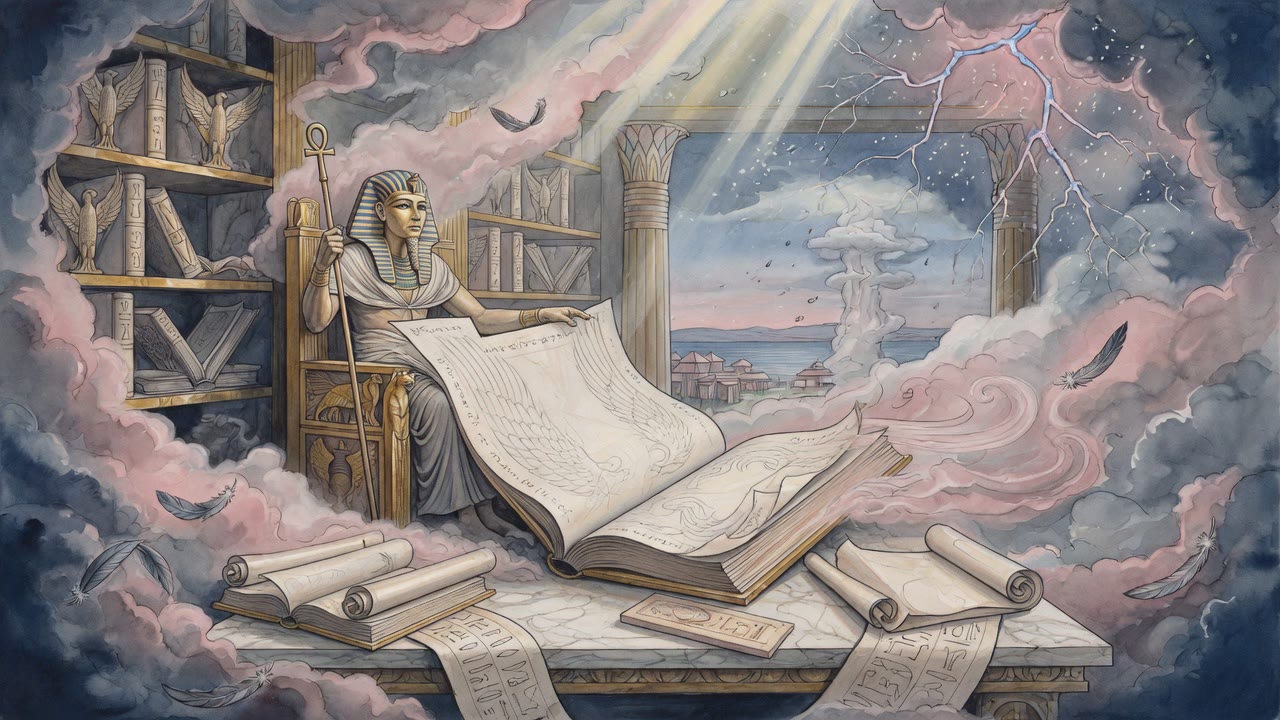
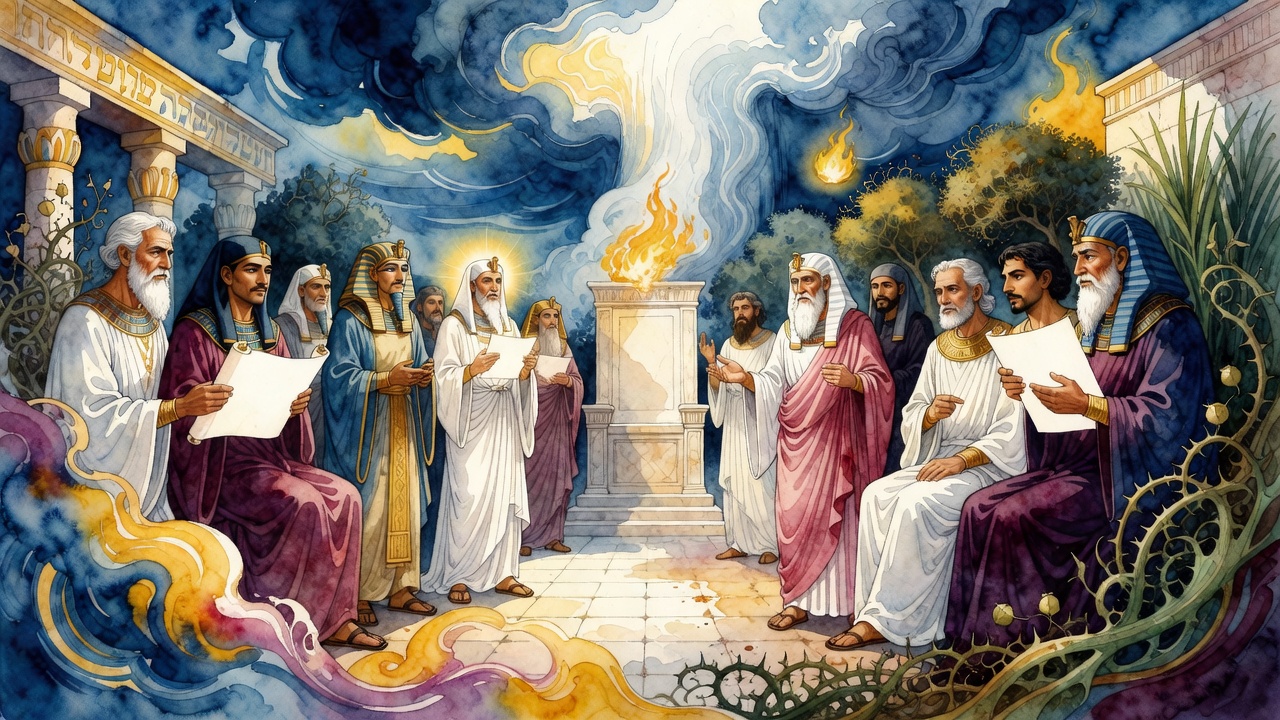
Can you picture it? Not just some dusty throne room, but a bustling hub of Egyptian power. The scene is almost comical – seventy secretaries, scribbling away, managing Pharaoh's co...
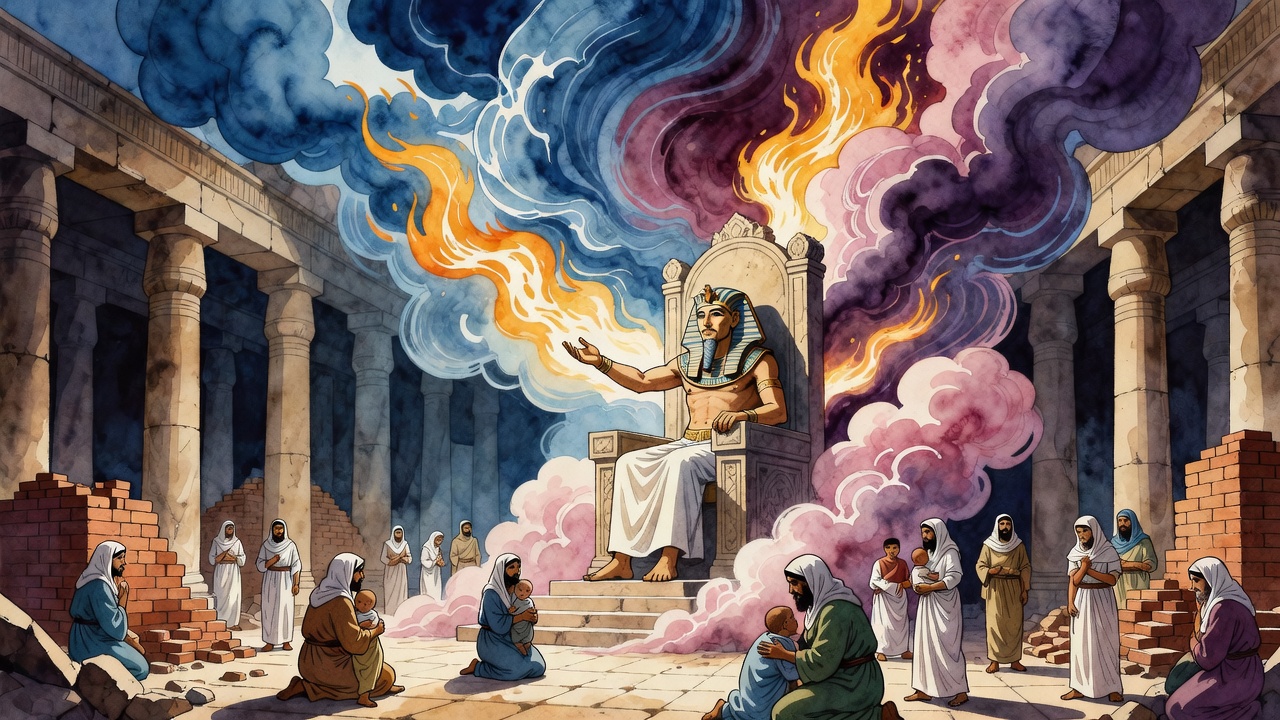
Legends of the Jews turns to Moses and Aaron Confront Pharaoh Face to Face. Two representatives of the enslaved children of Israel, standing before the most powerful man in the wor...
The consequences can be…well, let's just say they can be It centers on Miriam, Moses' sister, and her brother Aaron, the High Priest. They found themselves in hot water after speak...