1,809 texts · Page 18 of 38
Rabbi Meir takes the tradition further than either Rabbi Yossi or Rebbi. Even fetuses in their mothers' wombs, he declares, opened their mouths and chanted song before God at the R...
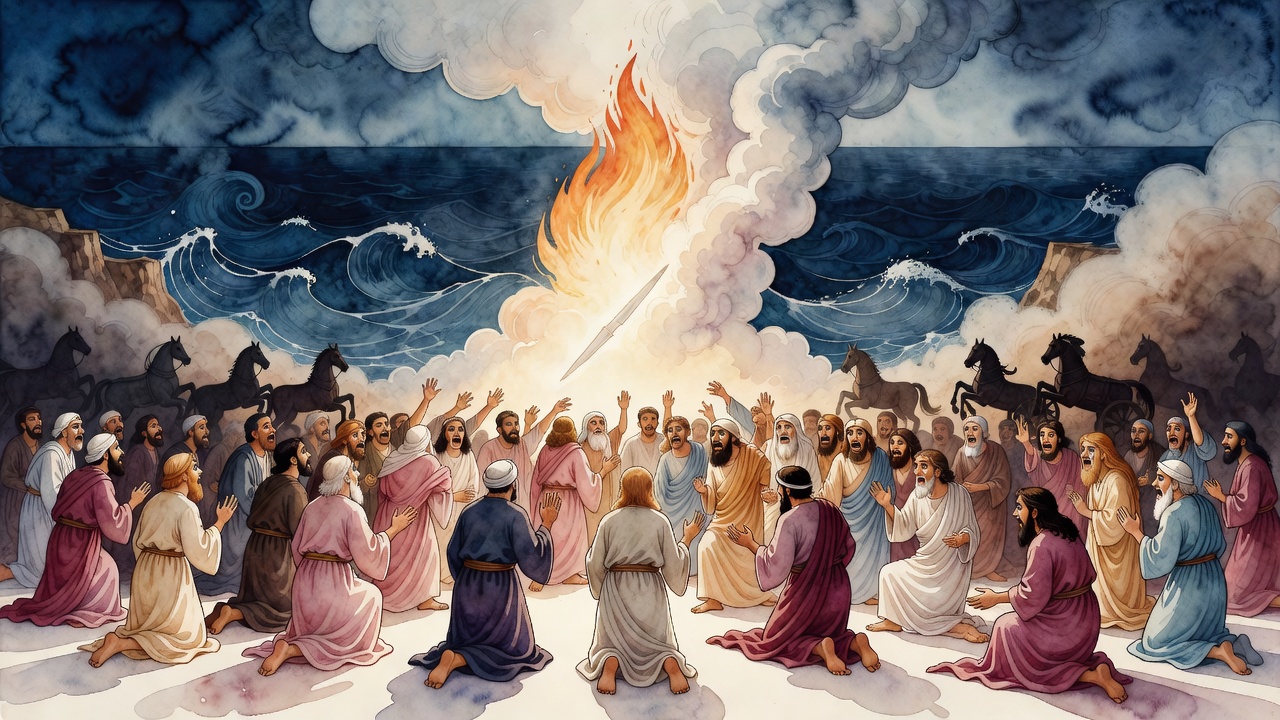
The Mekhilta offers a variant reading of "He is high on high" (Exodus 15:1) that relocates the mutual exaltation from Egypt to the Red Sea itself. In this version, the back-and-for...
Thus Sancheriv—With what he vaunted himself, punishment was exacted of him, viz. (II Kings 19:23) "Through your envoys you have blasphemed the L–rd, etc.", and (Ibid. 24) "It is I ...
An analogy: A king's son goes abroad—he goes after him and attends upon him. He goes to a different city—he goes after him and attends upon him. Thus with Israel. When they went do...
He revealed Himself to them as a rider, viz. (Ibid. 18:11) "And He mounted a cherub and flew, etc." He revealed Himself to them in mail and helmet, viz. (Isaiah 59:17) "He donned r...
"The L–rd is a man of war": Is it possible to say this (i.e., to refer to Him as "a man")? Is it not written (of His transcendent majesty) (Jeremiah 23:24) "Do I not fill heaven an...
All who help Israel, help, as it were, the Holy One Blessed be He, viz. (Judges 5:23) "Curse Meroz, said the angel of the L–rd. Curse bitterly its dwellers. For they came not to th...
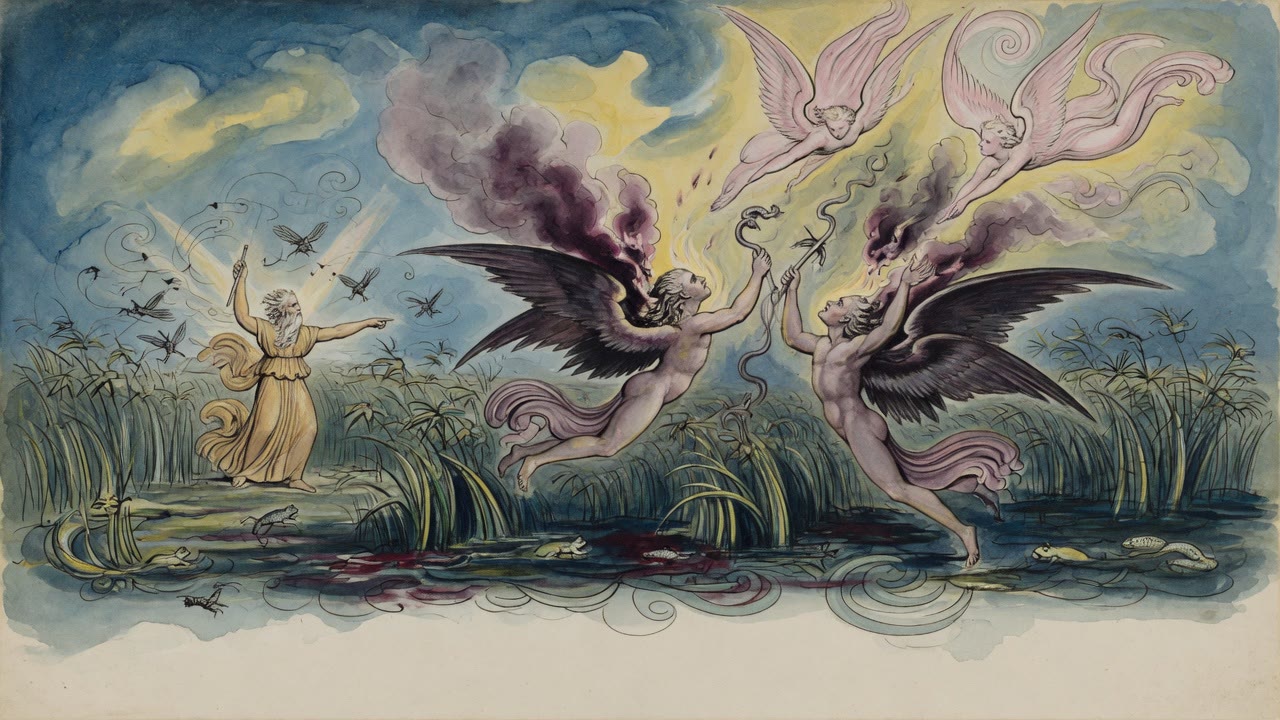
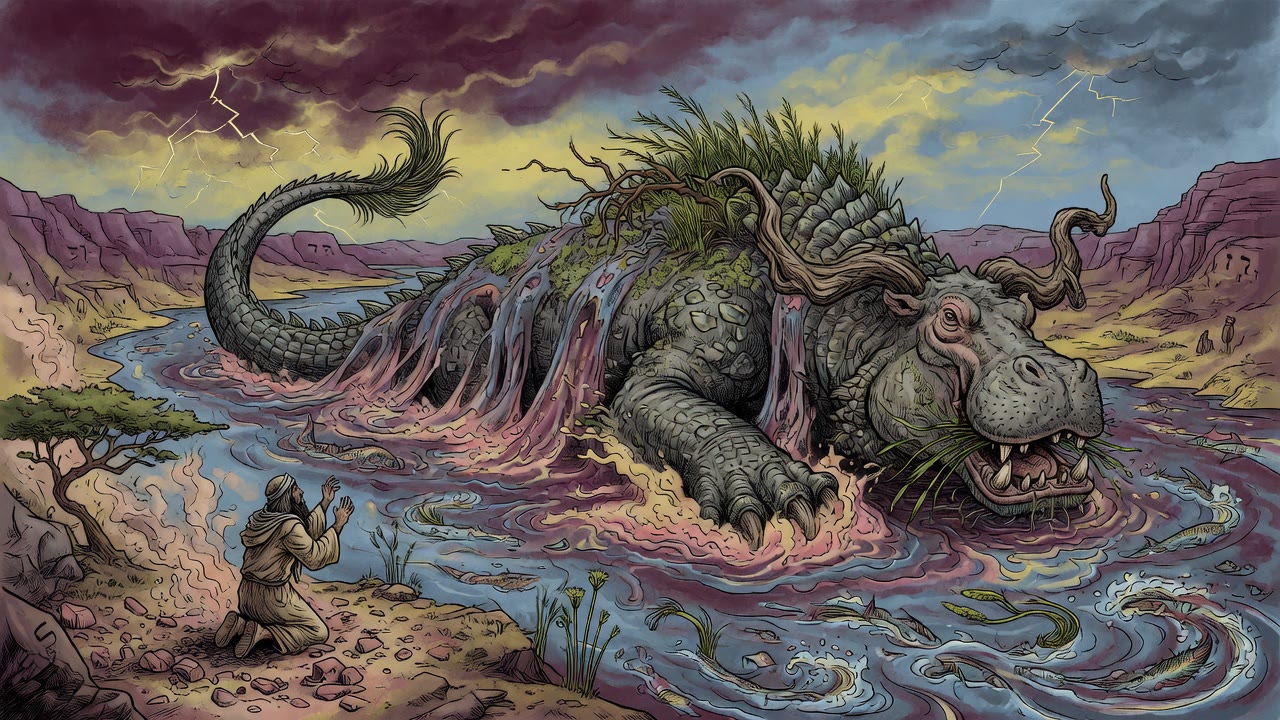
The Mekhilta de-Rabbi Ishmael continues its catalog of enemies who rose against Israel and were struck down by heaven, turning now to one of the most dramatic military disasters in...
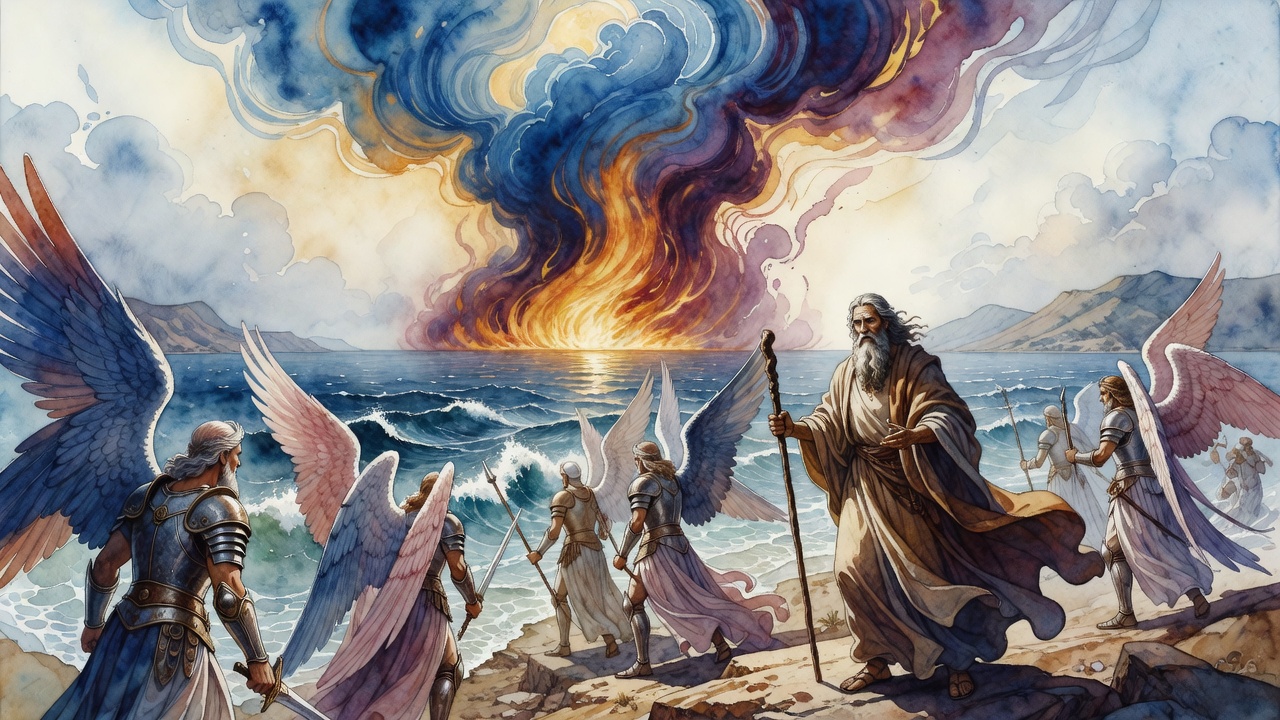
The Mekhilta lifts the declaration "Who is like You among the mighty" out of the earthly realm and directs it upward — toward the angelic hosts who minister before God on high. "Wh...
Rabbi Yossi and Rabbi Shimon used a vivid and startling metaphor to describe how the Israelites ate in the wilderness. They said Israel "stuffed themselves like horses" when the ma...
The Mekhilta completes its trilogy of faith-based miracles with the blood of the Passover lamb. God told the Israelites to slaughter a lamb and place its blood on their doorposts, ...
R. Elazar Homadai says: in a land of foreign (gods, i.e., idolatry). Moses said: Since the whole world serves idolatry, I will serve Him who spoke and brought the (whole) world int...
Rebbi — Rabbi Yehuda HaNasi, the compiler of the Mishnah (the earliest code of rabbinic law) — declared that circumcision was so great that all of Moses' accumulated merits could n...
R. Yossi says: G–d forbid that tzaddikim (a righteous person) (the righteous) should be lax in circumcision for even a short while, but Moses expounded: Shall he circumcise (his so...
(Exodus 18:4) "and the name of the second, 'Eliezer,' for (Moses said: 'The G–d of (Elokei) my father was my help (ezri), and He saved me from the 'sword of Pharaoh.'" R. Yehoshua ...
They said: This thing was expounded by R. Tzaddok, viz.: When R. Gamliel made a feast for the sages, all the sages of Israel were seated before him and R. Gamliel arose and served ...
God made a statement to Israel that the Mekhilta reads as one of the most intimate promises in Scripture: "And you shall be unto Me." Not unto an angel. Not unto an intermediary. U...
(Ibid. 4) "You shall not make for yourself an idol (lit., "a carving")": I might think that he may not make one that projects but he may make one that is flat. It is, therefore, wr...
(Ibid.) "And they stood from afar": outside of twelve mil (the distance of the Israelite encampment). We are hereby apprised that Israel receded twelve mil and returned twelve mil ...
(Devarim 5:26) "Would that this heart of theirsh (were in them to fear Me and to keep all of My mitzvot (commandments) all of the days so that it be good for them and for their chi...
Rabbi Yishmael read the commandment against idolatry with a scope that went far beyond golden calves and carved statues. When the Torah says "You shall not make unto Me gods of sil...
The Torah prohibits "gods of silver and gods of gold" (Exodus 20:20). But what exactly do these phrases add to the prohibition against idolatry? After all, the commandment against ...
If the prohibition against "gods of gold" addresses making extra cherubs beyond the commanded two, what does the additional prohibition against "gods of silver" teach? After all, t...
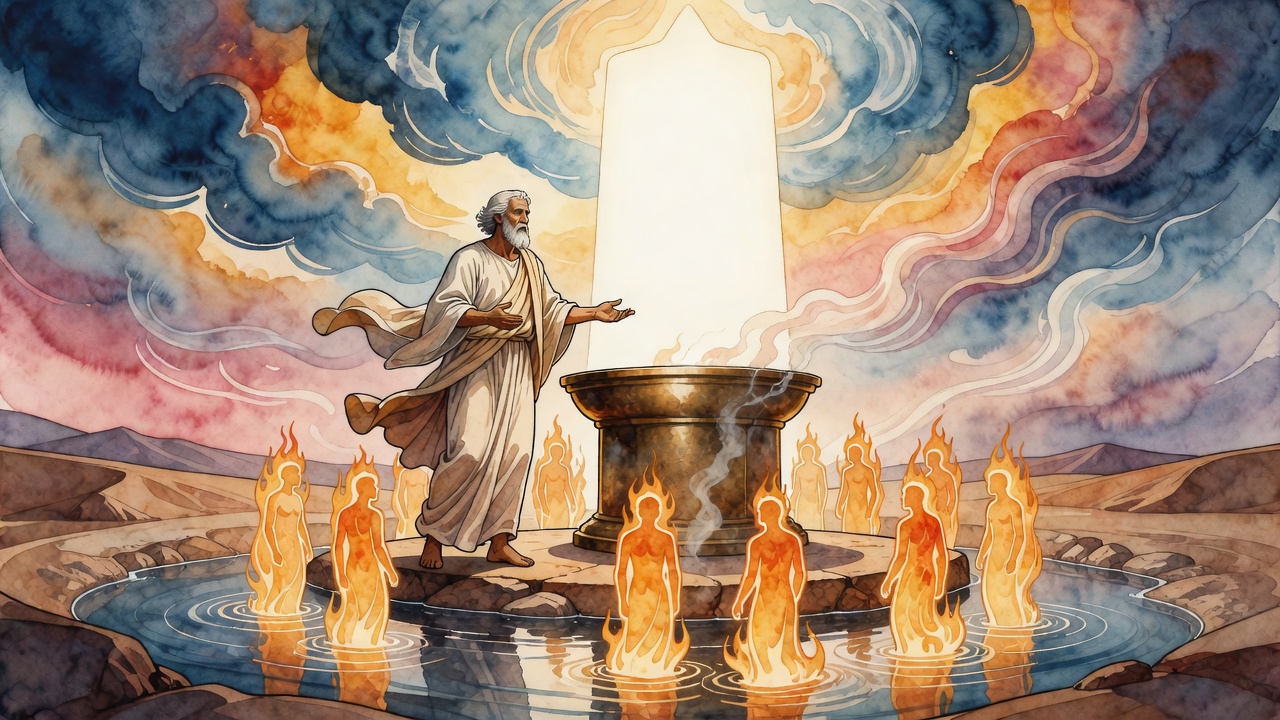
The Torah permits the making of cherubim — golden winged figures — atop the Ark of the Covenant in the Holy of Holies (Exodus 25:18). These are not merely decorative. They are the ...
R. Yishmael says: Come and see the mercies of the One who spoke and brought the world into being, for flesh and blood. For a man acquires himself with money from the hands of Heave...
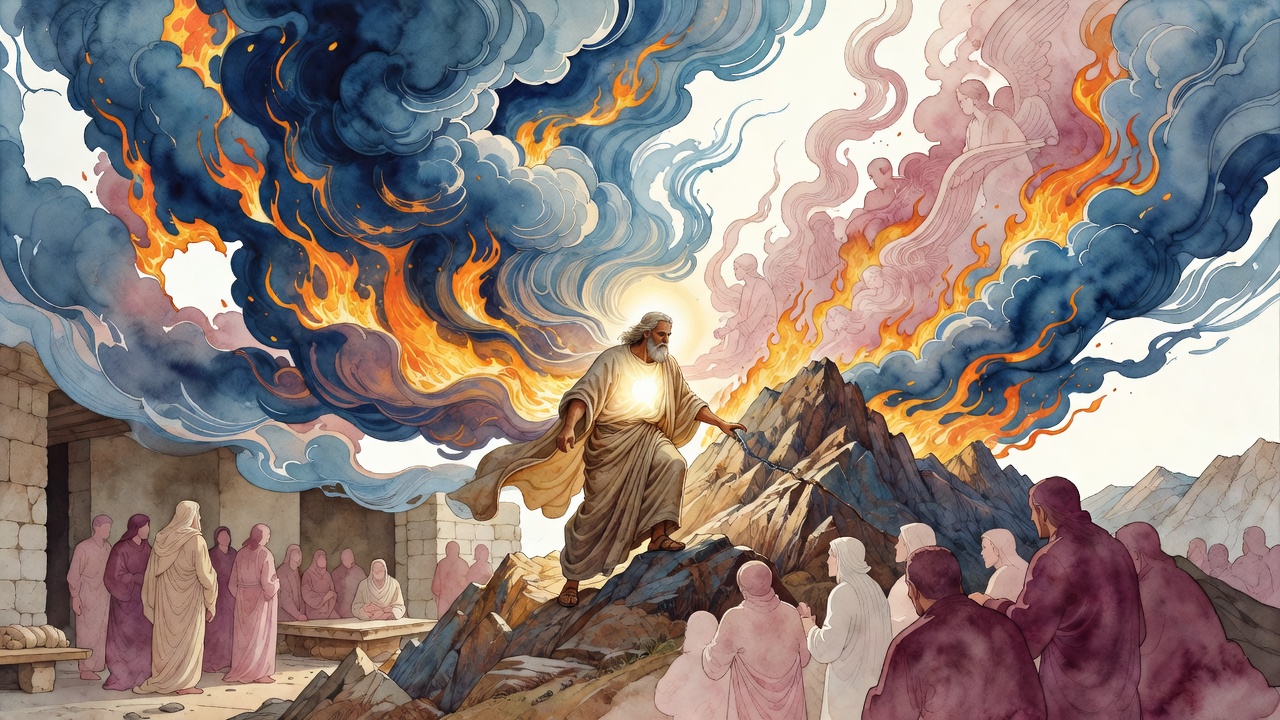
The opening of Mekhilta Tractate Shabbata draws attention to the singular way God communicated with Moses. The verse states (Exodus 30:11): "And the Lord spoke to Moses." The Mekhi...
The prophet Isaiah did. And his vision, described in the Book of Isaiah (6:1-8), has shaped Jewish understandings of God, heaven, and the very nature of holiness for millennia. Ima...
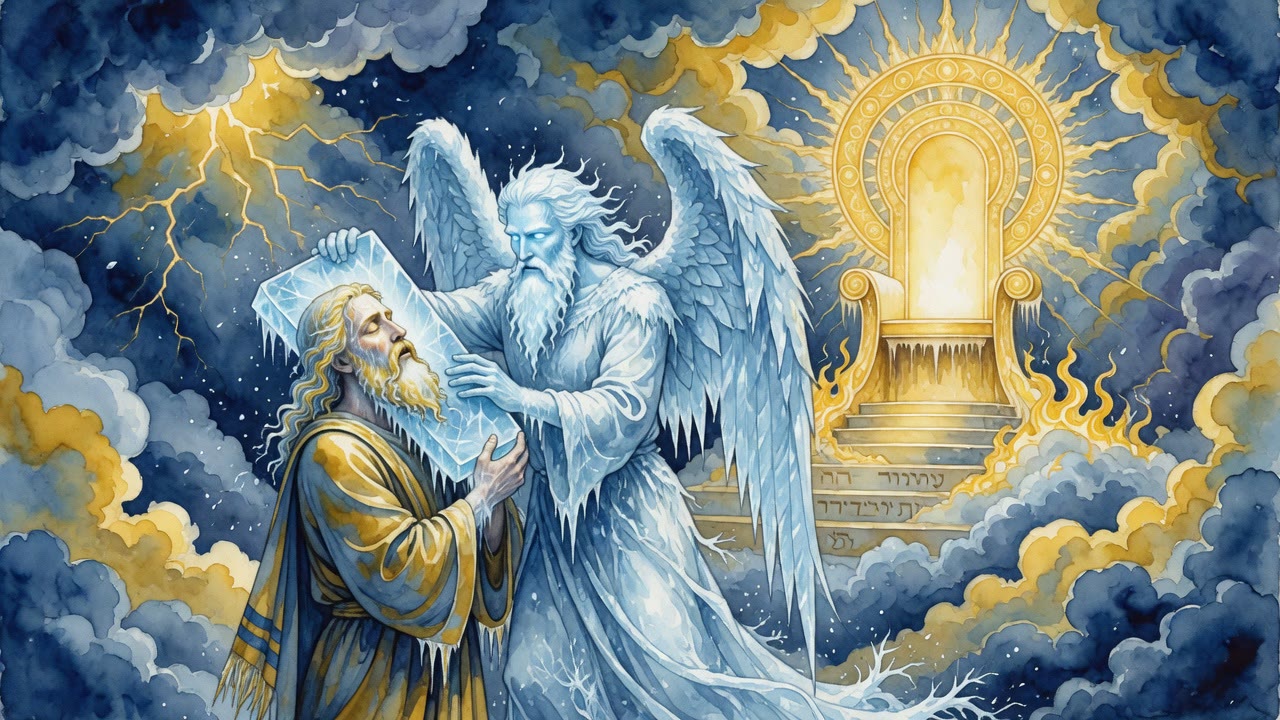
The prophet Daniel had such a dream. It's recorded in the Book of Daniel, and it's a vision that’s puzzled and inspired readers for centuries. "As I looked on," Daniel recounts, "t...
Jewish mystical tradition offers us some pretty imagery. We're talking about God's Throne of Glory – not just any chair, but a cosmic command center. A vision of ultimate authority...
Jewish tradition is rich with visions of the future, of the Olam Ha-Ba, the World to Come. And some of those visions are, well, breathtaking. Imagine this: a day when the very thro...
We often think of God as formless, beyond human comprehension, but our tradition is full of rich, imaginative descriptions. And one of the most striking is the image of God wearing...
Jewish tradition offers a stunningly beautiful image: Our prayers, all of them, rise up and become a crown for God. The image comes to us from several sources, each adding its own ...
Jewish tradition has some fascinating, and surprisingly relatable, ideas. One captivating story, found in Midrash (rabbinic interpretive commentary) Aleph Bet (5:8-9), suggests tha...
Where is God? Have you ever stopped to truly consider that question? It seems simple, almost childlike. But the deeper you delve, the more mysterious it becomes. The mystics of our...
Jewish tradition has a powerful and beautiful answer: the Ruah ha-Kodesh, the Holy Spirit. According to tradition, before the Throne of Glory, before angels, before even the stars ...
We often picture a grand, sweeping gesture, a divine command echoing through the void. But what if it was something… gentler? Something more akin to a breath? The mystics certainly...
Jewish tradition speaks of such things. Specifically, it tells us about three keys. Not physical keys, of course, but metaphorical ones – representing ultimate control over the ver...
The Torah actually grapples with this very question, and the answer, as you might expect, is layered and fascinating. : Moses, standing before the burning bush, is tasked with lead...
The story I want to share with you comes from the Talmud and it’s about Rabbi Ishmael ben Elisha, the High Priest, and a truly extraordinary encounter. Imagine this: Rabbi Ishmael ...
Jewish tradition paints a picture of a voice so powerful, so overwhelming, that it's almost beyond comprehension. We're told that God saved His full voice for a pivotal moment in h...
It’s a question that’s haunted mystics and theologians for centuries. And while Jewish tradition generally holds that no one can see God and live, there are whispers and echoes in ...
Jewish tradition, in its wonderfully audacious way, even imagines God putting on a tallit and tefillin (leather phylacteries worn during prayer). Yes, you read that right. God, wra...
We often picture God as all-powerful, creating worlds and intervening in human affairs. But did you know there's a tradition that imagines God as… a Torah scholar? It’s true! The B...
We, with our messy emotions and tear-streaked faces, tend to project a lot onto the Divine. But Jewish tradition actually gives us some incredibly vivid, even surreal, images of Go...
Jewish tradition dares to imagine a God who weeps. And perhaps nowhere is that more powerfully depicted than in the legends surrounding the destruction of the Temple in Jerusalem. ...
The destruction of the Temple in Jerusalem – twice – is one of the most profound traumas in Jewish history. It’s not just about losing a building; it’s about losing a connection, a...
There was a time, a very dark time, when God Himself considered doing just that. Imagine the scene: The Temple in Jerusalem lies in ruins. The people of Israel are in exile, weepin...
Jewish tradition has a powerful way of describing this feeling: the wandering of the Shekhinah (the Divine Presence). The Shekhinah, often translated as "divine presence," is under...