1,435 texts · Page 3 of 30
Continue browsing kabbalah texts from Jewish source collections. Page 3 includes additional passages with source attribution, category metadata, and links to individual text pages.
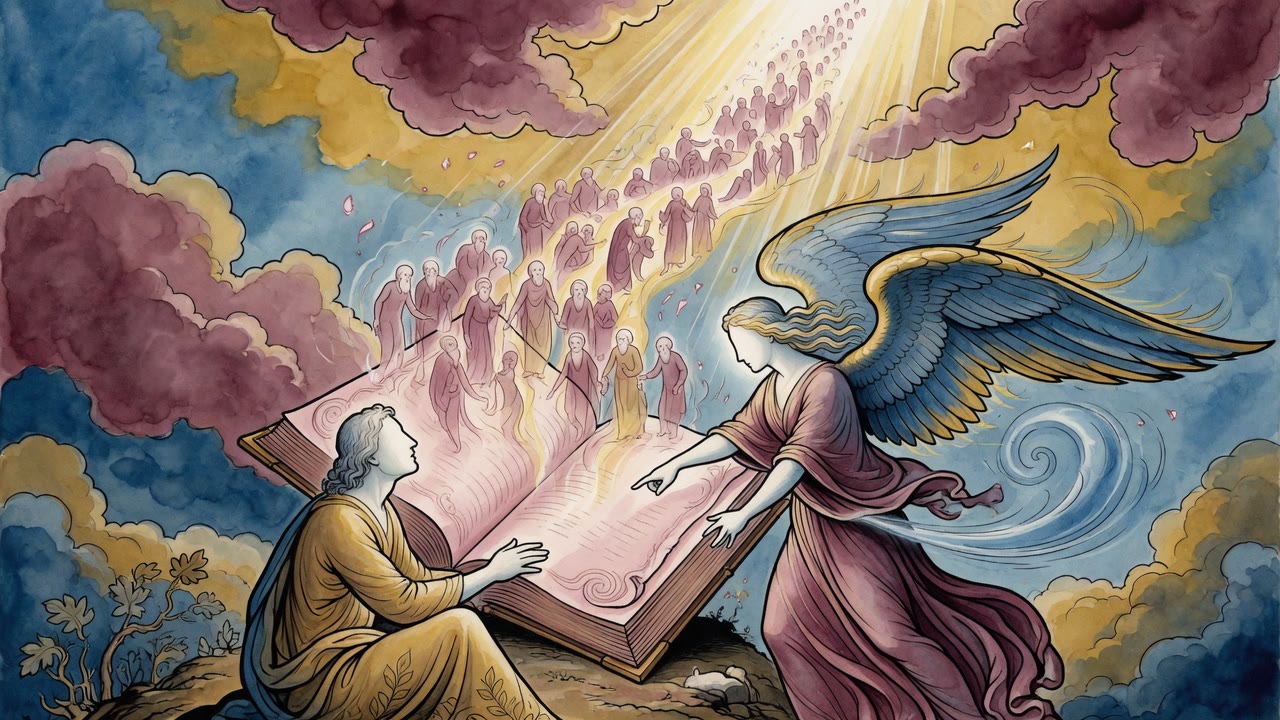
They're about to begin a mission to rebuild the world, and the first order of business? Dividing the land. But not just any land – In Legends of the Jews, a monumental work by Rabb...
It wasn't exactly a smooth transition. to a story from Legends of the Jews by Louis Ginzberg, a collection that pieces together fascinating narratives from the Talmud, Midrash, and...
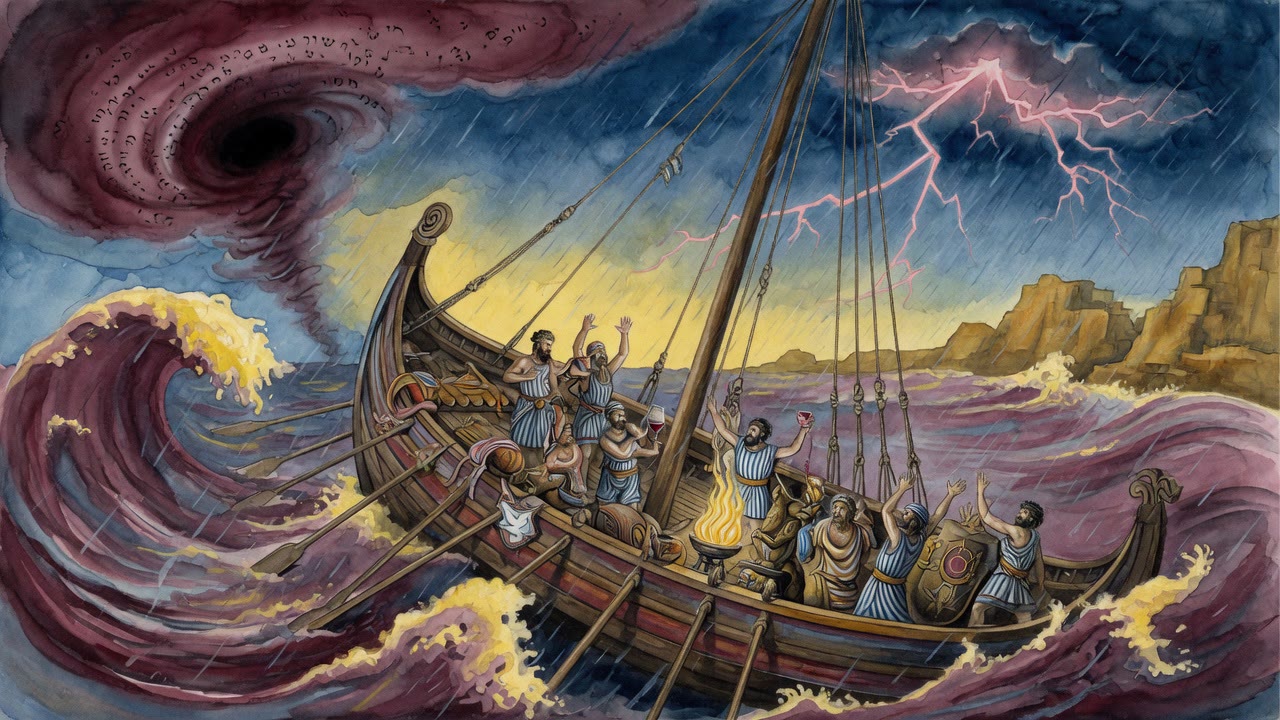
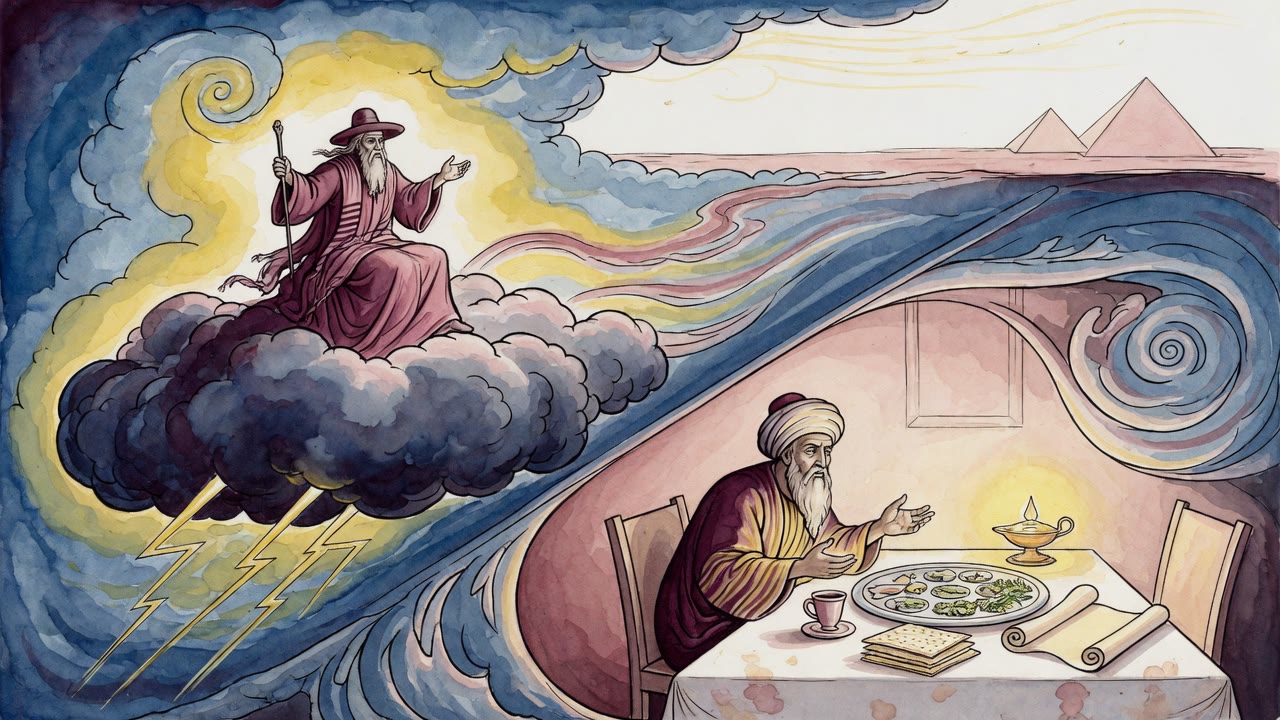
He does exactly what God tells him to do: he speaks to the sea. Easy enough. Except, the sea talks back. Not in a friendly, "Hey, how can I help you out?" kind of way. Oh no. Accor...
It wasn't just wisdom, my friends; it was a little help from some… unusual sources. He had a magnificent eagle, his own personal aerial chariot, if you will. This wasn't just any e...
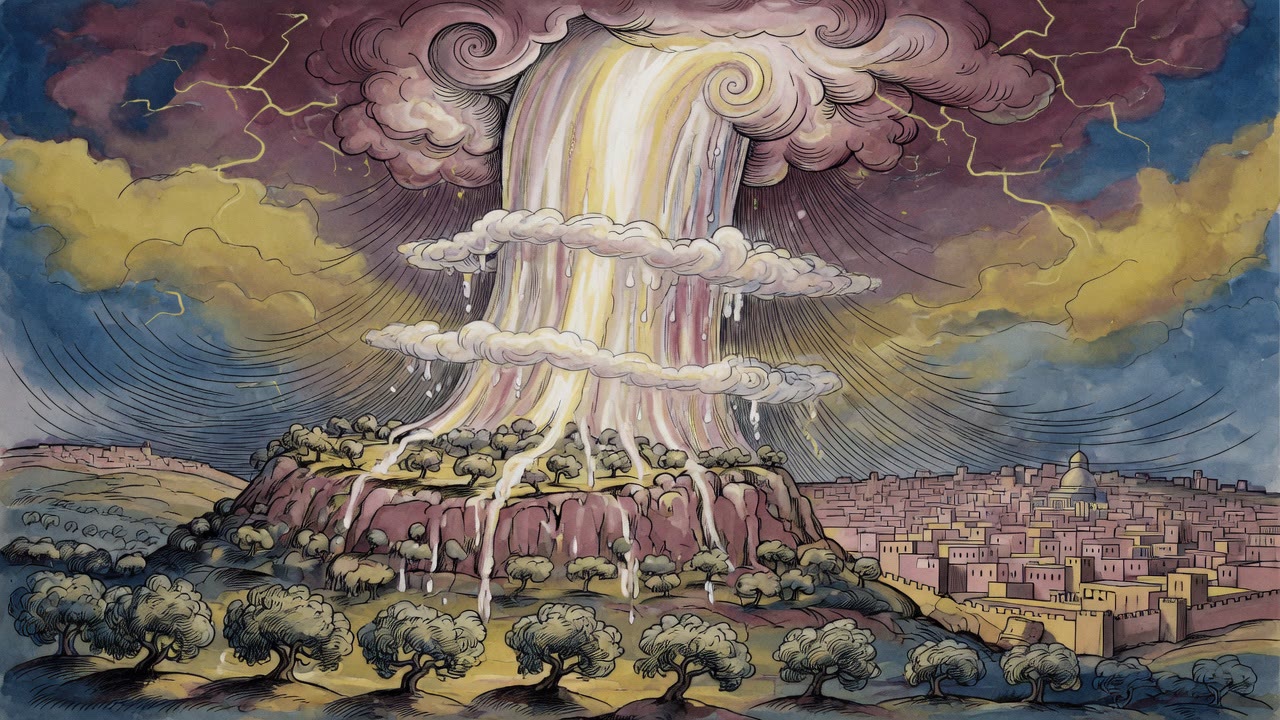
His story doesn't end there. According to tradition, Elijah didn't die. Instead, he ascended to heaven in a whirlwind, riding a chariot of fire (2 (Kings 2:1)1). And that's where t...
That was life for the prophet Jeremiah. Jeremiah's debut on the public stage happened during the reign of Josiah. He didn't mince words. He went right into the streets and declared...
Legends of the Jews turns to The Grueling March to Babylon Along the Euphrates. Then, something remarkable happens. They pass through the city of Bari. Now, the people of Bari, see...
He tackles this head-on in his work, Against Apion, a passionate defense of Judaism against its detractors. And in this section, Josephus gets straight to the point: he's had enoug...
Josephus, the first-century Romano-Jewish historian, grappled with this very question when trying to explain why the Jewish people weren't as well-known to the Greeks as, say, the ...
Herod sent his sons to Rome for an education. They came home polished, handsome, and walking straight into the deadliest family feud in Jewish royal history. Alexander and Aristobu...
Why the different guises? The Hasidic master Levi Yitzchak of Berditchev explains that God does not change, but rather it is those who perceive God who are different. God appears t...
The Jewish mystics had a powerful image for that kind of pain: the Shekhinah, the Divine Presence, weeping. It’s a radical idea, isn’t it? God, or at least this aspect of God, expe...
It's tied to Rosh ha-Shanah, the Jewish New Year. It's more than just eating apples and honey, you know? It's about something truly profound: the renewal of creation itself. Every ...
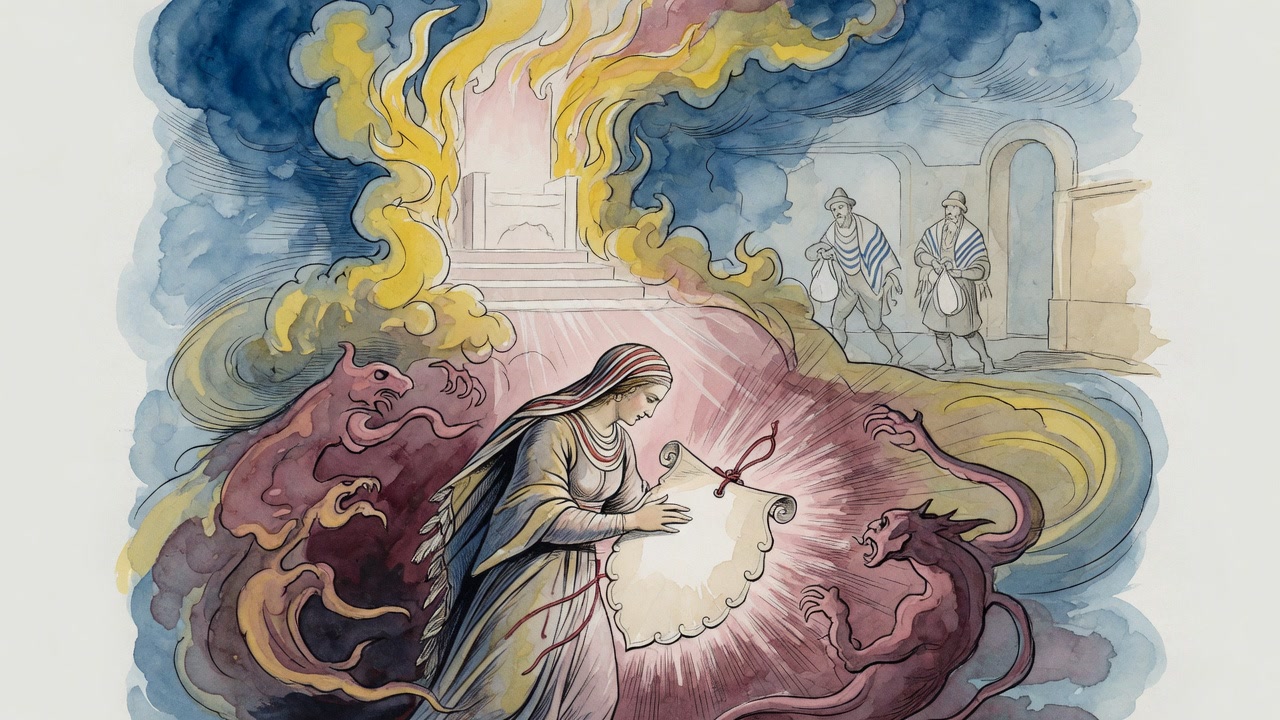
Zohar turns to The Chains Of The Messiah. Hebron, long ago. A city steeped in history, in faith, in the whispers of ancestors. And in this city lived Joseph, a man obsessed – in th...
It's a landscape of hidden meanings, a garden of secrets waiting to be unlocked. That's where Baal HaSulam, Rabbi Yehuda Leib Ashlag, comes in. Known for his ability to make even t...
That feeling, that sense of being a small part of something much, much bigger…it’s a very human experience. And it's a question that’s plagued thinkers for millennia: What is our r...
One of the most profound introductions to the Zohar comes from Baal HaSulam, Rabbi Yehuda Leib HaLevi Ashlag, a 20th-century Kabbalist known for making these complex ideas accessib...
One question that often pops up is about the nature of the soul. The Kabbalists, those masters of Jewish mystical thought, tell us something pretty : that the soul of a person is a...
It's precisely the question that Baal HaSulam, that great 20th-century Kabbalist, tackles head-on in his introduction to the Zohar. Specifically, in the third section of his introd...
The Zohar, that mystical cornerstone of Kabbalah, boldly declares that humanity is the CENTER of EVERYTHING. That all the upper worlds, this material world, everything… it was all ...
We all confront these questions, especially when it comes to something as massive as, well, existence itself. Why are we here? What's the point of it all? One fascinating approach,...
Some, particularly those who've distanced themselves from the yoke of Torah and mitzvot (commandments), argue that God created the universe and then, essentially, walked away. We'r...
Ever felt like the universe is just... ignoring you? Like you're shouting into the void, and all you get back is silence? Some people take that feeling and run with it, constructin...
Baal HaSulam, a towering figure in Kabbalistic thought, challenges us to flip that script entirely. In his introduction to the Zohar, that foundational text of Jewish mysticism, he...
It all boils down to understanding the tachlis, the ultimate purpose of creation. Think of it this way: would you show someone half-finished blueprints for a magnificent building a...
The familiar telling remembers creation, about ex nihilo, "something from nothing" in Latin. But what exactly does that mean? What was this "nothing" before everything? It's a ques...
Kabbalists have wrestled with that question for centuries. And one of the most profound answers comes down to a single idea: God wants to give. If the ultimate aim of creation, as ...
That feeling, that intuition… Kabbalah, the Jewish mystical tradition, wrestles with it directly. And one of the biggest, most mind-bending questions it tackles is this: If our sou...
In wisdom of Kabbalah, it’s all about shared essence, a similarity of form. Baal HaSulam, in his introduction to the Zohar, that foundational text of Kabbalah, uses a powerful anal...
Kabbalah, Jewish mysticism, wrestles with this very idea – the relationship between us, our souls, and the Divine. And in his "Introduction to the Zohar," Baal HaSulam, one of the ...
He frames the question like this: How can the “system [lit. chariot] of impurity and the husks” – the kelipot (more on that in a bit) – emerge from the very sanctity of God? How ca...
That tension, that struggle, is at the heart of a profound concept explored in the Zohar, the foundational text of Jewish mysticism. But to really understand it, we need a guide. A...
This tension, this cosmic tug-of-war between giving and receiving, is actually a central theme in the mystical teachings of the Zohar. The Zohar, a foundational text of Kabbalah, d...
Especially when we explore the profound teachings of the Zohar. Enter Baal HaSulam, Rabbi Yehuda Leib HaLevi Ashlag, a 20th-century Kabbalist whose commentary on the Zohar is consi...
Baal HaSulam, in his introduction to the Zohar, that foundational text of Kabbalah, lays out a powerful idea: these levels are there to help us transform our innate selfishness – t...
In Kabbalistic thought, these kelipot, these "husks of impurity," actually emanate from God's own sanctity! Sounds contradictory. But bear with me. Think of it this way: these nega...
The great Kabbalist, Baal HaSulam, in his introduction to the Zohar, dives deep into this very idea, giving us a glimpse into what might have been. He explains that before God even...
Baal HaSulam's Introduction to Zohar turns to Three States of the Soul Before Birth. Specifically, Baal HaSulam, the great 20th-century Kabbalist, gives us a peek behind the curtai...
The great Kabbalist, Baal HaSulam. Rabbi Yehuda Leib HaLevi Ashlag, wrestled with this very question in his "Introduction to Zohar." He anticipates a challenge, a nagging doubt tha...
You look inward and see flaws, imperfections, maybe even a bit of, well, ickiness. But then you look up, toward the divine, and think, "Wait a minute… shouldn't I be amazing? If a ...
Jewish mysticism, especially through the lens of Kabbalah, offers a pretty radical perspective on that feeling. It suggests that what we perceive as our body, with all its flaws an...
His answer? We actually emerge from the Eternal in a way that is fitting for that eternity! We began as eternal, perfect beings. The seed of our soul, our truest essence, is rooted...
The Baal HaSulam says in his introduction to the Zohar (that foundational text of Jewish mysticism), the key lies in a fundamental shift in human desire. what if every single perso...
Jewish mysticism offers a fascinating perspective on this feeling, one that mixes patient acceptance with unwavering hope. The great Kabbalist Baal HaSulam, in his "Introduction to...
Baal HaSulam, in his introduction to the Zohar, points out a fundamental truth: we are all different. Our desires, our needs, our very thoughts, and even the way we educate ourselv...
The great 20th-century Kabbalist, it all boils down to a fascinating mix of desires, each pulling us in different directions. Most of us, he explains in his "Introduction to the Zo...
Jewish mysticism has a lot to say about that feeling. Specifically, it explores the nature of the guf, the body. But not just the physical shell we inhabit. In the teachings of Baa...
The Zohar, that foundational text of Kabbalah, isn't always the easiest to unpack. That’s where figures like Baal HaSulam (Rabbi Yehuda Leib HaLevi Ashlag) come in. He wrote extens...