220 myths · Page 5 of 8
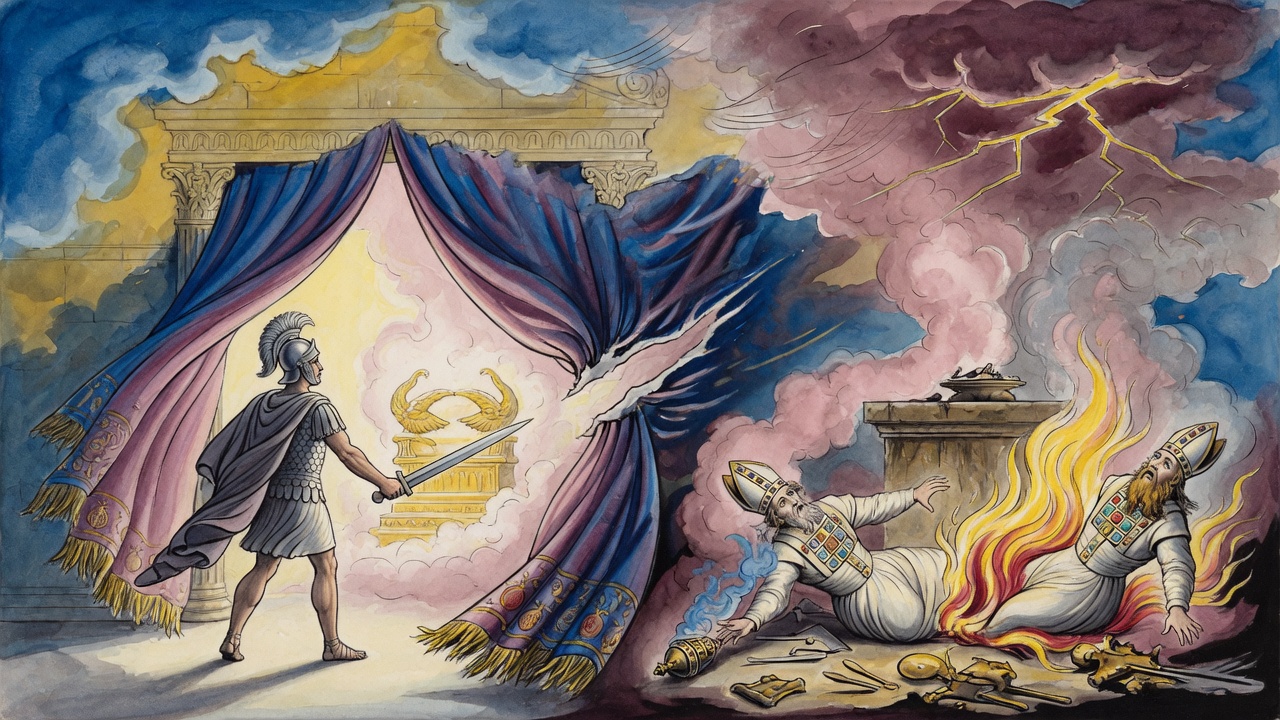
A mixed life hangs between pure merit and pure guilt. Yom Kippur opens like Noah's door. The Shekhinah, the Divine Presence, waits to see who boards.
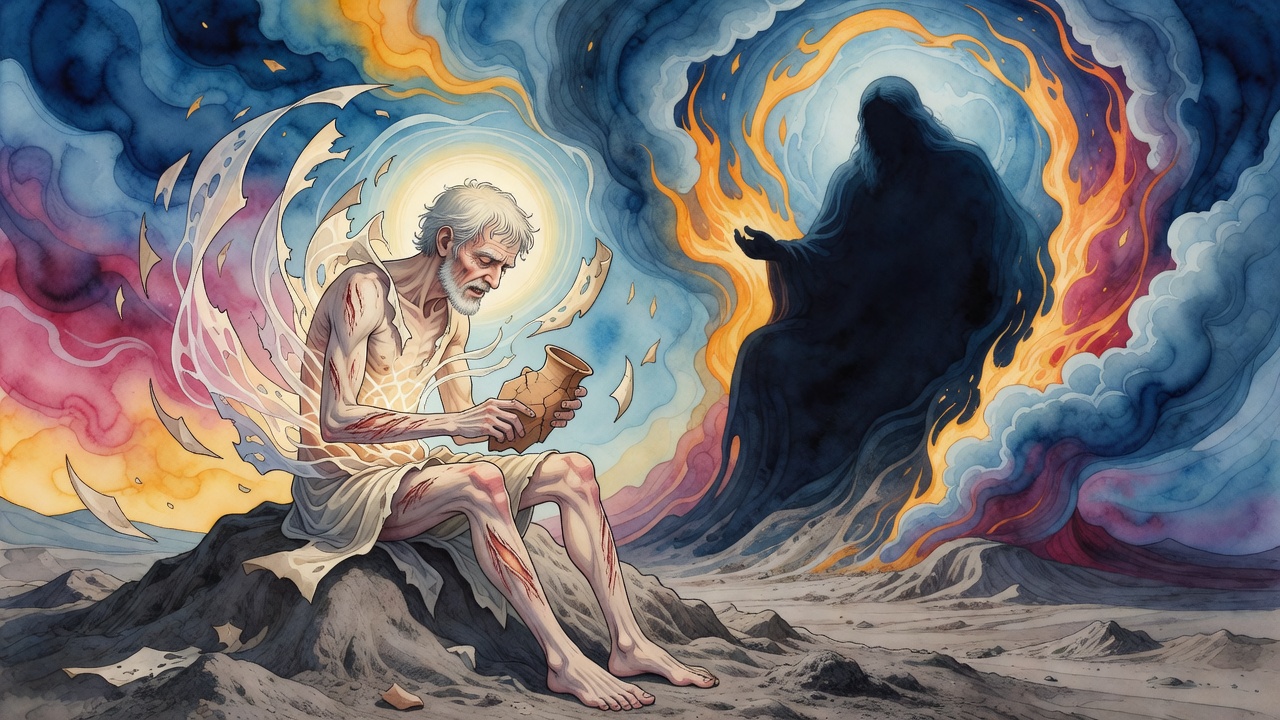
Job dug a shard under a scab until blood answered. Ash stuck to the wound. The sky looked shut, and night still shone like day.
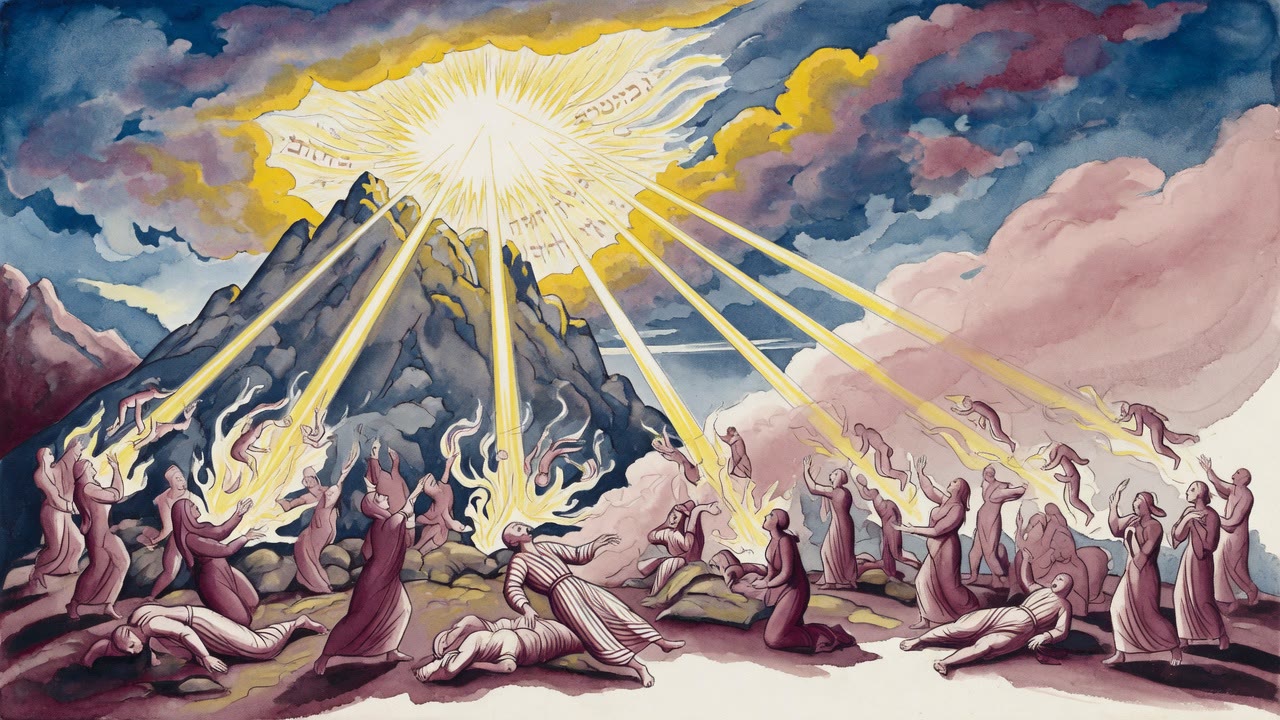
At Sinai each divine word knocks Israel's souls out of their bodies until God must soften the light so a people can stand and live.
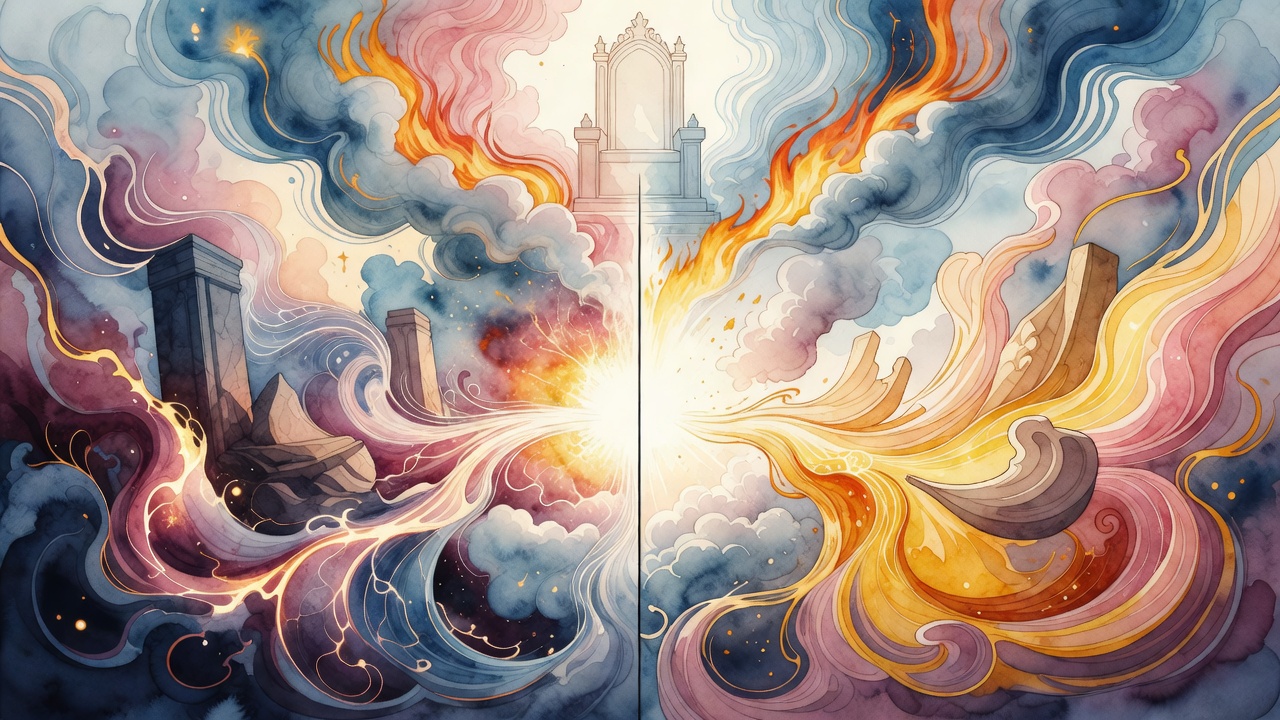
Right line pours giving. Left line answers with raw wisdom. A partition and middle force cut both lights to a height a world can bear.
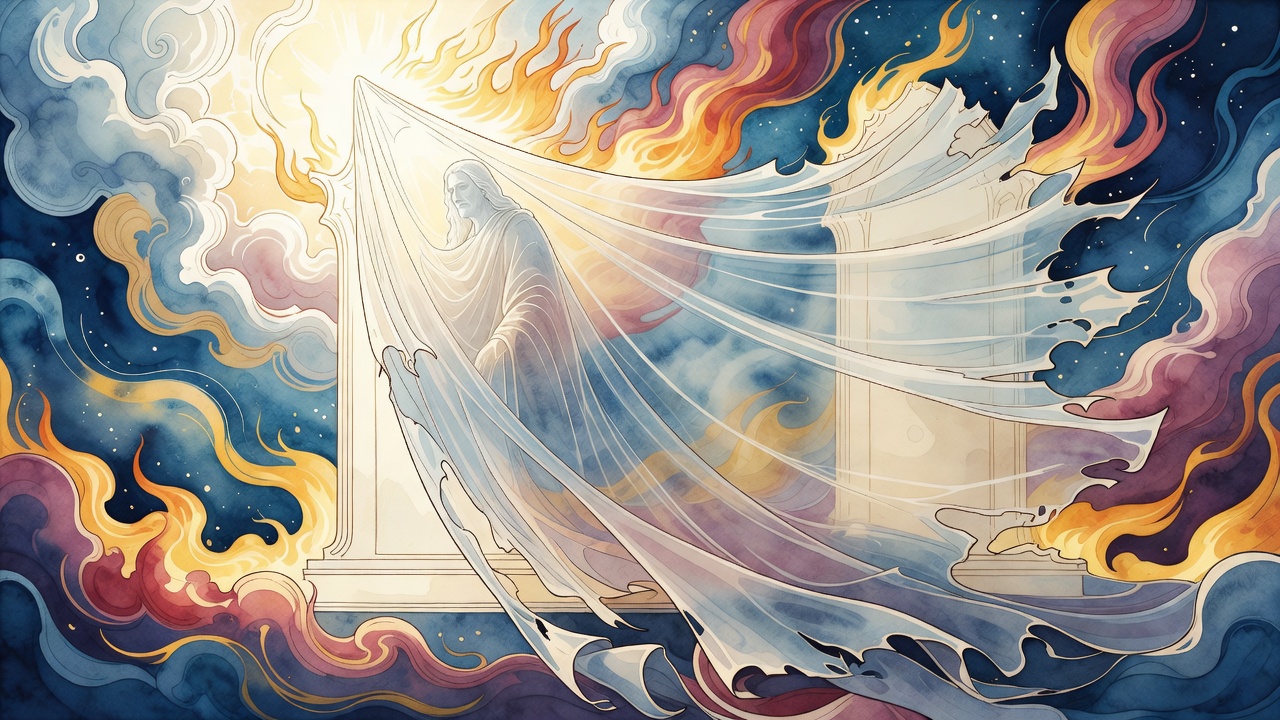
Bina held the partition like a wet cloth over fire. Too dry and the light would flood. Too thick and nothing in the world would be born.
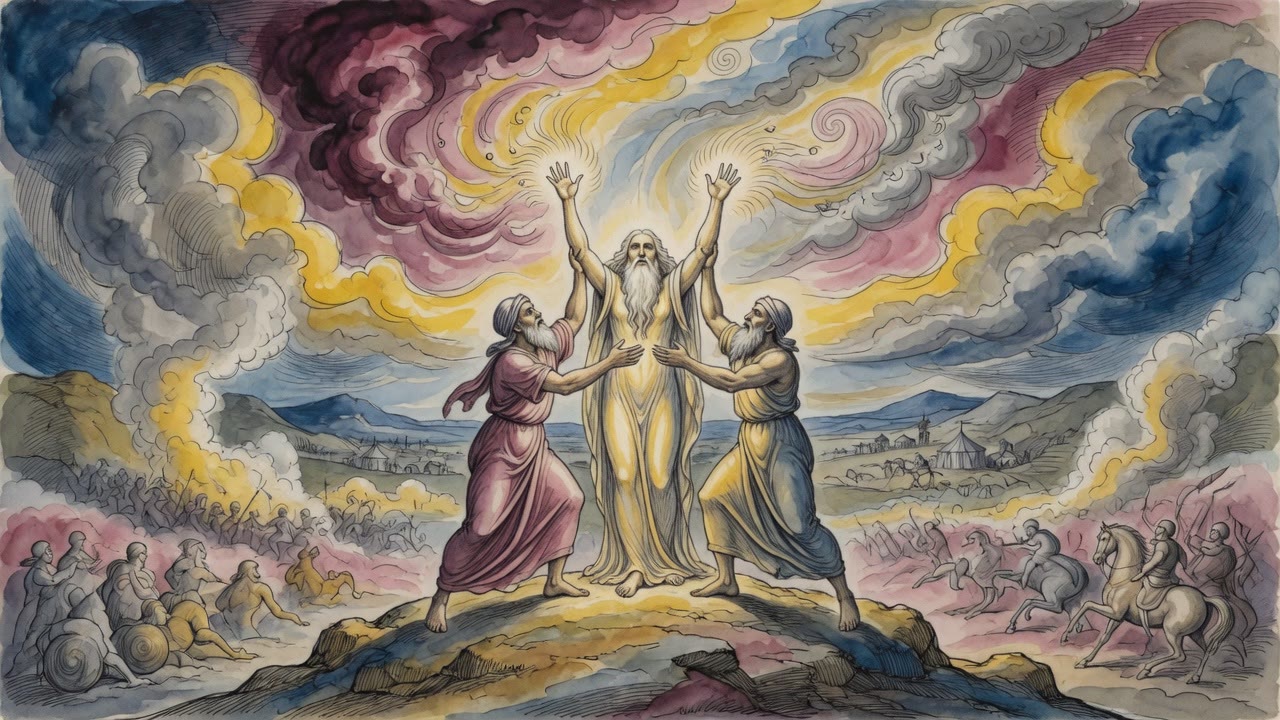
Light folded in a higher skull until a second pair of eyes could tell itself apart. The mouth was the only door. What it could not keep would finish it.
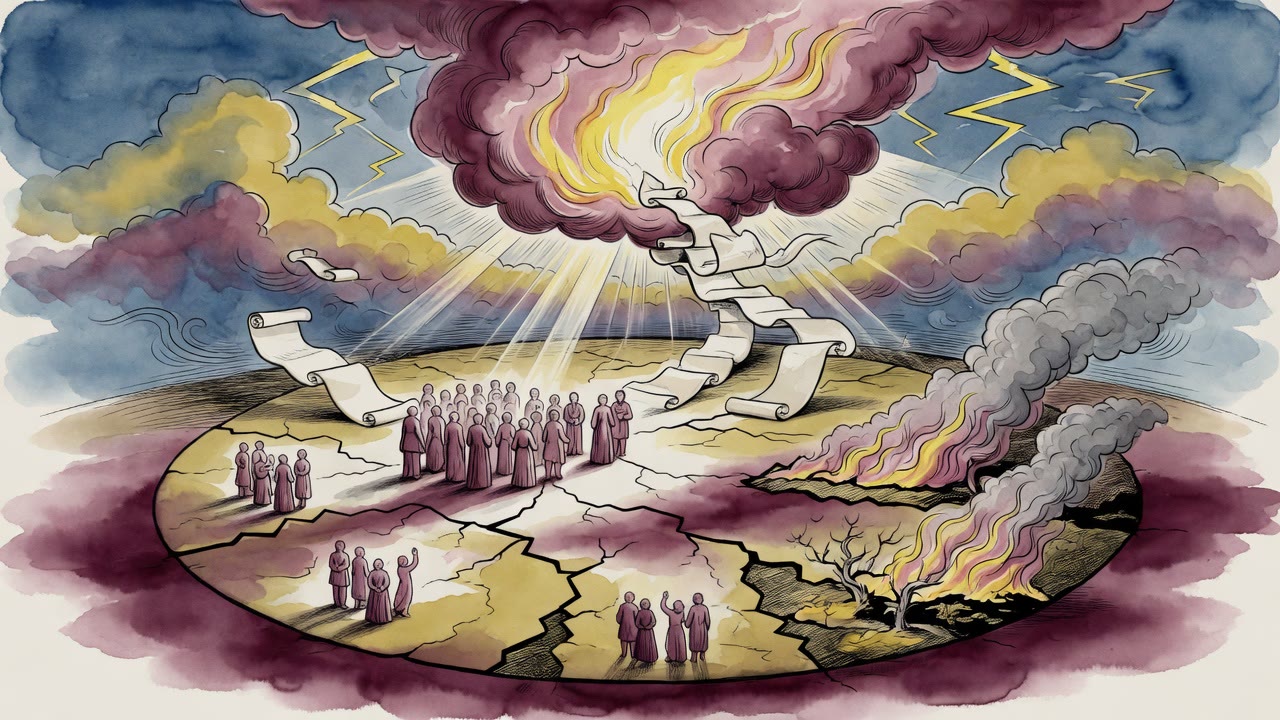
The air itself chewed. He wanted erasure. The angel opened a ledger, and the blank lines meant the burning was not done.
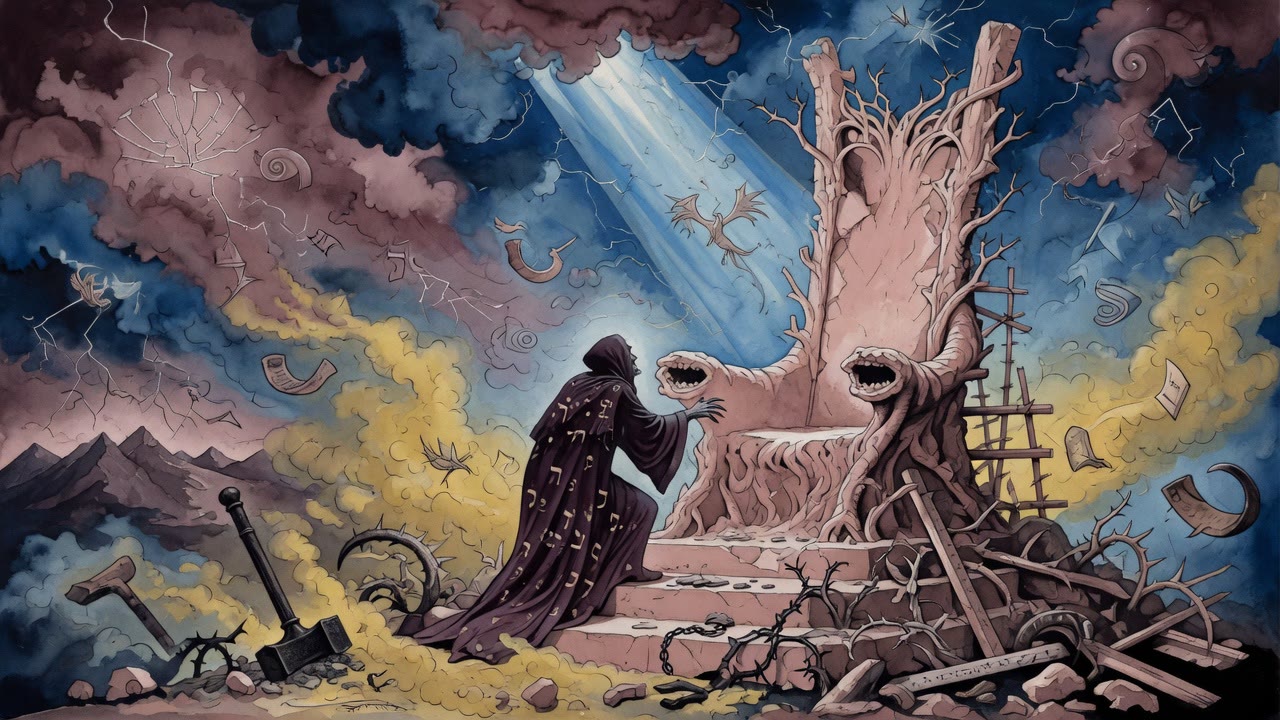
He set a second chair opposite the Throne and waited for a rival to sit. The gold looked solid. Samael would not take the seat.
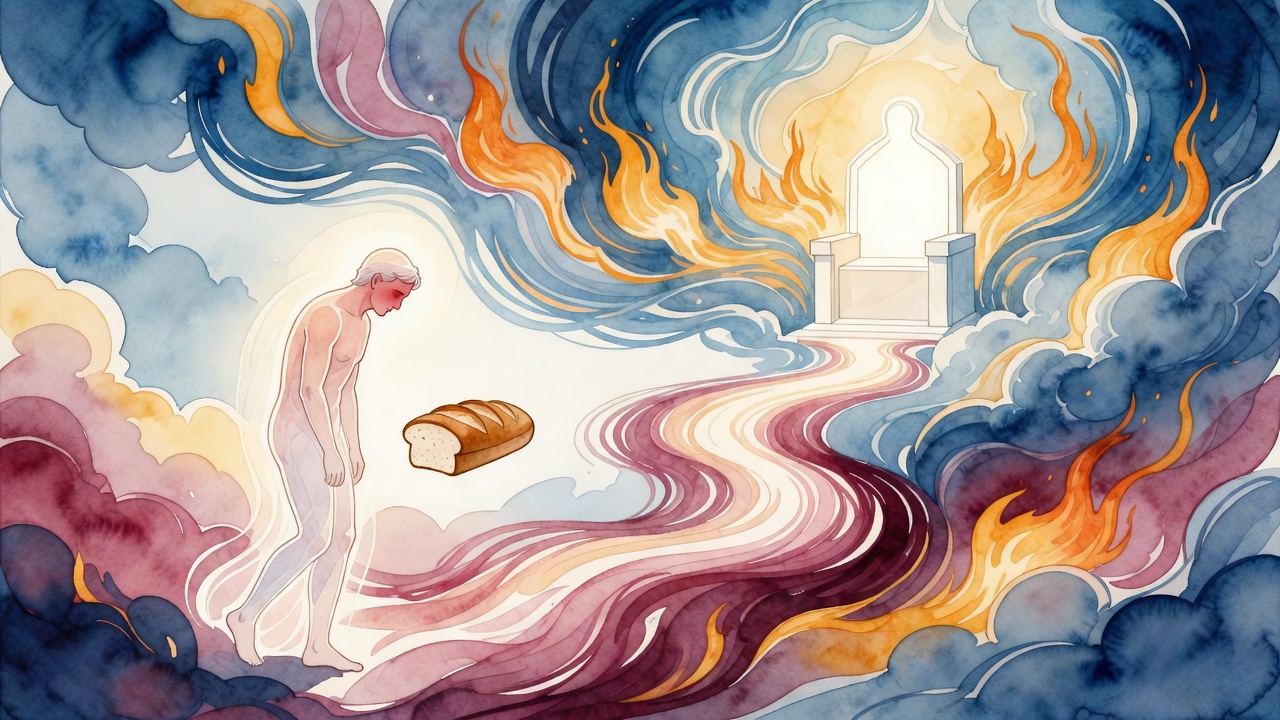
Other souls grabbed the loaf and could not lift their eyes. He left the table hungry. Years later he came back with work on his hands.
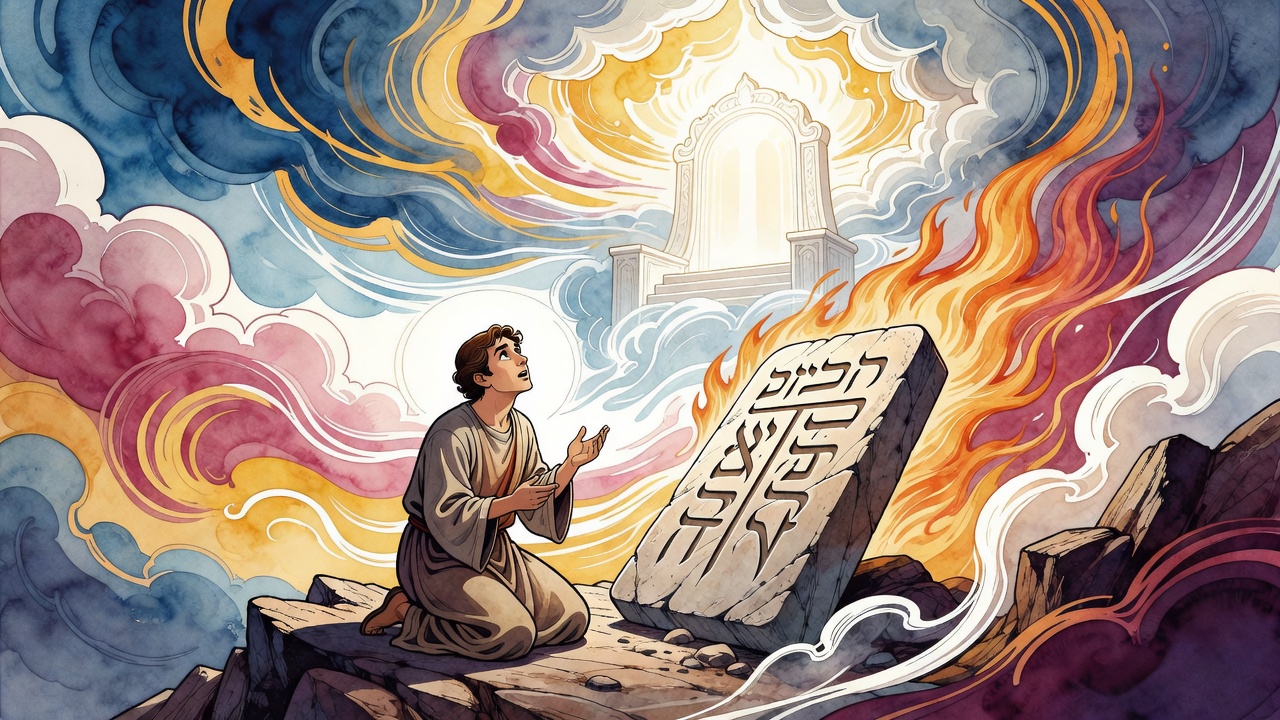
Levi set down the leather boxes and asked if he was painting gold onto the sun. A cracked wall on the walk home was stuffed with rags.
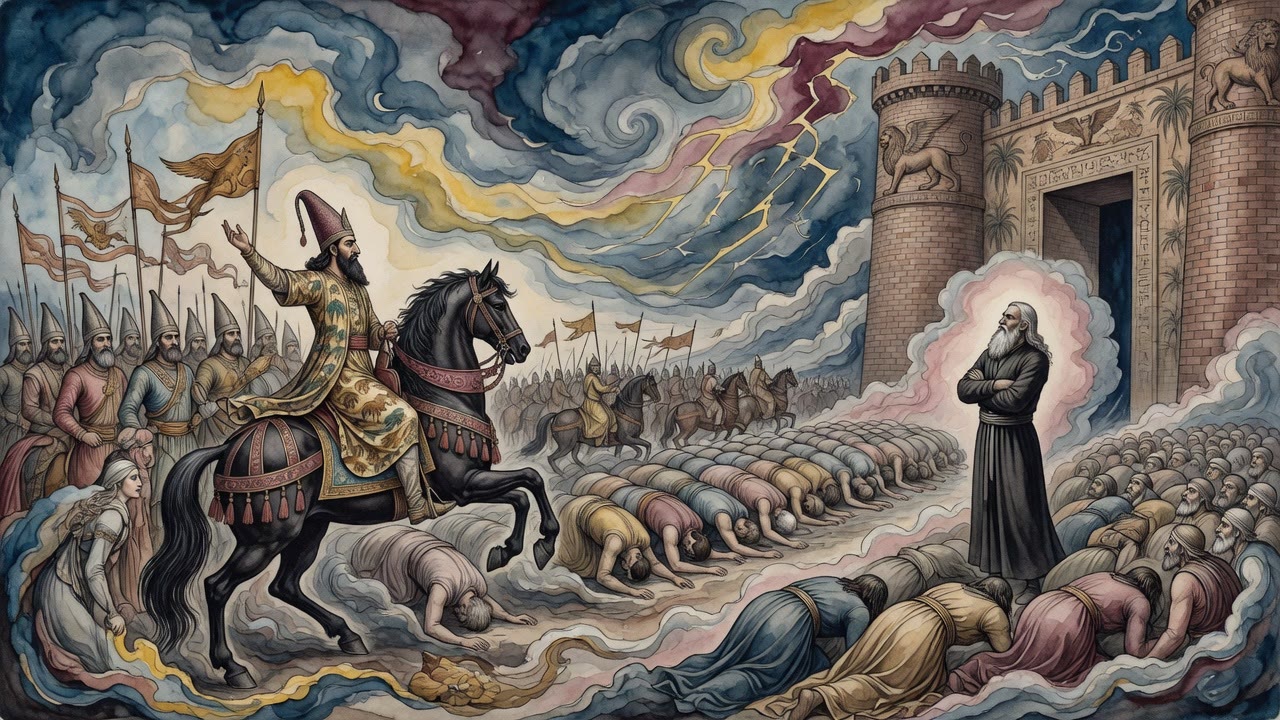
The morning let a thief walk free. At noon Rachel's scale stopped lying, and she sent the boy home with the bolt drawn.
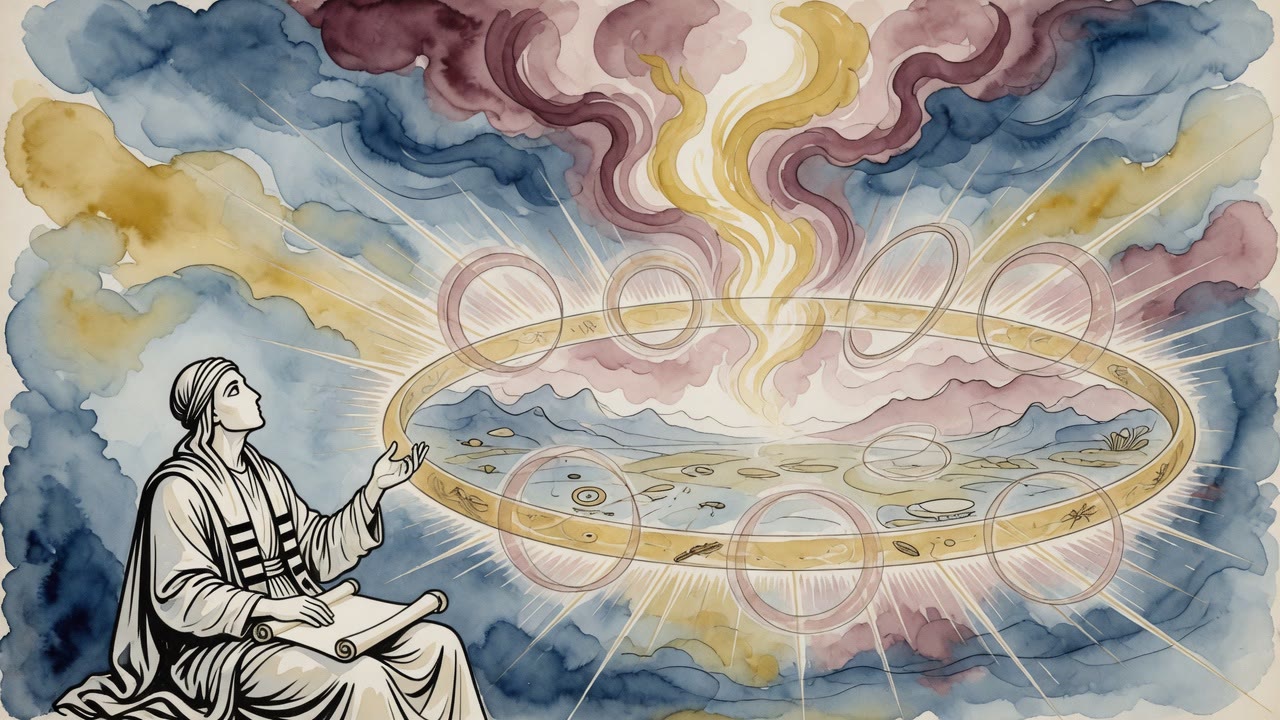
"Show me Your glory," he said. The last vessel would not move. He fell in the cleft and tasted dust that still belonged to her.
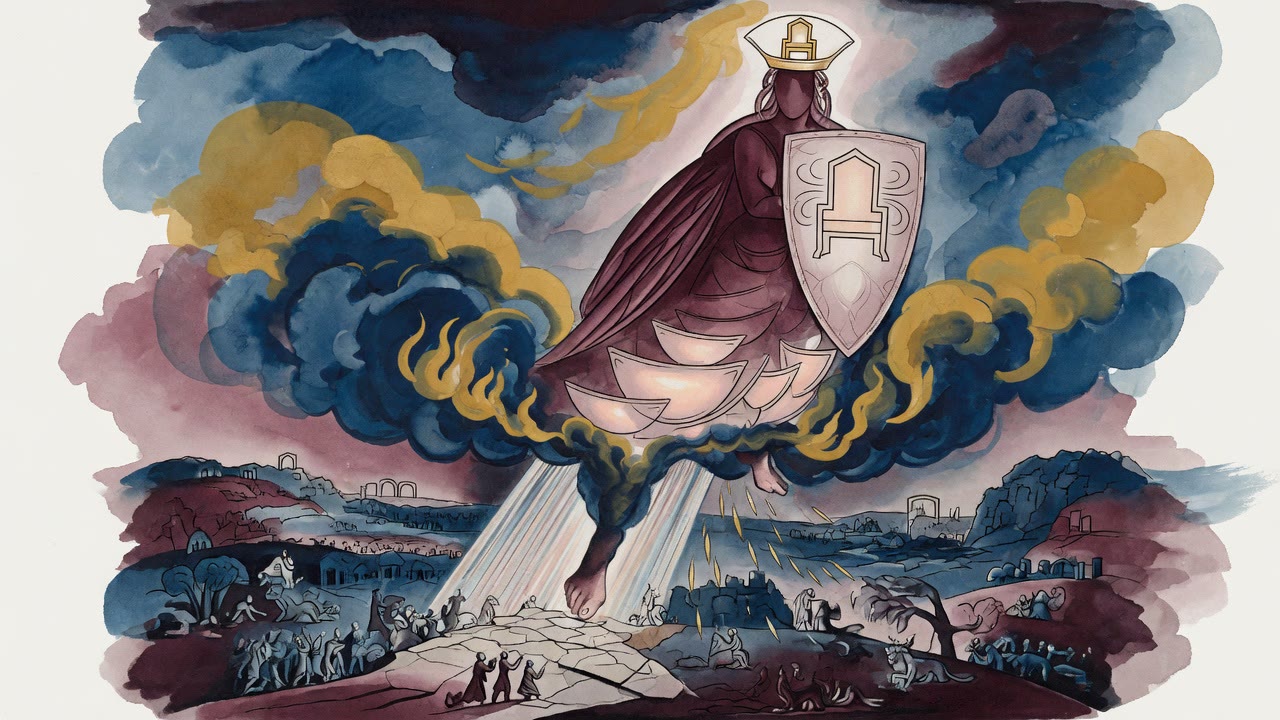
He reached for a line of light and touched meaning instead of metal. In the town below, a birth and a funeral shared the same night.
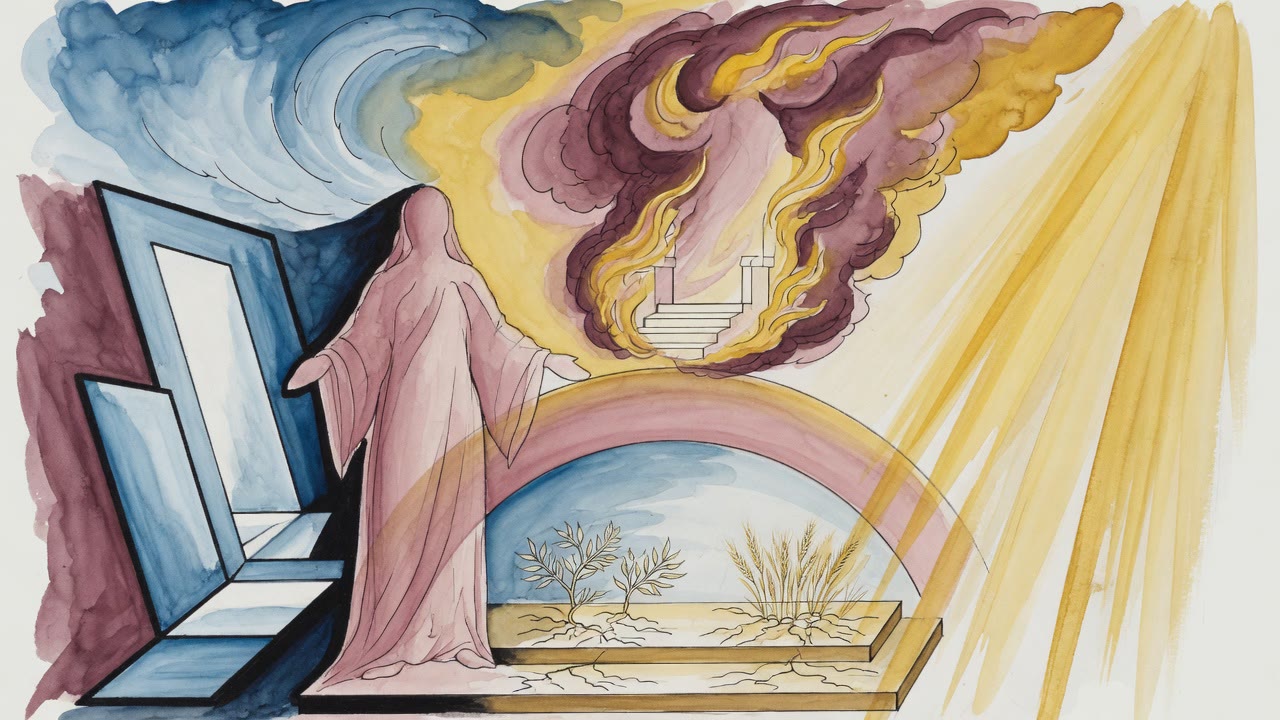
The cup vanished when the right hand poured. The left hand cut a rim that held nothing worth drinking. Then a third step found the middle.
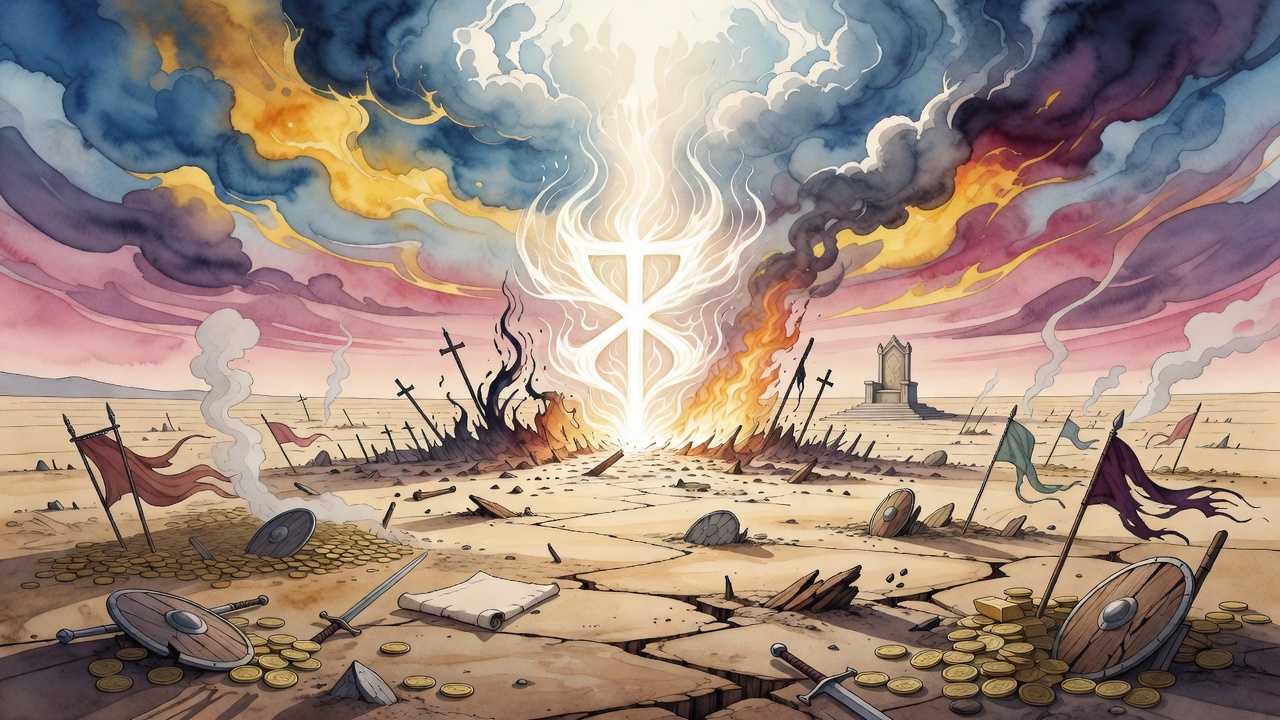
Gold, armies, and cleverness ran out at the edge of the Other Side. Only the four letters of the Name, held in exile faith, dissolved the counterfeit power.
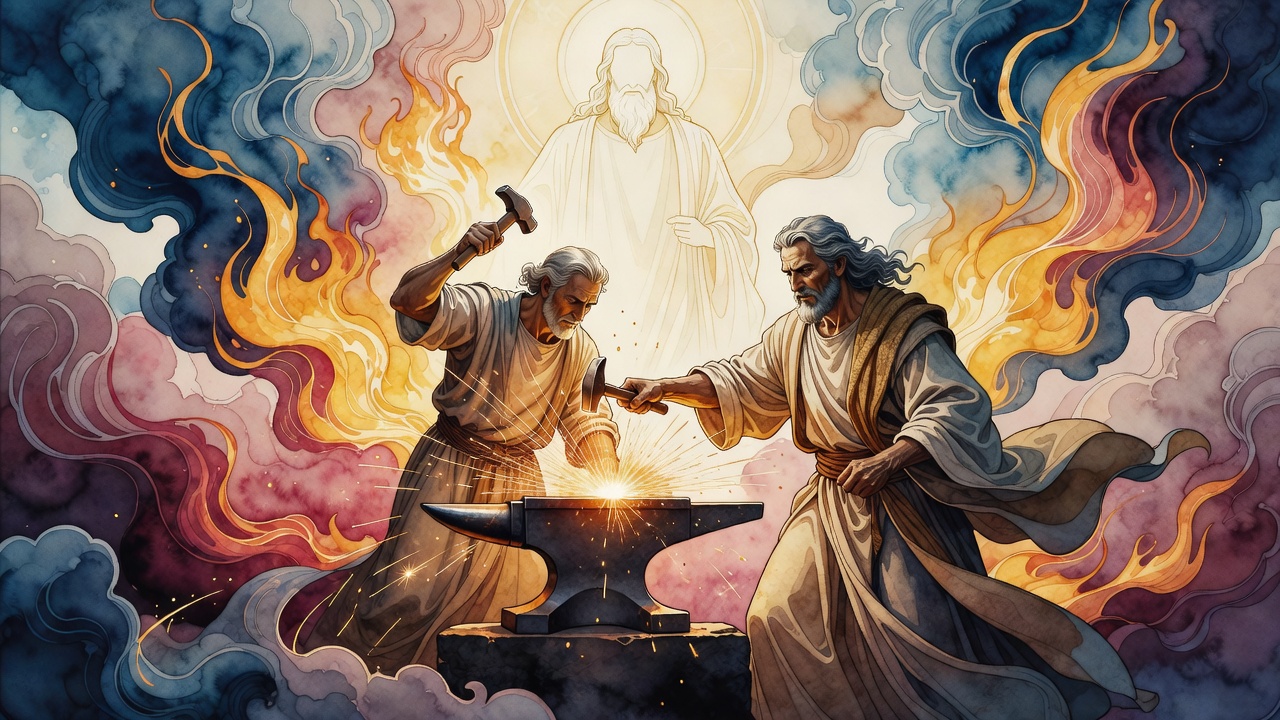
A student asked whether the sparks were mistakes. Rabbi Shimon refused to call them that. Another student reached for a spark and found it still hot.
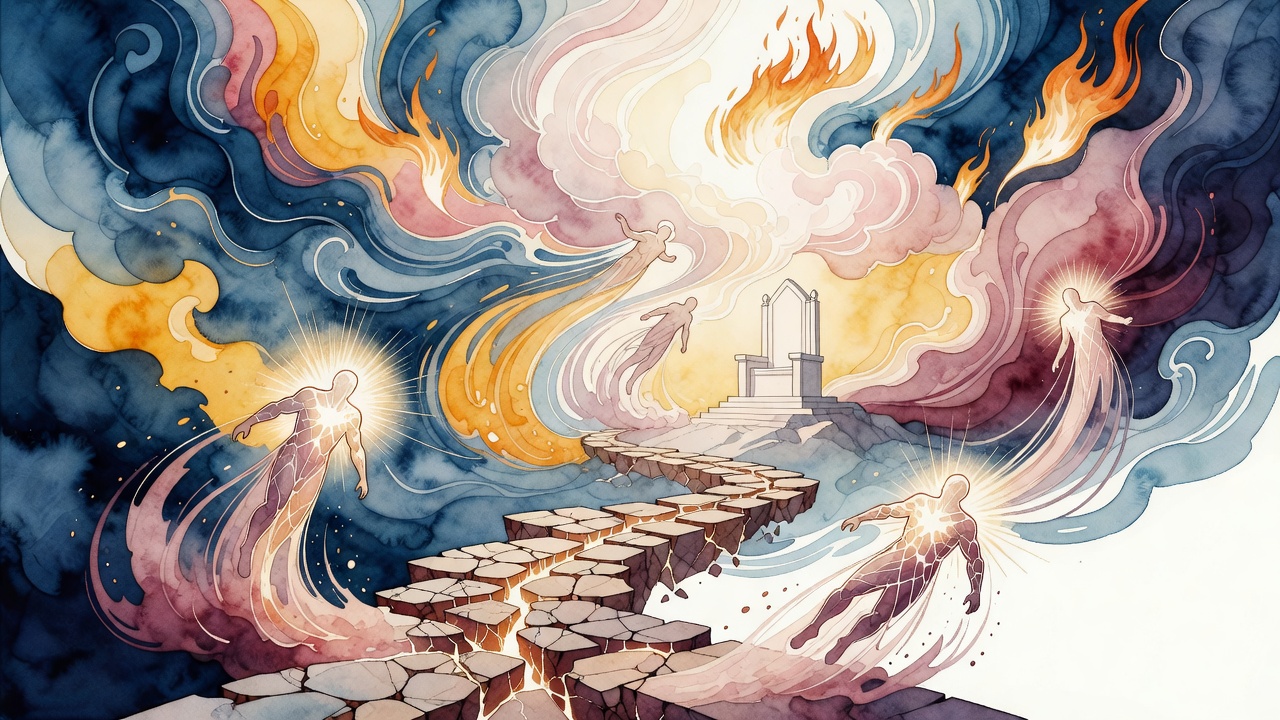
Bela sat on a throne of light until the light tore him. In a lower field a farmer put seed into a crack that had been only ruin.
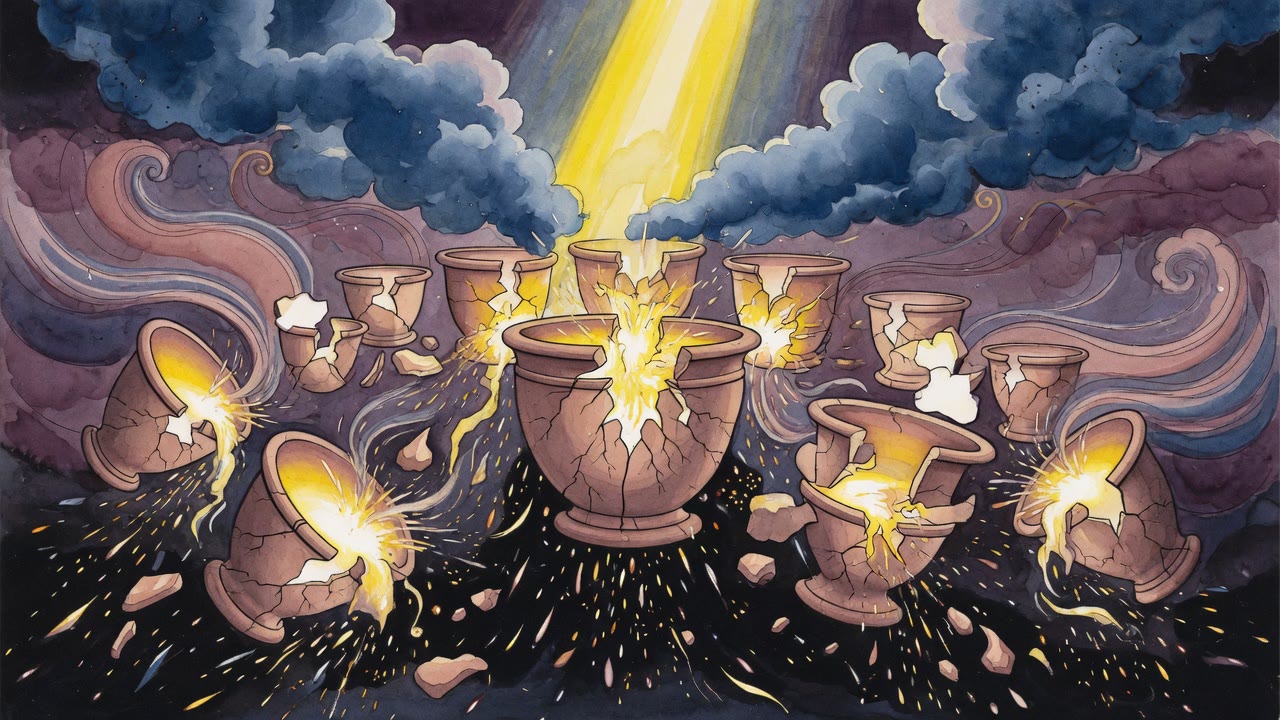
Before names settled on the worlds, ten cups took the first light. The light was too much. Clay sang, split, and spilled sparks into night.
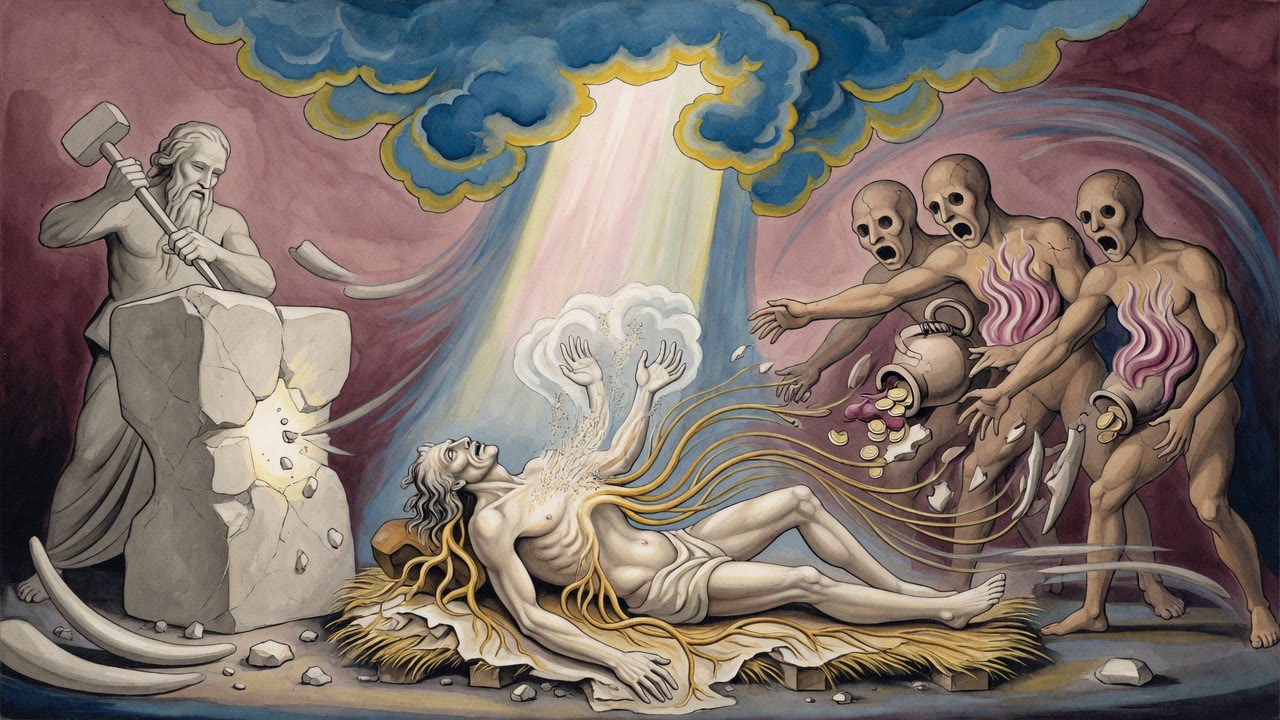
Each part of creation was measured alone. From those separate sums a shadow stepped free, a force whose only work was to divide light from its receivers.
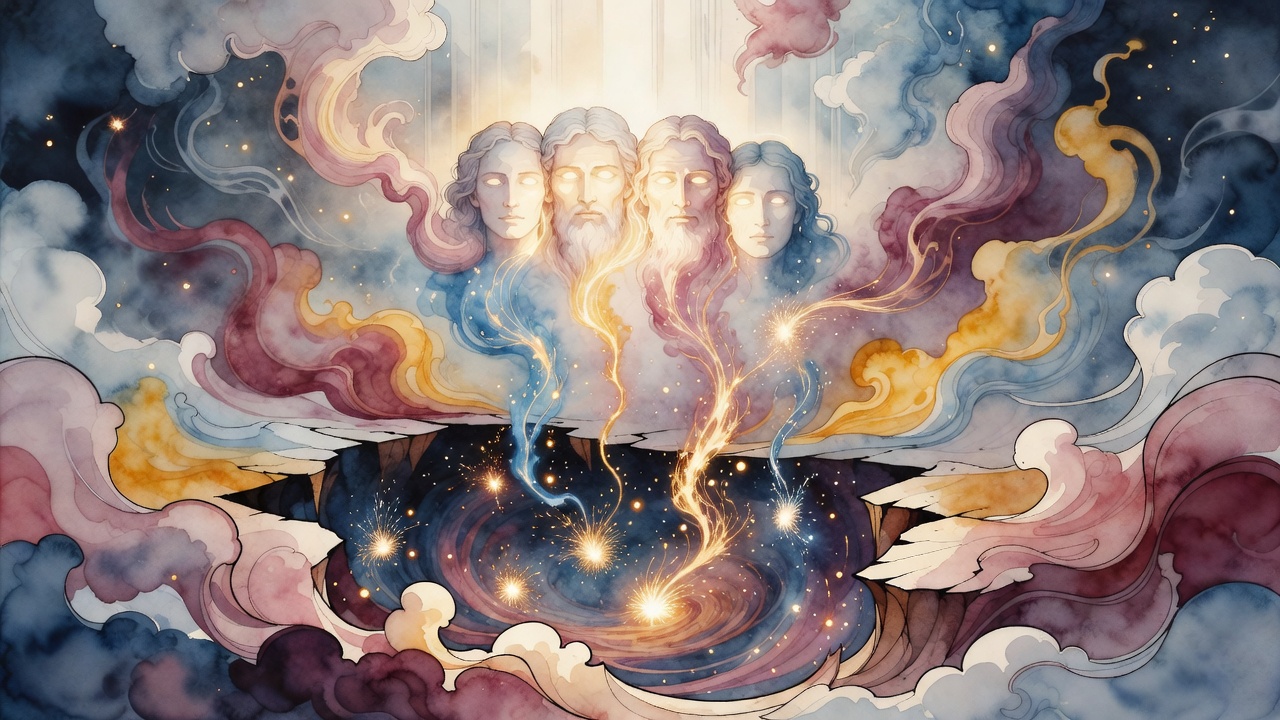
Four faces held seventy-two, and the sum became two hundred eighty-eight lights that had to fall. They dropped through the break and refused to go dark.
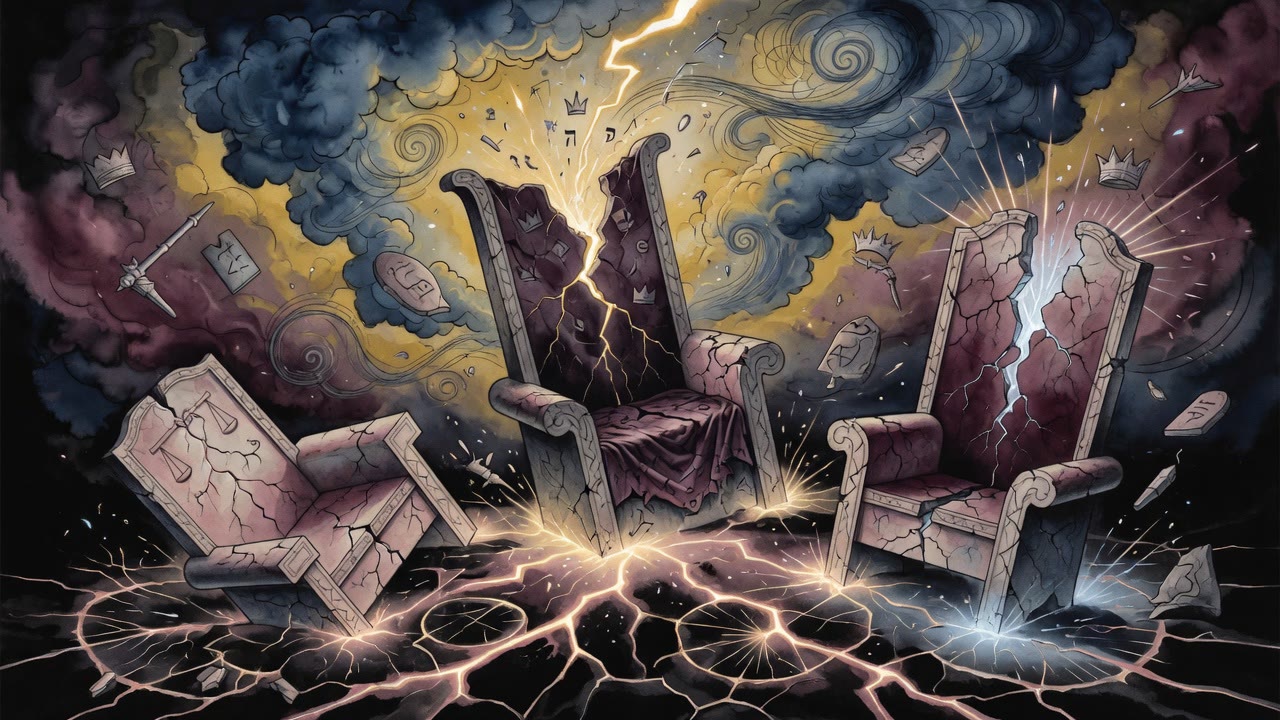
Before Adam stood, kings ruled in a world of pure din. Their thrones cracked. Malchut was both their wound and the door of their repair.
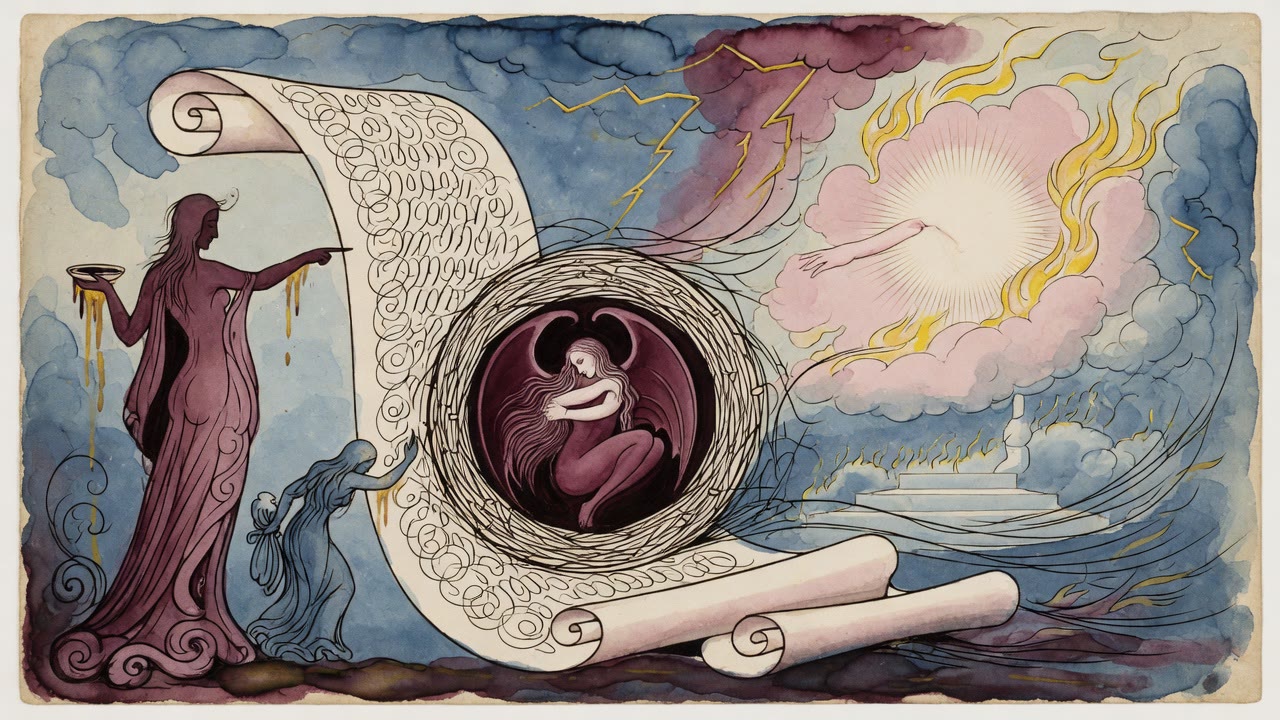
Joseph saw a sheaf stand upright in a field. The Tikkunim read it as the letter Aleph wearing a crown, the same letter at the top of Jacob's ladder.
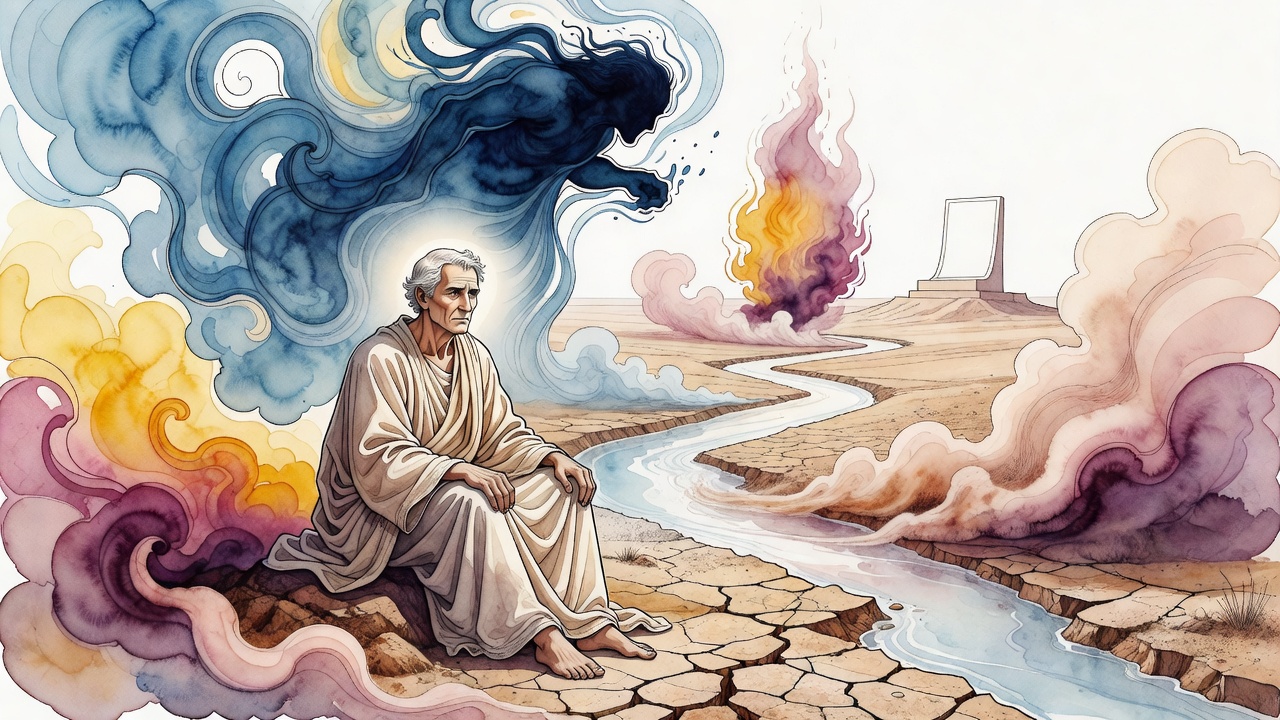
The heron that hunted this bank is gone and the insects sound careful. Three friends arrive with advice about sin. Job scrapes a potsherd across his boils.
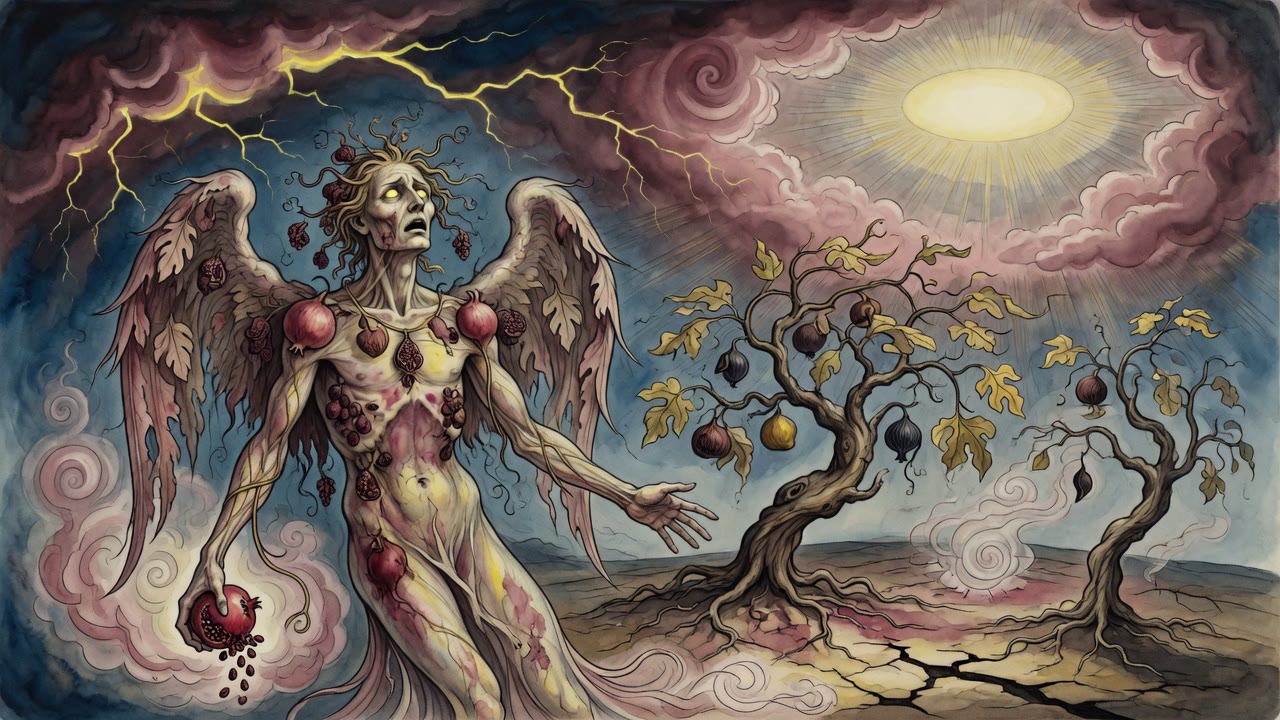
Juice ran down his wrist before a blessing left his mouth. Above the stall the appointed watcher went thin, waiting on a word that never came.
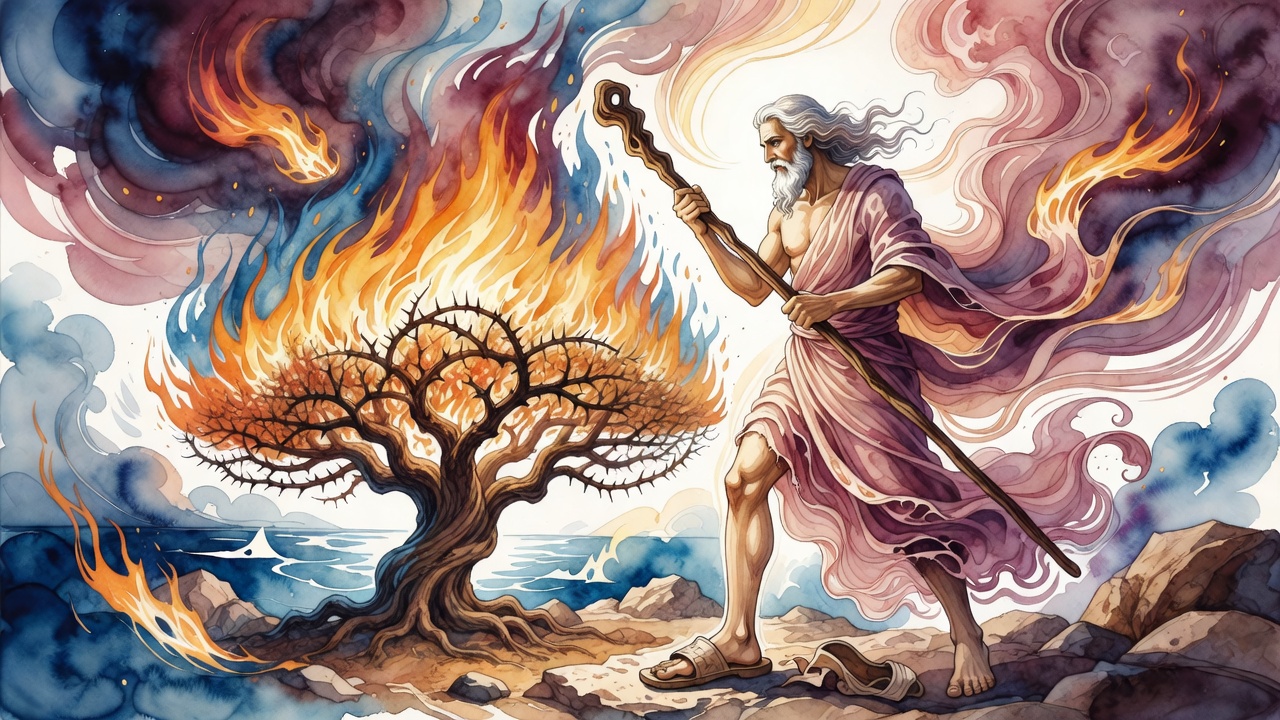
At Horeb the bush burned and held. Moses stripped the shoe of flesh, gripped the staff of covenant, and sang through Hod until the sea split open.
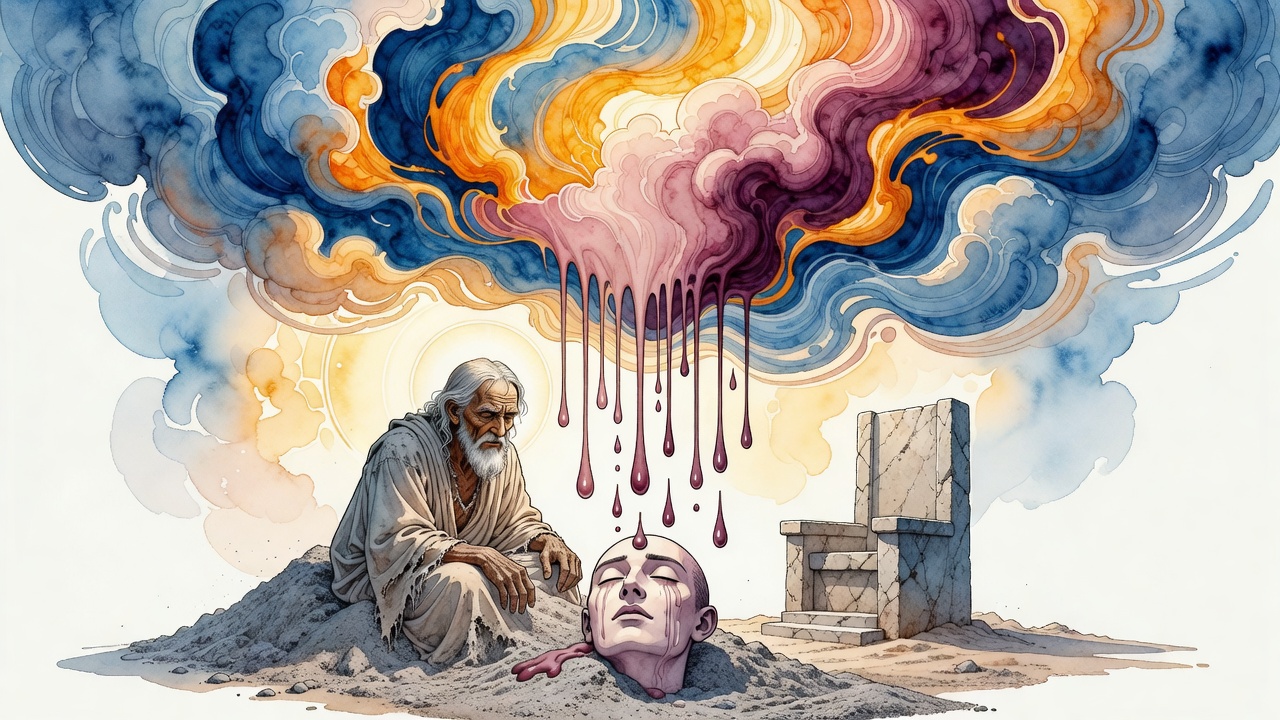
Friends circled with speeches polished for other men's disasters. Job scraped his skin with a potsherd and counted his dead in the pauses between paragraphs.
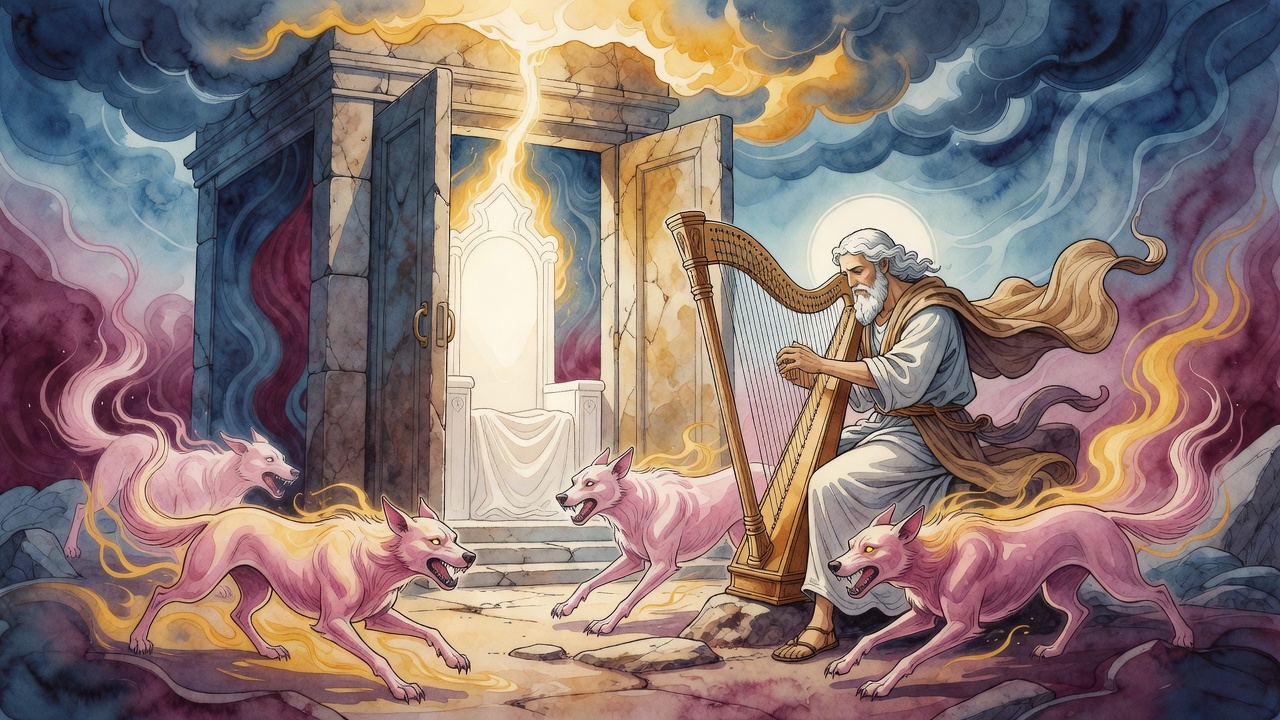
David struck the harp of Netzaḥ until the Chamber of Tears unlocked, and the dogs of the second watch lost their claim on his unique soul.
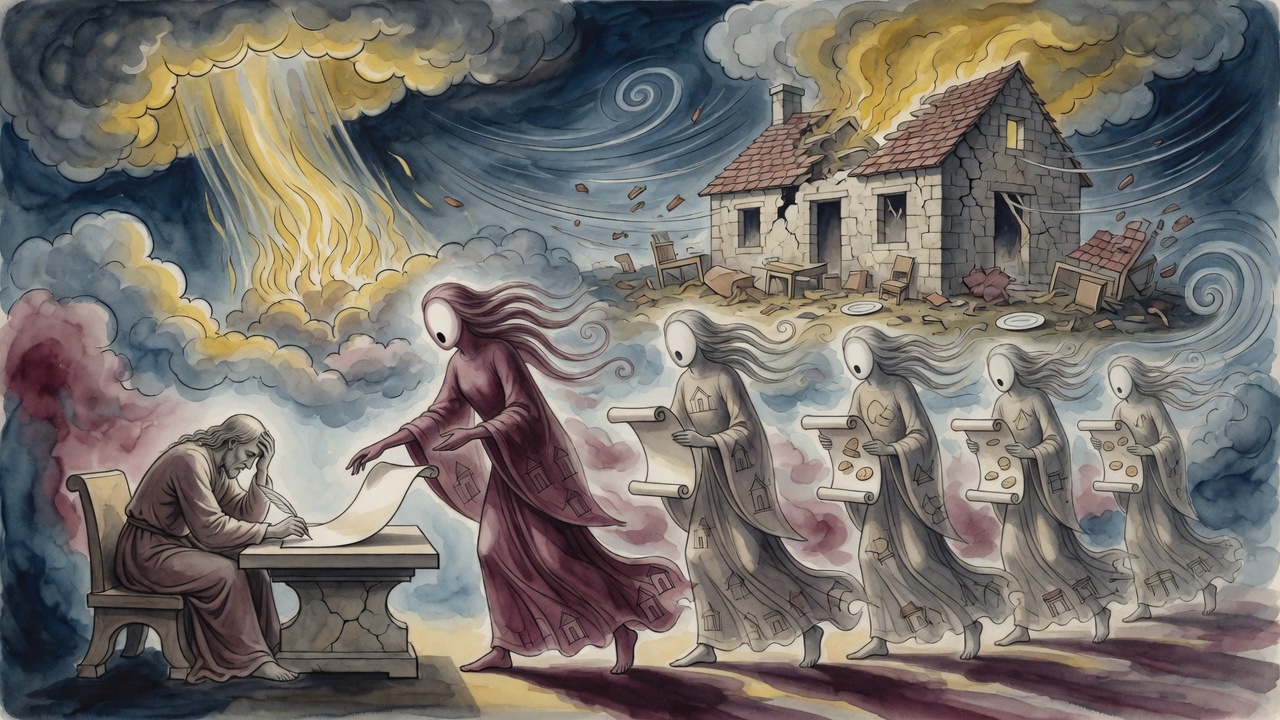
Joseph held the foundation of life-force in Egypt while a great fish of decrees closed its jaw, and prophecy poured into him from sun, moon, and stars.
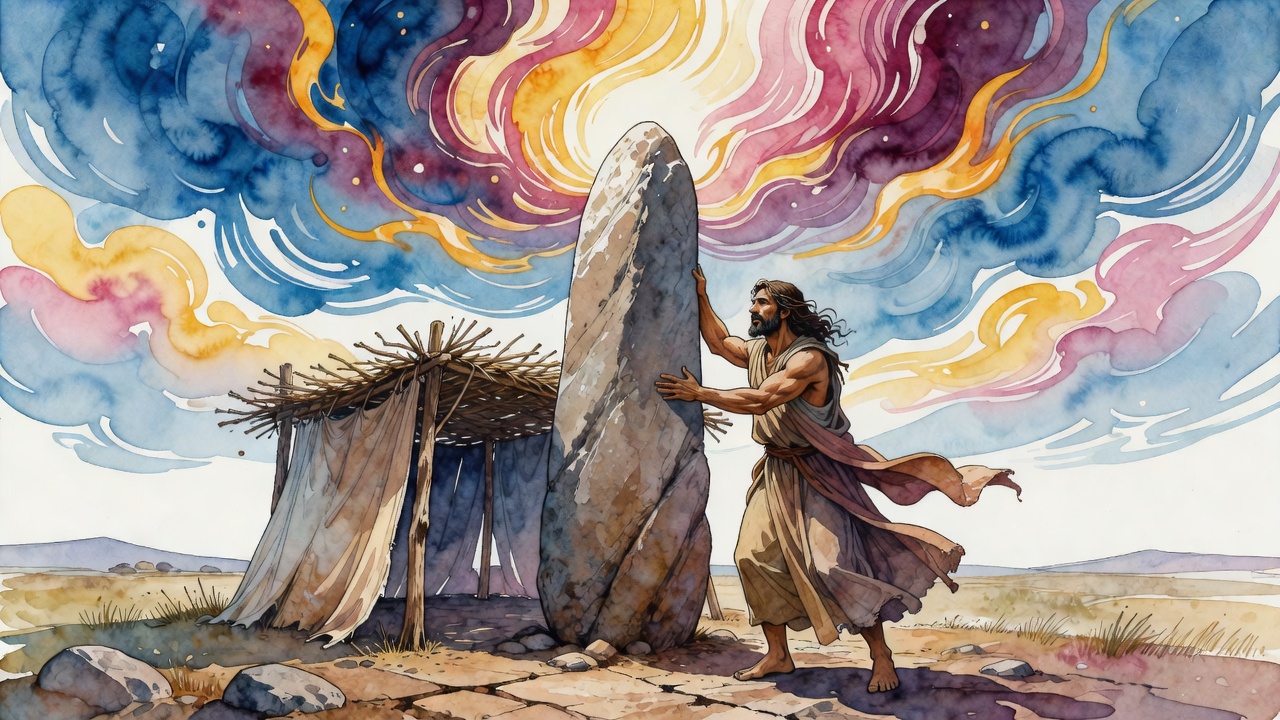
Years after he poured oil on the rock he had slept on, Jacob crossed back with flocks, children, and a limp. He built booths for the cattle too.
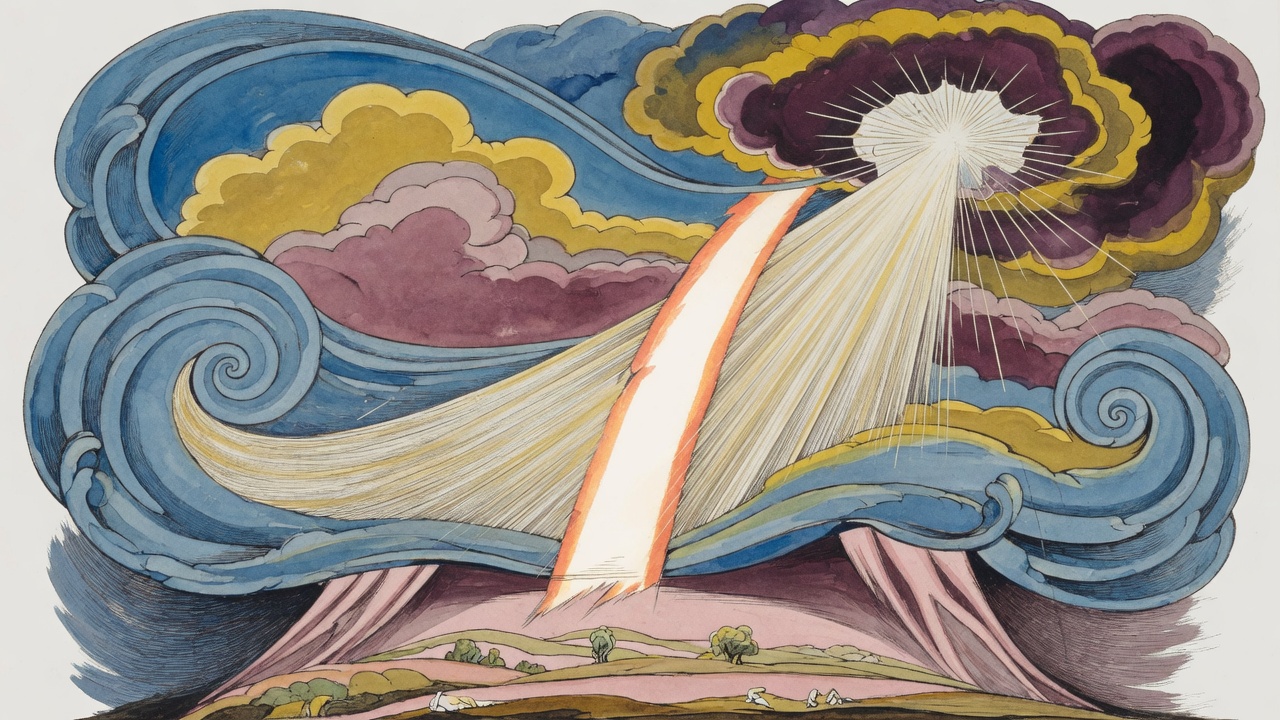
Adam watched a speck of Yod slip from the Aleph (the first Hebrew letter) of his making, and the first humans learned how a missing jot could unmake a world.
