5,036 texts · Page 34 of 105
Rabbi Yossi HaGlili presents one of the most famous calculations in rabbinic literature. He asks: how do we know that the Egyptians were struck with ten plagues in Egypt and fifty ...
Rabbi Akiva posed a provocative question: where do we learn that each of the ten plagues that struck Egypt was actually five plagues in one? If this calculation is correct, the Egy...
The Torah records a transformation at the Red Sea: "And the people feared the Lord" (Exodus 14:31). The Mekhilta notes the significance of the word "feared." In the past, the Israe...
The Mekhilta draws a parallel that cuts both ways. In the previous passage, the rabbis established that believing in Moses equals believing in God. Now they demonstrate the reverse...
Great is the faith wherein Israel believed in Him who spoke and brought the world into being; for in reward for Israel's belief in the L–rd, the Shechinah reposed upon them and the...
Rabbi Nechemiah teaches a principle of extraordinary generosity. If a person takes upon himself even a single mitzvah in true faith, that person is worthy of having the Holy Spirit...
The Mekhilta weaves together several verses to demonstrate that God guards the faithful and remembers the faithfulness of the ancestors. The opening verse sets the theme: "The Lord...
(Exodus 15:1) "Az yashir Mosheh": Az ("then") sometimes signals the past and sometimes signals the future. The past: (Genesis 4:26) "Az men began", (Exodus 4:26) "Az she said", (Ex...
The Song at the Sea begins with a grammatical mystery. The Hebrew text of (Exodus 15:1) reads az yashir Mosheh—literally, "then Moses will sing," using the future tense. If the Tor...
Variantly: "Moses and the children of Israel": We are hereby apprised that Moses chanted the song opposite all of Israel (i.e., that his voice was over and against those of all of ...
Moses devoted his life to three things, and each of them was called by his name. The Mekhilta examines the first: Torah. The prophet Malachi instructs Israel, "Remember the Torah o...
Whence do we find that he gave his life for Torah? In (Exodus 34:28) "And he was there with the L–rd (to receive the Torah) … Bread he did not eat, etc." And it is written (Devarim...
He devoted his life to the judges, and they were called by his name, viz. (Devarim 16:18) "Judges and officers shall you appoint for yourself in all of your gates." Now is justice ...
R. Eliezer b. Tadai says; Moses would begin with his words, and Israel would respond (with theirs). Moses would begin: "I shall sing to the L–rd," and Israel would end with him and...
The Mekhilta interprets the phrase "For He is high on high" (Exodus 15:1) as describing a relationship of mutual exaltation between God and Israel. The doubling in the Hebrew — ga'...
Thus do you find with the men of Sodom, that with what they vaunted themselves before Him, He exacted punishment of them. As it is written (Iyyov 28:5-8) "A land from which bread h...
The Egyptians' greatest military asset became the instrument of their destruction. The Mekhilta points to a devastating symmetry in the Exodus narrative that reveals God's measure-...
The Mekhilta draws attention to a strange detail about the drowning of the Egyptian army at the Red Sea. When God cast "a horse and its rider" into the sea, something happened that...
"a horse and its rider": The Holy One Blessed be He brings horse and rider, stands them in judgment, and says to the horse: Why did you pursue My children? The horse: An Egyptian s...
An analogy: A king's son goes abroad—he goes after him and attends upon him. He goes to a different city—he goes after him and attends upon him. Thus with Israel. When they went do...
Viz. (Song of Songs 3: "I had almost passed them (Moses and Aaron) by, when I found Him whom my soul loved. I held onto Him and did not let go of Him until I had brought Him to the...
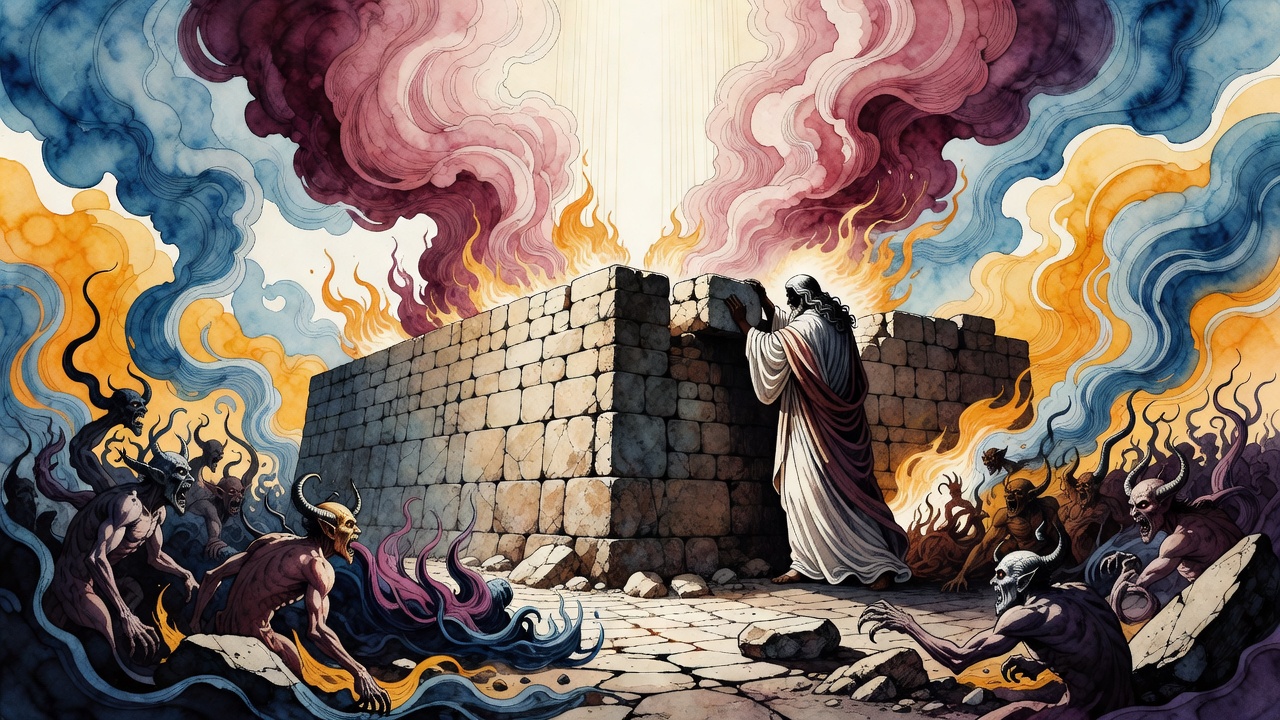
"the L–rd is a man of war': What is the intent of this? Because He revealed Himself at the sea as a hero waging war—"The L–rd is a man of war"—and He revealed Himself at Sinai as a...
The Mekhilta presents yet another parable about human warriors, this time addressing the most dangerous flaw of all: uncontrolled rage. A warrior in a province, it says, may become...
The Mekhilta offers a parable about a mortal king going to war. When a king of flesh and blood prepares for battle, emissaries from neighboring lands come to him requesting sustena...
The Mekhilta presents another contrast between a mortal king at war and God. A king of flesh and blood, while engaged in battle, cannot supply all of his soldiers with what they ne...
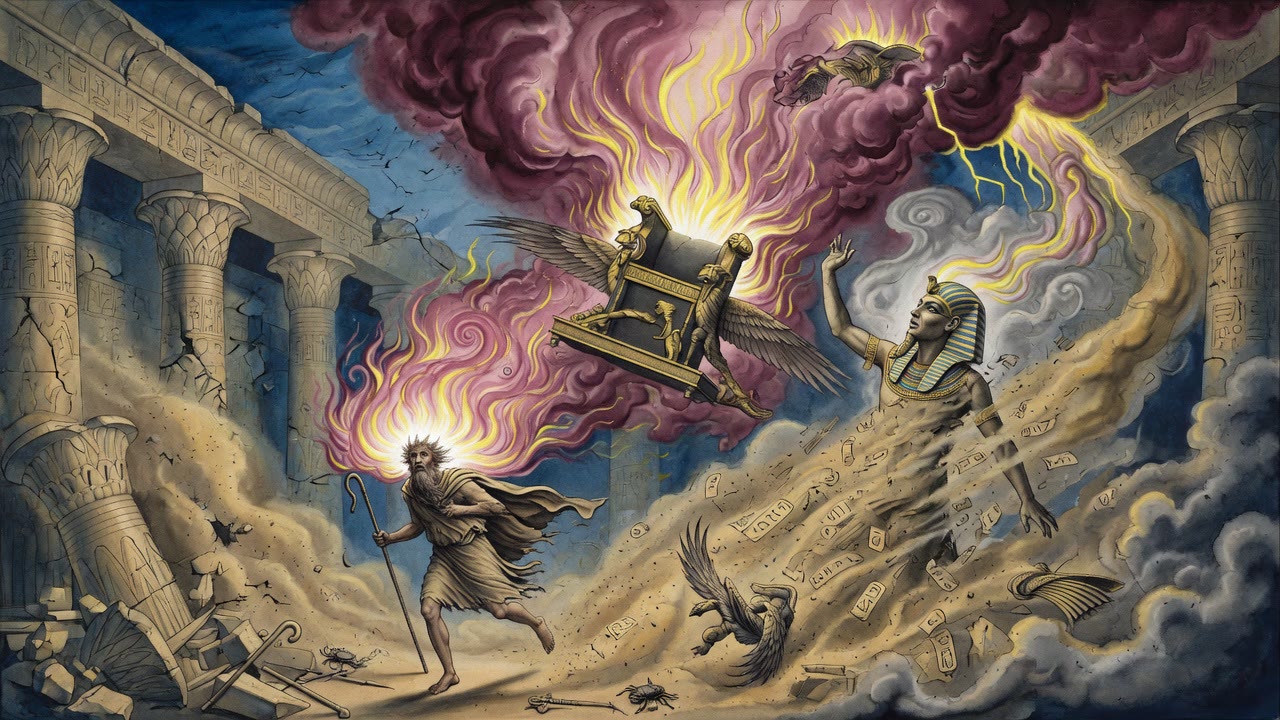
(Exodus 15:4) "the chariots of Pharaoh and his host": "As one measures, so is it meted out to him." They (the Egyptians [i.e., Pharaoh]) said (Ibid. 5:2) "Who is the L–rd that I sh...
The Mekhilta offers a pointed reading of the phrase "The chariots of Pharaoh" from the Song of the Sea, connecting Pharaoh's destruction at the Red Sea directly to his earlier crim...
(The water) covered the firmament over them and darkened the stars over them, viz. (Ezekiel 32:8) "All the lights of the heavens I will darken above you, and I will bring darkness ...
The Mekhilta asks another of its characteristically sharp questions about the Red Sea crossing. The verse says the Egyptians "descended into the metzulot" — the whirlpools or churn...
Thus do you find with the men of Sodom, that You gave them a grace period for repentance and they did not repent. As it is written (Genesis 18:20-21) "And the L–rd said: The outcry...
The Song at the Sea praises God not only for His power but for His patience. The Mekhilta de-Rabbi Ishmael highlights a detail that the Israelites themselves recognized as they san...
The Mekhilta DeRabbi Yishmael presents a teaching that parallels and extends the previous one about divine wrath, now turning to the subject of divine warfare. The principle is the...
All who help Israel, help, as it were, the Holy One Blessed be He, viz. (Judges 5:23) "Curse Meroz, said the angel of the L–rd. Curse bitterly its dwellers. For they came not to th...
All woods, when they burn, their sound is not heard; but stubble, when it burns, it crackles and is heard. Thus did the sound of Egypt, in its destruction, make itself heard. All w...
When the (other) kingdoms are symbolized, they are symbolized as cedars, viz. (Ezekiel 31:3) "Behold, Ashur, a cedar in the Levanon," and (Amos 2:9) "And I destroyed the Emori from...
Antoninus, the Roman emperor, once asked Rabbeinu HaKadosh — Rabbi Judah the Prince, the compiler of the Mishnah (the earliest code of rabbinic law) — for political counsel. "I wan...
(Ibid.) "They stood up like a flask": Just as a bound flask neither emits nor admits, so, the spirits of the Egyptians were bound up within them, neither emitting nor admitting—whi...
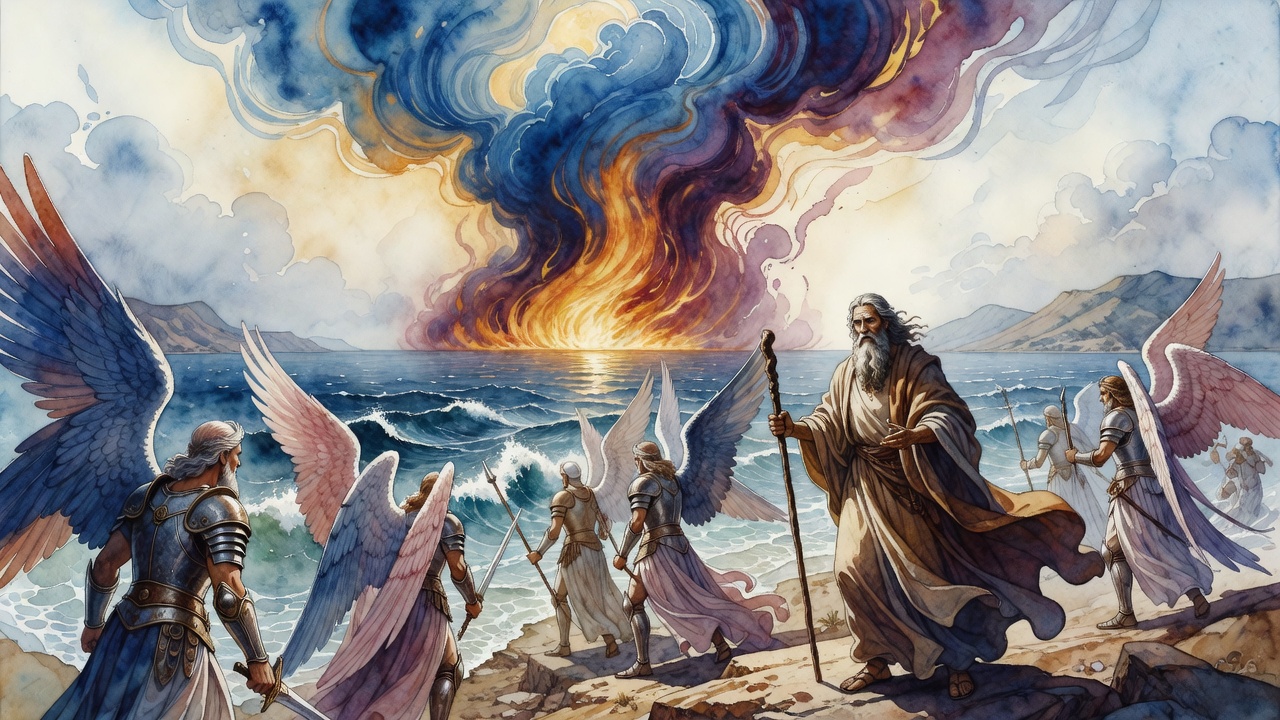
The Mekhilta draws a remarkable distinction between what the Red Sea was for Egypt and what it was for Israel. For the Egyptians, the sea was a sealed tomb. For the Israelites, it ...
The sea has no heart, and He gave it a heart. A terebinth has no heart, and He gave it a heart, viz. (II Samuel 18:4) "He (Avshalom) was yet alive in the heart of the terebinth." T...
"The foe said, etc.": How did Israel know what Pharaoh thought of them in Egypt? The Holy Spirit reposed upon them and they knew it. Pharaoh said: It really does not befit us to pu...
"The foe (Pharaoh) said": And he did not know what he was saying, viz. (Mishlei 16:1) "To a man are the musings of his heart, but to the L–rd is the meaning of the tongue." (He sai...
The Mekhilta DeRabbi Yishmael preserves a dramatic speech attributed to God, addressed to the Egyptians at the moment of the Red Sea's destruction. The voice is that of a king — an...
The Egyptian army was not unified in its cruelty. According to the Mekhilta, the Egyptians at the Red Sea divided into three factions, each with a different plan for what to do wit...
Re those who said: Let us kill them and take their money—"My hand shall impoverish them." With five things (i.e., utterances) did Pharaoh stand and blaspheme in the midst of the la...
You inclined Your right hand—the earth swallowed them up." An analogy: A renegade stands and blasphemes behind the king's palace: If I find the king's son, I will seize him and sla...
The Mekhilta DeRabbi Yishmael connects the drowning of the Egyptians at the Red Sea to the apocalyptic prophecy of Ezekiel about the war of Gog and Magog. The link between these tw...
The Mekhilta pauses on two words from (Exodus 15:10) — "mighty waters" — and asks a deceptively simple question: who in scripture is called "mighty"? The answer reveals a fourfold ...
The Mekhilta pinpoints the exact moment when Israel first declared (Exodus 15:11): "Who is like You among the mighty, O Lord?" It was not during the plagues. It was not at the mome...