255 myths · Page 4 of 9
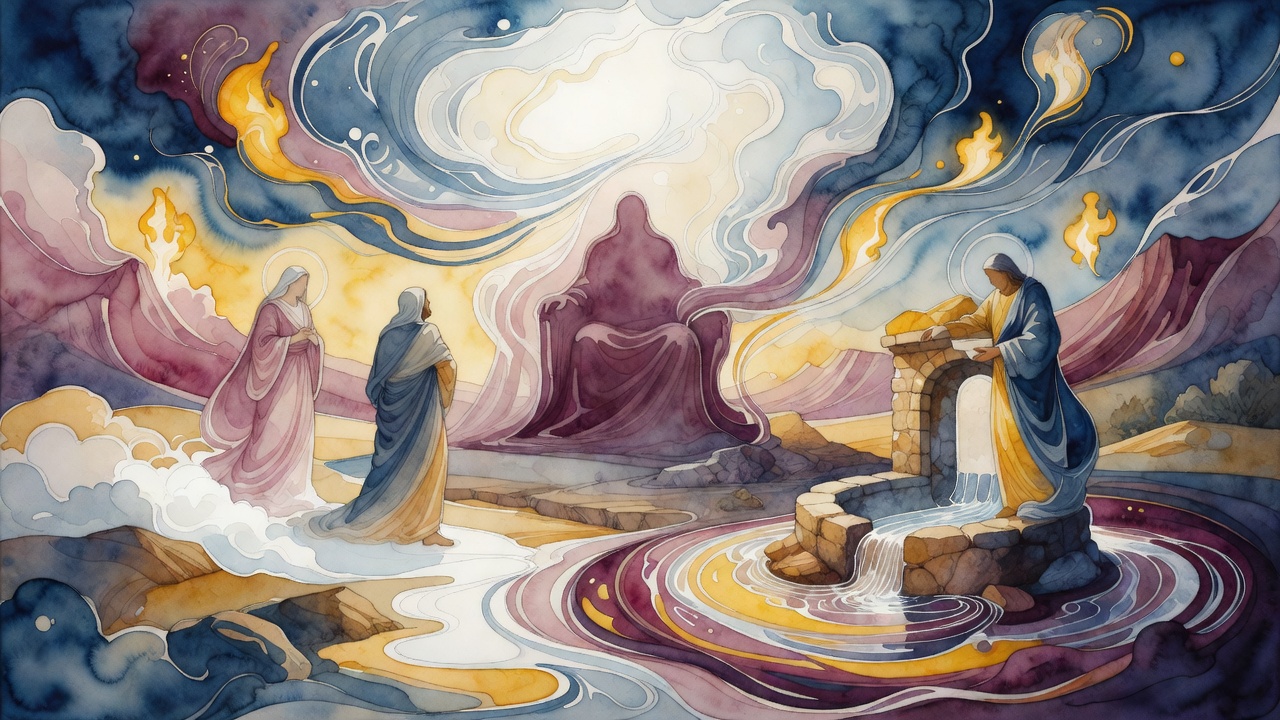
Abraham told her the hour for modesty was over. She uncovered, and the noblewomen said out loud that they were not worthy to let their children drink.
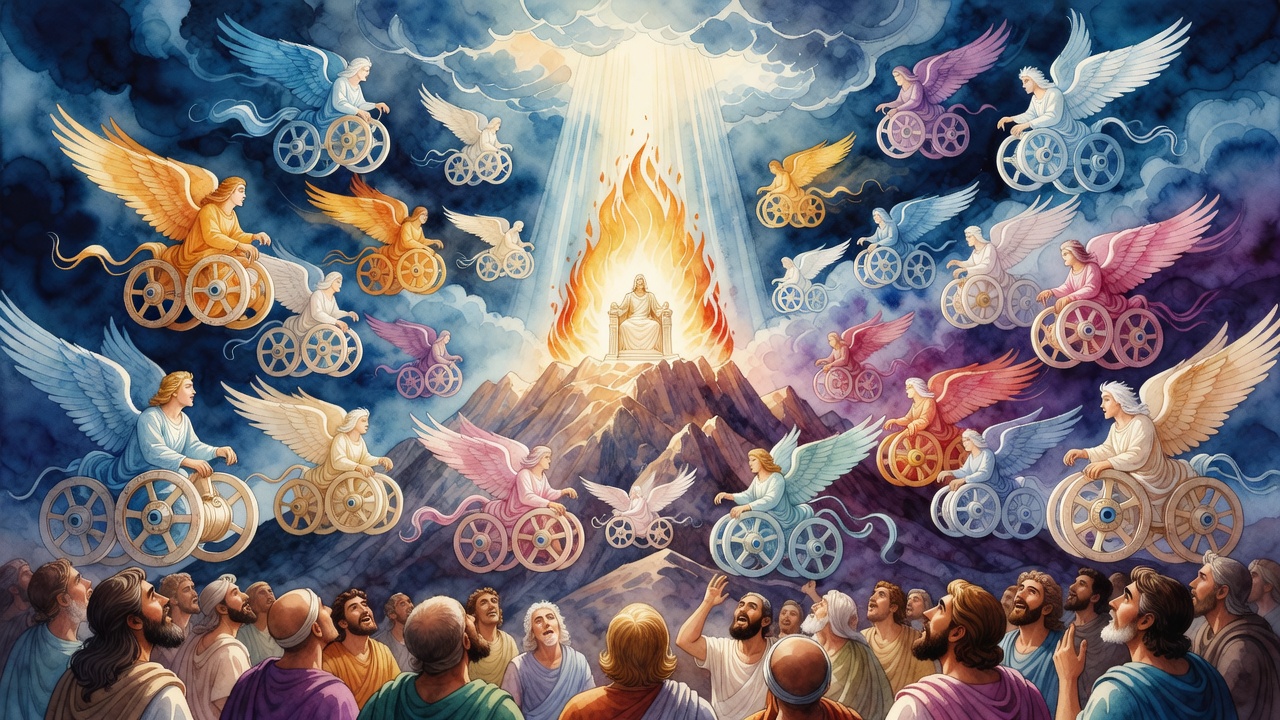
Rabbi Abdimi counted the angels who came down with God at the mountain. Every one of their chariots looked like the one Ezekiel saw by the river.
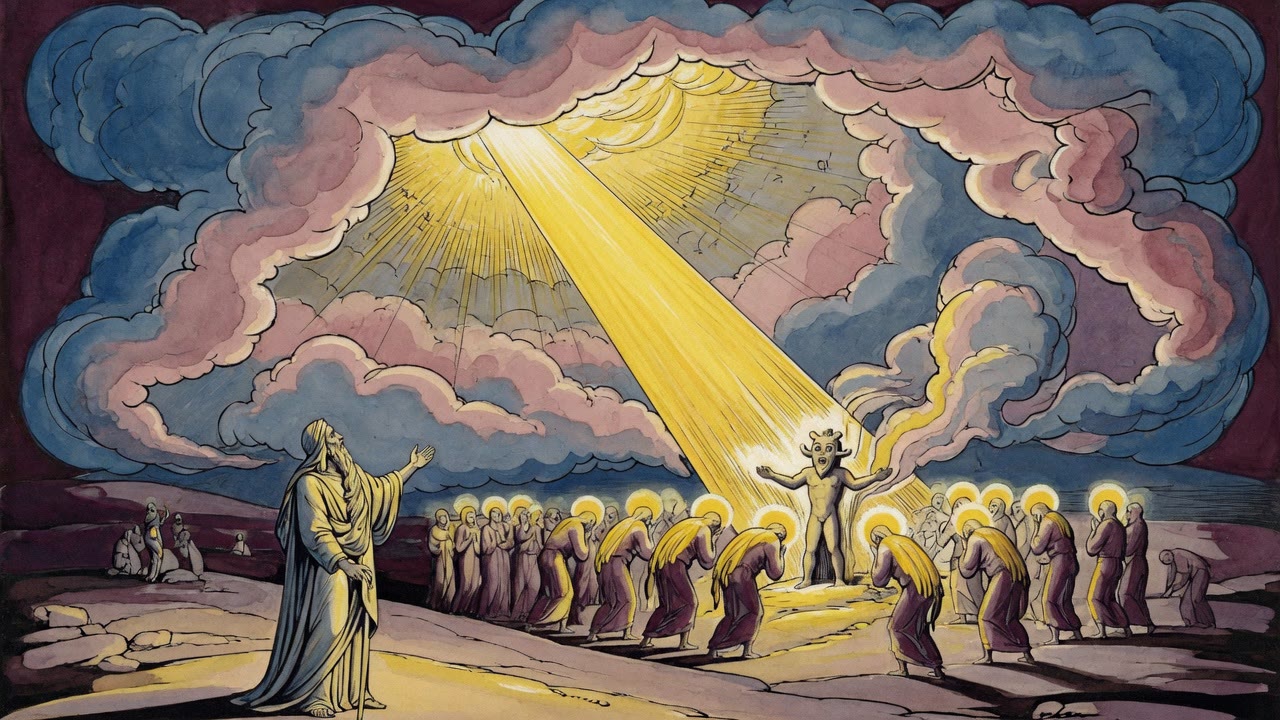
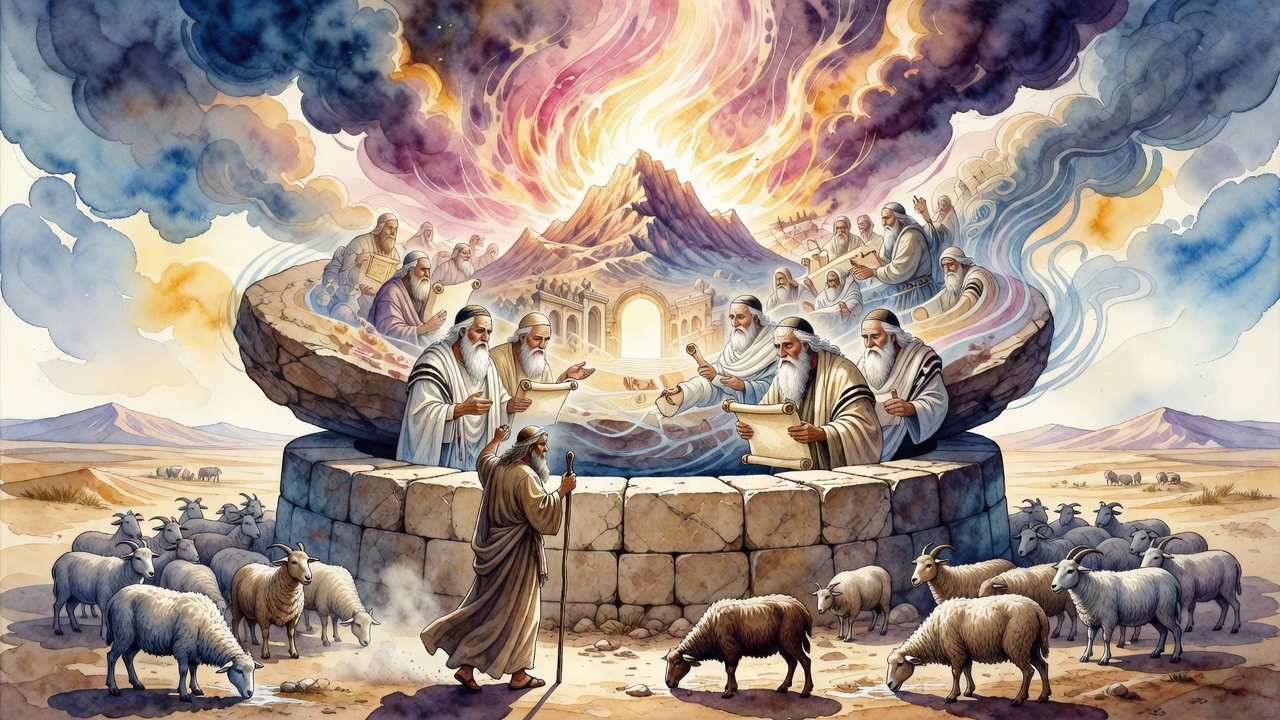
Moses drove Jethro's sheep forty days to reach Horeb. The empty desert already held the manna, the well, and the clouds of glory.
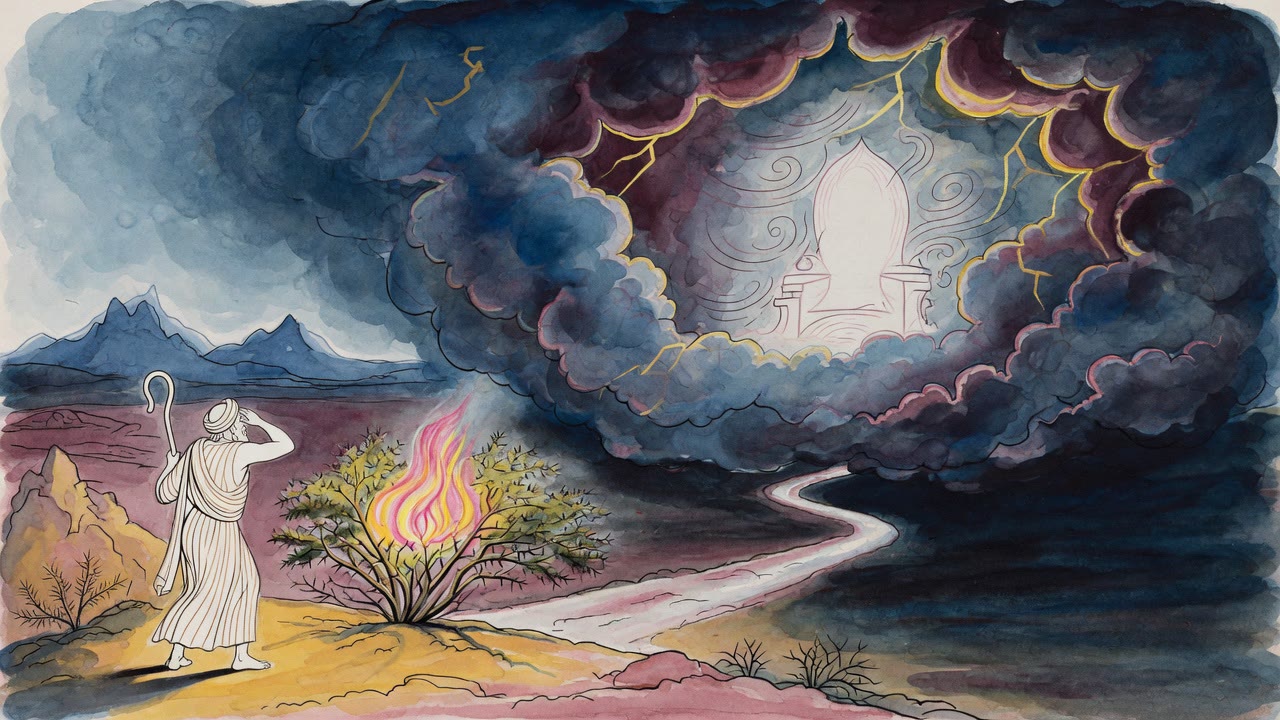
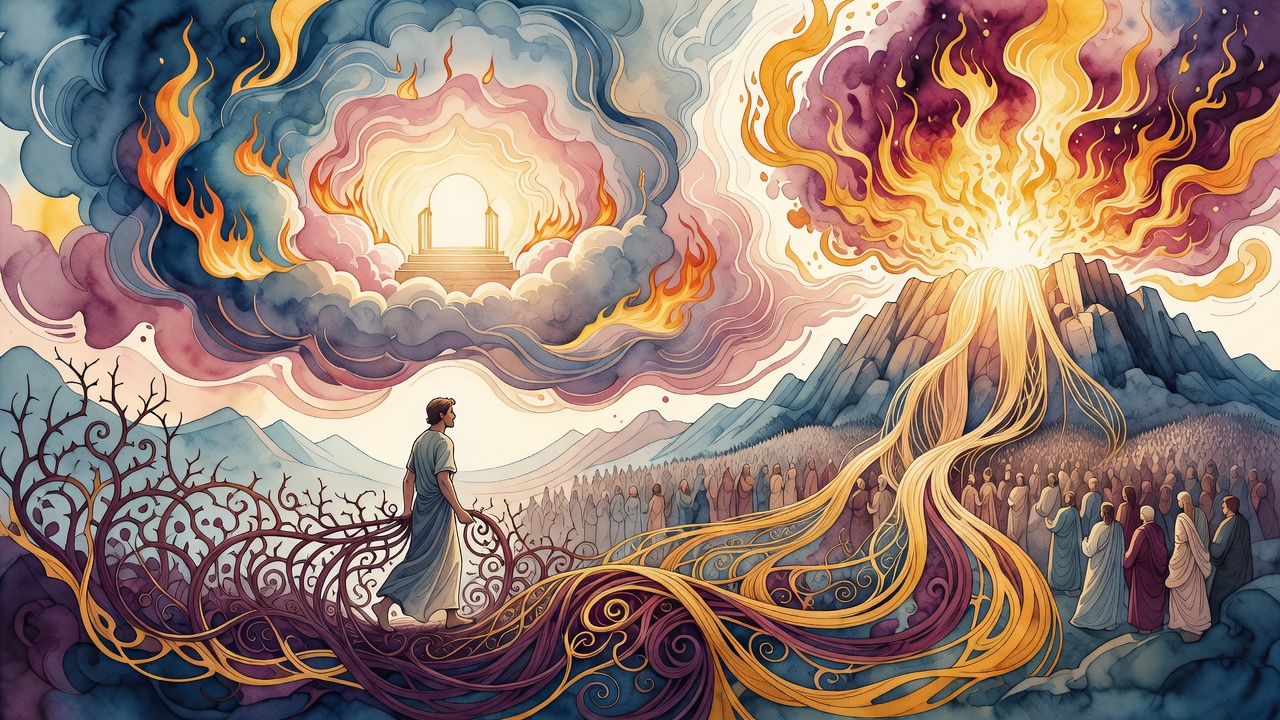
God gave the shepherd a fire that ate nothing, so the mountain would not frighten him. At the last threshold two angels had to carry him in.
She set the last jar down and checked herself again. This time the blood was there. Rabban Gamliel went white in the doorway.
Wicked Esau could still walk in and learn, God said, and pointed at the calendar. That was the whole answer the nations were given.
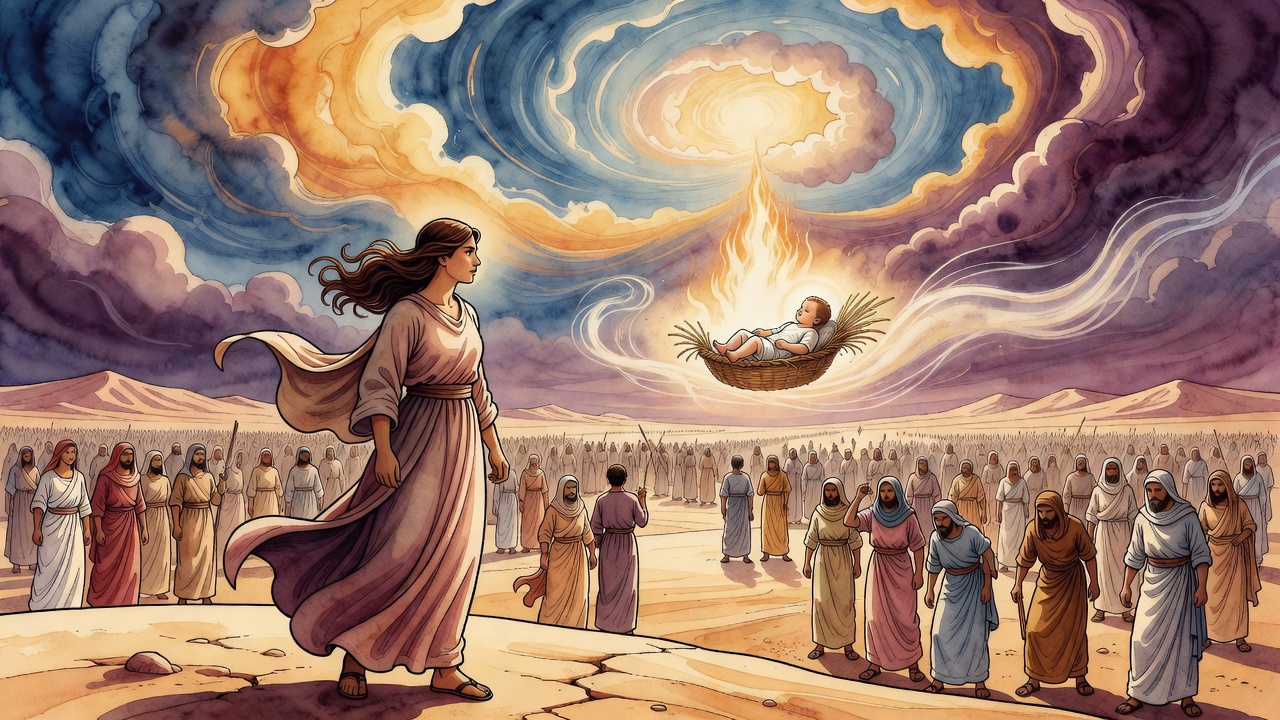
Miriam stood watch over her floating brother for an hour. Heaven paid it back at seven days interest, with the entire nation frozen in the desert for her.
All Israel lined the path when Moses walked to the Tent. Then God told him to go back to the camp, and he said no.
Jacob had not lain down to sleep in fourteen years. God told him to lie down, and he argued back that the sun was still too high in the sky.
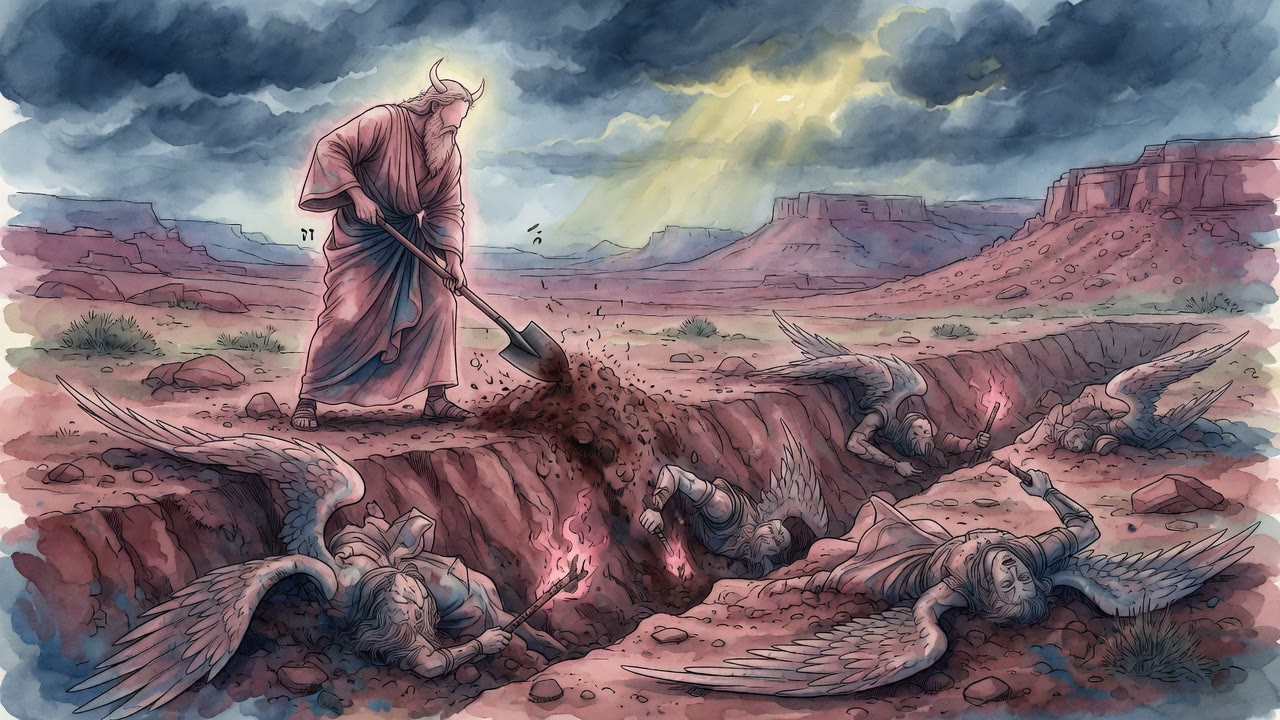
Israel danced around the calf, and heaven sent five named angels to wipe out the nation. One man ran ahead of the executioners.
A bier hung in the air at noon, and the face on it was Moses. The camp pointed up and asked Aaron for a god they could carry.
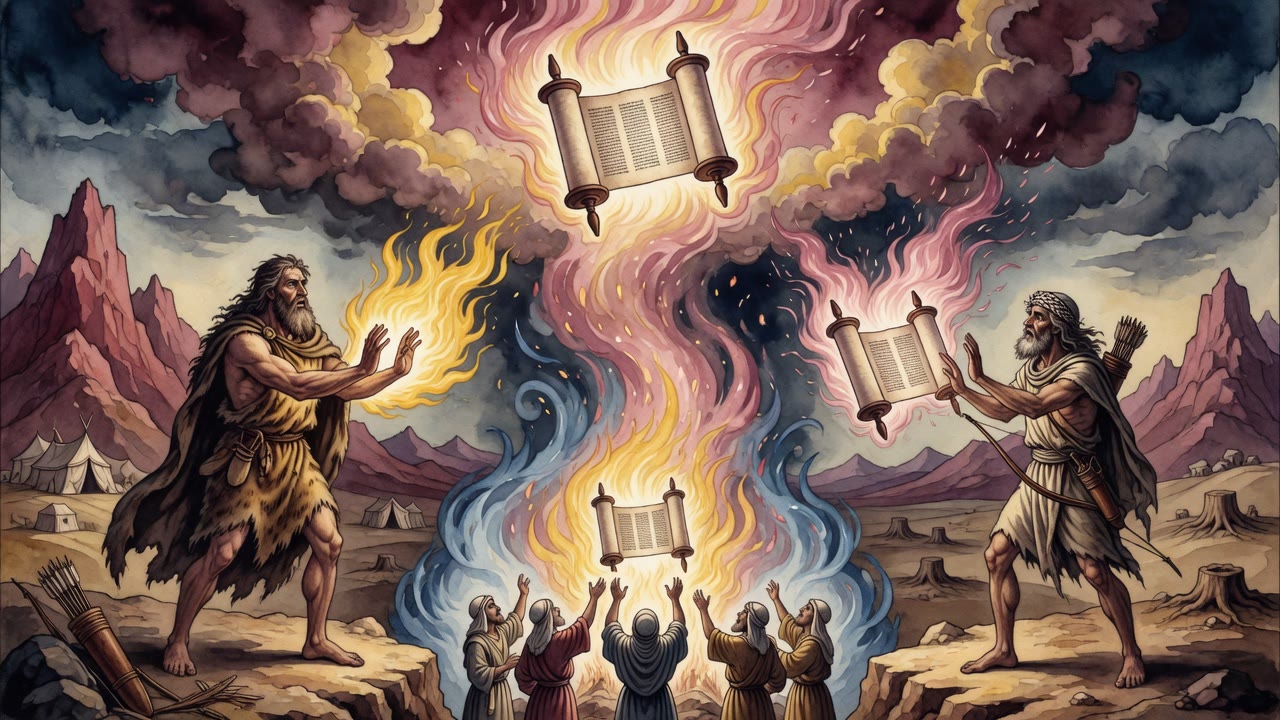
The sons of Esau asked what was written in it. God named one command. They remembered Isaac's blessing and would not take the rest.
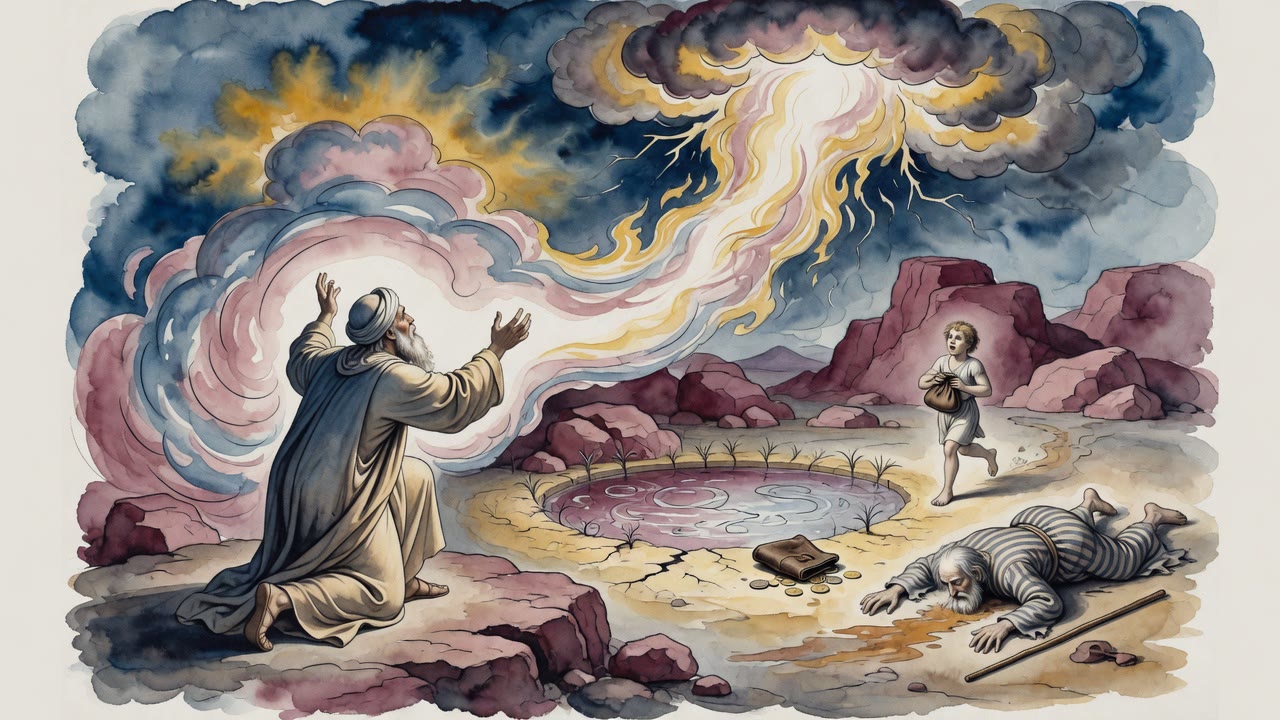
On Sinai Moses begged to see the law behind the world, and God led him to a spring where one lost purse left a boy rich and an old man dead.
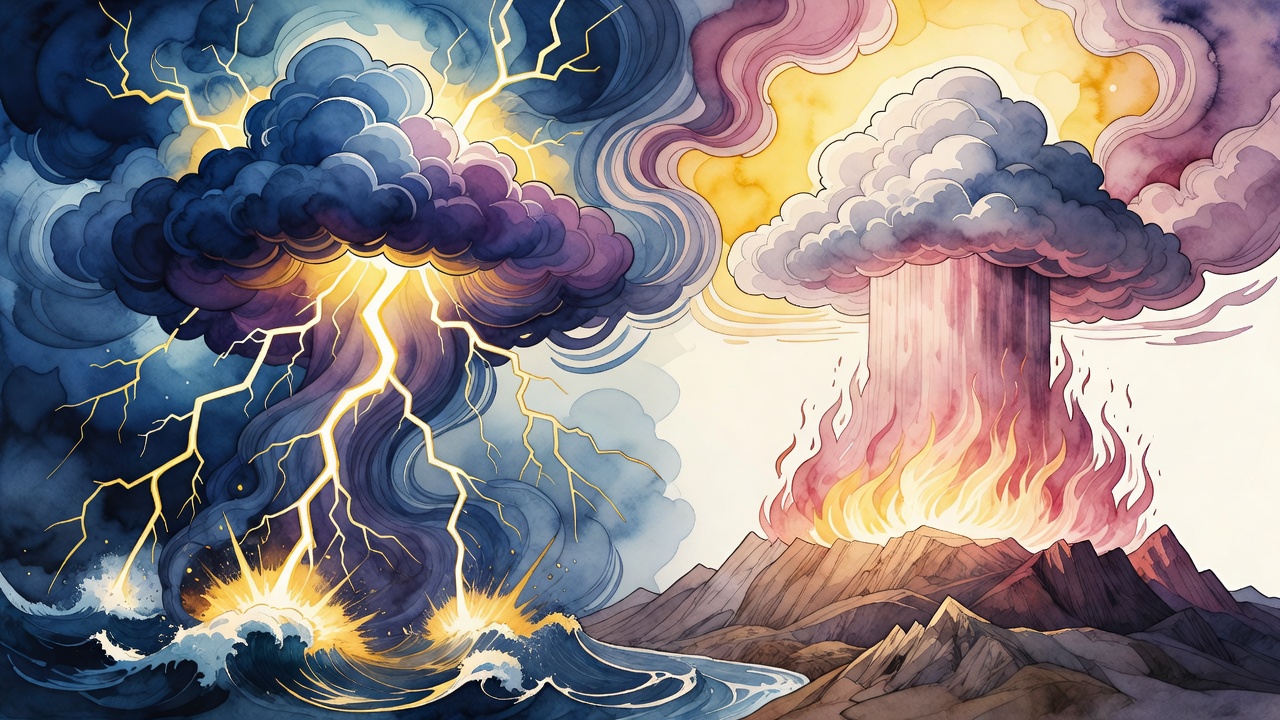
At the Sea He thundered as a young warrior, at Sinai He came slow and old, and the mystics swore the two faces hid one unchanging maker.
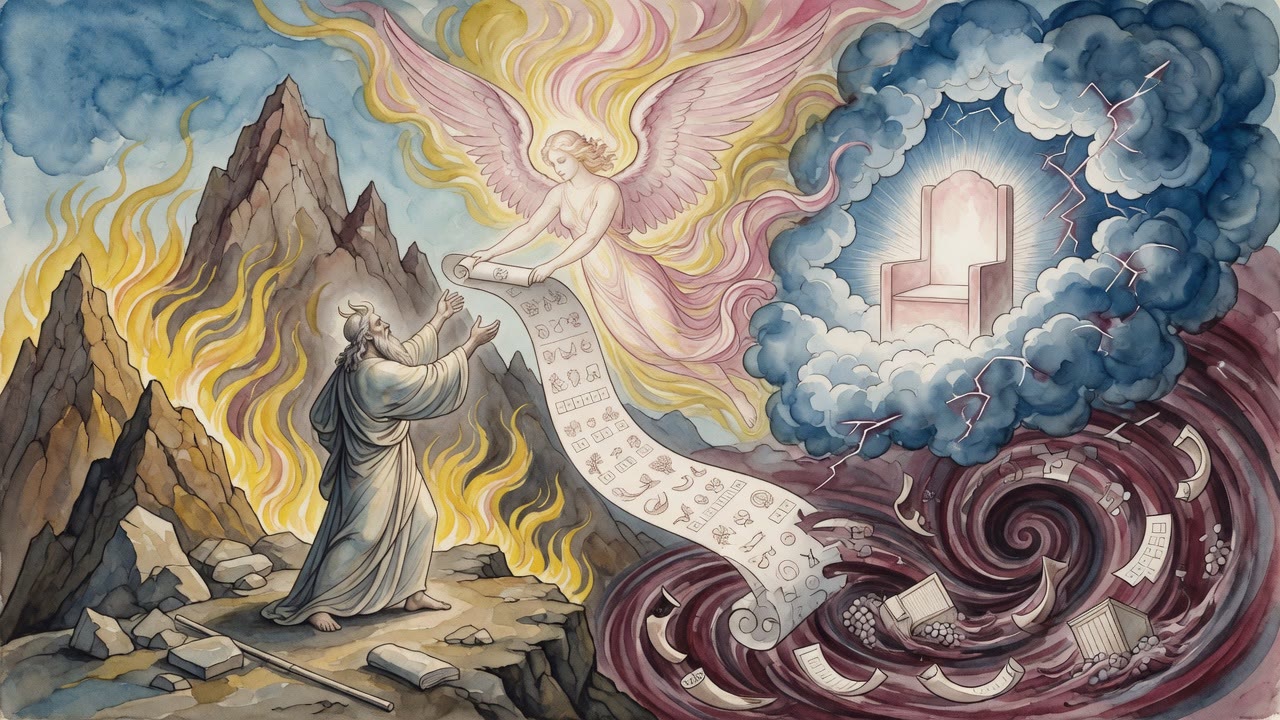
On Sinai an angel gave Moses the heavenly count of days, then showed him the age when one stolen month would drown every festival in chaos.
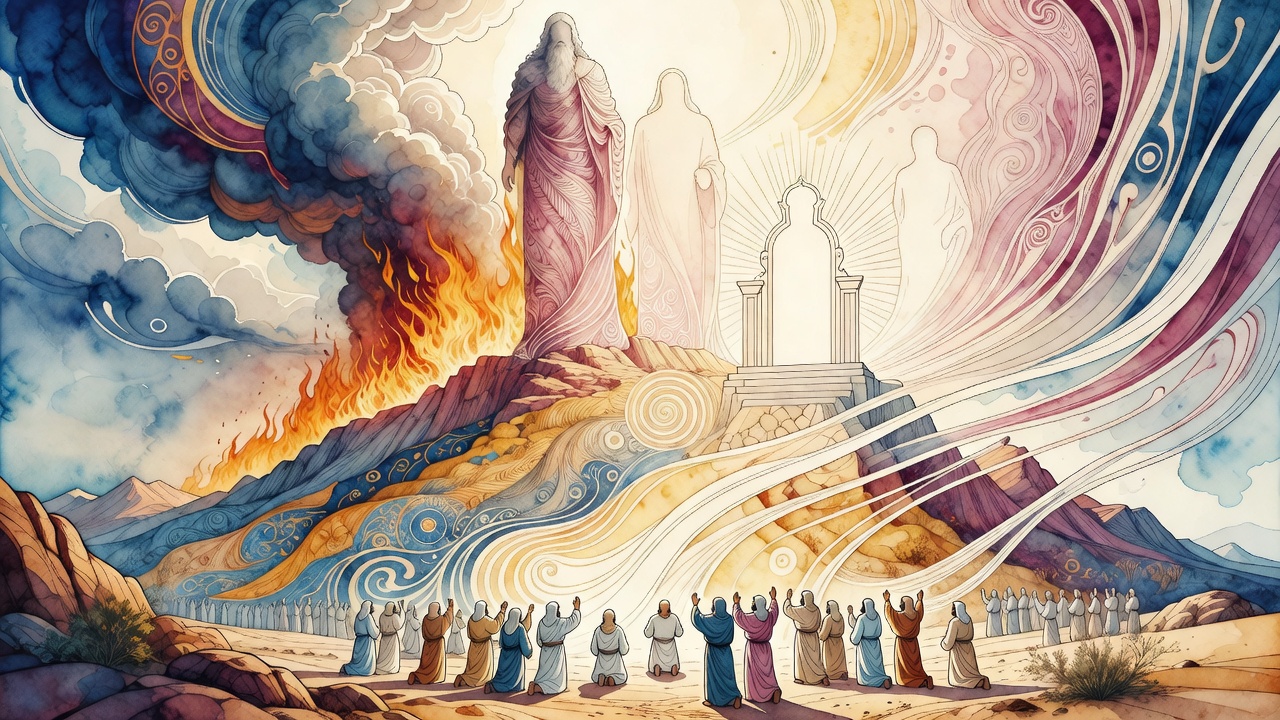
A kindness done in a low place with no witness rose as a thread of light. The Presence wore a robe cut from that cloth. When Israel turned, she wore black.
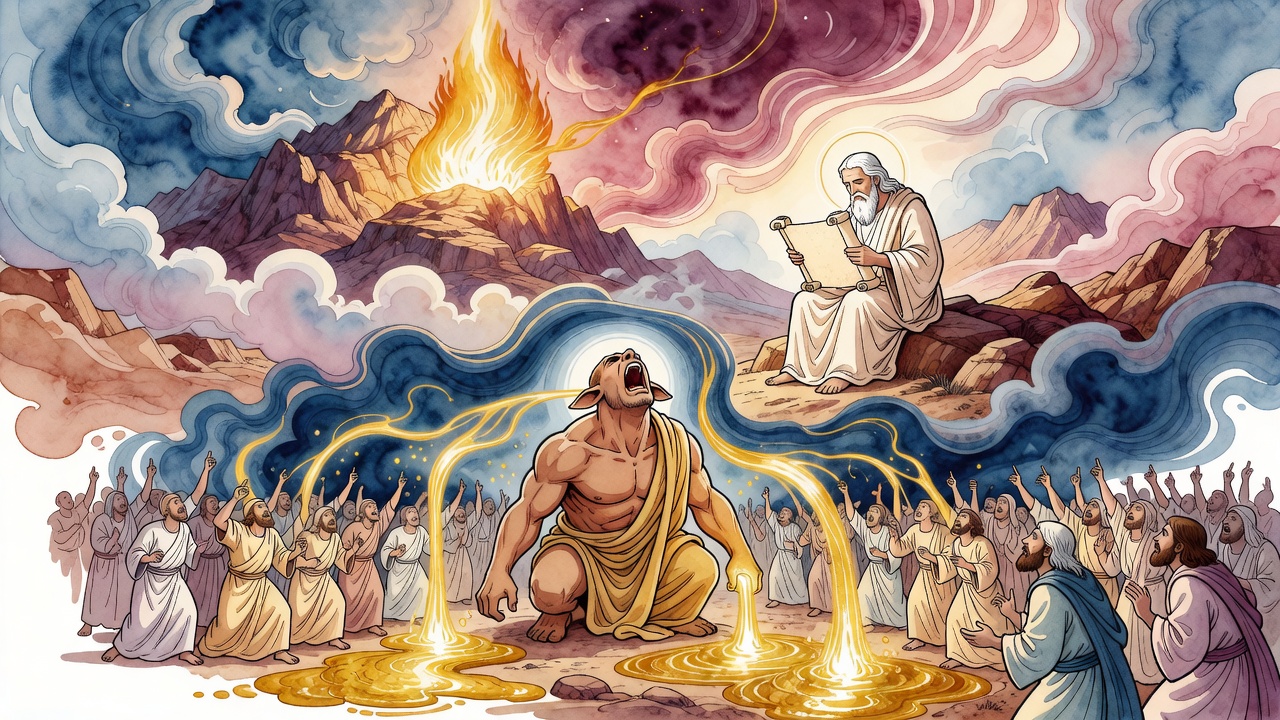
While Moses learns the blueprint of a holy life on Sinai, Samael lows like an ox in the camp below and turns Israel's fear into gold.
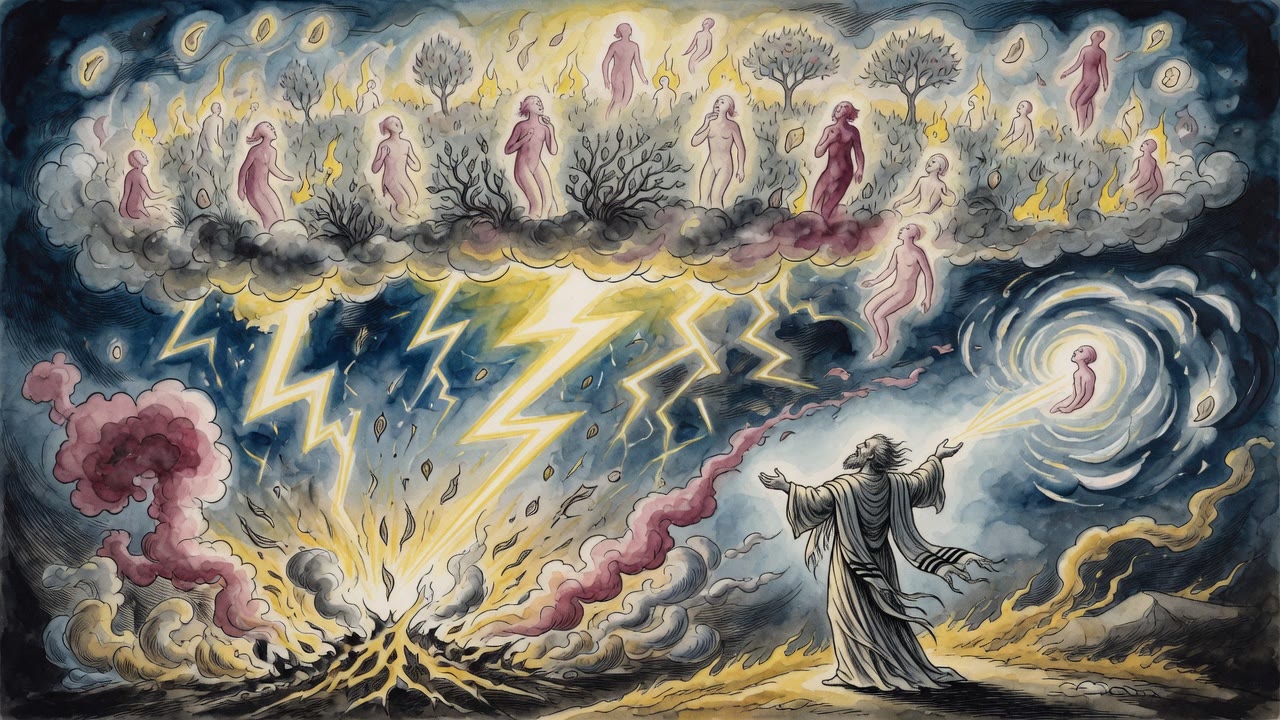
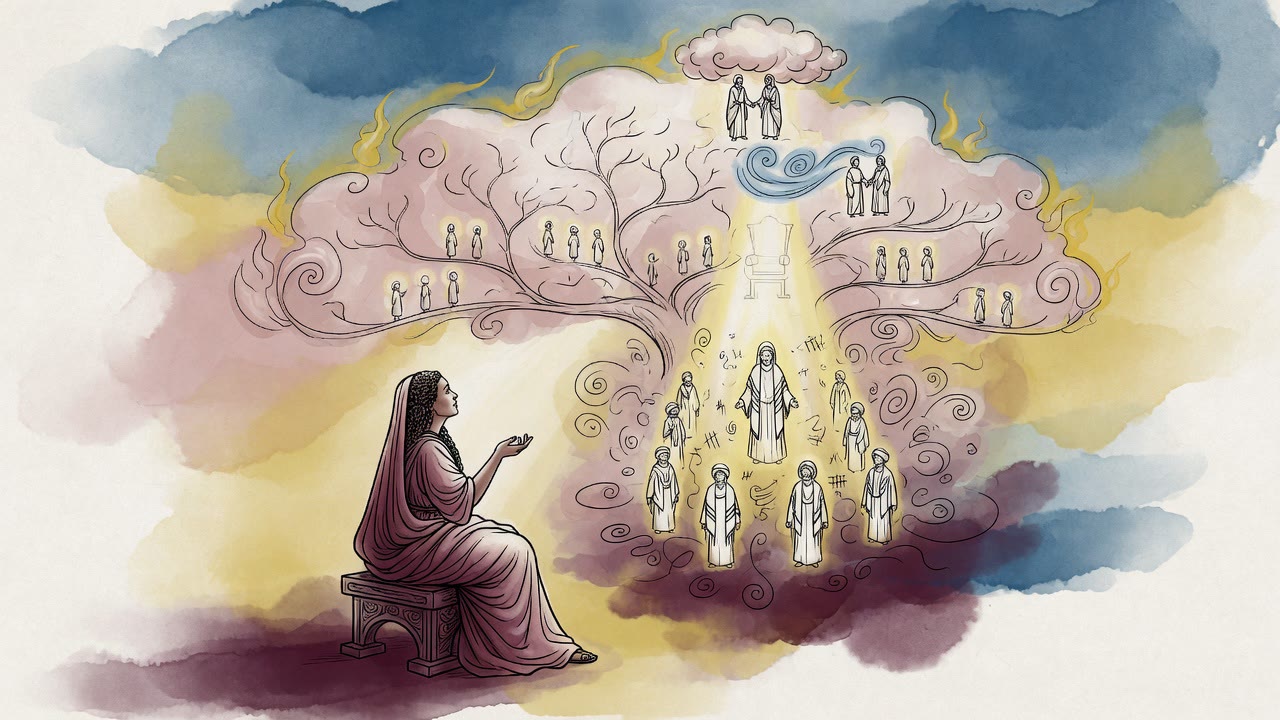
Before any body was formed, all souls waited in a garden above and stood at the thunder of Sinai, until a mystic learned to call one back by name.
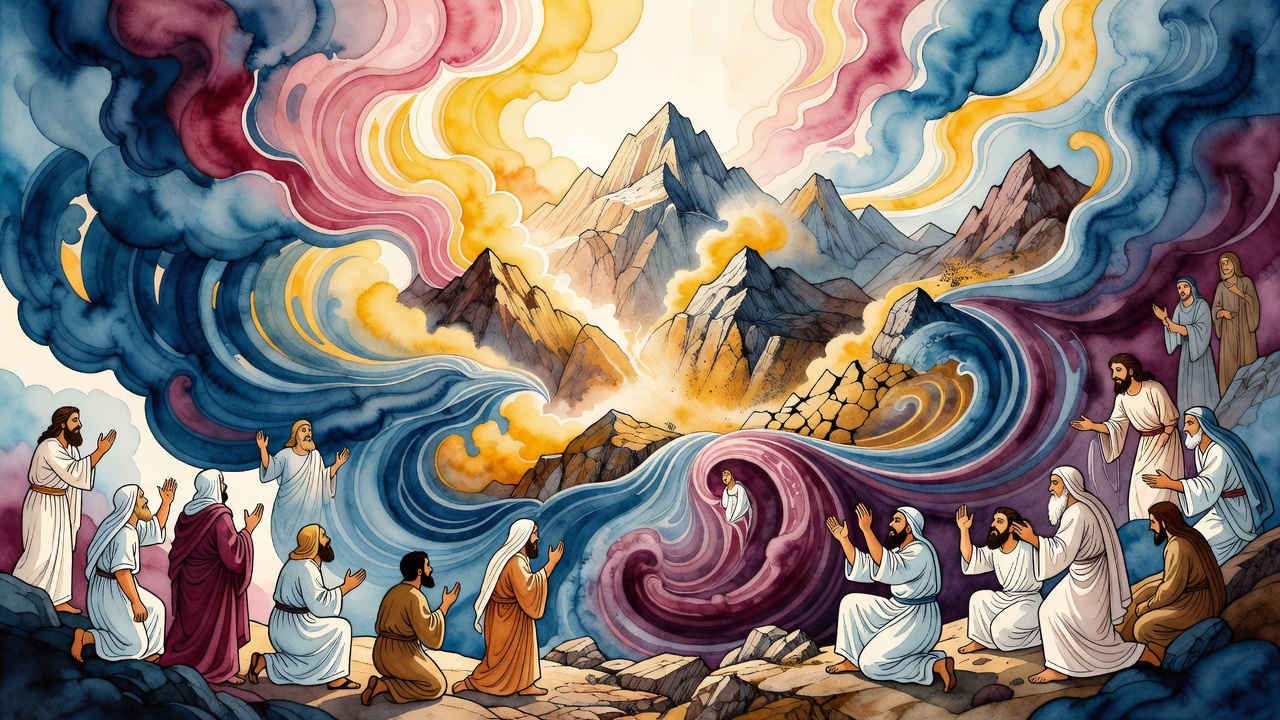
When the first commandment left God's mouth the mountains bowed and the sound turned visible, and each Israelite met a different face.
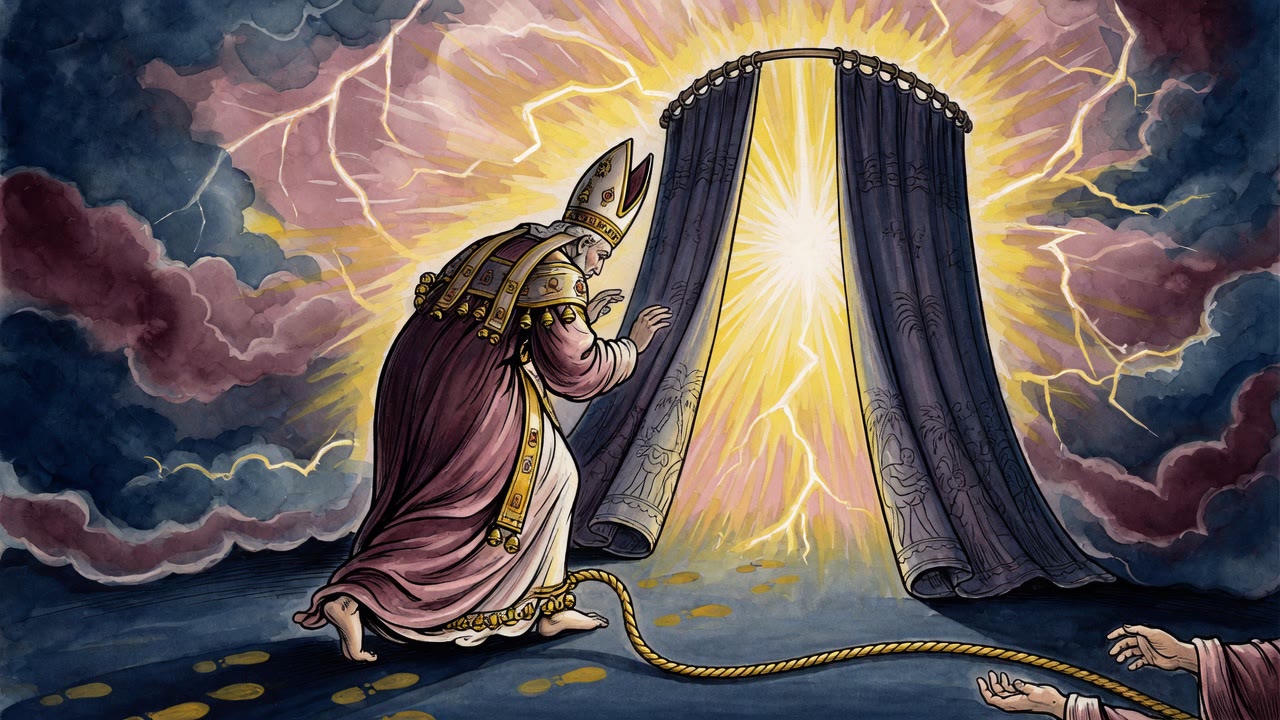
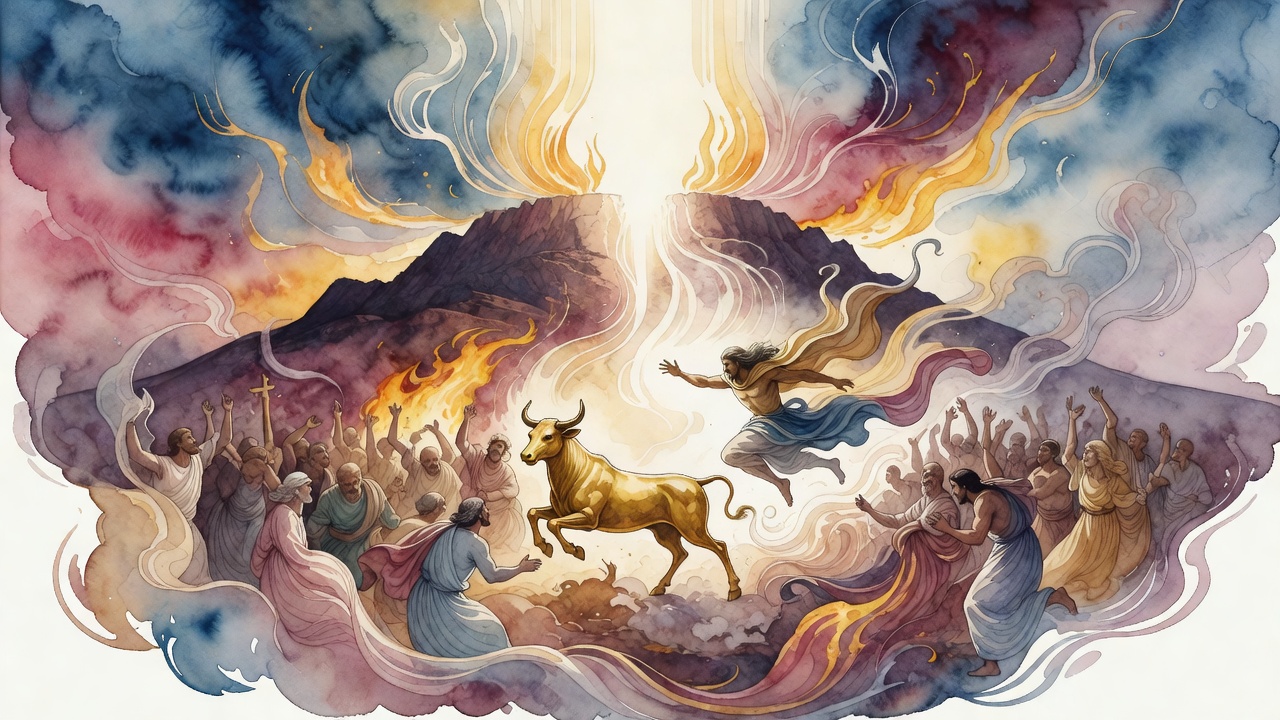
Men broke their own earrings. Aaron cast a plate bearing the Name. A living calf stepped from the flames, and Yom Kippur was born in the repair.
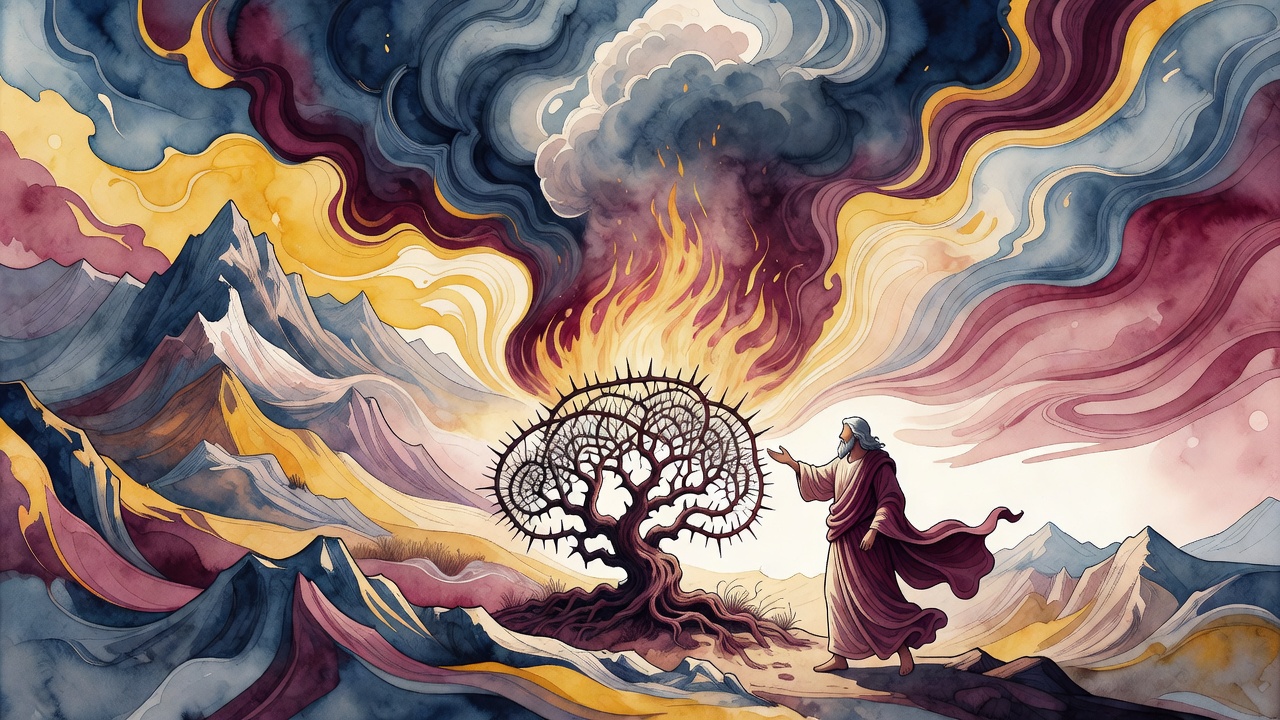
God abandoned the high slopes and settled in a shrub of thorns because Israel was in grief. Moses asked for an oath before he would go down.
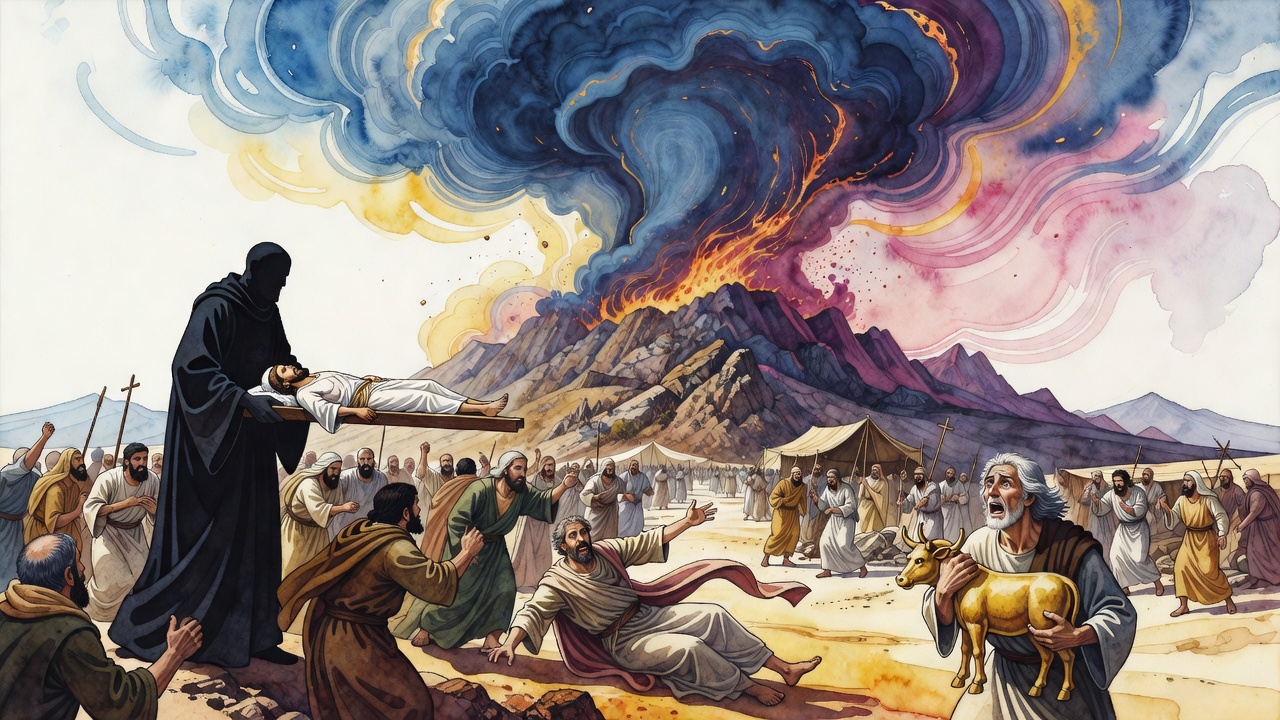
At the sixth hour of the fortieth day, Ha-Satan (the Accuser) painted Moses dead on the mountain. Hur rebuked the mob and fell, and Aaron faced gold with.
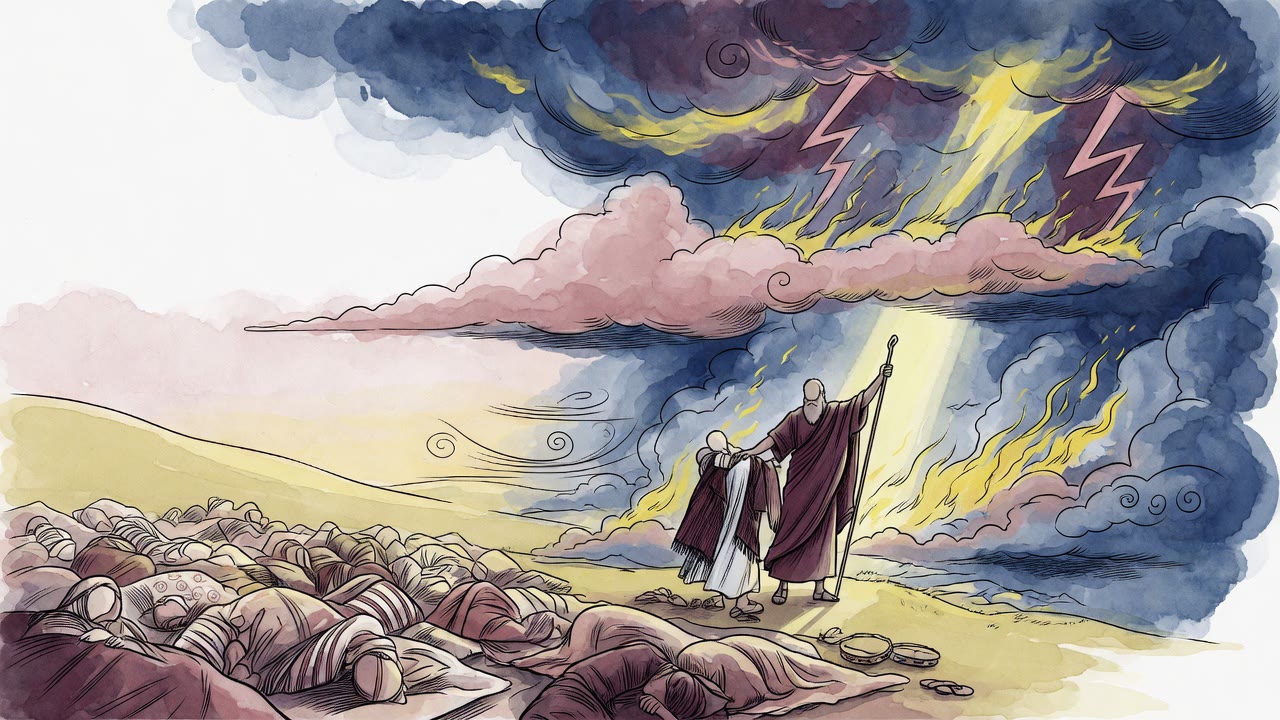
On the morning Torah was given, Israel slept late after a short summer night. Moses woke them as a bridegroom wakes a bride, and heaven walked out to meet them.
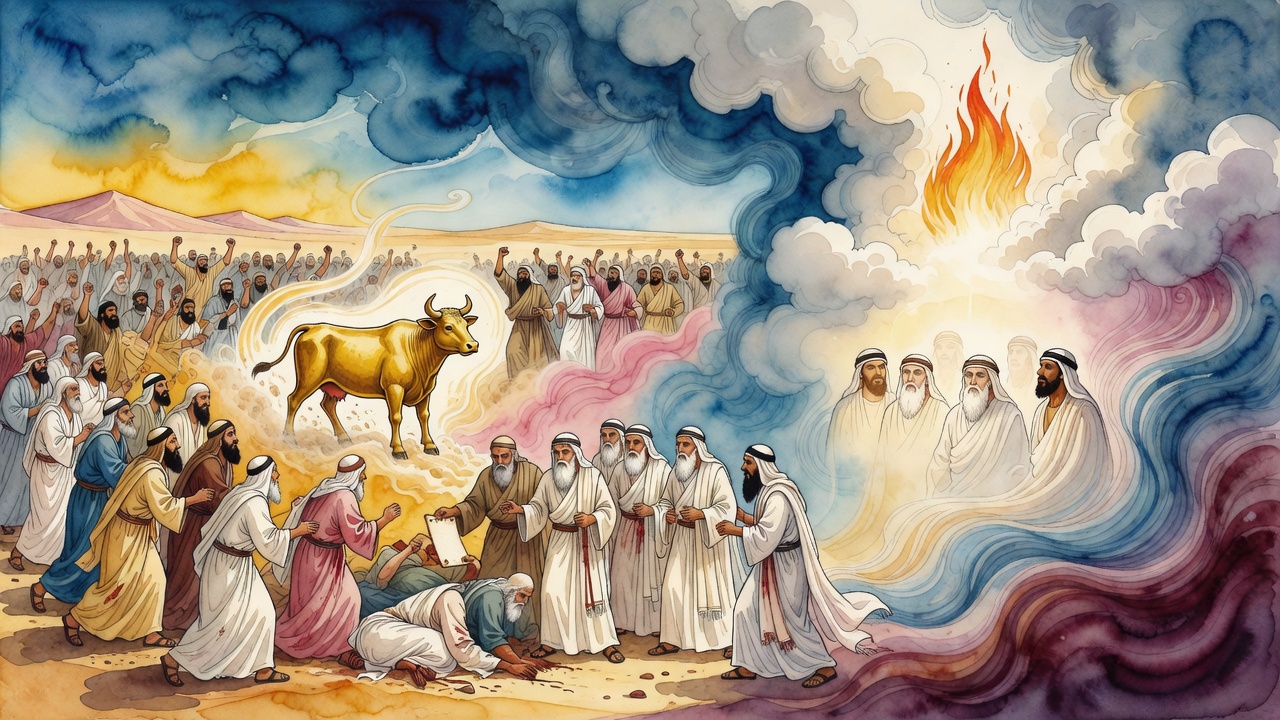
The crowd made the metal bull move and bellow, then told the judges to call it God. The judges said no, and the crowd killed them for it.
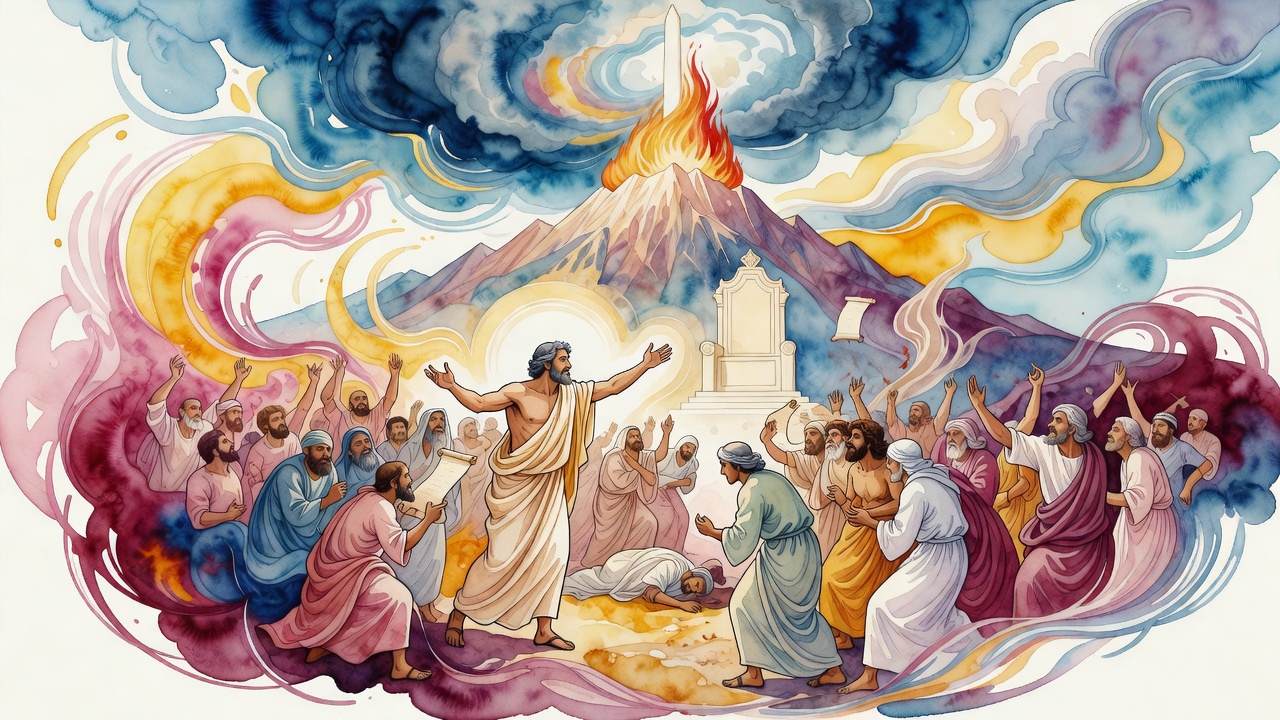
While Moses received Torah above, Hur rebuked the restless camp and was slain. Aaron faced a people who had already killed the man who said no.
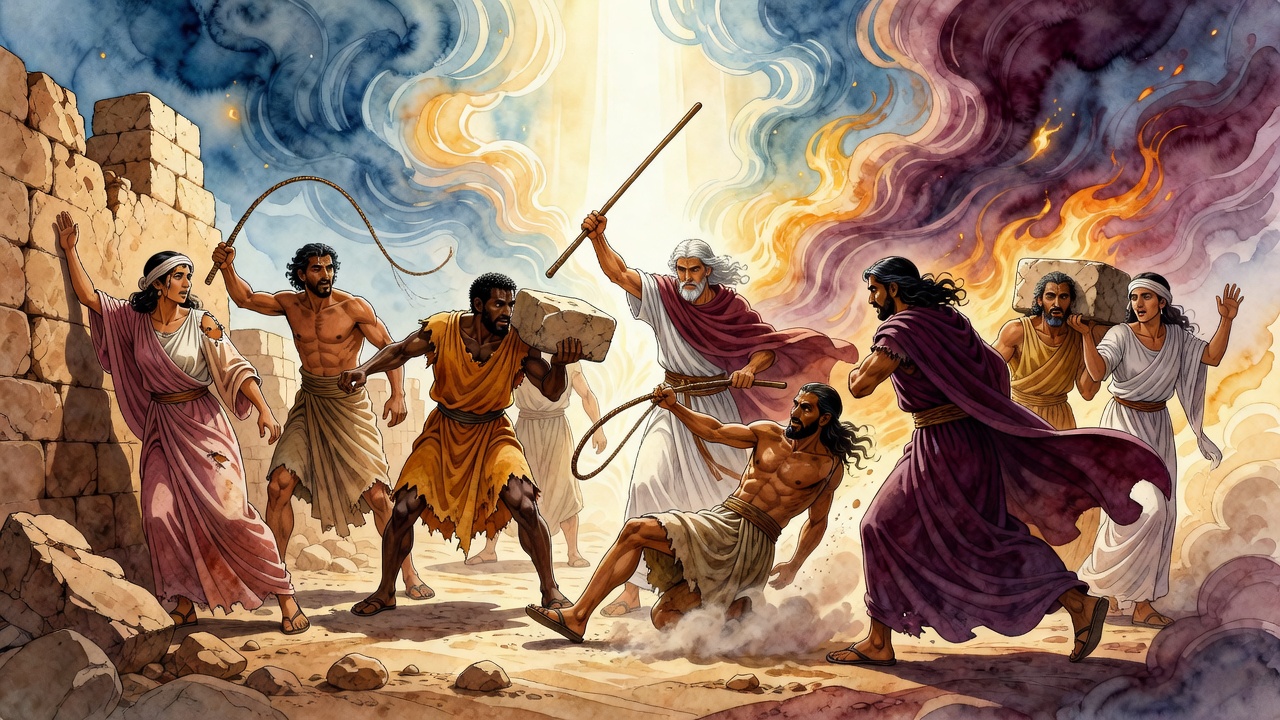
An Egyptian taskmaster forced Shelomith while Dathan was driven to labor, until Moses struck the abuser dead and fled the men he had saved.
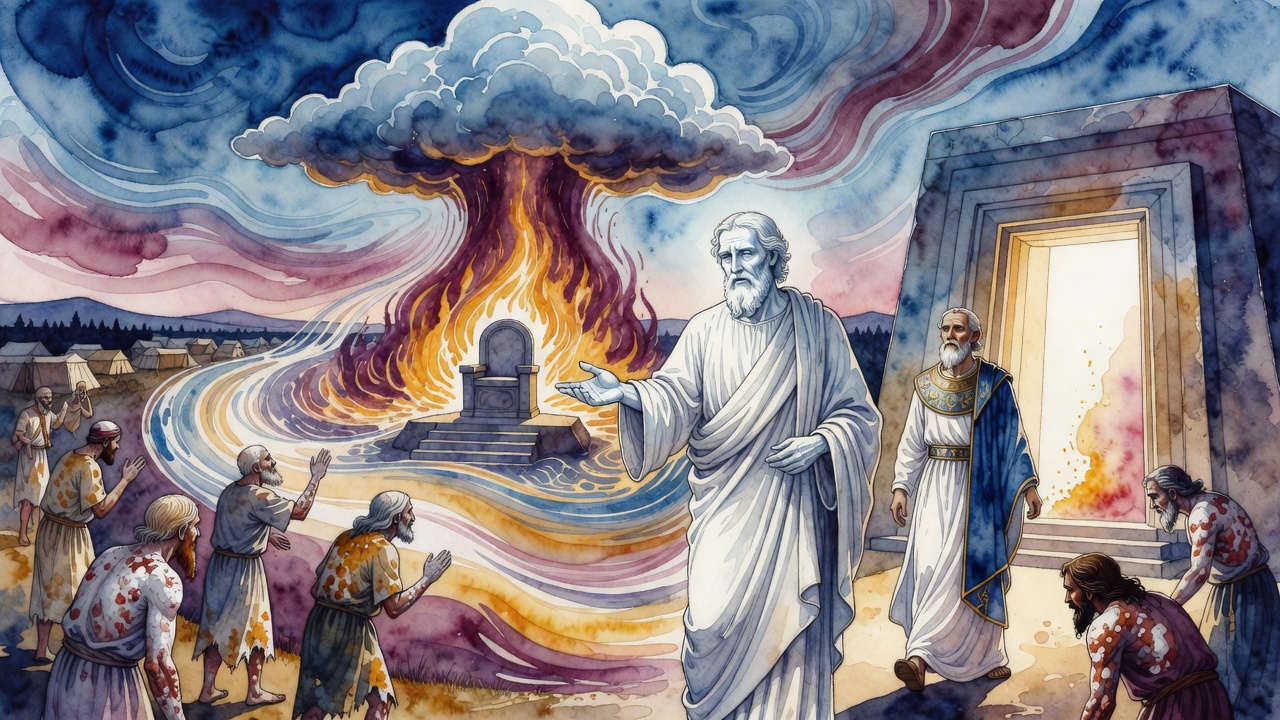
The dancers woke with white skin. They were walked to the edge of the camp, farther than ordinary uncleanness ever sent a body.
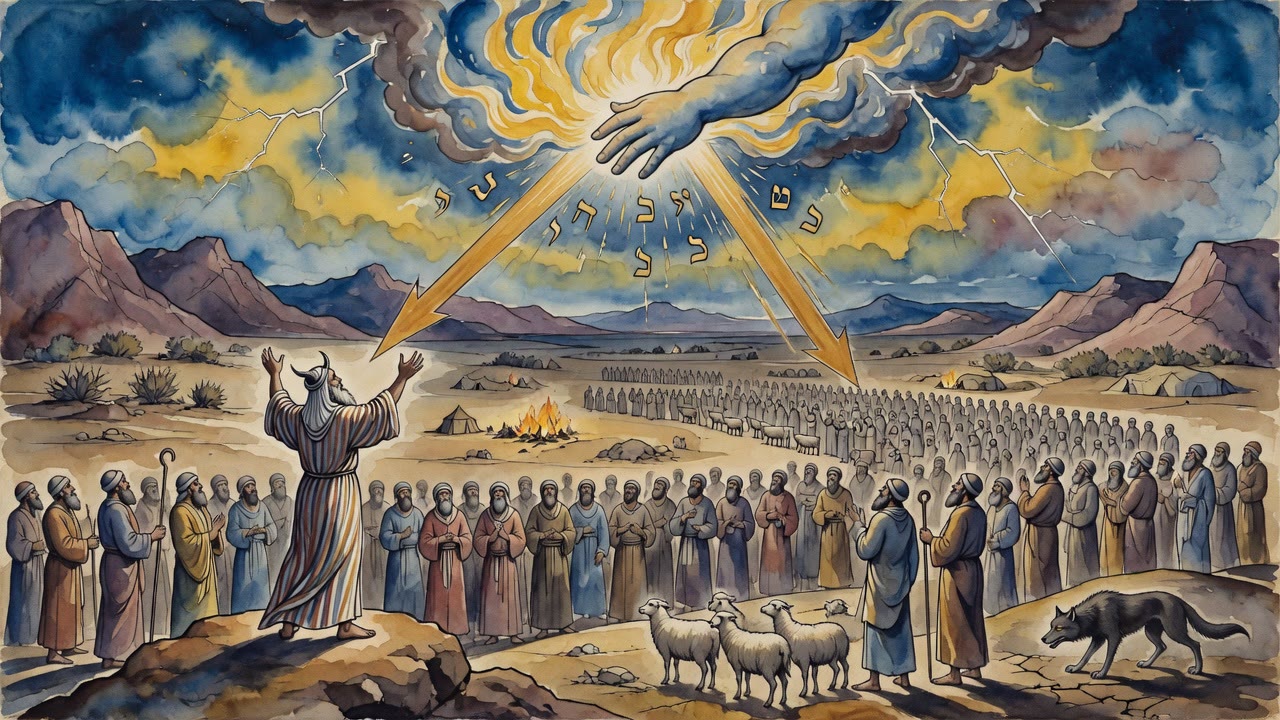
If one Israelite drifted out from under the cloud, the cloud went with him until he came back. Forty years, and no one in the camp needed a lamp at night.
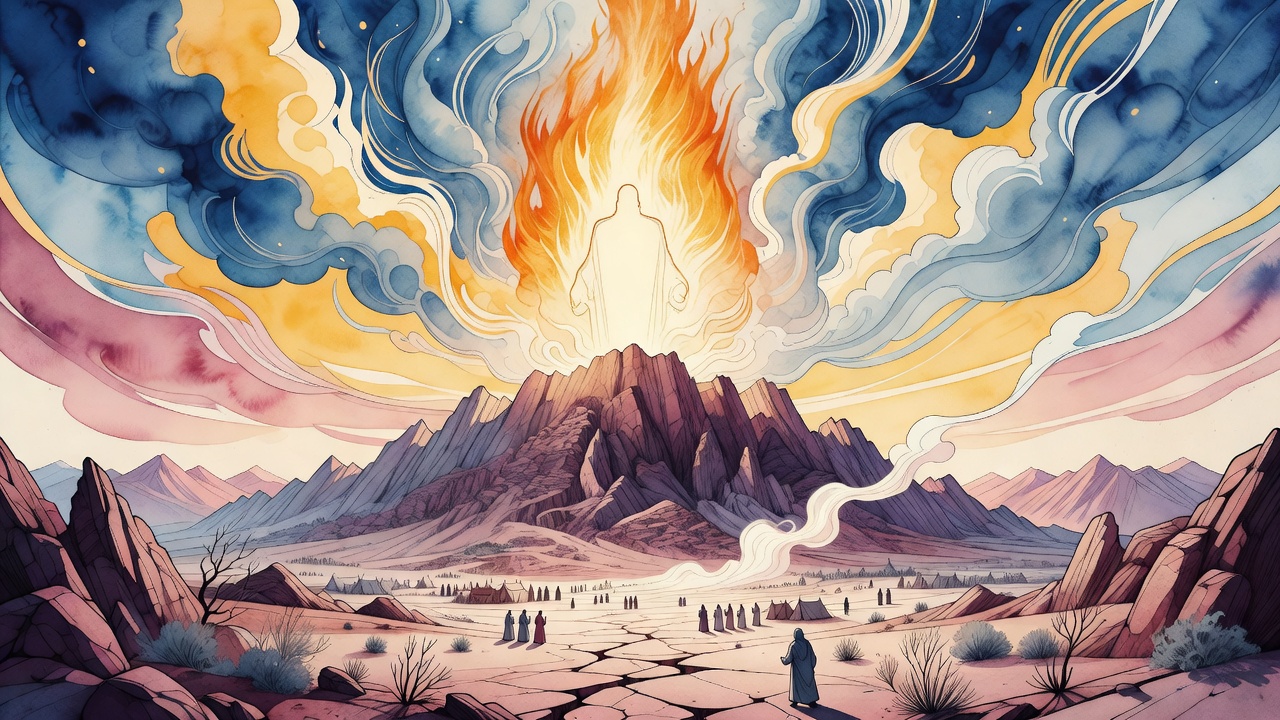
No bird sang. No ox lowed. A voice without echo said I am the Lord your God, and even the nations at the mountain's rim shook.
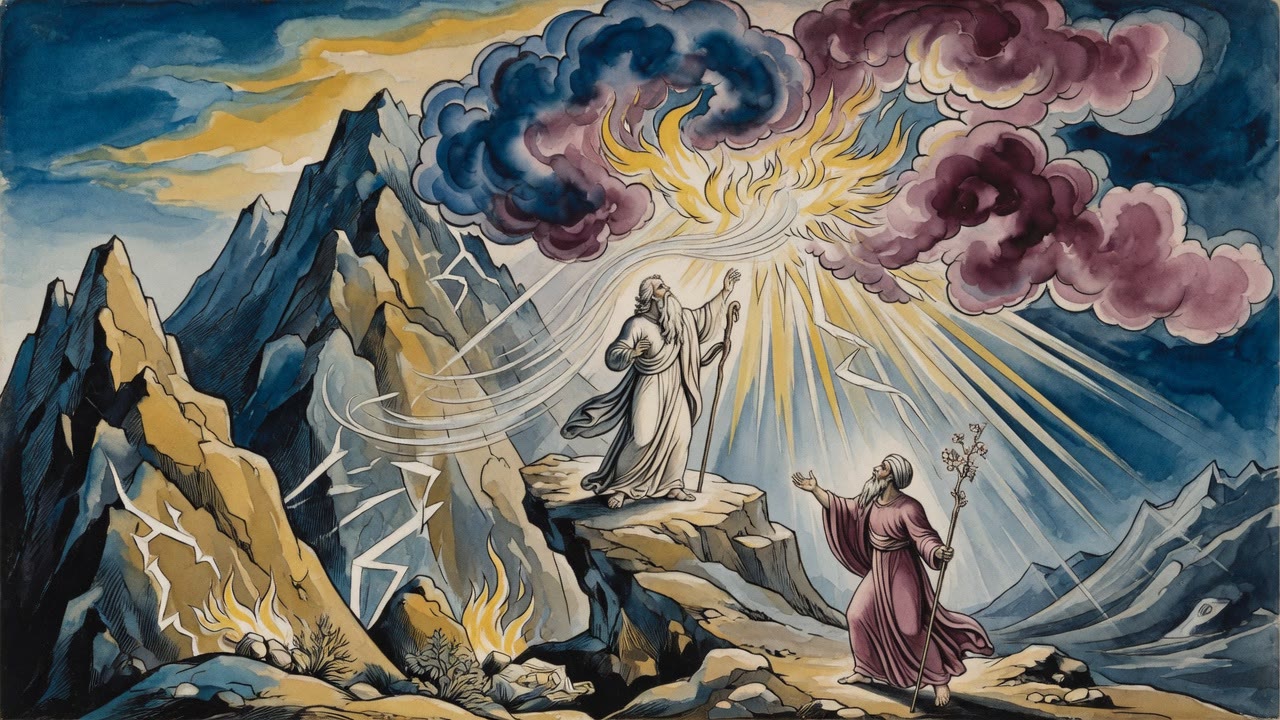
At the burning bush Moses said no for seven days running. God told him there would be a bill for that, and it came due at the door of the Tabernacle.
