255 myths · Page 5 of 9
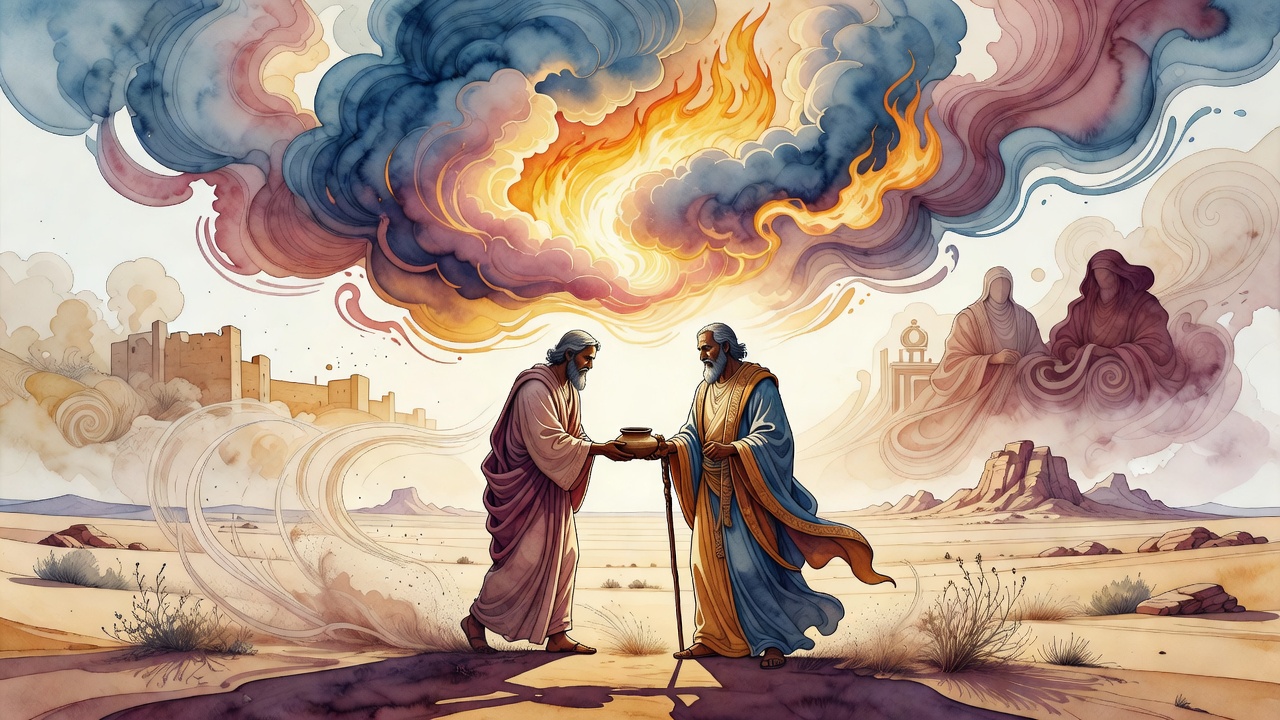
Moses served Jethro at a desert feast, then sent him home before Sinai, while Jethro's line later earned Jericho and Sanhedrin seats.
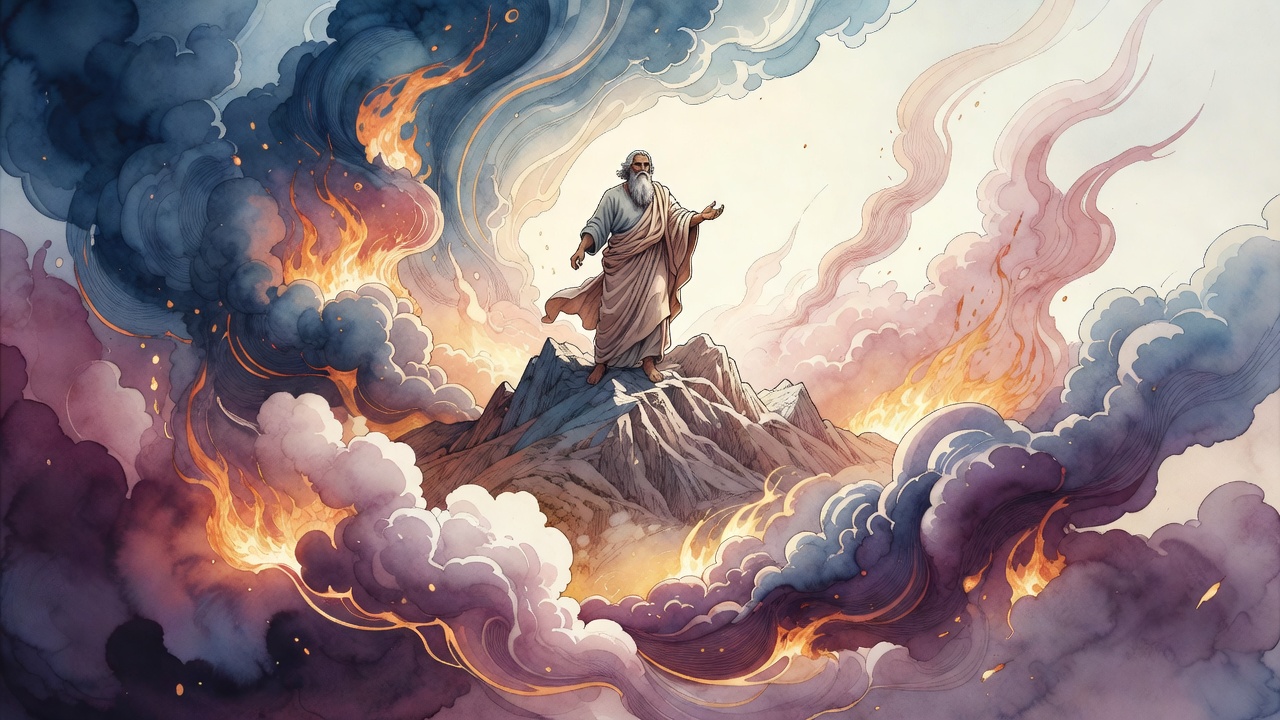
On the mountain forty days, Moses knew day by Written Law and night by Oral Law. After one hundred twenty days he brought pardon down on Yom Kippur.
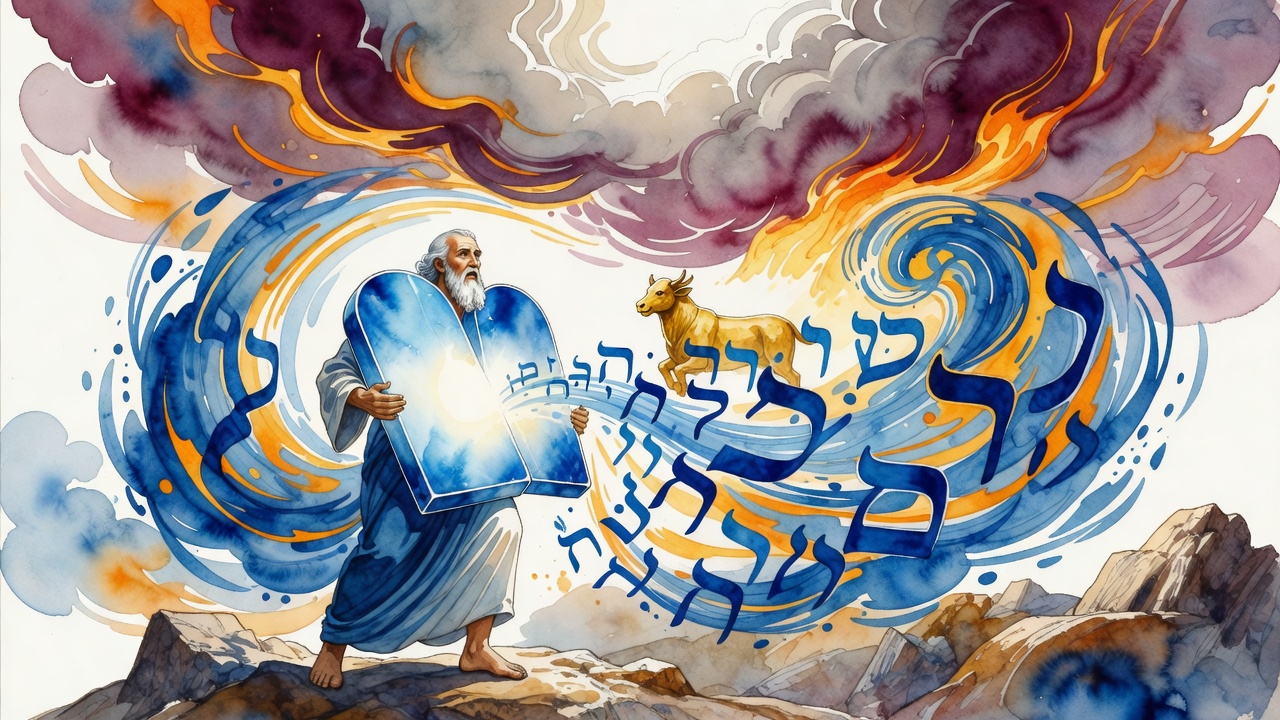
The tablets weighed as much as forty measures of wheat, and Moses carried them down easily. At the camp they turned to dead weight in his hands.
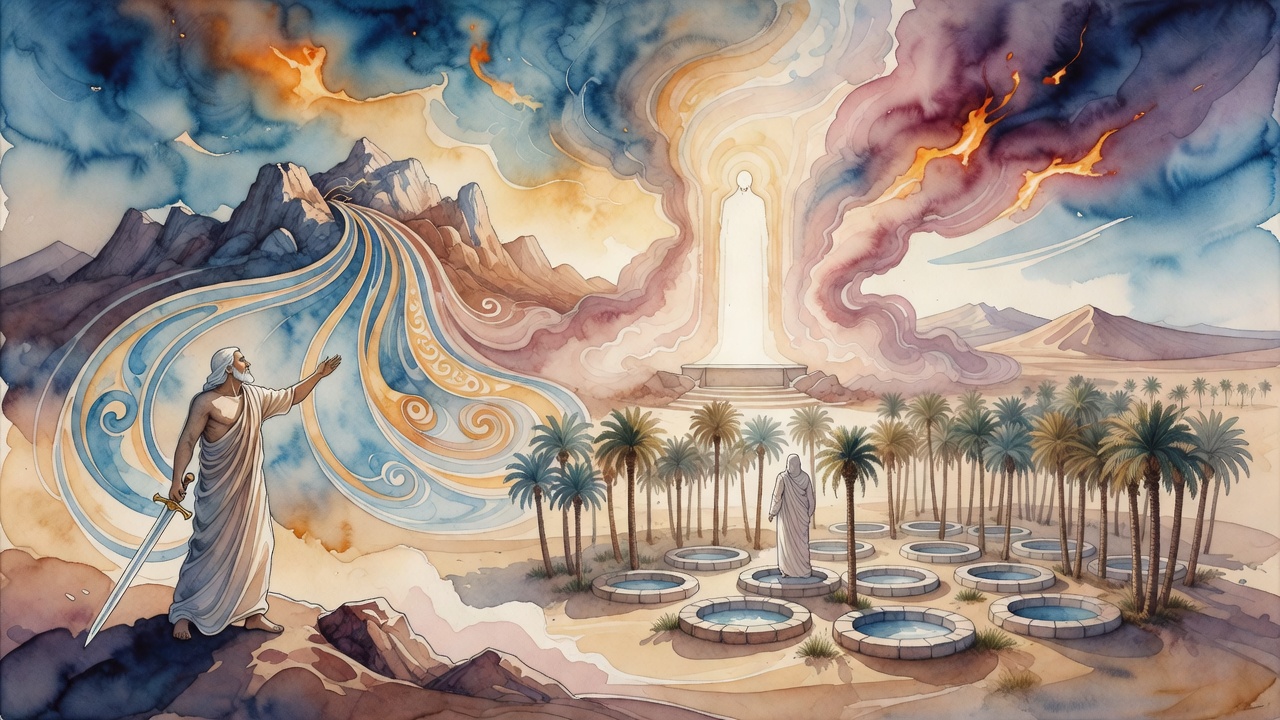
Horeb holds six names from mountain of God to sword. Elim held twelve wells and seventy palms, while God logged every desert station like a father.
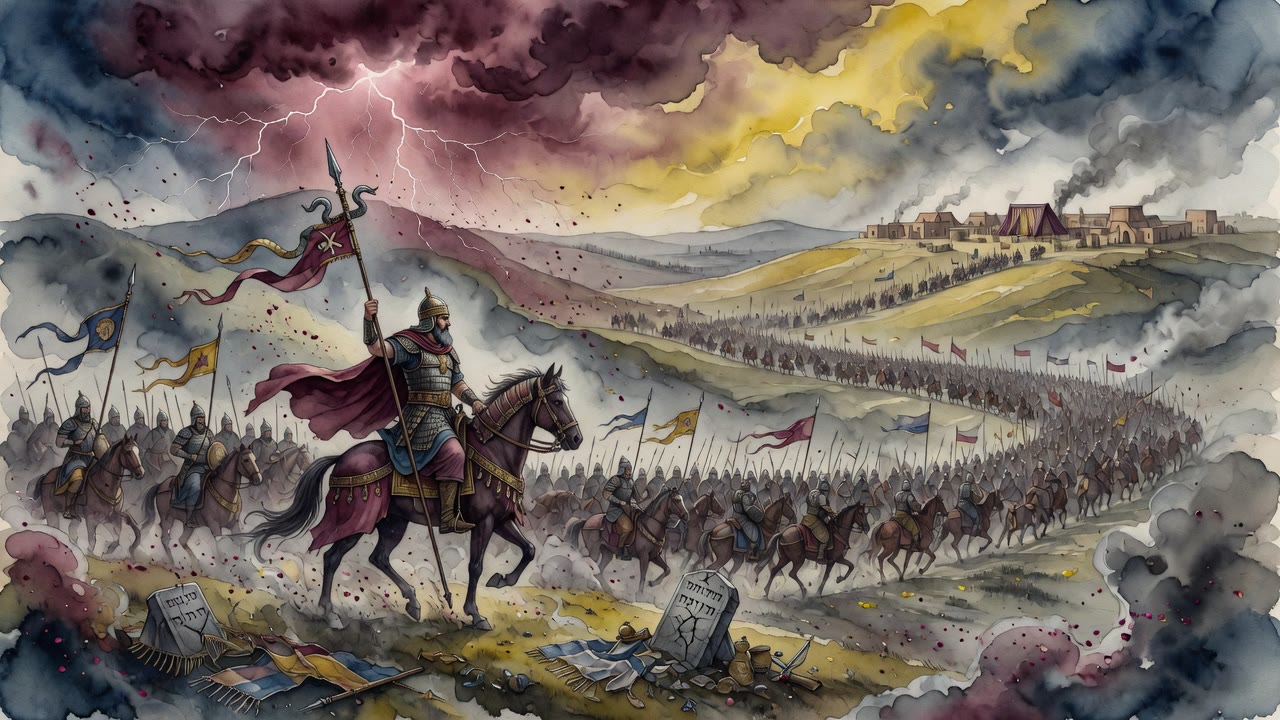
No one walked out. They asked to hear the words of their King from Himself, not from a messenger, and were given two days to purify.
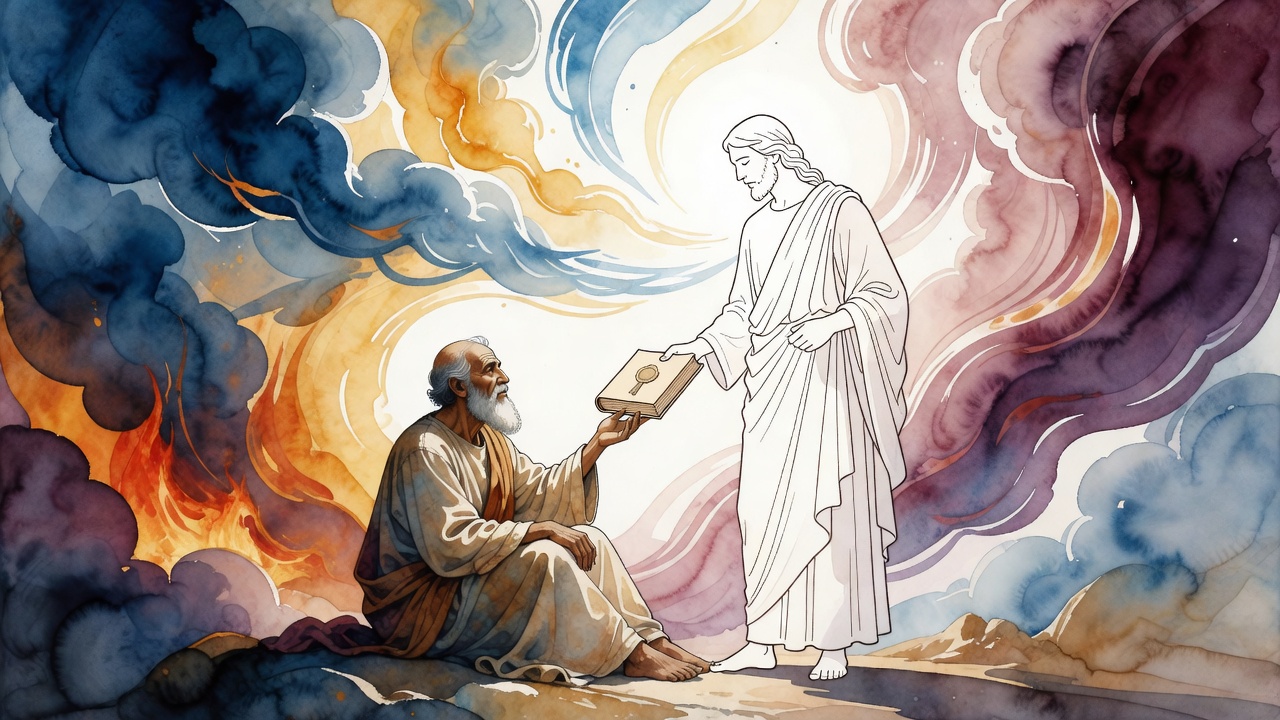
They found Moses standing with his hands folded. Joshua sat in the teacher's place. Then the wisdom left the older mouth.
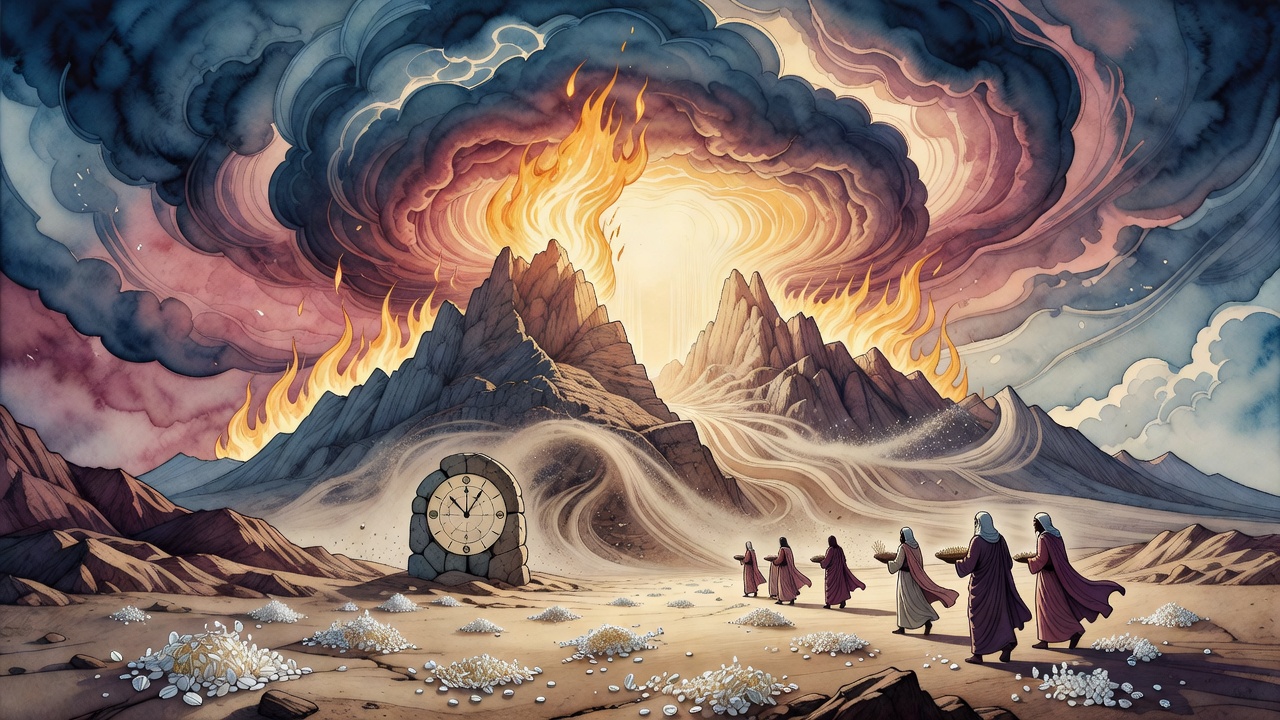
By the ninth hour the people were back in their tents. A double portion of manna was prepared for the next day. Moses stayed on the mountain.
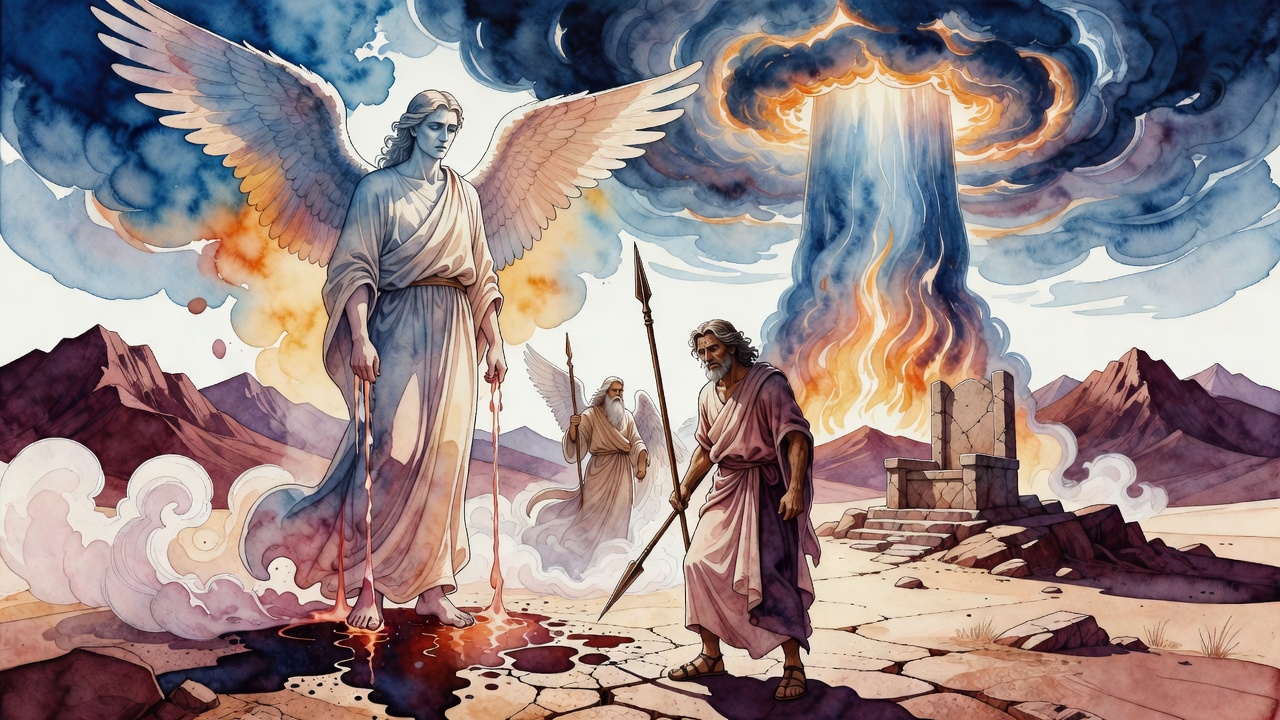
Moses rejected an angel and demanded God walk among Israel. When Joshua later asked the captain whose side he took, the angel wept from his feet.
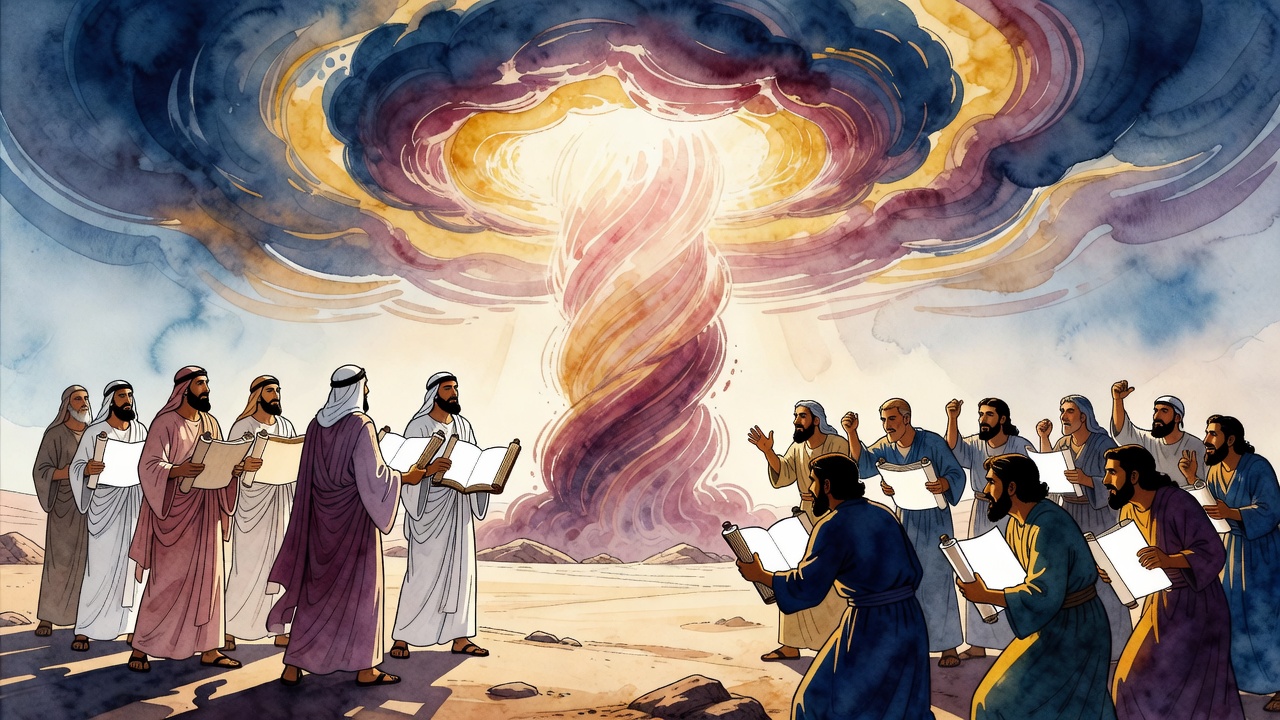
Before Sinai, the nations demanded to know why Israel was chosen. God asked for family records. Only Israel could open pure books of descent.
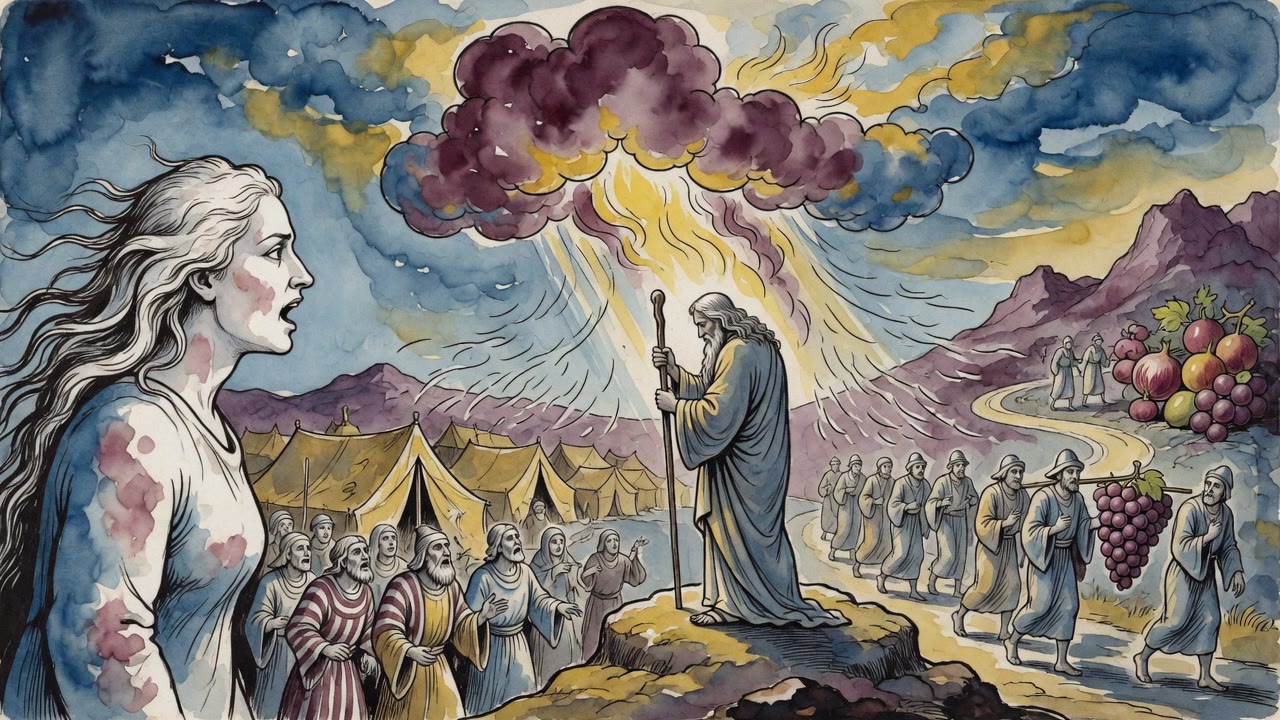
Go, get thee down, God said. Moses still had the tablets. In his heart he had already decided there would be no forgiveness.
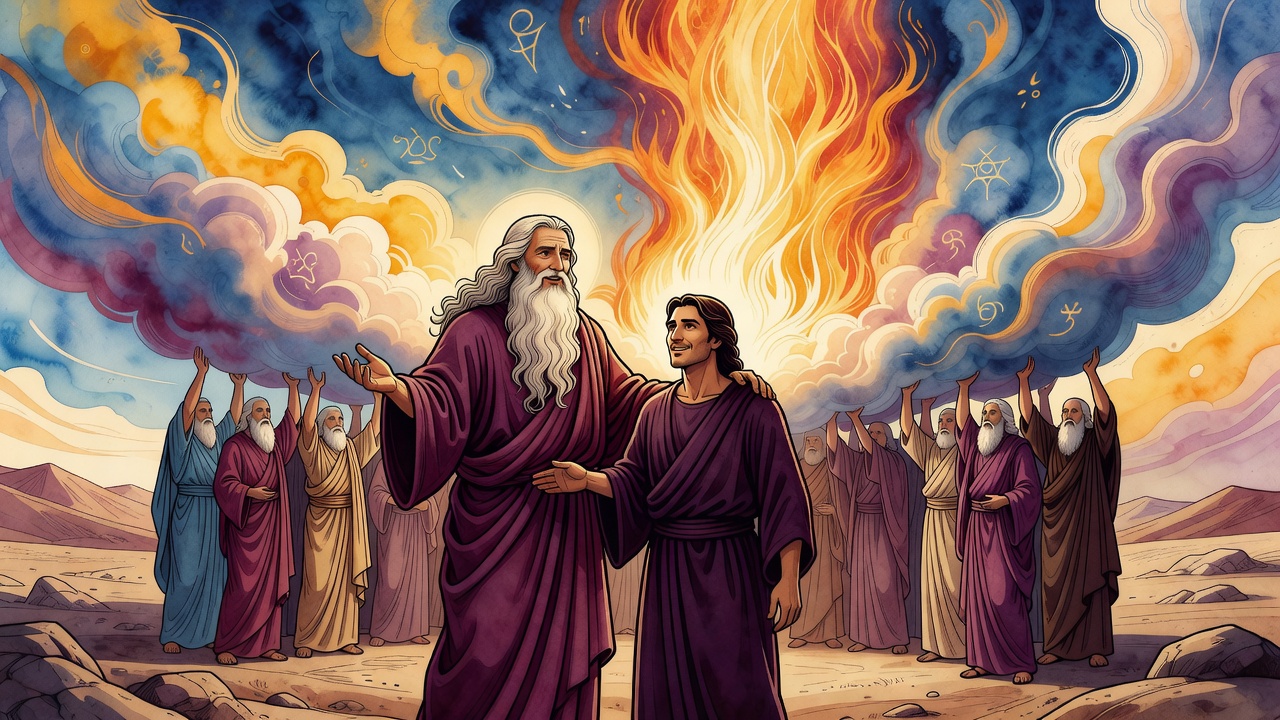
At a hundred and twenty his eye had not dimmed. Moses laid hands on Joshua anyway, with joy, and never asked why the honor missed his own sons.
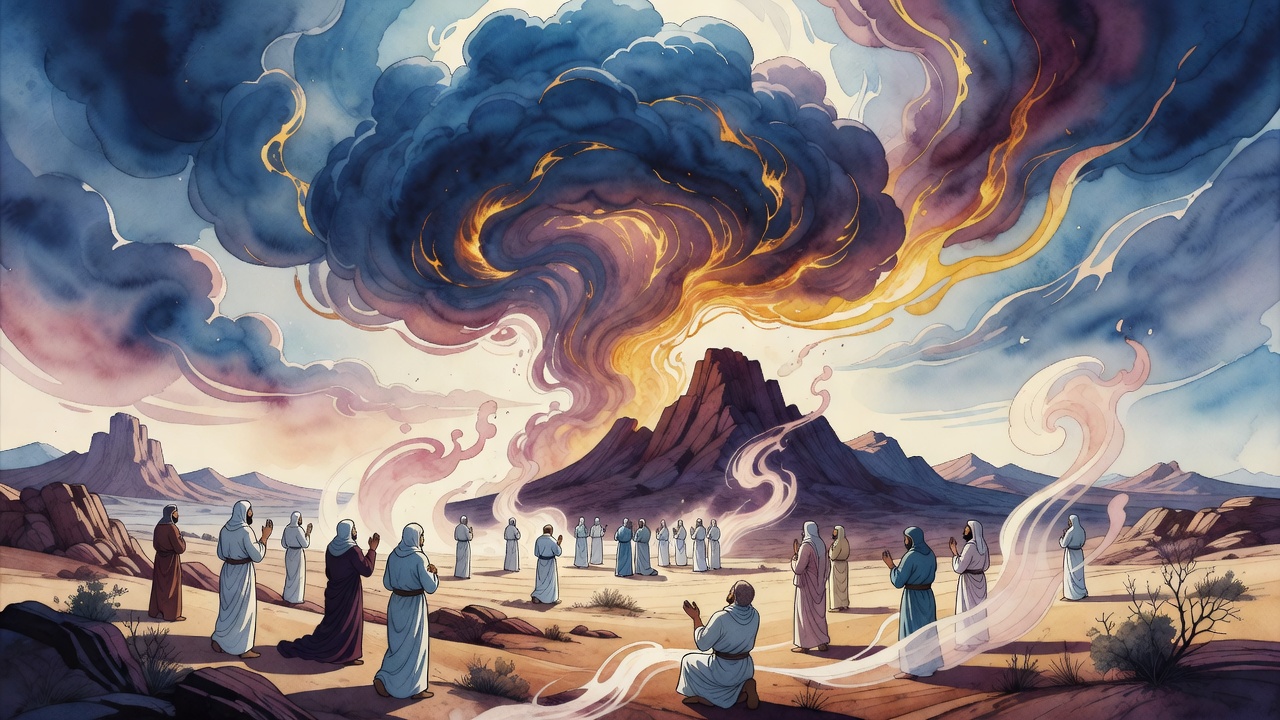
God measured the earth before Sinai. Nations refused, Israel accepted, and only the living received laws of food and a call to be holy.
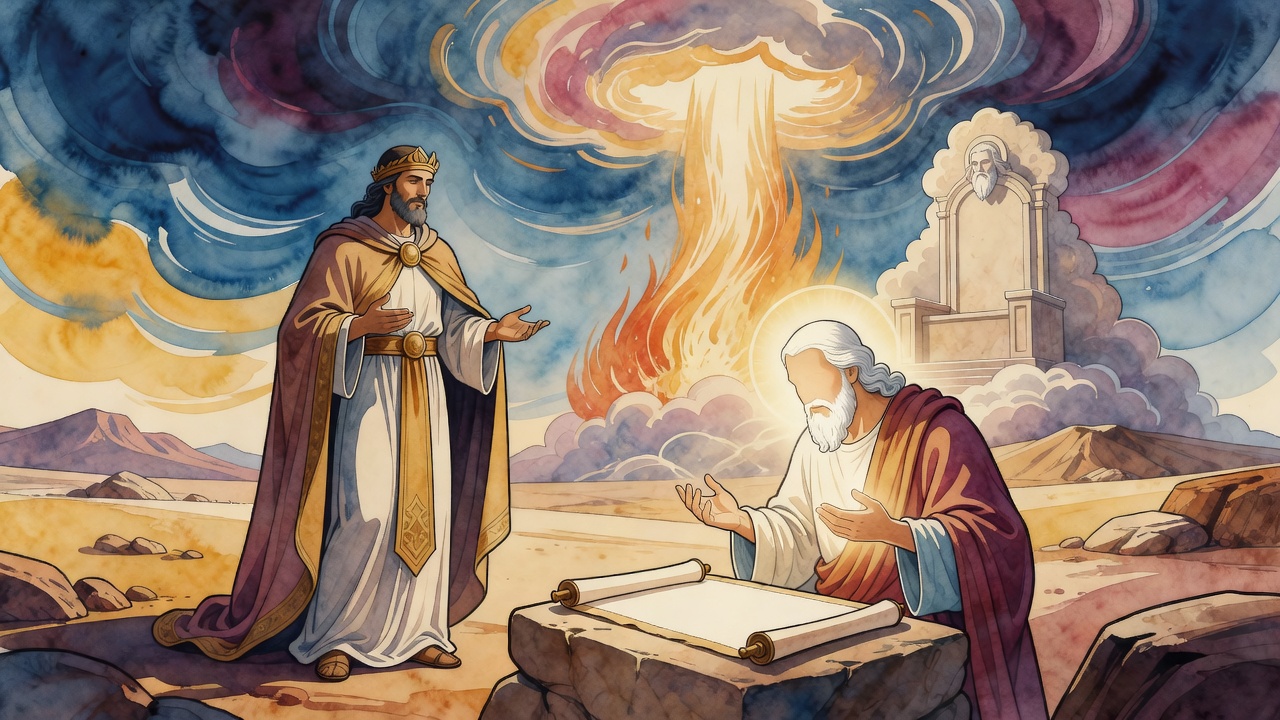
A king kept his daughter hidden from every stranger. One friend saw her face. Moses wrote the betrothal and came down shining.
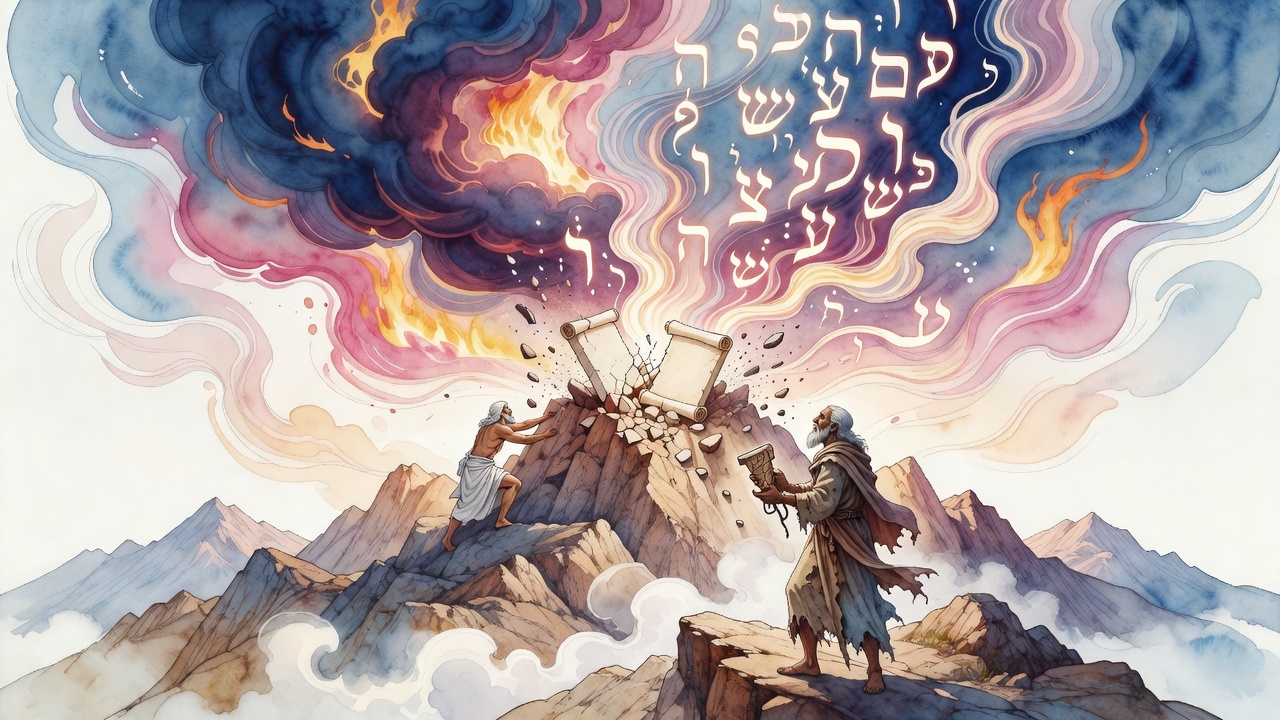
Moses asked how a defiled priest gets clean and heard nothing. Years later God handed him ashes and called it a statute.
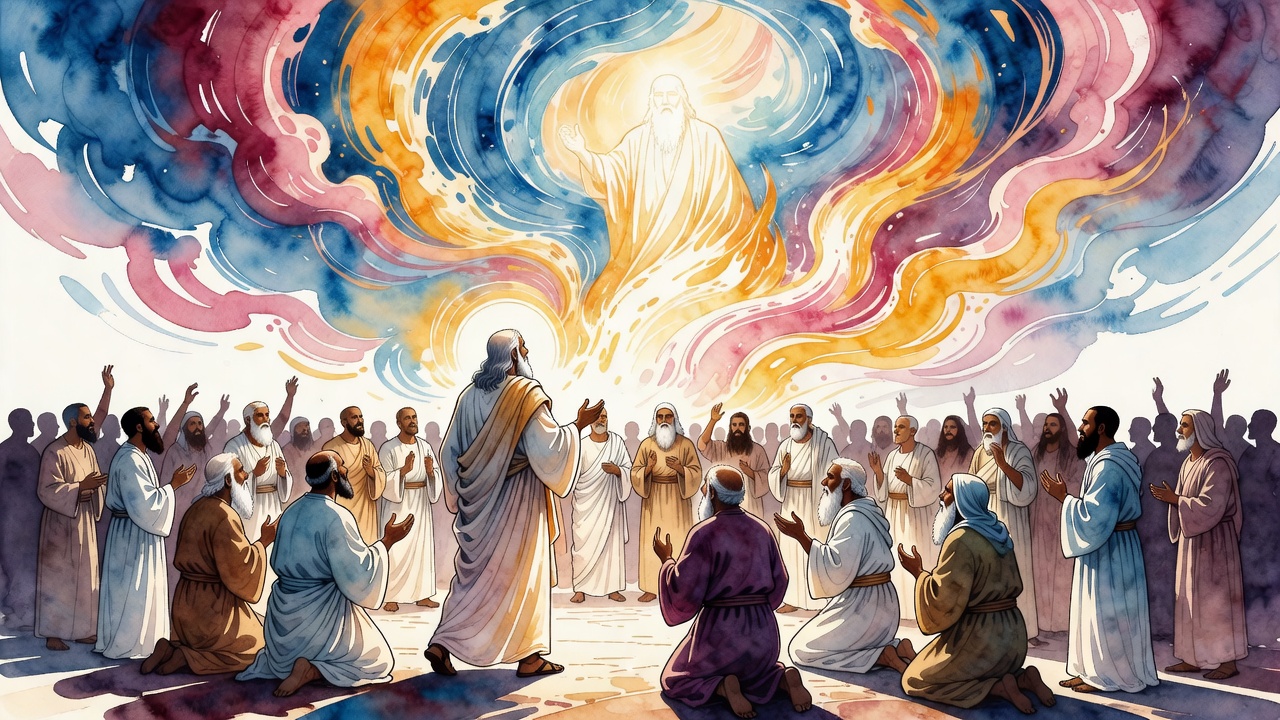
He could have climbed a rock and shouted the terms to the whole camp. The old men heard them first, and he stayed until they understood every word.
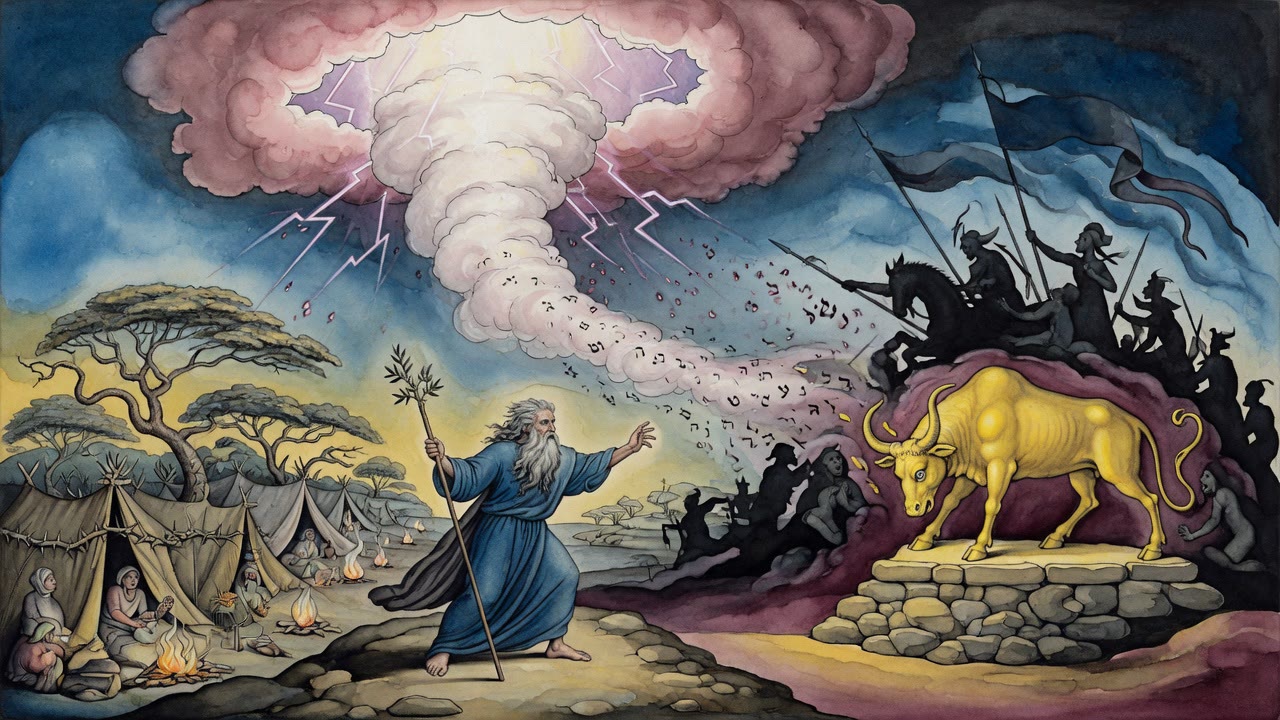
Moses argued the words at Sinai were spoken to him alone, not to them. God kept answering. Moses ended standing like a man thirty days in a sickbed.
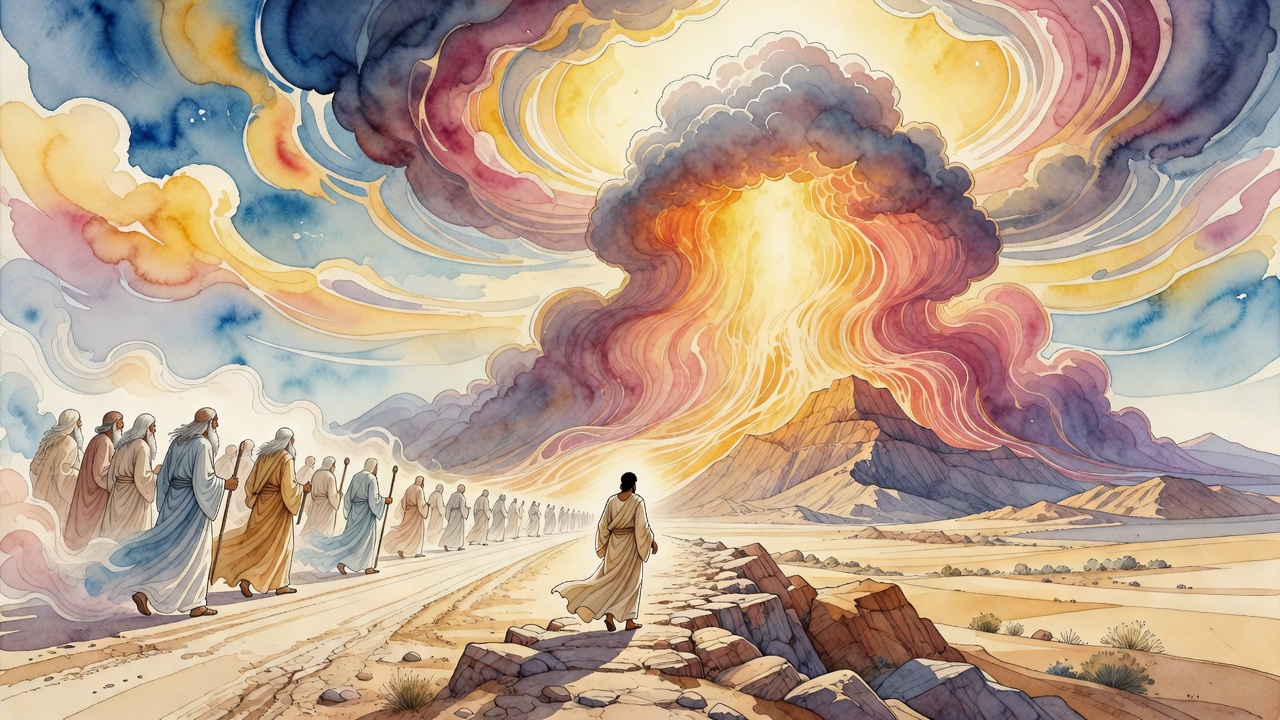
They had agreed to walk with Moses. At Pharaoh's wall the line behind him went quiet, and the two brothers entered alone.
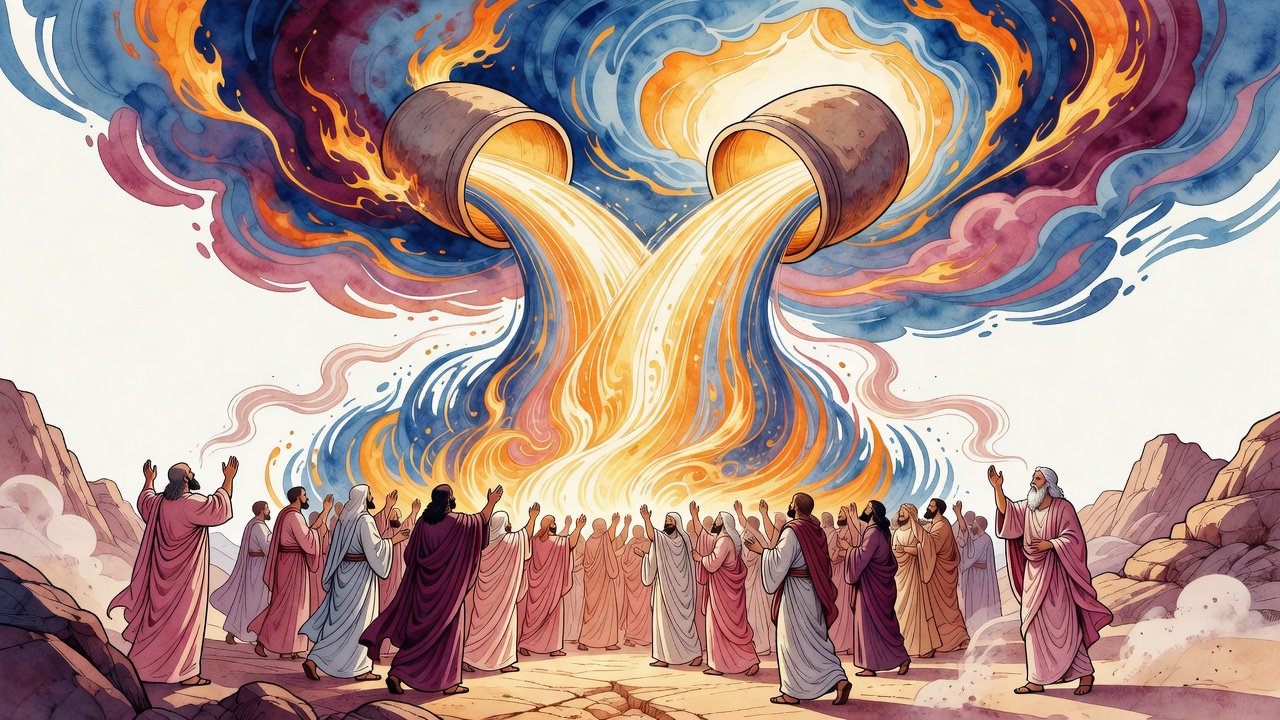
Adam and Noah received only a fragrance of law. At Sinai God tipped the jar and poured every commandment onto Israel.
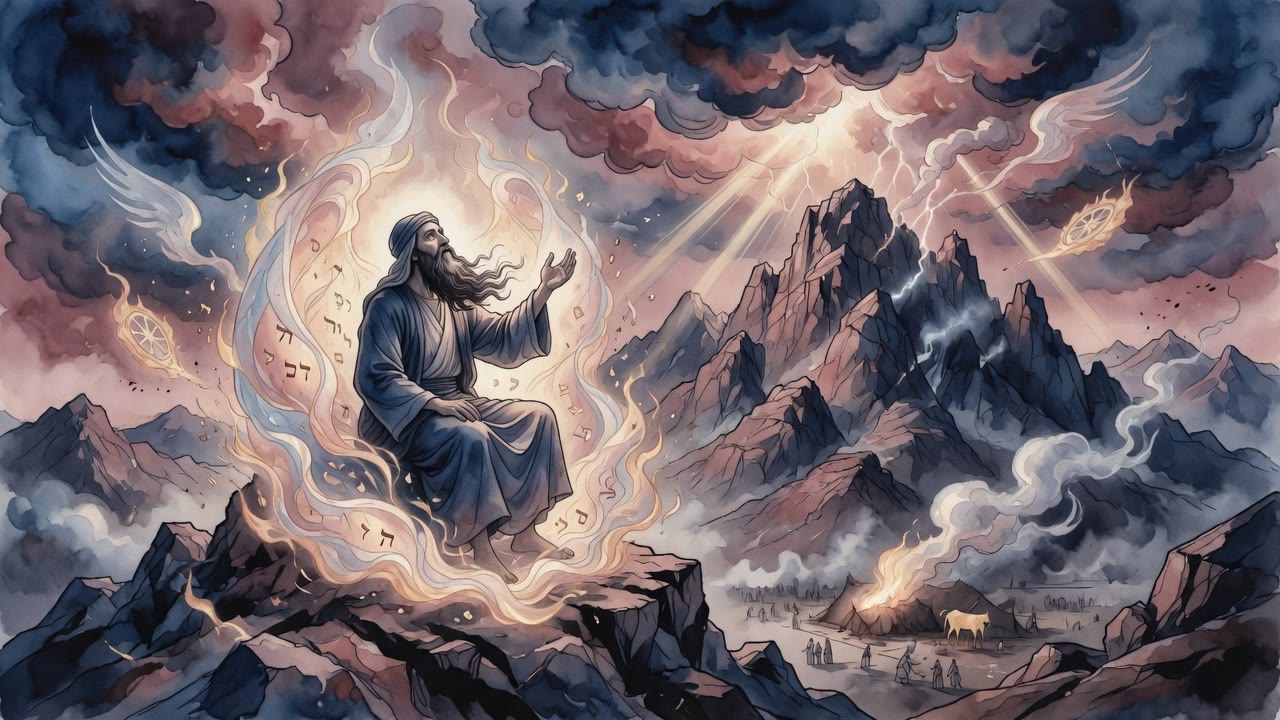
On Sinai Moses ate no bread. The Shekhinah, the Divine Presence, fed him while letters fled the first tablets and he carved the second set.
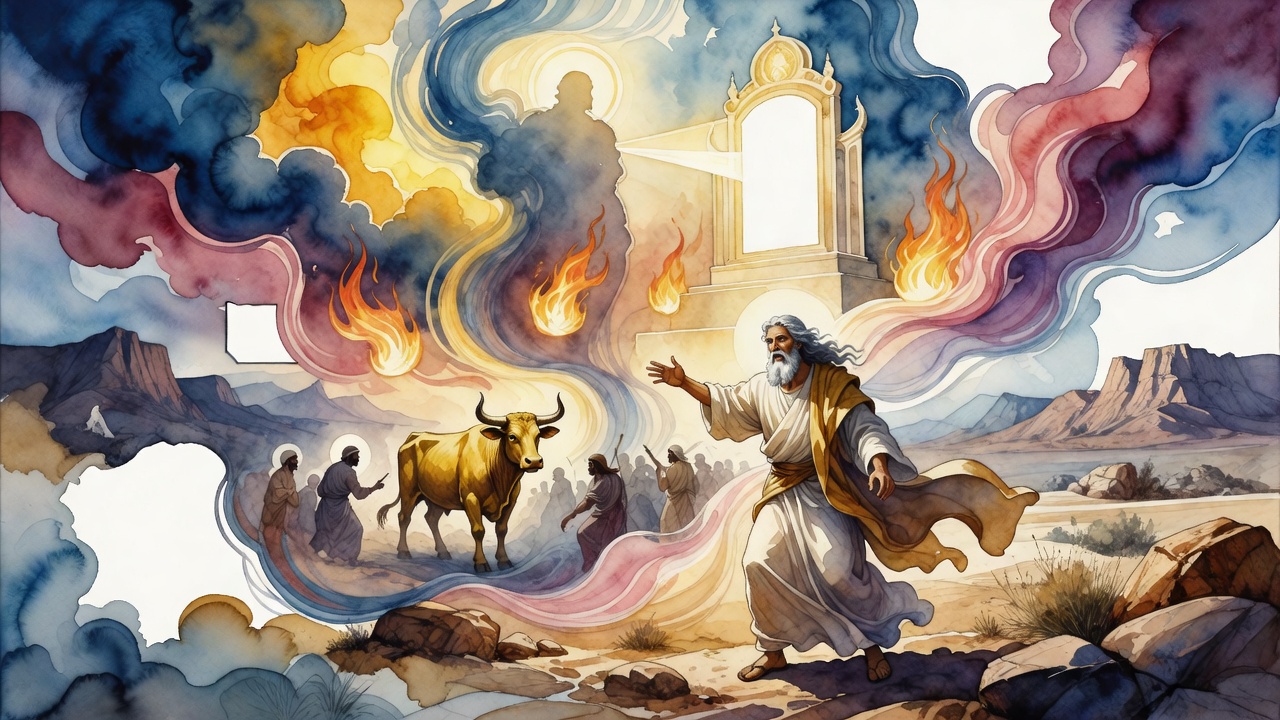
At the calf, Moses seizes a grammar loophole at Sinai. God said Elohekha, singular. Israel stole the ox from the chariot and paid fivefold in the wilderness.
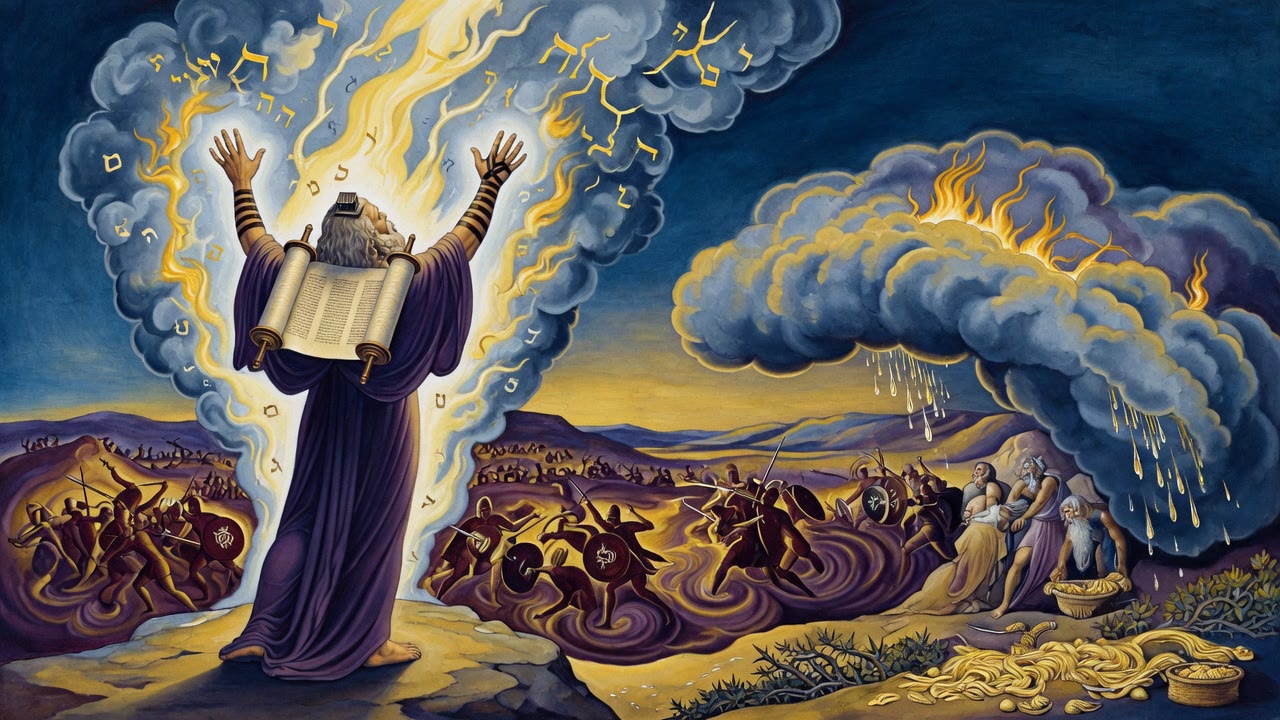
Moses comes down blazing and does not know it. Glory clings from the cave, from the gap between hands on the tablets, and from leftover ink on the pen.
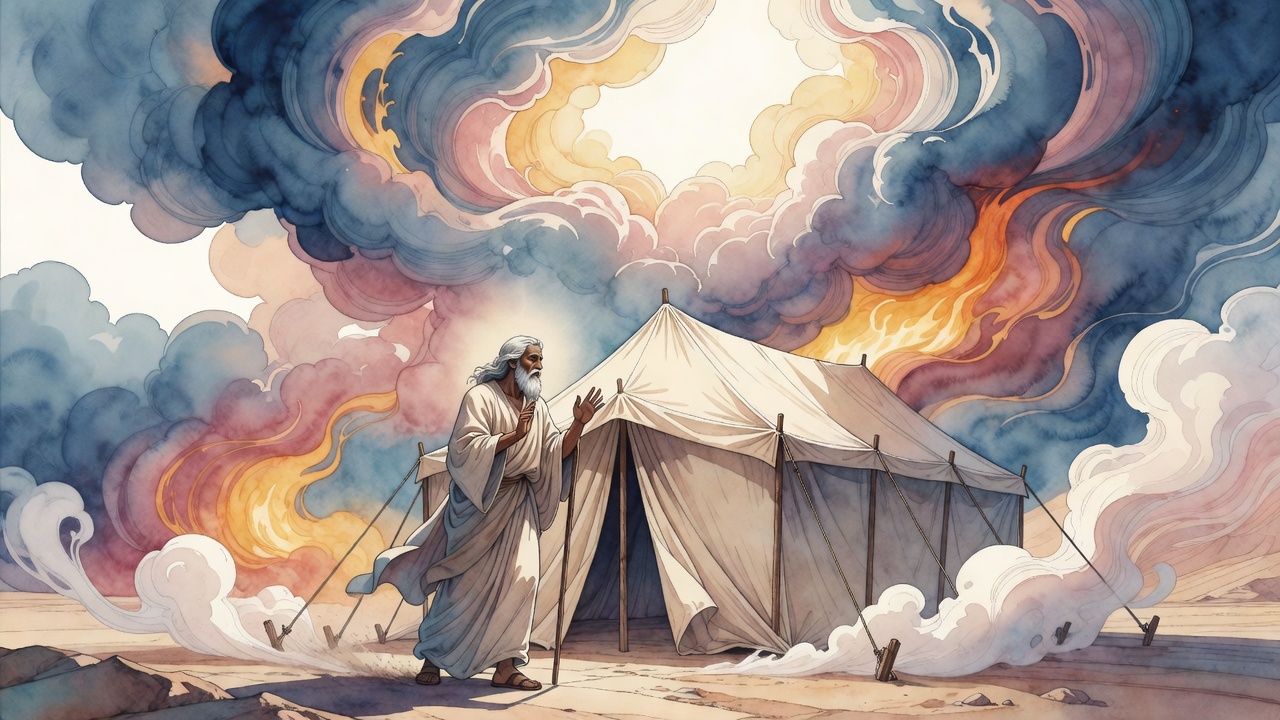
After Sinai Moses stood outside the finished Tent, afraid of the cloud, until the Holy One called him alone by name.
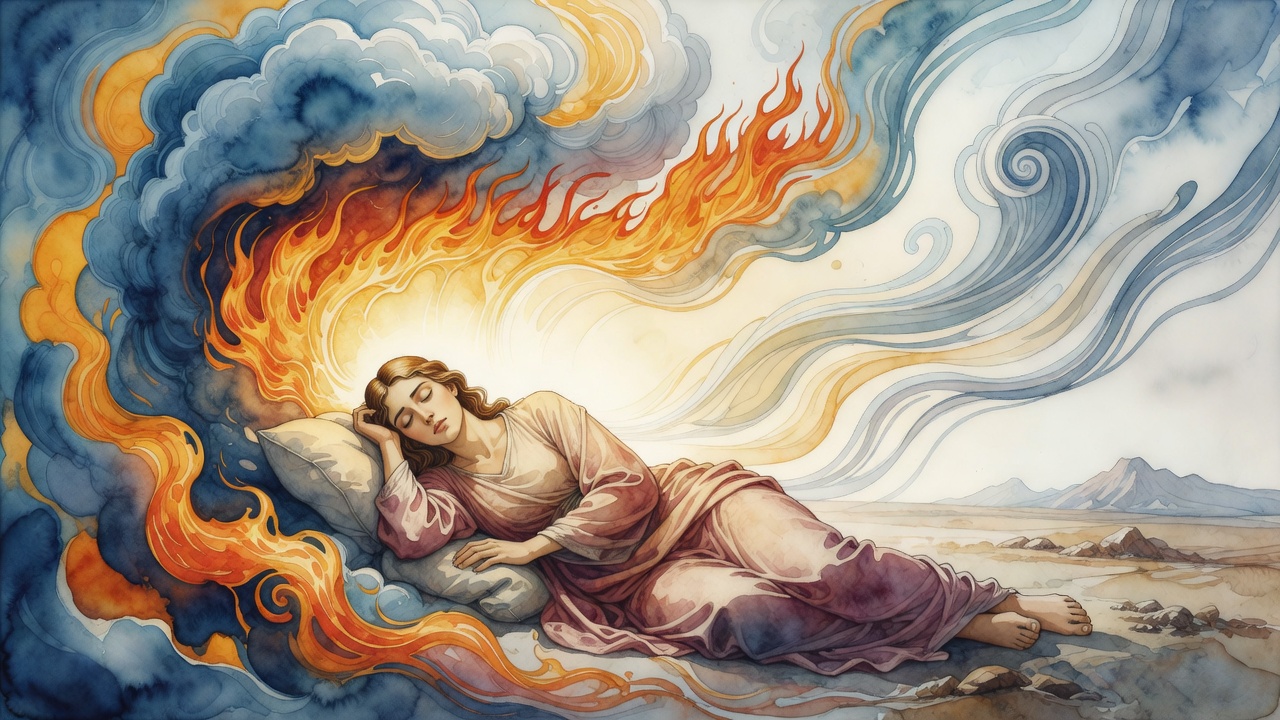
Love climbed past every title. God named Israel daughter, then sister, then mother, while Israel's heart stayed awake in exile's sleep.
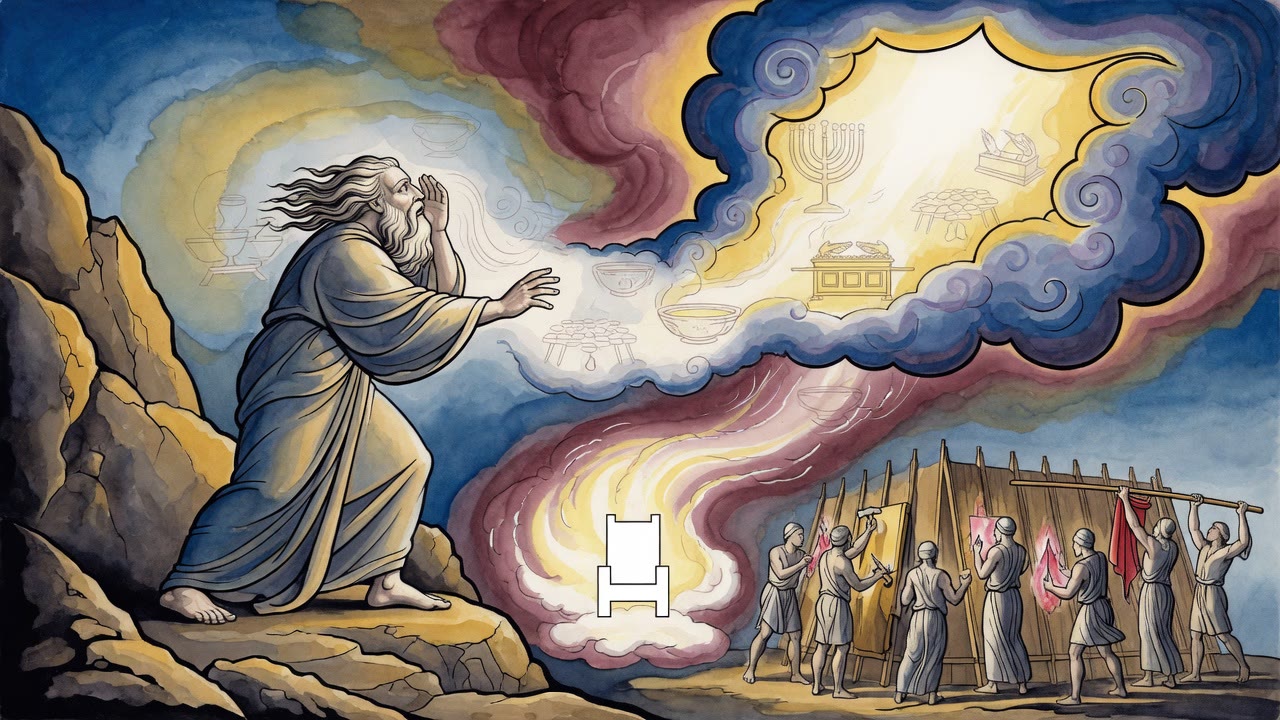
The camp said Moses had given the Sanctuary to his own blood. He opened the words from the mountain and showed them Bezalel's name already written.
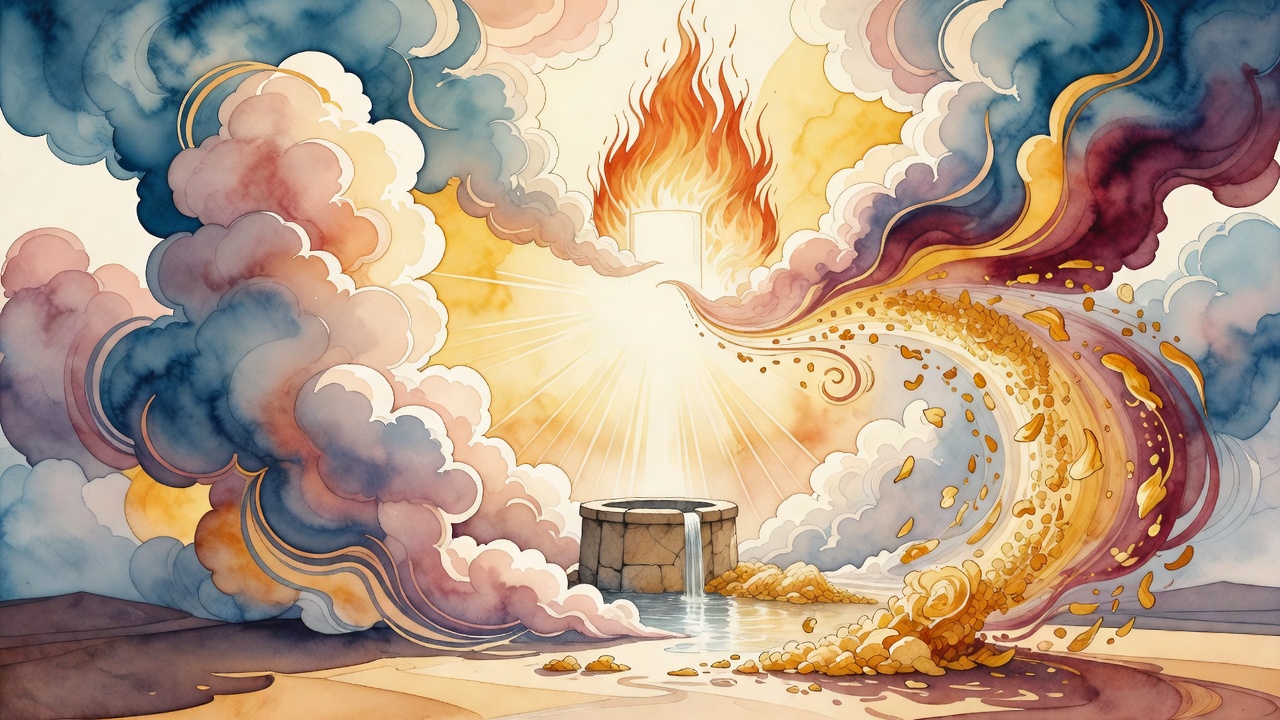
Israel called the wilderness a death trap. God answered with beds of cloud, manna, and a well that walked with Miriam.
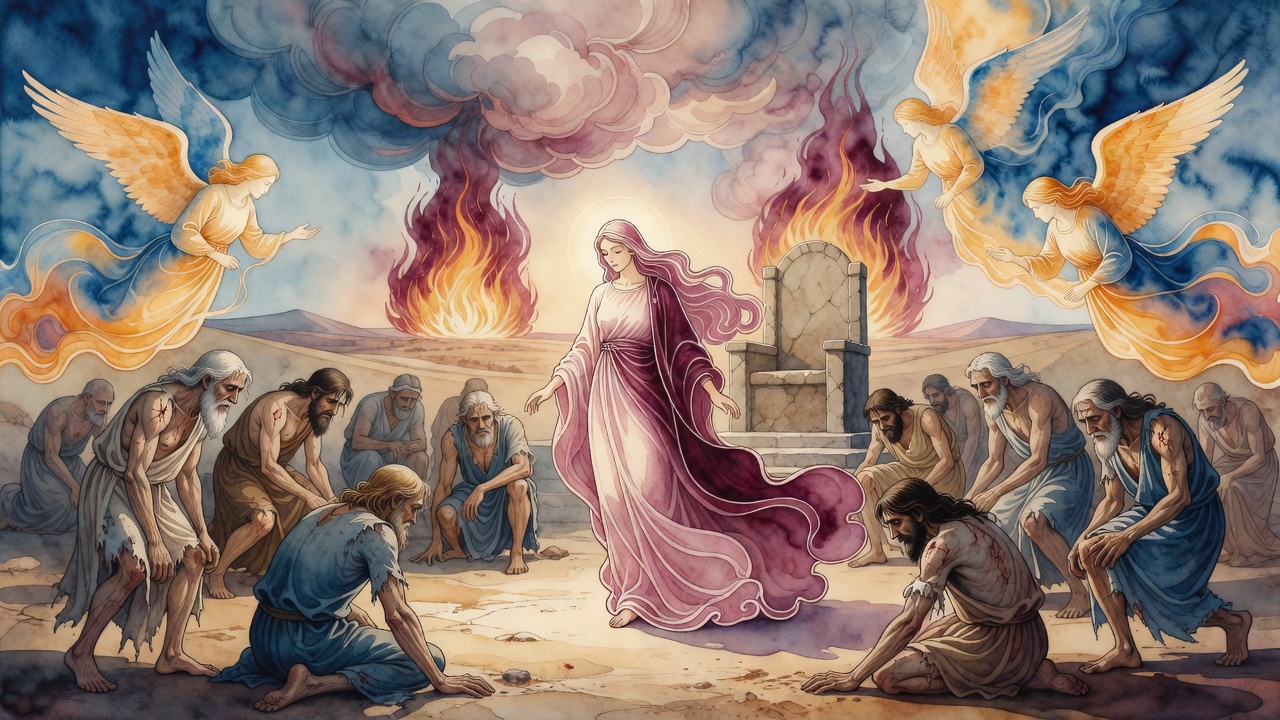
They reached the mountain with crushed hands. Angels went through the camp first. The seventh day still had no partner, and it asked why.
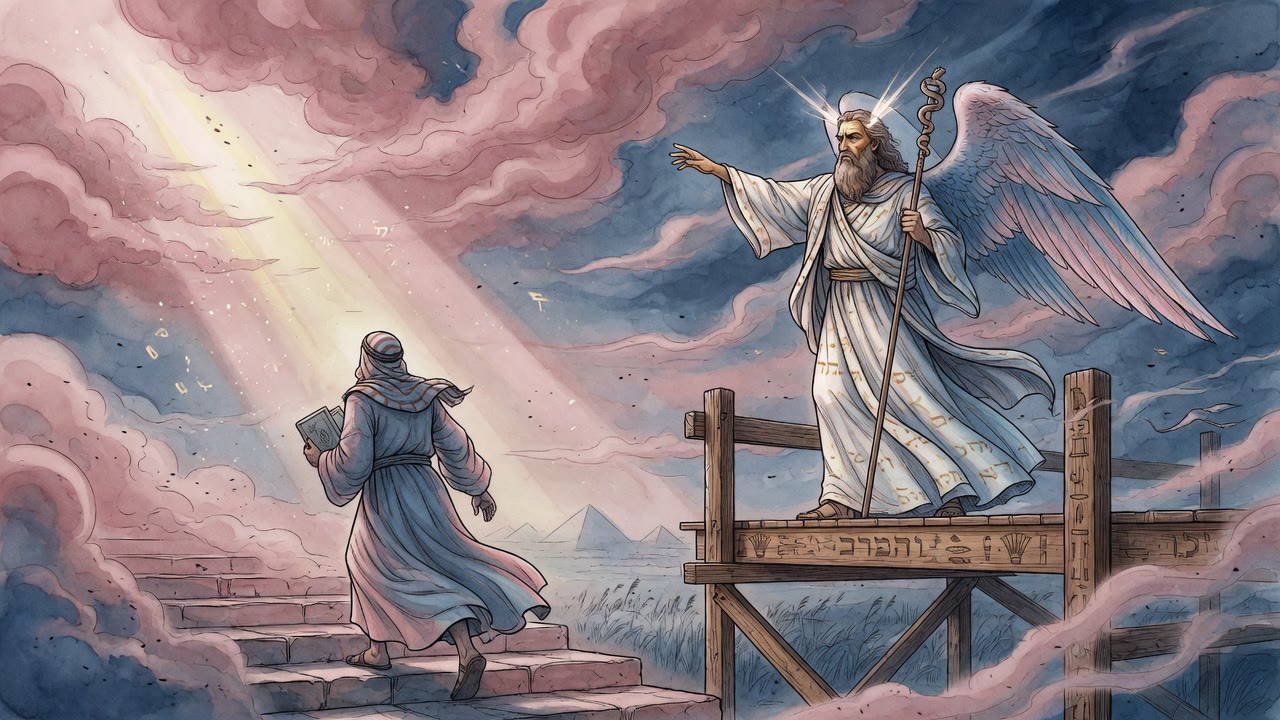
Pharaoh's men set a knife on Moses's neck. An angel took his face, the blade found the wrong body, and Eliezer's name kept the rescue forever.
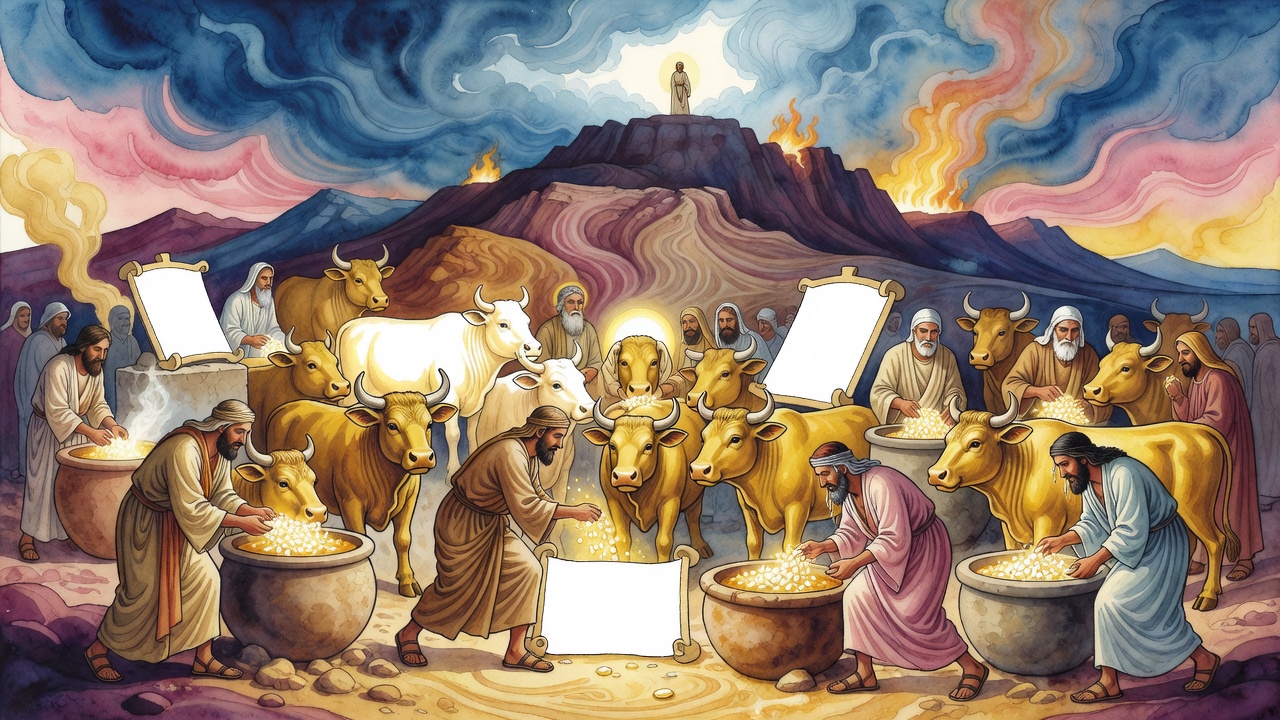
The mountain smoked. Moses was gone too long. Gold left their ears as thirteen calves, and they laid the morning's manna at the horns.
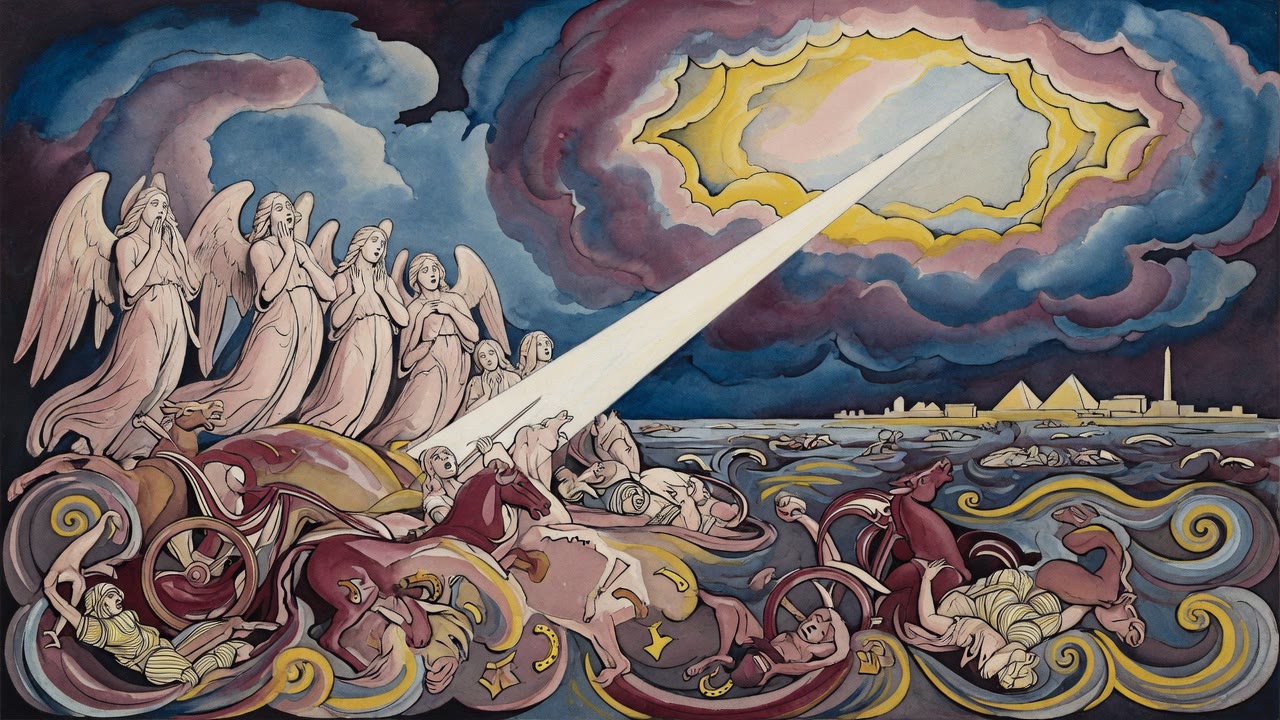
At Sinai every word leaves God's mouth at once. Death and life, wound and healing, sea and staff reverse in the same undivided speech.
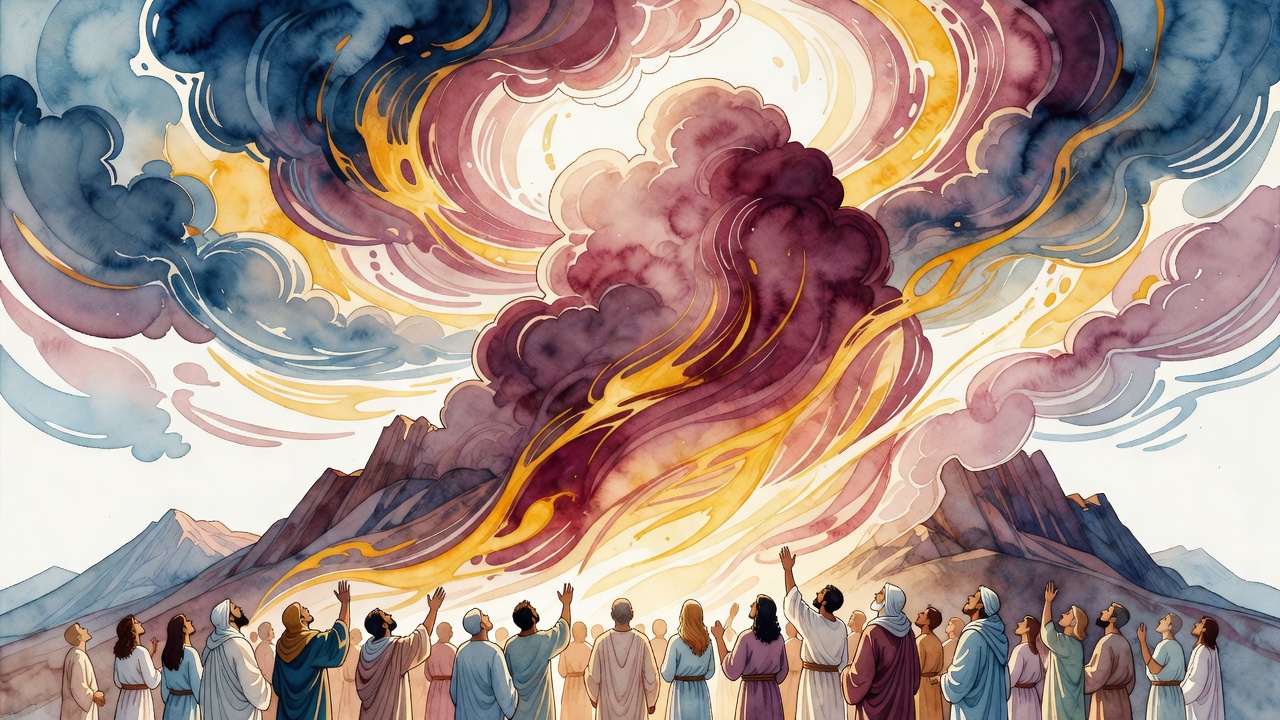
On the third morning the camp still had sleep in its eyes. God was already on the mountain. Thunder spoke in voices that did not copy each other.
