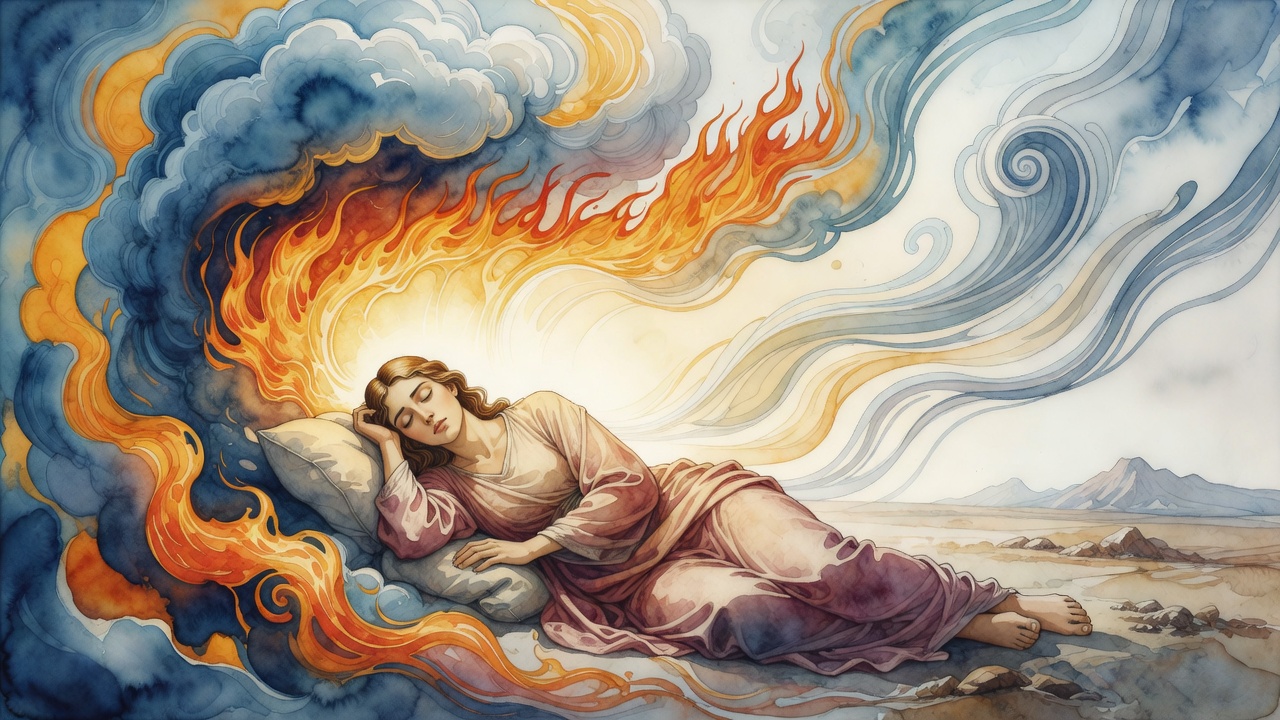
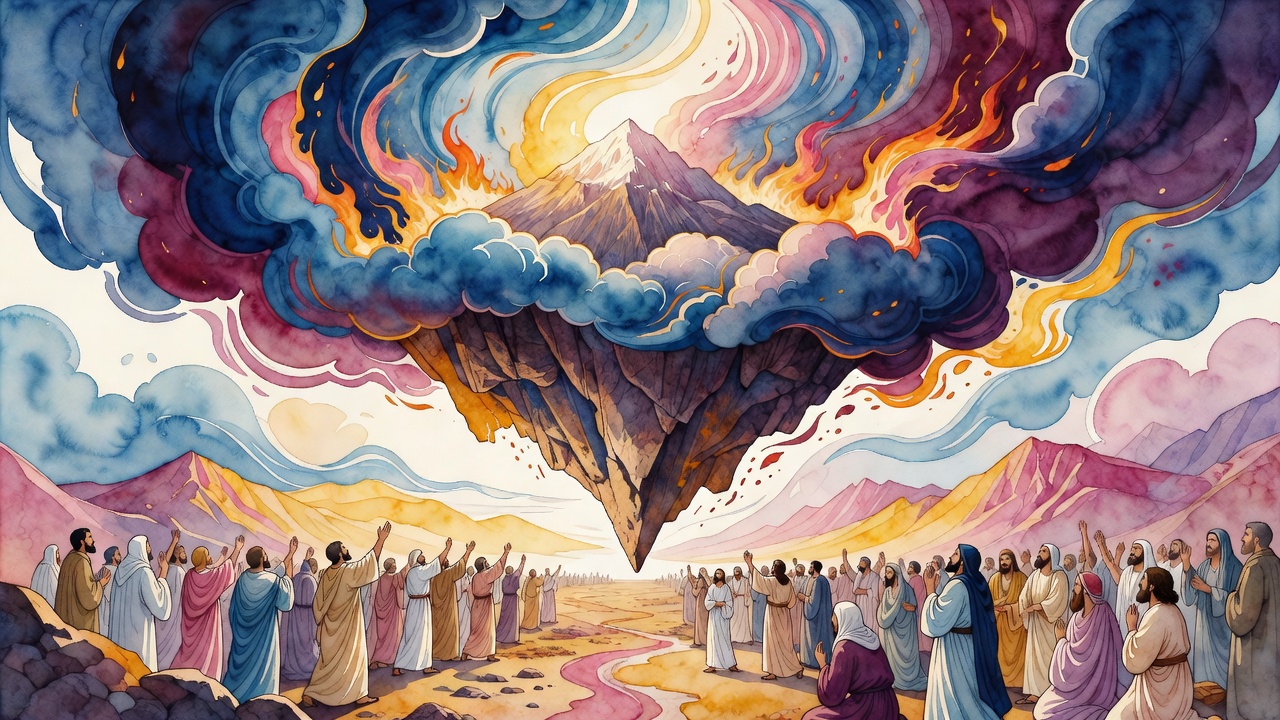
The Kiss at Sinai That Israel Refuses to Wash Off
The angel stopped at one man, not a tribe. He listed the punishments inside the word and waited. The kiss came only after the second yes.
Table of Contents
Pharaoh came out of Egypt on horseback, and God came out to meet him the same way.
 Click for full size
Every Mount Pharaoh Tried
Pharaoh mounted a stallion, so a stallion appeared under God. Pharaoh remembered that a stallion in a battle will turn and kill the man on its back. He got down and took a mare instead, and a mare appeared. He rode a red horse and met a red horse. A white one, a white one. A black one, a black one.
He put on armor and a helmet, and righteousness came down over the other rider like armor. He brought up jars of naphtha to burn the water's edge, and hail and coals of fire came through the clouds. He wheeled out the catapults, and thunder answered the stones. He sent in swords and spears, and lightning came in over the swords.
When there was nothing left in the Egyptian baggage train, a voice went across the water at him. "Wicked one. Do you have wind. Do you have a cherub. Do you have wings."
The sea closed because Pharaoh had run out of shapes to wear. Israel stood on the far shore with the water still running off them. Seven weeks later they were standing at the foot of a mountain, and they were not calm. Fear went through the whole camp and left it quiet. The quiet was not peace. It was six hundred thousand people waiting to find out what would happen to them.
The Angel Stopped at One Mouth
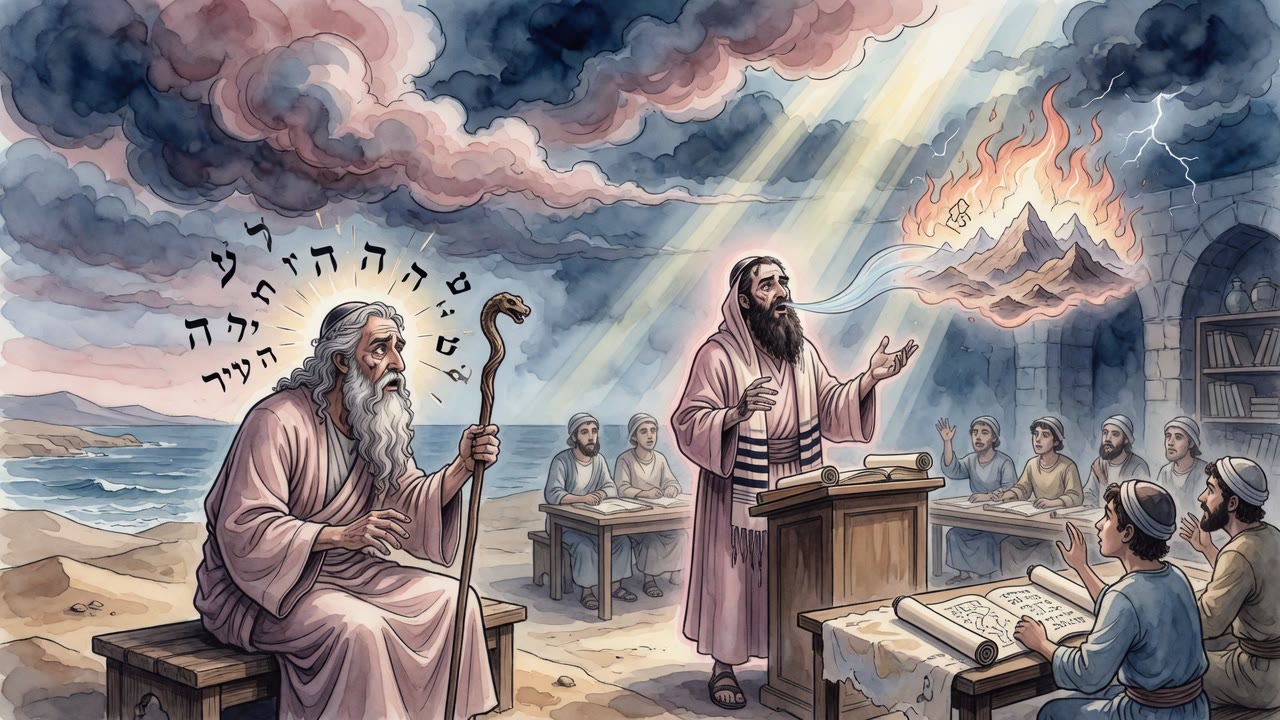
An angel took the first commandment out from in front of God and carried it into the crowd. He went to one man, not to a tribe and not to a family.
"Do you accept this upon yourself. There are such and such laws in it, and such and such punishments. There are decrees in it, and so many commandments, and inferences drawn from them. There are such and such rewards in it."
The man said, "Yes."
"And do you accept the divinity of the Holy One, blessed be He."
"Yes. Yes."
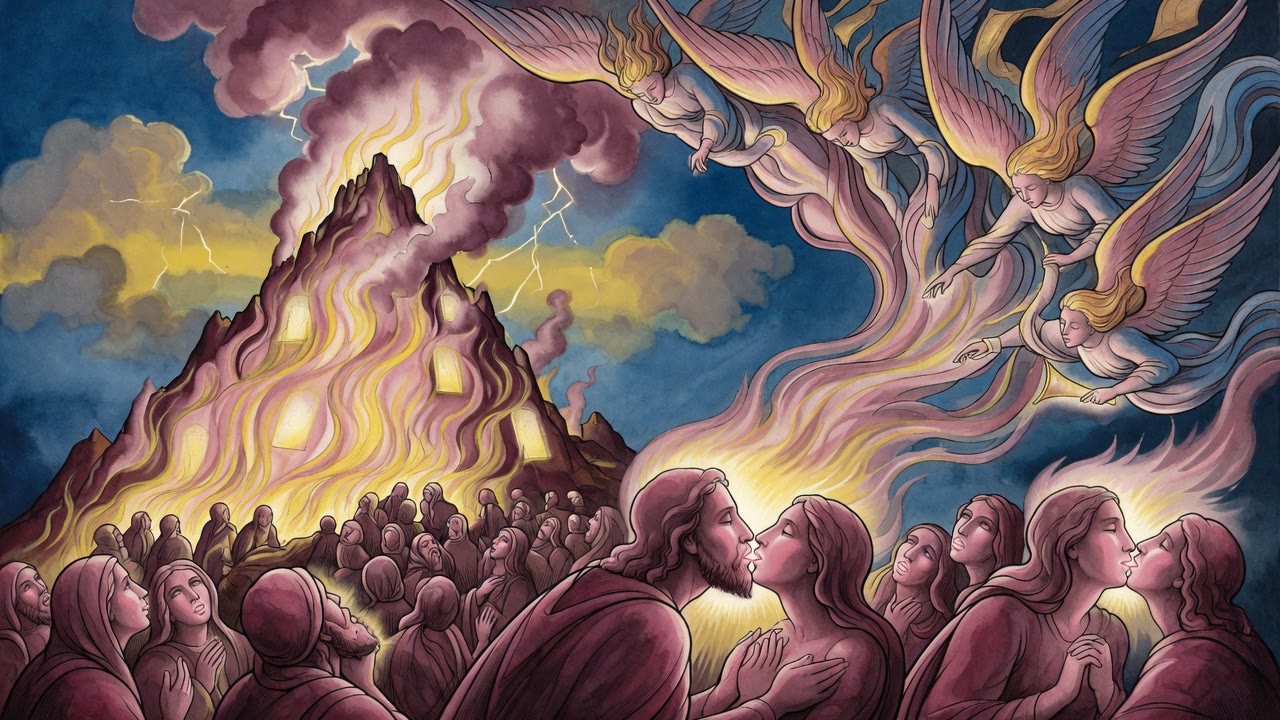
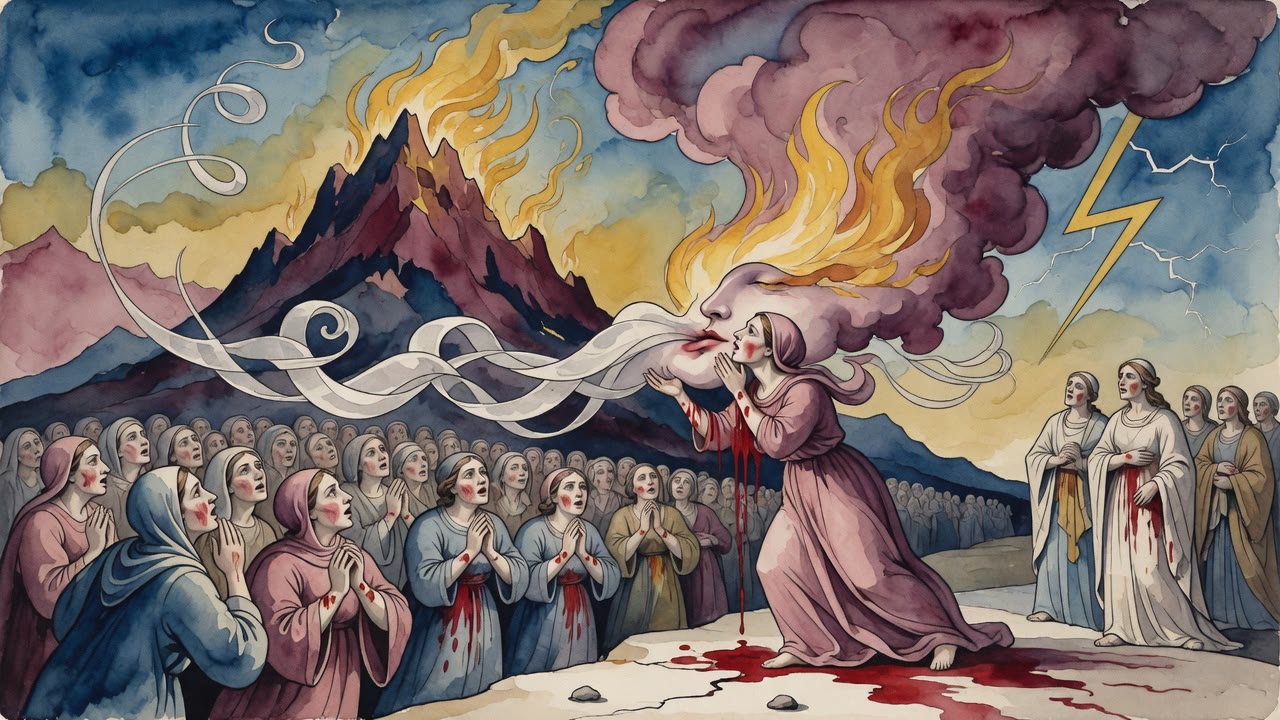
The angel leaned in and kissed him on the mouth. Then he moved on to the next man and started again. He listed the punishments every time, because a kiss without the list would have been a trick, and this was not a trick. Each person had to hear what he was taking before the mouth was touched.
The Word Came Itself
Others tell it without the angel.
In their telling the spoken word came off the mountain on its own and walked the camp, and it did its own asking. "Do you accept me upon yourself. There are such and such commandments in me. There are such and such laws in me, and such and such punishments, and such and such decrees, and such and such rewards."
The man said, "Yes. Yes."
The word kissed him on his mouth. Then it stood up in front of him in the shape of a scholar and began teaching him Torah, right there, before he had time to sit down. He had agreed to a commandment, so the commandment stayed and taught. Six hundred thousand separate conversations, and every one of them ended on a mouth.
They did not wash it off. Salt from the sea was still in their clothes. The kiss sat on top of the salt. If anyone later asked how a people could die for a God who paid them in hard years, the answer was already on their mouths from that afternoon.
The Nations Offered Dukedoms
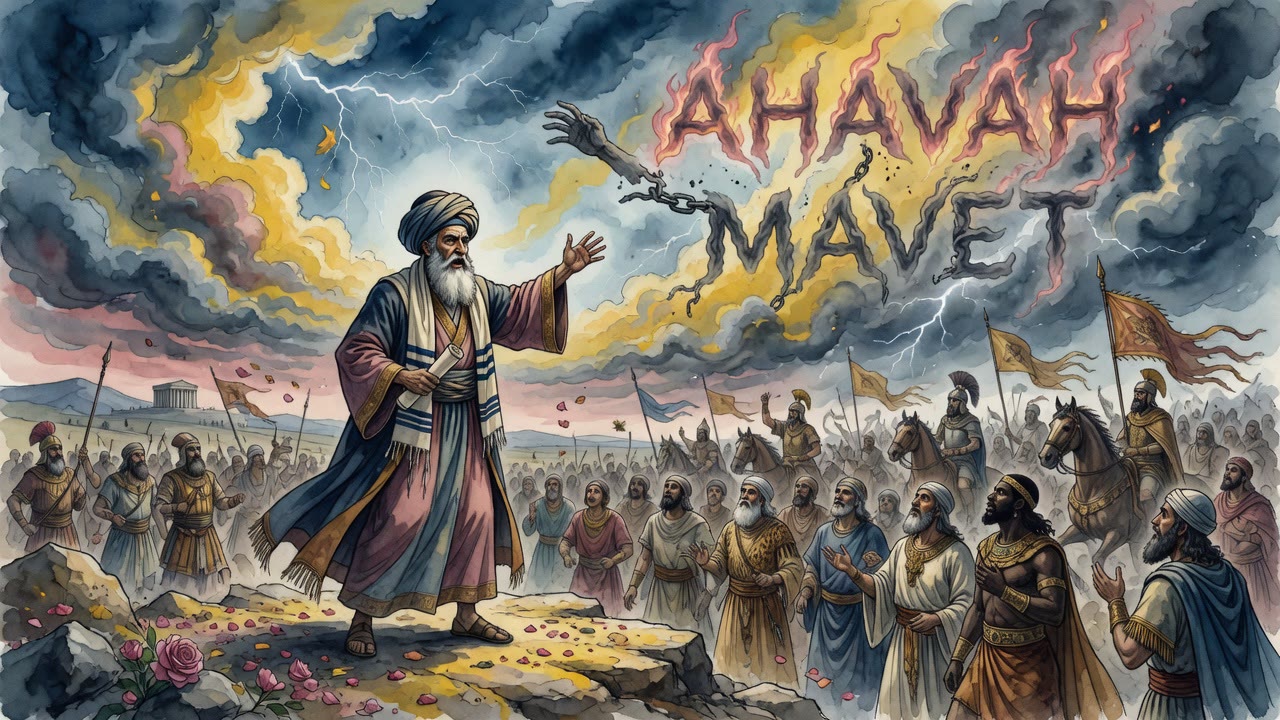
Centuries of it followed. Swords, fires, decrees, one empire and then the next. Every so often the same offer arrived, because the nations could see the dying and could not see the kiss.
"How long are you going to go on dying for this God of yours. How long are you going to be killed for his sake. How long will you keep doing kindness on his behalf while he pays you back in hard treatment. Come over to us. We will make you dukes. We will make you governors. We will make you generals. The whole world will turn around and look at you."
Israel answered with a question of its own. Did anyone ever hear that Abraham served idols, or Isaac, or Jacob, that their children should start now.
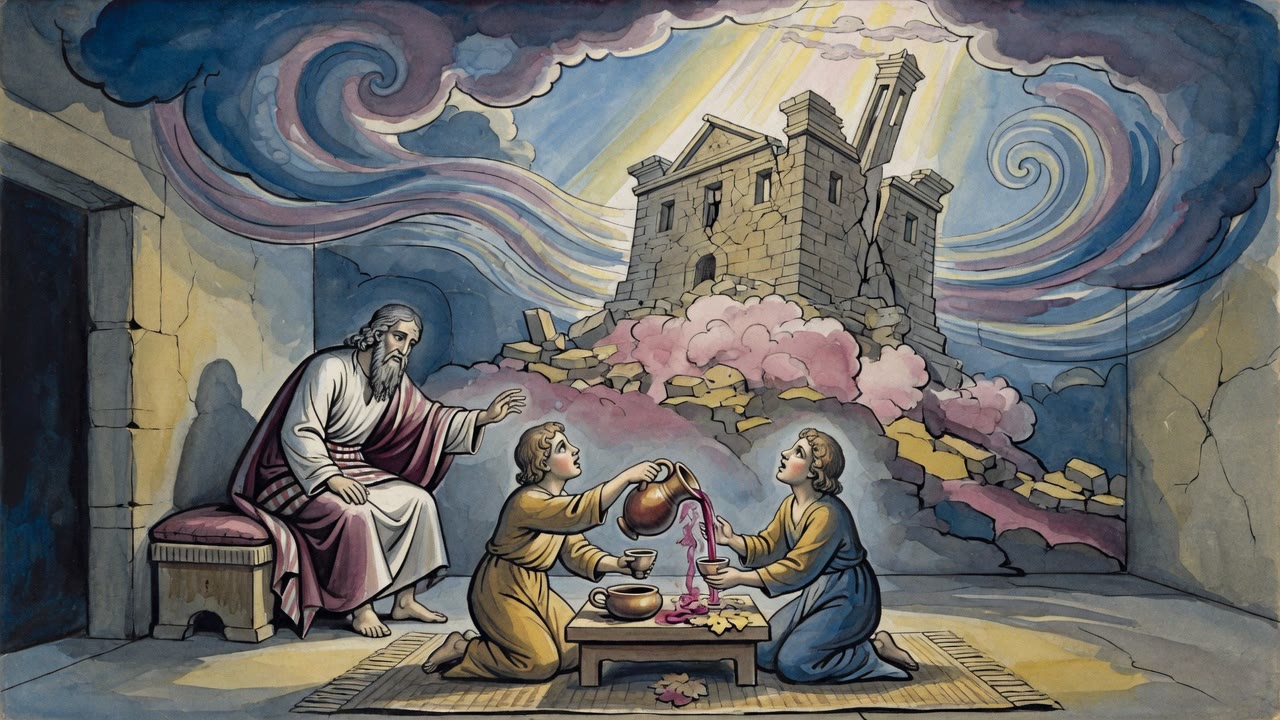
Then it made an offer back. What can you actually do for us. Can you dance for us the way they danced for Jacob the night he came out of Laban's house, when six hundred thousand angels danced in front of him, and some say twice that. Can you dance for us the way it was danced at the sea, with the angel of God moving along the column. Can you do what was done for Elisha, when his servant went outside at dawn and found the whole hill filled up with horses and chariots of fire.
Nobody made an offer after that. Dukes and governors are a kind of looking. Israel already had a dance, and a kiss they would not wash off, and a God who had matched Pharaoh horse for horse until the sea closed.
← All myths