Israel Ran After the Kiss That Began at Sinai
Israel at the sea begs God to speak close enough for song. Shir HaShirim Rabbah reads the Song's first verse as the moment thunder became tenderness.
Table of Contents
 Click for full size
Israel Heard Thunder and Called It a Kiss
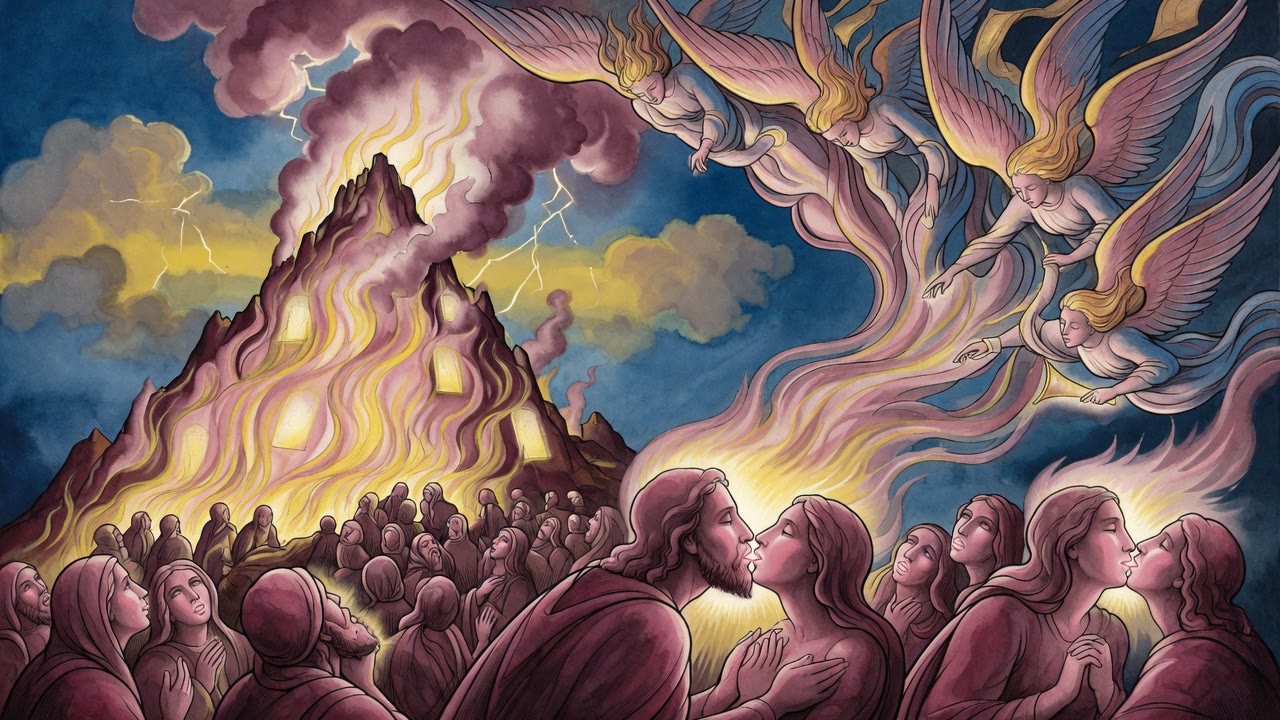
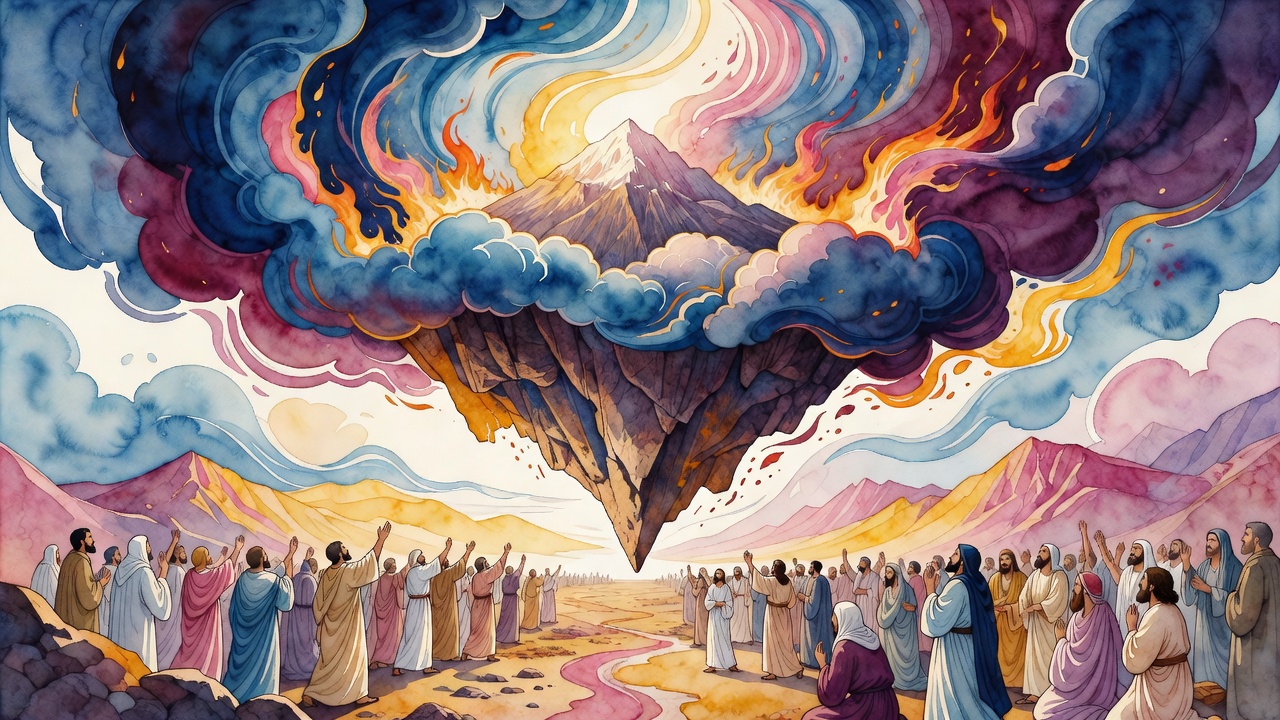
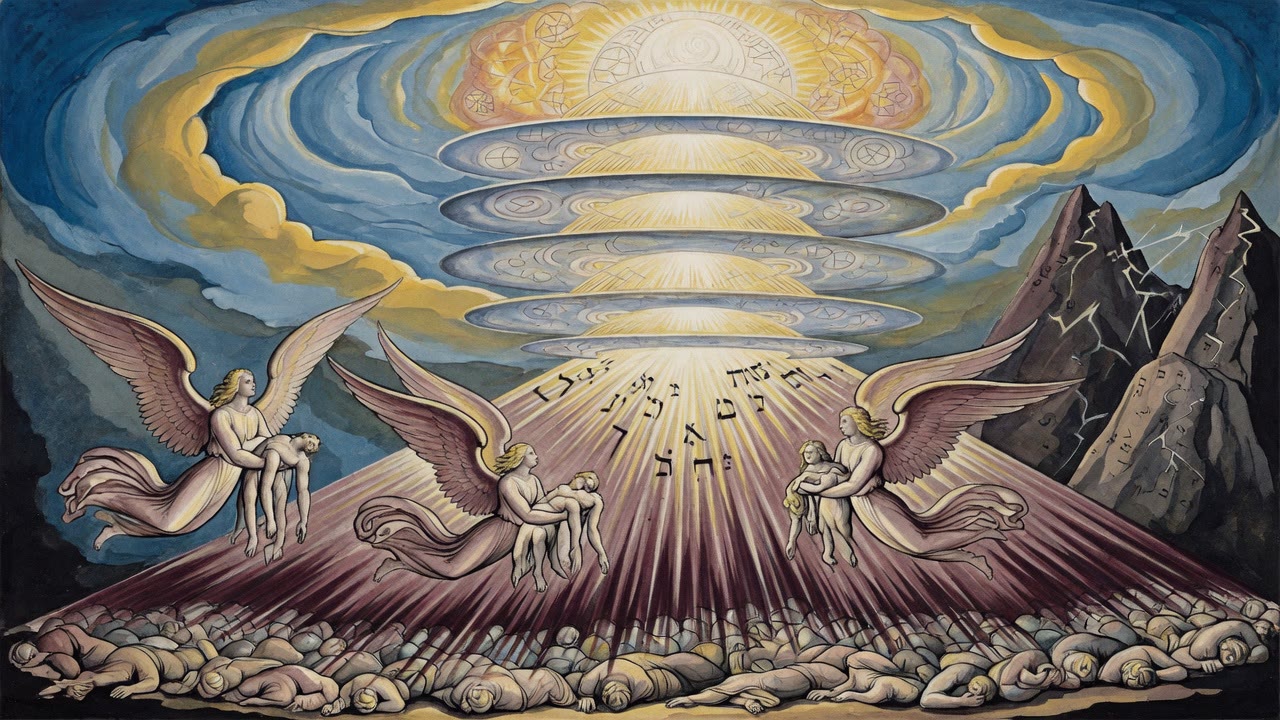
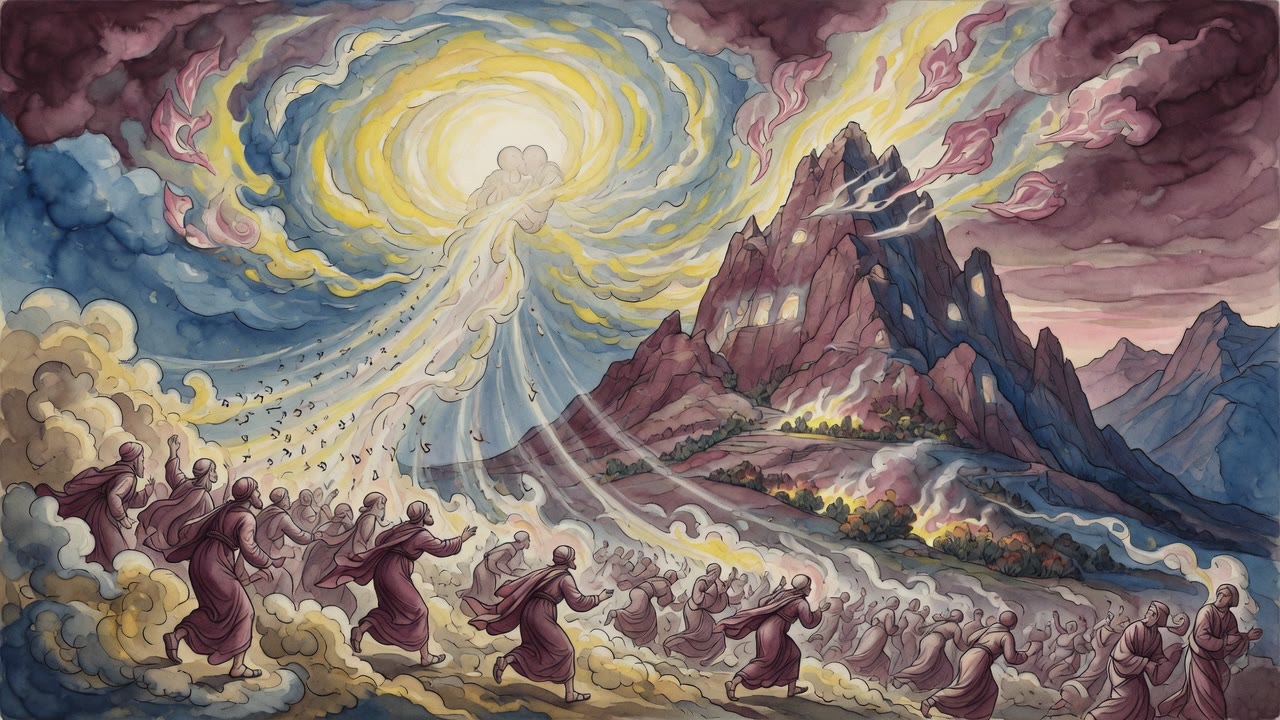
At the sea, Israel saw God's salvation and stopped being afraid, and then they sang. The song rose from the whole congregation at once, mothers and infants, elders and young men, all of them finding the same words in the same moment. Shir HaShirim Rabbah hears that moment inside the Song's first verse: let him kiss me with the kisses of his mouth. One sage placed that request at the sea, where Israel saw salvation and wanted the divine presence to rest upon them so they could sing. The kiss they were asking for was not sentimental. It was the desire for God to be close enough for song to be possible, close enough for one voice to rise from a hundred thousand mouths. Another sage placed the verse at Sinai, where the giving of Torah was the giving of a kiss. Either way, the first verse of the Song of Songs is not private love poetry. It is the entire community standing at the threshold of something overwhelming and asking for closer contact rather than further distance.
Abraham Ran and Was Called Father of Nations
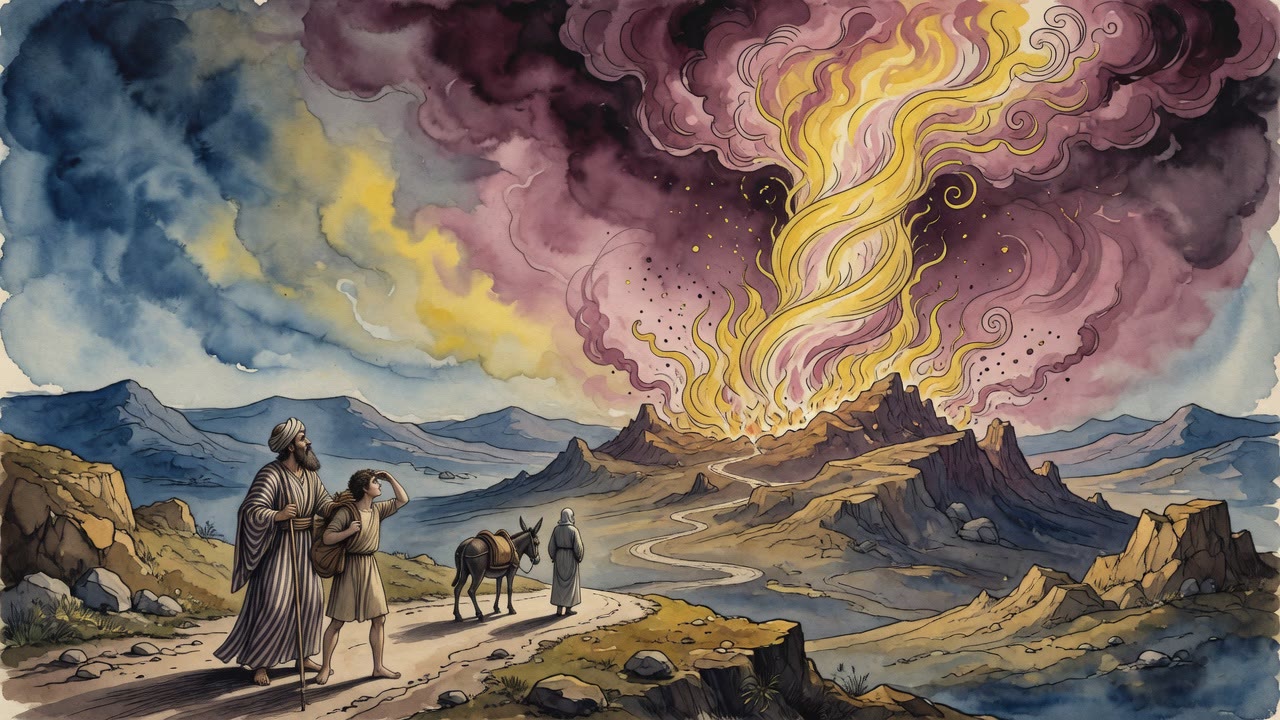
The Song says: draw me and we will run after you. Shir HaShirim Rabbah asks who earned the right to be drawn first. Abraham is the answer. He ran to greet the three strangers at Mamre. He ran to get a calf for the meal. He ran to Sarah to ask for bread. He stood before them while they ate and attended them. The running was not anxious hospitality. It was the form that love of guests takes in a man who has understood something about where guests come from and what entertaining them means. When God chose to make Abraham the father of nations, the title was not given to someone who had inherited the role or been born into it. It was given to a man who ran. The covenant that would eventually become Israel's national story began with a man who did not wait to be approached, who moved toward what was coming before it announced itself.
Isaac Carried Esau's Smell Toward an Older Fragrance
The Song's beloved says: the scent of your garments is like the scent of Lebanon. Shir HaShirim Rabbah reads that fragrance through a specific moment. When Isaac smelled Esau's garments on Jacob, he said: see, the smell of my son is like the smell of the field that the Lord has blessed. The blessing followed the fragrance. The Midrash hears the garments of Esau that Jacob wore as a sign of something the Song is saying about Israel: the outer garment may belong to the nations, may carry the smell of other histories, other struggles, other identities. But underneath, there is a fragrance that belongs to blessing, to covenant, to Lebanon's cedar, to the Temple's incense. Israel wears many garments in its long history. The fragrance underneath does not change.
The Sanhedrin Sat Like a Vineyard at Yavne
The Song describes the king bringing the beloved into his chambers, and the daughters of Jerusalem running after. Shir HaShirim Rabbah finds Israel's learned assembly in the image of the vineyard. At Yavne, after the Temple's destruction, Rabban Gamliel arranged the sages in rows like the vines and stocks and ground-spreaders of a vineyard: senior sages in front, intermediate behind, younger behind them. The daughters running after in the Song were the students following the teaching wherever it led. The court at Yavne was Israel running after the Beloved even after the chambers had been closed, even after the Temple was gone. They could no longer bring offerings. They could still study, argue, rule, and keep the covenant alive in the only form the exile allowed. The vineyard became the court because the court was all that remained of the beloved's chambers.
The Running Did Not Stop When the House Was Gone
The Song's logic, as Shir HaShirim Rabbah reads it, is that love pursues. Israel at the sea sang because salvation appeared. Israel at Sinai received the kiss of Torah. Abraham ran before the covenant was complete. The sages sat in vineyard rows at Yavne because the Torah they were interpreting was still alive even without an altar. At every moment when God might have seemed to withdraw, Egypt, Sinai's golden calf, the wilderness wanderings, the Temple's fall, the exile, Israel ran after rather than sitting still in the absence. The song that began at the sea and continued at Sinai was still being sung at Yavne in the language of legal argument, recorded in the language of the Song. We will run after you. Not: we ran once and stopped. We will run, present continuous, as long as there is a Beloved to follow.
← All myths