Israel Brought Thirteen Gifts and God Sent Thirteen Back
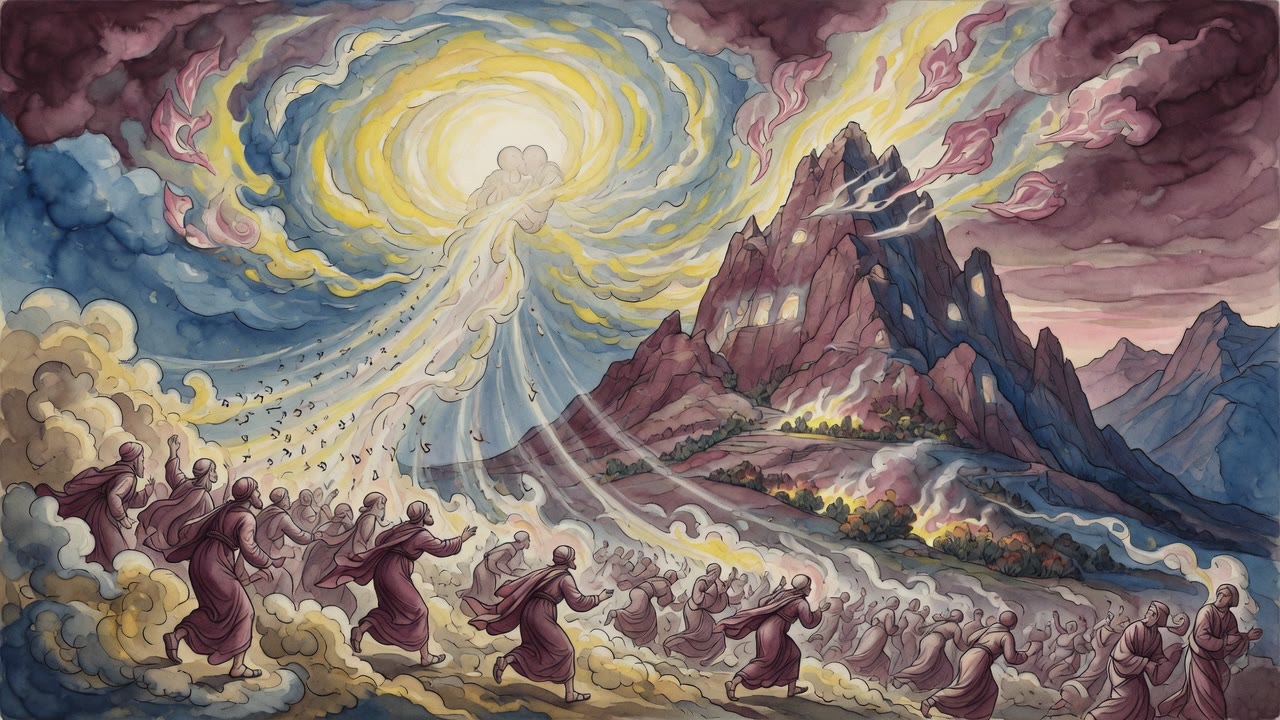
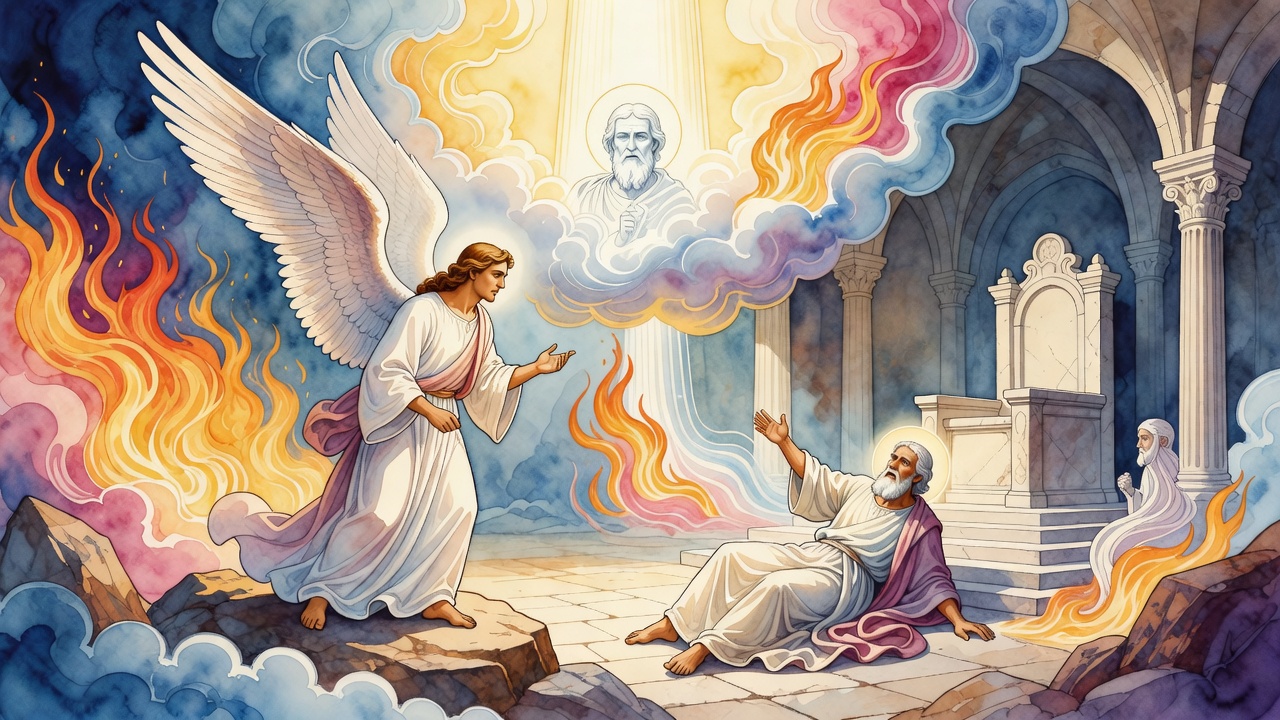
At Horeb the people were armed, and the Name was cut into the weapon. After the golden calf an angel came down and peeled it off the metal.
Table of Contents
 Click for full size
Jacob Packed the Timber Four Generations Early
Jacob stopped at Beersheba on his way down to Egypt and felled trees.
He was an old man going to see a son he had buried in his own mind twenty years before, and he stopped to cut lumber. Some say he took down the trees his grandfather Abraham had planted at that well. Some say the acacias came from Magdala of the dyers. Either way he loaded them and carried them into Egypt, and they went into the ground with him, and four generations later the children of his children walked out of that country carrying the same beams on their shoulders.
The central bar that runs through the boards of the Tabernacle from end to end is thirty-two cubits long. There is no tree that size in the wilderness. They had it because a man had thought about it before any of them were born, and the wood had no knots in it and no cracks. Even centuries later the people of Magdala would not touch their own acacia trees, out of respect for what had been cut there for the Ark. They asked Rav Hananya about it and he told them not to depart from the custom of their fathers.
What the Bride Brought
When two houses arrange a marriage, the question everybody asks in the street is what he sent her and what she sent him.
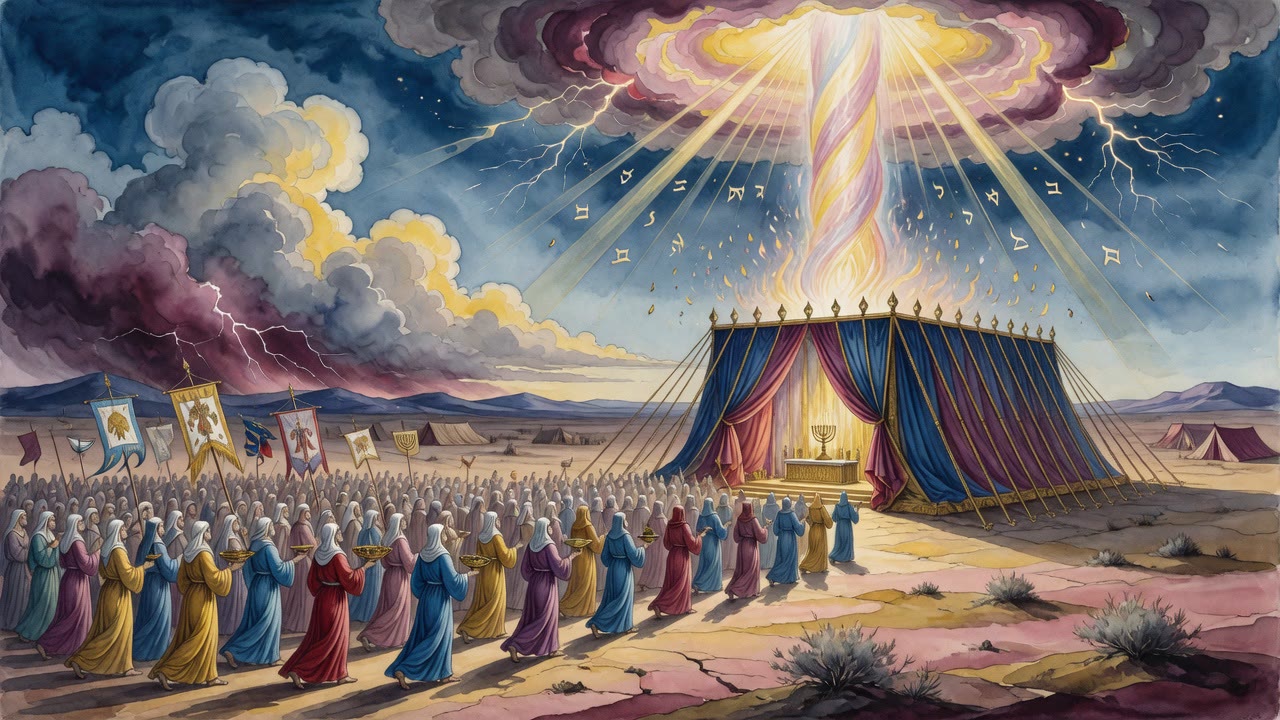
She brought thirteen. Gold, silver, bronze. Blue wool, purple wool, crimson wool. Linen and goat hair. Rams' skins dyed red and the skins called tachash. Acacia wood. Onyx stones, and stones for the settings. Thirteen kinds of thing, carried out of tents by people who had owned none of it a year earlier, and heaped up until Moses had to tell them to stop.
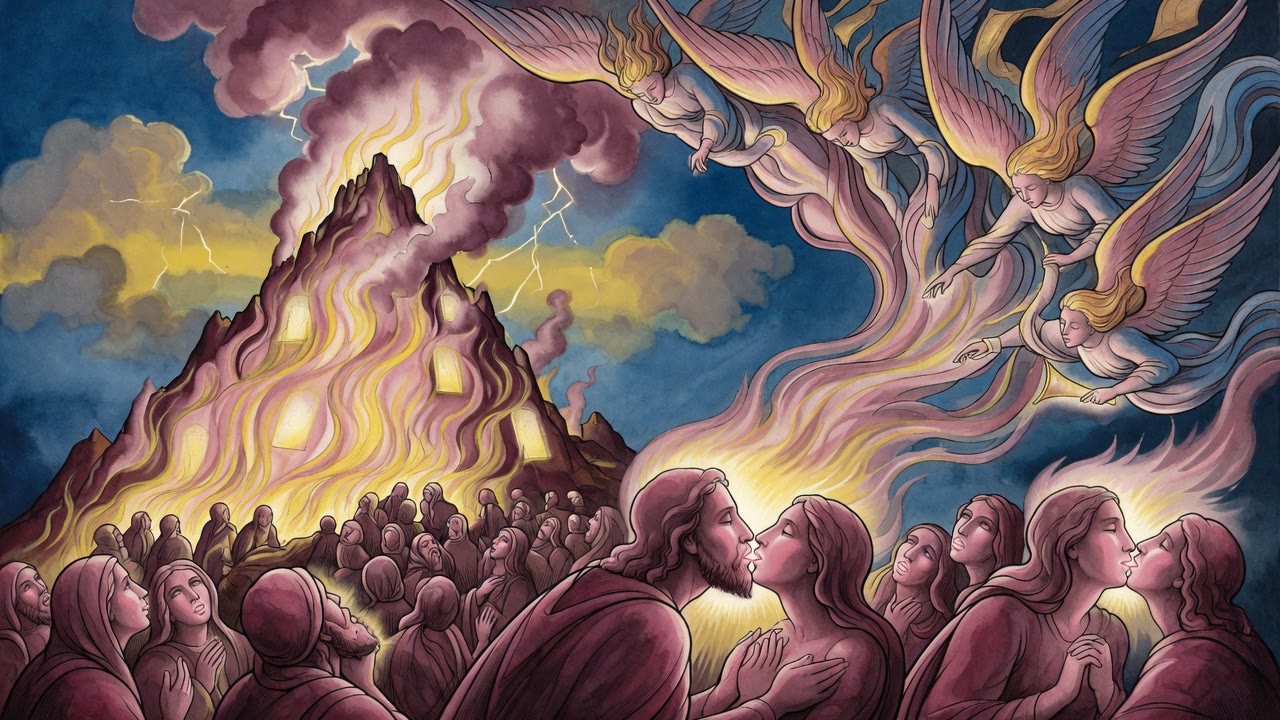
Thirteen came back the other way, and they came back as jewelry. I clothed you in embroidery. I shod you with tachash. I wrapped you in fine linen and covered you with silk, which is to say He wrapped them in clouds of glory and the pillar that would not move from in front of the camp. I put bracelets on your hands, and those were the tablets, written by God and engraved by God. A chain on your neck, and that was the words of Torah. A ring, and earrings, and the golden plate that ran from ear to ear across the forehead of the priest. And on the head, a crown of splendor, and that was the Presence itself.
A bridegroom doubles what the bride's house sends. So one voice says thirteen came back and another says twenty-six. She sent vessels and spices in a measured quantity. What came back was vessels and spices without any limit at all.
The Weapon With the Name Cut Into It
One item on that list was not jewelry.
I decked you with ornaments, the verse says, and Rabbi Shimon ben Yohai said the ornaments were weapons. At Horeb the people were armed, and the ineffable Name was engraved into the metal they were given.
Then they built the calf and said to it, this is your god, Israel.
And the Name came off the weapons. One tradition says it peeled away on its own, the way gilding lifts off a damp wall. The other says an angel came down and peeled it off with his hands, in front of them, and went back up. Either way the people were left holding ordinary metal, and heaven never returned the engraving.
Rabbi Meir read the love song over that morning without softening it. While the king was at his table, my nard gave off its scent. While the King of kings was at His feast in the firmament, said Meir, Israel gave off a stench and said to a calf, this is your god.
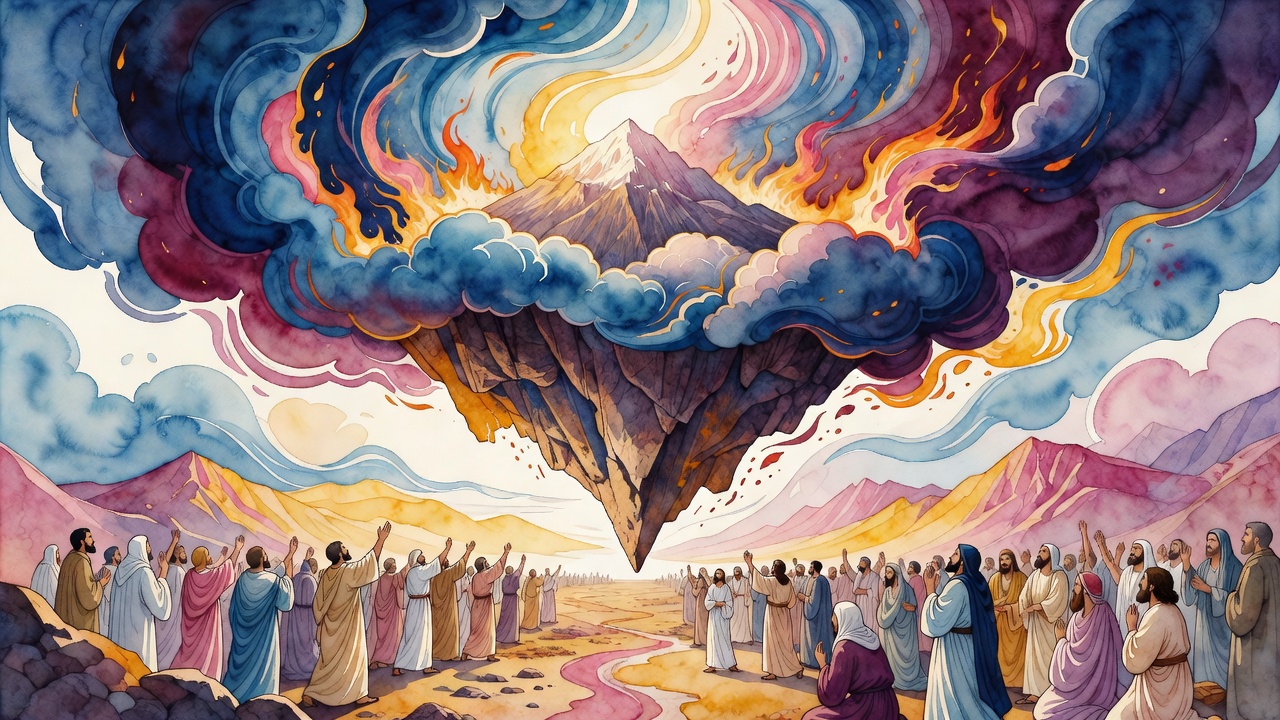
Rabbi Yehuda cut him off. "Enough, Meir." One does not expound the Song of Songs to Israel's shame. The Song was given in her praise and in nothing else. The scent in that verse, he said, is the scent that came up from the foot of Sinai when they said we will do and we will hear, and Meir answered nothing, and both readings were written down and kept side by side.
Fire Came Out From Between the Staves
On the march it was worse than impressive. It was frightening.
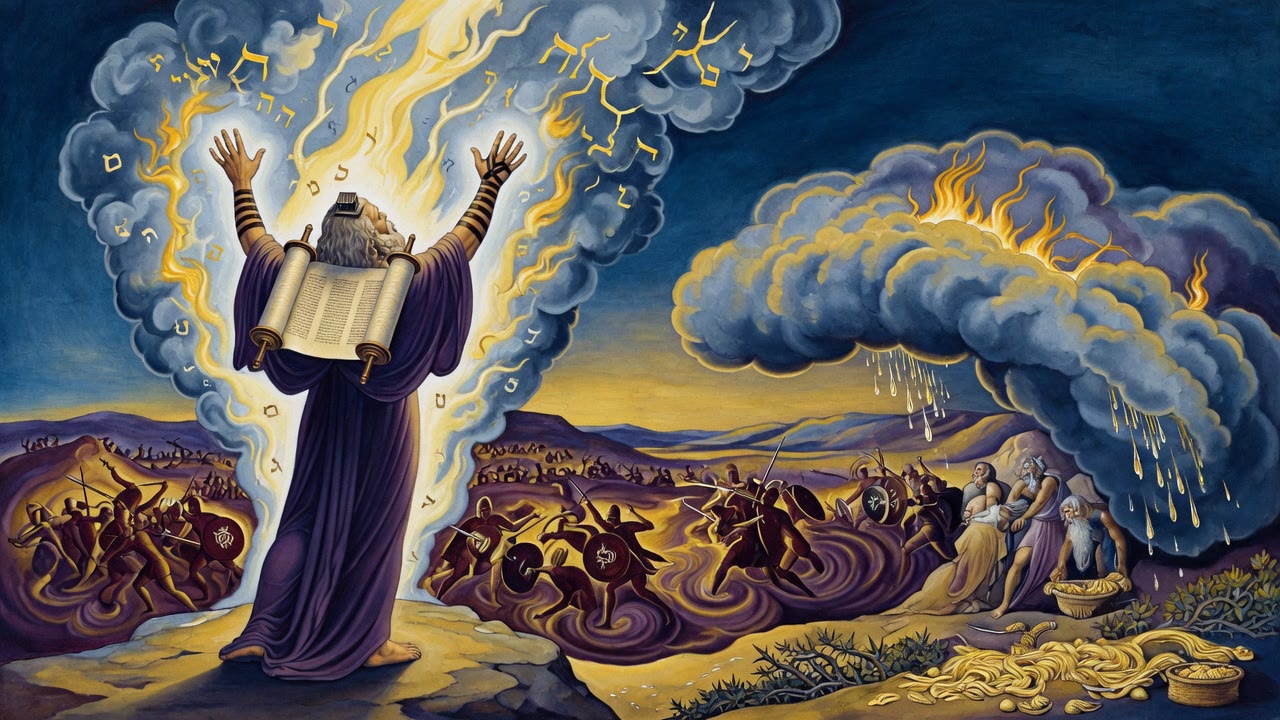
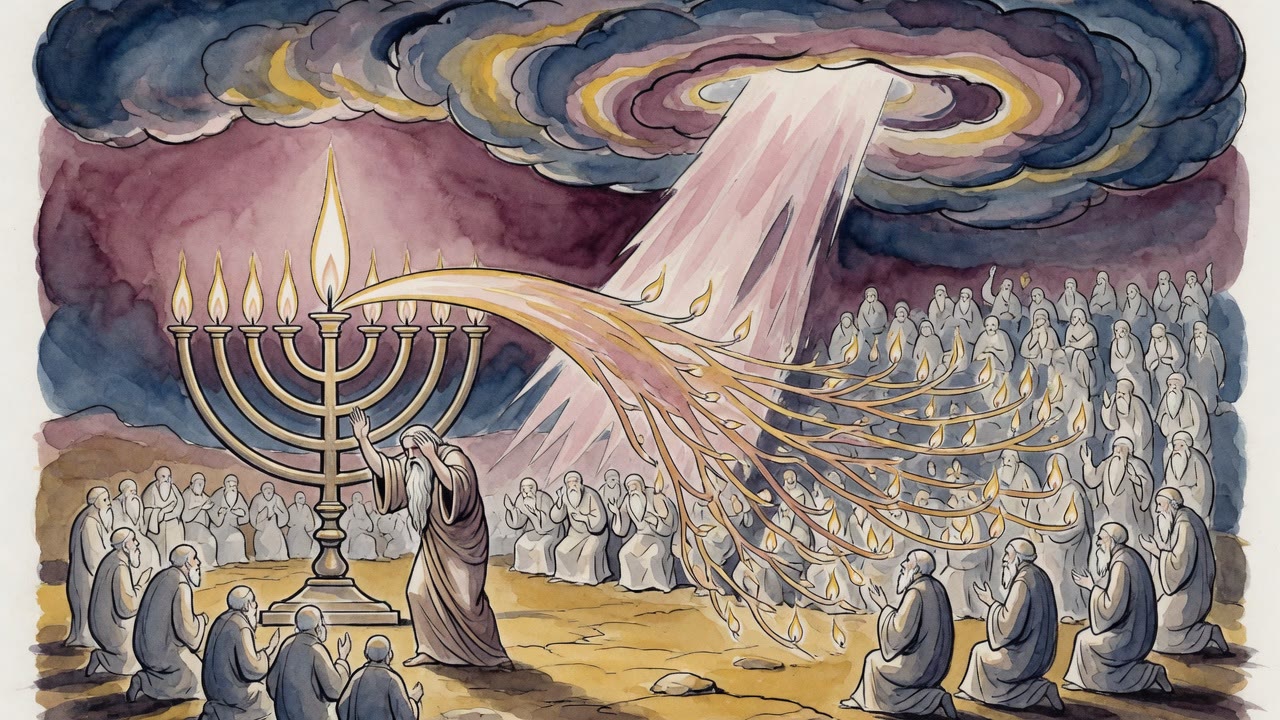
When Israel broke camp and moved from one journey to the next, the pillar of cloud came down and the pillar of fire went up, and the smoke off the two altars, the bronze one and the golden one, rose behind them like two sparks. Then fire came out from between the two staves of the Ark and ran ahead of the column, burning the snakes and the fiery serpents and the scorpions out of the ground before a single foot came down on it.
The nations stood off at a distance and watched a people walk through a desert inside a moving fire. They are gods, they said. Everything they do is done with fire. Terror and dread fell on them, and it was still falling on them long afterward.
Myrrh Has No Scent Until You Burn It
The bundle of myrrh in the love song is Abraham.
Myrrh stands first among the spices and Abraham stood first among the righteous. Anyone who gathers myrrh gets the bitterness of it on his hands, and Abraham handled bitterness his whole life and kept handling it. And myrrh gives up nothing until it is put in fire. That is when the room fills. Abraham's deeds were in him for years and nobody smelled them until Nimrod's furnace.
Frankincense is Isaac, laid out on the altar like a handful of it. The peddler's box with every spice in it is Jacob, whose sons came out whole, priesthood and Levites and kingship all out of one man. And everything Jacob owned came off the dust that got kicked up around his feet the night a stranger wrestled him until dawn.
Later came the generation that got burned in earnest. Rabbi Hiyya bar Abba said it plainly: if a man told me to give my life for the sanctification of the Name I would give it, provided they killed me at once. What was done in the generation of the persecution I could not have stood. They heated iron balls white and set them under a man's arms. They drove reed splinters up under the fingernails. Those were the ones who shed their blood like the blood of the gazelle and the hind, and they held the shape of God in the world by doing it.
As for the dust off Jacob's feet, God gathered it up and put it under the throne of glory, and it is there now.
← All myths