5 min read

Abraham Carried to God's Throne by the Angel Iaoel

When the divine voice fell silent, Abraham collapsed face-first on the ground. Then a hand grasped his and lifted him toward the throne of fire.

Curated by Arthur · Told by Maggid ·
Table of Contents
  1. The Voice and the Silence After It
  2. The Angel's Body
  3. The High Place
  4. The Throne
  5. What No One Before Had Seen

The Voice and the Silence After It

When the voice stopped, Abraham looked in every direction. There was no one. No breath of a man anywhere near him. His spirit seized with terror, his soul fled from him, and he fell face-first upon the earth, unable to stand. He lay pressed against the ground, unable to rise, while the silence where the voice had been pressed down on him like weight.

Then, from inside that silence, a new command: "Go, Iaoel, and by means of my ineffable Name raise up that man and strengthen him from his trembling."

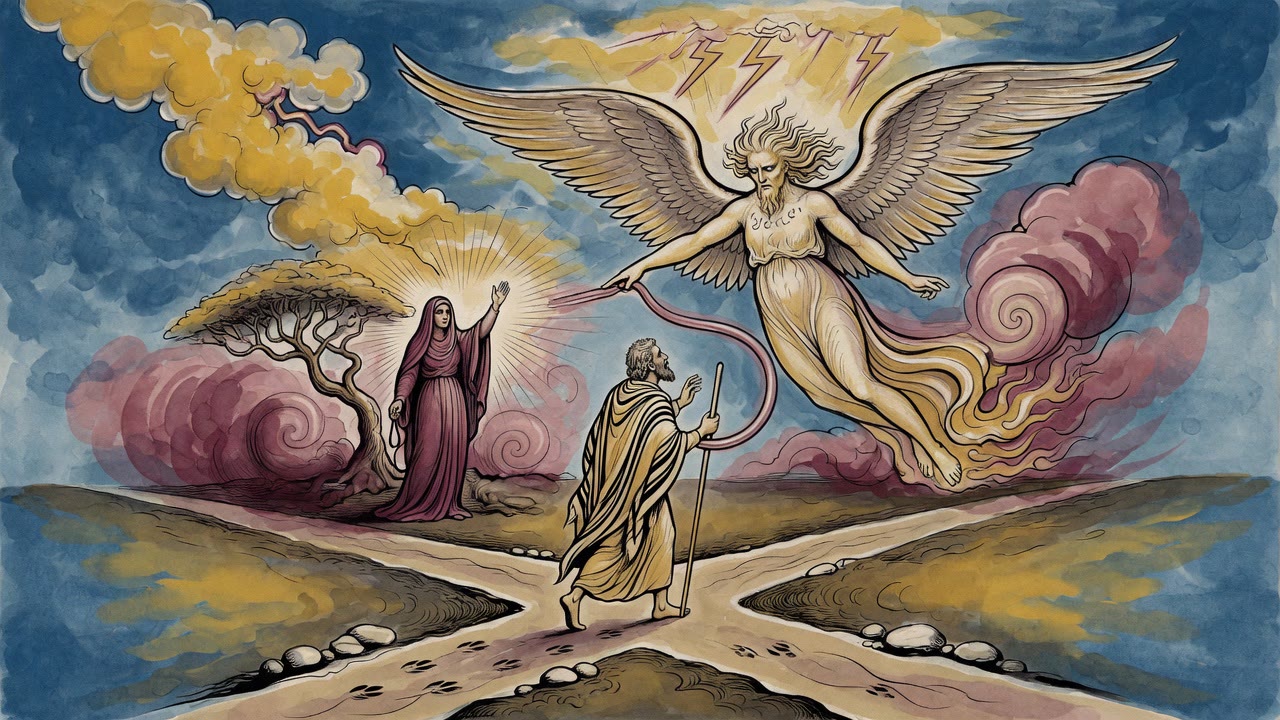
A hand grasped Abraham's right hand. In the likeness of a man, the angel set him on his feet.

The Angel's Body

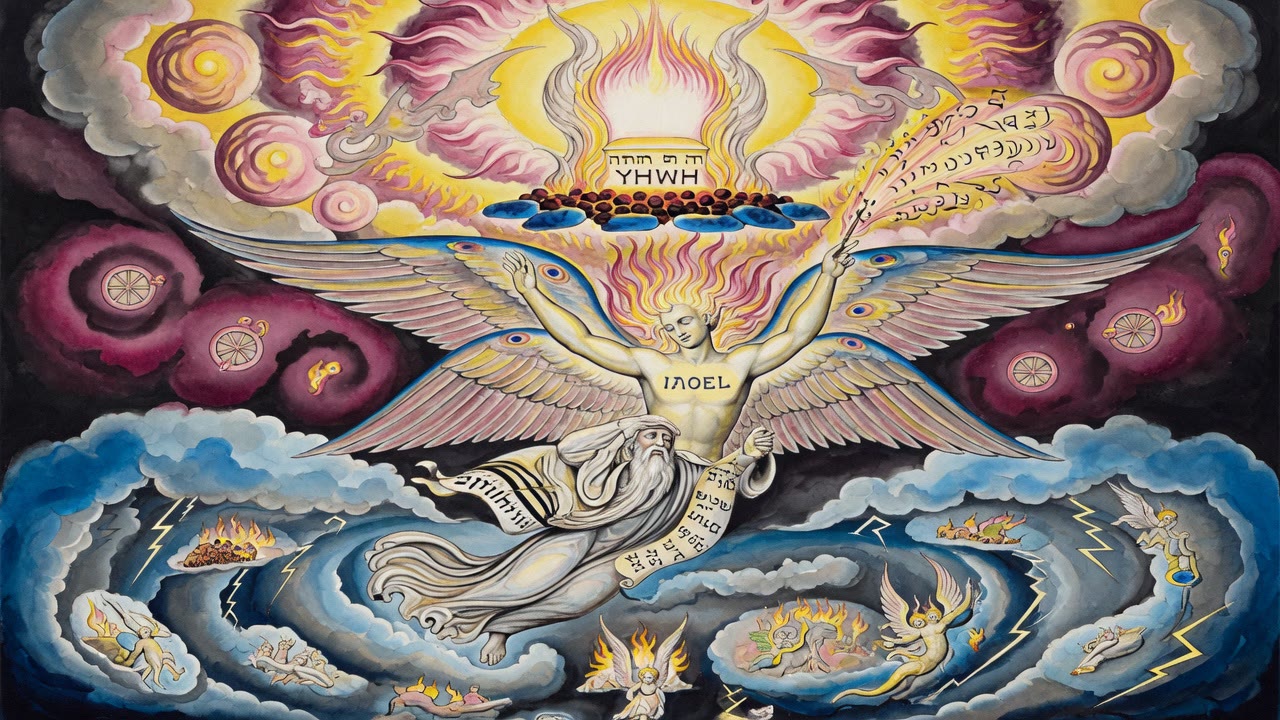
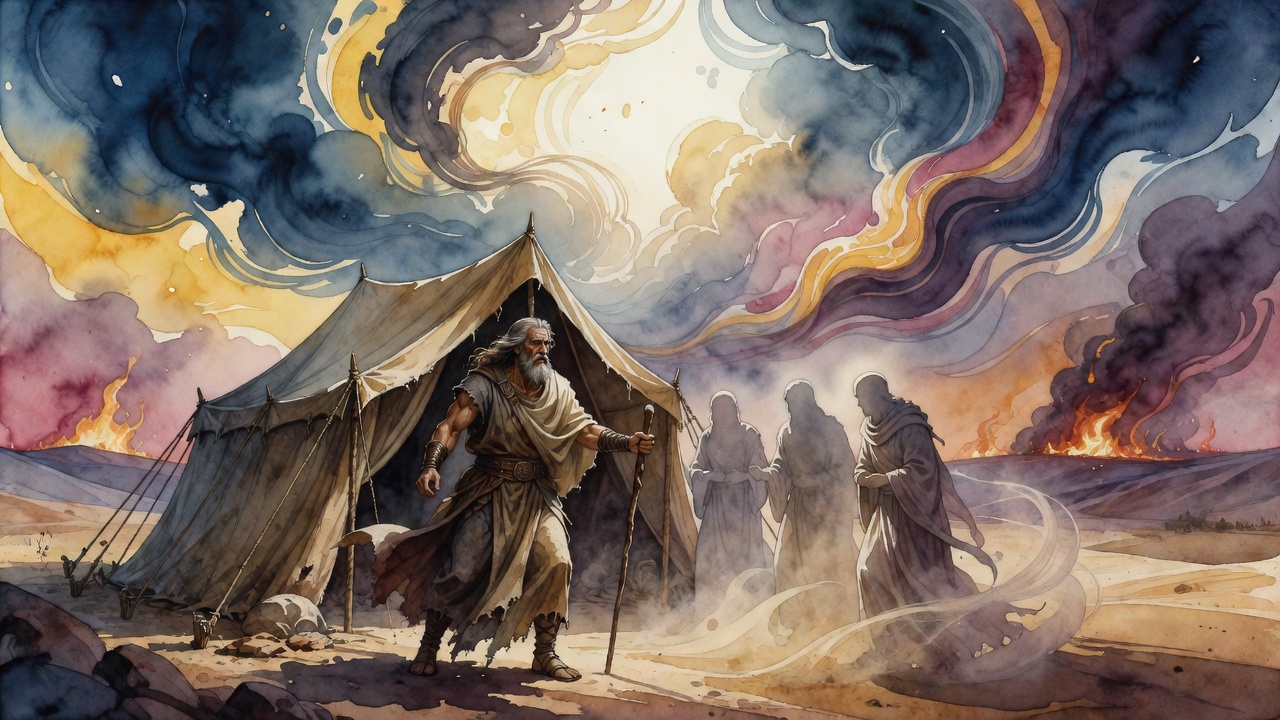
Abraham looked at the one who had lifted him. The sight did not settle. Iaoel's body was like sapphire, the same blue mineral Ezekiel had seen beneath the divine throne, and his face shone like chrysolite. His hair was white as snow, the color that Daniel had assigned to the Ancient of Days in the throne vision that terrified even that prophet. On his head sat a turban in the shape of a rainbow's arc. His garments were purple. In his right hand he held a golden scepter.

"Do not let my appearance frighten you," the angel said, "nor my speech disturb your soul. I am sent to you, and to bless you, in the name of God who loves you. Be fearless. Come with me."

Iaoel then named what he was: the one invested with the power of the divine Name, the mediator between heaven and the world below, the singer of the eternal song who was also, on occasion, sent to take a mortal by the hand and lead him upward.

The High Place

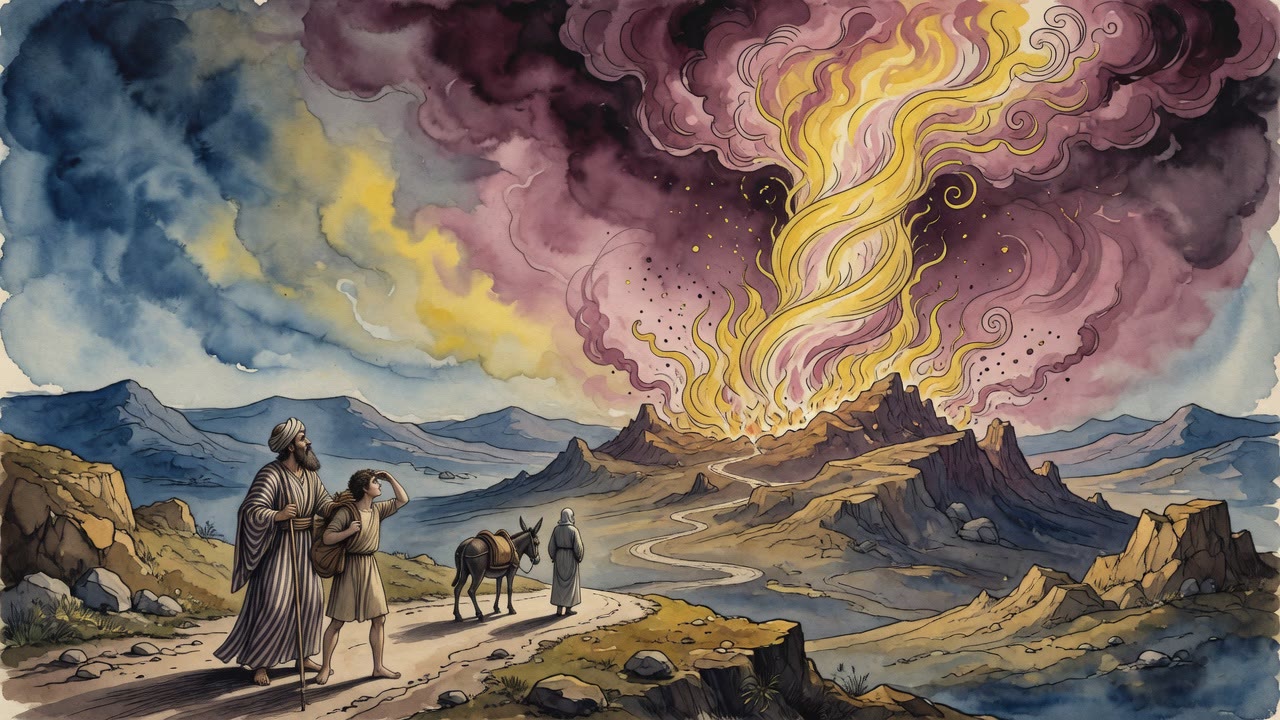
They ascended together to a high place. As they climbed, fire closed in around them on every side. A voice was inside the fire, and it sounded like many waters, like the roaring of the sea. Iaoel bowed his head and worshipped. Abraham wanted to fall to the ground, but there was no ground beneath him anymore. The high place on which they stood rose one moment and plunged the next, shaken by the force of what was approaching.

"Only worship, Abraham," the angel said. "Utter the song I have taught you. It will hold you."

Abraham had learned the song during the ascent. Now, with no earth beneath his feet and fire on every side and a voice like the sea filling the space where silence had been, he sang. Iaoel sang with him. The words described what they were approaching:

Eternal, mighty, Holy El, God only, Supreme. Self-originated, incorruptible, spotless, uncreated, immaculate, immortal, self-perfected, self-devised...

The Throne

While Abraham was still singing, the fire rose up on high. He heard the roaring of the sea grow louder as the flames climbed, and as they climbed, he saw what lay beneath them: a throne of fire.

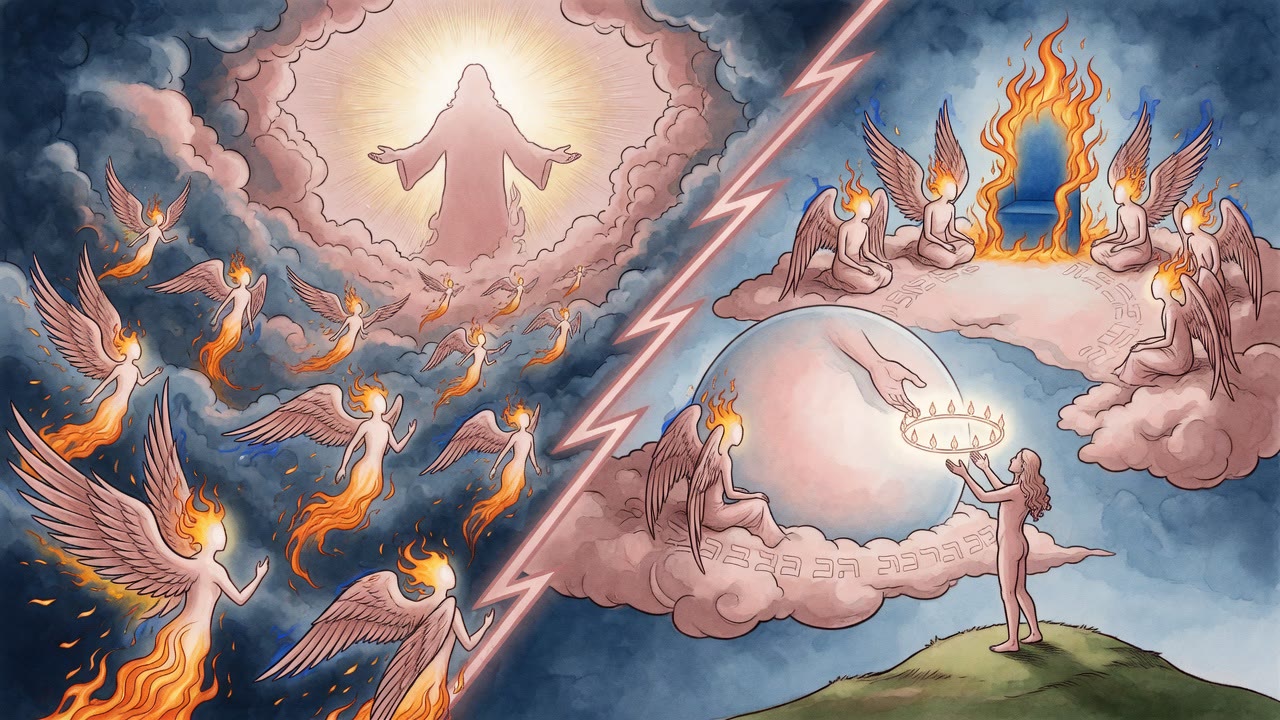
Around the throne, all-seeing ones recited the celestial hymn, their voices the permanent backdrop of heaven. Beneath the throne, four fiery living creatures sang. Each one was identical in form, each with four faces: a lion, a man, an ox, an eagle. Four heads on each body, sixteen faces in total. Each creature had six wings. With the wings from their shoulders they covered their faces. With the wings from their loins they covered their feet. The middle pair they spread for flight.

These were the creatures Ezekiel had seen beside the river Chebar six centuries earlier, when he had his own vision and nearly lost his mind describing it. Now Abraham saw them directly, not in a vision filtered through prophetic language but in the immediate presence of the throne itself.

What No One Before Had Seen

Four rabbis who later tried to enter the mystery of the divine chariot-throne were warned by the story of what had happened to them: one died, one went mad, one became a heretic, and only Rabbi Akiva came out whole. They had approached the vision through text and meditation, the safest route available to mortal minds. Abraham had been taken there in the body, grasped by a hand, lifted, carried up through fire to the place itself.

He was the first human being to see the throne directly. Not a dream, not a metaphor, not a mediated vision through an intermediary prophet. The hand of the angel Iaoel had placed him in the presence of the fire, and he had stood there long enough to see the living creatures and the throne and the all-seeing ones singing, and to sing himself, and to survive it.


← All myths

From the tradition

Sources

4 sources

The texts this telling draws on, in full. Open a card to read inline, or expand it for a wider, quieter read.

Apocalypse of Abraham XApocalypse of Abraham

When the voice stopped speaking, Abraham looked in every direction. No one. No breath of a man anywhere. His spirit was seized with terror. His soul fled from him. He became like a stone and fell face-first upon the earth, unable to stand.

While he lay there, face pressed to the ground, he heard the voice of the Holy One: "Go, Iaoel, and by means of my ineffable Name raise up that man and strengthen him from his trembling."

The angel came. In the likeness of a man, he grasped Abraham by the right hand and set him on his feet.

"Stand up, Abraham, Friend of God who loves you! Do not let the trembling of man seize you. I have been sent to strengthen you and bless you in the name of the Creator of heaven and earth. Be fearless. Hasten to Him."

Then Iaoel revealed who he was, and the description was staggering.

"I am called Iaoel by Him who moves that which exists with me on the seventh expanse of the firmament, a power by virtue of the ineffable Name dwelling in me." The angel who bore God's own unutterable Name within himself, the same role the rabbis later assigned to Metatron, whose name is said to be like that of God Himself.

Iaoel's duties were cosmic in scale. He restrained the living creatures of the Cherubim from attacking one another. He taught the throne-bearers the song of the seventh hour of night. He was ordained to restrain Leviathan, and every single reptile was subject to him. He had been the one commissioned to set fire to Terah's house.

"I have been sent to bless you and the land which the Eternal One has prepared for you. Stand up, Abraham! Go without fear. Be glad and rejoice, for I am with you. Eternal honor has been prepared for you by the Eternal One. I have been appointed to be with you and with the generation that will spring from you. And with me, Michael blesses you forever. Be of good cheer. Go!"

Full source
Apocalypse of Abraham XIApocalypse of Abraham

Abraham rose and saw the one who had grasped his hand and lifted him to his feet.

The sight was overwhelming. Iaoel's body was like sapphire. His face shone like chrysolite. The hair of his head was white as snow. Upon his head sat a turban that looked like the arc of a rainbow. His garments were purple, the color of royalty. In his right hand he held a golden scepter.

This was no ordinary messenger. Iaoel was an angel invested with the appearance of divine glory itself, a figure drawn from the same heavenly language as the prophet Ezekiel's vision (Ezekiel 1:26), with hair like snow recalling the Ancient of Days in Daniel's vision (Daniel 7:9).

"Abraham!" the angel said.

"Here I am, your servant."

"Do not let my appearance frighten you, nor my speech disturb your soul. Come with me. I will go with you, visible until the sacrifice, but after the sacrifice, invisible forever. Be of good cheer. Come!"

The angel would accompany Abraham in visible form only for the journey ahead. Once the sacrifice was complete and the heavenly revelation given, Iaoel would vanish from mortal sight forever. This was a one-time escort through the boundary between earth and heaven.

Full source
Apocalypse of Abraham XVIIApocalypse of Abraham

While Iaoel was still speaking, fire closed in around them on every side. A voice was inside the fire, like the voice of many waters (Ezekiel 1:24), like the roaring of the sea in its uproar. The angel bowed his head and worshipped. Abraham wanted to fall to the ground, but there was no ground to fall upon. The high place on which they stood rose upright one moment and plunged downward the next, shaken by the force of the Divine Voice.

"Only worship, Abraham," Iaoel said. "Utter the song I have taught you."

There was no earth beneath him. No solid footing. Only the song could hold him in place. And so Abraham sang, and the angel sang with him, the celestial hymn of praise:

Eternal, mighty, Holy El,
God only, Supreme!
Self-originated, incorruptible, spotless,
Uncreated, immaculate, immortal,
Self-complete, self-illuminating;
Without father, without mother, unbegotten,
Exalted, fiery One!

Lover of men, benevolent, bountiful,
Jealous over me and very compassionate;
Eli, that is, My God,
Eternal, mighty, holy Sabaoth,
Very glorious El, El, El, El, Iaoel!

You are He whom my soul has loved!
Eternal Protector, shining like fire,
Whose voice is like thunder,
Whose look is like lightning, all-seeing,
Who receives the prayers of such as honor You!

You, O Light, shine before the light of morning upon Your creatures,
And in Your heavenly dwelling places there is no need of any other light
Than the unspeakable splendor from the lights of Your countenance.

Accept my prayer,
Likewise also the sacrifice which You have prepared through me who sought You!
Accept me favorably, and show me, and teach me,
And make known to Your servant as You have promised me!

A mortal man, standing in midair, singing words that only angels were meant to know. The fourfold "El" was a substitute for the unutterable Name. The name "Iaoel" applied here not to the angel but to God Himself. Abraham had crossed over into a language reserved for the heavenly court.

Full source
Apocalypse of Abraham XVIIIApocalypse of Abraham

While Abraham was still reciting the song, the fire The first reading rose up on high. He heard a voice like the roaring of the sea. The fire would not stop. And as it climbed, ascending into the height, Abraham saw what lay beneath it.

A throne of fire.

Around the throne, all-seeing ones reciting the celestial song. Beneath the throne, four fiery living creatures singing, each one identical in form, each one with four faces: a lion, a man, an ox, and an eagle (Ezekiel 1:10). Four heads upon their bodies, sixteen faces in total. Each creature had six wings. With the wings from their shoulders they covered their faces. With the wings from their loins they covered their feet. The middle pair they spread wide for flying straight forward (Isaiah 6:2).

When the living creatures finished singing, they looked at one another and began to threaten one another. A strange and terrifying detail. Even the highest angels were consumed by rivalry in service, each claiming precedence, each turning upon its neighbor with menace.

Iaoel saw the threat. He left Abraham's side and ran to the creatures. He turned each living creature's face away from the one directly confronting it, so that they could not see each other's threatening expressions. Then he taught them the song of peace that has its origin in the Eternal One.

Abraham stood alone and looked beyond the living creatures. Behind them he saw a chariot with fiery wheels, each wheel full of eyes all around (Ezekiel 1:18). Over the wheels was a throne covered with fire, encircled by fire, surrounded by an indescribable fire that enveloped a fiery host.

And from within it all, Abraham heard a holy voice. It sounded like the voice of a man.

The vision of God's throne of glory, the Merkabah, the central mystery of the heavenly world. The same vision that would later consume the mystics who dared to ascend, that drove some mad and others to silence. Abraham was the first to see it. He stood in the fire and did not burn.

Full source