Miriam Watched One Hour and a Nation Waited Seven Days
Miriam stood watch over her floating brother for an hour. Heaven paid it back at seven days interest, with the entire nation frozen in the desert for her.
Table of Contents
 Click for full size
A Girl Who Would Not Walk Away
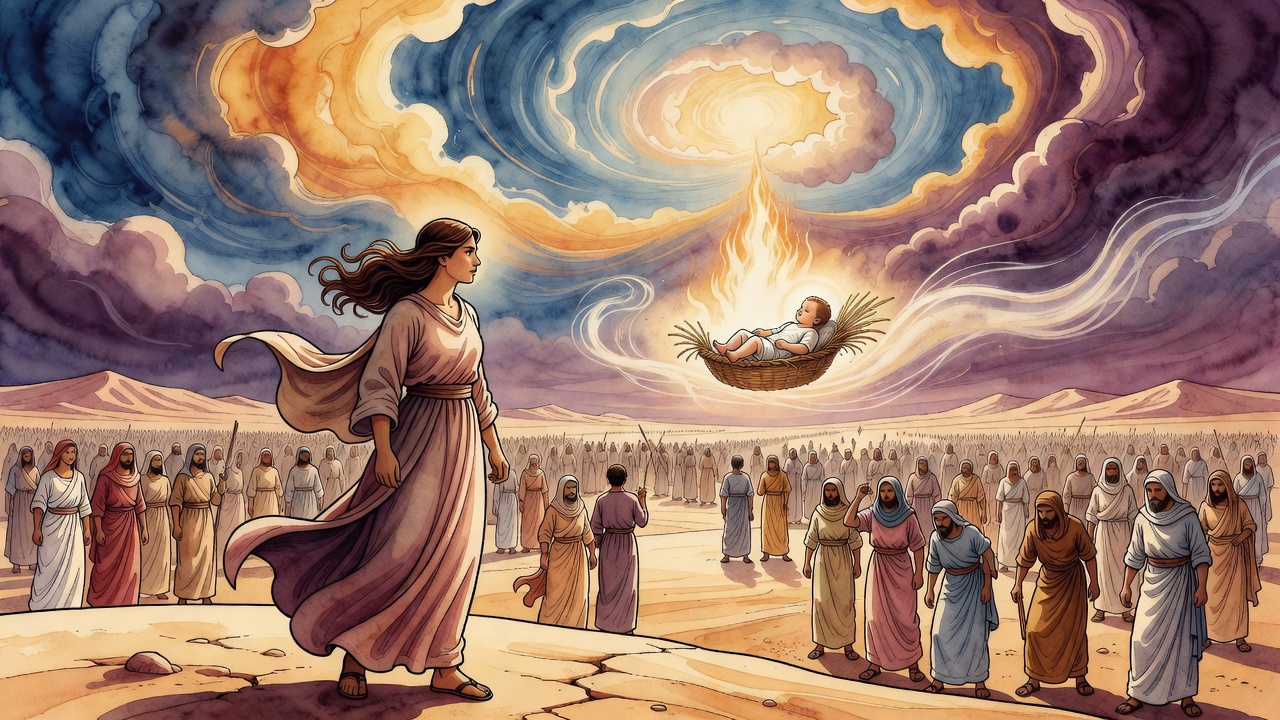
She had no good reason to stay. The river was wide and fast, the papyrus basket was already beyond reach, and if soldiers came she could do nothing. She was a child watching a smaller child float away, and the sensible thing was to go home before someone saw her standing there on the bank.
Miriam stayed. She stood at a distance and watched, the Torah says, to know what would be done to him. One hour she held her place, eyes on the basket, refusing to leave until she knew the end of the story.
The tradition counted that hour and remembered it.
The Hour That Cost a Nation Seven Days
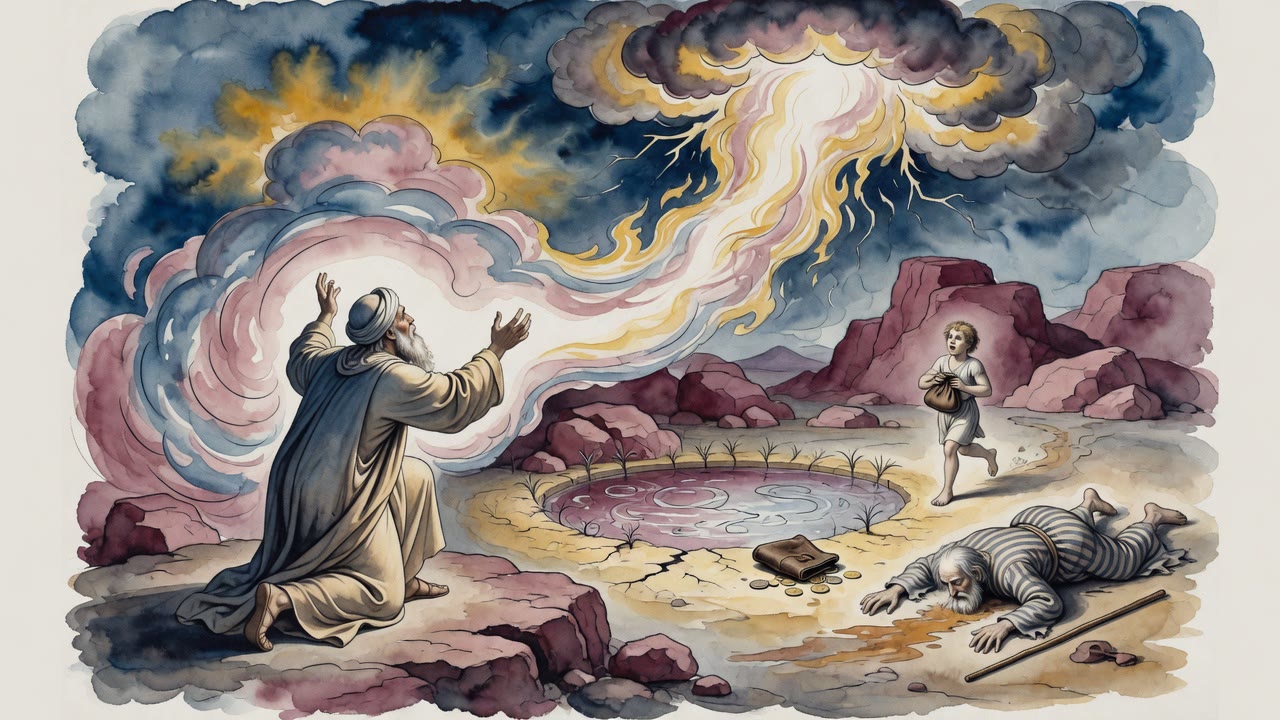
Years passed. Israel crossed the sea and came out into the wilderness, and Miriam led the women in song with a drum in her hand. Then came the episode at Hazeroth, when she spoke against Moses about his Cushite wife, and God was angry, and she was struck with a skin affliction and sent outside the camp.
She had to wait. Seven days, while all of Israel halted around her. Not a single step toward the land it had been promised. Not the Ark, not the priests, not the Levites, not the seven clouds of glory that moved above the camp. The Divine Presence itself sat down in the sand with everyone else, and would not move until Miriam came back in.
The accounting was exact. One hour on the bank, seven days of a nation waiting. The Talmud and the Yalkut Shimoni on Torah both preserve this as a law older than any courtroom: what you give in watching over someone comes back to you, multiplied, from the watching of Heaven over you.
The Penalty for Looking Too Long
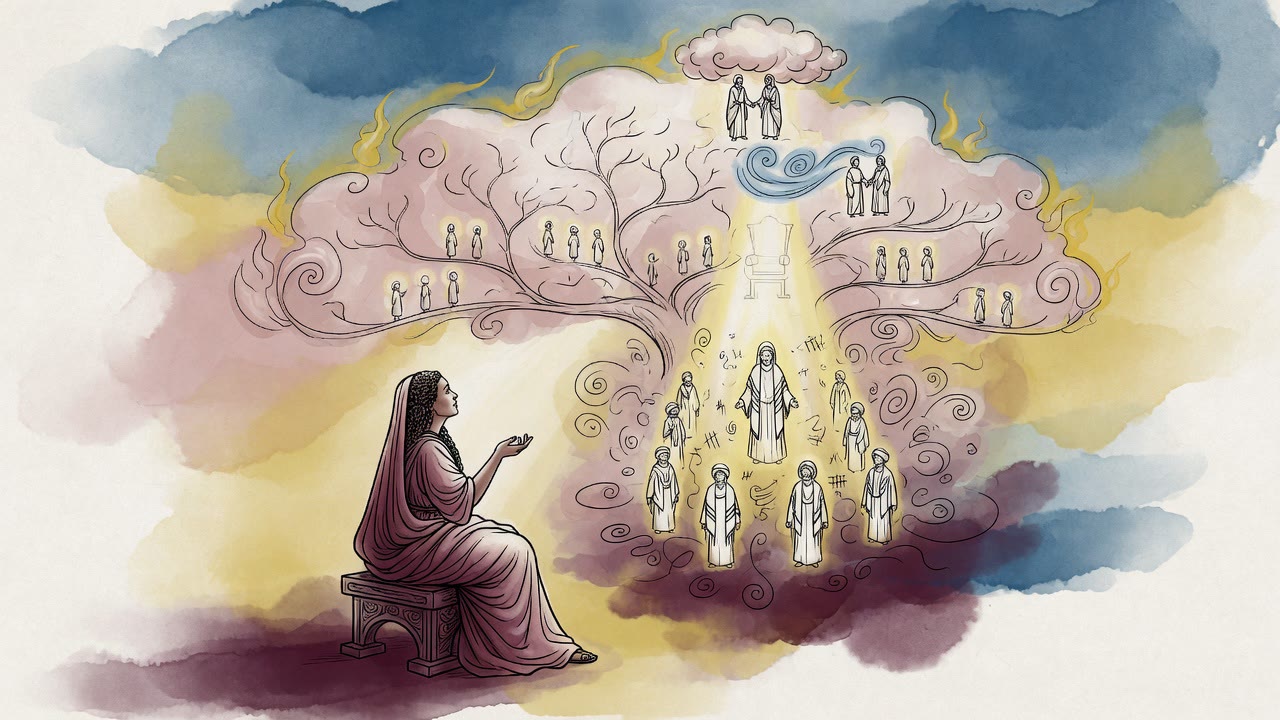
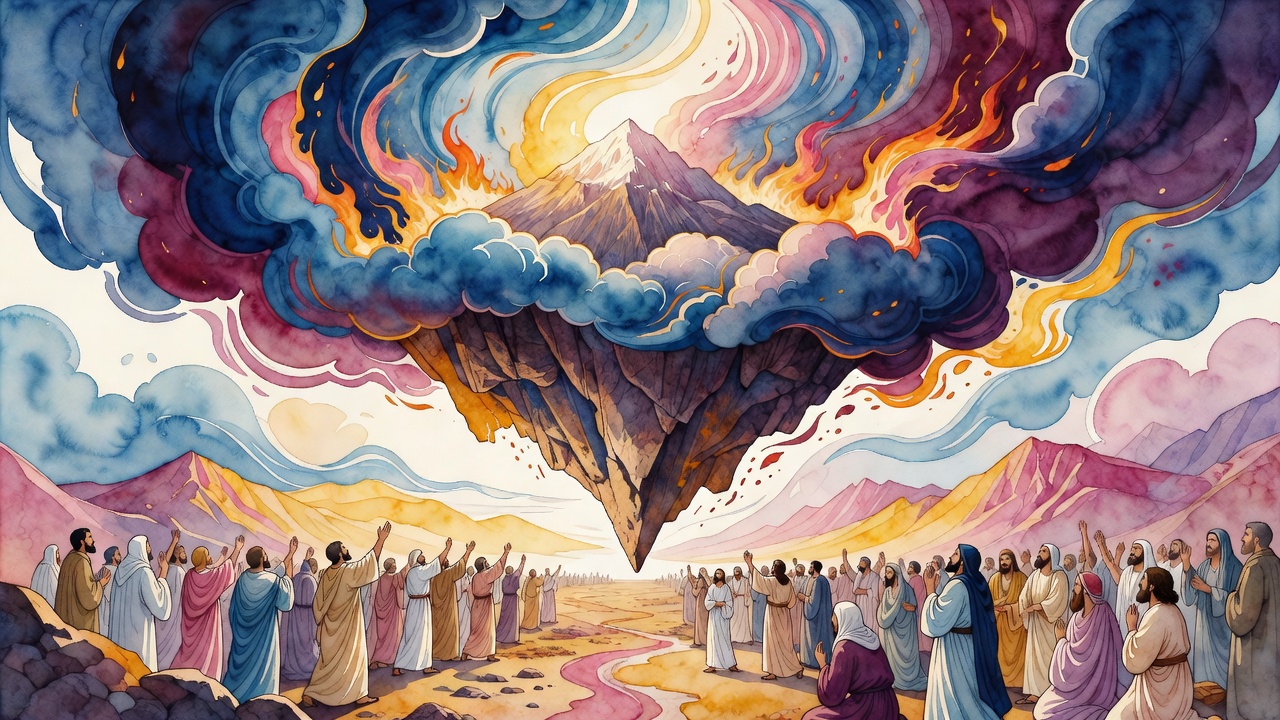
But the midrash that the Yalkut assembled holds a second story about watching, and this one runs in the opposite direction. The nobles of Israel, the seventy elders who went up the mountain with Moses and Aaron and Nadab and Abihu, looked at God. The Torah says they ate and drank in the divine presence, and it says they saw the God of Israel, and the floor beneath him was sapphire like the sky. What is strange is what the Torah does not say: it does not say they died.
The sages wrestled with that silence. They knew what gazing at the divine presence could cost, and they said the noblemen had used the feast as an excuse to let their eyes linger, staring at the Shekhinah (the Divine Presence) the way a man stares at something he knows he should not. The fact that they were not struck down immediately was not approval. Their punishment was deferred, and when it arrived it was complete. Nadab and Abihu died later in the Tabernacle. The elders died later in the wilderness. The meal on the mountain had been a debt written down, not forgiven.
Isaac and the Cost of What He Saw
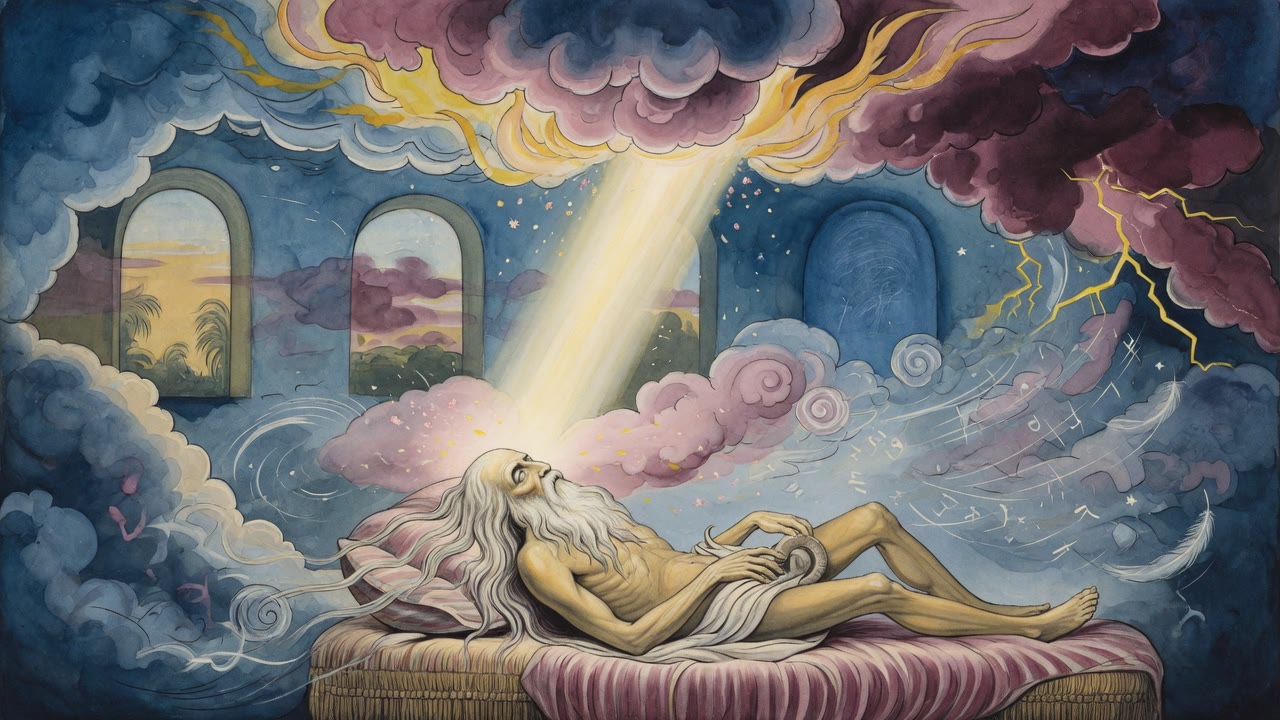
The Yalkut carries one more account in this cluster: Isaac's blindness in old age. Why did it come? He had seen the Divine Presence during the binding on the mountain, when he lay on the wood and his father raised the knife. The angels wept over him at that moment, and their tears fell into his eyes, and slowly over the years his sight dimmed. He did not lose it all at once. It was a slow cost, the residue of having looked at something mortal eyes are not built to hold.
The three stories belong together. Miriam watches with the whole of her attention and it is given back to her pressed down and overflowing. The nobles look with appetite and the looking is a debt that accumulates. Isaac sees what no one alive is supposed to see and carries the weight of it in his vision for the rest of his life. Heaven sees everything, pays everything back, and the rate of exchange is precise.
← All myths