When Torah Stood Beside Moses as He Blessed Israel
Moses blessed Israel at the edge of his life, and Devarim Rabbah says he was not standing alone. Torah stood beside him, and God stood beside Torah.
Table of Contents
 Click for full size
No One Could Be Missing
When a reader opens the Torah scroll before a congregation, there is a minimum. Three verses. Not one. Not two. Three.
Devarim Rabbah begins there, in the practical requirement of public Torah reading, and presses on it until the numbers open into something larger. Why three? One answer: Abraham, Isaac, and Jacob. Another answer: Moses, Aaron, and Miriam, the three through whom Israel received guidance in the wilderness. A reader at the bema stands in a chain of names that goes back to the first covenant. The scroll does not open in isolation. It opens inside a lineage.
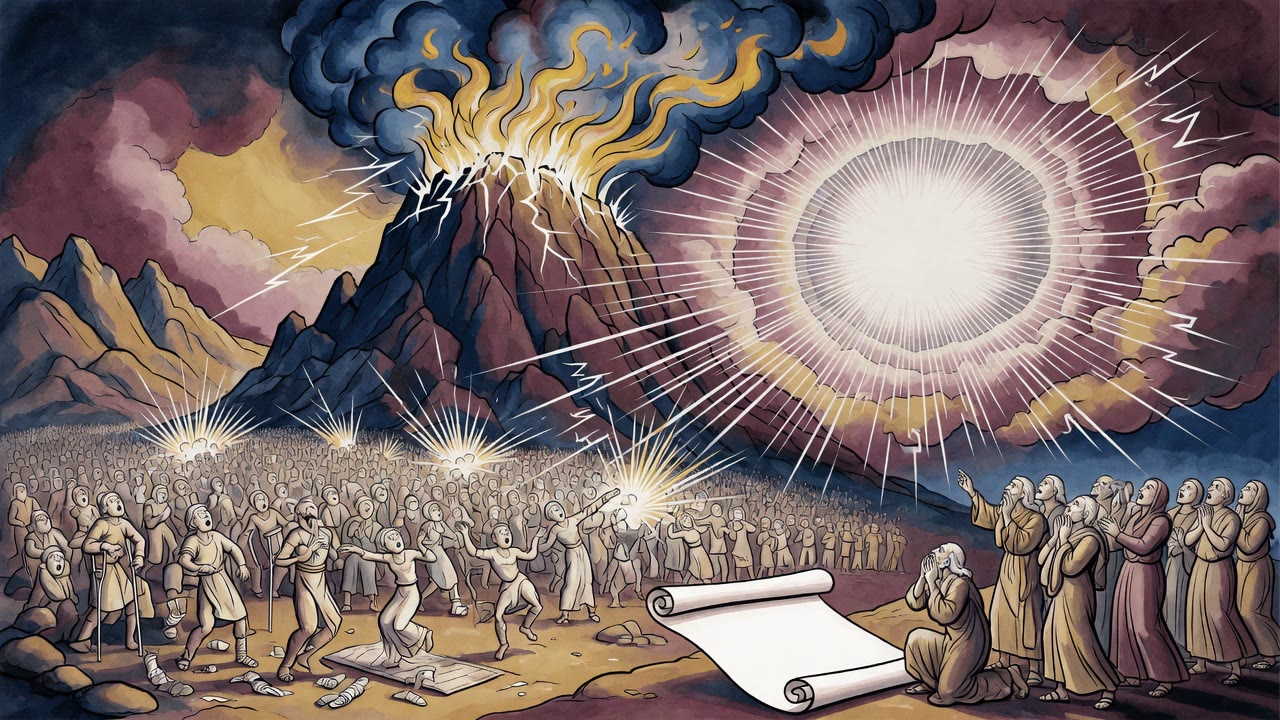
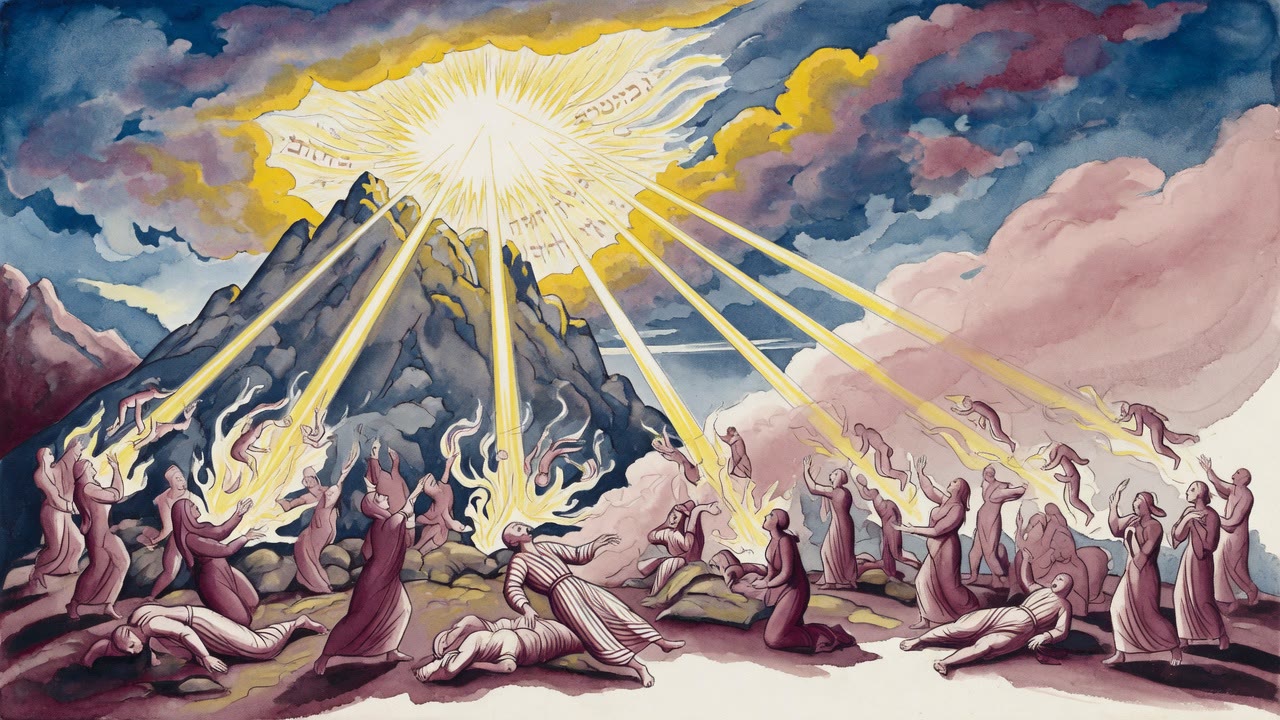
Then Rabbi Shimon bar Yohai makes the claim sharper. If even one Israelite had been absent at Sinai, God would not have descended. The verse says that God appeared before the eyes of all the people. All means all. The revelation was not for an audience of thousands minus one. It required a completeness that had no gap in it. A missing person at Sinai was not a logistical inconvenience. It would have been a structural failure of the whole encounter.
Torah in Front, God Behind
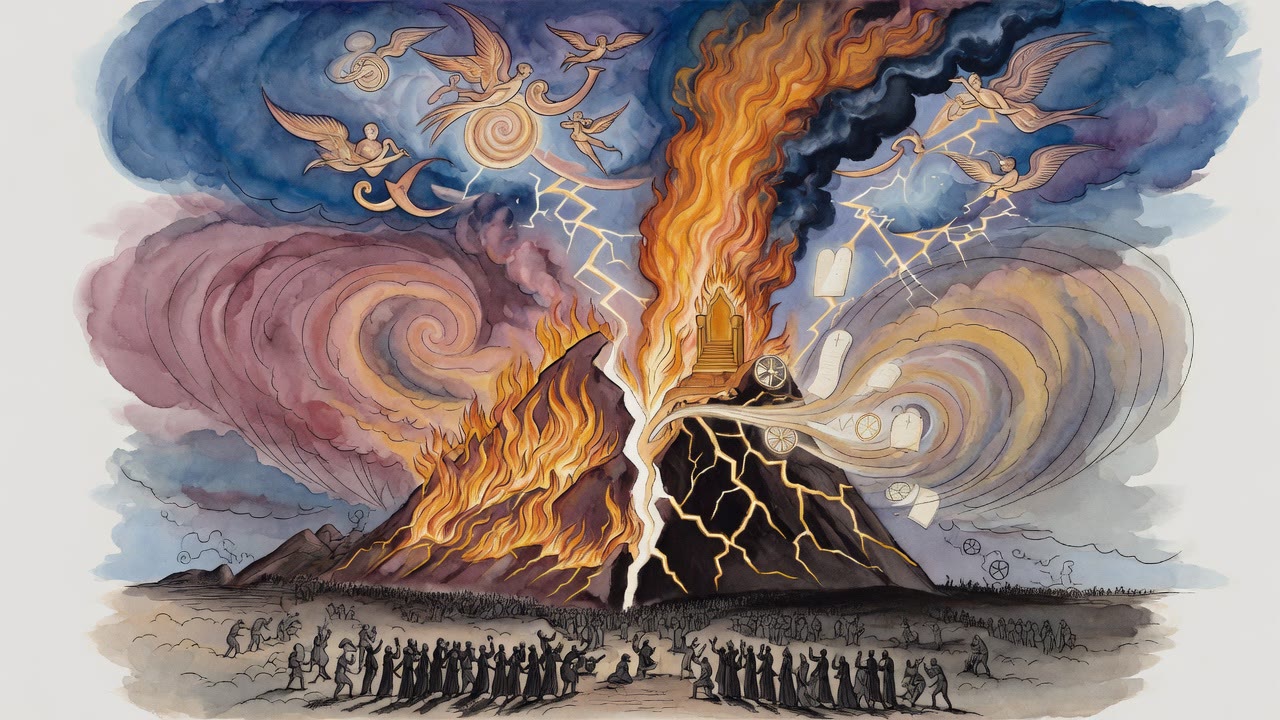
Moses stood at the edge of his life, Deuteronomy spread open before him, ready to bless Israel before he died. Devarim Rabbah hears three presences in the scene.
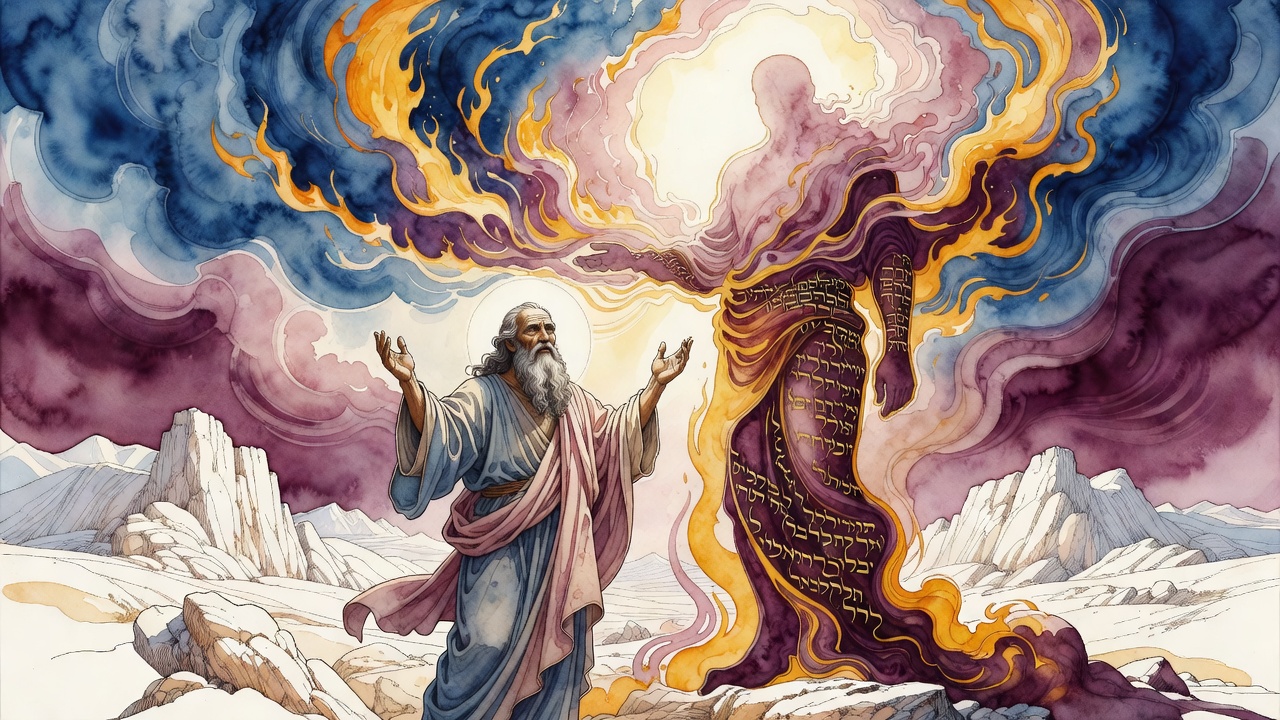
Rabbi Shmuel bar Nahman reads the verse this is the blessing with unusual attention to its arrangement. When Moses came to bless Israel, the Torah stood at his right hand and God stood behind the Torah. Moses was the speaker. Torah was the content. God was the ground everything rested on.
That arrangement matters. Moses is not alone at the podium. He is not a solitary prophet delivering his last speech before the people who outlived him. The blessing he speaks has two co-presences. Torah, which he received and transmitted and which will outlast him, stands forward. And behind it, the source from which the Torah came stands as the final support of everything Moses is about to say.
Reading in Public Is Not a Performance
The midrash moves between the abstract and the concrete with characteristic speed. One moment it is describing God and Torah crowded into Moses's final blessing. The next it is describing the practical rule that a public Torah reader must stand, not sit, because Ezra stood when he read to the people in the book of Nehemiah.
The rules about how to read are not separate from the theology of why to read. Ezra stood because the occasion demanded a posture that matched the weight of the scroll. Moses blessed while Torah stood beside him because the blessing required the presence of what the blessing was about. In Devarim Rabbah's understanding, the form of Torah practice is not incidental to its meaning. The way the body behaves during Torah, standing, attending, completing the minimum verses, being present rather than absent, is how the covenant enters the body.
What Completeness Means
Devarim Rabbah returns at the end to the requirement that all must be present. If even one person was missing at Sinai, the presence would not have come. That is a claim about the covenant as a collective entity, not as a collection of individuals who each separately receive their private portion. The covenant is complete only when everyone who belongs to it is actually there.
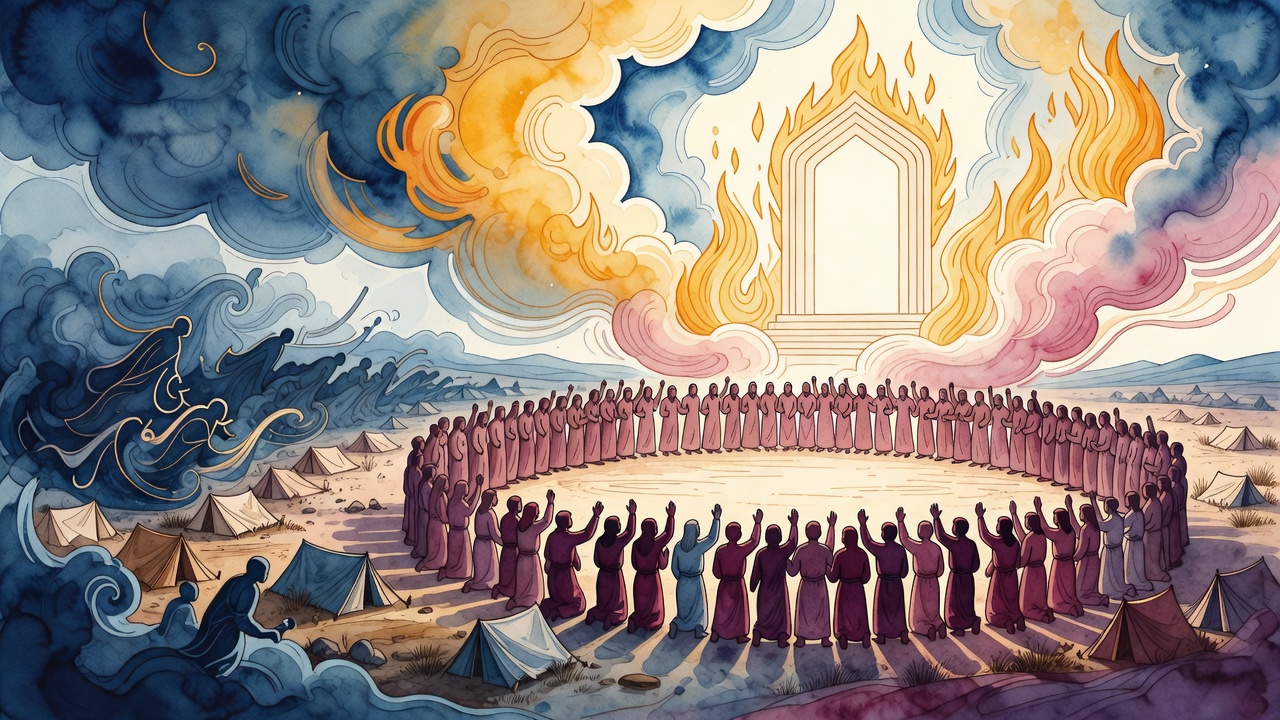
Moses blessed all of Israel at once, not sequentially, not by tribe, not by household. He turned and saw the entire people before him, and Torah stood at his right hand. The minimum number of verses in public reading, three, corresponds to three patriarchs and three leaders because every act of Torah is surrounded by the ancestors and teachers through whom it arrived. No one reads alone. No one receives alone. The blessing requires the whole people present just as the original revelation did.
← All myths